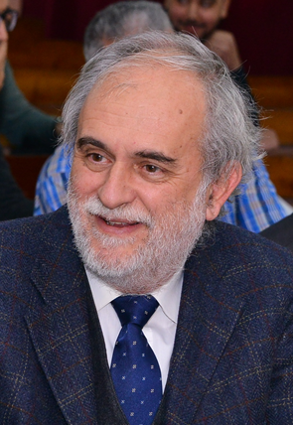
Zygmunt PizloView profile
Professor
Zygmunt Pizlo is a Professor and Falmagne Endowed Chair in Mathematical Psychology at the Department of Cognitive Sciences, University of California-Irvine. His research focuses on 3D shape perception, computational vision, and the principles underlying human and machine perception. He holds a Ph.D. in Psychology from the University of Maryland and prior degrees in Electrical Engineering from Poland. Pizlo’s work emphasizes symmetry, complexity, and veridicality in shape perception, proposing that the human visual system employs global constraints like symmetry to infer 3D structure from 2D images. His academic lineage traces back to notable mathematicians, and his contributions include pioneering theories on shape constancy, the Traveling Salesman Problem (TSP), and binocular vision models. He co-founded the ViPER Lab, where research explores 3D shape recovery and computational models of perception. Pizlo’s books, such as *3D Shape* (MIT Press, 2008) and *Making a Machine That Sees Like Us* (Oxford, 2014), synthesize his interdisciplinary approach. He collaborates with institutions like the Center for Theoretical Behavioral Sciences and organizes conferences on interdisciplinary vision research. Key themes in Pizlo’s research include the role of symmetry and a priori constraints in perception, the integration of global and local visual cues, and the application of psychological principles to AI. His work bridges cognitive psychology, mathematics, and engineering, aiming to create machines that emulate human visual capabilities.