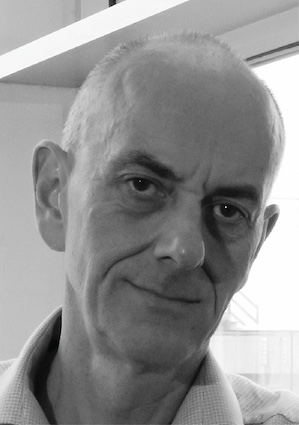
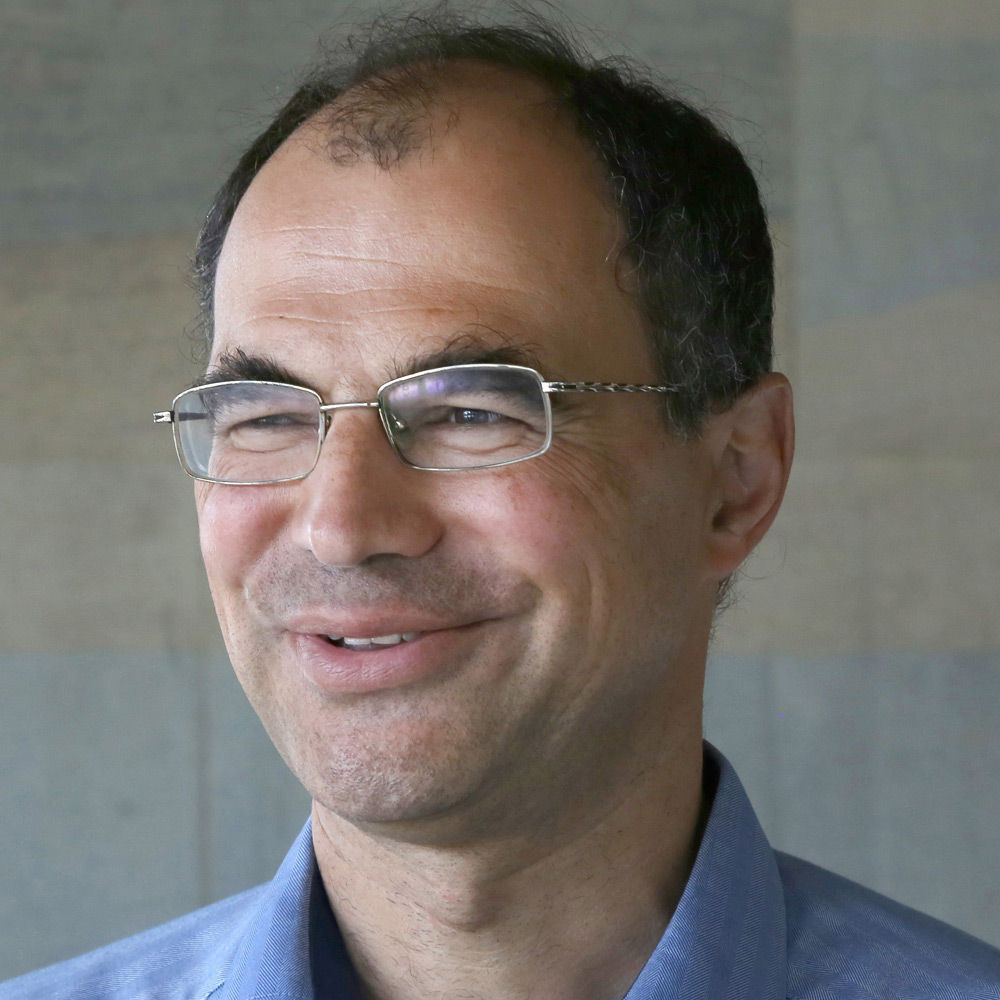
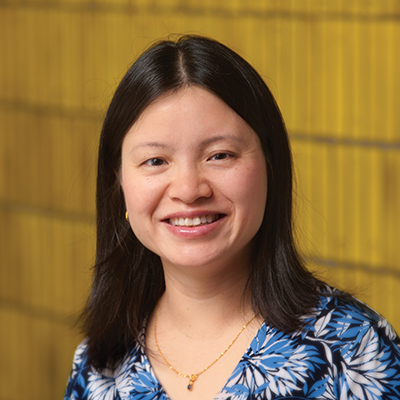
David J. Pine is a Silver Professor of Physics and Chair of the Department of Chemical and Biomolecular Engineering at New York University’s Tandon School of Engineering. He holds joint appointments in Physics and Mathematics within the College of Arts and Science. His research focuses on soft condensed matter, including colloidal self-assembly, complex fluids, and photonics. Pine has pioneered techniques like diffusing-wave spectroscopy to study dynamic systems. Education: Ph.D. in Physics (Cornell University, 1982), M.S. in Physics (Cornell, 1979), B.S. in Physics and Mathematics (Wheaton College, 1975). Research Interests: Pine’s work spans colloids, emulsions, and DNA-functionalized particles. He explores self-assembly mechanisms, rheology, and light-scattering techniques. Notable projects include colloidal diamond lattices and programmable patchy particles. Publications: Over 200 papers, including influential work on lock-and-key colloids (2010), colloidal crystallization (2015), and light-activated swimmers (2013). Recent studies focus on structural colored biomaterials (2025) and entropy-driven assembly (2023). Awards: Guggenheim Fellow, APS Fellow, AAAS Fellow, and Michelin Chair (ESPCI ParisTech). Lab: Pine Research Group at NYU, specializing in soft matter and nanotechnology. Collaborations span materials science, biophysics, and engineering.
Paul Horn is a Professor and Associate Chair of Graduate Studies in the Department of Mathematics at the University of Denver, within the College of Natural Sciences and Mathematics. He earned his Ph.D. in Mathematics from the University of California, San Diego (2009), under the supervision of Fan Chung. Prior to joining DU in 2013, he held postdoctoral positions at Emory University and Harvard University. His research focuses on combinatorics, graph theory, and probability, with a particular emphasis on applying probabilistic, algebraic, and geometric methods to analyze networks and graphs. Dr. Horn co-organizes the Rocky Mountains-Great Plains Graduate Research Workshop in Combinatorics (GRWC) and contributes to the graph theory section of the Masamu Advanced Studies Institute in southern Africa. He also serves as the graduate coordinator in the Mathematics Department, overseeing graduate student advising and program administration. His work spans theoretical contributions to graph structure, stochastic processes on networks, and applications in multi-agent systems and sensor networks. Publications highlight his expertise in graph curvature, network robustness, and combinatorial optimization, reflecting his interdisciplinary approach to discrete mathematics and its real-world applications. His research bridges pure and applied mathematics, addressing challenges in algorithm design, network dynamics, and geometric graph theory. Horn’s advising and mentorship activities include guiding graduate and undergraduate students in mathematics, emphasizing hands-on research experiences through workshops and collaborative projects. His contributions to academic leadership and research dissemination are evident through editorial roles and conference organization in combinatorics and graph theory.
Oleg Shpyrko is a Professor and Department Chair in the Department of Physics at the University of California, San Diego (UCSD). He leads a research group focused on nanoscale structural dynamics using advanced x-ray scattering techniques. His work bridges hard and soft condensed matter systems, including magnetic materials, energy storage materials, and biophotonic nanostructures. Shpyrko earned his Ph.D. in Physics from Harvard University in 2004. His research leverages national facilities like the Advanced Photon Source (APS) and Linac Coherent Light Source (LCLS). Key areas include coherent x-ray imaging, domain dynamics in magnetic systems, and operando studies of battery materials. His research interests span: Coherent X-ray Scattering and Imaging Magnetic Domain Dynamics Nanostructured Materials Energy Storage (battery cathodes) Biophotonic Structures Phase Transitions Notable achievements include pioneering X-ray Photon Correlation Spectroscopy (XPCS) for antiferromagnetic domain studies and revealing dislocation dynamics in battery materials. His work has been featured in Nature , Science , and Physical Review Letters . Shpyrko has mentored over 15 graduate students and postdocs, many of whom have become faculty at top institutions. Awards include the NSF CAREER Award (2010), Hellman Fellowship (2009), and the Rosalind Franklin Young Investigator Award (2008). His group operates facilities including Dynamic Light Scattering labs, AFM/EFM microscopes, and collaborates with synchrotron and neutron sources globally.
Professor Stefan Glock is an Assistant Professor of Discrete Mathematics at the University of Passau's Faculty of Computer Science and Mathematics, a position he has held since September 2022. Prior to this appointment, he spent three years as a Junior Fellow at the Institute for Theoretical Studies at ETH Zurich, following the completion of his doctorate at the University of Birmingham. Stefan Glock received his mathematics education at Technische Universität Ilmenau from 2009 to 2014, then pursued his PhD at the University of Birmingham, which he completed in 2018. His doctoral dissertation, "Decompositions of Graphs and Hypergraphs," was the runner-up for the Richard-Rado-Preis 2018. Professor Glock's research focuses on discrete mathematical structures, with particular emphasis on their asymptotic properties. His work spans several interconnected fields of combinatorics: Extremal Combinatorics : Investigating the maximum or minimum possible size of mathematical structures satisfying certain properties Probabilistic Combinatorics : Applying probability theory to solve combinatorial problems Graph Theory : Studying properties of graphs and networks Ramsey Theory : Examining conditions under which order must appear in large structures Design Theory : Creating arrangements of elements satisfying specific balance properties Discrete Geometry : Analyzing geometric problems with discrete structures Analysis of Professor Glock's recent publications reveals a consistent focus on solving long-standing open problems in combinatorics using innovative methods that combine probabilistic techniques with structural insights. His work often bridges theoretical mathematics with applications in theoretical computer science, particularly in the analysis of algorithms and network structures. A significant portion of his research addresses fundamental questions about graph and hypergraph decompositions, which have implications for coding theory, cryptography, and network design. Professor Glock has received notable recognition for his contributions to mathematics: Runner-up for the Richard-Rado-Preis 2018 for his dissertation "Decompositions of Graphs and Hypergraphs" Awarded funding through the prestigious DFG Emmy Noether Programme in 2024 for his research group on "the interplay of structure and randomness in mathematics" As a faculty member at the University of Passau, Professor Glock leads the Discrete Mathematics research group and actively collaborates with mathematicians worldwide. He has established a strong research program that has attracted funding for academic visitors and supports multiple research projects. His approach to mathematical problems emphasizes developing new methods that have far-reaching implications beyond the specific problems being solved. Professor Glock's research group at the University of Passau focuses on the interplay between structure and randomness in discrete mathematics. The group maintains active collaborations with leading institutions including ETH Zurich, University of Birmingham, and various research centers across Europe. Through the DFG Emmy Noether Programme funding, his group is expanding its research on combinatorial structures and their applications.
Huan Lei is an Assistant Professor at Michigan State University, holding a joint appointment in the Department of Computational Mathematics, Science and Engineering and the Department of Statistics and Probability. He earned his Ph.D. in Applied Mathematics from Brown University in 2012 under George Karniadakis and a B.S. in Special Class for the Gifted Young from the University of Science & Technology of China in 2005. His research integrates scientific machine learning with numerical analysis to develop structure-preserving algorithms for partial and stochastic differential equations arising in multi-scale systems. His work spans multi-scale modeling , non-Markovian dynamics , coarse-grained molecular simulations , and data-driven parameterization . Recent publications focus on learning generalized Langevin equations with state-dependent memory, consensus-based free energy surfaces, and non-equilibrium coarse-grained models. His team applies these methods to fluid dynamics, biomolecular solvation, and climate systems. NSF CAREER Award (2021) Brown University Dissertation Fellowship (2012) He advises graduate and undergraduate researchers and seeks Ph.D. candidates with expertise in numerical analysis or scientific computing. His group receives funding from NSF, DOE, Ford, and MSU Foundation.
Lisa P. Ramsey is a Professor of Law at the University of San Diego School of Law, where she teaches Trademark Law, International Intellectual Property, Civil Procedure, Trademark Litigation, Intellectual Property Survey, and Intellectual Property Seminar. She joined the USD law faculty in 2004, progressing from Assistant Professor (2004-2006) to Associate Professor (2006-2009) and then to full Professor (2009-present). Professor Ramsey's research focuses on the intersection of trademark law and free speech rights, examining how trademark protection can conflict with First Amendment protections. Her scholarship addresses potential conflicts between trademark laws and free expression, explaining how trademark protection of certain inherently valuable words, symbols, and product features can harm fair competition and freedom of expression. She has written extensively on non-traditional trademarks, the impact of Supreme Court decisions like Matal v. Tam on trademark registration, and the application of First Amendment principles to trademark enforcement. Her publications reveal a consistent focus on balancing trademark rights with free expression, with particular attention to how trademark law affects artistic expression, political speech, and competition. Recent work examines the implications of the Supreme Court's decisions in cases like Jack Daniel's v. VIP Products and Vidal v. Elster for trademark enforcement and registration. Thorsnes Prize for Outstanding Legal Scholarship (2020-2021) Class of 1975 Endowed Professorship (2017-2018) Order of the Coif Women of Influence in Law 2025 Honoree (San Diego Business Journal) Professor Ramsey actively participates in professional organizations, serving on the Trademark Law Committee of the American Intellectual Property Law Association and contributing to the International Trademark Association's Model Trademark Law Guidelines. She has testified before the U.S. Senate Judiciary Committee's Intellectual Property Subcommittee regarding the First Amendment implications of the proposed No FAKES Act. Her upcoming book, 'Trademarks and Free Speech: Conflicts and Resolutions,' is scheduled for publication by Cambridge University Press in December 2025.
Professor Roxanne P. Springer is a faculty member at Duke University's Department of Physics within Trinity College of Arts & Sciences, specializing in weak interactions and quantum chromodynamics (QCD). Her research explores fundamental symmetry violations and hadronic structure through effective field theories. Education: Ph.D. in Physics from California Institute of Technology (1990) Research Interests: Springers work focuses on hadronic parity violation, large-Nc expansion, and precision nuclear physics. She applies pionless effective field theory (EFT(π/)) to study neutron-deuteron capture, two-nucleon interactions, and neutrinoless double-beta decay. Her projects bridge QCD symmetries with nuclear dynamics. Publication Trends: Recent works emphasize large-Nc scaling, parity-violating observables, and cross-section calculations in nuclear reactions. Key topics include Wigner-SU(4) symmetry, renormalization group constraints, and hadronic structure analysis. Scientific Awards: POWRE Visiting Professorship (1998-1999) Grants: Principal investigator for DOE-funded projects on lattice QCD and effective field theory since 2005. Co-PI for multiple DOE grants on high-energy nuclear physics from 1990-2005. Includes support for strangeness physics and extreme energy density studies. Teaching: Taught graduate courses on quantum mechanics, quantum field theory, and nuclear physics since 2022. Led methods courses for physics research. Advising: Chaired thesis and preliminary committees for students including James Wheeler (2019), Adryanna Major (2020), and Qiaofeng Liu (2021). Mentored graduate students Xincheng Lin, H Nguyen, and Son Nguyen through 2021.
Angela Mendelovici is an Associate Professor in the Department of Philosophy at the University of Western Ontario , with a PhD from Princeton University (2010) and a BA from McGill University . She serves as Graduate Program Chair and is a Member of the Rotman Institute of Philosophy . Education: BA, McGill University PhD, Princeton University, 2010 Her research focuses on the intersection of Phenomenal Consciousness and Intentionality , challenging traditional views through her work on Phenomenal Intentionality Theory (PIT) . She argues for a radically internalistic theory of intentionality where mental states' contents are grounded in their phenomenal character. Recent work includes debates on Reliable Misrepresentation , Tracking Theories , and Combination Problems in Panpsychism. She has contributed to major handbooks and journals, often collaborating with David Bourget . Her publications span topics in Philosophy of Perception , Representationalism , and Non-Propositional Intentionality , with a forthcoming chapter in Non-Propositional Intentionality (Oxford University Press).
Catherine E Walsh is a senior professor and director of the doctoral programme in Latin American Cultural Studies at the Andean University Simón Bolívar in Ecuador. Her academic work centers on decolonial theory, critical interculturality, and the political, epistemic and ethical dimensions of knowledge production in Latin America, with particular focus on Indigenous and Black social movements across the region. Walsh's research interests span decolonial studies, Indigenous epistemic traditions, critical pedagogy, race and gender studies, and Latin American political movements. She has developed influential theoretical frameworks including "re-existence" and "cracks" to understand how alternative social practices emerge from below to challenge coloniality and hegemonic neoliberalism. Her work places Indigenous knowledge systems in conversation with feminists of color like M. Jacqui Alexander and Maria Lugones, as well as anticolonial theorists like Frantz Fanon, creating a rich interdisciplinary approach that bridges social movements with academic theory. She examines how communities living in direct relation with the land challenge Western nation-state sovereignty and imagine alternative forms of humanity "after Man." Walsh's publication trajectory reveals a consistent evolution from early work on educational exclusion of Latinos in the United States toward increasingly sophisticated decolonial frameworks. Her recent scholarship demonstrates how decolonial "cracks"—understood as extant and nascent fissures in the dominant order—take form through ground-up theorizing and practice. She argues for moving beyond "pedagogy as justice" toward "pedagogies of and for life" that enable alternative modes of living despite and beyond the capitalist-modern-colonial-racist system. Her work consistently centers Indigenous and Afro-descendant knowledge while critically engaging with Western theoretical frameworks. Among her most significant contributions is the 2023 book "Rising Up, Living On," which provides a comprehensive overview of Indigenous and Black militant social movements in Latin America from the mid-1990s to the present. As an editor, she has made foundational decolonial works accessible to broader audiences through her 2024 editorial work on "Aníbal Quijano: Foundational Essays on the Coloniality of Power." Her conceptual development of "re-existence" has become a powerful framework for understanding resistance that not only opposes domination but actively creates new forms of being and knowing.
Beverly Lemire is a Professor in the Department of History, Classics and Religion at the University of Alberta, and a Henry Marshall Tory Chair at the College of Humanities and Social Sciences. She holds a DPhil from Oxford University and has held academic positions at the University of Lethbridge and the University of New Brunswick before joining the University of Alberta in 2004. Her research focuses on material culture from the 17th to 19th centuries, examining intersections of gender, race, and empire in global trade. She leads an SSHRC-funded project, 'Fashioning the Imperial Atlantic: Race, Gender and Material Culture, c. 1660–1820,' analyzing how racial hierarchies and material objects shaped colonial societies. Lemire’s scholarly contributions include co-editing Object Lives and Global Histories in Northern North America (2021), which won the Horowitz Book Prize, and co-editing Dressing Global Bodies: The Political Power of Dress in World History (2019). Her work has been recognized through awards such as the Order of Canada (2023), Fellowship of the Royal Society of Canada (2003), and the J. Gordin Kaplan Award (2012). Her teaching integrates material culture studies, emphasizing hands-on engagement with museum collections. Lemire’s research spans topics like textile trade, colonial fashion, and the politics of museum collections, reflecting her interdisciplinary approach to global, colonial, and postcolonial histories.
Prof. Dr. Johanna Stachel is Chair of the Institute for Experimental Physics at Heidelberg University, where she leads research in high-energy nuclear physics. She maintains active affiliations with CERN's ALICE collaboration and serves on multiple international scientific committees including the American Physical Society Council. Her academic background includes a Doctorate in Physics from Mainz University (1982) under Prof. N. Kaffrell and earlier studies in Chemistry and Physics at Mainz University and ETH Zürich (1972-1978). Stachel's research focuses on Quantum Chromodynamics (QCD) and Quark-Gluon Plasma characterization through heavy-ion collisions. Her work examines particle production mechanisms , strangeness dynamics , and collective phenomena in proton-proton and nucleus-nucleus collisions. Key methodologies include femtoscopic correlation studies, heavy-flavor decay analysis, and multiplicity-dependent measurements to probe QCD phase transitions. Recent publications reveal strong emphasis on multiplicity-dependent phenomena across collision systems, with significant contributions to charm hadronization , vector meson production , and jet modification studies using ALICE data. Her team pioneers techniques for accessing hadronic interactions through correlation measurements. Stern-Gerlach-Medal of the German Physical Society (2019) Lise Meitner Prize of the European Physical Society (2014) Order of Merit of the Federal Republic of Germany (1999) Member of German National Academy of Science (2015) Presidential Young Investigator Award (1988) Stachel has directed major research initiatives including the ALICE Transition Radiation Detector project and served as spokesperson for the CERES experiment at CERN. Her leadership extends to institutional roles as former Dean of Heidelberg's Physics Department and President of the German Physical Society (2012-2014). She leads experimental teams within the Collaborative Research Center projects A02 ('From QCD transport to particle yields') and formerly C05 ('Probing the QCD phase structure with heavy quarks'), coordinating international efforts in heavy-ion collision analysis at the LHC.
Dr. Greis Julieth Kim Reyes serves as Assistant Professor of Physics in the Department of Physics and Astronomy at SUNY New Paltz, where she conducts computational research on semiconductor materials and defects. Her work bridges theoretical physics and practical materials design for energy applications. Her educational journey includes a Ph.D. in Physics from University at Buffalo (2024), Master's in Physics from Universidad Nacional de Colombia (2014), and Bachelor's in Physics-Education from Universidad Distrital Francisco José de Caldas (2010). This international background informs her interdisciplinary approach to materials science. Dr. Reyes specializes in computational exploration of intermediate band semiconductors, defect engineering, and magnetic materials using density functional theory (DFT) and machine learning. Her research reveals how atomic-scale defects create novel electronic properties, particularly in 2D materials like C 3 N/C 3 B bilayers and perovskite oxides. She employs iterative Kohn-Sham methods to simulate electronic behavior and optical responses, with recent work focusing on excitonic effects for solar energy applications. Analysis of her 15 most recent publications shows consistent emphasis on computational discovery of materials with tailored optical and electronic properties. Key trends include defect-enabled photocatalysis, interlayer exciton engineering in van der Waals heterostructures, and Jahn-Teller effects in doped semiconductors - all targeting next-generation energy technologies. Her scholarly recognition includes: Bahethi Scholarship (SUNY Buffalo, 2022) Silvestro Scholarship (SUNY Buffalo, 2022) Marshall Plan Foundation grant (Johannes Keppler Universität, 2018) As an educator, Dr. Reyes develops interactive quantum mechanics curricula using Mathematica simulations, as evidenced by her GitHub repository. She teaches General Physics and Quantum Physics courses while integrating computational tools to build student intuition for quantum materials. Though specific research students aren't listed, her teaching philosophy emphasizes critical thinking through problem-solving sessions and real-world applications. Her computational laboratory work focuses on first-principles simulations of materials, with active development of educational resources for quantum mechanics instruction. Current projects explore machine learning pipelines for materials discovery and defect-property relationships in emerging semiconductor systems.
Alex Byrne is the Laurance S. Rockefeller Professor in the Department of Linguistics and Philosophy at MIT. His primary research focuses on philosophy of mind (especially perception and consciousness), epistemology (particularly self-knowledge), metaphysics (especially color theory), and the philosophy of sex and gender. He collaborates extensively with David Hilbert on color relationalism and co-edited the influential Readings on Color series and The Norton Introduction to Philosophy . Education: No explicit academic training details listed, though his work implies advanced philosophical training. Key Works: Transparency and Self-Knowledge (2018), Trouble with Gender (2023), and edited volumes on color theory. Byrne's research interrogates foundational questions like the nature of hallucinations, the sex/gender distinction, and the metaphysics of color. His recent work critiques gender identity theories and explores conceptual boundaries in sex biology. Collaborations with Hilbert on color perception have shaped debates in sensory epistemology. Publications span epistemological puzzles (e.g., introspection's evidential role), metaphysical disputes (e.g., ordinary objects' existence), and applied ethics (e.g., legal protections for LGBTQ+ identities). Though no grants or awards are listed, his prolific publishing and editorial work reflect significant academic influence. He teaches advanced courses like Topics in Epistemology: Self-Knowledge and Philosophy of Mind: Mental Content , contributing to MIT's philosophy curriculum. Byrne's interdisciplinary approach bridges analytic philosophy with social/political theory, particularly in gender studies.
Dr. Alexei Vernitski is a Senior Lecturer in the School of Mathematics, Statistics and Actuarial Science (SMSAS) at the University of Essex. His research focuses on applying artificial intelligence (including reinforcement learning and deep learning) to mathematical problems in knot theory, algebra (e.g., braid theory), and universal algebra. He also explores mathematics education, particularly enhancing student motivation. Previously, he worked in the financial sector as a programmer and as a computer science lecturer. His research interests span AI-driven knot theory, algebraic structures (semigroups, groups), and mathematics education. Notable areas include the application of neural networks to braid untangling, automated reasoning in knot diagrams, and cognitive studies on math anxiety using EEG. He has supervised PhD students in mathematics education, universal algebra, and computer science applications of mathematics. His recent work demonstrates trends in combining machine learning with topological and algebraic problems, emphasizing practical AI solutions for abstract mathematical challenges. His articles reflect interdisciplinary approaches, merging computer science techniques with pure mathematics. Dr. Vernitski has advised multiple PhD students, contributing to diverse fields from knot theory to educational technology. His work bridges theoretical mathematics with real-world applications, such as optimizing data transmission and enhancing learning systems through neuroadaptive methods.
Shu Yang is the Joseph Bordogna Professor and Department Chair of Materials Science and Engineering at the University of Pennsylvania's School of Engineering and Applied Science. Her research spans multiple departments, with primary appointments in both Materials Science and Engineering and Chemical and Biomolecular Engineering. She directs the Yang Lab, which operates at the intersection of multi-materials synthesis, nano-/microfabrication, and device processing, backed by deep understanding of physical, mechanical and biological principles. Director, Center for Analyzing Evolved Structures as Optimized Products (AESOP) Principal Investigator, NSF NRT: Climate Action and Resilience for Extreme Urban Heat (CLIMATE-CARE) Member of the Engineering Research Visioning Alliance (ERVA) Professor Yang's research focuses on developing novel materials synthesis, assembly and eco-manufacturing of complex, multi-functional, nano- to macrostructured soft, sustainable materials and composites. Her lab addresses fundamental questions centered around surface/interface, actuation mechanisms, and structure-property relationships. Through directed assembly of oligomers, polymers, gels, colloids, liquid crystals, amphiphiles, and their composites with inorganic materials and biomolecules across nano- to macroscales, her team creates complex, multi-functional nano- and microstructures with unique surface, optical, and mechanical properties. Analysis of Professor Yang's recent publications reveals a strong trend toward environmentally responsive materials with applications in sustainability, water harvesting, carbon capture, and climate resilience. Her work increasingly integrates kirigami engineering principles with liquid crystal elastomers to create programmable, shape-morphing materials. The research shows a clear trajectory from fundamental materials science toward real-world applications addressing global challenges, particularly in climate action and sustainable infrastructure. Inaugural Nat Geo 33 Extraordinary Changemaker List 2022 Cozzarelli Prize from PNAS for Class III: Engineering and Applied Sciences Advanced Materials Hall of Fame collection recognition Multiple highly cited papers according to Web of Science Professor Yang's research group has secured significant funding for projects addressing climate change, sustainable materials, and advanced manufacturing. Her lab has developed numerous technologies with potential applications in coatings, adhesives, smart windows, displays, sensors, soft robotics, biomedical devices, dehumidifiers, and carbon-absorbing concrete. The Yang Lab maintains a strong mentoring record with numerous students and postdocs who have gone on to successful careers in academia and industry. Her group actively collaborates across disciplines, working with biologists, physicists, environmental scientists, and engineers to tackle complex challenges. The Yang Lab operates state-of-the-art facilities for materials synthesis, characterization, and fabrication. The lab is particularly known for its expertise in liquid crystal elastomers, kirigami engineering, and biomimetic materials. The group maintains strong industry partnerships and has filed multiple patents based on their research. Their facilities enable everything from molecular-scale synthesis to macro-scale manufacturing of functional materials, with particular strength in bridging these scales through innovative design principles.