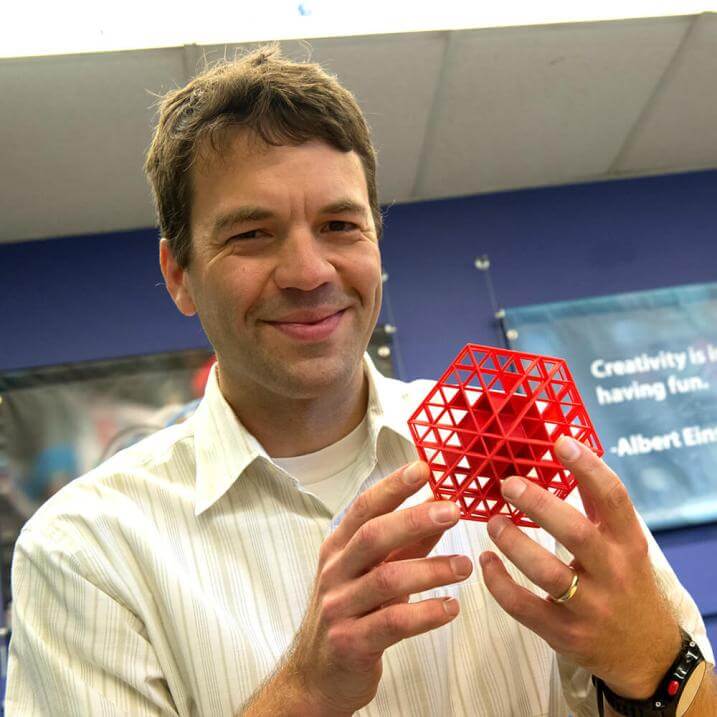
Dolph Schluter is a Professor in the Department of Zoology at the University of British Columbia, Faculty of Science. His research focuses on the ecological forces driving speciation and evolutionary divergence, particularly in adaptive radiation systems. Key research areas: Ecological speciation, Adaptive radiation, Genetic basis of species differences, Biodiversity gradients Primary study organisms: Threespine sticklebacks in British Columbia lakes (youngest known species pairs), Galápagos finches His work integrates field experiments, genomic studies, and collaborations with institutions like Stanford University and the Fred Hutchinson Cancer Research Center. Current projects examine species persistence under environmental change and genetic mechanisms of trait divergence. Recent publications emphasize parallel genetic evolution, hybridization dynamics, and the interplay of ecological selection with genomic architecture. Notable awards include AAAS Fellowship, the Crafoord Prize (2023), Darwin Medal (2021), and Sewall Wright Award (2008). Scientific Recognition AAAS Fellow (2024) Crafoord Prize (2023) Darwin Medal (2021) Member, Order of British Columbia (2021) Sewall Wright Award (2008) Killam Research Prize (2008) Lab members (D. Beltrán Segura, L. Combrink, Y. Hu, K. Lin) work in experimental ponds and controlled aquaria facilities, studying species interactions and genetic mapping. The lab maintains strict safety protocols for fieldwork and aquatic experiments.
Christine Allen-Blanchette is an Assistant Professor in the Department of Mechanical and Aerospace Engineering and affiliated with the Center for Statistics and Machine Learning at Princeton University. She also collaborates with Robotics at Princeton and previously held a Princeton Presidential Postdoctoral Fellowship. Education: PhD in Computer Science (2020), MSE in Robotics (2013) from the University of Pennsylvania; dual BS degrees in Mechanical Engineering and Computer Engineering (2011) from San Jose State University. Her research focuses on the intersection of deep learning, geometry, and dynamical systems. Key areas include control theory, robotics, and geometric deep learning, with applications to dexterous manipulation, 3D rotational dynamics, and equivariant neural architectures. Recent publications emphasize geometric algebra-based models for robotics, equivariant autoencoders for fluid dynamics, and physics-informed generative modeling. Her work integrates domain-specific constraints into neural architectures to enhance interpretability and performance. Scientific Awards: Princeton Presidential Postdoctoral Fellow Christine investigates connections between opinion dynamics and graph neural networks while advancing surrogate modeling and reward guidance methods in reinforcement learning. She contributes to robotics and machine learning communities through interdisciplinary research.
Prof. Dr. Sabine Jansen is a faculty member at the Mathematical Institute of Ludwig Maximilian University of Munich (LMU) . Her research focuses on stochastic processes, statistical mechanics, and quantum systems, particularly through her work in cluster expansions, Gibbs measures, and random geometric systems. She is affiliated with the Working Group on Stochastics and Financial Mathematics and participates in the DFG Collaborative Research Center CRC TRR 352 ( Mathematics of many-body quantum systems and their collective phenomena ) and the DFG priority program SPP2265 ( Random Geometric Systems ). Her office is located at Theresienstr. 39, 80333 Munich (Room 214, Block B, 2nd floor), and she can be contacted at Sabine.Jansen@math.lmu.de or jansen@math.lmu.de . Key Research Areas : Stochastic processes, cluster expansions, quantum statistical mechanics, many-body systems, and probabilistic methods in mathematical physics. Notable Collaborations : DFG-funded projects (CRC TRR 352, SPP2265), Munich Center for Quantum Science and Technology (MCQST), and international collaborations with institutions like Leiden University. Publications : Recent work includes studies on large deviations, intertwinings for continuum systems, virial inversion, and combinatorial approaches to generating functions. Labs & Teams : Leads the Stochastics and Financial Mathematics working group, contributing to quantum systems research at LMU and MCQST.
Raju Venugopalan is a distinguished theoretical physicist serving as a Distinguished Scientist at Brookhaven National Laboratory (BNL) and Director of the BNL EIC Theory Institute since October 2022. He also holds an Adjunct Professor position at Stony Brook University since March 2009 and previously served as Group Leader of the BNL Nuclear Theory group from June 2010 to September 2021. His career spans over two decades at BNL, where he was awarded tenure in June 2002. Venugopalan received his B.S. from the University of Chicago in June 1987 and his Ph.D. from Stony Brook University in August 1992. Following his doctorate, he completed postdoctoral appointments at the Theoretical Physics Institute at the University of Minnesota (1992-1994), the National Institute for Nuclear Theory at the University of Washington (1994-1996), and as a Danish Research Council Fellow at the Niels Bohr Institute in Copenhagen (1997-1998). His research primarily focuses on Quantum Chromodynamics (QCD) at high energies, where he has made seminal contributions to the development of the Color Glass Condensate (CGC) effective theory. Venugopalan has pioneered numerical and analytical techniques in real-time classical-statistical field theory and co-invented the IP-Glasma model, which provides the most successful description of high-energy heavy-ion collisions to date. He has also been an early proponent of the Electron-Ion Collider (EIC), having organized the first eRHIC workshop at BNL in December 1999. His work explores interdisciplinary connections between high-energy QCD and other areas of physics, ranging from Planck scale phenomena to ultracold atomic systems. Venugopalan's recent publications demonstrate a strong focus on the intersection of QCD, gravity through double copy formalisms, quantum information aspects of QCD (particularly entanglement), and quantum computing applications to field theory problems. His work on the QCD-gravity double copy in Regge asymptotics represents a cutting-edge research direction connecting strong force physics with gravitational phenomena. He has also been increasingly active in quantum information applications to nuclear physics, particularly in studying entanglement in QCD systems. Co-PI of Simons Foundation Collaboration on Confinement and QCD strings Co-author of Phys. Rev. D 50th Anniversary Milestone Paper (2020) Suffolk County NY Distinguished Asian American Award (2019) BNL Science & Technology Award (2018) Humboldt Research Award (Humboldt Prize, 2016) Fellow of the American Physical Society (2007) Venugopalan has supervised numerous undergraduate, master's, and Ph.D. students throughout his career. He has secured significant research funding including co-PI roles on DOE Topical Theory Collaborations (BEST, TMD, SURGE) and the Simons Foundation Collaboration on Confinement and QCD strings. His leadership extends to chairing the Steering Committee of the Joint BNL/Stony Brook Center for Frontiers in Nuclear Science and serving on multiple national and international advisory committees. As Director of the BNL EIC Theory Institute, Venugopalan leads theoretical efforts supporting the development of the Electron-Ion Collider, a major DOE project currently under construction at BNL. He also contributes to quantum computing initiatives through his role as Theory sub-Thrust co-Leader for the Co-design Center for Quantum Advantage (C2QA) at BNL.
Nicole Schweikardt is a Professor at the Institute of Computer Science within Humboldt University of Berlin . Her research focuses on Theoretical Computer Science , particularly in Database Theory , Formal Logic , and Algorithmic Meta-Theorems . Academic Rank: Professor Contact: schweikn@informatik.hu-berlin.de Research Interests : Nicole investigates logical characterizations of database query languages, algorithmic meta-theorems for sparse graphs, and efficient enumeration techniques. Her work bridges formal logic, computational complexity, and practical database systems. Scientific Awards : 2018 ACM PODS Alberto O. Mendelzon Test-of-Time Award Recent Article Trends : Nicole's recent publications emphasize schema matching , spanner evaluation , first-order logic extensions , and query enumeration . Her work spans theoretical foundations (e.g., counting quantifiers, Hanf normal forms) and practical applications (e.g., event stream analysis, document compression).
Prof. Dr. Sören Schlichting is a leading researcher in the Faculty of Physics at Bielefeld University , specializing in heavy-ion collisions , quark-gluon plasma , and non-equilibrium QCD dynamics . He actively contributes to collaborative projects such as the Transregio 211 Strongly Interacting Matter under Extreme Conditions and serves in academic committees including the Faculty Conference and Academic Advisory Board . Research Interests : Heavy-ion collision dynamics and quark-gluon plasma formation QCD kinetic theory and hydrodynamic modeling Spectral functions of non-Abelian gauge theories Chiral instabilities and critical phenomena Pre-equilibrium evolution and equilibration mechanisms Dilepton and photon probes of plasma anisotropy Article Trends reveal a focus on: Quantifying transverse flow and hydrodynamic validity in high-energy collisions Non-perturbative spectral function calculations Stochastic baryon transport and chiral dynamics Jet quenching and momentum broadening in non-Abelian plasmas Universal scaling laws in kinetic theories Scientific Awards : Zimányi Medal (2022) Key Collaborations include institutions like CERN, MIT, and the University of Cape Town, with frequent contributions to Physical Review , Journal of High Energy Physics , and EPJ Web of Conferences . His work bridges theoretical nuclear physics with experimental heavy-ion phenomenology , emphasizing real-time lattice simulations and kinetic modeling.
Naya Banerjee is an Associate Professor in the Department of Mathematical Sciences at the University of Delaware, part of the College of Arts & Sciences. Previously, she served as an Assistant Professor at the same university (2012–2016), held adjunct roles at UC Berkeley (2011–2012), and conducted postdoctoral research at the Hebrew University of Jerusalem and UC Berkeley. She earned her PhD in Algorithms, Combinatorics, and Optimization from Georgia Tech, advised by Dana Randall and Eric Vigoda. Her research focuses on probability theory and combinatorics, with applications to statistical physics, theoretical computer science, and statistics. Key areas include mixing times of Markov chains, random walks, random permutations, and Gibbs measures on trees and random graphs. Her work bridges foundational mathematical theory with computational challenges in sampling and optimization. Banerjee’s publications span topics such as cutoff phenomena in transpositions, simulated tempering algorithms, and phase transitions in mean-field models. Her interdisciplinary research occasionally intersects with public health, as seen in a 2020 study on antibiotic prescribing behaviors in India. While no formal awards are listed, her contributions reflect a strong commitment to advancing probabilistic methods in discrete mathematics. Her academic journey includes roles at prestigious institutions, and her research has been supported through various academic appointments. She advises students in theoretical mathematics and collaborates on projects at the intersection of combinatorics and computer science.
Thierry Eude is a Visiting Professor at the University of Burgundy, affiliated with the Computer Science Department of the IUT of Dijon. He holds a Doctorate in Physical Sciences (Industrial Computing) and has held academic roles including Director of the IUT's Computer Science Department (1999–2002). His research focuses on image compression, quality assessment, and perceptual metrics, with notable contributions to medical imaging and human vision models. Education includes a DEA in Instrumentation and Control, and a Master's in Advanced Maintenance Techniques. He collaborates with institutions like Laval University and University of Paris 13, and leads projects on digital twin technology, automated evaluation systems, and content-based image retrieval. Key research areas span image compression techniques, subjective/psychovisual quality metrics, and segmentation algorithms. His work integrates human visual system models to enhance compression efficiency and quality evaluation. Over 30 peer-reviewed articles since 1993 reflect his expertise in digital imaging and multimedia systems. Awards include membership in the Order of Engineers of Quebec and academic qualification for lecturer roles. He advises students on projects in image coding, quality metrics, and machine learning applications. Current initiatives include hybrid learning models and biometric authentication for remote evaluation. Laboratory affiliations include LE2I (UMR CNRS 5158) and LVSN, focusing on interdisciplinary projects in signal processing and database systems.
Greg Warrington is a Professor in the Department of Mathematics and Statistics at the University of Vermont (UVM), part of the College of Engineering and Mathematical Sciences. He holds a BA in Mathematics from Princeton University (1995) and a PhD from Harvard University (2001), supervised by Sara Billey. His career includes postdoctoral roles at the University of Massachusetts Amherst and the University of Pennsylvania, as well as a tenure-track position at Wake Forest University before joining UVM in 2009. Warrington specializes in algebraic combinatorics, focusing on the interplay between combinatorial structures and algebraic/ geometric concepts. His research emphasizes symmetric groups, with notable work on the mathematics of juggling, the game Memory, and gerrymandering. Supported by grants from the NSF, NSA, and Simons Foundation, his gerrymandering research explores quantification methods and election fairness metrics. He teaches advanced courses such as Abstract Algebra I, Topics in Combinatorics, and Graph Theory. His publications span combinatorial theory, voting systems, and interdisciplinary topics like pharmacokinetics and ecology. Warrington’s work bridges pure mathematics with applications in social sciences and environmental modeling. Key areas of contribution include: Combinatorial structures and symmetric group theory Quantitative analysis of electoral districting Cross-disciplinary research in juggling mathematics and drug metabolism studies Development of gerrymandering metrics and declination functions
Prof C.P.M. van Hoesel is a Professor of Operations Research at Maastricht University's School of Business and Economics, affiliated with the QE Operations research group within the Quantitative Economics department. His research focuses on optimization algorithms, logistics systems, transportation networks, and mathematical programming applications in operations research. Recent work addresses order picking optimization in warehouses, service network design under uncertainty, and routing problems using TSP extensions. Publications span topics from warehouse inventory routing to synchromodal transport pricing strategies, reflecting expertise in both theoretical and applied operations research. Collaborations include work with researchers like Christof Defryn and Faezeh Rajabighamchi on algorithmic solutions for complex logistical challenges. His methodologies combine exact mathematical models with heuristic approaches to solve real-world optimization problems. Key contributions include integer programming applications for disaster risk reduction (e.g., dike height optimization) and robust graph coloring algorithms. Research consistently bridges academic rigor with practical industry applications in logistics, transportation, and supply chain management.
Oswin Aichholzer is an Associate Professor in the Department of Algorithms and Theory at TU Graz, Austria. He is affiliated with the Institute of Algorithms and Theory and the Institute of Software Engineering and Artificial Intelligence. His research focuses on computational geometry, graph theory, and combinatorial geometry, with an emphasis on geometric graphs, matching problems, and crossing minimization in graph drawings. He is also involved in teaching theoretical computer science and actively contributes to research projects and courses through the TU Graz's Research Portal (PURE). His recent work explores structures like crossing-free Hamiltonian cycles, bicolored order types, and folding algorithms for polyominoes. Key research interests include algorithmic problems in geometric configurations, graph isomorphisms, and the development of efficient algorithms for problems in discrete mathematics. He has published extensively on topics such as flip operations in graphs, geometric matchings, and the analysis of complete graph drawings. His work often bridges theoretical foundations with practical algorithmic solutions, addressing challenges in both computational geometry and combinatorics. Dr. Aichholzer’s contributions span multiple areas, including the study of polyomino folding, bichromatic matchings, and the characterization of graph rotation systems. He maintains an active research presence, with recent publications in top conferences like the Symposium on Computational Geometry (SoCG). His research portal provides further details on ongoing projects and collaborations.
Weimin Chen is a Professor at the Department of Physics, Chemistry and Biology (IFM) at Linköping University, specializing in functional electronic and photonic materials. His research focuses on semiconductor spintronics, nanowire-based photonics, and optoelectronic device development. Key contributions include breakthroughs in room-temperature spintronics components, efficient photon upconversion in nanowires, and novel designs for organic solar cells. Chen has published extensively on topics such as exciton dynamics in core-shell nanowires, antiferromagnetic coupling in perovskites, and spin-polarized light-emitting nanostructures. His work combines experimental and computational approaches, addressing challenges in quantum information technologies, energy materials, and nanoscale device fabrication. Notable achievements include a 2024 VR research grant and collaborations with international teams on semiconductor spin dynamics and optoelectronic applications. He leads research projects at the Electronic and Photonic Materials division, contributing to advancements in nanowire lasers, spintronics interfaces, and defect-engineered semiconductors. Chen’s articles highlight innovations in nanowire heterostructures, with recent studies focusing on hydrogenation effects, exciton localization, and spin-conserved electron transport. His interdisciplinary research bridges fundamental physics with applied technologies, targeting next-generation information systems and sustainable energy solutions.
Dr. Kao-Yueh Kuo is a Researcher at the University of Sheffield's School of Mathematical and Physical Sciences, affiliated with the Inorganic Semiconductors Research Cluster. His work focuses on quantum error correction, decoding algorithms, and fault-tolerant quantum systems. He investigates advanced methods like belief propagation and quantum approximate optimization to enhance quantum code performance under realistic noise models. Key research interests include: Design and analysis of quantum error-correcting codes Efficient decoding strategies for topological and LDPC codes Integration of coding theory into quantum communication networks Algorithm optimization for fault-tolerant quantum memory systems Recent publications emphasize decoding algorithm improvements, with notable contributions to: Generalized data-syndrome codes Exploitation of degeneracy in quantum codes Fault-tolerant belief propagation systems Comparison of 2D topological code performance No scientific awards are explicitly listed in the provided information. Labs/Teams: Active contributor to the Inorganic Semiconductors Research Cluster, focusing on quantum information and materials science intersections.
Prof. Kjeld Eikema is a Full Professor at the Faculty of Science of Vrije Universiteit Amsterdam, affiliated with the Quantum Metrology & Laser Applications department and the LaserLaB - Physics of Light institute. He concurrently serves as a part-time group leader at ARCNL since 2014. His research focuses on ultrafast laser physics, high-harmonic generation, quantum metrology, and precision spectroscopy. Key contributions include studies on particle charge radii in quantum-degenerate helium, extreme ultraviolet vortex beams, and ptychographic imaging techniques. He has supervised 25 PhD theses and holds the Fresnel Prize 2003 for Fundamental Aspects from the European Physical Society. His work bridges fundamental physics with applied laser technologies, including innovations in laser pulse shaping and plasma-based light sources. Research interests span high-order harmonic generation, laser-matter interactions, and precision measurements . His group develops cutting-edge methods for extreme ultraviolet ptychography and coherent beam control. Recent advancements include structured illumination techniques and vortex beam applications. He teaches Ultrafast Laser Physics and contributes to interdisciplinary projects at the interface of quantum optics and metrology. Notable achievements include the first observation of the 1S-2S transition in helium ions and breakthroughs in Ramsey-comb spectroscopy. His lab, LaserLaB, is a hub for advanced laser systems and ultrafast dynamics research. Future work emphasizes quantum-degenerate gases and applications of extreme ultraviolet imaging in materials science.
Nejib Zaguia is a Professor at the School of Computer Science and Electrical Engineering, University of Ottawa. His research focuses on algorithms, order optimization, graph algorithms, and combinatorial structures. He has contributed significantly to the study of ordered sets, graph theory, and network-related problems such as decontamination and distributed algorithms. His work spans theoretical foundations and practical applications in wireless networks, Bluetooth protocols, and cellular automata-based systems. Research Interests: Zaguia explores advanced topics in algorithms, including optimization of ordered sets, graph coloring, and network analysis. His work on cellular automata and Bluetooth networks highlights interdisciplinary applications of theoretical computer science. Publications: His recent articles address challenges in network decontamination, Bluetooth distributed algorithms, and the mathematical properties of ordered sets. These contributions reflect a blend of algorithm design, combinatorial analysis, and real-world network problem-solving. Grants & Advising: While specific grants or advisees are not detailed here, his prolific publication record indicates active research collaborations and mentorship in his field.