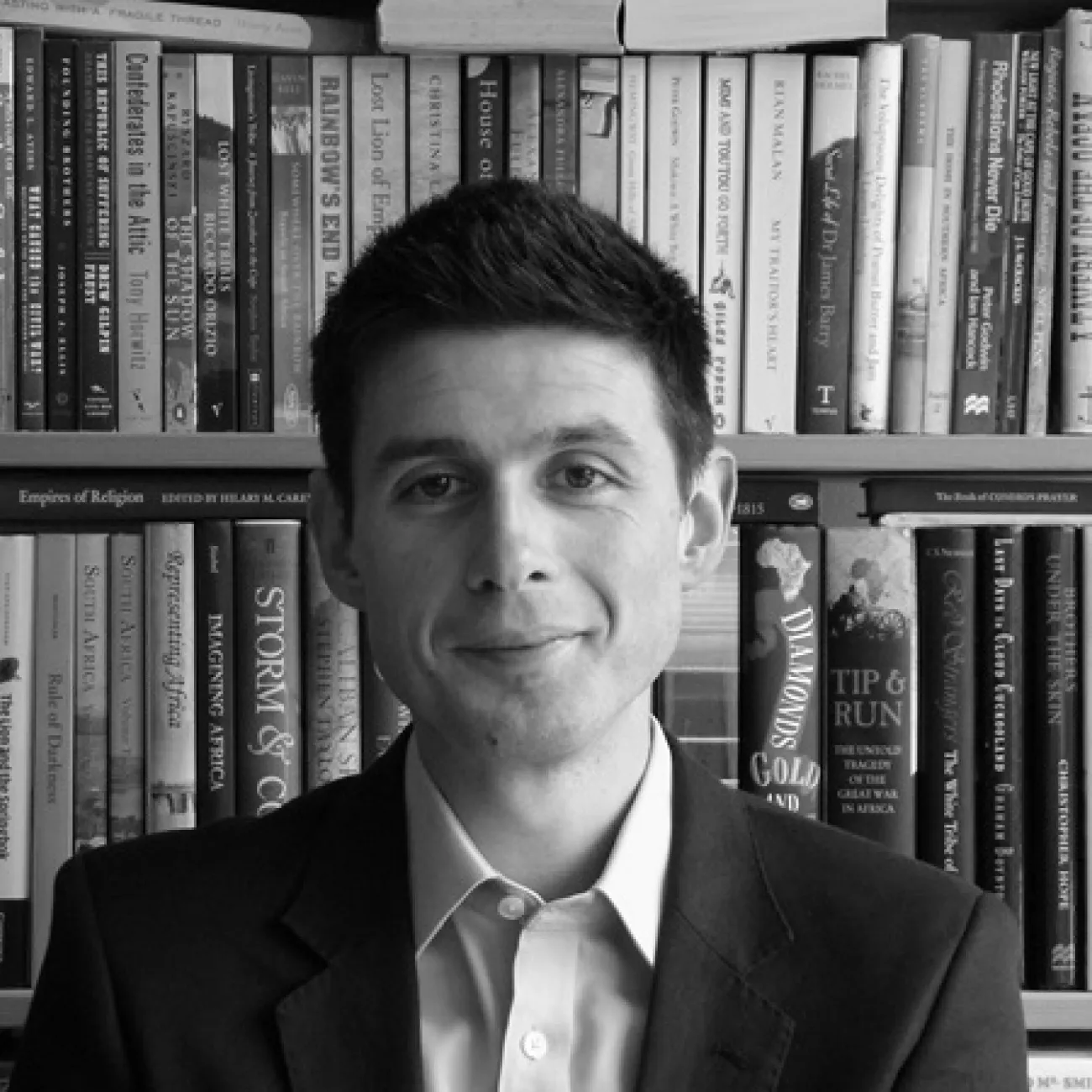
Dr. John McAleer is an Associate Professor of History at the University of Southampton. He specializes in British imperial and maritime history, focusing on the 18th and 19th centuries, the East India Company, and the role of islands in empire. His research explores global maritime networks, colonial encounters, and the representation of empire through material culture and museums. He currently teaches courses on British imperialism, maritime history, and museum studies. Previously Curator of Imperial and Maritime History at the National Maritime Museum, McAleer maintains roles with the Hakluyt Society, SS Great Britain Trust, and Bristol Archives. He has held fellowships from the Royal Historical Society and the Royal Asiatic Society. His major publications include works on Atlantic voyages, East India Company history, and the interplay between exploration and collecting practices. McAleer supervises PhD students in imperial history and collaborates on research projects funded by the Arts & Humanities Research Council and the British Academy. He has received awards for teaching excellence and scholarly contributions, including the Caird Medal and Muriel McCarthy Fellowship.
Steven Ma is a Professor at Clemson University's College of Engineering, Computing and Applied Sciences. He is affiliated with the Department of Mechanical Engineering, though the department name is not explicitly mentioned. His contact information includes an office in 222 Fluor Daniel Building, phone number (864) 656-5537, and email sma22@clemson.edu. Education : Ph.D. from State University of New York at Buffalo (1991), MS from Beijing Polytechnic University (1986), BS from Beihang University (1983). Steven Ma's research interests focus on engineering disciplines, specifically Autonomous Wheeled Vehicles, Machine Design and Manufacturing, Hydraulics and Electro-Hydraulic Control, Welding & Fatigue, and Bolted Joints Design. These areas highlight his expertise in mechanical systems and manufacturing technologies. Analysis of his publications reveals a secondary focus on historical and political topics, particularly Russia's Great War and Revolution, the Russo-Japanese War, and transnational cultural exchanges. His work explores themes like military finance, ideological propaganda, and the global impact of capitalism and revolutionary movements. As of the latest data, there are no documented scientific awards or student advisement records for Steven Ma. His affiliations and contributions to engineering research remain central to his academic profile.
Cristina Dondi serves as a Full Professor in the Department of Modern Literature and Culture at Sapienza University of Rome's Faculty of Arts and Philosophy. Her academic work centers on the history of the book with specialized expertise in incunabula (15th-century printed books), early book trade networks, and digital humanities methodologies. She teaches the "History of the Book" course for Global Humanities students, delivering lectures in person at Rome's Faculty of Arts and Philosophy during the 2024-2025 academic year. Her research spans material evidence of early printed books, Venetian printing practices, Dante's textual circulation, and library transformations during religious secularization. She pioneers digital approaches through projects like 15cBOOKTRADE and CERL, developing visualization tools for historical book movement data and collaborative digital infrastructures. Her work bridges traditional book history with computational analysis, emphasizing how physical artifacts reveal cultural and commercial networks. Analysis of her 2021-2023 publications shows consistent integration of digital tools with historical scholarship, particularly regarding Italian incunabula circulation and MEI database applications. She frequently examines Venetian commercial practices, Dante's reception, and collaborative digital resource creation, demonstrating how visual analytics transforms understanding of pre-modern book economies. Scientific Awards: No specific awards were documented in the provided sources. Professor Dondi leads significant research initiatives including the 15cBOOKTRADE project and Consortium of European Research Libraries (CERL) collaborations, which involve multi-institutional teams developing digital ecosystems for book historical research. These projects generate scholarly publications, digital tools, and educational resources while securing substantial research funding for infrastructure development and international conferences. She actively shapes the CERL digital ecosystem and 15cBOOKTRADE project framework, fostering interdisciplinary collaboration between historians, librarians, and computer scientists. Her current work focuses on expanding Material Evidence in Incunabula (MEI) applications and creating open-access platforms for analyzing early print culture across European collections.
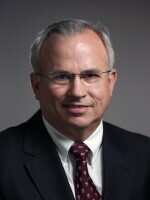
Gregory C. Gray, MD, MPH, FIDSA is a Professor in Infectious Disease Epidemiology at the University of Texas Medical Branch (UTMB) in Galveston, Texas, with appointments across multiple departments including Internal Medicine (Infectious Diseases), Microbiology & Immunology, and Global Health & Emerging Diseases. Dr. Gray has conducted epidemiological studies of infectious diseases for over 25 years across five continents, with a particular focus on occupational disease transmission, especially respiratory viruses. His research has examined farmers, veterinarians, turkey workers, swine workers, poultry workers, horse workers, cattle workers, hunters, and military personnel. He pioneered the Millennium Cohort Study, a prospective cohort study of approximately 300,000 people projected to continue through 2068, and has led numerous large-scale vaccine trials. As a strong advocate for the One Health approach, Dr. Gray has established One Health centers in the USA, Romania, and China, and developed four graduate programs in One Health (PhD, MHS, and certificates). His recent research focuses on zoonotic spillover events, universal influenza vaccines, and coronavirus detection in agricultural settings, with numerous publications in 2024-2025 addressing H5N1 avian influenza, respiratory virus transmission, and environmental health impacts. Selected honors include: Department of Defense Legion of Merit Medal Secretary of Defense Medal for Outstanding Public Service Medal of Honor from Mongolia's Minister of Health The Peace Medal awarded by the President of Mongolia University of Texas Medical Branch Robert E. Shope, MD Professorship Dr. Gray has authored over 350 peer-reviewed manuscripts cited more than 21,000 times (H-index 76). His current research portfolio includes multiple active grants from the USDA, Fogarty International Center, and private industry focusing on zoonotic disease surveillance, influenza vaccines, and coronavirus detection in agricultural settings. He has mentored numerous students and established international collaborations across six continents.
Jeremy Tai is Associate Professor in Modern Chinese History at McGill University, specializing in intellectual and social history from 1900 to present. His research examines gender, political economy, and cultural transformations. Specializations : Modern China, gender and sexuality studies, critical theory, and transnational cultural exchange. Key Publications : Focus on feminism in early 20th-century China and regional capitalism under Nationalist rule. Translated foundational Chinese feminist texts.
Feng Feng is an Assistant Professor in the Department of Biochemistry and Molecular Biology at Oklahoma State University, where he has been employed since August 2020. His research focuses on understanding how plants interact with microbial communities in their rhizosphere under various environmental conditions. Dr. Feng received his Ph.D. in Plant Molecular Biology from Tsinghua University in Beijing, China (2008-2012), followed by an M.S. in Microbiology and B.S. in Biotechnology from Henan Agricultural University in Zhengzhou, China. Ph.D., Plant Molecular Biology, Tsinghua University, Beijing, China (2008-2012) M.S., Microbiology, Henan Agricultural University, Zhengzhou, China (2005-2008) B.S., Biotechnology, Henan Agricultural University, Zhengzhou, China (2001-2005) Dr. Feng's research interests center on plant-microbe interactions, particularly how plants balance immunity and symbiosis signaling pathways when encountering both pathogenic and beneficial microbes in the rhizosphere. His work examines how environmental conditions affect plant decisions to promote or inhibit microbial colonization, with the goal of developing cropping systems that require less chemical fertilizer and are more resilient to climate change. Using molecular, cell biology, genetic, and biochemical approaches, his lab investigates how abiotic environmental factors regulate plant-microbe interactions and how immunity and symbiosis signaling pathways influence broader microbial communities. Dr. Feng's scholarly output shows a consistent focus on plant immunity and symbiosis mechanisms, particularly involving LysM receptor-like kinases and their role in distinguishing between pathogenic and symbiotic microbial signals. His recent work has increasingly emphasized the ecological context of plant-microbe interactions and the potential applications for sustainable agriculture. Dr. Feng serves as an Associate Editor for Frontiers in Microbiology (since 2022) and has editorial roles with several other journals including Frontiers in Plant Science, Horticultural Plant Journal, and iMeta. Associate Editor, Frontiers in Microbiology (2022-present) Editorial Board, Frontiers in Plant Science (2021-present) Editorial Board, Horticultural Plant Journal (2021-present) Editorial Board, iMeta (2021-present) Dr. Feng actively mentors graduate students and postdoctoral researchers, with his lab currently recruiting Ph.D. students and postdocs interested in plant-microbe interactions. He has secured multiple research grants including funding from the U.S. Department of Agriculture and the Oklahoma Center for the Advancement of Science and Technology (OCAST). His laboratory investigates the molecular mechanisms by which plants regulate their interactions with rhizosphere communities, with particular focus on how environmental conditions influence the balance between immunity and symbiosis signaling pathways.
Teresa Bonacci is an Associate Professor in the Department of Biology, Ecology and Earth Sciences at the University of Calabria (UNICAL), where she conducts research and teaches in zoology with a focus on entomology. She is also the Scientific Director of the Zoology Museum within the university's museum system (SIMU). Her academic affiliations include membership in the PhD School of Life Science and Technology and leadership roles in degree program coordination. Laurea in Natural Sciences, University of Calabria PhD in Animal Biology, University of Calabria Socrates/Erasmus Scholarship, University of Kiel, Germany Research Grant (Assegno di ricerca), SSD BIO/05, University of Calabria National Scientific Qualification for Full Professor (I fascia) Her research spans applied and medico-veterinary entomology, forensic entomology, and conservation biology. She investigates saproxylic beetles (e.g., Cucujus spp.), pollinators (bees, flies, beetles), and insect behavior, especially in forensic contexts such as post-mortem interval estimation and myiasis. Her work integrates taxonomy, morphology, ecology, and chemical signaling, often in collaboration with chemists, legal experts, and conservation agencies. She has published extensively in high-impact journals, with over 80 scientific publications and strong citation metrics. The most recent articles reflect a multidisciplinary trend, combining taxonomy, forensic science, biodiversity monitoring, and veterinary entomology. Topics include the discovery of new insect species in Italy, the role of beetles in decomposition, insect damage in cultural heritage, and myiasis in domestic and wild animals. These works highlight her expertise in both fundamental zoological research and practical applications in forensics and conservation. Scientific Contributions: Over 80 scientific publications Scopus h-index: 15; Google Scholar h-index: 20 Key researcher in saproxylic beetle conservation Pioneer in forensic entomology studies in Southern Italy Active collaborator with legal and medical institutions She supervises numerous PhD and master's students and has directed over 90 theses. Her teaching responsibilities include courses in Zoology, Entomology, Forensic Entomology, and Medical-Veterinary Entomology. She is deeply involved in student mentorship, thesis supervision, and academic service, including examination boards and curriculum development. She also leads biodiversity monitoring projects in Calabrian national parks and has contributed to the development of machine learning tools for insect identification. Her research team collaborates with national and international institutions, including the CNR, University of Milan, and forensic pathology units. She leads projects on bioindicators, insect-plant interactions, and the impact of climate change on mountain species. The Zoology Museum under her direction supports both research and public outreach.
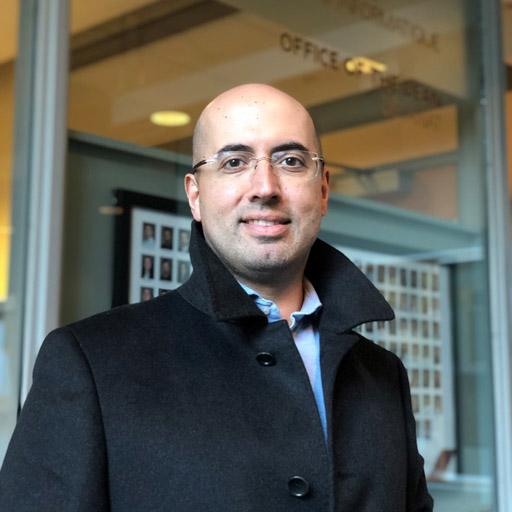
Mahdi S. Hosseini is an Assistant Professor in the Department of Computer Science and Software Engineering at Concordia University and a faculty member of the Applied AI Institute. He holds a PhD from the University of Toronto (2016) and completed a postdoctoral fellowship at UofT, supported by MITACS-Elevate and NSERC fellowships. His research focuses on advancing deep learning and computer vision for computational pathology and healthcare technologies, aiming to develop AI tools for clinical diagnosis. He currently supervises graduate students and has published over 30 papers and two patents. Education: PhD in Electrical and Computer Engineering from the University of Toronto (2016), postdoctoral training at UofT collaborating with Huron Digital Pathology Inc. (Waterloo, Ontario). Research interests include deep learning, computer vision, computational pathology, medical imaging, and AI ethics (P4AI project). His work emphasizes developing explainable AI systems for clinical pathology, biomarker discovery, and efficient learning algorithms. Professional service includes serving as Area Chair for NeurIPS 2023, CVPR 2023-2024, and ECCV 2024. He reviews grants for CIHR, NSERC, and serves on program committees for key conferences (ICCV, CVPR, NeurIPS). Teaching includes courses on applied AI, machine learning, and deep learning for computational pathology at both graduate and undergraduate levels. Awards: MITACS-Elevate Fellowship (postdoc), NSERC Research Funding (2016-2017). His work has led to patents in diagnostic systems and has collaborated with hospitals and pathologists to advance clinical applications. Labs/Teams: Active collaborations with the Applied AI Institute at Concordia, Huron Digital Pathology, and healthcare institutions. Research emphasizes interdisciplinary approaches between computer science and clinical medicine.
Zhao Baisheng is a Professor and Chair of the Institute of World Literature at Peking University, where he also serves as Secretary General for Cross-Cultural Studies. During Summer Semester 2005, he was a Guest Professor at Johannes Gutenberg University Mainz, affiliated with the Department of English and Linguistics. His research focuses on cross-cultural dynamics, East-West interactions, and global literary frameworks. He led a seminar titled "Cross-culturalism – Toward a World Literature and Culture" , examining themes like immigration, colonization, and globalization through works by Defoe, Eliot, Hu Shi, and others. His lecture series explored topics such as Westernization in 20th-century China, the role of Marxism in Chinese contexts, and representations of China in media. Zhao’s academic contributions include Theory of Auto/Biography (2003), analyzing auto/biographical forms in cultural contexts. His work bridges literary theory with interdisciplinary cross-cultural studies.
Alex Liu is a Researcher at the Department of Earth Sciences within the University of Cambridge. He specializes in palaeobiology , focusing on the origin and early evolution of animals, particularly the Ediacaran biota (~579–539 million years ago), and their co-evolution with Earth's environment. Research Focus: Refines understanding of animal body plan evolution, taphonomy, sedimentology, and macroevolutionary trends. Methodologies: Combines fieldwork, experimental studies, petrology, phylogenetics, and big-data analyses. Collaborations: Works with international museums and research teams on fossil sites in Namibia, Canada, and Brazil. Additional Interests: Explores meiofaunal evolution, paleogeography, paleoclimate, and conservation paleobiology. He supervises Cambridge NERC Doctoral Landscape Awards (DLA) projects and welcomes student contributions to taxonomic, paleoecological, and analytical studies.
Chiu Ping Cheng is a Professor in the Department of Biology at the University of Minnesota, USA, specializing in Molecular Biology and Plant-Microbe Interactions . With over two decades of research on Ralstonia solanacearum and its interactions with solanaceous crops, Dr. Cheng has pioneered studies on plant defense mechanisms against bacterial wilt, regulatory gene functions, and biocontrol agent applications. Current research: Plant-pathogen interactions Special techniques: Genomic screening, bacteriophage-derived proteins Key pathogens: Ralstonia solanacearum, Pectobacterium carotovorum His recent publications (2024) explore tomato cultivar resistance variation , NADPH oxidase-effector interactions , and phenylpropanoid metabolism in wild mungbean . Though no formal scientific awards are listed, his work has been featured in leading journals like Plant Cell & Environment and New Phytologist . Dr. Cheng operates from the Life Science Building R942 laboratory.
Ferran Garcia-Pichel is a Regents Professor and Center Director at Arizona State University’s School of Life Sciences, affiliated with the Biodesign Center for Fundamental & Applied Microbiomics, Center for Biodiversity Outcomes, Water Institute, and Global Drylands Center. He holds a PhD in Microbiology from the University of Oregon (1999) and has been a faculty member at ASU since 1999. His research focuses on microbial adaptations in arid environments, including biogeochemical cycling, soil crust formation, and sustainable land restoration. Key interests include cyanobacterial sunscreen compounds (scytonemin), carbonate dissolution mechanisms, and hydrogen production. Teaching responsibilities include advanced microbiology, microbial ecology, and geomicrobiology courses such as MBB 495 Undergraduate Research and BIO 493 Honors Thesis. Awards span from the 2021 Regents Professor distinction to the 2023 Sperry Award for restoration science. His lab explores interdisciplinary approaches to study microbial communities in desert soils, marine intertidals, and atmospheric dust, with applications in climate resilience and biomedicine. Research highlights include biocrust restoration strategies, microbial nitrogen fixation networks, and the role of GABA/Glu signaling in spatial organization. Collaborations address global challenges like fugitive dust mitigation and carbon sequestration. The lab is based at the Biodesign Building B on ASU’s Tempe campus.
Océane Martin is a Lecturer in Clinical Microbiology at the University of Bordeaux, where she conducts her research at the Institute of Cellular Biochemistry and Genetics, a joint unit of CNRS and the university. Her work bridges clinical microbiology, oncology, and nutritional sciences. Research Interests: Océane Martin specializes in the role of the microbiota in cancer development, particularly focusing on: Links between processed meat consumption, nitrites/nitrates, and colorectal cancer. The role of pathogenic bacteria like Helicobacter pylori and Salmonella in gastric and colorectal cancers. The gut-brain axis in glioblastoma, including how the microbiota influences tumor progression and therapeutic resistance through the GLIOBIOTA project. Intratumoral microbiota in brain tumors and their functional implications. Publication Trends: Her recent publications reflect a strong focus on bacterial genotoxins, DNA damage responses, host immune modulation, and dietary factors in carcinogenesis. Her work integrates molecular microbiology with immunology and cancer biology, often using in vivo models to study host-pathogen dynamics. Scientific Contributions: Member of ANSES working group (2020–2022) on nitrite salts in food. Invited expert at the French National Assembly on nitrite-related health risks. Regular contributor to public science communication via The Conversation and national media. Advising and Grants: While no formal students are listed, her leadership in the GLIOBIOTA project suggests active mentorship and grant-funded research. Her involvement in national expert panels and interdisciplinary projects indicates sustained funding and collaborative research networks. Labs and Teams: She conducts research at the Institute of Cellular Biochemistry and Genetics (University of Bordeaux / CNRS), contributing to teams focused on infection biology, microbiota, and cancer. Her work aligns with translational research initiatives linking diet, microbiology, and oncology.
Sören Stark is a Professor of Central Asian Archaeology at New York University's Institute for the Study of the Ancient World (ISAW). He holds roles as Vice Director (Spring/Summer 2025 & AY2025-26) and Chair of the Visiting Scholar Search Committee (AY2025-26). His expertise focuses on the archaeology of Central Asia, particularly Hellenistic and Late Antique Sogdiana, and the dynamics between agrarian societies and nomadic groups. Stark received his PhD in 2005 from Martin-Luther-Universität Halle-Wittenberg and has conducted extensive fieldwork in Tajikistan, Uzbekistan, and the Bukhara oasis. Key projects include directing excavations at Bashtepa (since 2015), investigating agro-pastoral communities in Western Sogdiana, and analyzing Bronze/Iron Age petroglyphs and Iron Age kurgans. His research integrates archaeological data with historical sources, emphasizing regional connectivity and cultural interactions during the Hellenistic and post-Hellenistic periods. Stark co-edits Brill's Handbook of Oriental Studies and has published widely on topics such as Türk archaeology, Sogdian material culture, and Greco-Bactrian coinage. Recent work highlights include the 2019 publication on Bashtepa's fortifications and terracotta figurines, alongside studies on urbanization patterns in Bukharan Sogdiana. His field methodologies combine stratigraphic excavation, ceramic analysis, and radiocarbon dating to reconstruct socio-environmental histories. Laboratory and team collaborations involve the Uzbek-American Expedition in Bukhara (UzAmEB) and the NYU Abu Dhabi archaeological initiative. Stark's research bridges ancient history and archaeology, addressing questions of cultural identity, political frontiers, and subsistence strategies in Central Asia's crossroads.
Alexander J Sundermann serves as an Assistant Professor in the Department of Epidemiology at the University of Pittsburgh School of of Public Health. His research focuses on leveraging pathogen genomic surveillance and machine learning to revolutionize infection prevention practices in healthcare settings, with demonstrated impacts on outbreak detection accuracy and intervention speed. Education: 2013: BS in Microbiology, University of Rochester 2014: MPH in Infectious Diseases and Microbiology, University of Pittsburgh 2022: DrPH in Epidemiology, University of Pittsburgh Dr. Sundermann's work centers on whole-genome sequencing of pathogens to detect healthcare-associated transmission invisible to traditional methods. His research demonstrates how genomic surveillance reveals hidden outbreaks of vancomycin-resistant Enterococcus (VRE) and mucormycosis, directly linking colonization to clinical outcomes like ICU admission and mortality. He pioneers machine learning tools that analyze electronic health records to identify transmission routes, creating more efficient outbreak investigation frameworks across hospital networks. His publication portfolio (2019-2025) shows a clear trajectory toward integrated genomic-clinical surveillance systems, with recent work quantifying clinical and economic impacts while addressing implementation barriers. This interdisciplinary approach bridges epidemiology, genomics, and data science to transform infection prevention protocols. Scientific Awards: No awards listed in available information. Advising and Grants: While specific advisees and grant details aren't provided, his multi-institutional collaborations suggest active mentorship within genomic epidemiology research teams. His work with the National Healthcare Safety Network indicates engagement with major public health surveillance infrastructure. Labs and Teams: Dr. Sundermann leads cross-functional teams including microbiologists, data scientists, and clinicians across multiple healthcare systems. His UPMC outbreak investigations and national linen contamination studies demonstrate operational frameworks for real-time genomic surveillance implementation in complex hospital environments.