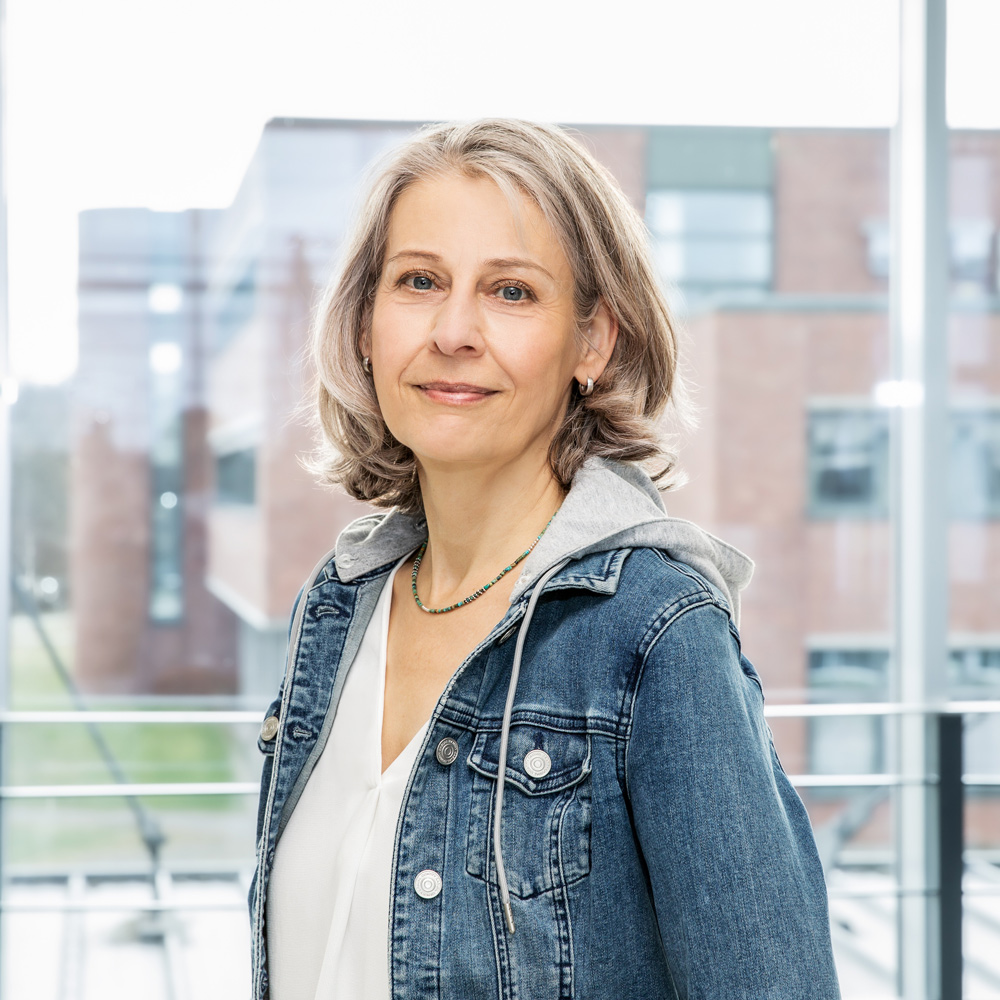
Prof. Dr. Eva Spies is a Professor for the Study of Religion with Focus on Africa at the University of Bayreuth within the Faculty of Humanities & Social Sciences . She holds a PhD in Cultural Anthropology from the University of Mainz and leads the Research Section Moralities in the Africa Multiple Cluster of Excellence (EXC 2052). Key Roles : Principal Investigator, Bayreuth International Graduate School of African Studies (BIGSAS) Vice Dean of Research Co-founder, German Association for the Study of Religion's Africa working group Research Interests span religious plurality, development cooperation, and transformative practices. She coined the concept of religious engineering to analyze how religious resources shape social/political worlds. Regional expertise in Niger/West Africa and Madagascar/Indian Ocean , with focus on: South-South mission Religion and pandemic response Intercultural hermeneutics Epistemological conflicts Material culture in development Projects : Africa Multiple Cluster of Excellence (2025): "Religious engineering. The making of moralities, development and religion in Niger" Humboldt Research Hub (2021): "Fighting pandemics with religion?" (with Moi University and University of Zimbabwe) Education : PhD in Cultural Anthropology, University of Mainz
Albrecht Fuess is a Professor of Islamic Studies at Philipps University of Marburg since 2010, specializing in Middle Eastern History (13th–17th centuries), Mamluk socio-cultural dynamics, and contemporary European Islamic discourses. His research spans historical continuity in Ottoman-Mamluk-Safavid interactions, Islamic youth cultures, and Mediterranean geopolitics. Research Focus: Medieval Islamic history, Transottomanica mobility studies, Islam in Europe, and cultural integration of Muslim migrants. Awards: Le Studium Fellowship (2007–2009) at Université de Tours. His publications emphasize military-economy interplay, legitimacy through religious narratives, and resource management in empires, with a focus on Mamluk and Ottoman transformations. He has advised on doctoral projects covering topics like Islamic welfare, Arabic ʾAmālī literature, and Cypriot-Ottoman relations. Leadership: Co-coordinator of Transottomanica (DFG-SPP 1981), member of ANR and DAAD committees, and liaison professor for the German National Academic Foundation. Editorial Roles: Co-editor of 'Transottomanica' and 'Muslim Worlds' series, and advisory board member for journals in Cairo, Paris, and Leuven.
Prof. Dr. Sebastian Conrad holds the Chair of Modern History at Freie Universität Berlin , specializing in Global History , (Post-)colonial History , and Intellectual History . He joined the faculty in 2010 after teaching at European University Institute in Florence and serving as visiting scholar at institutions including NYU Abu Dhabi and The New School, New York. Director of MA "Global History" (FU Berlin/Humboldt University joint program) Director of Graduate School "Global Intellectual History" Principal Investigator, Cluster of Excellence "Temporal Communities" (2024) Research Interests focus on transnational historical frameworks , globalization of historical narratives , and postcolonial historiography . His latest book Die Königin: Nofretetes globale Karriere (2024) analyzes cultural globalization through Nefertiti's iconography, while his current project explores global history of bodily aesthetics and identity formation since the 19th century. Recent Publications include: 2022: "Empire and Nationalism" (American Historical Review) 2021: "Globalizing the Beautiful Body" (Journal of World History) 2020: "Greek in Their Own Way" (American Historical Review) Scientific Honors : Elected member, Berlin-Brandenburg Academy of Sciences and Humanities (2024) Elected member, Academia Europaea (2024) Finalist, German/NDR non-fiction book awards (2024) for Nefertiti study Academic Leadership includes editorial roles at Geschichte und Gesellschaft , Past & Present , and Globalgeschichte book series (Campus Verlag). His work bridges historical analysis with contemporary debates on memory, identity, and global cultural dynamics.
Prof. Dr. Barbara Mittler is Professor of Sinology at Heidelberg University and founding co-director of the Heidelberg Centre for Transcultural Studies (CATS) and the Cluster of Excellence 'Asia and Europe in a Global Context.' Her research explores Chinese cultural policy, print media, musicology, visual culture, and transcultural studies. Mittler's scholarly contributions include groundbreaking work on Cultural Revolution culture, early Chinese print media (particularly women's magazines), and the transcultural flows of cultural production. Her current projects examine Mao as a global icon and comparative studies of Asian 'fathers of the nation.' Her publication record demonstrates consistent focus on cultural transmission mechanisms, with recent research developing transcultural frameworks for understanding cultural exchange and historical analysis. Publications reflect an interdisciplinary approach combining visual analysis, media studies, and historical methodology. Mittler has received numerous honors including the Fairbank Prize, Heinz-Maier-Leibnitz Prize, and memberships in the Leopoldina and Heidelberg Academy of Sciences. She leads major initiatives like the China-Schul-Akademie developing educational materials about China for German schools.
Max Planck Institute for Biological IntelligenceGermany
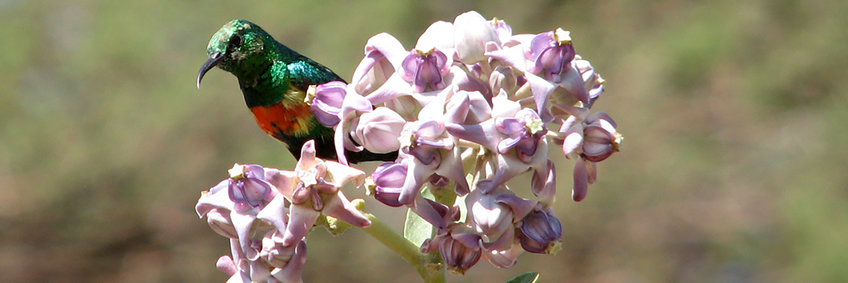
Maude Baldwin is the Director of the Evolution of Sensory and Physiological Systems department at the Max Planck Institute for Biological Intelligence. Her research focuses on the molecular and physiological mechanisms underlying sensory receptor evolution in vertebrates, particularly in birds. Education : Ph.D. from Harvard University (Department of Organismic and Evolutionary Biology, 2007-2014); B.A. from New York University (Gallatin School of Individualized Study, 2005). Research Interests include: Evolution of taste receptors, such as the repurposing of savory receptors for sweet detection in hummingbirds. Convergent evolution in sensory systems across vertebrates. Integrative approaches combining molecular methods, cell culture, and behavioral studies. Impact of dietary shifts on ecological and physiological adaptations. Publication Trends reveal a focus on comparative genomics , protein evolution , and sensory system adaptation , with specific attention to bird taste receptors , gene loss , and echolocation genetics . Labs & Teams : Baldwin leads a multidisciplinary team at the Max Planck Institute, recruiting researchers in comparative genomics , organoid technology , and vertebrate natural history . The group investigates sensory-diet coevolution and physiological trade-offs.
Harald Fuess is a Professor of Cultural Economic History at the Heidelberg Centre for Transcultural Studies since 2009. He holds a Ph.D. from Harvard University and B.A. from Princeton University , with prior teaching roles at the University of Sheffield, Sophia University, and visiting appointments at Oxford, Duisburg-Essen, Columbia, and Tokyo University. He serves as the Erasmus Coordinator for Asian Studies and as University Scientific Coordinator of the Hexagon Alliance . Education: Princeton University – B.A. Harvard University – M.A., Ph.D. His research spans modern Japanese history , gender dynamics , transcultural economic relations , and Eurasian cultural flows . Publications focus on Japan's legal sovereignty, consumption patterns, and the Meiji Restoration's global impact. Key academic contributions include leadership roles such as President of the European Association for Japanese Studies (2008-2011) and ongoing membership in its Executive Council (since 2000) . He has held administrative positions including Director of the Cluster Graduate School Transcultural Studies (2012-2017) and Speaker for Research Area C "Health and Environment" (2009-2012) . Recent publications analyze topics ranging from historiography of the senses to colonial legal frameworks in East Asia. His work bridges historical analysis with contemporary issues like tourism's economic impact and intellectual property evolution in transnational contexts.
Prof. Dr. Ulrike Freitag is Director of the Leibniz-Zentrum Moderner Orient (Berlin) and holds a special professorship in Islamic Studies at Freie Universität Berlin. Her research focuses on social and cultural history of the Arab world, urban history, and transregional connections in the Indian Ocean. She has directed major projects like 'An Oasis Facing Globalisation: Hegra’s History since the 19th Century' and authored seminal works such as A History of Jeddah . Education: Habilitation (Islamic Studies, 2002, Bonn), PhD (1991, Freiburg), MA (1987, Freiburg). Key research stays include Damascus (1984-85, 1987-90), Yemen, and Southeast Asia. Research Interests: Urban development, migration networks, Ottoman heritage, Saudi state formation, and transregional Islamic dynamics. Current projects explore Jeddah’s urban history and transregional entanglements in the Arabian Peninsula. Engagement: Editorial roles for Journal of Arabian Studies , ZMO Studien , and advisory boards for institutions like the Leibniz Institute of European History. Awarded fellowships from Käthe-Hamburger Kolleg and LUCIS. Supervised over 20 doctoral theses on topics ranging from Ottoman governance to Gulf intellectual history. Publications: Over 150 articles, 8 monographs, and 6 edited volumes. Her work blends archival research with transregional perspectives, emphasizing marginalized voices and material culture. Recent focus on pandemic impacts and Saudi-Iranian geopolitical dynamics.
Dr. Fabian Schulz is a Senior Researcher in Ancient History at the University of Tübingen, where he works in the Department of History within the Faculty of Humanities. He leads a prestigious Junior Research Group under the Emmy Noether Programme of the German Research Foundation (DFG), titled 'Power and Influence: Influencing Emperors between Antiquity and the Middle Ages.' His academic profile also includes association with the Collaborative Research Center (SFB) 923 'Threatened Order - Societies under Stress' and active participation in the 'Tübingen Theosophy' research group. Previously, he contributed to the Heidelberg Academy of Sciences and Humanities project on John Malalas' Chronicle and the University of Tübingen's DFG project 'East and West 400-600 AD.' Dr. Schulz earned his PhD in Classics from Freie Universität Berlin (2006-2010), where he also served as a teaching assistant. During his doctoral studies, he was a Pensionnaire étranger at the École Normale Supérieure Paris. Prior to that, he completed an MA equivalent degree in Classics at Freie Universität Berlin, with time spent as a visiting student at the University of Oxford (1999-2005). His early career included teaching Latin and Greek at a grammar school in Lübeck (2006). His research specializes in power structures and influence mechanisms in ancient societies, with particular focus on how advisors shaped imperial decisions in Late Antiquity. He has made significant contributions to understanding councils of elders in Archaic Greece (especially the Spartan Gerousie), Byzantine chronography (particularly John Malalas' works), and the complex dynamics between Eastern and Western Roman empires during the 5th and 6th centuries. His methodological innovation lies in applying modern sociological models of interpersonal influence to historical analysis of ancient political culture, bridging literary representation with political reality in pre-modern monarchical states. Young researchers award for 'Ratgeber, Experten, Manipulatoren: Einfluss als Machtfaktor und Diskursobjekt in der Antike' As principal investigator of his Emmy Noether project, Dr. Schulz has secured substantial research funding from the German Research Foundation. His collaborative work includes multiple edited volumes on Late Antique history and Byzantine chronography, reflecting his strong international scholarly network. He currently serves as a deputizing member (non-professorial academic staff) on the faculty board of Humanities at the University of Tübingen. His research often intersects with contemporary concerns about power dynamics, political influence, and historical memory, as evidenced by his work on video game representations of ancient history. Dr. Schulz is an active contributor to the online commentary project on John Malalas' chronicle, specifically editing sections of Book XVIII. His work frequently involves detailed textual criticism and analysis of historical sources, with particular attention to how narratives are transmitted and reinterpreted across different cultural contexts. His scholarly approach combines philological precision with broader historical and sociological perspectives.
Prof. Dr. Thomas Duve is a Director at the Max Planck Institute for Legal History and Legal Theory and holds the Professorship for Comparative Legal History at Goethe University Frankfurt am Main. His research focuses on global legal history, particularly the interplay between secular and religious knowledge in the Iberian empires of the early modern period, and the method of legal history and comparative law. Director, Max Planck Institute for Legal History and Legal Theory Professor of Comparative Legal History, Goethe University Frankfurt Co-editor of 'The School of Salamanca Working Paper Series' Duve’s research explores normative knowledge production, colonial law, and the glocalization of legal norms. He has led projects such as 'Glocalizing Normativities' and 'Mapping Conflicts in Iberian Worlds', emphasizing cross-cultural legal exchange and historical normativity regimes. His recent publications (2018–2025) address global legal history, transnational legal practices, and the role of canon law in colonial settings. Key themes include legal pluralism, indigenous rights, and the translation of legal norms across cultures, with methodological innovations in comparative and transnational legal studies. Duve collaborates extensively with international scholars and institutions, including the Max Planck Partner Group and the Oxford Handbook of Legal History. His work bridges European and Latin American legal traditions, offering critical insights into legal globalization and postcolonial legal analysis.
Dr. Takuma Melber is a Senior Lecturer at Heidelberg University's Karl Jaspers Centre, where he coordinates the MA Transcultural Studies program. His research examines military history with a focus on Japanese occupation policy in Southeast Asia during World War II. Melber's work investigates complex dynamics of collaboration and resistance in occupied territories, particularly Malaya and Singapore. His research combines military history with social history approaches to analyze occupation policies and local responses. He has received recognition for his contributions to military history, including the Wilhelm-Deist-Preis and Förderpreis für Militärgeschichte awards. Melber maintains international research collaborations and has held visiting positions at Kyushu University, Kyoto University, and Osaka University to advance his studies on Japanese wartime policies.
Rhenish Friedrich Wilhelm University of BonnGermany
Karoline Noack is a full Professor of Ancient American Studies and Ethnology at the Institute of Archaeology and Cultural Anthropology , University of Bonn, where she also directs the BASA Museum (Bonn Collection of the Americas). She has held this position since 2009 and is a leading scholar in Andean studies, museum ethnology, and colonial Latin American history. Her research interests are deeply interdisciplinary, focusing on: The Inca state and early colonial Andes, particularly in Peru, Bolivia, and Mexico Transculturation and gender in colonial contexts The history of ethnological knowledge, especially in the GDR Museum studies, collection ethics, and the decolonization of ethnographic museums Material culture and provenance research Her recent scholarly output centers on dependency and mobilization in the Inca Empire, the global history of resources (like cotton and coca), and the role of museums in knowledge production. She has led major projects such as 'Balancing the Center and the Local' in Cochabamba and the KOSMOS collaborative project on object-based knowledge. Her publications span museum ethics, colonial legal history, and transcultural exchange. Karoline Noack has received significant recognition, including: Membership in the German Archaeological Institute Fellowships from the Volkswagen and Gerda Henkel Foundations Membership in the DFG Review Board Leadership roles as Spokesperson for the Transdisciplinary Research Area 'Present Pasts' and Chair of BASS e.V. She advises and mentors students in ethnology and archaeology, and her work involves extensive collaboration with international scholars and institutions. Her research is supported by major German funding bodies and is published in leading academic venues. She is also deeply involved in public engagement through museum curation and exhibitions.
Prof. Dr. Ulrike Freitag is a distinguished scholar in Islamic Studies and social history of the Arab world, holding a Professorship at Freie Universität Berlin and serving as Director of the Leibniz-Zentrum Moderner Orient (ZMO) . Her work bridges urban history, transregional Islamic networks, and Arabian Peninsula studies within Indian Ocean and Red Sea contexts. Education : PhD in Islamic Studies (Freiburg, 1991), Habilitation (Bonn, 2002) Research : Focus on Ottoman urban violence, Saudi state formation, Hadhrami diaspora, and historical urbanism in Jeddah Her supervision of PhD projects spans topics from Moroccan Sufi sanctußen to Yemeni Jewish communities. Recent scientific awards include fellowships at Leiden University and Käthe-Hamburger Kolleg. She contributes to public discourse through Tagesspiegel op-eds and international conferences.
Max Planck Institute for the History of ScienceGermany
Dagmar Schäfer is a leading historian of science and technology, serving as Managing Director of the Max Planck Institute for the History of Science (MPIWG) and holding the Chair of China Studies and History of Technology at the University of Manchester (2011). She directs Department III: Artifacts, Action, Knowledge at MPIWG since 2013 and holds Honorary Professorships at Technische Universität Berlin (History of Science and Technology) and Freie Universität Berlin (China Studies). Her research spans the history of Chinese technology (Song-Ming dynasties), material culture, and knowledge systems, emphasizing artifacts' role in scientific diffusion. Doctorate (1996) and Habilitation (2005) in Sinology and History of Science Guest Professorships: Shanghai Jiao Tong University (2017), IAS Princeton (2019), European University Institute (2022) Her seminal work, The Crafting of the 10,000 Things (2011), explores 17th-century Chinese knowledge systems, earning the Pfizer and Levenson Prizes. Recent contributions focus on knowledge ownership (co-edited Ownership of Knowledge , MIT Press 2023) and plurilingual scholarship in Eurasia (co-edited Brill 2023). Her 2020 Leibniz Prize recognized her innovative approaches to global cultural studies. Publications analyze comparative technological paradigms, local knowledge in historical contexts, and transcultural artifact analysis. She is central to the Kn/Own/Able project challenging intellectual property norms in knowledge dissemination.
Catholic University of Eichstätt-IngolstadtGermany
Prof. Dr. Isabelle Stauffer holds the Professorship for Modern German Literature at the Catholic University of Eichstätt-Ingolstadt , where she also serves as Vice Dean of the Faculty of Languages and Literature and Deputy Director of the Center for Religion, Church, and Society in Change (ZRKG) . She co-leads the ZRKG Research Field III on "Religiosity in Contemporary Transformation Processes" and examines intersections of literature with gender/queer studies , postcolonial theory , and cultural history of gallantry . Studied at University of Zurich and Humboldt University Berlin Doctorate (2006) and Habilitation (2015) from Johannes Gutenberg University Mainz Previously held positions at Goethe University Frankfurt, Philipps University Marburg, and Saarland University Her research spans early modern to contemporary German literature , with specializations in intermediality (film, digital media), epistolary culture , and dandyism/fashion history . Current projects include organizing the 2025 IVG congress panel "Figures of Crisis – Crisis of the Figure" and editing the complete works of Aurora von Königsmarck. She has published extensively on topics including: Postcolonial transformations in early modern texts Religious discourse in contemporary literature Intermedia reflexivity in digital age narratives Queer performativity in historical and modern contexts Translation as cultural transfer mechanism Surface aesthetics in cinema and art
Darold Cuba is an intellectual historian and political scientist affiliated with the Department of History at the University of Cambridge. He serves as a Teaching Fellow at the Global History Lab (GHL) and a Research Associate at the Cambridge Black Advisory Hub (CamBAH). As a founder of multiple initiatives including MarronageOrg, Oxbridge Africas (OA), the Cambridge AntiRacism Forum (CARF), Cambridge Enterprise's CRoSS+Hub, and the Cambridge Histories of Marronage (CHoM) Workshop series, he maintains significant influence in academic and social justice circles. His research focuses on the concept of "Landed Blackness" and "United States Post Emancipation Marronage (USPEM)," examining how Freedom Colony Founding Families (FCFFs) in the United States from 1865 to 1900 created autonomous Black communities through land ownership, strategic worship traditions, and collective governance. His work engages deeply with anticolonial, postcolonial, and decolonial scholarship, drawing on theorists like Frantz Fanon, Edward Said, Homi Bhabha, Gayatri Chakravorty Spivak, and Linda Tuhiwai Smith. By applying Michel Foucault's concept of the "regime of truth," Cuba investigates how Black communities created their own truths to resist systemic white supremacy and institutional racism. Cuba serves on the Fairfield Foundation's Family Circle Leadership Group's Executive Committee and is a descendant of indigenous Native AmerIndian, African, and European communities from Tsenecommacah (Gloucester County in the Virginia Tidewater region). His scholarship connects historical freedom colonies to contemporary Black political thought, emphasizing their continued relevance in modern movements for reparations and racial justice.