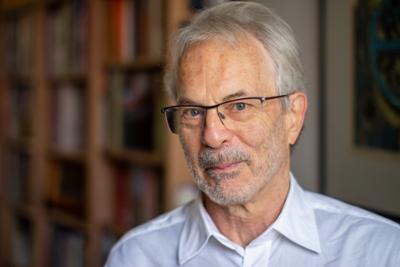
Yannik ThiemView profile
Associate Professor
Yannik Thiem serves as an Associate Professor in the Department of Religion at Columbia University, with his office located at 80 Claremont Avenue, Room 206, Mail Code 9610, New York, NY 10027. He is scheduled for academic leave during Fall 2025 and Spring 2026, with office hours available by appointment only. His contact phone number is 212-851-4128. Education: PhD in Rhetoric, University of California at Berkeley (2009) Dr. theol. in Catholic Theology, Eberhard–Karls–Universität Tübingen, Germany (2004) Thiem's research centers on queer and feminist theory, religious studies, political theology, and critical theory, exploring how religion and sexuality function as methodologies for analyzing 'infrastructures of experience'—material convergences of truth and affect that become visible only when disrupted. His work challenges conventional boundaries by treating queerness and religion as irreducible to bodies or traditions, examining their sedimentation through textual, ritual, architectural, and spatial transmissions. He actively develops queer religious studies frameworks to engage broader fields, with current focus on his project Queer Nuisances: Race, Religion, Sex and Other Monsters , which synthesizes queer theory, transfeminism, critical race theory, and European early modern philosophy. His scholarship critically investigates intersections of gender, race, sexuality, coloniality, class, and ability in meaning-making practices. Thiem's publications from 2014-2023 reveal consistent engagement with queer theory's expansion into religious and political contexts, particularly examining whiteness in psychoanalysis, fetishism in materialist politics, knowledge capitalism's affective economies, and Benjamin's theological metaphysics. His work demonstrates a trajectory toward dismantling normative frameworks and analyzing how collective practices shape embodied experience. Scientific awards: None mentioned in the provided text. Thiem mentors graduate students within Columbia's Department of Religion, though no specific advisees are listed. No grant funding details or collaborative research projects are documented in the available materials, with scholarly activity centered on individual theoretical work and departmental affiliations. No dedicated research labs or institutional teams are referenced; his work operates through the Department of Religion's academic structure, emphasizing textual and theoretical analysis over experimental or group-based research environments.