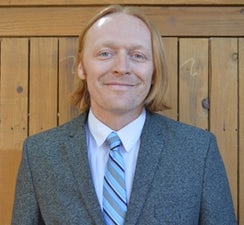
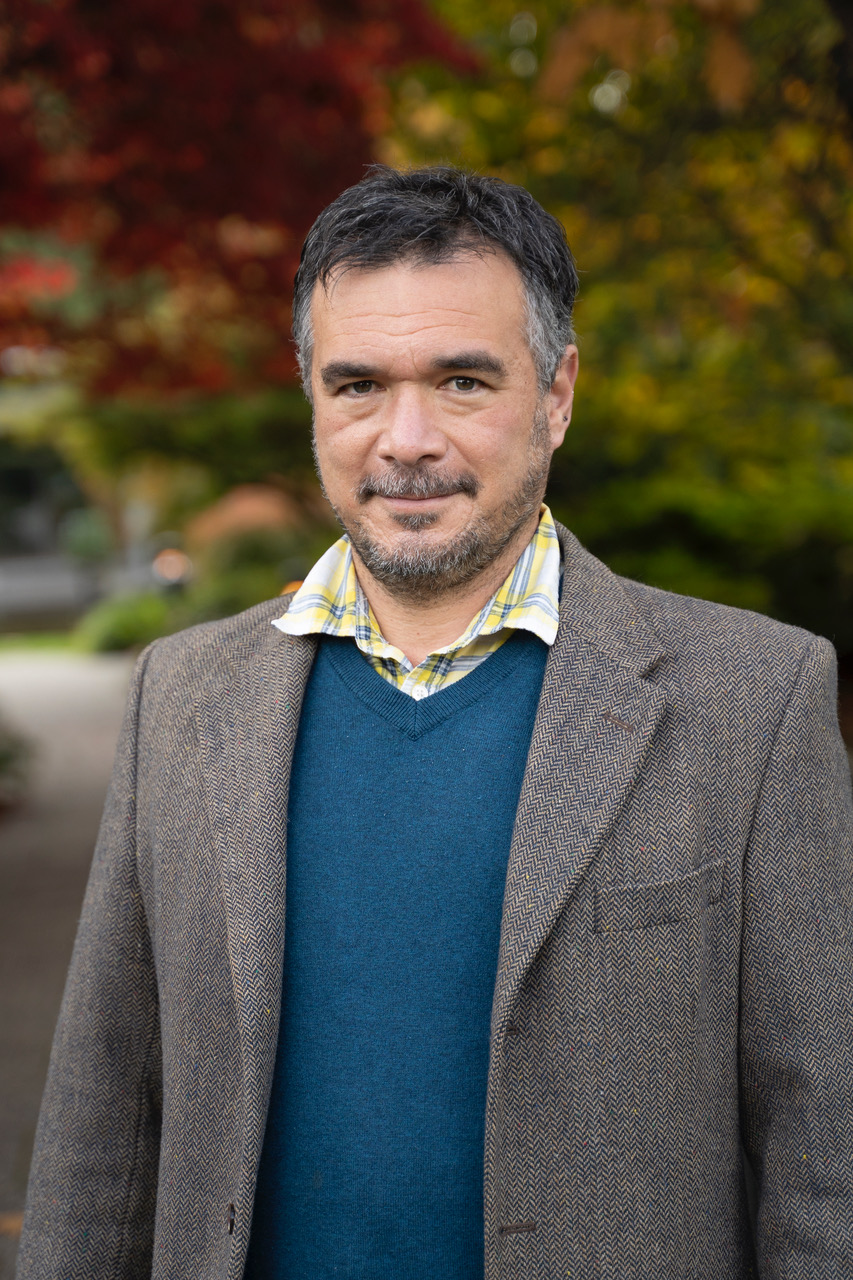
Ben Nobbs-Thiessen is an Assistant Professor of History and Chair of Mennonite Studies at the University of Winnipeg. He holds a PhD from Emory University (2016), with prior roles as a research associate at Arizona State University (2016–18) and a teaching fellow at Washington State University (2018–2020). His research focuses on Mennonite migrations across the Americas, environmental change, and indigenous-settler relations. He teaches courses on Latin American Mennonites and Mennonite Studies II. His research combines archival work, field studies, and oral histories from Bolivia, Paraguay, Mexico, Canada, and the U.S. His 2020 book Landscape of Migration examines Bolivia’s lowland colonization and its intersection with Mennonite and indigenous communities. Current projects include a century-long study of Mexico-Canada Mennonite migrations linked to water scarcity and neoliberal reforms. His publications span journals like Journal of Latin American Studies and Agricultural History , addressing topics like frontier development, foodways, and border conflicts. His transnational approach bridges environmental, migration, and colonial histories. He contributes to interdisciplinary initiatives such as the Newberry Consortium in American Indian Studies and the Centre for Rupert's Land Studies.
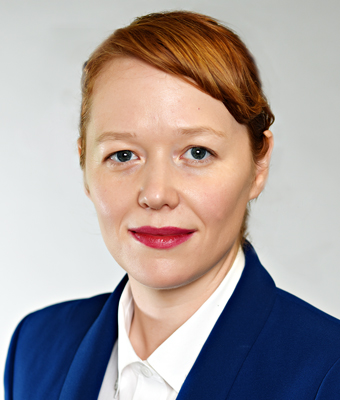
LK Bertram is an Associate Professor in the Department of History at the University of Toronto, specializing in 19th-century North American history with a focus on migration, gender, sexuality, and colonialism. Her work bridges academic research and public engagement, particularly through social media algorithms (TikTok, Instagram) for combating digital disinformation. Clio Prize-winning author (2020) 2022 SSHRC Insight Grant recipient Public history campaign curator (9 million+ views) Her research spans colonial institutions, sex work economies, and material culture, with publications on Icelandic diaspora, Arctic militarization, and immigrant food traditions. She teaches courses like HIS199 History and Social Media and HIS417 Histories of Sex Work , emphasizing hands-on learning via exhibitions and artifact workshops. Recent projects explore how social media algorithms can amplify quality historical data, including the viral @socialforscholars initiative. Her work connects historical narratives to contemporary debates on disinformation, cultural appropriation, and legal frameworks.
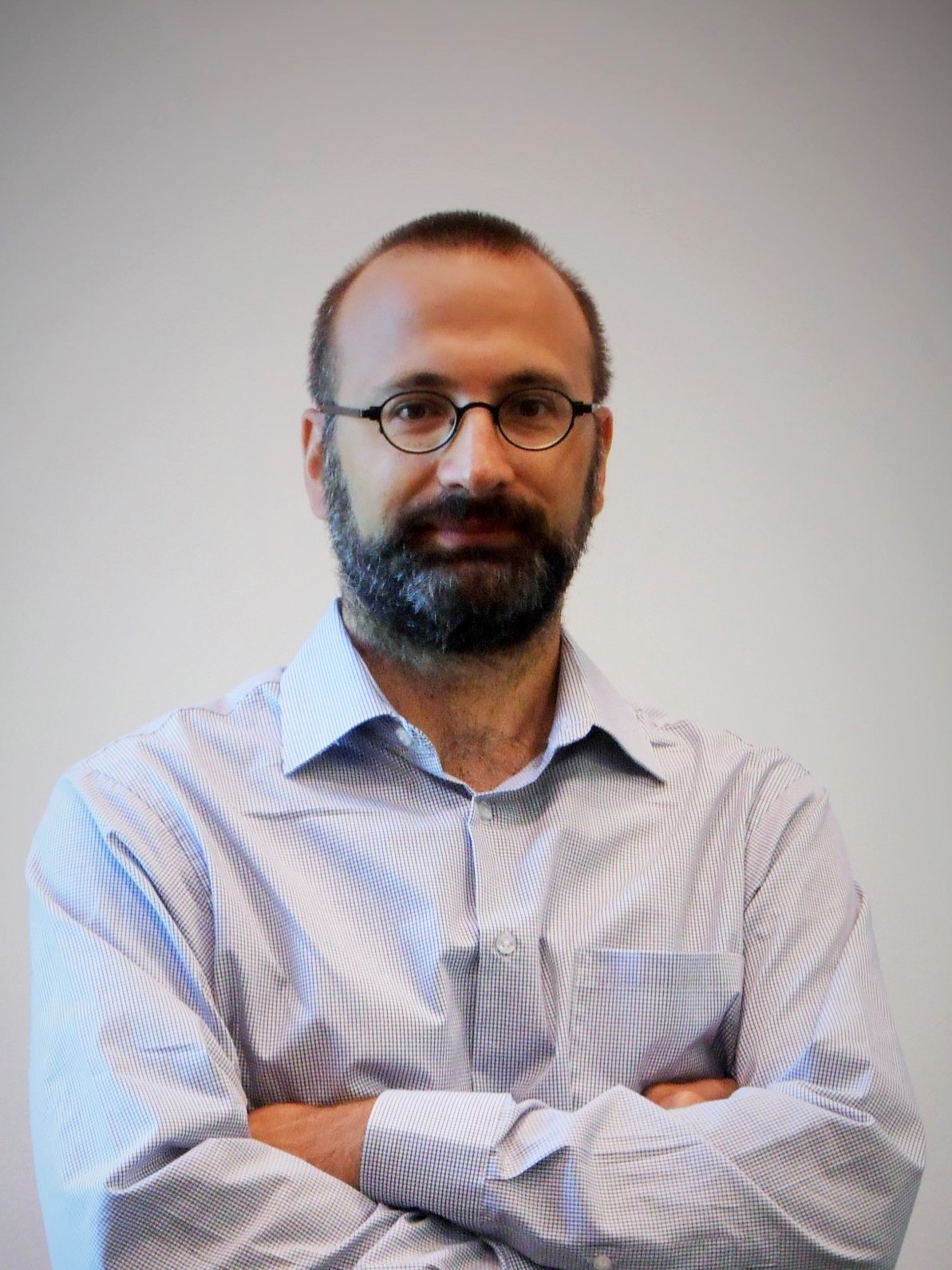
Julie Rak is the HM Tory Chair and Professor in the Department of English and Film Studies at the University of Alberta. She holds a BA and PhD from McMaster University and an MA from Carleton University. Her research focuses on auto/biography, life writing, and nonfiction in North America, with specialties in gender, Canadian literature, and publishing studies. She has authored or co-edited numerous books, including False Summit: Gender in Mountaineering Nonfiction (2021) and The Routledge Introduction to Auto/biography in Canada (2023). Rak’s academic roles include interim Chair of the EFS Department (2023–2024) and leadership in the Stories of Change research group. She has received prestigious awards such as the J. Gordin Kaplan Award (2023) and the Killam Annual Professorship (2017–2018). Her research explores marginalized narratives, including Inuit literature and digital life writing, with a commitment to inclusivity and community engagement. Her teaching spans undergraduate and graduate courses on autobiography, gender theory, and Canadian literature. She actively supervises research projects and supports student initiatives like the Roger Smith Undergraduate Research Award. Rak’s work bridges academic rigor with public scholarship, with over 90 media engagements. Education: PhD in English, McMaster University MA in Canadian Studies, Carleton University BA in English, McMaster University Grants & Projects: SSHRC Insight Grant for Government Agents, Literary Agents: Inuit Books and Government Intervention, 1968–1985 Leadership in the Stories of Change initiative Awards & Honors: Fellow of the Royal Society of Canada (2022) Henry Marshall Tory Chair (2019–2025) 2024 Visiting Professor at Merton College, Oxford
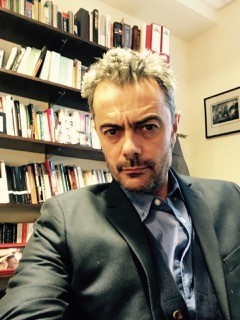
Andrea Lanza serves as Associate Professor in the Department of Italian Studies within the Faculty of Arts & Science at the University of Toronto. Originally from Italy, he completed his academic training in France at the École des Hautes Études en Sciences Sociales (EHESS), earning both his Diplôme d'Études Avancées and Doctorat degrees, following his Laurea from Università degli Studi di Milano La Statale. His scholarly profile demonstrates extensive transnational engagement with French political thought while maintaining institutional affiliation with Italian Studies. Doctorat, École des Hautes Études en Sciences Sociales (Paris) Diplôme d'Études Avancées, École des Hautes Études en Sciences Sociales (Paris) Laurea, Università degli Studi di Milano La Statale Lanza's research focuses on the historical intersections between political thought and social science, with particular emphasis on Early French Socialism (1800-1850), the making of French working classes, and Contemporary French Political Thought. His scholarly trajectory follows two interrelated axes: the emergence of socialist discourse in 19th century France and historic-philosophical debates on democratic society, especially regarding French thinkers like Lefort, Gauchet, Rosanvallon, Foucault, and Rancière. His work demonstrates remarkable interdisciplinary range, connecting political philosophy with historical anthropology, sociology, and religious studies. His recent publications reveal a growing engagement with contemporary issues including decolonization debates, cancel culture, and the epistemological challenges facing social sciences today. Lanza has also held significant administrative roles, serving as Associate Chair for Undergraduate Studies in the Department of Italian Studies during 2022-2023. Administrative Service: Associate Chair - Undergraduate, Department of Italian Studies (2022-2023) Lanza's scholarly network extends across North America and Europe, with collaborations spanning multiple disciplines. His recent editorial work on Claude Lefort's political philosophy and Marcel Gauchet's theories of democratic society demonstrates his position at the forefront of contemporary political thought scholarship.
Lyndsay Campbell is a Professor at the University of Calgary, cross-appointed between the Faculty of Law and the Department of History in the Faculty of Arts. Her work bridges Canadian and American legal history, comparative law, and constitutional studies. Ph.D., Jurisprudence and Social Policy, University of California, Berkeley (2008) Master of Law, University of British Columbia (1999) J.D., University of British Columbia (1995) M.A., English Literature, University of Toronto (1991) B.A., English Literature, University of British Columbia (1990) Campbell's research focuses on Canadian and American legal history , libel law , constitutionalism , and imperial legalities . Her work examines intersections between legal and extralegal regulatory strategies, comparative approaches to law, and 19th-century Canadian constitutionalism. Current projects include an edited collection on Legal Histories of Empire with Shaunnagh Dorsett. Her publications analyze legal histories of censorship , racial justice in law , and gender-related legal frameworks . Recent work includes the 2022 monograph Truth and Privilege and the 2020 co-edited open-access volume Canada’s Legal Past . Fellow, Constitutional Law and History Program, University of California, Berkeley (2008) William Nelson Cromwell Fellowship in Legal History (2007) Dean's Normative Time Fellowship, UC Berkeley (2004) Regents Intern Fellowship (2001) Osgoode Society Legal History Prize (1998) SSHRC doctoral fellowship (1997) Campbell teaches courses in Canadian and American history, legal theory, and the undergraduate Law and Society program. She previously practiced law in British Columbia and clerked for justices at the British Columbia Court of Appeal.
Sarah Moser is an Associate Professor in the Department of Geography at McGill University's Faculty of Arts, where she conducts research at the intersection of urban and cultural geography. Her office is located in Burnside Hall 413, and she can be reached at (514) 266-9908 or sarah.moser@mcgill.ca. Dr. Moser leads the New Cities Lab, which examines new cities, nation-building, migration, discourses of sustainability, and urban policy mobility from a human geography perspective. Dr. Moser's academic background includes: PhD in Geography from the National University of Singapore Postdoctoral Fellow at the Center for Urban and Global Studies, Trinity College Postdoctoral Fellow at the Massachusetts Institute of Technology Her research primarily examines how national, religious, and ethnic identities shape cities in Southeast Asia and the Muslim world. Dr. Moser is particularly fascinated by the transnational circulation of identity, architecture and urban policy, and how cities across Asia are increasingly looking to other parts of the global south rather than to 'the west' for inspiration. Her current work investigates the global emergence of supra-national religious and ethnic identities and how they are manifested in urban form to serve secular nation-building purposes. She specifically examines emerging pan-Islamic identity, the 'Arabization' of Muslim identity, and emerging 'pan-Chinese' identities currently circulating in Asia. Analysis of Dr. Moser's recent publications reveals a strong focus on new master-planned cities across the Global South, with particular attention to projects in Southeast Asia, the Middle East, North Africa, and Latin America. Her work demonstrates interdisciplinary engagement across urban studies, political geography, cultural geography, and postcolonial studies, with recurring themes of identity construction, transnational influences, and the political dimensions of urban planning. The geographic scope of her research has expanded significantly over time, moving from initial Southeast Asian case studies to a truly global comparative perspective. Dr. Moser's research has been supported through various grants that have enabled fieldwork in multiple countries where new city projects are underway. She has developed collaborative networks with researchers across the globe, particularly in regions where she conducts fieldwork. While specific grant details aren't provided in the available text, her extensive field-based research suggests substantial grant support for international travel and research assistance. Dr. Moser directs the New Cities Lab at McGill University, which conducts field-based research examining new city projects in Indonesia, Malaysia, Morocco, Kuwait, Nigeria, Saudi Arabia, United Arab Emirates, Palestine, and Ecuador. The lab combines discourse analysis with on-the-ground investigation, interviewing government officials, planners, and those affected by these urban mega-developments. The lab maintains an active presence on social media, particularly Instagram (@new.cities.lab), to share research findings and engage with broader audiences.
Paul Downes is a Professor in the Department of English at the University of Toronto, with a focus on eighteenth- and nineteenth-century American literature and its intersection with political philosophy. He holds a BA from York University and a PhD from Cornell University. His research spans literature and political philosophy, Marxist theory, and environmental humanities, often analyzing canonical texts through critical theoretical frameworks. Education: BA, York University; PhD, Cornell University Fields of Interest: American Literature, Environmental Humanities, Literary and Critical Theory, Literature and Political Philosophy, Marxist Theory Downes’ research examines the relationship between literary works and political ideologies, particularly in early American literature. His recent work explores the politics and aesthetics of protection from the 18th to 21st centuries. His publications highlight themes of sovereignty, democracy, and ethical intervention in texts by authors like Herman Melville and Charles Brockden Brown. His journal articles and book chapters frequently bridge literary analysis with philosophical and political discourse. Notable trends in his publications include critical engagements with Thomas Hobbes’ theories in colonial contexts, the role of political theology in shaping early American narratives, and the interplay between democracy and terror in Gothic fiction. His work also interrogates energy ideologies in Melville’s Moby Dick and historical parallels between revolutionary texts and modern events. No scientific awards or honors were mentioned in the provided text. He has not explicitly listed any formal advisees or students in the available materials.
Lady Rojas Benavente is an Associate Professor in the Department of Classics, Modern Languages and Linguistics at Concordia University, where she has been teaching since her appointment as Assistant Professor in 1996, with promotion to Associate Professor in May 2003. Prior to joining Concordia, she served as an Assistant Professor at the University of Ottawa and as a lecturer at the Faculty of Education at The University of Western Ontario, where she taught second language methodology, French and Spanish. Dr. Rojas Benavente received her PhD in Hispanic Literature from the University Laval in 1991, following an MA in Spanish Literatures (Cum Laude, 1985) and BA in History and Spanish (1983), both from the University of Ottawa. She also holds a Diploma qualifying as a Secondary School teacher specializing in Spanish Language and Literature, Psychology and Philosophy from the National Pedagogic University of Women in Lima, Peru (Cum Laude, 1968). Her research focuses on Critical Feminism in Peruvian & Latin-American Women Writers, with special emphasis on contemporary Peruvian and Mexican narrative, drama, poetry and essay. Her work encompasses Cultural Studies and Literary and Critical Theories, Latin American History, Post-colonialism, Human Rights, Women Studies, Feminist Theories, Gender Issues, Latin America Black History, Indigenous and Minorities Studies, and Comparative Studies in Education. She has published nine books (two poetry collections and seven critical interpretations) and over 50 refereed papers in Latin American Women's literary work, particularly focusing on Peruvian and Mexican authors. Dr. Rojas Benavente's scholarly output demonstrates consistent engagement with themes of gender, ethnicity, and power structures in Latin American literature. Her recent publications explore the works of contemporary Peruvian women writers, examining how they address issues of violence, racism, and gender in post-independence national contexts. Her research trajectory reveals a deepening focus on decolonial perspectives, indigenous resistance, and the intersection of gender with other social categories. Hispanic Literary and Cultural Institute's Honor Diploma (2010) Publication Award from the University of New Brunswick for the Anthology, Constructing Memory: Latino-Canadian Women Writers in the New Millennium Recognition by Mouvement Desjardins in celebration of International Women's Day (2008) As president of the Society for Literary Criticism of Spanish American Women Writers' work (CCLEH), Dr. Rojas Benavente has facilitated connections between Concordia colleagues, local artists, international writers, and the Latino-Montreal community. She serves on the editorial boards of Alba de America, a literary magazine from the United States, and Voces, a Peruvian cultural magazine. Her leadership extends to organizing numerous conferences on Latin American women writers across Canada, Latin America, and Montreal, including multiple meetings of Hispano-Canadian Women Writers and events commemorating significant figures in Latin American literature.
Dr. Wendell Nii Laryea Adjetey is an Associate Professor and William Dawson Scholar in the Department of History and Classical Studies at McGill University, specializing in post-Reconstruction U.S. history and the African Diaspora in North America and the Atlantic World. His research examines transnational Black freedom struggles, connecting social, cultural, intellectual, political, and military histories across geographical boundaries. His award-winning monograph Cross-Border Cosmopolitans: The Making of a Pan-African North America (UNC Press, 2023) has received multiple honors including the Governor General's History Award and CHA Best Scholarly Book Prize. The work pioneers integrated analysis of African American, African Canadian, and African Caribbean histories within broader Atlantic frameworks. Educational background includes: Postdoctoral fellowship at Harvard University Ph.D., M.Phil., and M.A. from Yale University M.A. from University of Toronto Honors B.A. from University of Toronto (St. Michael's College) Dr. Adjetey's scholarly distinctions include the H. Noel Fieldhouse Award for Distinguished Teaching and Principal's Prize for Excellence in Teaching at McGill. His extensive service includes advisory roles for SSHRC anti-racism initiatives and founding the Dr. Kenneth Melville Black Faculty and Staff Caucus. As a public intellectual, he contributes to The Washington Post , Globe and Mail , and Toronto Star , addressing historical consciousness and contemporary social justice issues. His humanitarian work includes gang prevention programs and educational equity initiatives.
Zulfikar Hirji is an Associate Professor in the Department of Anthropology at York University, Toronto, Canada. He holds a DPhil from the University of Oxford, an MPhil from the University of Cambridge, and a BA from McGill University. His research focuses on Muslim societies, material and visual culture, identity formation, and critical pedagogy, with a regional emphasis on the Indian Ocean, East Africa, and South Asia. He has conducted multi-sited ethnographic and archival research across these regions, including Europe and North America. Education: DPhil (Social Anthropology, Oxford, 2002), MPhil (Islamic Studies, Cambridge, 1997), BA (Religious Studies & Anthropology, McGill, 1989) Hirji explores themes such as communal identity, socio-legal frameworks, urban violence in plural societies, and the dynamics of migration and family networks. He is also engaged in critical scholarship on representations of Muslims in academic and public discourse. His work bridges anthropology, history, and visual arts through curated exhibitions, including Memories of Stone (2017) and Transformations: Enlightenment in a Digital Age (2016). He has held roles like Graduate Program Director and Visiting Research Fellow at the Institute of Ismaili Studies. Key Appointments: Coordinator of Individualized Studies (2019–2024), York Fellow at the Pontifical Institute of Mediaeval Studies (2015–2016) His contributions extend beyond academia through art installations and public lectures addressing cultural heritage, digital age challenges, and youth perspectives. No scientific awards are explicitly listed in the provided texts.
Dr. Gaoheng Zhang is an Associate Professor of Italian Studies at the University of British Columbia's Faculty of Arts. His research analyzes cultural mobilities within Italy's and Western Europe's global networks with Asia, America, and Africa, focusing on transculturality and dialogism through multilingual and multisited methodologies. Key Focus Areas: Migration/Postcolonial Studies, Gender and Masculinity, Film/Communication Studies, Italian-Chinese Relations Teaching: Italian Food/Fashion Cultures, Mafia Movies, Pandemic Literature, (Post-)Colonial Cultures His scholarship includes pioneering works on China-Italy cultural exchanges through Mobility, Architecture, Chronotopes (2023), and the upcoming monographs Italian Dumplings and Chinese Pizzas (2025) and Fashion Communications Between Italy and China (2025). He is co-editing The Handbook on Modern China-Italy Relations (2026-2027) with Valentina Pedone. Dr. Zhang's research has received prestigious recognition including: SSHRC Insight Grant (2025-2029) UBC Killam Faculty Research Fellowship (2022-2023) Jean Monnet Fellowship (2022-2023) SSHRC Insight Development Grant (2018-2020) Provost’s Postdoctoral Scholarship at USC (2012-2014) He serves on the executive committee of UBC's Centre for Migration Studies and advisory board of Green College, while maintaining affiliations with the Centre for European Studies and Asian Canadian/Asian Migration Studies program.
Pamela Klassen is Professor and Chair in the Department for the Study of Religion at the University of Toronto, cross-appointed to Anthropology. She is a Fellow of the Royal Society of Canada and has held distinguished positions including William Lyon Mackenzie King Chair at Harvard University and Distinguished Visiting Professor at the University of Tübingen. Professor Klassen's research focuses on the anthropology of religion with particular attention to: Colonialism, treaties, and public memory in North America and Turtle Island Global Christianities and their relationship to Indigenous lands Religion, ritual, and museum studies Digital humanities approaches to religious history Gender, spirituality, and religious authority Her scholarly work demonstrates a consistent engagement with how religion shapes and is shaped by colonial histories, public memory, and contemporary political struggles. Klassen's research bridges academic inquiry with public-facing projects that collaborate with Indigenous communities, particularly the Rainy River First Nations. Among her notable awards are the American Academy of Religion Award of Excellence (2012), the Northrop Frye Award of Excellence (2015), and the Anneliese Maier Research Award from the Humboldt Foundation (2015-2020). She was elected as a Fellow of the Royal Society of Canada in 2019. Professor Klassen actively mentors graduate students and has supervised numerous PhD candidates working at the intersection of religious studies, anthropology, and Indigenous studies. Her current research includes a book on the public memory of gold rushes in settler colonies and ongoing collaborative work with the Kay-Nah-Chi-Wah-Nung Historical Centre. She leads several major collaborative projects including "Kiinawin Kawindomowin Story Nations," a digital storytelling initiative focused on restorying colonial documents about Manidoo Ziibi (Rainy River), and "Treaty Conversations," an educational resource about treaty relationships in Ontario.
Amy Scott Metcalfe is a Professor in the Department of Educational Studies at the University of British Columbia (UBC), affiliated with the Faculty of Education. She holds dual appointments with the Institute for Gender, Race, Sexuality and Social Justice, emphasizing interdisciplinary approaches to higher education studies. Her research focuses on international comparative higher education systems, academic governance, and sociological analysis of university policies. She critiques managerialism trends and explores gender disparities in academic productivity. Metcalfe employs visual methodologies, including photo-ethnography and extended photo essays to document institutional change. Teaching responsibilities are managed through the Department of Educational Studies, with course details available via UBC’s official portal. Her scholarship spans Canadian and global contexts, addressing issues like faculty internationalization, research ethics frameworks, and the impact of pandemic disruptions on academic collaboration. Key contributions include longitudinal studies on Canadian professors’ perceptions of work-life balance, comparative analyses of gender gaps in research output across North America, and critical examinations of university-industry-government networks. She advocates for equity-centered pedagogies and anti-colonial approaches in higher education policy.
Prof. Melissa N. Shaw is an Assistant Professor in the Department of History at McGill University. Her research focuses on Black Canada, racial dynamics in colonial North America, and modern Canadian history from 1700–1940. She holds a PhD from Queen’s University. Her work examines topics such as Black Canadian enlistment efforts during WWI, historical memory of slavery, and intellectual/social histories of marginalized communities. Notable publications include analyses of racial exclusion in military service and critical reviews of seminal works on Canadian slavery. Shaw contributes to historical record-keeping through entries on figures like James Francis Jenkins and William Peyton Hubbard for the Dictionary of Canadian Biography. Her office is located in Leacock Rm 635, with Winter 2023 office hours on Wednesdays and Fridays at 10:30–11:30 am.
Rafael Wainer is a Continuing Sessional Lecturer in the Department of Anthropology at the University of British Columbia (UBC), affiliated with the Faculty of Arts. His academic background includes a PhD in Medical Anthropology (UBC, 2017), an M.A. from UBC (2008), and a Licenciado from the Universidad de Buenos Aires (2003). His research focuses on medical anthropology, socio-cultural anthropology, and health-related issues in Latin America, particularly Argentina. Education: Ph.D., Medical Anthropology, University of British Columbia, 2017 M.A., University of British Columbia, 2008 Licenciado, Universidad de Buenos Aires, 2003 Research Interests: Children’s cancer experience and biomedicine Palliative care and end-of-life practices Humor in clinical settings Death, dying, and grief in schools Healthcare policy and pandemic responses Ethnographic methods in medical institutions Teaching: Rafael teaches courses on Medical Anthropology, Socio-Cultural Anthropology, and Applied Anthropology, emphasizing critical perspectives on health, biomedicine, and cultural practices. Publications: His work explores themes like permeable bodies in pediatric oncology, grief in educational settings, and the role of humor in palliative care. Recent contributions include analyses of Argentina’s Hospice movement and critiques of pandemic-era health technologies. Recognition: He has received awards including the Sessional Lecturer Teaching Award (2022) and multiple research grants supporting fieldwork in Argentina and Canada. Advisory Role: Co-director of Darío-Iván Radosta’s PhD thesis on Argentina’s Hospice movement (2020–present). Outreach: Engages in public projects like “Duelo en Escuelas” , addressing grief in educational contexts, and critiques of health policies (e.g., Canada’s pandemic app).