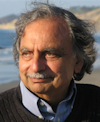
Farooq Azam is a Distinguished Professor of Microbial Oceanography at the Scripps Institution of Oceanography, University of California San Diego. He has held this position since 1996, following roles as Professor-in-Residence and Research Biologist at the same institution. His research focuses on marine microbial ecology, coral reef microbiology, microbial biogeochemistry, and the ocean carbon cycle. Azam earned his Ph.D. in microbiology from the Czechoslovak Academy of Science, Prague, and completed a postdoctoral fellowship at Stony Brook University. Affiliations: Scripps Institution of Oceanography, UCSD Key Roles: Long-term leadership in microbial oceanography research Research Interests: His work explores how marine microbes influence biogeochemical cycles, coral health, and organic matter dynamics. He has pioneered studies on microbial regulation of the ocean carbon cycle and the ecological roles of marine phages. Awards: Includes election to the American Academy of Arts and Sciences (2015), Tiedje Award (2004), and recognition as an ISI Highly Cited Researcher (2002). He holds an honorary doctorate from Linnaeus University (2004).
University of Natural Resources and Life Sciences ViennaAustria
Fabian Pfrengle is a full Professor of Organic Chemistry at the Institute of Organic Chemistry , Department of Natural Sciences and Sustainable Resources , University of Natural Resources and Life Sciences Vienna (BOKU). He previously led research groups at the Max Planck Institute of Colloids and Interfaces (2013-2020) and worked at The Scripps Research Institute (2010-2013). Research Focus: His work bridges carbohydrate chemistry and plant biology , specializing in plant cell wall glycans and glycosyltransferases . He develops synthetic glycan arrays for enzyme characterization and investigates immune response triggering mechanisms in plants through oligosaccharide fragments . His projects include automated polysaccharide synthesis and liposome-based immune tolerance applications. Publication Trends: His 15 most recent articles emphasize chemical synthesis of sugar nucleotides , plant glycan arrays , and enzyme specificity analysis , reflecting his focus on carbohydrate engineering and plant immunity . Key subfields include UDP-sugar derivatization , Xylan structure-function relationships , and Glycosyltransferase profiling . Grants & Projects: Currently leads 5 major projects including Automated Algal Polysaccharide Synthesis (EU-funded, 2023-2028) and Synthetic Glycan Ligands for Plant Immune Receptors (FWF-funded, 2022-2026). His research also explores thrombocyte biology and Rhamnogalacturonan-II fragments with support from FWF and City of Vienna . Community Service: Serves on editorial boards ( Monatshefte für Chemie , 2021-present) and as reviewer for 12 journals including JACS Au , Nature Communications , and Angewandte Chemie . Member of professional societies: Gesellschaft Österreichischer Chemiker (2020), Deutscher Hochschulverband (2019), and Gesellschaft Deutscher Chemiker (2008).
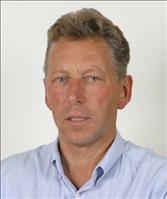
François Peeters is a Full Professor of Physics at the University of Antwerp, Belgium, holding the position since 2000 (with Dutch title 'gewoon hoogleraar' since 2003). He previously served as Research Director (FWO-VI) at the University of Antwerp (1996-1999), Research Leader (NFWO) (1992-1996), and Senior Research Assistant (NFWO) (1988-1992), establishing a distinguished academic career spanning over three decades. His educational background includes a Ph.D. in Physics from the University of Antwerp (1982), followed by a Habilitation (Hoger aggregaat) from the same institution (1987), and a postdoctoral fellowship at Bell Laboratories in Murray Hill, New Jersey (1982-1983). His academic journey also featured research periods at prestigious institutions including the High Magnetic Field Laboratory in Grenoble, University of California Berkeley, Oxford University, and several Brazilian and Australian universities. Peeters' research focuses on theoretical condensed matter physics , specializing in the electronic, optical, and magnetic properties of nanostructured systems. His work encompasses semiconductors , superconductors , graphene , and hybrid quantum systems , with particular emphasis on strong correlations in both classical (colloids, dusty plasma) and quantum (quantum dots) environments. His theoretical frameworks bridge fundamental quantum mechanics with practical nanotechnology applications, driving innovations in spintronics and quantum device design. Analysis of his publication record reveals a clear evolution from foundational work on polaron physics and quantum Hall systems in the 1980s-1990s toward contemporary research on graphene, topological materials, and programmable quantum nanodevices. His most cited works demonstrate consistent leadership in mesoscopic physics, with recent publications showing increased focus on spin-dependent transport phenomena and two-dimensional material systems. His scientific recognition includes: Fellowship in the American Physical Society (2005) APS Outstanding Referee award (2008) Doctor Honoris Causa from University of Szeged, Hungary (2009) Peeters has supervised 26 completed PhD theses and currently leads the Condensed Matter Theory research group comprising 3 ZAP researchers, 16 PhD students, and 8 postdocs. His grant portfolio includes coordination of an EU Marie Curie Training site on 'Electrons on helium', participation in multiple EU projects, COST actions, and ESF networks, demonstrating sustained success in securing competitive international funding. The Condensed Matter Theory group maintains extensive international collaborations, evidenced by Peeters' research visits to over 10 institutions worldwide and regular hosting of 3-4 international visitors at postdoc or professorial levels. The group's output of over 770 refereed publications with 12,000+ citations reflects its position at the forefront of theoretical condensed matter physics research.
Dr. Andreas Zöttl is a physicist affiliated with the University of Vienna , currently serving as an Assistant Professor in the Computational and Soft Matter Physics department. His research focuses on computational modeling of active matter, microswimmers, and polymer dynamics, with applications in biophysics and soft materials. He teaches courses such as Computational Statistical Mechanics and Biological Physics , emphasizing theoretical and computational methods. His recent work explores reinforcement learning in microswimmer locomotion, chiral particle dynamics, and polymer behavior under shear flow. Research keywords include Machine Learning , Fluid Dynamics , and Soft Matter Physics . Themes span hydrodynamic interactions , active colloids , mesoscale simulations , and non-equilibrium systems . Contact: andreas.zoettl@univie.ac.at
University of Natural Resources and Life Sciences ViennaAustria
Assoc. Prof. Dietmar Pum is a leading researcher at the Institute of Biophysics, University of Natural Resources and Life Sciences, Vienna (BOKU). With a career spanning over three decades, he has pioneered work on S-layer proteins as nanobiotechnological tools and biomimetic surface functionalization. His research bridges microbiology, biophysics, and nanomaterials science. Education & Career Doctorate (1984) and Habilitation (1992) at Vienna University of Technology Awarded FEBS (1987) and EMBO (1982) fellowships Assoc. Univ. Prof. since 1997, Deputy Head of Biophysics Institute since 2014 Research Focus Dr. Pum's work centers on leveraging S-layer proteins for nanoscale fluid mechanics , molecular imprinting , and biohybrid materials . His projects explore: Self-assembly of 2D protein crystals Functionalization of carbon nanotubes Biomimetic sensor development Applications in diagnostics and environmental technology Publication Trends His recent publications (2025-2019) highlight interdisciplinary advancements in: Nanoscale biofluid dynamics Gold nanoparticle synthesis via microbial enzymes Archaeal S-layer characterization Protein-directed nanomaterials Biosensor platforms Lipid quantification via machine learning Scientific Recognition Philip Morris Research Prize (1998) Cardinal Innitzer Prize (1992) ÖAGM Prize (1986) Peer reviewer for Nature Materials , Advanced Materials , and Biophysical Journal Advising & Collaborations Dr. Pum has supervised over 15 theses, mentoring students in topics ranging from Caenorhabditis elegans imaging to nanomembrane fabrication. He leads international collaborations under EU Horizon and FWF grants, including the Stimuli Responsive Materials project (2020-2025). Labs & Networks As a core member of BOKU's Center for NanoBiotechnology and the Ludwig Boltzmann Institute for Molecular Nanotechnology , he develops bioinspired nanomaterials and contributes to global programs in molecular self-assembly.
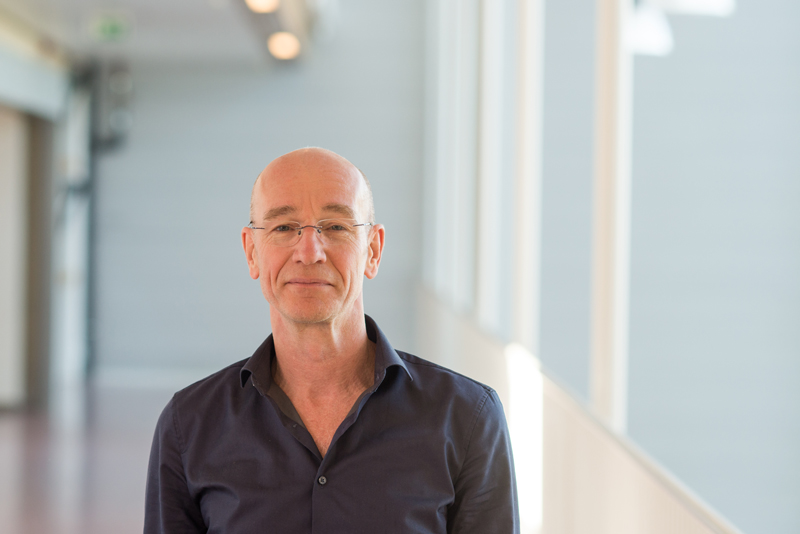
Nico Sommerdijk is a Professor of Bone Biochemistry at the Radboud Institute for Molecular Life Sciences, Radboud University Medical Center Nijmegen. Previously, he held positions at Eindhoven University of Technology, including Full Professor (2014–2019) and Head of the Laboratory of Materials and Interface Chemistry. His research focuses on biomineralization, biomimetic materials, and advanced electron microscopy techniques, particularly cryo-EM and liquid-phase EM. He earned his PhD (cum laude) from Radboud University Nijmegen in 1995 and completed postdoctoral research at the University of Kent (UK), Radboud University, and Eindhoven University of Technology. He pioneered the use of cryo-EM to study organic-inorganic interactions and founded the Radboud Electron Microscopy Center. His work has been supported by prestigious grants, including an ERC Advanced Grant (2018), NWO VICI (2010), and TOP-PUNT (2016). Notable awards include the Royal Society of Chemistry Soft Matter Award (2015) and the NWO VIDI Award (2006). Key research areas include collagen mineralization mechanisms, crystal nucleation, and biomaterial design. His interdisciplinary approach bridges chemistry, materials science, and biophysics, with applications in biomedical materials and geology.
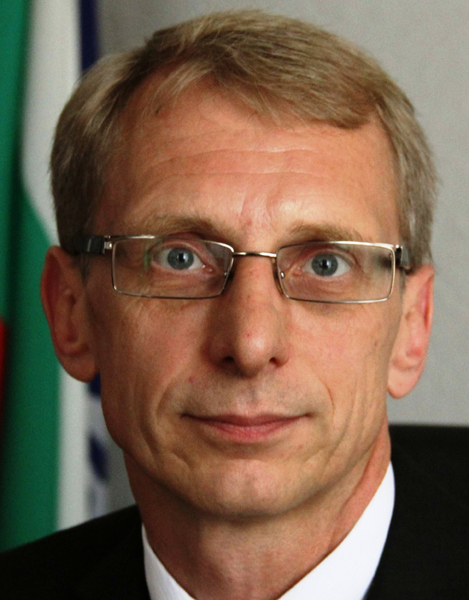
Nikolai Denkov is a Professor of Physical Chemistry at Sofia University's Faculty of Chemistry and Pharmacy, leading the Laboratory of Active Formulations and Materials since 2017. His administrative roles include Head of the Department of Chemical Engineering (2008–2015), Deputy Minister (2014–2016), and Minister of Education and Science of Bulgaria (2017). He holds a DSc from Sofia University (2007) and has authored over 160 peer-reviewed articles with an h-index of 45. Research focuses on colloid science, surfactant systems, and interfacial phenomena, including foam rheology, emulsion stability, and self-shaping of oil droplets. His studies bridge fundamental physics and industrial applications in cleaning agents, food technology, and pharmaceuticals. Key contributions include discovering antifoam mechanisms and self-emulsification processes. Recipient of the Solvay Prize (2019) and Bulgaria's highest scientific honor, 'Pythagoras' (2010) Supervised 12 PhD students and led 40+ industry-funded projects with companies like Unilever and BASF Active in international organizations: IACIS Council member, ERC panel chair, and ESA advisor His work emphasizes translational research, with patents in formulation technologies and over 7,300 citations. Current research explores smart materials and micro/nanostructured systems.
Institute of Science and Technology AustriaAustria
Antoine Aubret is a postdoctoral fellow at the University of California San Diego, working in the Soft Condensed Matter Lab under Pr. Jeremie Palacci. His research focuses on self-assembly and self-organization in active micro-particle systems. PhD in Physics (2015), Université Claude Bernard Lyon 1, with advisors Pr. Christophe Dujardin and Pr. Joel Bellessa Expertise in nano-optics and non-equilibrium soft matter physics Develops custom microscopes with optical tools for colloidal architecture manipulation Recent work includes experimental studies on dissipative structures and interfacial transport in active matter systems. Publications span journals like Nature Physics , Soft Matter , and ChemPhysChem .
Institute of Science and Technology AustriaAustria
Edouard Hannezo is a Professor at the Institute of Science and Technology Austria (ISTA) since 2022, focusing on the application of theoretical physics to elucidate design principles of self-organization in biological systems. His research spans multiple scales, from cytoskeletal dynamics to tissue architecture, with key collaborations in developmental and cell biology. The Hannezo Group integrates solid/fluid mechanics, statistical physics, and soft materials engineering to address fundamental questions in morphogenesis. Current Research: Investigates stochastic branching in mammalian organs, active fluids in cytoskeletal organization, and fate selection during development. Key Contributions: Developed biophysical frameworks for intestinal organoid morphogenesis, branching morphogenesis, and mechanochemical feedback loops. Scientific Awards: EMBO Young Investigator Award (2019) ERC Starting Grant (2019) Wellcome Trust Fellowship (2015) Bettencourt-Schuller Young Researcher Prize (2014) Team: Leads a multidisciplinary team including PhD students (Zuzana Dunajova, Andreas Ehrmann, Kasumi Kishi) and postdocs (Oliver Drozdowski, Yuting Li), with technical support from image analyst Suyash Naik.
Univ.-Prof. Christos N. Likos is a world-leading researcher at the University of Vienna , holding the chair in Multiscale Computational Physics since 2010. Affiliated with the Faculty of Physics and directing the Computational and Soft Matter Physics group, he bridges scales from microscopic to macroscopic in soft matter systems. Education: Dipl.-Ing. in Electrical Engineering (NTUA Athens), M.Sc. & Ph.D. in Physics (Cornell University) Honors: Fellow of the Royal Society of Chemistry (2013), University of Vienna Teaching Award (2025), Outstanding Referee Award (2009) His research in Soft Condensed Matter focuses on polymers, colloids, and biomolecular systems through coarse-graining , density functional theory , and Monte Carlo simulations . Key collaborations include institutions in Rome, Heraklion, San Sebastian, and Princeton. His work reveals principles of self-organization, non-equilibrium phenomena, and responsive material design with applications in cosmetics, nanotechnology, and biophysics. Recent publications highlight active matter , topological polymers , and electric field-responsive microgels . The group trains 18 current students (Ph.D., M.Sc., B.Sc.) and maintains partnerships with experimental teams across Europe. As Associate Editor of Soft Matter and member of Journal of Colloid and Interface Science Open editorial board, he shapes scientific discourse in his field. Teaching excellence is a hallmark, with courses on Advanced Statistical Physics and Soft Matter Principles . His group website details ongoing projects, while lab facilities in Vienna's Kolingasse campus enable interdisciplinary research.
Sofia Kantorovich is a Professor at the University of Vienna, serving as Deputy Head of both the Research Platform MMM (Mathematics-Magnetism-Materials) and Computational and Soft Matter Physics group. Her departmental affiliation is with Computational and Soft Matter Physics at Kolingasse 14-16, 1090 Wien (Room 03.22). She actively teaches undergraduate and graduate courses including Linear Algebra for Computational Science, Analysis for Computational Science, and seminars on soft matter physics through the 2025 academic year. Her research centers on computational modeling of magnetic soft matter systems, with emphasis on ferrofluids, magnetic nanoparticles, nanogels, and supracolloidal polymers. She investigates how external magnetic fields influence structural properties, self-assembly dynamics, rheological behavior, and transport phenomena in complex magnetic fluids. Key applications include drug delivery systems, responsive materials design, and magnetic composites engineering, employing molecular dynamics simulations and theoretical analysis to uncover fundamental mechanisms. Analysis of her 2023-2025 publications reveals consistent focus on field-responsive dynamics in magnetic colloidal systems. Her work frequently examines coarsening phenomena in ferrogranulate networks, morphology-dependent responses in magnetic nanogels, and filamentous structure behavior under applied fields. These studies demonstrate how particle shape, concentration gradients, and interaction potentials govern macroscopic properties in magnetic soft matter. No scientific awards are documented in the available sources. Information regarding graduate student advising and grant funding details is not provided in the current materials. Professor Kantorovich leads research within the Computational and Soft Matter Physics group and co-directs the interdisciplinary MMM platform, which integrates mathematical modeling, magnetic theory, and materials science to advance understanding of complex magnetic systems and their technological applications.
University of Natural Resources and Life Sciences ViennaAustria
Ronald Zirbs is a Research Fellow at the Institute of Colloid and Biointerface Science , University of Natural Resources and Life Sciences, Vienna (BOKU). With a PhD in Polymer Chemistry (Martin-Luther-University Halle/Saale, 2007-2009; TU Wien, 2005-2006), his research focuses on nanoparticle synthesis , surface-active ionic liquids , and thermoresponsive polymer architectures .
University of Natural Resources and Life Sciences ViennaAustria
Giacomo Chizzola M.Sc. is a researcher at the Institute of Colloid and Biointerface Science , part of the Department of Natural Sciences and Sustainable Resources at the University of Natural Resources and Life Sciences, Vienna (BOKU). His work focuses on nanoparticles and responsive polymers for magnetically triggered drug delivery , particularly in healthcare-associated infections. Project : Stimuli Responsive Materials for the Rapid Detection and Treatment of Healthcare Associated Infections (2020-2025), funded by the European Commission (EC). Presentations : 11 lectures at international conferences (e.g., Gordon Research Conferences, STIMULUS Summer Schools) and workshops in Austria, Germany, Switzerland, and the Czech Republic (2021-2024). Research Areas : Synthesis and modification of magnetic nanoparticles , development of polymersomes , and applications in biomedical engineering and nanobiotechnology . Contact: giacomo.chizzola@boku.ac.at
Andrey Kuznetsov is a researcher at the Faculty of Physics, specializing in Computational Physics and Soft Matter Physics. His work focuses on magnetic materials and their dynamic properties, particularly nanoparticles and ferrofluids. Fields of Interest: Magnetic Anisotropy, Nanoparticle Self-Assembly, Dipole-Dipole Interactions, Soft Matter Systems His research explores field-controlled mass transport mechanisms in magnetic soft matter, leveraging computational models and experimental validations. Recent projects include studies on multi-core particles and binary superparamagnetic mixtures, highlighting intergrain interactions and magnetic susceptibility effects. Publications and collaborations reflect cutting-edge work in applied magnetic fields and their influence on nanoscale material behavior. Active presentations at scientific conferences demonstrate ongoing contributions to the field.
Bruno Chaudret is a Research Professor at INSA-Toulouse, France, and a member of the French Academy of Sciences since 2005. He serves as Director of the Laboratoire de Physique et Chimie des Nano-Objets (UMR 5215) since 2011 and has held leadership roles in CNRS and IFPEN. PhD, Imperial College London (1977) Doctorat d'État, Université Paul Sabatier Toulouse (1979) His research bridges organometallic chemistry and nanomaterials , focusing on: Magnetic nanostructures Catalysis via C-H bond activation Dihydrogen complexes Self-assembly of nanoparticles into superlattices Gas sensor materials His scientific work spans nanoparticle synthesis , magnetic properties , and catalytic applications , with significant contributions to controlled nanoparticle shapes and assemblies. Notable scientific awards include: Coordination Chemistry Award, French Chemical Society (1982) CNRS Silver Medal (1997) Geoffrey Wilkinson Prize, Royal Society of Chemistry (2008) Grand Prix Pierre Süe, SCF (2010) He has supervised 36 PhD students and 26 Post-Doc fellows , while contributing to 16 patents and 370+ refereed publications . His work extends to industrial applications through licencing.