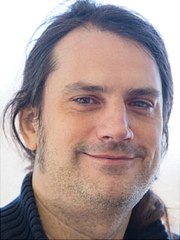
Prof. Dr. Wolfgang Parak leads the Biophotonics research group at the University of Hamburg's Department of Physics and is affiliated with the Center for Hybrid Nanostructures (CHyN). His work focuses on colloidal nanoparticles, their synthesis, surface chemistry, and biomedical applications. Employment: University of Hamburg (since 2017) Email: wolfgang.parak@uni-hamburg.de OrciD: 0000-0003-1672-6650 Research spans three branches: (1) Synthesis of multifunctional nanoparticles (CdSe, Au, FeO₃), (2) Surface functionalization via amphiphilic polymers, and (3) Applications in medicine (targeted delivery, analyte sensing, photothermal therapy). Recent work explores size-dependent nanoparticle penetration in cell spheroids and plasmonic polymorphs with bipyramid thin films. Publications (2025) include studies on: Aggregation-mediated cellular uptake optimization (Nano Today) Plasmonic polymorphs in Small Photoluminescent gold nanomaterials (Advanced Optical Materials) Scientific recognition: Highly Cited Researcher (2018-2021) Bioconjugate Chemistry Lectureship Award (2018) Current projects include NANO-PEFIS (2024-2026) and grants for material resources (Otange, Bonakdar).
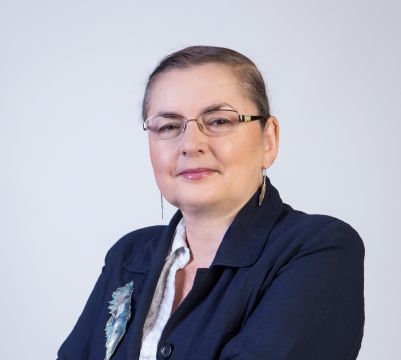
Professor Elżbieta Grządka serves as a University Professor and Head of the Department of Physical Chemistry at the Faculty of Chemistry, Maria Curie-Skłodowska University in Lublin. Her academic career spans over 15 years with significant contributions to colloid science and surface chemistry. Her educational background includes: Master's degree (2002) in Basic and Applied Chemistry from the Faculty of Chemistry at Maria Curie-Skłodowska University PhD in Chemical Sciences (2006) from the same institution Habilitation degree (2016) from the Faculty of Chemistry Professor Grządka's research focuses on the physicochemistry of dispersed systems, with particular expertise in adsorption phenomena at solid-liquid interfaces. Her work investigates how polysaccharides interact with metal oxide surfaces under varying conditions, examining surfactant influences on macromolecular adsorption processes, colloidal stability mechanisms, and polymer-surfactant interactions. This research has direct applications in environmental technology, pharmaceutical formulations, and materials science. Analysis of her 15 most recent publications reveals consistent thematic focus on alumina and manganese dioxide systems with various biopolymers. Key trends include systematic investigation of how ionic/non-ionic surfactants modulate adsorption layers and electrokinetic properties, with particular attention to pH effects and electrolyte concentrations. Her work demonstrates methodological rigor through combined adsorption, stability, and electrokinetic measurements across diverse polymer-surfactant-metal oxide combinations. Her scientific achievements have been recognized through: Distinction for doctoral dissertation by the Faculty of Chemistry Council (2006) Honorable Mention from the Polish Chemical Society for best doctoral thesis (2006) First-degree collective Rector's Award for scientific activity (2014) Rector's Award for obtaining habilitation degree (2016) Professor Grządka has secured competitive research funding including a Ministry of Science and Higher Education project (2010-2013) on "Study of adsorption and electrokinetic properties of the system: polysaccharide/surfactant/electrolyte/metal oxide" (No. N N204 090438). While specific advisees aren't listed in available materials, her departmental leadership role and publication record indicate active mentorship of graduate students. She maintains regular consultation hours (Mondays 12:00-14:00 in Room 215) and is identifiable via ORCID 0000-0003-2037-6227.
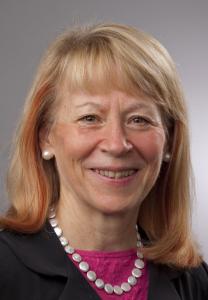
Professor Anna Deryło-Marczewska is a distinguished academic at Maria Curie-Skłodowska University in Lublin, serving as Head of the Department of Physical Chemistry since September 2019 and Dean of the Faculty of Chemistry since September 2016. Previously, she was Vice-Dean for Scientific Research since September 2008 and headed the Department of Physical Chemistry of Solid Surfaces from October 2007. Her educational journey includes earning a PhD in 1983, completing her habilitation in 1995, becoming an associate professor in 2002, and achieving the title of professor in 2017. She has maintained continuous academic progression at UMCS for over three decades. Professor Deryło-Marczewska's research focuses on adsorption processes, particularly the removal of pesticides, dyes, and biologically active compounds from aqueous solutions using carbon materials, aluminosilicates, and composites. Her work spans experimental studies of equilibrium processes, adsorption kinetics, temperature dependencies, and the synthesis of mesoporous silica, carbon, and composite materials. She has made significant contributions to understanding the physicochemical properties of pure and modified materials and the impact of modification methods on surface properties. Her publication record demonstrates consistent research activity across multiple disciplines including materials science, environmental chemistry, and nanotechnology, with particular emphasis on developing sustainable solutions for environmental remediation. Her recent work shows increasing focus on biocomposites, protein adsorption, and advanced nanomaterials for specialized applications. Member of Polish Chemical Society (Lublin Branch - former chairman, branch treasurer) Former chairman of Section of Physicochemistry of Interfacial Phenomena Recipient of multiple research grants including European Community's Seventh Framework Programme projects Supervisor for International Visegrad Fund projects As an administrator, she has secured substantial research funding including a 638,000 PLN educational project 'Kursy w języku angielskim dla chemii materiałowej'. Her research group maintains international collaborations through projects like COMPOSITUM and NanoBioMat, reflecting her prominence in the global scientific community. The department she leads operates specialized laboratories focused on adsorption processes, nanomaterial synthesis, and surface characterization, providing infrastructure for both fundamental research and practical applications in environmental protection.
Geraldine Richmond is the Presidential Chair in Science and Professor of Chemistry at the University of Oregon, where she has been a faculty member since 1985. She holds appointments in the Department of Chemistry and Biochemistry within the College of Arts and Sciences. Richmond directs multiple undergraduate research programs and serves in significant national leadership roles including on the National Science Board and as Secretary of the American Academy of Arts and Sciences. Richmond received her undergraduate degree in chemistry from Kansas State University and her Ph.D. in physical chemistry from the University of California, Berkeley. Her educational background has shaped her commitment to both advanced research and foundational science education, particularly in introductory chemistry and science literacy courses. Her primary research examines the chemistry and physics occurring at complex surfaces with relevance to energy production, environmental remediation, and atmospheric chemistry. Using laser-based methods and theoretical simulations, her most recent work focuses on understanding environmentally important processes at water surfaces. Richmond's interdisciplinary approach bridges physical chemistry, environmental science, and surface physics to address critical environmental challenges. Her work has established her as a leading expert in interfacial phenomena, particularly at aqueous boundaries. Analysis of her recent publications reveals a strong focus on nanoemulsions, surfactant behavior at liquid interfaces, and advanced spectroscopic techniques like vibrational sum frequency generation. Her work spans fundamental physical chemistry investigations while increasingly incorporating elements of diversity, equity, and inclusion in STEM education and career pathways, reflecting her dual commitment to scientific discovery and social impact. National Medal of Science Priestley Medal of the American Chemical Society Linus Pauling Legacy Award ACS Olin-Garvan Medal American Physical Society Davisson-Germer Prize in Surface Physics Presidential Award for Excellence in Science, Mathematics and Engineering Mentoring ACS Award for Encouraging Women in the Chemical Sciences Richmond has mentored dozens of undergraduate, graduate students and postdoctoral associates throughout her career. She directs two major undergraduate research programs: the NSF-funded Research Experience for Undergraduates (REU) program, which she has led continuously for 30 years (making it the longest-running NSF REU program in the country with over 400 participants), and the Presidential Undergraduate Research Scholars (PURS) Program. Her grant portfolio includes continuous NSF funding for the REU program and support from a University of Oregon alum for PURS. Richmond has secured significant resources to advance both scientific research and educational initiatives. Richmond leads the Richmond Science Group laboratory at the University of Oregon, which conducts cutting-edge research on surface phenomena. She is also the founding and current Director of COACh (Committee on the Advancement of Women Chemists), a grassroots organization formed in 1998 that has helped in the career advancement of over 20,000 women scientists and engineers across the U.S. and in more than 20 developing countries worldwide. COACh runs career-building workshops and networking programs globally to support women in STEM fields.
Terry P Bigioni is a Professor in the Department of Chemistry & Biochemistry at the University of Toledo , affiliated with the College of Natural Sciences and Mathematics . With over two decades of research activity, his work bridges materials chemistry, nanoparticle synthesis, and interfacial assembly mechanisms. Core Research: Silver/gold nanoclusters, green synthesis methods, and optical property characterization Key Techniques: EXAFS analysis, computational modeling, and self-assembly studies Selected Research Themes His publications reveal trends in: Monolayer-protected metal clusters Atomic-scale nanoparticle interactions Photophysical properties of ultrasmall nanoparticles Biomedical applications of nanomaterials Environmental sustainability in nanoparticle production Crystallographic structure determination Scientific Impact includes high-impact work in Nature , Science Advances , and ACS Nano . Collaborations span multiple institutions, with networks involving researchers in physics, materials science, and chemical engineering.
Swarnalok De is a Researcher in the Department of Chemistry and Materials Science , specializing in materials engineering with emphasis on Self-Assembly , Nanoparticle , and Biomaterial applications. Their research aligns with UN Sustainable Development Goals, focusing on Biodegradation and Surface Science for sustainable technologies. Publication Trends: Their recent work includes bio-templated silver nanopatterns for photothermal coatings (2024), edible pressure sensors using bio-based materials (2024), and virus-based self-assembled surfaces (2023). Research spans materials science , virology , and polymer engineering , with a focus on sustainable electronics and nanostructured materials . Collaborations: Active collaborations with researchers like J. Vapaavuori , K. Mäkinen , and M. A. Kostiainen highlight interdisciplinary efforts in Multifunctional Materials Design .
Reine-Marie Guillermic is a Research Professor at the University of Saint-Boniface, teaching Physics, Mathematics, Statistics, and Introduction to Management Sciences. Her research focuses on food physics , rheological properties , acoustic characterization , and X-ray tomography of food systems. Research Highlights: She specializes in food foam and bubbly media, combining ultrasonics and synchrotron imaging to study texture-microstructure relationships in noodles, plant-based proteins, and wheat dough. Her work bridges applied physics , food engineering , and material science . Scientific Awards: Best Poster Award, Ultrasonics Conference (2020) Best Poster & Grand Prize, Material Institute for Materials Conference (2017) Best Poster Awards, Material Institute for Materials (2016) and Eufoam (2010) Professional Activities: Guillermic has presented at international conferences including Phononics (Paris, 2015), Biofoams (Toronto, 2013), and Angewandte Chemie symposia. She serves as Manitoba ACFAS advisor and president of Orienteering Manitoba.
Germán Salazar Alvarez is an Associate Professor at the Department of Materials Science and Engineering, Solid State Physics, Uppsala University. He holds a PhD in Materials Chemistry from the Royal Institute of Technology (KTH, 2005) and received his docent qualification from Stockholm University (2013). Since 2019, he has led research on nanomaterials characterization using advanced scattering techniques. His research focuses on: Multimodal characterization of sustainable nanomaterials (nanocellulose, iron oxides) Operando/in-situ studies using neutron/X-ray scattering and diffraction Nanoparticle self-assembly and functional properties Electrocatalysis for energy applications (water splitting, biomass conversion) He teaches courses including Chemistry and Physics of Nanomaterials, Modern Physics, and supervises project work in Materials/Chemical Engineering. Current research projects include the PRISMAS project (2025-2028) on magnetoionics and operando X-ray scattering, and the RÅC project (2020-2024) on polarized neutron methods for electrode materials. He has supervised multiple PhD students including Athira Anil (2024), Seda Ulusoy (2024), and current student Germán Alvarez Carrero.
Filip Mehler is a PhD student and visiting researcher at Uppsala University, affiliated with the Department of Physics and Astronomy (Materials Physics) and the Department of Medicinal Chemistry (Pharmaceutical Physical Chemistry). He focuses on neutron instrumentation development for Grazing Incidence Neutron Scattering (GISANS) experiments. Research Interests : His work enables GISANS measurements for complex soft matter interfaces, particularly single lipid membranes and weakly scattering systems. This involves creating portable GISANS boosters for existing SANS instruments. Publications : His recent research explores voltage-controlled interphase transitions in ionic liquid/carrier systems, published in the Journal of Colloid and Interface Science (2023).
Dr. Jia Hui Lim is a postdoctoral researcher at the Max Planck Institute of Colloids and Interfaces in Potsdam, Germany. She specializes in Sustainable and Bio-inspired Materials , focusing on environmentally conscious material design and biological systems as inspiration for technological innovation. Her research intersects disciplines such as Materials Science , Nanotechnology , and Green Chemistry , aiming to develop eco-friendly and bio-inspired solutions for material engineering challenges. Contact: jiahui.lim@...
Dr. Maria Murace serves as a Research Fellow at the Max Planck Institute of Colloids and Interfaces in Potsdam, Germany, where she is embedded within the Sustainable and Bio-inspired Materials research group. Her work focuses on developing advanced material systems through biomimetic approaches with explicit sustainability objectives. Her research interests center on Materials Science , particularly Sustainable Materials and Bio-inspired Materials , exploring how natural structural principles can inform eco-friendly synthetic material design. This work intersects with Colloid Science to address challenges in resource efficiency and environmental impact reduction, emphasizing renewable feedstocks and biodegradable composites. Her investigations target applications in sustainable packaging, biomedical interfaces, and energy-efficient manufacturing processes. Based at the institute's Am Mühlenberg 1 campus (K-1.240 office), Dr. Murace collaborates within a multidisciplinary team advancing green material innovation. Contact is available via telephone (+49 331 567-9235) or email addresses maria.murace@mpikg.mpg.de and mm2518@mpikg.mpg.de.
Prof. Bruno Jesus is a Researcher at the Max Planck Institute of Colloids and Interfaces in Potsdam, Germany, specializing in Sustainable and Bio-inspired Materials . His work intersects materials science, colloid chemistry, and interfacial engineering to develop environmentally conscious solutions. Research Interests Sustainable Materials Bio-inspired Design Colloid and Interface Chemistry Nanotechnology Applications
Juliane Simmchen serves as a Reader (equivalent to Associate Professor) in the Department of Pure and Applied Chemistry within the Faculty of Science at the University of Strathclyde. Her research bridges fundamental colloid science with practical applications in environmental sustainability and biomedical engineering, positioning her at the forefront of active matter research. She actively contributes to strategic initiatives including bioimaging workshops and EU-funded collaborative projects. Her academic foundation includes: Doctor of Philosophy in Motion on the microscale, Universidad Autonoma de Barcelona (2014) Master of Chemistry, TU Dresden (2010) Dr. Simmchen's research focuses on designing and controlling active colloids and micro/nanorobots through photocatalytic and biohybrid approaches. She investigates how surface charge modifications program tactic behaviors in microswimmers, develops sustainable fabrication methods for environmental remediation of microplastics, and explores embodied intelligence in soft matter systems. Current work emphasizes the 5R's (Reduce, Reuse, Recycle, Recover, Redesign) to create biodegradable microsystems with real-world applicability in pollution mitigation and targeted drug delivery. Analysis of her 2025 publications reveals a strong interdisciplinary trajectory merging condensed matter physics, polymer science, and nanorobotics. Key trends include standardization roadmaps for micro/nanorobotic platforms, cryogenic characterization techniques for microplastics, and fundamental studies of colloidal dynamics at complex interfaces. These works collectively advance the field toward sustainable implementation of active matter technologies. Her scientific recognition includes: Nernst Haber Bodenstein Award (2022) for pioneering contributions to colloid and interface science Zsigmondy Fellowship (2022) supporting innovative nanoscience research As Principal Investigator of the €5.2 million EU Horizon GREENS project (2025-2029), she leads an international consortium training 15 researchers in sustainable micro/nanorobotics. She serves as PhD examiner and participates in strategic workshops including Wiley Meetings and Bioimaging Initiatives, fostering cross-sector collaborations. Her grant portfolio demonstrates strong leadership in translating fundamental research into environmental solutions. Dr. Simmchen maintains extensive international collaborations across Europe and North America, evidenced by her co-authorship in major roadmaps and participation in the Strathclyde Bioimaging Strategic Theme. Her research group is developing next-generation microswimmers with biodegradable components and adaptive environmental response capabilities, positioning their work at the convergence of sustainability and nanotechnology.
Tero Mäkinen is a postdoctoral researcher at Aalto University's Department of Applied Physics, specializing in materials science and computational modeling. His work bridges disciplines like physics, rheology, and sustainable materials engineering. Key Affiliations: Aalto University, Complex Systems and Materials research group. His research focuses on: Mechanical properties of metallic glasses and high-entropy alloys Rheology of colloidal hydrogels and thermogelation processes Computational methods for material design and failure prediction Development of sustainable biobased foams and coatings Recent publications highlight his contributions to: Creep failure mechanisms in heterogeneous and amorphous materials Data-driven approaches for alloy phase prediction Open-source software tools for rheological analysis Green materials engineering using cellulose and lignin
Heikki Nurmi is a Research Fellow in the Department of Applied Physics at Aalto University. His research focuses on superhydrophobic surfaces, droplet dynamics, and surface metrology, with applications in coatings, paints, and bacterial growth mediums. Scientific Awards : Innovation Prize of the Department of Applied Physics (2022). His recent publications (2020-2025) explore superhydrophobicity, underwater surface stability, and droplet tribology, appearing in journals like Nature Materials , Advanced Science , and Communications Materials . These works emphasize interdisciplinary applications in materials science, fluid dynamics, and biophysics. He is part of the Soft Matter and Wetting research group, contributing to advancements in contact angle goniometry, droplet lubrication, and superhydrophobic solar cell engineering.