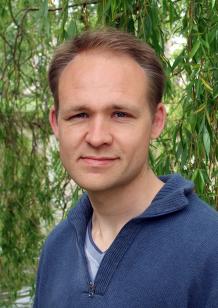
Dr James Herbert-Read is an Associate Professor and Whitten Lecturer in Marine Biology at the Department of Zoology, University of Cambridge. He serves as Deputy Head of Department (Postgraduate Education) and leads the Marine Behavioural Ecology Group. His research focuses on understanding how animals, particularly marine organisms, collect and process information from their environments to make behavioral decisions, with emphasis on social interactions, adaptation mechanisms, and ecological constraints. His group employs theoretical frameworks, controlled experiments, and quantitative field studies to investigate behavioral diversity in marine species. Key themes include collective behavior, predator-prey dynamics, camouflage strategies, and the impacts of environmental stressors on animal decision-making. Recent publications highlight work on lionfish vocalization mechanisms, cuttlefish camouflage, citizen science applications in marine research, and behavioral responses to visual and acoustic noise. Scientific awards and affiliations include: Whitten Lecturer in Marine Biology Associate Professor, University of Cambridge He has supervised research projects on topics such as: Social attraction in invasive fish species Evolution of coordinated movement Neurophysiological basis for leadership in shoals Maternal effects on offspring exploration
Quentin Gausset is an Associate Professor in the Department of Anthropology at the University of Copenhagen, Faculty of Social Sciences. His work bridges environmental anthropology, development studies, and climate action, with extensive fieldwork across West, Southern, and East Africa, as well as Southeast Asia and Denmark. He leads the SAMSKAB research project focused on green transitions and community-driven sustainability. His research interests include environmental anthropology, natural resource management, development, HIV/AIDS, ethnicity, autochthony, indigeneity, kinship, religion, and interdisciplinary field methods. He is a member of the Anthropological Research Group on Nature, Environment and Climate (NEC), reflecting his deep engagement with ecological and societal transformations. The recent scholarly output of Quentin Gausset demonstrates a strong shift toward climate action, citizen-driven environmental initiatives, and sustainable community models, particularly in Denmark. His publications analyze eco-villages, carbon footprinting, and collective behavioral change, emphasizing the cultural and social dimensions of the green transition. This reflects a broader interdisciplinary trend in his work, linking anthropological insight with sustainability science and policy. While no formal scientific awards are listed in the provided material, his editorial leadership in key books on climate mitigation and green transitions underscores his influence in the field. His collaboration with institutions such as Gulu University and participation in research networks highlight his international academic engagement. Quentin Gausset has advised or collaborated on numerous research initiatives and projects, including the Citizen Driven Environmental Action (CIDEA) project and initiatives on natural resource management in Africa. He has contributed to interdisciplinary teaching and capacity-building programs in Southeast Asia and southern Africa, demonstrating a commitment to collaborative and applied research. He is actively involved in the Anthropological Research Group on Nature, Environment and Climate (NEC) at the University of Copenhagen, which serves as a hub for interdisciplinary research on environmental change, sustainability, and community governance. His work often involves collaborative networks across Denmark and internationally, particularly in Africa and Southeast Asia.
Prof. Radek Erban is a Professor of Applied Mathematics at the Mathematical Institute , University of Oxford. He is affiliated with the Oxford Centre for Industrial and Applied Mathematics and works across interdisciplinary fields including Mathematical Biology, Stochastic Processes, and Reaction-Diffusion Systems. His research focuses on: Multiscale modeling of biological and chemical processes Stochastic simulation algorithms for reaction-diffusion systems Mathematical analysis of collective behavior in biological systems Computational methods for chemotaxis and gene regulatory networks Partial differential equation models for biological phenomena Recent work explores multi-resolution simulations of ions, morphogen gradient modeling, and hybrid numerical methods for stochastic processes. His publications span journals in applied mathematics, computational biology, and physical sciences. Current projects involve bridging atomistic and continuum models for chemical systems.
Leibniz Institute of Freshwater Ecology and Inland FisheriesGermany
Jens Krause is a Professor and Head of Department at the Leibniz Institute of Freshwater Ecology and Inland Fisheries (IGB) in Berlin, leading the Research Group on Mechanisms and Functions of Group-Living. He holds a full professorship in Fish Ecology at Humboldt-Universität zu Berlin, Faculty of Life Sciences, Thaer-Institute, and since 2018 has been an Adjunct Professor at Technical University Berlin within the Excellence Cluster 'Science of Intelligence'. His research is centered on collective intelligence, social networks, decision-making, and behavioural ecology in fish and other animals. Full Professor in Fish Ecology, Humboldt-Universität zu Berlin Adjunct Professor at Technical University Berlin (since 2018) Head of Department, IGB Berlin PhD, University of Cambridge Diploma, Free University Berlin His work integrates experimental biology, network analysis, and biomimetic robotics to understand how animals make collective decisions. His expertise spans animal behaviour, evolution, and ecological physiology, with a strong focus on group-living dynamics. Recent research explores group hunting, predator evasion, social foraging, and the impact of environmental stressors on collective behaviour. The analysis of his recent publications reveals a strong trend in understanding collective behaviour in fish, including escape waves, social foraging, group hunting in marlins and sailfish, and the use of robotic agents to study social integration. His interdisciplinary approach combines marine biology, physics, robotics, and data science to uncover the mechanisms behind collective intelligence in both animal and human systems. Editorial Board, Behavioral Ecology Editorial Board, Fish and Fisheries Executive Board, Excellence Cluster 'Science of Intelligence' Advisory Board, Bimini Biological Field Station Foundation He advises numerous PhD students and postdoctoral researchers, and leads major research projects, including 'Developing exploration behaviour' funded by the Excellence Cluster. His work has been supported by extensive collaborations across Europe and North America, and he frequently publishes in top-tier journals such as Nature , Science Advances , Proceedings of the Royal Society , and Current Biology . His lab employs cutting-edge methods including automated tracking, social network analysis, and interactive robotics to study animal groups. His research group, 'Mechanisms and Functions of Group-Living', is embedded within the Excellence Cluster 'Science of Intelligence', where they investigate collective cognition, social information use, and the role of individual differences in group performance. The team combines field studies with laboratory experiments and computational modelling to understand the evolution and function of collective behaviour across species.
Prof. Iain D. Couzin is Director of the Max Planck Institute of Animal Behavior and holds a Professorship in Biodiversity and Collective Behavior at the University of Konstanz. He co-leads the German Research Foundation (DFG) Excellence Cluster “Centre for the Advanced Study of Collective Behaviour” and previously served as a full Professor in Princeton University’s Department of Ecology and Evolutionary Biology. His research focuses on uncovering the principles of collective behavior across biological scales, from neural networks to animal swarms and human societies. Research interests span experimental and theoretical approaches, leveraging cutting-edge technologies like AI-driven behavioral analysis and virtual reality for animals. These methods enable studies on coordination mechanisms in systems such as fish schools, locust swarms, and primate groups, with applications to robotics and social sciences. Key awards include the Leibniz Prize (Germany’s highest research honor), Royal Society Fellowship, and multiple citations as a Highly Cited Researcher. His leadership roles include directing interdisciplinary teams at the Max Planck Institute and the Konstanz Excellence Cluster, fostering collaborations across physics, computer science, and biology. Awards: Royal Society Fellowship (2025), Leibniz Prize (2022), Fyssen Prize (2024), Lagrange Prize (2019) Labs/Teams: Collective Behavior Lab (Max Planck Institute), Centre for the Advanced Study of Collective Behaviour (DFG Cluster)
Professor Ashley Ward is a Professor of Animal Behaviour at the University of Sydney's School of Life and Environmental Sciences. His research focuses on social behaviour, collective animal behaviour, and the ecology of fish, particularly in group-living species. He leads the Animal Behaviour Lab and has authored influential books like Sociality: The Behaviour of Group-Living Animals (2016) and Questions and Answers on Aquarium Fishes (2007–2008). His work integrates experimental and theoretical approaches to understand how animals make decisions in groups, navigate risks, and adapt to environmental challenges. Research interests include predator-prey dynamics, immune system effects on social behavior, and the role of social context in camouflage. Notable grants include 'Understanding animals through movement' (2018) and 'Advancing fauna conservation in post-fire landscapes' (2021). His recent studies explore collective decision-making, immune-challenge responses in fish, and the impact of environmental cues on shoaling behavior. Awards and recognitions are not explicitly listed, but his contributions to fish behavior research are widely cited. He advises on grants and collaborates internationally, with over 100 peer-reviewed articles and books. His lab emphasizes field and laboratory experiments, combining behavioral observations with computational modeling to uncover principles of collective behavior and social organization.
Prof. Malinda Carpenter is a Professor in Developmental Psychology at the University of St Andrews, School of Psychology and Neuroscience. Her research focuses on infants' and young children’s social cognition, including joint attention, prosocial behavior, intergroup reactions, and comparative cognition between humans and apes. She holds editorial roles at Cognition and Child Development Perspectives . Research Interests: Her work examines mechanisms underlying social learning, communicative gestures, and the emergence of shared understanding in early childhood. Key topics include how infants interpret others' mental states, form social bonds, and navigate group dynamics. She also investigates parallels and differences in social cognition between humans and great apes. Awards: Fellow of the Royal Society of Edinburgh (2021), Fellow of the Association for Psychological Science (2012) Supervision: Currently advising PhD candidates Jinzhi Feng and Christina Ruiz-Mendoza Lab Affiliations: Centre for Research into Equality, Diversity & Inclusion; Institute of Behavioural and Neural Sciences Public Engagement: Her team addresses methodological challenges in child research and emphasizes ethical participant recruitment. Recent work explores how time constraints and social contexts influence prosocial behavior in young children.
Dr Jonathan Read serves as Senior Lecturer in Biostatistics at Lancaster Medical School, Lancaster University, specializing in infectious disease transmission dynamics and evolutionary patterns through network-based epidemiological modeling. Educational background includes: PhD in Ecology, University of Stirling (1996) BSc in Biology, York University (1991) His research integrates social contact pattern measurement with population-scale transmission modeling, behavioral response analysis during epidemics, and large-scale human mobility frameworks. Current work focuses on refining outbreak assessment methods and pathogen evolutionary dynamics through both primary data collection and secondary analysis approaches. Recent publications demonstrate a strong emphasis on mobility data integration for infectious disease research, particularly in leptospirosis case studies and pandemic preparedness applications, reflecting interdisciplinary convergence of spatial epidemiology, statistical modeling, and public health intervention design. Scientific recognition includes: Weldon Memorial Prize Dr Read actively supervises PhD candidates in disease dynamics modeling and epidemic control strategies while leading multiple DSI-funded projects including school-level pathogen transmission control, mobility model effectiveness assessment, and SARS-CoV-2 surveillance systems. His research portfolio spans epidemic threat evaluation across Malawi, Uganda, and UK school environments. He contributes to the CHICAS DSI - Health research group and provides expert consultation to the Scientific Pandemic Influenza Group on Modelling, with ongoing projects extending through 2030 addressing transmission network quantification and epidemic preparedness.
Dr. Andrea Flack is an Independent Emmy Noether Group Leader at the Max Planck Institute of Animal Behavior, Konstanz, Germany, and a Junior Group Leader at the Centre for the Advanced Study of Collective Behaviour, University of Konstanz. Her research focuses on understanding how ecological, environmental, and genetic factors shape migratory behaviors in birds, particularly white storks, and their evolutionary consequences. Current Positions: Independent Emmy Noether Group Leader, Max Planck Institute of Animal Behavior (2022–present) Junior Group Leader, Centre for the Advanced Study of Collective Behaviour (2020–present) Education: DPhil in Zoology (2009), University of Oxford Diploma in Biology (2009), Freie Universität Berlin Her work integrates cutting-edge technologies such as high-resolution GPS, accelerometers, and on-board cameras with experimental approaches like delayed-releases and cross-fostering to explore behavioral variation and its implications. Recent research highlights include social learning in migration and the impact of anthropogenic habitats on stork movement patterns. Key trends across her publications emphasize collective decision-making, environmental adaptation, and technological innovations in tracking. Notable contributions appear in journals like PNAS , Current Biology , and Journal of Applied Ecology . Scientific Awards: Emmy Noether Fellowship Dr. Flack collaborates extensively, utilizing Movebank for data integration and leading studies on avian collision risks and migration phenology. Her lab team includes researchers like William Fiedler and Emily Aikens , focusing on experimental designs and ecological modeling.
Andrea Perna is an Assistant Professor at the IMT School for Advanced Studies in Lucca, Italy, with a background in theoretical biology and biophysics. Previously, he held a Senior Lecturer position at the University of Roehampton, UK, and conducted research across Europe and Australia. His work focuses on collective animal behavior, pattern formation in biological systems, and ecology, combining experimental, computational, and mathematical approaches. Education: Degree in Biological Sciences from Scuola Normale Superiore and University of Pisa (Italy), followed by a PhD in Psychophysics (neurobiology) from Scuola Normale Superiore, Pisa. Research Interests: Collective behavior in fish schooling, termite nest architecture, biophysical principles of animal group cohesion, and the interplay between individual behavior and ecosystem properties. Notable projects include modeling trail networks in ants and exploring how environmental factors influence nest construction in termites. Labs/Teams: Leads the Networks Unit at IMT School, collaborating with institutions like the Hawk Conservancy Trust and international researchers in ecology, mathematics, and physics. Active in mentoring PhD and post-doctoral researchers in complex systems and ecological modeling. Grants/Funding: Secured funding for post-doctoral positions studying termite nest evo-devo and collaborative projects on raptor flight mechanics.
Professor Andrew (Jamie) Wood holds a joint appointment in Mathematics and Biology at the University of York, promoted to Professor of Mathematical Modelling in 2021 after serving as Senior Lecturer (2014) and Lecturer (2012). He chairs the Equality, Diversity and Inclusion Committee and co-founded the York Historical Warfare Analysis Group. His educational background includes undergraduate studies at Cambridge, a PhD at Imperial College, and a Royal Commission for the Exhibition of 1851 fellowship at Oxford where he transitioned from Mathematical Physics to biological applications. Earlier research involved Ising models and Daisyworld systems during a postdoc at Edinburgh's JCMB. Wood's research bridges computational mathematics with biological systems, focusing on collective motion dynamics (network interactions and noise effects), microbial ecology (metabolism, spatial structures, plasmid evolution), and unconventional domains like naval warfare modeling and glycosylation pathways . His work consistently applies stochastic modeling to evolutionary questions in symbiosis and translocation. Recent publications reveal an interdisciplinary trajectory spanning conservation biology (arthropod translocation), microbial evolution (plasmid-chromosome fitness tradeoffs), and sustainable biotechnology (cyanobacterial feedstocks). This reflects his core methodology of adapting statistical physics frameworks to biological complexity. Royal Commission for the Exhibition of 1851 fellowship RCUK Fellow (2007) Wood actively recruits PhD students for mathematics-biology interface projects and currently leads major grants including IMPROGLYC0 (EU-funded glycoform programming, 2025-2028) and BBSRC-funded glycan biosynthesis research (2024-2026). His group maintains collaborations with defense analysts through the Historical Warfare Analysis Group. He operates within York's Mathematical Biology and Chemistry Research Group, leveraging cross-departmental infrastructure for agent-based simulations of bacterial communities and warfare scenarios, with emerging work on fungal-cyanobacterial bioprocess engineering.
Associate Professor Nicholas J. Osborne is Theme Leader for Environmental Health Epidemiology at the Queensland Alliance for Environmental Health Sciences (QAEHS), University of Queensland, and Program Director for the Masters of Environmental Health Sciences. Previously affiliated with the Universities of NSW, Sydney, Exeter, Melbourne, Portsmouth, and Flinders, Murdoch Children’s Research Institute, and Cancer Council Victoria, he maintains active roles through UQ's research centers. His academic background includes: BSc (Honors) in Science MAgSc (Master of Agricultural Science) PhD from the School of Population Health, University of Queensland, focused on cyanobacterial toxins and public health effects in southeast Queensland Dr. Osborne specializes in environmental epidemiology examining disease etiology through exposure assessment. Key areas include pollen-respiratory health linkages, chronic kidney disease in low- and middle-income countries, greenspace benefits (metabolic health, vitamin D), indoor air quality (mold, asthma), and climate change impacts (heatwaves, ENSO). His methodology integrates primary data collection (HealthNuts, Cornwall Housing Study) and secondary cohort analysis (UK Biobank, NHANES), using regression models and structural equation analysis to map exposure pathways. Recent publications (2024-2025) reveal dominant trends: 7/15 works analyze greenspace health effects via UK Biobank, 5/15 address heatwave vulnerability in Australia, and 3/15 investigate pollen-climate interactions. Studies consistently employ interdisciplinary approaches linking environmental data with health outcomes, emphasizing mediation analysis and climate attribution. Dr. Osborne has supervised 6 PhD students to completion (2 primary, 4 co-supervisor) and currently mentors 4 PhD candidates. Editorial roles include: Associate Editor, Archives of Environmental and Occupational Health (since 2011) Editorial Board, International Journal of Epidemiology Editorial Board, International Journal of Environmental Research and Public Health Editorial Board, Pediatric Allergy, Immunology and Pulmonology Research projects span HealthIron (iron overload), HealthNuts (food allergy), PollerGEN (pollen DNA), and Sri Lanka CKDu studies. As Theme Leader at QAEHS, he directs the Environmental Health Epidemiology team and collaborates with the Minderoo Centre on plastic pollution research. His work integrates environmental data linkage, field studies, and big data mashups (e.g., MEDMI project) for population health analysis.
Sigal Balshine is a Professor at McMaster University in Hamilton, Canada, affiliated with the Department of Psychology, Neuroscience & Behaviour and serving as associate member of the Department of Biology. Her research focuses on evolutionary behavioural ecology , particularly sociality , breeding system evolution , and anthropogenic impacts on animal behavior , primarily through studies of fish but also extending to birds and human-related ecological issues. PhD in Zoology (University of Cambridge, 1995) BSc in Zoology (University of Toronto, 1989) Post-doctoral fellowships at Tel Aviv University, Konrad Lorenz Institute, and University of East Anglia Her research integrates animal behavior , behavioral ecology , and neuroscience , with recent work examining how environmental stressors like anthropogenic noise and wastewater pollution affect fish physiology and social interactions . She investigates parental care evolution , social hierarchies , and reproductive tactics across species including cichlids, round gobies, and toadfish. Key trends in her 2024-2025 publications include studies on acoustic communication disruption in midshipman fish, environmental stressors in invasive species, and neuroendocrine regulation of social behavior. Her work often combines field and laboratory approaches, emphasizing ecologically relevant contexts . She actively supervises graduate students in both Psychology and Biology departments and leads the Aquatic Behavioural Ecology Laboratory (ABEL) at McMaster University, which explores how aquatic animals adapt to environmental changes through behavioral and physiological mechanisms.
Maxime Aubert is Professor of Archaeological Science at Griffith University, Australia, specialising in geochemical dating of early rock art and hominin fossils. He is a National Geographic Explorer and ARC Future Fellow whose discoveries have twice (2014 & 2020) been selected among the top-10 scientific breakthroughs by the journal Science . His research centres on uranium-series and other micro-analytical techniques to illuminate the timing and context of human evolution, early symbolic behaviour and the colonisation of Wallacea and Sahul. Education PhD Earth Sciences (Uranium-isotope Geochemistry), Université du Québec / INRS, 2009 Research Interests Aubert develops and applies cutting-edge geochemical methods to key questions in human evolution: Dating of Palaeolithic cave art and rock engravings Geochronology of hominin fossils and archaeological deposits Early human dispersals through Island Southeast Asia and into Australia Conservation science for Pleistocene rock-art heritage His recent publications reveal 51,200-year-old narrative art in Sulawesi, 1.04-million-year-old hominin sea-crossings to the same island, and the world’s earliest known surgical amputation (31,000 BP, Borneo), collectively reshaping global timelines of art, technology and medicine. Scientific Recognition Science journal Top-10 Scientific Breakthroughs 2014 & 2020 National Geographic Explorer ARC Future Fellowship Grants & Projects Aubert has secured > AUD 6 million in competitive funding, including ARC Discovery and Linkage projects, National Geographic grants, and industry partnerships with Google Arts & Culture. Current major projects investigate early art and occupation along the northern route to Australia, Aboriginal rock-art management in Cape York Peninsula, and the archaeology of the Great Papuan Plateau. Doctoral Supervision & Team Science He currently supervises Griffith doctoral candidates working on oxalate dating of Australian rock art and Tasmanian hand-stencil heritage, and has previously led or co-supervised PhD projects on Sulawesi underwater archaeology, Indonesian prehistoric migration, Siberian rock art, and Philippine cave archaeology. His team collaborates closely with Indonesian, Australian and European institutions, conducting large-scale field programs in Sulawesi, Borneo and Papua New Guinea.
Alyx Elder is a Lecturer in Zoo Biology and Animal Behaviour at Manchester Metropolitan University, with nearly 20 years of industry experience in exotic zoo animal training. Her research focuses on pinniped sensory systems , AI-based kinematic tracking , and animal welfare , integrating fieldwork in zoos, aquariums, and museum collections. She is a BBSRC Discovery Fellow and member of the Conservation, Ecology, Evolution and Behaviour Research Group . Current PhD student: Katie Todd (Pinniped sensing strategies) Current MSc student: Emma Mcloughlin (South African Fur Seals) Completed MSc/BSc students: Donata Lorenzo , Mollie Taylor , Catherine Smith Her work involves collaborations with institutions like Seaquarium Rhyl and Blackpool Zoo , and she actively contributes to public engagement via media appearances on BBC , ITV , and The ONE Show .