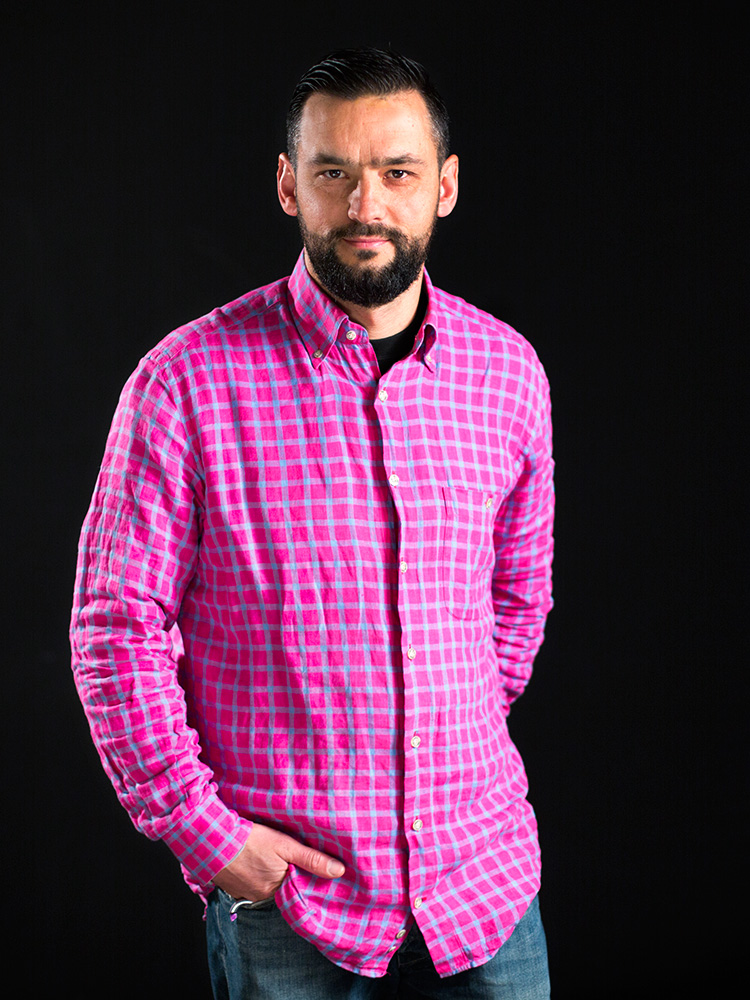
Prof. Dr. Nils Stieglitz is a distinguished Professor of Strategy at Frankfurt School of Finance & Management since 2012 and serves as President & CEO since 2018. He leads the Management Department (2015–2018) and held the Executive Board role as Vice President Corporate Development (2017–2018). His research spans Strategic decision-making Organizational adaptation Human-agent interaction across dynamic environments. His scholarly work appears in top-tier journals like Strategic Management Journal , Management Science , and Organization Science , focusing on complex organizational trade-offs, incentive design, and scenario planning. He also contributes strategic insights to global media outlets such as Harvard Business Review and The Economist . As Senior Editor at the Journal of Organization Design and editorial board member of Organization Science , he shapes discourse on organizational theory. His teaching emphasizes strategy formulation and organizational design principles.
Rebecca Cox is an Assistant Professor in the Department of Psychological & Brain Sciences at Washington University in St. Louis, where she leads the Sleep, Circadian Rhythms, and Psychopathology (SCRAP) Laboratory. Her research investigates the role of sleep and circadian rhythm disruption in anxiety-related disorders, employing multimethod approaches such as actigraphy, melatonin assays, ecological momentary assessment, and clinical trials. Education: PhD, Vanderbilt University MA, Vanderbilt University BA, Hendrix College Her research focuses on how disruptions in sleep and circadian rhythms affect physiological, cognitive, and affective functioning, contributing to the development and persistence of anxiety disorders. She is particularly interested in leveraging sleep and circadian medicine—including light therapy and cognitive behavior therapy for insomnia—as novel treatment strategies. Her work spans populations such as young adults and perinatal individuals, aiming to identify modifiable behavioral targets to improve mental health outcomes. The recent publications highlight a strong trend in integrating objective and subjective sleep measures with clinical psychology, particularly in OCD, PTSD, and general anxiety. Her work increasingly employs real-time data collection and population-level analysis to understand temporal and biological influences on mental health. Scientific Awards: No awards listed in the provided text. Dr. Cox advises students through the SCRAP Lab and is involved in clinical and translational research, though specific grants are not detailed. Her lab uses innovative methodologies to bridge basic science with clinical applications in mental health treatment. Labs and Teams: She directs the SCRAP Lab (Sleep, Circadian Rhythms, and Psychopathology Laboratory), which conducts interdisciplinary research combining sleep science, circadian biology, and clinical psychology to address anxiety-related psychopathology.
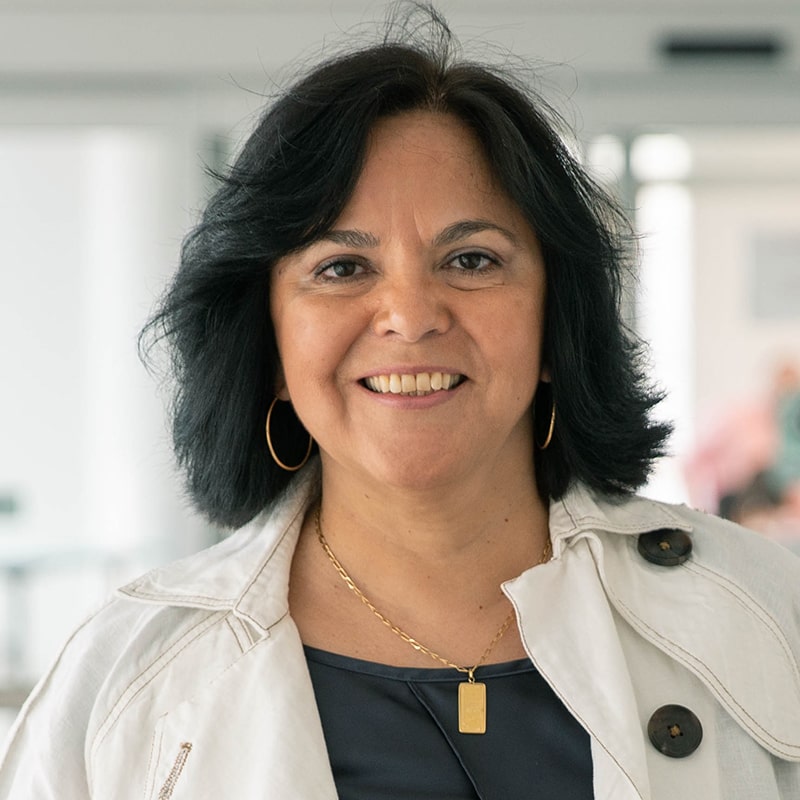
Gustavo Cardoso is a Full Professor of Communication Sciences at ISCTE - University Institute of Lisbon and a researcher at CIES-Iscte - Center for Research and Studies in Sociology. He is also an associate researcher at CADIS in Paris and Director of OberCom - Observatory of the Media in Lisbon. His academic leadership includes directing the PhD in Communication Sciences and three postgraduate programs: Journalism, Fact-Checking and Disinformation, and Communication and Political Consulting. Full Professor, Department of Sociology, ISCTE-IUL Integrated Researcher, CIES-Iscte Director, OberCom - Observatory of the Media Associate Researcher, CADIS, Paris Education: Aggregation in Sociology, ISCTE-IUL (2010) Postgraduate Studies in Global Leadership and Public Policy, Harvard Kennedy School (2009) PhD in Sociology of Communication, ISCTE-IUL (2005) Master’s in European Studies, ISCTE-IUL (1997) Bachelor’s in Business Organization and Management, ISCTE-IUL (1994) Gustavo Cardoso's research focuses on the sociology of communication, media and society, internet studies, and the transformation of journalism in the digital age. His work explores the shift from mass communication to networked communication, the role of screens and mediation, digital democracy, and the cultural impacts of the network society. He investigates how communication shapes institutions, identities, and social change, particularly in times of crisis. His recent publications reveal a strong trend toward theorizing networked communication, mediatized culture, and the communication of communication as a new paradigm. His books analyze digital transformation, youth media practices, open science, and socio-political movements, reflecting a deeply interdisciplinary and globally comparative approach. Scientific Awards and Honors: Grand Officer of the Order of Prince Henry the Navigator Young Global Leader (2009) Member of Academia Europaea – Cinema, Media, and Visual Studies section He has served as advisor to the President of Portugal on Information Society policy (1996–2006) and as non-executive Vice-Chairman of the Lusa news agency (2006–2012). He leads major research projects on open science and digital transformation, often funded by the Calouste Gulbenkian Foundation. His international collaborations include the World Internet Project and research networks across Europe, the US, and Asia. He mentors students and researchers in communication, sociology, and digital culture. His leadership extends to editorial and organizational roles in books and research initiatives, including co-editing volumes on network society, crisis cultures, and media models. He is actively involved in shaping communication education and policy in Portugal and beyond.
Dr. Antoinette K. Kankindi serves as the Global Visiting Associate Professor of Law and Senior Research Fellow in the Integrity Program at Strathmore University Law School, Nairobi, Kenya. Her academic career spans over two decades, with roles including Director of Strathmore Governance Centre (2009–2013) and Senior Lecturer since 2004. She holds a PhD in Political Philosophy (2008, University of Navarra, Spain) and a Master’s in Governance (2005, University of Navarra). Her expertise bridges ethics, politics, and law, focusing on governance, political legitimacy, and African institutional frameworks. Education: PhD in Political Philosophy, University of Navarra (2008) Master’s in Governance, University of Navarra (2005) LLM and LLB, University of Kinshasa Her research emphasizes ethical foundations of politics, particularly in African contexts, addressing integrity in public leadership and democratic traditions. Notable projects include the Student Civic Initiative and Youth and Women’s Participation in Community Development . She publishes in African governance, ethics, and political philosophy, with works in collaboration with institutions like Radboud University and Palgrave MacMillan. Dr. Kankindi’s multilingualism (English, French, Spanish, Italian, Kiswahili) and cross-continental experience enrich her scholarship. She previously worked as a legal officer for Chevron and the Chilean Embassy, contributing to projects empowering marginalized groups in the Democratic Republic of Congo.
Lena Springer is a Research Associate in the History and Philosophy of Science at King’s College London, affiliated with the Department of Theology & Religious Studies and the Lau China Institute. Her work focuses on traditional Chinese medicine (TCM), indigenous botanical knowledge, and the intersection of environmental cosmology with healing practices. She leads the ERC-funded Cosmological Visionaries project exploring climate change responses in China-Russia border regions. Education: D.Phil. in Sinology from the University of Vienna (focus: transmission of scientific heritage in China). Research includes ethnographic fieldwork across China’s ethnic regions, examining multi-ethnic folk medicines and materia medica histories. She has held roles as Senior Research Fellow at Sichuan University and Affiliate of the Austrian Academy of Sciences' Institute for Social Anthropology. Research interests include biosocial interactions in indigenous sciences, the preservation of traditional medical landscapes, and academic migration dynamics. Her forthcoming book Arztgeschichten adopts a biographical approach to 20th-century TCM evolution, while her database work bridges historical pharma-recipes with modern drug development. Funding comes from the Wellcome Trust, EU Synergy Grants, and institutions in China/Taiwan. Teaching includes Sinology, pharmacognosy, and narrative-biographical methods. Public engagement includes media commentary on TCM innovations and heritage preservation projects.
Natalia Villanueva-Nieves is an Assistant Professor in the Department of Chicana and Chicano Studies at Sonoma State University. Her interdisciplinary scholarship bridges literary studies, affect theory, and digital humanities, with a focus on Latinx, Chicanx, Central American, and Caribbean expressive cultures. Her academic background includes a doctoral degree in Chicana and Chicano Studies from the University of California, Santa Barbara, and a master’s in Comparative Literary Studies from Utrecht University. Dr. Villanueva-Nieves' research explores Latinx emotional geographies, transnational feminisms, hemispheric race studies, and digital storytelling. She investigates how affect, space, and racialization intersect in Latina narratives, particularly through relational and hemispheric frameworks. Her work emphasizes collective archives of care and hope in Latinx testimonial writing. Her recent publications reflect a strong trend toward interdisciplinary and public-facing scholarship, combining literary analysis with digital tools and social justice engagement. The articles span themes such as affective spaces, digital archives, transnational feminisms, and geocritical approaches to Latinx literature. Her scholarly work has appeared in Chiricú Journal , Ex-Centric Narratives Journal , Zócalo Public Square , American National Biography , Aztlán: A Journal of Chicano Studies , and edited volumes from UNAM and the University of Alcalá de Henares. Dr. Villanueva-Nieves is currently developing a digital monograph that uses interactive maps and digital storytelling to present Latinx testimonial writing as living archives. She is also completing her book The True Colors of Feeling Brown: Affect and Space in Latina Narratives , under contract with Palgrave in the Geocriticism and Spatial Literary Studies series.
Darshana Sreedhar Mini is an Assistant Professor in the Department of Communication Arts at the University of Wisconsin–Madison, where she teaches and conducts research at the intersection of feminist media, gender & sexuality studies, transnational media, migrant media, and South Asian screen cultures. She is also the Director for Media and Gender Justice at the 4W Initiative and holds affiliations with the Center for Southeast Asian Studies, Gender and Women’s Studies, Center for Visual Cultures, Center for South Asia, and the Havens Wright Center for Social Justice. Ph.D., Division of Cinema and Media Studies, University of Southern California M.Phil., Center for Studies in Social Sciences, Calcutta (CSSSC), India Dr. Mini’s research centers on Global Media Cultures, Transnational Cinemas and Migration, South Asian Cinema, and Feminist Media. Her work critically examines soft-porn cinema in India, media publics, censorship, labor in the entertainment sector, and migrant media practices. Her first book, Rated A: Soft-Porn Cinema and Mediations of Desire in India (UC Press, 2024), is a groundbreaking study that combines archival and ethnographic methods to explore the social and cultural impact of Malayalam soft-porn from the 1970s to the 2000s. Her second book project, Telegeographies of Indian Migration , investigates media flows between South Asia and Southeast Asia, focusing on colonial-era labor migration and its lasting effects on identity and community formation. Her recent publications span a diverse range of topics including South Asian pornographies, digital intimacy, anti-caste activism, #MeToo and intersectional feminism, transnational empathy in cinema, and media infrastructures. These works reflect a strong trend toward interdisciplinary, feminist, and decolonial scholarship that challenges dominant canons in film and media studies. Edward Cameron Dimock, Jr. Prize in the Indian Humanities, AIIS, 2024 Early Career Award, NCA, 2024 Race, Ethnicity and Indigeneity Fellow, IRH, UW-Madison, 2024 Byerly Award for Feminist Political Economy, ICA, 2023 First Book Award, The Center for Humanities, UW-Madison, 2022 SCMS Student Writing Award, 2017 Dr. Mini has been actively involved in academic service and leadership, including directing the Media and Gender Justice initiative, co-organizing seminars on migrant media, and contributing to feminist and anti-caste scholarship. Her research has been supported by prestigious grants from the Social Science Research Council (SSRC), American Institute of Indian Studies (AIIS), National Endowment for the Humanities (NEH), and the University of Wisconsin–Madison. She also leads a significant grant-funded project as Principal Investigator for the 'South Asian Film and Media Collection' at UW-Madison. She is a key member of several collaborative research environments, including the Center for Visual Cultures and Performance Studies (CVCPS), the Wisconsin Center for Film and Theatre Research (WCFTR), and the 4W Initiative, where she directs programming on media and gender justice. These affiliations reflect her commitment to interdisciplinary, socially engaged scholarship and the creation of inclusive academic communities.
Milan Bernard is a Lecturer and PhD candidate in the Department of Political Science at the University of Montreal's Faculty of Arts and Sciences. His academic work focuses on contemporary political philosophy with special emphasis on Hannah Arendt's theoretical framework. As a doctoral researcher, he actively contributes to the department's teaching mission while pursuing his dissertation on conflict in politics and solidarity mechanisms. His educational background includes: Master's in Political Theory (2016), University of Toronto Bachelor's in International Studies (2015), University of Montreal Bernard's research explores the presence of conflict at the heart of politics and the potential for balancing its destructive potential through solidarity. His work with Hannah Arendt's intellectual legacy examines contemporary ideological landscapes, social movements, and the diffusion of ideas in international relations. His scholarship demonstrates a consistent focus on how political theory can address current democratic challenges and ecological crises. His publications from 2022-2025 reveal a strong concentration on democratic theory, political conflict, and solidarity concepts, with increasing attention to environmental politics and climate governance. The trajectory shows deepening engagement with Hannah Arendt's work while expanding into contemporary political challenges. His scientific recognition includes: Merit Scholarship for Graduate Studies (ESP), University of Montreal (2023) GRIPP Research Fellowship (2023-2024) Support Scholarship for Graduate Studies (ESP), University of Montreal (2024) SSHRC Doctoral Fellowship (2024-2025) Bernard has been actively involved in academic mentorship through the Department of Political Science's mentoring program and has participated in organizing major academic events including the ACfas Congress and the Quebec Society of Political Science Congress. His professional engagement extends to the National Council of the Unemployed (CNC) where he serves as co-spokesperson, connecting his academic work with social activism. He has also contributed to the Feminist Perspectives Network (RPF) as a research assistant, demonstrating commitment to both theoretical and applied political work.
Jose Antonio Hinojos Morales is a contemporary artist and researcher affiliated with Miguel Hernández University of Elche, where he completed his PhD in 2020. His academic work focuses on contemporary painting practices within the broader context of visual arts research. His research interests center around pictorial languages and procedures in contemporary contexts , with particular emphasis on the relationship between landscape, nature, and culture. He investigates how landscapes function as cultural constructs and explores innovative methodologies in the representation of the human face through art. His work also engages with decolonial thought and aesthetics, media archaeology, and expanded painting techniques. Hinojos Morales' artistic output demonstrates significant trends in contemporary Spanish art, particularly in the exploration of spiritual, philosophical, and scientific concepts through visual media. His work often challenges conventional perceptions and hegemonic epistemological positions, creating dialogues between traditional and contemporary artistic approaches. Second place, VIII International Painting Competition 'Miradas 2018', Chicago (USA), 2018 Second Prize, XIX Pastor Calpena Painting Prize, Aspe (Alicante), 2015 First Prize, XLVI National Painting Contest Vila de Sant Joan d'Alacant, 2013 First Prize, III National Painting Competition No to Fear, La Nucía (Alicante), 2013 Third Prize, XVII National Painting Competition City of Antequera, Antequera (Málaga), 2013 As an educator and researcher, Hinojos Morales has coordinated the Altea Artistic Residency program, directing multiple landscape-focused scholarship-residencies that support emerging artists. His work bridges academic research with professional artistic practice, contributing to both scholarly discourse and the contemporary art scene in Spain.
Cleotilde (Coty) Gonzalez is a Research Professor of Decision Sciences at Carnegie Mellon University, with primary affiliation in the Department of Social and Decision Sciences (SDS). She serves as the Founding Director of the Dynamic Decision Making Laboratory (DDMLab) and Research Co-Director of the NSF National Institute for AI for Societal Decision Making (AI-SDM). Her extensive academic affiliations include the Security and Privacy Institute (CyLab), the Societal Computing program in the Software and Societal Systems Department (S3D), the Human-Computer Interaction Institute (HCII) in the School of Computer Science, and the Center for Behavioral Decision Research (CBDR) and Center for Neural Basis of Cognition (CNBC). Dr. Gonzalez holds a Ph.D. in Management Information Systems and has developed Instance-Based Learning Theory (IBLT), a significant contribution to cognitive science that explains how people make decisions based on past experiences. Her research spans experimental studies and computational modeling of cognitive processes in dynamic decision environments, with applications in cybersecurity, human-machine teaming, and societal decision making. Her recent publications reveal a strong focus on human-AI collaboration, collective intelligence, cybersecurity, and cognitive modeling. The research trends show increasing integration of AI systems with human decision processes, particularly examining how humans and AI can complement each other in complex decision environments. Her work increasingly addresses cybersecurity challenges through behavioral science perspectives, exploring how cognitive models can improve defense mechanisms against social engineering attacks. Lifetime Fellow of the Cognitive Science Society Lifetime Fellow of the Human Factors and Ergonomics Society Member of the Governing Board of the Cognitive Science Society Member at Large of the Policy Council of the System Dynamics Society Committee member of the National Academies Division Committee for the Behavioral and Social Sciences and Education Dr. Gonzalez has mentored over 50 post-doctoral fellows and doctoral students, with many going on to successful careers in academia, government, and industry. Her research has been supported by major collaborative efforts including Collaborative Research Alliances (CRA) and Multi-University Research Initiative grants from the Army Research Laboratories (ARL) and Army Research Office (ARO), as well as projects with the Defense Advanced Research Projects Agency (DARPA). She directs the Dynamic Decision Making Laboratory, which conducts research involving laboratory experiments and cognitive computational models to derive theoretical conclusions about dynamic decision making and develop applications for societal problems.
Magnus Linnarsson is a Professor of History at Stockholm University's Department of History, specializing in political history with a focus on early modern and modern Sweden. His research examines institutional change, public-private service organization, and the evolution of the welfare city. He leads undergraduate programs and supervises students at all levels. PhD in History (2010), Lund University Associate Professor (2017), Stockholm University His research spans four centuries of political conflicts over public services, state formation, and urban development. Key works include analyses of Sweden's postal, customs, and welfare systems, comparing hierarchical and contractual state organization models. Recent publications (2024) in Nordic Welfare Cities explore urban citizenship and inclusive welfare systems since 1850, challenging national narratives by emphasizing local governance. Earlier studies (2022–2018) dissected regime shifts, mercantile-state relations, and publicness concepts in tramway and telecom debates. Current projects include: Skiftande regimer (2021–2025): State formation and administrative reform (Vetenskapsrådet-funded) Olika vägar till välfärdsstaden (2021–2025): Nordic urban welfare debates (Riksbankens jubileumsfond-funded) He advocates for interdisciplinary analysis of political economy, institutional loyalty, and spatial dynamics, connecting historical debates to modern policy challenges.
Ashley J Thomas is an Assistant Professor at Harvard University, specializing in infant and child social cognition. Her research explores how young humans develop naive sociology, focusing on social hierarchy, intimacy perception, and moral judgments of parenting decisions. Education: PhD in Psychology (2018), MA in Psychology (2015) from UC Irvine, BA in Architecture (2008) from UC Berkeley. Her work reveals infants use caregiver interactions to evaluate social partners and demonstrates that saliva sharing serves as a key cue for relationship recognition. She examines how implicit theories of intelligence correlate with brain plasticity beliefs, showing that malleable intelligence theories align with environmental influence acceptance. Scientific awards include the NIH National Research Service Award and multiple fellowships. She has organized symposia on social cognition at the Cognitive Development Society and Society for Research on Child Development conferences.
Maha Haji serves as Assistant Professor in Cornell University's Sibley School of Mechanical and Aerospace Engineering and Systems Engineering field member since 2021. She directs the Symbiotic Engineering and Analysis (SEA) Lab, pioneering sustainable offshore technologies for Blue Economy advancement and climate change mitigation through interdisciplinary symbiotic system design. Her academic credentials include: B.S. in Mechanical Engineering and B.A. in Applied Mathematics from University of California, Berkeley (2012) M.S. in Oceanographic Engineering from MIT/Woods Hole Oceanographic Institution (2015) Ph.D. in Mechanical and Oceanographic Engineering from MIT/Woods Hole Oceanographic Institution (2017) Professor Haji's research integrates Systems Engineering and Ocean Engineering to develop sustainable offshore solutions, emphasizing Design Optimization for renewable energy systems (offshore wind/wave), mineral extraction from seawater, desalination, and aquaculture. Her work creates synergistic multi-functional platforms that harmonize resource harvesting with ocean ecosystem preservation. Publication analysis reveals consistent focus on symbiotic offshore systems, with 2018-2019 studies demonstrating interdisciplinary approaches to ocean resource utilization—spanning environmental science, engineering design, and economic optimization for critical mineral extraction and renewable energy integration. She secured $2.6M in NOAA Sea Grant funding for the MOLLUSCA microplastic collecting robot project with Professor Sunny Jung, advancing ocean conservation technology. Her mentorship cultivates next-generation engineers in sustainable offshore development through the SEA Lab's research framework. The SEA Lab operates as a multidisciplinary hub developing symbiotic engineering solutions for offshore wind, mineral extraction, and aquaculture systems, emphasizing lifecycle sustainability and climate resilience in ocean technology deployment.
Eduardo Mercado III is a Professor in the Department of Psychology at the University at Buffalo, College of Arts and Sciences. His research focuses on bioacoustics, cognitive psychology, and marine ecology, particularly the vocal behavior of humpback whales and its implications for understanding human impact on marine ecosystems. He is also known for his work in perceptual learning, autism spectrum disorder, and comparative cognition. Scientific Awards Guggenheim Fellowship Harvard Radcliffe Institute Fellowship Research Trends His recent publications emphasize bioacoustic analysis of humpback whale songs, including their spectral entropy, cyclical variations, and adaptive adjustments to anthropogenic noise. Additional work explores perceptual learning mechanisms in autism, neural network modeling for acoustic classification, and cognitive processes in canines and rodents. Projects Mercado’s “Singers as Sentinels” project combines acoustic analysis of humpback whale songs with public awareness initiatives about ocean noise pollution. The project will produce a book, Why Whales Sing and Dolphins Don’t , and a web-based interface for public engagement.
Kaveri Medappa is a Postdoctoral Researcher in Human Geography at the University of Oxford's Department for Continuing Education and a Junior Research Fellow at Kellogg College. She contributes to a multi-institutional ESRC-funded project, 'Trucking Lives: Making Space for People in Truck Driving Work', focusing on UK HGV drivers' work-life conditions. Formerly associated with the University of Sussex, where she earned her PhD in International Development (2022), and St. Joseph’s College, Bengaluru. Doctoral research on app-based workers in Bengaluru under Prof Geert De Neve and Dr Rebecca Prentice Teaching experience in Anthropology and Social Work across UK and India Previous role as Research Associate in 'Speculative Urbanism' project Her expertise spans labour anthropology , critical mobility studies , and feminist political economy , examining intersections of digital technologies, financialisation, and social movements. Recent publications highlight gig economy dynamics, platform worker rights, and speculative finance impacts. Key trends in her research include: Digital labor platform governance (2020–2023) Comparative truck driving work (2024) Financialisation and social reproduction (2022–2025) Urban displacement and affective landscapes (2020) Scientific recognition includes: DSA 'Highly Commended' PhD Thesis Prize (2023) Adam Weiler Doctoral Research with Impact Award (2022) Chancellor’s International Research Scholarship (2018–2021) Her work connects academic research with public scholarship through policy briefs, media contributions, and podcast appearances.