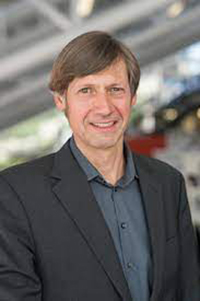
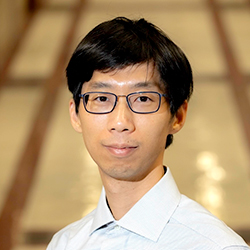
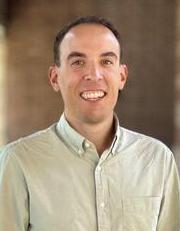
Herman Bruyninckx is a Part-Time Full Professor at Eindhoven University of Technology (TU/e) in the Mechanical Engineering department, specifically within the Control Systems Technology group and EAISI High Tech Systems initiative. He also serves as a professor (Hoogleraar) at KU Leuven in Belgium. Academic focus on robotics, control systems, and multi-agent coordination Active research in model predictive control , semantic mapping , and dynamic constraint algorithms Recent publications address industrial automation , agro-food robotics , and haptic technology Research Highlights : Developed hybrid decision-making frameworks for multi-agent navigation Innovated swing-free control methods for robotic pick-and-place operations Formulated constrained dynamics algorithms with LQR-Gauss principle integration Created ExoTen-Glove for haptic feedback in virtual environments Collaborative Projects : Coordinated with researchers like René van de Molengraft , Elena Torta , and Koen de Vos Contributed to NWO/TTW FlexCRAFT project for cognitive robotics in agro-food technology
Professor Clinton Fookes is a faculty member at the Queensland University of Technology (QUT) within the School of Electrical Engineering & Robotics . His research focuses on leveraging computer vision and artificial intelligence to develop automated systems that understand, anticipate, and interact with human behaviors, with applications in medical diagnostics, autonomous vehicles, defense, and industrial efficiency . Research areas include AI adaptability, multimodal biosignal analysis, and human-machine interaction Collaborates with CSIRO Data61, Defence Science and Technology Group, Orica, Airbus, and Sentient Vision Systems Develops systems for human action detection, infrastructure monitoring, and stress response prediction His work addresses critical challenges in AI deployment, such as environmental adaptability and reducing diagnostic errors in medical and autonomous systems. Recent publications highlight trends in self-supervised learning, zero-shot knowledge transfer, multimodal integration , and 3D reconstruction for healthcare , while exploring ethical AI use in sectors like mining and defense . Professor Fookes emphasizes interdisciplinary collaboration, bridging engineering, medicine, and social sciences to advance AI systems capable of real-world impact. His research agenda includes improving AI memory capabilities and explainability for safer, more reliable automation.
Martin Bechthold is the Kumagai Professor of Architectural Technology at Harvard University’s Graduate School of Design (GSD), serving concurrently as the GSD’s Academic Dean. He holds affiliations with Harvard’s Paulson School of Engineering and Applied Sciences and the Wyss Institute for Biologically Inspired Engineering. His academic career bridges architecture, materials science, and engineering, with a focus on innovative material systems and design robotics. Bechthold earned a Diplom-Ingenieur in architecture from RWTH Aachen University and a Doctor of Design from Harvard GSD. He previously practiced architecture in Europe with firms like Skidmore, Owings & Merrill and Santiago Calatrava. His research groups, including the Material Processes and Systems (MaP+S) Group and the Design Robotics Group, explore topics like multi-material 3D printing, carbon-negative materials, and biofabrication. He founded the Laboratory for Design Technology to foster industry-academia collaborations. His research interests span structural innovation, architectural ceramics, and the perception of materials. He has authored seminal works such as Innovative Surface Structures and Ceramic Material Systems , and his peer-reviewed papers appear in Nature Reviews and Advanced Functional Materials . He teaches advanced courses on material systems, design methods, and structural design. Bechthold’s work emphasizes sustainable technologies and cross-disciplinary design, with projects like the Concrete Origami and Ceramic Futures exhibitions showcasing experimental material applications. He holds patents in material innovation and has curated influential design exhibitions.
Guo Ping is an Associate Professor of Mechanical Engineering at Northwestern University, leading the Advanced Intelligent Manufacturing Laboratory (AIM). His research focuses on precision manufacturing, intelligent metrology via deep learning, and advanced manufacturing applications. He holds a Ph.D. from Northwestern University and a B.S. in Automotive Engineering from Tsinghua University. Education: Ph.D. in Mechanical Engineering, Northwestern University, Evanston, IL B.S. in Automotive Engineering, Tsinghua University, Beijing, China Research Interests: Dr. Guo’s work emphasizes innovations in precision engineering, including ductile-regime machining, smart metrology systems, and robotics-driven manufacturing. Key areas include structural coloration, additive manufacturing, and human-robot collaboration in industrial settings. His lab explores cutting-edge techniques like ultrasonic vibration machining and machine learning for defect detection and process optimization. Publications Trends: Recent work spans AI-driven quality control (e.g., photometric stereo networks), robotic swarm patterning, and wearable fatigue monitoring systems. His research bridges machine learning, robotics, and traditional manufacturing to address scalability and precision challenges. Awards: F.W. Taylor Medal (CIRP, 2023) ASME Kornel F. Ehman Manufacturing Medal (2021) SME Outstanding Young Manufacturing Engineer Award (2020) Professional Service: Associate Editor of the Journal of Manufacturing Processes (2017–present). Active in organizing conferences and reviewing for top journals. Labs & Teams: Directs the AIM Lab, which integrates robotics, AI, and advanced materials to solve problems in precision fabrication and smart manufacturing. Current projects include structural coloration for anti-counterfeiting and fatigue prediction in industrial workers.
Levi J Hargrove is an Associate Professor at Northwestern University, holding dual appointments in the Department of Physical Medicine and Rehabilitation at the Feinberg School of Medicine and the Department of Biomedical Engineering at the McCormick School of Engineering. He is also a Research Scientist at the Center for Bionic Medicine at Shirley Ryan AbilityLab. His work focuses on developing neural control systems for prosthetic limbs, particularly in myoelectric control and pattern recognition, aiming to create clinically viable solutions for amputees. Education: BScE in Electrical Engineering, University of New Brunswick, 2003 MScE in Electrical Engineering, University of New Brunswick, 2005 PhD in Electrical Engineering, University of New Brunswick, 2008 Research Interests: Signal processing, pattern recognition, myoelectric control of powered prostheses, and neural interfaces for bionic limbs. His lab translates research into clinical applications, such as the first thought-controlled bionic leg and Coapt LLC's pattern recognition systems for upper-limb prosthetics. Awards: 2017 American Academy of Orthotists and Prosthetists Research Award 2014 Department of Defense Outstanding Research Team Award 2015 Collaboration Award from Chicago Innovation Grants: Manages a $25 million portfolio from federal, military, and philanthropic sources. Key projects include NSF-funded research on human-robot interaction and DoD grants for prosthetic innovation. Labs: Leads the Regenstein Foundation Center for Bionic Medicine and collaborates with the Neurorehabilitation and Neural Engineering Lab. His work emphasizes translational research, bridging engineering and clinical practice.
Vivek Boominathan is an Assistant Research Professor in the Department of Electrical and Computer Engineering at Rice University. He is affiliated with the GLEE lab (Geometry, Light, & Imaging lab). His research focuses on computational imaging, combining computer vision, machine learning, applied optics, and nanofabrication to develop innovative imaging systems for applications such as robotics, medical sensing, and virtual/augmented reality. He has contributed to projects like PhlatCam (a lensless camera) and NeuWS (neural wavefront shaping). His work bridges optics, algorithms, and materials science to overcome traditional limitations in imaging systems. Boominathan's research interests include lensless imaging, optical meta-devices, turbulence mitigation, and bio-inspired imaging systems. He has developed systems like Foveated thermal imaging prototypes and real-time lensless microscopes. His lab emphasizes interdisciplinary approaches, integrating hardware design with machine learning. Key projects include: NeuWS: Neural wavefront shaping for imaging through scattering media CoIR: Compressive implicit radar for sensing applications FlatCam and PhlatCam: Ultra-thin lensless imaging devices Bioluminescence imaging in marine species His work has been published in top venues like Science Advances, Optica, and IEEE TPAMI. He collaborates with institutions like NASA JPL and industry partners on applied imaging solutions. Current research trends emphasize sensor-algorithm co-design and high-speed imaging systems for AR/VR applications. Boominathan holds a PhD in Electrical Engineering and has extensive postdoctoral experience in computational imaging. He advises projects in the GLEE lab and mentors students in hardware-software co-design for imaging systems. His lab focuses on translating theoretical innovations into practical devices with commercial potential.
Stefanie Tellex is an Associate Professor of Computer Science and Engineering at Brown University. She leads research in Human-Robot Interaction, focusing on enabling robots to understand natural language instructions and collaborate effectively with humans. Her work spans robotics, artificial intelligence, and reinforcement learning, with a strong emphasis on practical applications like teleoperation, task execution, and language grounding. Education : PhD in Computer Science, Massachusetts Institute of Technology (2010) MS in Computer Science, MIT (2006) MEng in Computer Science, MIT (2003) BSc in Computer Science, MIT (2002) Research Interests : Her research integrates robotics with natural language processing, emphasizing: Developing systems that interpret complex human instructions Improving robot learning through weak supervision Designing intuitive human-robot collaboration interfaces Advancing reinforcement learning for real-world robotic tasks Publications Trends : Recent work highlights advancements in: - Language-grounded reward functions for robots - Virtual reality frameworks for robot teleoperation (ROS Reality) - Abstract planning techniques for non-Markovian tasks - Hybrid architectures for interpreting multi-granularity instructions. Teaching : CSCI 1410: Artificial Intelligence CSCI 1951R: Introduction to Robotics CSCI 2951K: Topics in Collaborative Robotics Advising & Labs : Advises students on robotics and NLP projects. Active in Brown’s robotics labs focusing on human-robot collaboration and AI-driven systems.
Hasan Ayaz, PhD, is an Associate Professor at Drexel University’s School of Biomedical Engineering, Science and Health Systems, and the Department of Psychology in the College of Arts and Sciences. He is a core member of the CONQUER Collaborative and has affiliations with the University of Pennsylvania and Children’s Hospital of Philadelphia. His research focuses on neuroengineering, neuroergonomics, and clinical applications of optical brain imaging, particularly using fNIRS and EEG. He has over 200 publications and has secured funding from federal agencies and industry partners. Dr. Ayaz serves on editorial boards for journals like PLOS One and Frontiers in Human Neuroscience and has organized international neuroergonomics conferences. Education: BSc (Electrical and Electronics Engineering, Boğaziçi University, Turkey), MSc and PhD (Drexel University). Research Interests: Neuroergonomics, functional neuroimaging, biomedical signal processing, neuroengineering, fNIRS, EEG, brain-computer interfaces, and mobile neuroimaging. His work aims to develop next-generation brain imaging technologies for applications ranging from aerospace to healthcare. Key Awards: Received a Wellcome LEAP Grant for Addiction Research in 2024. Grants & Advising: Extensive federal and corporate funding; no explicit student list provided. His research involves interdisciplinary collaborations and clinical partnerships. Labs/Teams: Leads the CONQUER Collaborative and contributes to the Cognitive Neuroengineering group at Drexel.
Dr. Andrew Erwin is an Assistant Professor in Mechanical Engineering at the University of Cincinnati, focusing on robotics, human-robot interaction, and rehabilitation engineering. He holds a PhD and MS from Rice University (2018, 2014) and a BS from the University of Massachusetts Amherst (2012). Prior to UC, he was a postdoc at the University of Southern California and the Jet Propulsion Laboratory. His research explores how forces and movements are executed in healthy individuals, and how robotic devices can assist or restore function post-injury. Key areas include rehabilitation robotics, bio-inspired systems, haptic interfaces, and motor learning. He has received prestigious awards such as the NASA Postdoctoral Program Fellowship (2018) and the IEEE/ASME Transactions on Mechatronics Best Paper Award (2017). Dr. Erwin’s work integrates biomechanics, control systems, and neurophysiology. His lab develops devices like the SE-AssessWrist for wrist assessment and explores planetary seismometers for space missions. He maintains an active Google Scholar profile with over 25 publications. Education: PhD, Mechanical Engineering, Rice University, 2018 MS, Mechanical Engineering, Rice University, 2014 BS, Mechanical Engineering, University of Massachusetts Amherst, 2012 His current research emphasizes curriculum design for robotics learning, human-robot collaboration, and adaptive control systems. He offers a PhD position for Fall 2025 focusing on these areas.
Matthew Holden is an Associate Professor in the School of Computer Science at Carleton University. He holds a PhD (2018) and MSc (2014) from Queen's University and a BScH (2012) from Western University. His research focuses on Surgical Data Science, applying machine learning to surgical time-series data from operating rooms and simulations to improve patient outcomes and surgical training. Key areas include real-time decision support, performance assessment, and surgical efficiency through domain-knowledge integration. Research interests emphasize machine learning for surgical workflows, skill assessment via sensor data (e.g., motion tracking, EEG), and computer-assisted interventions. Notable work includes automated proficiency evaluation in cataract surgery, ultrasound-guided procedures, and neurosurgical training. His contributions span medical robotics, surgical education, and clinical decision support systems. Publications highlight advancements in surgical workflow anticipation, tool detection, and skill metrics across domains like ophthalmology, emergency medicine, and neurology. Holden advocates for interdisciplinary approaches combining computational methods with clinical expertise to enhance healthcare delivery.
Huazhen Fang is an Associate Professor in the Department of Mechanical Engineering at the University of Kansas School of Engineering, where he joined in 2014. He leads the Information & Smart Systems Laboratory (ISSL) and holds a courtesy appointment in the Department of Electrical Engineering & Computer Science. His research focuses on enabling intelligence for complex systems through information-driven approaches. Dr. Fang received his Ph.D. in Mechanical Engineering from the University of California, San Diego in 2014, following an M.Sc. from the University of Saskatchewan and a B.Sc. in Computer Science & Technology from Northwestern Polytechnic University in China. He was a Visiting Faculty Fellow at Mitsubishi Electric Research Laboratories in 2022. His research interests span Systems and Control, Advanced Battery Management, Energy Storage Systems, and Robotics, with particular focus on system modeling, estimation, control design, machine learning and numerical optimization. Dr. Fang's work has significant applications in energy management, cooperative robotics, and environmental observing systems. His research has been supported by the National Science Foundation, Department of Energy, Army Research Laboratory, and Mitsubishi Electric Research Laboratories. His extensive publication record shows a clear trend toward increasingly sophisticated integration of physics-based modeling with machine learning approaches, particularly in battery management systems and autonomous vehicle control. Recent work demonstrates a growing emphasis on Bayesian inference methods, distributed control architectures, and safety-critical applications of intelligent control systems. Faculty Early Career Award from National Science Foundation (2019) University Scholarly Achievement Award (2024) Miller Professional Development Award (2022) Miller Faculty Scholar Award (2018, 2019, 2023) Wesley G. Cramer Outstanding Mechanical Engineering Faculty Award (2016) Big XII Faculty Fellowship (2015) IEEE Transactions on Transportation Electrification Prize Paper Award (2024) Dr. Fang has successfully mentored numerous graduate students through the Information & Smart Systems Laboratory, with many receiving awards for their research. His research has attracted significant funding from prestigious organizations including the National Science Foundation, Department of Energy, Army Research Laboratory, and Mitsubishi Electric Research Laboratories. He currently serves as an Associate Editor for multiple prestigious journals including Information Sciences, IEEE Transactions on Industrial Electronics, and IEEE Control Systems Letters. The Information & Smart Systems Laboratory (ISSL) under Dr. Fang's leadership has established itself as a center for cutting-edge research in information-driven smart systems. The lab focuses on pushing the frontiers of information extraction, analysis and exploitation for dynamic systems to deal with system complexity and enable system intelligence. The lab actively collaborates with industry partners and local communities, emphasizing research that serves societal needs.
Bo Wu is an Associate Professor in the Department of Computer Science at Colorado School of Mines. His research focuses on compilers and programming systems, particularly program optimizations for heterogeneous computing and emerging architectures, with applications in machine learning and graph processing. He joined Mines in 2014 after earning a Ph.D. from The College of William and Mary and earlier degrees from Central South University in China. Education : B.S. in Computational Science and Technology (Central South University, 2005) M.S. in Computer Science (Central South University, 2008) Ph.D. in Computer Science (The College of William and Mary, 2014) Research Interests : Wu's work emphasizes enhancing data locality in heterogeneous systems, GPU scheduling, and optimizing applications for emerging architectures. His contributions include frameworks like GraphZero for efficient graph mining and FLEP for GPU preemption. Awards & Grants : NSF SPX Award (2018) NSF CAREER Award (2018) Supercomputing Best Paper Award (2015) Multiple NSF grants for GPU-related research Advising & Grants : Wu has led several NSF-funded projects and actively participates in conference program committees (e.g., PPoPP, SC, ICS). His research spans compiler optimizations, parallel computing, and high-performance systems. Labs & Teams : While specific labs aren’t named, his work involves collaborations on GPU-based systems, graph processing frameworks, and compiler toolchains.
Jack Snoeyink is a Professor at the University of North Carolina at Chapel Hill, holding joint appointments in the Department of Computer Science (College of Arts & Sciences) and the School of Data Science and Society. His research focuses on computational geometry, with applications in molecular biology, geographic information systems (GIS), and geometric modeling. His work in computational geometry explores algorithmic design and analysis for problems in solid modeling, computer graphics, and robotics. Key application areas include terrain modeling in GIS, molecular structure validation in biochemistry, and computational topology. He has contributed to output-sensitive algorithms for convex hulls and Voronoi diagrams, and geometric search problems. Articles highlight his expertise in computational geometry, with trends spanning 1999-2000. Topics include contour tree algorithms (SODA'00), watershed extraction (ASPRS'99), and skeleton generation (Crust.pdf). His work bridges theoretical advancements with practical implementations in GIS and structural biology. Jack Snoeyink has collaborated with researchers like Marc van Kreveld, Christopher Gold, and Bettina Speckmann on projects related to Delaunay triangulation, regression depth computation, and geometric assembly problems. He previously served as a program director at the National Science Foundation's CISE division (2015-2018) and co-founded the TRIPODS program for data science foundations.
Kalaichelvi Saravanamuttu is an Associate Dean in the Faculty of Science and a Professor in the Department of Chemistry and Chemical Biology at McMaster University. Her research focuses on optochemical self-organization in soft materials, nonlinear optics, and photonics, with applications in light capture, waveguide architectures, and all-optical computing. She holds a PhD in Chemistry from McGill University (2001) and conducted postdoctoral research at the University of Oxford (2001-2003). Her work combines polymer chemistry, photochemistry, and optical physics to develop functional materials like photoresponsive hydrogels and waveguide-encoded lattices. Key research themes include light-induced structural changes in soft matter, dynamic optical systems, and bio-inspired optical devices. Teaching includes courses on equity in science (SCIENCE 2AR3/4AR6) and advanced materials (CHEM 4W03). She has received funding from NSERC, the Canadian Foundation for Innovation, and the US Army Research Office. Her research group collaborates widely, with recent studies exploring electroactive hydrogels and switchable self-trapped light beams.
Joshua D. Bard is an Associate Professor and Associate Head for Design Research at Carnegie Mellon University's School of Architecture. His work bridges traditional craft and cutting-edge robotics, focusing on human-machine collaboration in construction domains. He leads Archolab, an award-winning research group exploring digital fabrication methods like 'Morphfaux' (robotic plaster techniques) and 'Spring Back' (parametric steam bending). Education: M.Arch (Distinction) from University of Michigan; B.A. in Literature & Philosophy from Wheaton College. Professional affiliations include the Manufacturing Futures Institute and rob|arch. Research emphasizes reviving historical crafts through digital tools, such as augmented reality interfaces for architectural education and thermal-tuned concrete panels via robotic processes. His teaching includes generative modeling and architectural robotics labs. Awards: Architect Magazine R+D Award, Canadian Wood Council Merit Award Key Projects: Plaster ReCast AR app, Thermally Informed Robotic Concrete Panels Collaborators: Dana Cupkova, Garth Zeglin, Steven Mankouche Current courses include 62-225 Generative Modeling and 48-555 Introduction to Architectural Robotics. His work is featured in venues like the Carnegie Museum of Art and academic journals like International Journal of Architectural Computing .