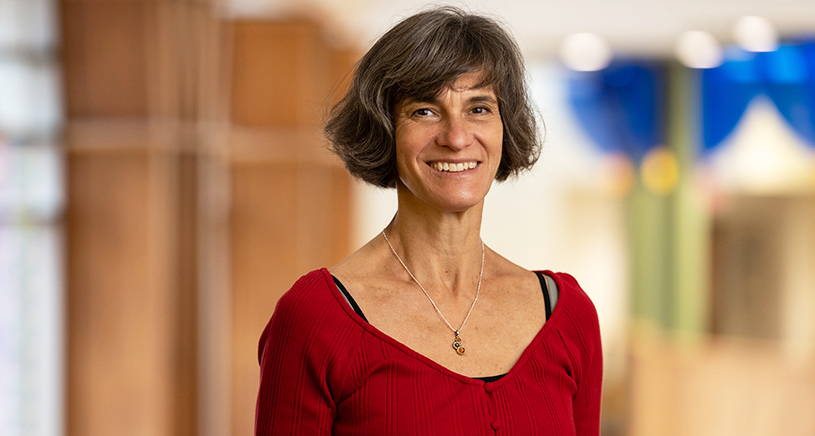
Professor Fiona McConnell is a leading political geographer at the University of Oxford , affiliated with the School of Geography and the Environment and St Catherine's College as a Tutorial Fellow. Her career spans institutions like Newcastle University (as Lecturer) and Trinity College, Cambridge (Junior Research Fellow). Education: BA in Geography, University of Cambridge (Fitzwilliam College) PhD, Queen Mary University of London McConnell's research explores governance beyond the state , focusing on stateless communities , diplomacy in marginalized spaces , and geographies of peace . She pioneers concepts like liminal geopolitics and diaspora diplomacy , examining how marginalized groups engage in statecraft and redefine legitimacy. Her recent publications reveal trends in digital diplomacy , self-determination , and legal geographies . Collaborations with scholars like Costas Constantinou, Elaine Ho, and Liam Saddington highlight her interdisciplinary approach. Scientific Awards: Philip Leverhulme Prize for Geography (2019) Back Award, Royal Geographical Society (2022) British Academy Mid-Career Fellowship (2017) McConnell supervises doctoral students in areas including contested sovereignties , digital mediation , and peacebuilding through natural resources . She leads the Gobi Framework project (2018–2021) on sustainable mining in Central Asia and co-founded the Model UNPO teaching initiative.
Heiner Giefers is a Professor for Cloud Computing at the Department of Computer Science and Natural Sciences at Southwestphalia University of Applied Sciences since 2018. Prior to this position, he worked as a Research Staff Member at IBM Research - Zürich (2013-2018), focusing on hardware acceleration in cloud environments, implementation of big data algorithms on FPGAs, and development of hardware platforms for approximate and in-memory computing. Dr. Giefers received his doctorate (Dr. rer. nat.) from Universität Paderborn in 2012 with a dissertation titled "Design and Programming of Reconfigurable Mesh based Many-Cores." His academic journey at Universität Paderborn includes serving as an Academic Council Member (Akademischer Rat a.Z.) from 2008-2013 and as a Scientific Staff Member from 2006-2012, where he taught digital technology and computer architecture. Professor Giefers' research focuses on energy-efficient computing, particularly through hardware acceleration using FPGAs for cloud and AI workloads. His work spans cloud computing infrastructure, hardware-software co-design, approximate computing, in-memory computing, and energy-efficient implementations of machine learning algorithms. He has made significant contributions to the field of reconfigurable hardware for high-performance computing applications. His recent publications show a strong trend toward applying hardware acceleration techniques to artificial intelligence and machine learning workloads, with a particular focus on energy efficiency. His work bridges the gap between theoretical computer science and practical hardware implementation, often resulting in patented technologies that address real-world computing challenges in cloud environments. Best Paper Award for "Stochastic Matrix-Function Estimators: Scalable Big-Data Kernels with High Performance" (2016) Best Paper Award Nomination for "Energy-Efficient Stochastic Matrix Function Estimator for Graph Analytics on FPGA" (2016) Best Paper Award Nomination for "Analyzing the energy-efficiency of dense linear algebra kernels by power-profiling a hybrid CPU/FPGA system" (2014) Best Paper Award Nomination for "A Triple Hybrid Interconnect for Many-Cores: Reconfigurable Mesh, NoC and Barrier" (2010) Professor Giefers actively supervises numerous Bachelor's and Master's students, with over 50 completed theses covering topics from machine learning and cloud computing to IoT systems and hardware acceleration. He leads the "Energy-efficient AI" project (eki), which aims to increase the energy efficiency of AI systems through approximation techniques for FPGA implementation. Additionally, he collaborates with Prof. Dr. Christian Plessl on the "Digital teaching materials with Jupyter Notebooks" project, creating interactive learning materials that integrate teaching content, program code, and results into a single document. His work extends to practical applications through multiple patents related to FPGA implementations, neural networks, and memory systems, demonstrating his commitment to translating research into real-world solutions.
Fiona Zisch serves as Associate Professor at The Bartlett School of Architecture, University College London (UCL), holding key roles including Programme Director for the MArch Design for Performance and Interaction and Co-Chair of the UK chapter of the Academy of Neuroscience for Architecture (ANFA). She directs the International Centre for NeuroArchitecture and NeuroDesign and leads research at UCL's BodyLab. Her academic trajectory spans positions at the University of Innsbruck, University of Greenwich, University of Westminster, and University of Plymouth. Her educational foundation includes a Dipl. Ing. in Architecture (BSc/MSc equivalent) from the University of Innsbruck and Lunds Tekniska Hogskola, followed by a PhD from UCL's Bartlett School of Architecture and Institute of Behavioural Neuroscience. Zisch's transdisciplinary research explores cognitive ecologies through the integration of architecture, cognitive neuroscience, experimental psychology, philosophy of mind, critical theory, and cyberfeminism. Central to her work is the concept of wickedness and wicked thresholds —dynamic spaces of transformation where discovery emerges through reciprocity between neural spatial construction, architectural design concepts, and experiential qualities. Her investigations into embodied cognition examine how movement and bodily presence shape architectural experience, informed by her background in dance and collaborations with choreographers across spatial and temporal scales. Analysis of her 15 most recent publications reveals a dominant interdisciplinary trajectory merging architectural design with neuroscience. Key trends include neural mechanisms of spatial aesthetics, comparative studies of real/virtual environments, and the application of neuroarchitecture to equitable design. Her work consistently addresses spatial memory distortions , embodied navigation , and affective responses to built environments, while expanding into exhibition-based explorations of care ethics, disruption, and societal transformation through art-technology collaborations. Zisch supervises PhD candidates in UCL's Architectural Design MPhil/PhD programme and cross-departmental students in Neurology and Behavioural Neuroscience. Her teaching emphasizes 5EA cognition (extending 4EA models to incorporate Entanglement) and atmospheric design within performance-oriented architectural education. She actively contributes to international academic discourse through lectures, workshops, and external examination roles. She leads the BodyLab at UCL Here East, a transdisciplinary research space investigating the intersection of architectural design, neuroscience, and movement studies. The lab fosters collaborations with neuroscientists, choreographers, and technologists to develop experimental frameworks for understanding embodied spatial cognition through both physical and virtual environments.
Professor Sophia Psarra is a faculty member at The Bartlett School of Architecture within University College London . Her research and teaching focus on the interplay between spatial configuration, architecture, and sociopolitical dynamics, particularly in parliamentary buildings and urban environments. She directs the Architectural and Urban History and Theory PhD Programme and has authored significant works including Architecture and Narrative (2009) and The Venice Variations (2018), along with co-editing Parliament Buildings: The Architecture of Politics in Europe (2023). PhD in Architecture from University College London (1997) MSc in Architecture (Research) from University College London (1986) Diploma in Architecture from National Technical University of Athens (1985) Her research spans transdisciplinary fields such as architectural history and theory , space syntax , urban morphology , and social/political philosophy . Recent work examines parliamentary architecture and its role in political culture, supported by collaborations with the UCL European Institute and international conferences. Her publications highlight spatial cognition, power dynamics, and the impact of digital media on urban design. Key trends in her recent articles include: Spatial modeling of parliamentary buildings and political culture Space syntax applications in museums and urban environments Interdisciplinary analysis of architecture, language, and institutions Urban resilience strategies during pandemics Scientific recognition includes: First prizes in EUROPAN architectural competitions Parliament Buildings (2023) shortlisted for the Colvin Prize University College London Publication Award (2003) She has supervised 11 PhD students to completion and served as external examiner for 19 PhDs internationally. Her work has received funding from the Leverhulme Trust , NSF (USA) , Onassis Foundation , and UCL Grand Challenges . She collaborates with institutions like the Natural History Museum and Museum of Modern Art to explore spatial design impacts on human experience.
Dr. Carole Dalin is Associate Professor in Sustainable Food Systems at University College London's Bartlett School of Environment, Energy & Resources, where she leads the Sustainable Food Systems research team at the Institute for Sustainable Resources. She also holds a dual appointment as CNRS Researcher at École normale supérieure in Paris, leading the European Research Council Starting Grant FLORA project on 'Sustainable and healthy food solutions: system dynamics and trade-offs'. Her academic journey began with a Diplôme d'Ingénieur from Ecole Centrale Paris in 2011, followed by a Ph.D. in Environmental Engineering & Water Resources from Princeton University in 2014 under the supervision of Ignacio Rodriguez-Iturbe. Her research bridges environmental engineering and policy, with a primary focus on the environmental sustainability of global food production and trade. Dr. Dalin's work specifically addresses water resources management within food systems, the water-food-energy nexus, and biodiversity conservation impacts. She has developed integrated environmental sustainability indicators for global food production and has made significant contributions to understanding virtual water trade and groundwater depletion embedded in international food commerce, with particular attention to vulnerable regions like Southern Africa. Dr. Dalin's scholarly output demonstrates a consistent trajectory toward understanding the complex interconnections between food systems, environmental sustainability, and human health. Her work has increasingly integrated biodiversity considerations with water sustainability metrics, and she has become a key contributor to the Lancet Countdown reports that examine health implications of climate change. Recent publications highlight her expanding focus on developing practical solutions for sustainable food systems that balance environmental protection with food security needs. NERC Independent Research Fellowship (2016-2021) ERC Starting Grant FLORA (2022-2027) Multiple contributions to The Lancet Countdown on health and climate change reports Dr. Dalin actively mentors a diverse research team comprising both current and former Ph.D. students and postdoctoral researchers who investigate various dimensions of sustainable food systems. Her research has secured funding from prestigious organizations including NERC, the European Research Council, and the Wellcome Trust. She maintains strong collaborative relationships across institutions, particularly with UCL's Centre for Biodiversity and Environment Research and French research institutions through her CNRS position at École normale supérieure. She facilitates the Water and Food Resource Nexus research theme at UCL's Institute for Sustainable Resources, which integrates multiple projects addressing different aspects of food system sustainability, including the FOODIES project on environmental indicators, ADVENT on energy and nature valuation, and research on climate change impacts on food security.
Martha Tsigkari serves as an Associate Professor at The Bartlett School of Architecture, University College London (UCL), where she bridges architectural practice with cutting-edge computational research. Her position situates her at the forefront of digital transformation in the built environment, with institutional affiliations spanning UCL's Faculty of the Built Environment and direct contributions to UN Sustainable Development Goals 4 (Quality Education), 11 (Sustainable Cities), and 13 (Climate Action). Her research program critically examines the integration of artificial intelligence, machine learning, and cognitive psychology into architectural design processes. Key investigations include spatial and visual connectivity analysis, XR-enhanced collaborative design environments, and AI-driven optimization of building performance. She explores how digital tools reshape creativity, professional identity, and sustainability outcomes in architecture, with particular focus on data commoditization, skills evolution, and human-AI collaboration in design workflows. Her interdisciplinary approach connects architectural theory with computational neuroscience and industrial digitalization trends. Tsigkari's publication trajectory reveals a clear evolution from computational structural analysis (2012-2017) toward AI ethics and professional transformation (2022-2024). Early work established foundations in performance-driven facades and material systems, while recent output confronts existential questions about architectural practice in the AI era. Her scholarship consistently addresses the tension between technological capability and human-centered design values, with growing emphasis on sustainable development frameworks and educational implications. Scientific Awards: No major awards are documented in the available records. Advising and Grants: While specific supervisees and funding mechanisms aren't detailed in current sources, her extensive collaborative network across 30+ publications indicates active mentorship and research leadership. Co-authorship patterns suggest involvement in multi-institutional projects addressing AECO industry digitalization, with potential ties to UK research councils and industry partnerships like RIBA. Labs and Teams: Tsigkari operates within The Bartlett's digital research ecosystem through recurring collaborations with Kosicki, Tarabishy, and Psarras. Her work manifests in experimental toolsets including Glaucon (XR design environment), HYDRA (optimization framework), and SandBOX (conceptual design system), indicating leadership in UCL's computational design labs focused on human-AI interaction and sustainable building technologies.
Jorge Camba is an Associate Professor at the School of Engineering Technology and holds a courtesy appointment in the Department of Computer Graphics Technology at Purdue University . He also serves as a Senior Research Scientist (by courtesy) in the Department of Industrial Engineering at the University of Naples Federico II , Italy. PhD in Systems and Engineering Management (Universidad Politécnica de Valencia, Spain) MSc in Digital Media (East Tennessee State University) MSc in Computer Science (Universidad de Vigo, Spain) His research explores intelligent CAD systems , digital manufacturing , and mixed reality environments , focusing on model quality assurance , design intent communication , and collaborative design tools . Recent work investigates spatial cognition in CAD education , geometric variability analysis , and annotation-driven knowledge management . Key trends in his publications include parametric modeling strategies , 3D annotation systems , and XR applications in design evaluation. Awards include the Purdue Faculty Scholar (2021) and I3B Fellow (2021). He has presented at conferences on topics like Industry 4.0 , space habitat design , and digital product quality .
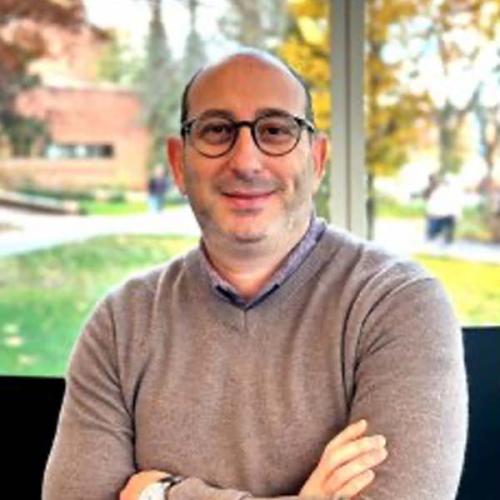
Hazar Dib is an Associate Professor at the School of Construction Management Technology, Purdue Polytechnic Institute, Purdue University. His work bridges Building Information Modeling (BIM) , knowledge management , and interactive learning technologies to advance construction education and process efficiency. Ph.D. in Building Construction (2007, University of Florida) MSc. in Civil Engineering (2002, University of Balamand) BSc. in Civil Engineering (2000, University of Balamand) Research Interests focus on: BIM lifecycle integration AI/knowledge-based systems for construction Digital tools for surveying and steel connection education Collaborative communication frameworks Sustainability metrics in building practices Human factors in technology adoption Scientific Awards include multiple Charles B. Murphy Awards for undergraduate teaching and the Society of Leaders in Construction induction. His NSF-funded projects like VELS (Virtual Environment for Learning Surveying) and Steel Connection Teaching Tool highlight his innovation in STEM education . Articles span serious games , visual learning , and BIM maturity assessments , reflecting his interdisciplinary approach.
Professor Odd Jarl Borch is a prominent academic at Nord University specializing in emergency preparedness, crisis management, and Arctic security. His work bridges theoretical research with practical implementation through international collaborations and policy contributions. Education: Harstad Gymnasium Norwegian School of Economics Umeå University, Sweden Indiana University, USA Bodin Maritime College Professor Borch's research focuses on emergency preparedness systems in high-complexity environments, particularly in the Arctic region. His work examines civil-military cooperation, hybrid threats, and organizational management during crises. He has pioneered research on maritime safety in polar regions and developed frameworks for cross-border emergency response coordination. His approach integrates theoretical organizational models with practical crisis management applications, emphasizing the unique challenges of Arctic operations. His recent publications (2020-2024) reveal a strong trajectory toward hybrid threat analysis and collaborative security frameworks. The research consistently addresses Arctic-specific challenges while developing universally applicable emergency response models. Key themes include virtual network intelligence, civil-military coordination mechanisms, and structural adaptations for high-complexity environments. His work demonstrates increasing emphasis on digital transformation in emergency management and the evolving nature of security threats in polar regions. Professor Borch leads significant research initiatives including the NORDLAB Center for Emergency Preparedness and Cooperation and coordinates a network of 25 European researchers on civil-military preparedness. He has initiated major international collaborations such as the Arctic Safety and Security network with 22 universities and the ARCSAR innovation network. His practical impact extends to public service through membership on the Corona Commission, the Total Emergency Preparedness Commission, and the cruise industry safety investigation committee. He has supervised numerous bachelor's, master's, and PhD students in organization and management subjects related to security and crisis management. His teaching portfolio includes fisheries economics, vessel operations, financial management, and crisis management. Professor Borch's laboratory work centers on the NORDLAB emergency management facility, which conducts advanced simulation training for Arctic emergency response professionals.
Betty Tärning is a researcher at the Department of Philosophy, Lund University , specializing in Cognitive Science and Educational Technology . She is affiliated with the eSSENCE: The e-Science Collaboration and contributes to the LU Profile Area: Natural and Artificial Cognition . Her work focuses on digital learning environments, pedagogical agents, and feedback systems. Email: betty.tarning@lucs.lu.se Office: LUX:B467, Helgonavägen 3, Lund Research Interests: Tärning investigates how virtual reality and educational games can enhance learning outcomes, particularly in middle school and early childhood education . Her recent work explores robotic emotional expression and feedback neglect in digital contexts. Article Trends: Recent publications emphasize human-robot interaction , virtual learning environments , and feedback mechanisms in educational games. She integrates cognitive modeling with pedagogical design to address challenges in digital literacy and student engagement . Projects & Collaborations: Active in initiatives like DeSIDE: Designing Sustainable Digital Work and Virtuellt klassrum som forskningsplattform , she collaborates across disciplines, including with Pufendorf IAS and Humanities Lab . Her network includes researchers from Sweden , Europe , and North America .
Brett Bligh is a Senior Lecturer at Lancaster University's Department of Educational Research and Director of the Doctoral Programme in E-Research and Technology Enhanced Learning. His work focuses on technology-driven institutional change in post-compulsory education through Activity Theory and interventionist methodologies like the Change Laboratory. Current roles: Director of Teaching for Department of Educational Research Leadership in International Society for Cultural-historical Activity Research (ISCAR) Co-editorships: Studies in Technology Enhanced Learning, Bureau de Change Laboratory Research interests center on: Digital transformation in higher education Activity theory applications Change Laboratory interventions Technology-enhanced learning frameworks His recent publications analyze: Open Educational Practices (2025) Virtual sustainability initiatives (2025) Pandemic-era educational pivoting (2022) Networked learning frameworks (2023) He supervises numerous PhD students (20+) working on: AI integration in teaching Blended learning communities Logistics education reform Medical professional identity
Philippa Clarke is a Professor in the Department of Epidemiology at the University of Michigan School of Public Health and a Research Professor at the Institute for Social Research. Her work focuses on the intersection of social epidemiology , social gerontology , and health equity , examining how neighborhood environments influence cognitive aging , disability , and health outcomes across the life course. Education: PhD, Public Health (2000), University of Toronto MSc, Public Health (1996), University of Toronto BA, Psychology (1987), McGill University She directs the National Neighborhood Data Archive (NaNDA) , a national repository of contextual data for studying health inequalities. Her research integrates innovative methods like Google Street View and Systematic Social Observation to measure environmental factors, with recent projects analyzing disparities in type 2 diabetes , cognitive decline , and COVID-19 impacts across urban and rural settings. Her publications span social epidemiology , disability studies , and environmental health , emphasizing the role of neighborhood walkability , social infrastructure , and policy interventions in promoting healthy aging. She has contributed to understanding racial disparities in health outcomes and developed frameworks like 'Cognability' to link urban design with cognitive resilience. Her methodological work on virtual neighborhood audits has set standards for environmental health research, and she collaborates across disciplines to address aging with disability , stroke recovery , and public health policy . Current projects examine how neighborhood socioeconomic history and environmental exposures shape later-life cognition and metabolic diseases .
Elina Eriksson is an Associate Professor at the Department of Media Technology and Interaction Design (MID) within the School of Electrical Engineering and Computer Science at KTH Royal Institute of Technology. She holds additional affiliations with Green Leap, Digital Futures, and the KTH Climate Action Center. Dr. Eriksson co-leads the Sustainable Futures Lab research group and serves as programme responsible for the new Sustainable Digitalisation master's programme launching in autumn 2024. Dr. Eriksson earned her PhD from KTH with the thesis 'Situated Reflexive Change - User-centred Design in(to) Practice' in 2013, while also working at Uppsala University during her doctoral studies. Her academic journey demonstrates a consistent focus on the intersection of technology and sustainability. Her research centers on sustainability and human-computer interaction (S-HCI), specifically exploring how computing can facilitate the transition to a more sustainable world. She investigates change processes and practices across multiple domains, with particular emphasis on energy transitions, academic travel emissions, sustainable behavior change, and futures thinking for sustainability. Dr. Eriksson approaches these challenges through both theoretical frameworks and practical interventions. Analysis of Dr. Eriksson's publication record reveals a strong trajectory in sustainable computing, with increasing focus on climate action and systemic change in recent years. Her work bridges technical computing research with social science perspectives, emphasizing practical applications for sustainability challenges across academic, organizational, and everyday contexts. Dr. Eriksson currently manages the project 'Beyond the event horizon: tools to explore local energy transformations' and contributes to 'Decreased CO2-emissions in flight-intensive organisations' and 'HabitWise - Creating Sustainable Everyday Habits.' She teaches courses including 'ICT and Sustainability,' 'Leading Complex Change Processes,' and 'Sustainable ICT in Practice,' while examining various degree projects across computing disciplines. As co-leader of the Sustainable Futures Lab, Dr. Eriksson fosters interdisciplinary research that examines how digital technologies can support sustainable practices and transitions. The lab serves as a hub for innovative approaches to sustainability challenges through human-centered computing research.
Yuta Sugiura is an Associate Professor in the Department of Information and Computer Science at Keio University's Faculty of Science and Technology. His research focuses on innovative human-computer interaction techniques, particularly in wearable computing, tangible interfaces, and novel input methods. Previously, he worked as a postdoctoral researcher at the National Institute of Advanced Industrial Science. Dr. Sugiura's research interests span Human-Computer Interaction, Wearable Computing, Augmented Reality, Tangible User Interfaces, Gesture Recognition, Ubiquitous Computing, Haptics, and Virtual Reality. His work often explores how everyday objects and environments can become interactive surfaces, with notable projects including the iRing (intelligent ring), SenSkin (skin as interface), and EarHover (mid-air gesture recognition for hearables). He has developed numerous novel interaction techniques that leverage physical properties of materials and human physiology for input and output. His recent publications indicate a strong focus on hearable computing, medical applications of HCI, edible interfaces, and novel authentication methods. The research shows a consistent pattern of exploring unconventional interaction surfaces and leveraging subtle physical phenomena for input sensing. His work has significant implications for healthcare applications, particularly in neurological disorder screening and rehabilitation. Best Paper Award Dr. Sugiura has advised numerous students who have gone on to publish significant work in top-tier HCI venues. His research has been supported by various grants enabling the development of novel interaction techniques and systems. He maintains strong collaborations with researchers across Japan and internationally, particularly in the fields of wearable computing and medical applications of HCI. His laboratory appears to focus on lifestyle computing, developing interfaces that integrate seamlessly into daily activities. Current projects include exploring edible displays, adaptive ear interfaces, and novel authentication methods using wearable devices. Future work seems to be heading toward more medical applications of HCI, particularly in neurological assessment and rehabilitation.
Gaang Lee is an Assistant Professor in the Department of Civil and Environmental Engineering at the University of Alberta's Faculty of Engineering, where he joined in 2022 after earning his Ph.D. from the University of Michigan. His research pioneers 'sympathetic' built environments that enhance safety, health, productivity, and comfort for workers and users through integration of wearable biosensors, AI, extended reality, and robotics with psychophysiological theories. Education: Ph.D in Civil and Environmental Engineering, University of Michigan, Ann Arbor (2022) - Emphasis: Construction Engineering and Management; Graduate Certificate in Computational Discovery and Engineering Graduate Certificate in Computational Discovery and Engineering, University of Michigan, Ann Arbor (2022) M.S. in Architectural Engineering, Yonsei University, South Korea (2012) - Emphasis: Construction Engineering and Management B.S. in Architectural Engineering, Yonsei University, South Korea (2010) Dr. Lee combats technological exclusion for marginalized groups (construction workers, older adults) by developing empathetic technologies for workplaces, buildings, and urban spaces. His work applies human sensing, AI, and digital twins to create environments that adapt to diverse human needs, with key projects spanning psychophysiological safety monitoring, human-robot collaboration, and inclusive urban design. He integrates psychophysiological and socio-cognitive theories to address real-world gaps in construction engineering and computer science. His recent publications (2023-2025) reveal strong trends in AI-driven safety hazard identification, biosensor-based stress/fatigue monitoring, and virtual reality for construction team dynamics. A critical emerging focus is equity-centered technology design, with increasing publications addressing inclusive built environments and technological access for vulnerable populations through graph-based algorithms, domain adaptation, and interpretable AI models. Scientific Awards: No awards mentioned in the provided text. Dr. Lee actively recruits students for his 'Empathetics' research group starting in 2026, prioritizing candidates with empathy, research motivation, and commitment to diversity and inclusion. While specific grants are not detailed, his research program receives institutional support from the University of Alberta and likely external funding given its interdisciplinary scope and industry relevance. He leads the 'Empathetics' research group (part of Attentive Hub) which emphasizes diversity as fundamental to innovation. Current projects include psychophysiological monitoring for occupational safety, trustable human-robot collaboration systems, and extended reality frameworks for empathetic built environments. The group collaborates with IHT LAB (https://www.iht-lab.com/) and focuses on deploying technologies that make daily surroundings safe, healthy, and truly inclusive for all individuals.