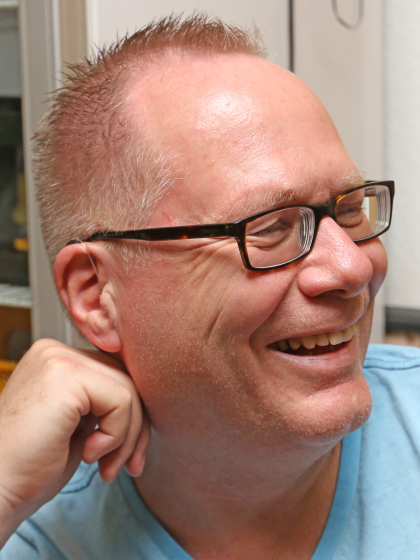
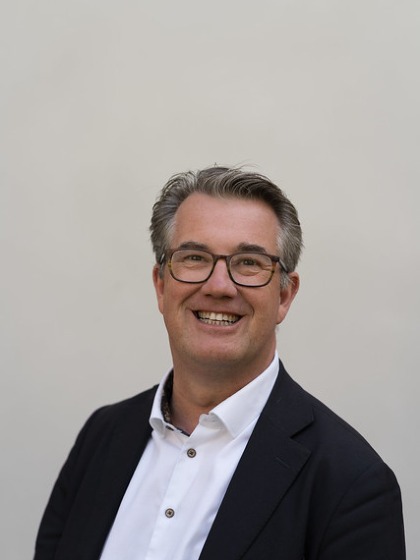
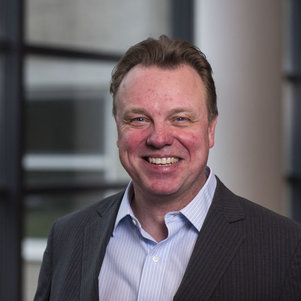
Dr. Wim Biemans is an Associate Professor at the Faculty of Economics and Business of the University of Groningen, specializing in Innovation Management and Marketing. He holds a PhD from Eindhoven University of Technology (1989) and has over 25 years of experience in research, teaching, and consulting. His work focuses on service innovation, B2B marketing, customer involvement in innovation, and the marketing-sales interface. He has authored over 100 peer-reviewed articles and books, including the best-selling Dutch B2B marketing textbook. His research has been recognized with awards like the Thomas P. Hustad Best Paper Award. He serves as Triage Editor for the Journal of Product Innovation Management and editorial board member for Industrial Marketing Management and Journal of Business & Industrial Marketing. Biemans teaches at the University of Groningen and multiple international institutions, including guest professor roles in Europe, Asia, and the U.S. He also designs executive programs for managerial training in innovation management and customer value creation. His recent research explores humor’s impact on creativity, digital tools in sales-marketing integration, and bridging technology-to-product development gaps. He emphasizes end-to-end value creation through intra-organizational collaboration and has published on the Valley of Death ecosystem challenges in innovation commercialization.
O.J. (Oliver) Moore is a Professor and Chair of Chinese Language & Culture at the University of Groningen's Faculty of Arts. His expertise spans Art History of China, early/modern Chinese history, archaeology, and material culture. He holds a PhD from Cambridge University and has held roles at Leiden University, the British Museum, and Kyoto University. His research integrates historical, technical, and aesthetic aspects of Chinese art and culture, with a focus on photography, printing systems, and classical texts. Education: Studied Chinese at London University (SOAS) and Fudan University (Shanghai), PhD at Cambridge on Tang Dynasty civil service recruitment rituals. Teaching includes modern Chinese language, East Asian art/media, and thesis writing. He supervises PhD projects on Chinese art collecting in the Netherlands and collaborates internationally on courses like 'Chinese Gardens in Europe.' Key publications: Photography in China: Science, Commerce and Communication (2022), translations of Tang-era texts, and studies on Tang art and archaeology. Research emphasizes demystifying Chinese culture through translation and cross-disciplinary approaches. Past roles include Curator at the Netherlands Museum of Ethnology and Visiting Professor at Kyoto University.
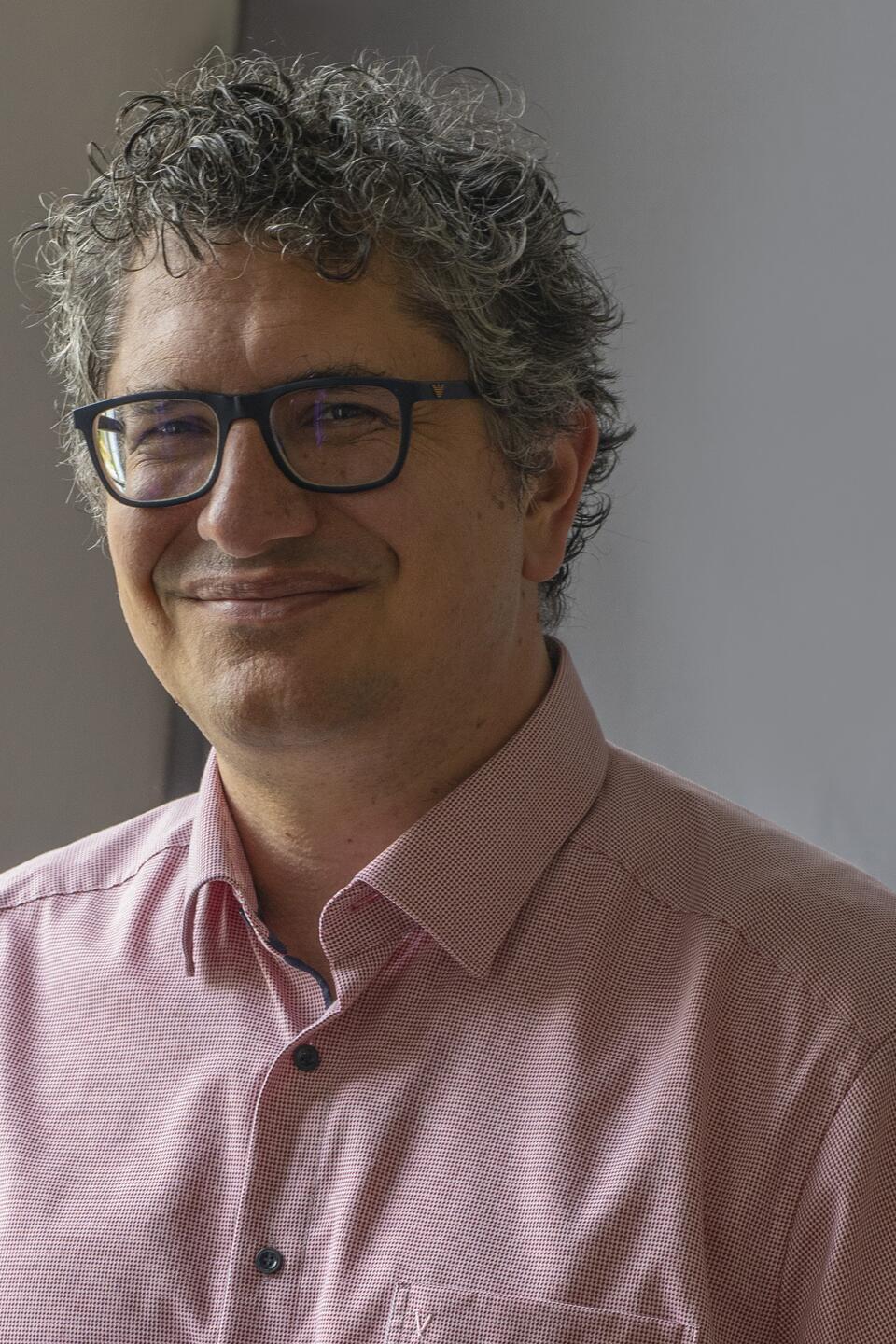
Wiebe M. de Vos is a Full Professor at the MESA+ Institute, University of Twente, where he leads research in advanced membrane technologies. His work bridges fundamental polymer chemistry and practical applications in water treatment and sustainability. Full Professor, MESA+ Institute, University of Twente His research focuses on membrane science, particularly polyelectrolyte multilayer systems, nanofiltration, and sustainable material design. He investigates how surface chemistry, phase separation, and polymer interactions influence membrane performance in complex aqueous environments. His work addresses critical challenges such as nanoplastics removal, salinity management, and micropollutant degradation. The recent publications highlight a strong trend in developing next-generation membranes with enhanced stability, selectivity, and environmental compatibility. His team explores pH-responsive systems, biocatalytic membranes, and scalable fabrication methods, contributing significantly to both academic knowledge and industrial applications in water purification. No scientific awards were mentioned in the provided text. Dr. de Vos has supervised 22 academic works, indicating active mentorship of Master’s and PhD students. While specific grants are not detailed, his extensive research output and dataset publications suggest sustained funding and collaborative projects. His research integrates experimental design, material characterization, and process engineering. His work is conducted within the MESA+ Institute, a leading nanotechnology research center, fostering interdisciplinary collaboration in materials science and engineering.
Cyrus C.C. Mody is a Professor in the History of Science, Technology, and Innovation and Director of the STS Program at Maastricht University. Formerly an Associate Professor (2014–2015) and Assistant Professor (2007–2014) at Rice University's Department of History, his research focuses on the commercialization of academic science, energy humanities, and the technopolitics of scarcity. He leads the NWO-funded 'Managing Scarcity and Sustainability' project and co-leads the ERC Synergy 'Nanobubbles' initiative examining scientific record correction. His expertise spans applied physics, university-industry partnerships, and countercultural science in the US since 1965. Education: Ph.D. (2004), M.A. (2001), Cornell University, Science and Technology Studies A.B. (1997), Harvard University, Engineering Sciences (magna cum laude) Research Interests: Mody explores how scientific knowledge interacts with industry, policy, and culture. Key themes include: Energy transitions and environmental diplomacy Historical roles of oil and semiconductor industries Responsible innovation frameworks Risk communication in science Grants & Collaborations: NWO Vici Grant (2020–2025): Investigates oil industry's role in sustainability debates ERC Synergy 'Nanobubbles': Addresses scientific discourse integrity Postdoc and PhD supervision in energy humanities and nanotechnology ethics Public Engagement: Mody critiques authoritarian threats to science, advocates for interdisciplinary education, and publishes in venues like Volkskrant and Science & Education . His 2022 MIT Press book The Squares analyzes 1970s scientist activism.
Nina Schwarz is Assistant Professor of human-environment interactions in cities at the Department of Urban and Regional Planning and Geo-Information Management, ITC—University of Twente. Holding a Diploma in Environmental Sciences (University of Lüneburg, 2003) and a PhD in Social and Economic Sciences (University of Kassel, 2007), she spent a decade as senior scientist at the Helmholtz Centre for Environmental Research – UFZ before joining ITC. Her interdisciplinary research integrates urban land-use science, ecosystem-service evaluation and advanced modelling techniques—especially agent-based models—to explore sustainable urban development under global change. Research interests revolve around three interconnected themes: (i) urban land-use change —understanding how residential, commercial and green-space dynamics co-evolve; (ii) urban ecosystem services —quantifying both supply and demand of services such as local climate regulation, recreation and biodiversity; and (iii) behavioural modelling —formalising human decision-making to simulate policy scenarios ranging from slum-upgrading to vineyard management. She actively links these themes to UN Sustainable Development Goals, notably SDG 11 (Sustainable Cities) and SDG 15 (Life on Land). Recent publications (2022-2025) reveal a methodological breadth spanning citizen-science impact assessment in Suriname, cooling effects of urban water bodies in Chinese mega-cities, European wine-growers’ adaptive behaviour, and methodological advances in upscaling and validating agent-based land-use models. Across these studies, Schwarz consistently combines empirical field data, geospatial analytics and participatory approaches to produce policy-relevant insights for cities in both the Global North and South. She has (co-)authored >80 peer-reviewed works, accumulating c. 5 900 citations and an h-index of 28 (Scopus). While specific honours are not itemised in the supplied text, her sustained citation impact and invited contributions to major conferences (e.g., iEMSs 2020, IAHR 2025) underscore scientific recognition. Schwarz frequently engages with societal stakeholders: her projects have generated open datasets on urban green-space monitoring in Paramaribo, e-learning modules for Latin-American universities, and interactive dashboards for sustainable water management. Within ITC she contributes to capacity-building programmes for emerging economies, supervises graduate researchers and maintains active collaborations across Europe, Latin America, Africa and Asia. No explicit lists of PhD students or personal grants are provided in the current corpus, but her leadership of externally funded projects (e.g., citizen-science evaluation, vineyard decision-making database) indicates ongoing acquisition of research funding.
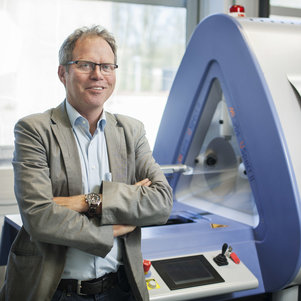
Prof. Freek J. Beekman is a Full Professor and head of the Biomedical Imaging section within the Department of Radiation Science & Technology at Delft University of Technology (TU Delft), Faculty of Applied Sciences. He is a leading figure in biomedical imaging, with extensive contributions to nuclear imaging technologies, including SPECT, PET, and CT. His research spans detector development, image reconstruction algorithms, hybrid photonic imaging, and the application of artificial intelligence in medical imaging. Research Interests: His work focuses on advancing imaging modalities through innovations in hardware (e.g., multi-pinhole collimators) and software (e.g., deep learning for attenuation correction). He has pioneered ultra-high-resolution imaging systems, particularly for preclinical and clinical SPECT, and has developed integrated platforms like U-SPECT-BioFluo. His recent research explores glymphatic delivery of nanoparticles, infection imaging, and AI-driven reconstruction techniques, reflecting a strong translational focus. Publication Trends: His most recent publications (2021–2023) emphasize deep learning in SPECT, multi-isotope imaging, high-resolution ex vivo systems, and applications in neuroimaging and oncology. The articles demonstrate a consistent focus on improving image quality, resolution, and clinical utility through physics-informed and AI-enhanced methods. Scientific Awards: NWO Physics Valorization Prize Innovation of the Year Award by the World Molecular Imaging Society (2015, 2018) Edward Hoffman Memorial Award (2017) Bruce Hasegawa Memorial Award (2021) FOM Valorization Award (2013) TU Delft Entrepreneurial Award (2010) Advising and Grants: While specific student names are not listed, his leadership in large collaborative projects and supervision of numerous publications suggests active mentoring. He has secured significant funding through national and international grants, evidenced by his invention of over 20 patent families and successful technology transfer. His founding and leadership of MILabs BV (sold to Rigaku) highlights his impact on commercialization and industry-academia collaboration. Labs and Teams: He leads the Biomedical Imaging research group at TU Delft, which develops cutting-edge imaging systems such as VECTor (SPECT-PET) and EXIRAD-HE. His teams have produced technologies used globally in academic and pharmaceutical research, contributing to tracer development and therapeutic innovation.
Paul Moritz Wiegmann is an Assistant Professor in the Department of Industrial Engineering and Innovation Sciences at Eindhoven University of Technology (TU/e), where he is part of the ITEM group. He currently serves as President of the European Academy of Standardisation (EURAS). His academic career includes visiting research positions at TU Berlin (2014 & 2015), Yonsei University, Seoul (2018), and the University of California, Davis (2023). Paul holds a PhD from Rotterdam School of Management, Erasmus University, alongside additional degrees from Erasmus University and the University of Warwick. His educational background emphasizes interdisciplinary training, reflected in his research and teaching. His research focuses on the role of standardization in innovation ecosystems, particularly how explicit and implicit rules enable value creation and capture. He employs mixed-methods approaches, including case studies, grounded theory, choice experiments, and conjoint analysis. His work aligns with UN Sustainable Development Goals, addressing societal challenges like sustainability and smart technologies through collaborative frameworks. Notable awards include the Industria Education Award 2022-2023 for Best Teacher Talent (2023) and the ISPIM Dissertation Award 2020 (2020). These recognize his contributions to both education and research in standardization and innovation. In advising and grants, Paul has supervised 30 works (names not listed) and leads the Measuring societal impact of standards project (2021–2022). He also coordinates the FIQCS: FIeldlab Quantum Cryptography Solutions for Safe Society initiative (2023–2028). His activities include organizing conferences like EU-SPRI 2025 and delivering invited talks on topics ranging from standardization governance to quantum technologies. Paul teaches courses such as Methodology for IE research and Patents design rights & standards exploration course , reflecting his expertise in standardization and research methods. He contributed to the Standardization literature database (2024), an interdisciplinary review, and engages in media discussions on topics like AI adoption in SMEs and quantum threat mitigation in public safety.
George Vosselman is a Full Professor at the University of Twente, Faculty of Geo-Information Science and Earth Observation (ITC), specializing in Geo-Information Extraction with Sensor Systems. Educated with honours at Delft University of Technology (1986) and PhD in Photogrammetry from Rheinische Friedrich Wilhelms University of Bonn (1991), he has held academic roles at the University of Stuttgart, University of Washington, and Delft University of Technology (1993–2004). Since 2004, he has been a key figure at ITC, serving as department head (2012–2018, 2023–). Education: Delft University of Technology (BSc with honours, 1986), Rheinische Friedrich Wilhelms University of Bonn (PhD with honours, 1991) His research focuses on leveraging sensor technology advancements for large-scale geo-information production. Key expertise includes quality analysis of laser altimetry data, point cloud segmentation/classification, 3D building/road modeling, and model-driven imagery analysis. He has published over 220 papers and co-edited the textbook Airborne and Terrestrial Laser Scanning (2010). Recent work integrates deep learning with geospatial data, addressing semantic segmentation, visual question answering, and drone-based mapping. Recent publications (2025–2023) highlight trends in deep learning for remote sensing , including multimodal question answering benchmarks (HRVQA), vectorized building extraction (RoIPoly), latent diffusion for road modeling (LDPoly), and drone obstacle avoidance systems. His work bridges photogrammetry , computer vision , and robotic mapping , with applications in urban planning, disaster management, and informal settlement monitoring. Scientific Awards : Hansa Luftbild (1993), ISPRS Otto von Gruber (2000), Schwidefsky Medal (2012), Karl Kraus Medal (2012), ASPRS Fairchild Award (2015), ISPRS Fellow (2020) As an educator, Vosselman has taught photogrammetry, remote sensing, and laser scanning at Delft University of Technology and globally. He chaired the ITC Examination Board (2015–2023) and modernized geo-information education in Asia/Africa. His software for point cloud processing is commercialized in Europe, and he currently leads ISPRS working groups on point cloud methodologies. Labs/teams include the Earth Observation Science Chair Group at ITC, collaborating on UAV-based datasets (UAVid, UAVPal) and indoor laser scanning systems. Recent activities (2025) involve invited talks on pulse matching limitations in laser scanning and deep learning for point cloud classification.
Dr. Stephan van Galen (University of Groningen) is a historian and researcher with a focus on 15th-17th century Southeast Asian history, particularly in Arakan and Bengal. His work explores Slavery and slave trade dynamics Myanmar's historical networks Indian Ocean commercial interactions Venetian merchant influence His academic contributions include publications on historical governance structures and modern quality assurance systems in higher education, such as the Dutch accreditation reforms. Recent activities include organizing a popular 2021 exhibition on slavery and participating in international advisory boards for university governance. Currently serving as Secretary-General of University Services at the University of Groningen, Van Galen combines administrative leadership with ongoing research pursuits. His work appears in journals like HO Management and edited volumes from institutions including Royal Netherlands Academy of Arts and Sciences.
Myriam M.A.H. Cloodt serves as an Associate Professor of Open Innovation and Entrepreneurship at the Department of Innovation, Technology Entrepreneurship & Marketing (ITEM) within the School of Industrial Engineering at Eindhoven University of Technology (TU/e). She is also affiliated with EAISI High Tech Systems as a University Researcher. Her academic career spans over two decades, with a continuous focus on understanding innovation processes in complex business environments. Dr. Cloodt earned her MSc in Business Economics from Maastricht University in 1997. After working as a lecturer for two years, she began her PhD research at the Department of Organization & Strategy, completing her dissertation at METEOR (Maastricht University) on measuring innovative performance of high-tech companies after mergers and acquisitions. She joined Eindhoven University of Technology in July 2004 as a researcher at the School of Technology Management, becoming Assistant Professor in June 2006, and was promoted to Associate Professor of Open Innovation and Entrepreneurship in August 2017. Her research focuses on open innovation, corporate entrepreneurship, and strategic management, with particular interest in corporate venturing, strategic technology alliances, mergers and acquisitions, network analysis, and value constellations within innovation ecosystems. Dr. Cloodt's work bridges academic theory and practical application, as evidenced by her participation in industry projects for companies and innovation ecosystems like the High Tech Campus Eindhoven. Her publications span prestigious journals including Research Policy, Journal of Product Innovation Management, and Technological Forecasting and Social Change, as well as book chapters for Oxford University Press. Analysis of her recent publications reveals a strong trajectory toward circular economy applications, particularly in plastics innovation, alongside continued work on innovation ecosystems, science parks, and military innovation contexts. Her research demonstrates methodological diversity, employing network analysis, case studies, and stated choice experiments to investigate complex innovation phenomena across different sectors and organizational contexts. Best Paper Award - Mature PhD Student at the ESU European University Network on Entrepreneurship Conference (2021) Dr. Cloodt actively supervises graduate students and has contributed to numerous research projects, including C-PlaNeT (Circular Plastics Network for training), SEE-V-Lab, and the Brabant Center of Entrepreneurship. Her professional engagements extend to developing publications for organizations such as Adviesraad voor het Wetenschaps- en Technologiebeleid (AWT) and Het Financieele Dagblad. In teaching, she contributes to the BSc program in Industrial Engineering & Management Science, the MSc program in Innovation Management, and the Certificate program in Technology Entrepreneurship & Management. Her work aligns with UN Sustainable Development Goals, particularly through contributions to circular economy research and sustainable innovation practices. Dr. Cloodt maintains active collaborations with industry partners and participates in significant academic conferences including the Annual World Open Innovation Conference where she serves on program committees.
Robert Verburg is an Associate Professor in Technology and Innovation Management at Delft University of Technology, Faculty of Technology, Policy and Management. He is affiliated with the Department of Values, Technology and Innovation and the Section of Economics of Technology and Innovation. He currently serves as the director of the international Master of Technology (MOT) program and teaches courses such as Leadership and Technology Management and strategic leadership for responsible innovation. His research focuses on leadership, managing people, knowledge management, and the future of management, with a strong emphasis on responsible innovation and sustainability. His work bridges qualitative and quantitative methodologies and has been published in leading management journals including the Journal of Management , Leadership Quarterly , and International Journal of Project Management . His recent publications explore organizational trust, innovation barriers in financial firms, virtual project management, and knowledge sharing networks. These works reflect consistent themes in responsible innovation, leadership in technological contexts, and strategic human resource practices. Associate Professor, TU Delft Director, MSc Management of Technology Researcher in Leadership & Innovation Robert Verburg has supervised over 100 Master’s thesis projects and has been involved in curriculum development for the MOT program. He leads an online course on strategic leadership for responsible innovation offered through KIVI. He has participated in the NWO project on Sustainable Business Models, a collaboration between Delft, Erasmus, and Leiden universities, focusing on transformational leadership and shared value measurement. He is affiliated with the research group on Economics of Technology and Innovation and contributes to advancing responsible innovation through both research and education. His work supports the integration of ethical, sustainable, and strategic leadership practices in technology-driven organizations.
Huib Zuidervaart is a Guest Researcher at the Royal Netherlands Academy of Arts and Sciences (KNAW), affiliated with the Huygens Institute for the History of the Netherlands. His career spans roles at institutions including Huygens ING, Utrecht University, and Leiden University, with expertise in the history of scientific instruments and academic institutions. Educated at VU University Amsterdam and Utrecht University, he holds a Ph.D. on Dutch astronomy in the Eighteenth Century. His research focuses on Early Modern Science, particularly the role of instruments, academic communities, and collections. Notable projects include co-editing the Collected Letters of Antoni van Leeuwenhoek and analyzing Dutch contributions to optical and astronomical innovations. His work bridges technical craftsmanship, institutional history, and cultural contexts of scientific advancement. Publications emphasize interdisciplinary connections between science, art, and society, such as exploring Vermeer’s Delft paintings through a scientific lens. His articles frequently address knowledge circulation in Dutch cities like Middelburg and Delft, highlighting regional networks of scholars, artisans, and collectors. Collaborations include international projects on instrument history and editorial roles in journals like ISIS . His writings span technical analyses, historical biographies, and critical reviews, reflecting a commitment to preserving and interpreting the material and intellectual heritage of early modern science.
Emma J.M. Moonen is a Postdoctoral Researcher (Research Fellow) at Eindhoven University of Technology's Department of Mechanical Engineering, affiliated with the Microsystems Group and Eindhoven MedTech Innovation Center. She holds a competitive Faculty of Impact Fellowship funded by NWO for commercializing sweat sensing technology. Her academic credentials include: BSc in Mechanical Engineering, Eindhoven University of Technology (2017) MSc in Mechanical Engineering, Eindhoven University of Technology (2019) with research at University of Cambridge PhD in Mechanical Engineering, Eindhoven University of Technology (2024, cum laude) Moonen's research centers on microfluidic and wearable sensor development for noninvasive health monitoring through sweat analysis. She integrates electrowetting principles, dielectric materials, and microelectrode arrays to create point-of-care diagnostic platforms capable of analyzing low sweat volumes for clinical information. Her work directly contributes to UN Sustainable Development Goals for health and well-being. Publication trends reveal consistent advancement in sweat-based monitoring systems, progressing from foundational microfluidic design to practical wearable implementations and safety validation. Recent work emphasizes clinical translation, device miniaturization, and real-world usability for sedentary populations. Key recognitions include: PhD awarded cum laude (March 2024) NWO Faculty of Impact Fellowship for commercialization project (2024) Funded by an NWO Faculty of Impact grant, Moonen leads translational research to transform academic innovations into market-ready health monitoring solutions. Her collaborative work spans the Microsystems Group, Eindhoven MedTech Innovation Center, and international partners including University of Cambridge. Current projects focus on sweat sensing platform commercialization while developing safety protocols for electrowetting applications. Research operations are conducted within TU/e's Microsystems Group infrastructure at the Department of Mechanical Engineering, leveraging Eindhoven MedTech Innovation Center resources. The Faculty of Impact Program provides dedicated commercialization support for translating her sweat sensing platform into clinical applications.
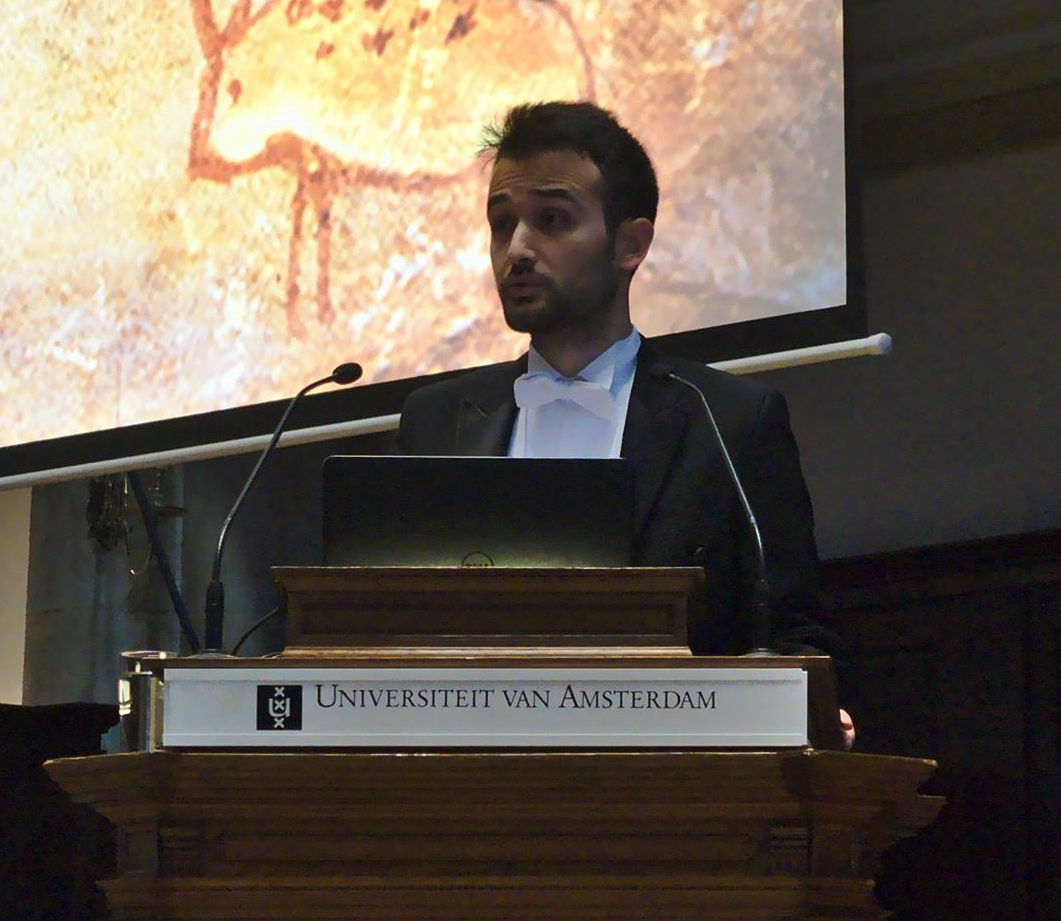
Sezer Karaoglu is a Lecturer and part-time postdoctoral researcher at the Computer Vision Group, Informatics Institute, University of Amsterdam. He is also the CTO and Co-Founder of 3DUniversum, a technology spin-off of the University of Amsterdam that provides state-of-the-art 2D/3D computer vision solutions. Additionally, he has co-founded other startups including Scanm and 3DHealthScan. Dr. Karaoglu received his PhD from the Computer Vision Group, Informatics Institute, University of Amsterdam, with research funded by the COMMIT project. His educational background includes a double master's degree: an optics, image and vision master's degree from University Jean Monnet in France and a media technology master's degree from Gjovik University College in Norway. He completed his undergraduate studies with honors at Istanbul Technical University in Telecommunication Engineering. His research focuses on Artificial Intelligence and 3D Computer Vision, with specific interests in SLAM, re-localization, 3D reconstruction, 3D object detection and segmentation, synthetic media, generative AI, deep fake creation and detection, and VR/AR technologies. His work has significant applications in healthcare, particularly in using deepfake technology for therapy for victims of sexual violence-related PTSD and moral injury, as documented in a Frontiers in Psychiatry article. Analyzing his recent publications reveals a strong trend toward neural scene reconstruction, intrinsic image decomposition, and the application of diffusion models to computer vision problems. His research increasingly integrates 3D scene understanding with language models, as evidenced by his work on language-to-3D scene generation. The applications span from healthcare (deeptherapy.ai) to media authenticity (deepfake detection) and industrial applications. ICT.OPEN Poster Award (3rd Position), Oct'13 Pascal VOC'12 Classification challenge, 2nd Position, Sep'12 Pascal VOC'12 Detection challenge, 3rd Position, Sep'12 Best project award at Nokia and CIMET project competition Outstanding reviewer at CVPR'21 PROVADA Future Startup Battle winner Best Dutch AI startup by Valuer Dr. Karaoglu has supervised numerous PhD, Master's, and Bachelor's students, demonstrating his commitment to academic mentorship. His research has attracted significant media attention, with features on Dutch national TV programs including NPO, VPRO, RTL, and international outlets like BBC News. He has received research funding through the COMMIT project during his PhD studies and has successfully translated his research into commercial applications through his startups. His work on deepfake technology has been applied in innovative therapeutic contexts through DeepTherapy.ai, showing the real-world impact of his research. Dr. Karaoglu leads research efforts at the Computer Vision Group Amsterdam and through his company 3DUniversum, which has developed applications like weScan, DeepTherapy, and FairFake.ai. His team collaborates with various institutions including the Netherlands Film Academy for grief therapy applications using deepfake technology. The DeepTherapy project represents a particularly impactful application of his work, using deepfake technology to help victims of sexual violence confront perpetrators in therapeutic settings.
Dr. Wim Korevaar serves as a part-time university researcher at the Signal Processing Systems (SPS) Group of Eindhoven University of Technology (TU/e), while concurrently working as a Senior Telecommunications System Engineer at TNO (Dutch Applied Research Institute) in Delft since April 2019. At TNO, he designs optical and quantum satellite communication systems for ground-to-satellite and satellite-to-satellite links, contributing to standardization efforts at CCSDS and ESA. He earned his PhD, cum laude, from Eindhoven University of Technology for pioneering work on Hermite-based multi-user communication schemes as an alternative to Fourier-based systems. During his doctoral studies, he founded two companies subsequently acquired in 2007 and 2019. Dr. Korevaar's research centers on optical satellite communications, quantum communications, and signal processing for telecommunications, with specific expertise in end-to-end system performance analysis, modem design, and signal processing techniques for space-based systems. His work actively bridges academic research and industrial applications through collaborations between universities, research institutes, and private sector partners. Analysis of his 2022-2024 publications reveals a concentrated focus on advancing space communication technologies, particularly in channel modeling under atmospheric turbulence, latency-constrained fading mitigation, end-to-end performance of coherent optical feeder links, and high-speed channel coding architectures. These contributions target robust high-capacity systems for next-generation satellite networks with dual-use government and commercial applications. He currently participates in the LaiQa project (2024-2026) advancing quantum key distribution space components, and maintains active engagement with students on groundbreaking communication system innovations despite no formal advisee listings.