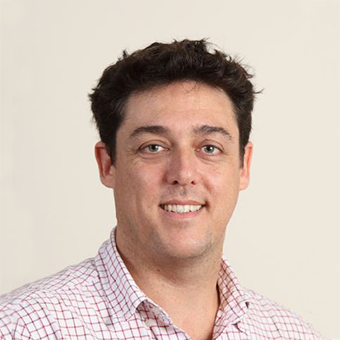
David Alan GoldbergView profile
Associate Professor
David Alan Goldberg is an Associate Professor in the School of Operations Research and Information Engineering (ORIE) at Cornell University, part of Cornell Engineering. He joined Cornell in 2017 and previously held the A. Russel Chandler III Associate Professorship at Georgia Tech’s Industrial and Systems Engineering department. Goldberg earned his Ph.D. in Operations Research from MIT (2011) and a B.S. in Computer Science from Columbia University (2006). Education: B.S. in Computer Science, Columbia University (2006) Ph.D. in Operations Research, MIT (2011) Research Interests: Goldberg’s work focuses on applied probability and stochastic processes, including optimal stopping, inventory and queueing models, combinatorial optimization, and robust optimization. He develops algorithms and insights for complex systems, addressing challenges like the curse of dimensionality. His research spans applications in data science, operations research, and stochastic modeling. Notable contributions include distributionally robust inventory control and high-dimensional decision-making frameworks. Awards and Honors: 2025 Community-Engaged Practice and Innovation Award (David M. Einhorn Center) 2023 Sunny Yau ’72 Teaching Award (Cornell) 2019 INFORMS Applied Probability Society Best Publication Award 2015 NSF CAREER Award Multiple INFORMS Nicholson Student Paper Competitions (First Place, 2019 & 2015) Teaching and Service: Goldberg leads Cornell ORIE’s undergraduate research program, connecting students to real-world applications of OR and data science. He teaches courses in probability modeling, stochastic models, and academic skills for PhD students. He chairs the INFORMS Applied Probability Society and serves on editorial boards for Operations Research and Stochastic Systems . At Cornell, he advises the Undergraduate ORIE Society and directs undergraduate studies in ORIE. Labs & Collaborations: Goldberg’s research integrates theoretical rigor with practical applications, often involving collaborations across disciplines. His work bridges operations research, statistics, and computer science to address modern challenges in inventory systems, queueing networks, and decision-making under uncertainty.