Ben Halpern is a Professor at the Bren School of Environmental Science & Management and Director of the National Center for Ecological Analysis and Synthesis (NCEAS) at UC Santa Barbara. He holds a PhD in Ecology from UCSB and a BA in Biology from Carleton College. His research focuses on marine ecology and conservation planning, with expertise in cumulative impact assessments, marine reserves, and the Ocean Health Index. He has led global projects on ocean health, biodiversity threats, and sustainable aquaculture, collaborating with institutions worldwide. Notable roles include co-founding the Conservation Aquaculture Research Team (CART) and serving as a part-time Chair in Marine Conservation at Imperial College London (2013–2018). Research interests span marine biodiversity conservation, climate change impacts on ecosystems, and the integration of ecological and social data into policy. His work emphasizes interdisciplinary approaches to address environmental challenges, such as mapping wastewater impacts, evaluating aquaculture sustainability, and developing tools for marine spatial planning. Awards include the Smith Fellowship Program (sponsored by The Nature Conservancy) during his postdoctoral work. He teaches Bren School courses, mentors graduate students, and leads collaborative research teams. Current projects include analyzing climate change effects on aquaculture and advancing the Ocean Health Index framework to support global conservation efforts.
Hakan Sandal-Wilson is an Assistant Professor of Gender, Peace and Security at the Department of Gender Studies, London School of Economics and Political Science. His research critically examines intersections of gender, sexuality, ethnicity, religion, and conflict in the Middle East, particularly focusing on Kurdish queer/LGBTIQ+ politics and diasporic movements. He is also invested in creative-critical interdisciplinary research methods, co-editing a volume on politically engaged methodologies. Previously, he served at the University of Cambridge as a Teaching Associate and Affiliated Lecturer, and as Campaigns Officer for Amnesty UK’s LGBTI Network. Education : - PhD, University of Cambridge Centre for Gender Studies - MA in Cultural Studies, Istanbul Bilgi University Research Interests : - Queer Studies in Conflict Zones - Kurdish Social Movements - Diasporic Feminist and Queer Activism - Ethnography and Creative Writing Methodologies Publications Trends : His work bridges theoretical inquiries with activism, emphasizing marginalized queer voices in conflict-affected regions. Recent projects include monographs on Kurdish queer politics and co-edited collections on creative-critical interventions for social justice. Awards & Grants : No awards explicitly mentioned, but his work has been translated into multiple languages and featured in outlets such as openDemocracy and Jadaliyya. Advising & Mentorship : No listed advisees, but directs LSE’s MSc Gender and MSc Gender (Research) programmes, teaching courses like GI402 (Gender, Knowledge & Research Practice) and GI413 (Gender, Race & Militarisation). Labs & Collaborations : Co-convened 'Creaction' interdisciplinary workshops at UCL, fostering global creative-critical social justice research.
Affiliations & Roles Professor of Computer and Information Science at University of Pennsylvania Faculty in Graduate Groups: Bioengineering (School of Engineering) Genomics & Computational Biology (School of Medicine) Operations, Information & Decisions (Wharton School) Psychology (School of Arts & Sciences) Research Affiliations: Annenberg Public Policy Center (Distinguished Fellow) Center for Cognitive Neuroscience Institute for Translational Medicine Research Interests Focuses on explainable AI, natural language processing (NLP), and machine learning applications in psychology and medicine. Key areas include: Language analysis for well-being and mental health Spectral methods for NLP (e.g., Eigenwords) Forecasting and decision-making models Bioinformatics and genomics Teaching Teaches advanced courses in Machine Learning, Deep Learning, and AI ethics, including: CIS 5200: Machine Learning CIS 5220: Deep Learning CIS 6200: Advanced Topics in Deep Learning Key Collaborations Works with interdisciplinary teams on projects like the Good Judgment Project (forecasting) and WWBP (Well-Being and Language). Collaborators include Martin Seligman (positive psychology), Dean Foster (statistics), and Michael Collins (NLP).
Prof. Dr. Sakura Yamamura is a Junior Professor (Assistant Professor) in Digital Methods in Human Geography at RWTH Aachen University, holding a Dr. rer. nat. in Geography from the University of Hamburg (2018). Her research focuses on migration, transnationalism, superdiversity, and urban studies, with a particular emphasis on digital methods applied to spatial and social dynamics. She has held postdoctoral and visiting fellowships at institutions including the Max Planck Institute and Maastricht University. Yamamura’s work bridges geography, sociology, and economics, examining how transnational migrants shape global cities like Tokyo and the impacts of globalization on urban spaces and policies. Her recent studies address the intersectionality of entrepreneurship, pandemic effects on LGBTQ+ activism, and digital transformations in urban production. Research interests include the socio-spatial dimensions of migration, intersectional approaches to entrepreneurship, and the interplay between digital tools and human geography. Her academic contributions span peer-reviewed articles in journals like Ethnic and Racial Studies and Urban Studies , as well as edited volumes on superdiversity and global urbanization. She actively engages in interdisciplinary dialogue, addressing topics such as mediated social touch and the methodological challenges of fieldwork in transnational contexts. Yamamura’s career includes roles as a guest lecturer at Adam Mickiewicz University (Poland) and SKEMA Business School (France), reflecting her commitment to international collaboration and teaching. She has advised numerous research projects and contributes to policy discussions on migration and urban development. Her current work at RWTH Aachen emphasizes leveraging digital methods to analyze complex urban systems and transnational networks.
Mohd Fikree Hassan is a Lecturer at the School of Information Technology, Monash University Malaysia, joining in June 2023. He holds a Ph.D. and Master's from the University of Malaya, and a B.Eng. in Electronics Engineering from Multimedia University. With over 14 years of academic experience, he is actively engaged in research, teaching, and supervision. B.Eng. in Electronics Engineering (Telecommunications), Multimedia University, 2004 M.Eng. in Engineering (Telecommunications), University of Malaya, 2015 Ph.D. in Signal and Systems, University of Malaya, 2018 His research focuses on image and signal processing , particularly in image enhancement, restoration, computer vision, and human color vision . His work contributes to improving image visibility, removing color casts, and developing algorithms for noisy or degraded images. He applies mathematical and computational techniques to solve real-world imaging challenges. The recent publication trends (2021–2025) show a strong focus on image restoration using variational methods (e.g., total variation, ℓ0 regularization), color enhancement in HSI space, and video analysis for sports applications. His work bridges theoretical optimization and practical computer vision systems. He actively contributes to the academic community through peer review for journals such as Neurocomputing , Journal of Imaging , and International Journal of Computational Intelligence Systems , as well as for IEEE conferences. Mohd Fikree is currently accepting PhD students and serves as an external examiner for academic programs. His consistent research output and editorial service reflect a growing impact in the field of image processing and computer vision. While no formal lab or team is mentioned in the text, his collaborations with researchers like R. Paramesran, T. Adam, and G. Krishnasamy suggest active research partnerships in signal and image processing.
Katrine Eldegard is a Professor at the Norwegian University of Life Sciences (NMBU), Faculty of Environmental Sciences and Natural Resource Management (MINA), Department of Ecology and Natural Resource Management (INA). She leads BatLab Norway and contributes extensively to national and international conservation science policy. Institution: Norwegian University of Life Sciences School: Faculty of Environmental Sciences and Natural Resource Management Department: Department of Ecology and Natural Resource Management Position: Professor Her research centers on understanding how human activities and land use affect natural ecosystems and species across taxa and spatial scales. She specializes in the behavioral, population, and community-level responses of mammals, birds, and insects to anthropogenic pressures such as energy infrastructure, transport networks, and forestry. A major focus is on bat ecology and conservation, pollination dynamics, and biodiversity monitoring in boreal and agricultural landscapes. Her recent publications reveal strong trends in climate change impacts on bat morphology and distribution, pollinator-plant interactions under environmental change, and the ecological consequences of infrastructure development. These works integrate field ecology with advanced modeling and policy-relevant assessments. She has played leading roles in key scientific committees: Chair, Mammal Committee, Norwegian Red List for Species (2021) Chair, Mammal Committee, Norwegian Alien Species List (2023) Member, Norwegian Scientific Committee for Food and Environment (VKM), CITES Expert Panel Norway’s representative, UNEP/Eurobats Advisory Committee Eldegard has supervised numerous research projects and collaborated with government agencies and private partners on applied ecology. She teaches courses including NATF200 Vern og forvaltning av norsk natur and the upcoming NATF300 Conservation Science. Her work is supported by extensive fieldwork, interdisciplinary collaboration, and integration of ecological theory with practical conservation. She leads BatLab Norway, a research group dedicated to advancing knowledge on bat ecology, behavior, and conservation through innovative methods including telemetry, acoustic monitoring, and landscape analysis.
Jay Crisostomo is an Associate Professor and Director of Graduate Studies at the University of Michigan's Department of Ancient Near Eastern Civilization and Languages and Civilizations within the College of Literature, Science, and the Arts. He holds the George G. Cameron Professorship. His research focuses on the languages and intellectual histories of ancient Mesopotamian cuneiform cultures, with emphases on sociolinguistics, multilingualism, translation, and scribal practices. He earned a Ph.D. from the University of California, Berkeley in 2014. Teaching encompasses courses on ancient Middle Eastern history, languages, and cultures, including 'Science and Technology in the Ancient Middle East' and 'Madness, Medicine, and Magic in the Middle East.' He also teaches on sport history and language in the ancient Mediterranean. As Director of Graduate Studies, he supports MES program students, advising prospective PhD candidates in ancient Middle East history/Assyriology. Research highlights include his book Translation as Scholarship: Language, Writing, and Bilingual Education in Ancient Babylonia and ongoing projects on the 3,000-year history of Sumerian language use, Babylonian scholars, and Sumerian-Akkadian linguistic contact. Current efforts involve editing 150 lexical tablets in Germany's collections. His work bridges ancient textual analysis with broader themes in cultural transmission and knowledge systems. He collaborates on critical editions of cuneiform texts and maintains affiliations with international research networks. Contactable via cjcrisos@umich.edu, his office is located at 202 South Thayer Street, Ann Arbor.
Benjamin Justice is Distinguished Professor of Education at the Rutgers Graduate School of Education and an associate member of the History Department at Rutgers–New Brunswick. He holds a courtesy appointment as Senior Research Scholar at Yale Law School and serves as series editor for New Directions in History of Education at Rutgers University Press. His interdisciplinary work bridges education, history, law, and philosophy. Ph.D. in Education, Stanford University M.A. in History, Stanford University B.A. in History, Yale University Dr. Justice's research focuses on the history of education , civic education , religion in public schools , and the intersection of criminal justice and curriculum theory . He explores how experiences with police, courts, and detention shape civic identity, drawing on legitimacy and curriculum theories. His work spans educational policy, democratic ideals, race, and philosophical inquiry. His recent publications reflect a strong trend in interdisciplinary scholarship, combining historical analysis with contemporary policy critique. Key themes include school choice, settler colonialism in education, democratic civility, and the role of religion in public life. His articles appear in top journals across education, history, and social science, as well as in public forums like The Atlantic and theHumanist.com . Dr. Justice has received numerous honors, including: AESA Critics Choice Book Award AERA Outstanding Scholarly Publication on Justice in Education Award (2025) National Academy of Education/Spencer Post-Doctoral Fellowship Russell Sage Foundation Visiting Scholar (2023–24) CASE Circle of Excellence Gold Award He has held leadership roles as President of the History of Education Society (2021–2022) and member of the NAEP U.S. History Standing Committee (2011–2019). He has received multiple awards for teaching, research, and service at Rutgers. While no formal list of students is available, his collaborative works suggest mentorship and academic advising. He has led research projects supported by major foundations and institutions. Dr. Justice is affiliated with several scholarly organizations, including the History of Education Society, American Educational Research Association, American Educational Studies Association, Legal Studies Association, and Organization of American Historians. His work continues to influence both academic and public discourse on education and democracy.
Leandro "Leo" Pongeluppe serves as an Assistant Professor of Management at the Wharton School of the University of Pennsylvania, holding the distinguished position of Leonard J. Horwitz Faculty Scholar. His academic journey culminated with a PhD from the Rotman School of Management at the University of Toronto, positioning him at the forefront of research at the intersection of business and societal challenges. Pongeluppe's research program centers on understanding how organizational design and governance mechanisms influence the achievement of United Nations Sustainable Development Goals. His work spans multiple continents and contexts, with field research conducted in Brazilian favelas, the Amazon rainforest, worldwide desalination plants, and African HIV/AIDS treatment clinics. Methodologically, he employs innovative mixed-methods approaches that combine econometric causal inference with ethnographic techniques to tackle complex socio-environmental challenges. His publication portfolio reveals a consistent focus on stakeholder management within contexts of socioeconomic development and environmental sustainability. The research demonstrates how businesses can effectively address global challenges through strategic stakeholder engagement, showing particular promise in environmental conservation efforts and inclusive business models. His work on the Amazon rainforest reveals how companies like Natura have successfully preserved forests through stakeholder alignment, while his favela research exposes the complex social consequences of economic mobility. Wharton AI & Analytics Initiative Research Funding (2024) Wharton Teaching Excellence Awards (2023-24) Wiley Blackwell Outstanding Dissertation Award (Academy of Management, 2023) Multiple Best Paper Awards from Strategic Management Society and Academy of Management conferences Wharton Global Initiatives and ESG Initiative Funding (2023) Prior to his academic career, Pongeluppe co-founded Insper Metricis, a research group focused on socio-environmental impact evaluation, where he contributed to Brazil's first Social Impact Bond in partnership with São Paulo State Government and international development institutions. His professional experience also includes three years as an associate researcher at the Accenture Institute for High Performance, working on inclusive innovation projects across Brazil, China, Ghana, India, Mozambique, Nigeria, and South Africa. This practical experience deeply informs his scholarly work and teaching approach, particularly in his course on Managing Established Enterprises which addresses strategic challenges facing incumbent firms.
David Lindlbauer is an Assistant Professor at the Human-Computer Interaction Institute (HCII) within Carnegie Mellon University's School of Computer Science. He leads the Augmented Perception Lab and co-directs the CMU Extended Reality Technology Center (XRTC) . His research bridges Human-Computer Interaction, Computer Graphics, and Computer Vision to create adaptive interfaces that enhance human-digital interaction. Education : PhD (summa cum laude) from Technische Universität Berlin , MSc and BSc from University of Applied Sciences Upper Austria Previous Affiliation : Postdoctoral Researcher at ETH Zurich (2018-2020) David's research focuses on understanding human perception of digital information and developing computational approaches to optimize AR/VR interface usability. Key areas include: Context-aware adaptive interfaces Visual saliency and attention modeling Spatial audio-haptic systems Optimal placement algorithms Object manipulation in Remixed Reality Diminished/ambient MR interfaces His 15 most recent publications (2024-2025) span topics in adaptive XR interfaces, multimodal notifications, haptic systems, and spatial cognition. These works appear at venues like ACM CHI, ACM UIST, IEEE VR, and Frontiers in VR. Common themes include: Machine learning for interface adaptation Human factors in XR design Real-time environment analysis Privacy-aware display systems Collaborative MR interfaces Accessibility enhancements Scientific Recognition : Best Paper Honorable Mention Award (ACM CHI 2024) Best Paper Award (ACM ISS 2023) ETH Zurich Postdoctoral Fellowship Multiple best paper recognitions at CHI, UIST, and IEEE VR Teaching & Leadership : Course developer for CMU's "Interactive Extended Reality" Mentor for NASA SUITS Challenge team Co-chair roles at CHI and UIST Overseeing PhD students and research interns
Prof. Dr. Hakkı Polat Gülkan is a Professor at Başkent University's Civil Engineering Department. With a PhD (1971) and Master's (1968) from the University of Illinois in Civil Engineering and a Bachelor's (1966) from METU, his career spans over five decades in earthquake engineering, structural dynamics, and disaster management. PhD: University of Illinois, Civil Engineering (1971) Master's: University of Illinois, Civil Engineering (1968) Bachelor's: Middle East Technical University, Civil Engineering (1966) His research focuses on seismic risk assessment, structural behavior under extreme loads, and disaster mitigation strategies. Key contributions include earthquake simulator development, ground motion analysis, and retrofitting techniques for masonry and reinforced concrete structures. He has published extensively on deformation limits, response spectra, and historical building preservation. Recent work includes 15+ articles from 2024-2012 analyzing Istanbul's seismic hazards, Marmara region dynamics, and post-earthquake structural integrity. Conference papers address Turkey's endemic building vulnerabilities and deformation thresholds for seismic isolation systems. Scientific Achievements: Elected to U.S. National Academy of Engineering (2023) As an active journal reviewer for 13+ publications (2023-2024), he contributes to advancing earthquake engineering discourse. His teaching portfolio includes advanced structural analysis, concrete mechanics, and seismic design courses.
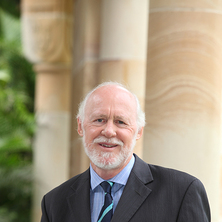
Professor Victor Callan AM is Professor of Leadership and Organisational Change at the University of Queensland Business School within the Faculty of Business, Economics and Law. With over 300 publications to his name, including 179 journal articles, 60 conference publications, and 17 books, he is one of Australia's most recognized researchers in organizational change, leadership performance, and employee training. His influential work has shaped public policy in workforce development, vocational education, and organizational change management. Education: Bachelor (Honours) of Arts, University of New South Wales Doctor of Philosophy, Australian National University Professor Callan's research focuses on two primary areas: organizational change and leadership, with special interest in employees' and leaders' experiences with large-scale change; and employee skills, capabilities and training, examining effective responses to skills development and shortages. His work explores adaptation levels, personal capabilities, communication dynamics, and team processes during organizational transitions. He has pioneered research on maverickism in organizations, investigating how positively deviant change agents drive radical organizational transformations. His recent publications reveal a strong trend toward gender equality research, Indigenous knowledge integration, and maverick leadership. These works span multiple disciplines including organizational behavior, human resource management, vocational education, and leadership studies. His research on workplace gender inequality employs wicked problems frameworks, while his work on Indigenous knowledge holders emphasizes co-creation and positioning as expert researchers. Major Awards and Recognition: Fellow of the Academy of Social Sciences in Australia Fellow of the Queensland Academy of Arts and Sciences Fellow of the Australian Institute of Company Directors Member (AM) of the Order of Australia for significant service to higher education University's Award for Excellence in Higher Degree Research Supervision Two UQ Excellence in Leadership Awards Professor Callan has supervised numerous PhD students across diverse topics including leadership ascension, maverickism, CEO appointments, and organizational change. He has secured substantial research funding, including his 14th Australian Research Council project in 2025 focusing on Indigenous women environmental rangers. His advisory work spans over 100 projects for government departments and international organizations across South Africa, Ghana, Tanzania, Indonesia, Bhutan, Brunei, New Zealand, PNG, and South Pacific countries, addressing employee skills, vocational education, industry closures, and workforce development. He actively contributes to executive education for senior managers globally and has developed strong research, consulting, and industry partnerships. His current teaching focuses on MBA programs and the Bachelor of Advanced Business Honours program at UQ.
Zhi-Pei Liang is the Franklin W. Woeltge Professor in the Department of Electrical and Computer Engineering at the University of Illinois at Urbana-Champaign, with joint appointments in the Department of Bioengineering, Beckman Institute for Advanced Science and Technology, and Coordinated Science Laboratory. His research spans biomedical engineering, medical imaging, and signal processing with a focus on advancing magnetic resonance imaging and spectroscopy technologies. His educational background includes a Ph.D. in Biomedical Engineering from Case Western Reserve University (1989) and a B.S. in Electrical Engineering from South-China University of Technology (1982), followed by postdoctoral training at UIUC (1989-1991). Professor Liang's research interests center on magnetic resonance imaging and spectroscopy , with particular emphasis on ultrafast imaging techniques , model-based reconstruction methods , and the integration of physics-based modeling with machine learning . His pioneering work on SPICE (SPectroscopic Imaging by exploiting spatiospectral CorrElation) has revolutionized high-resolution metabolic brain imaging by enabling label-free molecular imaging through the marriage of spin physics and machine learning. His research spans pattern recognition, parameter estimation, image formation theory, and algorithms for medical imaging applications. Analysis of his recent publications reveals a strong focus on high-resolution metabolic imaging , particularly using SPICE methodology to map brain metabolism with unprecedented detail. His work bridges fundamental physics of magnetic resonance with advanced computational methods to overcome traditional limitations in imaging speed and resolution. Current research directions include J-resolved spectroscopic imaging, deuterium-based metabolic mapping, and multimodal integration of PET and MRSI for studying neurological disorders. Elected to International Academy of Medical and Biological Engineering (2012) Gold Medal, International Society for Magnetic Resonance in Medicine (2022) Technical Achievement Award, IEEE Engineering in Medicine and Biology Society (2014) Fellow, National Academy of Inventors (2021) Author of influential book 'Principles of Magnetic Resonance Imaging' (1999) President of IEEE Engineering in Medicine and Biology Society (2011-2012) Professor Liang has advised numerous students and postdocs in biomedical imaging research and has received multiple teaching honors including the Ronald W. Pratt Outstanding Teaching Award (2005) and multiple listings among UIUC's Excellent Teachers. His research has been supported by various grants from NIH, NSF, and other funding agencies. He leads the SPICE (Spectroscopic Imaging by exploiting spatiospectral Correlation) research group which focuses on developing novel imaging techniques that combine physics-based modeling with machine learning for ultrafast metabolic imaging. His laboratory, part of the Beckman Institute's Integrative Imaging Theme, collaborates extensively with clinical researchers at Carle Illinois College of Medicine and other institutions to translate advanced imaging techniques into clinical applications for neurological disorders, cancer, and metabolic diseases. Current projects focus on high-resolution mapping of brain metabolism in Alzheimer's disease, stroke, and brain tumors using novel MR spectroscopic imaging techniques.
Wang Jianmin serves as Professor and Doctoral Supervisor at Tongji University's School of Art and Media, concurrently holding the position of Vice Dean since 2014. With a computer science PhD from Sun Yat-sen University, he bridges engineering and media arts through pioneering research in intelligent communication systems and digital media interfaces. His work focuses on human-centered design for emerging technologies, particularly in automotive and virtual environments. His academic foundation includes: PhD in Engineering (Computer Software and Theory), Sun Yat-sen University (2003) Master's in Computational Mathematics, Sun Yat-sen University (1999) Bachelor's in Computational Mathematics, Nankai University (1996) Professor Wang's research centers on intelligent communication systems and digital media art, with significant contributions to automotive human-machine interfaces (HMI), virtual reality applications, and user experience methodologies. His investigations into driver-robot transparency, augmented reality navigation, and mixed-reality educational platforms demonstrate interdisciplinary innovation connecting computer science, cognitive psychology, and design theory. Current projects explore AI-driven media systems for urban environments and safety-critical interaction frameworks. Analysis of his recent publications reveals a cohesive research trajectory focusing on automotive HMI (40% of output), human-robot interaction (30%), and mixed reality applications (30%). His work consistently emphasizes experimental validation through driving simulators and user studies, yielding practical design guidelines for industry implementation. The interdisciplinary nature spans computer science, cognitive ergonomics, and media studies, with increasing emphasis on AI integration in communication systems. His scientific recognition includes national and provincial awards for innovation in human-computer interaction and educational technology: 2019 China Industry-University-Research Innovation Award for automotive HMI systems 2020 China User Experience Alliance Excellence Award 2012 Guangdong Dingying Science and Technology Award Multiple national/provincial science progress awards (2001-2009) 2020 Tongji University Teaching Achievement Award for curriculum development As an educator, Professor Wang mentors graduate students in national design competitions including the 'Core Cup' Future Automotive HMI Challenge and International User Experience Innovation Competition. His research program is supported by substantial funding from diverse sources: National Grants: National Natural Science Foundation projects on driver behavior modeling and cognitive testing Ministry of Education: 15+产学合作 projects for virtual simulation labs and curriculum development Shanghai Municipal: Publicity Department funding for smart city media research Industry Partnerships: Huawei (intelligent vehicle HMI), SAIC Motor (AR-HUD design), and automotive electronics firms He directs Tongji's Media Experiment and Practice Teaching Center and the All-Media Research Institute, leading teams developing virtual simulation platforms for emergency news reporting, intelligent vehicle interaction testing systems, and mixed reality educational tools. Current initiatives focus on AI-enhanced media art for urban applications and next-generation HMI frameworks for autonomous mobility solutions.
Senior Lecturer Christoffer Dahl is a faculty member at Kristianstad University within the Faculty of Teacher Education and the Department of Subject Teacher Education . He specializes in Swedish with a didactic focus and is an active member of the Learning in Language and Literature (LiLL) research group. Since 2015, he has contributed significantly to both teaching and research in literature education, particularly in the areas of textbook analysis, multimodal discourse, and literary didactics. Research Focus: Theoretical and methodological intersections between linguistics , literary studies , and didactics Reception theory, genre theory, and discourse analysis in educational contexts Multimodal analysis of literature textbooks Comparative Nordic textbook studies (Denmark, Norway, Sweden) Intersectionality in literature education His current major project is a comparative study that builds on his doctoral thesis, Litteraturstudiets legitimeringar , analyzing how Nordic literature textbooks legitimize the study of literature through writing and images, with a focus on intersectionality. Teaching & Collaboration: Christoffer teaches text analysis and children's literature . He has collaborated since 2013 with Mikael Nordenfors (University of Gothenburg) on the Swedish National Agency for Education’s website, contributing to the SMDI network (Swedish with a didactic orientation). Supervision & Academic Service: Supervised 75 student works Active peer reviewer for journals and publishers (e.g., Routledge, Taylor & Francis) Organizer and participant in multiple academic conferences and workshops Consultant and expert reviewer for educational agencies