Prof. Ravi Ahuja serves as Professor of Modern Indian History and head of the 'Modern Indian History' research group at the Centre for Modern Indian Studies (CeMIS) of the University of Göttingen, where he was founding director in 2009. Previously, he taught at Heidelberg University's South Asia Institute and conducted research at Berlin's Centre for Modern Oriental Studies before his appointment at SOAS, University of London. His research spans 18th-20th century Indian social history with core focus on labour systems, urban development, and infrastructure. Current projects investigate South Asian seafarers' social history and mid-20th century labour-centred social policy formation. The CeMIS research group maintains concentrated bandwidth in: Labour history and history of work History of capital(ism) History of economic and social policy Social history of industrial space (urban/rural) History of infrastructure A dedicated research-oriented educator, Prof. Ahuja offers comprehensive courses across South Asian historiography including gender history, medical history, and social movement studies. He co-leads the 'Historical Sociology' study focus with Rupa Viswanath and maintains intensive mentorship of research students within CeMIS's collaborative academic environment.
Stefano Grivet Talocia is a Full Professor in the Department of Electronics and Telecommunications at Polytechnic University of Turin. He serves as Director of the Doctoral School, is a member of the Interdepartmental Center SmartData@PoliTO - Big Data and Data Science Laboratory, and holds positions on the University Committee for Research and the Commission for the Promotion of Library, Archive and Museum Heritage. He is also President of the Doctoral School Council. His educational background includes a Laurea degree (summa cum laude) in Electronic Engineering (1994) and a Ph.D. in Electronic and Communication Engineering (1998), both from Polytechnic University of Torino. From 1994 to 1996, he worked at NASA/Goddard Space Flight Center in Greenbelt, MD, USA. Professor Grivet Talocia's research focuses on passive macro-modeling of concentrated and distributed interconnect structures for Signal/Power Integrity, order reduction techniques, and modeling and simulation of fields, circuits, and their interactions. His work spans several key areas including fast simulation of transmission lines (TOPLine technique), macromodeling and model order reduction, simulation methods for fields and circuits, passivity enforcement of lumped macromodels, waveform relaxation techniques, and wavelet applications. His research has significant applications in electromagnetic compatibility and signal integrity verification of complex electronic systems. His recent publications demonstrate strong trends in model order reduction techniques applied to power integrity verification, advanced macromodeling for electromagnetic compatibility, nonlinear circuit analysis, uncertainty quantification in PCB design, and power electronics modeling. These works consistently address practical engineering challenges in high-speed electronic design with emphasis on computational efficiency and accuracy. URSI Young Scientist Award (1999) Best symposium paper (2006) Three IBM Shared University Research Awards (2007-2009) IEEE Transactions on Advanced Packaging Best Paper Award (2007) Best EPEP conference paper awards (2007, 2008) Best Associate Editor Award - IEEE Transactions (2020) Best Conference Paper Award (2020) Three Intel SRS Grants (2022-2024) IEEE Fellow (2018) Professor Grivet Talocia actively supervises PhD students working on cutting-edge topics including machine learning applications in signal integrity, model reduction techniques, and electromagnetic compatibility. He has secured significant research funding through competitive grants including PRIN projects and multiple industry-sponsored research contracts with major technology companies such as IBM, Intel, Nokia, Hitachi, and Infineon. His technology transfer activities include co-founding the spin-off IdemWorks (acquired by CST in 2016) and maintaining active collaborations with industry partners. He leads the EMC Group (Electromagnetic Compatibility) within the Department of Electronics and Telecommunications and has developed the autoCircuits web service for automated generation of circuit theory problems. His research has been recognized by inclusion in the top 2% worldwide researcher catalog (Stanford) since 2019.
Pauline Lemaigre-Gaffier is a Lecturer in Modern History at the University of Versailles Saint-Quentin-en-Yvelines (UVSQ), affiliated with the Institute of Cultural and International Studies (IECI) and the Department of History. She co-leads the VoCriPat project (2023–present) and participates in the DIM PAMIR committee (2022–present) and ANR ACADEC project (2022–present). Her research focuses on European court societies (festivals, ceremonies, urban interactions) Cultural history (material culture, documentary writings) Political history (public finance, administrative practices) Economic history (privileges and businesses) Heritage sciences Her 15 most recent publications explore topics like archival practices in early modern Europe French court administration of the arts economic networks of privileged enterprises royal household logistics spanning 2015–2024, with upcoming works on economic history and heritage sciences in 2025. She has received the Benabou Prize (2012) and was a Thiers Foundation scholarship holder (2009–2010) . Her career includes editorial roles at Entre-Temps (2021–2023) and educational management for the 'Music, Performance, and Heritage' degree (2014–2016). She collaborates with institutions like the Centre de recherche du Château de Versailles and the Heritage Sciences Foundation.
Florent Cosandier serves as a Lecturer in the Section of Microtechnology and Research Associate at the Micromechanical and Horological Design Laboratory (INSTANT-LAB) within the School of Engineering at Swiss Federal Institute of Technology Lausanne (EPFL). His dual roles bridge precision engineering education and advanced research in mechanical systems design. His research centers on compliant and flexure mechanisms with applications spanning horology, space instrumentation, and micro-technology. Key focus areas include parasitic error minimization in translation stages, dynamic balancing for mechanical oscillators, and additive manufacturing of complex compliant systems. Recent work demonstrates experimental validation of zero-force mechanisms and novel pivot designs for high-precision positioning. Analysis of his 15 most recent publications reveals a dominant trend in rectilinear stage development (6 articles), horological applications (4 articles), and space telescope assembly systems (3 articles). His work consistently emphasizes experimental validation, large-range motion capabilities, and parasitic shift elimination through innovative parallel mechanism configurations. Cosandier has advised at least one PhD student at EPFL: Kruis Johannes Richard Cornelis Geerit. He contributes to teaching through courses like "Advanced mechanisms for extreme environments" within the SMT-ENS unit. As a core member of INSTANT-LAB, he collaborates on projects involving metallic additive manufacturing for damping systems, micro-vibration suppression platforms, and silicon-based flexure mechanisms. His current research trajectory shows increasing focus on space applications and bi-material additive manufacturing techniques.
Tom Coates is a Professor of Pure Mathematics in the Department of Mathematics at Imperial College London's Faculty of Natural Sciences. He holds affiliations with the Artificial Intelligence Network, the CNRS-Imperial Abraham de Moivre UMI, and the Pure Mathematics research group. His office is located in the Huxley Building (662) on the South Kensington Campus, London SW7 2AZ, and he can be contacted via email at t.coates@imperial.ac.uk or phone at +44 (0)207 594 3607. Professor Coates' research spans pure mathematics with emphasis on algebraic geometry, mirror symmetry, and Gromov-Witten theory. He investigates quantum cohomology and Fano variety classification to construct a 'Periodic Table for shapes' through computational algebra, data mining, and machine learning. His work integrates geometric methods with cluster-scale computing to identify structural patterns in algebraic varieties, focusing on quantum periods, toric degenerations, and Laurent polynomial applications. His recent publications (2021-2024) demonstrate a strong trend toward computational classification of Fano varieties and polytopes, leveraging machine learning for dimension prediction and database construction. Key themes include mirror symmetry via Laurent inversion, toric geometry applications, and connections between Gromov-Witten invariants and modular forms. These works often utilize custom tools like PCAS and Fanosearch for large-scale algebraic computations. While specific student names are not listed, Professor Coates mentors PhD and Master's students in algebraic geometry and computational mathematics. His research is supported by the Simons Foundation, member institutions, and contributors, enabling international collaborations through networks like the CNRS-Imperial Abraham de Moivre UMI. He leads a research team developing the Periodic Table for shapes framework, utilizing high-performance computing resources. The team maintains open-source tools including PCAS (Periodic Table for Algebraic Shapes) and Fanosearch for Fano variety exploration, with code repositories hosted on Bitbucket and quantum period databases published in Scientific Data.
Terence Lee Robinson is a Professor at Cornell AgriTech , affiliated with the School of Integrative Plant Science and Horticulture Section . His work focuses on applied fruit crop physiology to enhance global fruit production. Education : PhD in Horticulture (1984) and MS in Horticulture (1982) from Washington State University; BS in Plant Science (1978) from Brigham Young University. Research Interests center on solving practical fruit production challenges through orchard systems analysis , rootstock evaluation , and crop load management . His field-oriented studies integrate biological and economic assessments of orchard performance. Recent Publications highlight his expertise in apple rootstock testing , chemical thinning , and nutrient management , with global implications for improving fruit quality and orchard productivity under diverse conditions. Scientific Honors : Elected Fellow, American Society for Horticultural Science (2021) Wilder Medal, American Pomological Society (2021) International Fruit Tree Association Hall of Fame (2015) Extension Leadership includes fostering collaborations between Cornell, Michigan State University, and Ontario Canada extension teams, while editing the NY Fruit Quarterly to disseminate research findings.
Lisa Nakamura is the Gwendolyn Calvert Baker Collegiate Professor in American Culture at the University of Michigan, with affiliations in the Department of English Language and Literature, Digital Studies, and the DISCO Network (Digital Inquiry, Speculation, Collaboration, and Optimism). Her research focuses on the intersection of race, gender, and digital technologies, particularly in Asian American studies, digital media theory, and feminist frameworks. Ph.D., CUNY Graduate Center, 1996 Her work critically examines digital labor, internet cultures, and the racialized dimensions of online spaces. Recent publications explore topics like the attention economy, techno-optimism, and the precarity of digital labor through collaborative projects like the Precarity Lab Collective. She investigates how marginalized communities navigate and reshape digital environments, with a focus on gaming, social media, and algorithmic bias. Nakamura's research output reveals trends in critical digital humanities, emphasizing the sociopolitical implications of internet infrastructure and the ethical considerations of emerging technologies. Her books analyze digital racism, platform security failures (e.g., Zoombombing), and the visual representation of race online across two decades of technological evolution. As director of the DISCO Network (disconetwork.org), she leads initiatives that blend academic research with community engagement, promoting equitable digital futures through interdisciplinary collaboration. Her methodology combines theoretical analysis with practical applications of digital tools for social justice.
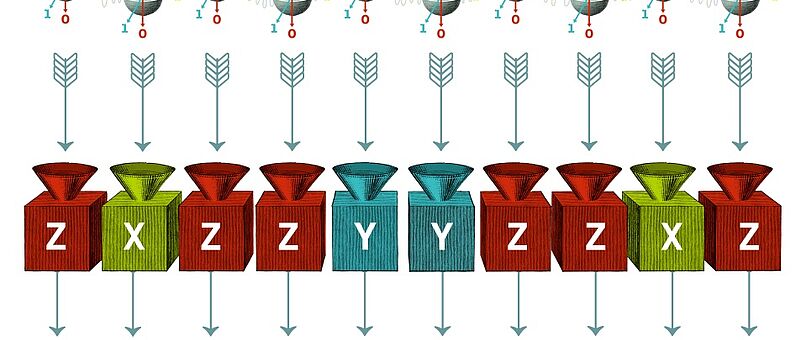
Dr. Borivoje Dakic is an Associate Professor at the University of Vienna , affiliated with the Faculty of Physics and the Quantum Optics, Quantum Nanophysics and Quantum Information department. His research spans foundational and applied aspects of quantum theory. Operational reconstruction of quantum formalism Quantum interference as a resource for communication Tomography of large-scale quantum systems Macroscopic quantum phenomena His work includes scalable verification techniques for quantum devices and collaborations with experimental teams like Philip Walther’s and Markus Aspelmeyer’s groups. He received the Marko Jarić Prize (2025) for his contributions. Recent projects focus on diagnostics of quantum devices (FWF BeyondC SFB), information-theoretic foundations of quantum interference (FWF P36994), and local operations in quantum field theory (Cluster of Excellence QuantA). His research on quantum coherence in networks and macroscopic entanglement challenges traditional assumptions about quantum-classical boundaries. Publications emphasize resource-efficient tomography, device-independent verification, and foundational frameworks for quantum statistics and field theory. Teaching: Quantum Information (2025W), Theory in Quantum Optics (2025S), VCQ Summerschool Labs: Dakić Group at University of Vienna
Marc Sachon is a Full Professor and Director of the Department of Operations, Information, and Technology at IESE Business School, University of Navarra . He serves as Academic Director for Advanced Management Programs (AMP) and specialized courses like Successful Change Management and Industry 4.0 . His leadership extends to the annual IESE Automotive Industry Conference (since 1986) and consulting engagements with global firms such as BMW Group , Phoenix Group , and Traton Group . PhD in Industrial Engineering and Engineering Management from Stanford University MBA from IESE Business School Master's in Aerospace Technology from University of Stuttgart His research focuses on operations strategy , particularly in the automotive industry , and the impact of Industry 4.0 on manufacturing and logistics. He explores how digital transformation reshapes value chains, emphasizing human-machine collaboration and supply chain resilience. His work spans academic journals like IEEE Transactions and business publications like IESE Insight , with case studies on companies such as Porsche and Netflix . Professor Sachon has received multiple teaching awards and maintains an active consulting practice across industries including airlines , pharmaceuticals , and logistics . He previously worked at Airbus and IBM , and currently advises a mobility startup board. His recent publications highlight trends in electric mobility , 3D printing , and supply chain sustainability .
Karl Bell is an Associate Professor in Cultural and Social History at the University of Portsmouth, specializing in supernatural and environmental history, folklore, and Victorian popular culture. He joined in 2007 after teaching at the University of East Anglia. Co-director, Centre for Port Cities and Maritime Cultures Co-Principal Investigator, 'From Sail to Steam, Carbon to Green' (Lloyd’s Register-funded, 2025-2031) Former director, Supernatural Cities project (2016-2022) Education: PhD in History, University of East Anglia (2007) MA in Modern History, Birkbeck College, University of London (2001) BA Hons in Modern History, Anglia Ruskin University (1992) His research explores the relationship between modernity, enchantment, and the Gothic, with a focus on coastal environments, psychogeography, and the revival of folklore in contemporary culture. He has authored books like the award-winning The Legend of Spring-heeled Jack and The Magical Imagination . Recent publications examine maritime haunting, urban Gothic mindscapes, and the evolution of supernatural narratives. His work bridges historical analysis with literary and cultural studies, emphasizing affective landscapes and storytelling. Scientific Awards: Outstanding PhD Supervisor Award, University of Portsmouth (2017) He has secured AHRC funding for 'Lost Voices: Spiritualism in the First World War' (2017) and leads the Lloyd’s Register-funded 'From Sail to Steam' project (2025-2031). As founder of Portsmouth Darkfest (2016-2021), he fostered academic-creative collaborations and developed the Portsmyth app. He teaches undergraduate and postgraduate courses, including the MA Victorian Gothic distance learning program, and serves on editorial boards of Revenant and Coastal Studies and Society .
David Lindlbauer is an Assistant Professor at Carnegie Mellon University's Human-Computer Interaction Institute (HCII), where he leads the Augmented Perception Lab and co-directs the CMU Extended Reality Technology Center. His research focuses on advancing Mixed Reality (MR) and Extended Reality (XR) interfaces through computational interaction methods that optimize spatial, temporal, and multimodal feedback.
Dr Ellen Adams is a Reader in Classical Archaeology and Liberal Arts at King’s College London, affiliated with the Departments of Classics and Interdisciplinary Humanities. She holds a PhD from the University of Cambridge (2004) and has conducted archaeological fieldwork across Europe. Her research focuses on Minoan Crete, disability studies in classical contexts, and museum accessibility for sensory-impaired audiences. She co-organizes the ICS Mycenaean Seminars and founded the Museum Access Network for Sensory Impairments (MANSIL) in 2018. Her work bridges archaeology and modern accessibility, emphasizing audio description, touch tours, and British Sign Language in museums. Recent projects include Disability Studies and the Classical Body (Routledge, 2021) and collaborations with institutions like the British Museum and the Courtauld Gallery. She teaches Greek archaeology, museum studies, and interdisciplinary modules in global cultures. Adams has appeared on BBC Radio discussing Minoan civilization and classical reception. Her research projects include Making Sense of Visual Art Through a Visual Language (BSL) and Anosmia in Culture and History . She actively curates public engagement events, such as BSL storytelling in Holyrood Park and creative writing competitions for blind/visually impaired audiences.
Dr. Anna Bernard is a Senior Lecturer in Comparative Literature and English at King’s College London, part of the Faculty of Arts & Humanities. She holds a BA from UC Berkeley and a PhD from the University of Cambridge. Her research focuses on postcolonial and world literature, decolonization, and solidarity movements, particularly Palestinian activism and international solidarity campaigns. Bernard has held significant fellowships and grants, including the Leverhulme Research Fellowship and an AHRC Research Network Grant. Her recent works include Decolonizing Comparative Literature (2023) and Decolonizing Literature (2023), which explore decolonial methodologies in academia and literature. She currently researches solidarity movements in Nicaragua, South Africa, and Palestine (1975–1990), emphasizing archival activism and transnational cultural networks. Bernard supervises PhD students in anti-colonial literature and cultural activism, and her teaching spans postcolonial theory and solidarity movements in literature. Education: Bachelor of Arts (UC Berkeley) Doctor of Philosophy (University of Cambridge) Research Interests: Postcolonial and world literature Decolonization and cultural activism Palestinian national movement Solidarity movements and internationalism Literature and human rights Recent Articles: Bernard’s work critiques humanitarian frameworks and emphasizes solidarity-based political action. Her 2023 articles Decolonizing Comparative Literature and Decolonizing Literature challenge Eurocentric academic paradigms. Earlier works include analyses of Palestinian solidarity in 1980s literature and critiques of empathy-driven humanitarianism. Awards: Leverhulme Research Fellowship (2016–17) AHRC Research Network Grant (2013–16) University of York Anniversary Lectureship (2010–11) Grants and Projects: Bernard’s research includes collaborations with Algerian universities and involvement in the International Solidarity Action Research Network (ISARN). She organizes events on solidarity, such as Building Usable Pasts and Decolonizing Higher Education . Lab/Team: Bernard contributes to King’s Critical Economic and Political Thought research group, which examines politics and economics through cultural lenses.
Minyi Huang is a Professor in the School of Mathematics and Statistics at Carleton University. His research focuses on Mean Field Stochastic Control, Stochastic Algorithms in Multi-Agent Systems, and Wireless Networks. He holds a Ph.D. from McGill University (2003) and has held postdoctoral positions at the University of Melbourne and the Australian National University. Dr. Huang is a Fellow of IEEE and a Member of SIAM. Education: Ph.D. in Electrical and Computer Engineering, McGill University (2003) M.Sc. in Systems and Control, Chinese Academy of Sciences (Beijing) B.Sc. in Mathematics, Shandong University (Jinan, China) Research Interests: Huang's work centers on stochastic control, mean field games, and multi-agent systems. His contributions include theoretical advancements in mean field social optimization, graphon-based control frameworks, and applications in wireless networks and economic models. He has organized workshops on Mathematical Cybernetics and Stochastic Processes, fostering interdisciplinary collaboration. Scientific Awards: Fellow of the IEEE Advising & Grants: Huang has advised numerous graduate students on topics in stochastic control and mean field theory. His grants include funding for international PhD students through Carleton's initiatives. He collaborates on projects involving mean field models for production output and social dynamics. Labs/Teams: Associated with the Ottawa-Carleton Institute for Mathematics and Statistics (OCIMS), contributing to collaborative research in control theory and applied mathematics.
Kaiyang Liu is an Assistant Professor at the Department of Computer Science, Memorial University of Newfoundland. He holds a Ph.D. from Central South University (2019) and was a Postdoctoral Fellow at the University of Victoria, Canada. His research focuses on distributed cloud/edge computing, data center networks, and distributed machine learning, emphasizing optimization for data-intensive services. He is an IEEE Senior Member and has received prestigious awards, including the NSERC Discovery Grants and IEEE TCCLD Outstanding Ph.D. Thesis Award. Education: Ph.D. in Information Science and Technology, Central South University (2014–2019) M.Sc. in Information Science and Technology, Central South University (2012–2014) B.Eng. in Information Science and Technology, Central South University (2008–2012) Research Assistant at the University of Victoria (2016–2018) Research Interests: Kaiyang’s work bridges AI and cloud computing, exploring optimization strategies for next-generation systems. Key areas include learning-based congestion control, energy-efficient resource management, and scalable distributed storage solutions. His research has been published in top-tier journals like IEEE Transactions on Parallel and Distributed Systems and conferences such as IEEE ICDCS. Awards & Grants: NSERC Discovery Grants & Discovery Launch Supplement (2024) IEEE TCCLD Outstanding Ph.D. Thesis Award (2020) CSC-UVic Fellowship (2016–2018) Teaching: He teaches courses on Computer Networks, Advanced Computer Networks, and Operating Systems at Memorial University and previously at the University of Victoria. Labs & Teams: His research group focuses on Space Edge Computing, leveraging LEO satellites for resilient, low-latency networks. Ongoing projects include optimizing distributed systems for AI workloads and satellite-based data centers.