Santa Di Cataldo is an Associate Professor at the Department of Control and Computer Engineering (DAUIN) of Politecnico di Torino. His research focuses on computer vision, pattern recognition, digital image processing, and medical image processing, with applications in industrial systems and AI for manufacturing. Scientific Branch: IINF-05/A - Information Processing Systems ERC Sectors: PE6_8 - Computer graphics, computer vision, multi media, computer games ERC Sectors: PE6_11 - Machine learning, statistical data processing His work includes developing AI-driven anomaly detection frameworks, physics-informed neural networks for additive manufacturing optimization, and neuro-symbolic approaches for Industry 4.0 applications. He supervises PhD students in Artificial Intelligence and Computer Engineering programs, collaborating on projects like BIG (Blue Is Green) and PNRR-Complementary Plan. Premio Donna Innovazione (2010) He leads courses such as Machine Learning in Applications and Applied AI and Machine Learning , while contributing to bioinformatics and robotics-related teaching. His research is supported by IAM@PoliTo and EDA groups, utilizing LADISPE laboratory facilities.
Giuseppe Perelli serves as an Associate Professor in the Department of Computer Science at Sapienza University of Rome, maintaining his office at Viale Regina Elena, 295 (Building E), 1st floor, room 106. His academic responsibilities encompass teaching and research within the university's computing discipline. His scholarly work focuses on core areas of Computer Science, with specialized contributions to Algorithms development and Software Engineering methodologies. These research interests drive advancements in computational theory and practical software systems design. Contact is facilitated through email perelli@di.uniroma1.it or telephone at +39.06.49255.470 (extension 36470), supporting collaboration and academic inquiries.
Fausto Francesco Lizzio is a Fixed-term Researcher at the Department of Mechanical and Aerospace Engineering (DIMEAS) within the College of Mechanical, Aerospace and Automotive Engineering at the Polytechnic University of Turin . His work focuses on consensus protocols , distributed control , and unmanned aerial systems (UAVs) . Research Interests: Multi-agent systems, time-delay networks, robotics, and aerospace engineering. Teaching Roles: Course instructor for advanced flight dynamics and collaborator in courses on spacecraft control, flight mechanics, and aerospace simulation. His recent research explores stability-switching properties in multi-agent systems, decentralized target estimation for UAV swarms, and digital twin applications for prognostic health management. These studies intersect aerospace engineering, control theory, and networked robotics. Scientific Contributions: He has been recognized with an open badge for participating in research funding calls through the Rimini School 2025. His publications span journals like IEEE Control Systems Letters , Drones , and conference proceedings for SICE and EASN events.
Paolo Zatelli is an Associate Professor at the University of Trento , Department of Civil, Environmental and Mechanical Engineering. His academic career spans over two decades, with research expertise in geomatics, photogrammetry, and open-source GIS applications. Department of Civil, Environmental and Mechanical Engineering (since 2001) Researcher in ICAR06 (Topography and Cartography) International collaborations in geospatial projects Education includes a degree in Environmental and Territory Engineering (1993, 110/110 with honors) and a PhD in Topographic and Geodetic Sciences (1998). He has taught courses in GIS, Digital Cartography, and GPS surveying. Research Interests focus on geospatial technologies and their applications. Key areas include digital photogrammetry , wavelet applications in geodesy , GPS survey planning , and open-source GIS development . His work extends to environmental monitoring, historical cartography analysis, and sustainable forest management systems. Publication Trends show sustained contributions to FOSS4G (Free and Open Source GIS) applications, with recent work covering topics like landscape metrics , EV charging infrastructure , beta diversity analysis , and historical map digitization using GRASS GIS and QGIS. Scientific Contributions include: Member, IAG Special Study Group 4.187 on Wavelets in Geodesy Organizing committee, IV Hotine-Marussi Symposium Key developer of GRASS GIS applications Contributor to GOCE satellite geodesy projects Teaching and Mentorship highlights his role in both academic and professional GIS training, with over 20 theses supervised. His Technical Contributions involve developing open-source tools for spatial database management, statistical analysis, and georeferencing workflows.
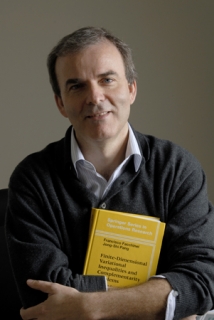
Francisco Facchinei is a Professor at Sapienza University of Rome, affiliated with the Department of Computer, Automatic and Management Engineering Antonio Ruberti within the College of Engineering. His research spans nonlinear and non-differentiable optimization, complementarity problems, variational inequalities, and game theory applications in telecommunications. His work focuses on developing algorithms for nonconvex optimization with ghost penalties, asynchronous distributed methods, and applications in healthcare and communications systems. Key Contributions: Foundational work in variational inequality theory, generalized Nash equilibrium problems, and optimization over dynamic networks. Recent Trends: Emphasis on asynchronous parallel algorithms, stochastic optimization, and non-invasive medical diagnostics via machine learning. He has held academic positions at Sapienza University since 1990, progressing from Ricercatore to Professore Ordinario. No scientific awards are explicitly mentioned in the provided texts.
Simone Lenti is an Assistant Professor (Ricercatore RTDa) at the Department of Computer, Control, and Management Engineering of Sapienza University of Rome. He is an active member of the A.WA.RE research group , which specializes in visual analytics. Lenti obtained his Ph.D. in 2021 with a dissertation on visual analytics techniques for cybersecurity. His research bridges cybersecurity , visual analytics , and human-computer interaction , focusing on: Developing computational methods for vulnerability analysis (e.g., NLP for CVE relevance, smart contract taxonomies) Designing visual tools for threat detection (e.g., attack graphs, firmware fuzzing) Enhancing interpretability in data-driven systems (e.g., partial dependence analysis, process mining) Lenti's publications (2019–2025) demonstrate a consistent focus on applying visual analytics to cybersecurity challenges , with recent expansions into bioinformatics and education. Key trends include automated vulnerability management, human-centered explainability, and scalable threat modeling. Awards: IEEE VizSec 2018 Best Paper for contributions to cybersecurity visualization. He contributes to academic infrastructure through tools like easyDeclare (declarative process modeling) and BUCEPHALUS (business-centric cybersecurity analysis), emphasizing practical applications of his research.
Jlenia Toppi is an Associate Professor at the Department of Computer, Control and Management Engineering, Sapienza University of Rome. With a background in Biomedical Engineering (B.Sc. and M.Sc. summa cum laude from University of Rome, Ph.D. from University of Bologna), she leads research at the Neuroelectrical Imaging and BCI Laboratory, IRCCS Fondazione Santa Lucia, focusing on EEG signal processing, brain connectivity modeling, and graph theory applications in cognitive and clinical neuroscience. Education: B.Sc. Clinical Engineering (2006), M.Sc. Biomedical Engineering (2009), Ph.D. Biomedical Engineering (2013) Awards: IEEE EMBC Student Paper Finalist (2012), Young Bioingegneria Award (2012), IEEE EMBS Best Poster (2011) Her research develops advanced EEG methodologies for brain mapping and dynamic connectivity estimation , applied to disorders of consciousness, stroke rehabilitation, and social neuroscience. She pioneered hyperscanning EEG for interpersonal brain-to-brain analysis and contributed to BCI systems like RECOM and The Promotoer. Recent publications highlight her work on hybrid BCI rehabilitation , muscle synergy extraction , and multi-modal assessment of therapeutic interventions . She serves as editor for Computation and Mathematical Methods in Medicine and collaborates with international projects including Horizon 2020.
Federica Borio is a Research Fellow at the Department of Control and Computer Engineering (DAUIN) at the Polytechnic University of Turin. Her work focuses on advancing research in computer science and control systems, with a particular emphasis on collaborative laboratory initiatives. Research Interests Computer Science Control Systems Software Engineering Robotics Artificial Intelligence Machine Learning Recent Publications Her 2014 publication S3+ Lab highlights her contributions to collaborative research environments and system development. Labs and Teams Federica Borio is actively involved with the S3+ Lab, focusing on interdisciplinary projects that bridge theoretical and applied computer science in educational and industrial contexts.
Edoardo Battegazzore is a Research Fellow at the Department of Control and Computer Engineering (DAUIN) at Politecnico di Torino , where he also serves as an external lecturer and teaching assistant. His work spans virtual and augmented reality applications in medical training, cognitive psychology, and public safety, supported by funded projects such as Holo-BLSD (2024-2025). Education: Completed his PhD (XXXV Cycle) with a thesis titled "Virtual and Augmented Reality Applications for Public Health and Safety" (2024), advised by Andrea Bottino and Fabrizio Lamberti Research interests focus on: Virtual Reality (VR) and Augmented Reality (AR) for medical training and cognitive testing Human-Computer Interaction in collaborative AR environments Simulation Modeling for seismic and pedestrian evacuation dynamics Gamification in education and behavioral studies Recent publications highlight trends in VR/AR applications for prosthetics, airway management, and public health, alongside behavioral studies on cooperation and competition. His work also covers usability evaluations of AR/VR devices for industrial and emergency training. Current affiliations include: CGVG - Computer Graphics and Vision Group (DAUIN) Collaborator on funded projects like Holo-BLSD (2024-2025)
Giacomo Garaccione is a Ph.D. candidate in Computer and Systems Engineering at the Polytechnic University of Turin , affiliated with the Department of Control and Computer Engineering (DAUIN) and the SOFTENG - Software Engineering Group . He holds an MSc in Computer Engineering (Software) from the same institution. Current Role : Ph.D. candidate (38th cycle, 2022-2025) Teaching : External lecturer and teaching assistant for Information Systems and Software Engineering courses in Engineering and Management and Computer Engineering programs (2022-2025). His research focuses on applying gamification to software engineering education , with emphasis on conceptual modeling and GUI testing . He develops gamified tools like UMLegend and GERRY , integrating artificial intelligence and natural language processing for automated model validation and feedback. Publications analyze gamification’s impact on student productivity and perception in UML/BPMN education. Scientific recognition : Nominated for merit awards (2025). Collaborator on multiple studies involving large language models and gamified IDE plugins , with ongoing work to create a comprehensive gamified environment for software modeling and requirements training.
Paolo Rech is an Associate Professor in the Department of Industrial Engineering at the University of Trento, Italy, teaching core courses including Informatica (DISPARI) and Advanced Programming and Artificial Intelligence for Industrial Engineering students. His research spans hardware-software reliability under radiation exposure with emphasis on real-world applications. His primary research domains feature: Reliability Engineering : Pioneering fault-tolerance methodologies for radiation-prone environments Radiation Effects : Quantifying neutron/gamma impacts on GPUs, TPUs, and quantum devices Computer Architecture : Designing hardened RISC-V systems and post-CMOS accelerators AI Reliability : Developing fault-aware neural networks for safety-critical deployment Quantum Vulnerability : Characterizing error mechanisms in quantum circuits Analysis of his 15 most recent publications reveals a dominant focus on radiation-hardened computing systems, with 83% of works addressing neutron-induced faults in GPUs/TPUs and quantum devices. His methodology consistently integrates neutron beam experiments, fault injection frameworks, and architectural hardening techniques across space, medical, and autonomous systems applications. Scientific Awards: None documented in available sources. His teaching directly feeds into research supervision, with course content on C++ programming, object-oriented design, and quantum computing foundations forming the basis for student projects in fault-tolerant system development. Current grants likely support neutron irradiation testing and quantum reliability initiatives given publication patterns, though specific funding details aren't publicly itemized. He operates within University of Trento's engineering research ecosystem, collaborating with teams specializing in radiation testing and quantum computing through projects like ARCHYTAS and Trikarenos, though no dedicated lab name is specified in source materials.
Andrea Molinari is a Contract Professor at the University of Trento since 1990 and at the Free University of Bozen since 2002. He also serves as a Visiting Professor at Lappeenranta University of Technology (2021-2025) and holds a Docent position in Decision Making at the same institution (2024-2029). Previously, he was an Adjunct Professor at Turku University/Abo Akademi in Finland (2007-2019). Education: 2022: Doctoral Degree - Doctor of Science (Technology), Engineering Science, Software Engineering research field from LUT - Lappeenranta University of Technology. Dissertation: "Integration Between eLearning platforms and Information Systems: a New Generation of Tools for Virtual Communities" 1988: Master Degree in Economics from Università degli Studi di Trento with grade 110/110. Thesis: "P.I.R.S. Personal Information Retrieval Systems" Professor Molinari's research focuses on the intersection of education technology and information systems. His primary areas include e-learning/m-learning systems, virtual communities and social media, semantic technologies and ontologies, data management with AI applications, and Enterprise Project Management. His work bridges theoretical computer science with practical applications in educational and organizational contexts, particularly examining how technology can enhance learning experiences and organizational efficiency. His recent publications reveal a strong emphasis on the evolution of Learning Management Systems in the AI era, integration of semantic technologies with educational platforms, and applications of serious games for professional training. There's a clear trajectory toward more sophisticated, AI-enhanced educational technologies that incorporate data analytics, personalized learning, and advanced user modeling. Scientific Awards: Winner of the "S. Ciancio" scholarship (1980, 1982, 1983) Outstanding Paper Award at the Ed-Media World Conference on Educational Technology (1995) Since 1994, Professor Molinari has supervised approximately 10 thesis projects annually across multiple institutions including the University of Trento (Economics, Engineering), University of Bolzano (Computer Science, Education), and Abo Akademy in Finland. His teaching spans numerous courses related to information systems, project management, and technology applications across various academic disciplines. He has coordinated numerous research projects, particularly in the areas of e-learning platforms, virtual communities, and semantic technologies for educational applications. Professor Molinari is actively involved with several research communities and has served on program committees for numerous international conferences including IEEE-STAR, SMARTGREENS, and the International Conference on Web-based Education. His work often involves interdisciplinary collaboration between computer scientists, educators, and domain specialists to develop innovative technology-enhanced learning solutions.
Christian Peukert serves as Professor of Digitization, Innovation and Intellectual Property at HEC Lausanne (Faculty of Business and Economics at University of Lausanne) and leads the Digital Markets Lab. His research examines how digitization transforms consumer behavior, firm strategies, and market dynamics, with particular focus on intellectual property frameworks and the economics of data and artificial intelligence. He actively contributes to the Digital Economy Network and teaches courses in strategy, innovation, applied econometrics, and data science. Peukert's research interests center on the economic implications of digital transformation across multiple domains. His work investigates copyright economics in the digital age, AI regulation challenges, open source software business models, and the impact of data governance frameworks like GDPR. He explores how technological changes affect market efficiency in creative industries including publishing, music, and comics, while examining the relationship between innovation incentives and intellectual property systems in digital environments. His publication portfolio demonstrates strong interdisciplinary engagement across law, economics, and computer science, with recent articles appearing in top journals like Management Science, Research Policy, and Organization Science. Notable research trends include examining AI training data economics, analyzing digital market regulation effectiveness, and studying the welfare impacts of mobile internet access policies. His work frequently employs empirical methods including field experiments, natural experiments, and large-scale data analysis. Peukert has received significant recognition for his scholarly contributions, including: Best Paper Award at Strategy Science Conference for research on startup funding and open source communities Best Paper Award at WISE for work on news recommendation algorithms Best Paper Award at INFORMS Annual Meeting 2024 for research on AI training data dynamics His research has attracted media attention from major outlets including Wall Street Journal, Washington Post, MIT Technology Review, and VoxEU, demonstrating the policy relevance of his work. Peukert maintains active collaborations with researchers across Europe and regularly contributes to policy discussions on digital markets and intellectual property through his leadership in the Digital Markets Lab and Digital Economy Network.