Tim Fletcher, PhD, is a Professor of Kinesiology at Brock University’s Faculty of Applied Health Sciences. His research focuses on pedagogical strategies to foster meaningful learning experiences in physical education, emphasizing teacher implementation of innovative approaches. He co-authored the seminal text Meaningful Physical Education: An Approach to Guide Teaching and Learning (2021) and employs self-study methodology to explore practitioner research. Professional affiliations include editorial roles with journals such as Physical Education & Sport Pedagogy and Journal of Teaching in Physical Education , and board positions with organizations like Ophea. His work addresses teacher professionalization, curriculum design, and the sociocultural dimensions of physical education. Research trends across his articles highlight themes of democratic pedagogies, teacher agency, and the intersection of theory and practice. Notable projects investigate student voice initiatives, occupational socialization of educators, and the challenges of implementing pedagogical innovations in diverse educational contexts. He has advised numerous collaborative studies with international colleagues, though specific student advisee names are not listed. His contributions extend to curriculum development and professional development frameworks for educators, reflecting a commitment to advancing equitable and engaging physical education practices.
Ain A. Grooms serves as an Assistant Professor in the Educational Leadership and Policy Analysis Department at the University of Wisconsin-Madison School of Education. Her research centers on K-12 educational equity, specifically examining access and outcomes for students of color and traditionally disenfranchised communities through the critical lens of race and place. She investigates how educational policies impact student achievement and leadership practices across school, district, and state levels. Her primary research domains include: Educational equity frameworks and implementation Race and place intersections in policy analysis Retention strategies for educators of color Equity-focused principal pipeline development Computer science education policy implementation Chronic absenteeism in marginalized communities Analysis of Dr. Grooms' recent publications reveals a consistent focus on dismantling systemic barriers through leadership development and policy innovation. Her work examines how educational leaders navigate racialized contexts, with particular attention to computer science equity, pandemic response adaptations, and the sustainability of equity-focused initiatives. Publications span high-impact journals including Educational Policy and Urban Education, demonstrating rigorous mixed-methods approaches to educational justice. Her scholarship connects theoretical frameworks with practical leadership applications, emphasizing community-engaged solutions to persistent educational inequities. Current projects investigate institutional responses to demographic shifts and the development of counterspaces for marginalized students and educators.
Joyce S. Osland serves as the Executive Director of the Global Leadership Advancement Center at San José State University's School of Global Innovation and Leadership, affiliated with the Lucas College and Graduate School of Business. Education: PhD in Organizational Behavior from Case Western Reserve University (1990). Her research focuses on global leadership, cross-cultural management, international business, and organizational behavior. She has contributed to frameworks for cultural sensemaking, expatriate repatriation knowledge transfer, and defining global leadership competencies. Key publication trends include global leadership development, expatriate management, cross-cultural knowledge transfer, and experiential organizational behavior models. Notable works span from 1999 to 2014, with a focus on Latin American cultural implications, repatriation processes, and cognitive expertise in global leadership. She teaches courses like BUS 268: Managing Across Cultures and BUS 262B: Global Leadership Development at San José State University's Lucas Business Complex in Santa Clara, CA.
Raghu Garud is the Alvin H. Clemens Professor of Entrepreneurial Studies in the Department of Management and Organization at the Smeal College of Business, Pennsylvania State University. He is an active researcher in the fields of entrepreneurship, innovation, and organizational theory. His research focuses on the emergence of novelty , exploring how new ideas are generated, valued, and commercialized. Key areas include entrepreneurial framing , digital innovation , organizational innovation , and technological design . He employs process-based and narrative approaches to understand innovation dynamics in contexts such as platform-based ventures, regional regeneration, and identity-challenging technologies. Recent publications reveal a strong trend toward understanding legitimacy , institutional categorization , and performative processes in innovation. His work spans comparative studies (e.g., e-cigarettes in US vs UK), in-depth case analyses (e.g., Uber, Gmail), and conceptual advancements in entrepreneurial framing and performativity. Collaborators include Y. Snihur, L. D. W. Thomas, N. Phillips, J. Gehman, and T. Tharchen. His research has appeared in top journals such as Academy of Management Review , Strategic Organization , Journal of Business Venturing , and Strategic Management Journal . While no formal awards are listed in the provided text, his sustained publication record in premier outlets and named professorship indicate significant scholarly recognition. He advises graduate students and collaborates on projects related to innovation and entrepreneurship, though specific advisees are not listed. Garud's work is associated with research on digital platforms, regional innovation ecosystems, and the cultural dimensions of entrepreneurship. He contributes to ongoing scholarly conversations on the processual nature of innovation and the role of narrative and design in entrepreneurial success.
Professor Joanne Meehan is a faculty member at the University of Liverpool Management School, specializing in modern slavery, sustainable supply chains, corporate power, and social value. She serves as Director of the Centre for Sustainable Business and Associate Editor for the Journal of Purchasing and Supply Management . Her research focuses on: Strategic impacts of sustainable procurement on stakeholders Supply chain conflicts between equity and economic benefit Critical Action Research methodology Key article trends include modern slavery frameworks (2023) and institutional logic of sustainable organizations (2021). She has received multiple awards including UoL Staff Awards (2023) and best paper recognitions (2016-2023). Teaching areas: Strategic Procurement Management Collaborative Procurement Public Sector Procurement Professional roles: Director of Liverpool MBA program (2016-2018) PhD examiner at 10+ universities Editorial roles with JPSM , IJPSM , and IMM
Elina Mäkinen serves as Professor of Science, Technology, and Organization at Tampere University's Faculty of Management and Business. She concurrently holds a docentship at the University of Helsinki's Faculty of Social Sciences and serves on editorial boards including the Journal of Organizational Change Management. Her institutional affiliations reflect deep engagement with organizational studies across Nordic academic networks. Her academic background includes a B.Sc. and M.Sc. in Sociology from the University of Helsinki and a Ph.D. in Organization Studies from Stanford University. This foundation supports her research at the intersection of institutional theory and scientific practice. Mäkinen's research centers on interdisciplinary knowledge production, examining how academic careers evolve at disciplinary boundaries. She investigates ethical regulation in science, academic entrepreneurship, and team science dynamics, with particular focus on boundary work and knowledge integration processes. Her work reveals how researchers navigate institutional constraints while pursuing translational science. Analysis of her publication trajectory shows consistent focus on boundary phenomena in science, evolving from early work on clinical recruitment to recent studies of ethical governance. The corpus demonstrates methodological diversity across ethnographic, interview-based, and network analysis approaches within organizational sociology frameworks. As principal investigator, she leads two major projects: The Emergence of Health and Life Science Innovations (HeLSI) and Competing Imaginaries of Ethical Science (IMAGES), funded by the Foundation for Economic Education (2020-2023) and Emil Aaltonen Foundation (2023-2025). These projects examine structural and ethical dimensions of contemporary science. Her laboratory work centers on transdisciplinary collaboration, particularly through the New Social Research unit, where she investigates how researchers build shared epistemic frameworks across disciplinary divides. Current efforts focus on ethical regulation systems in non-medical research contexts.
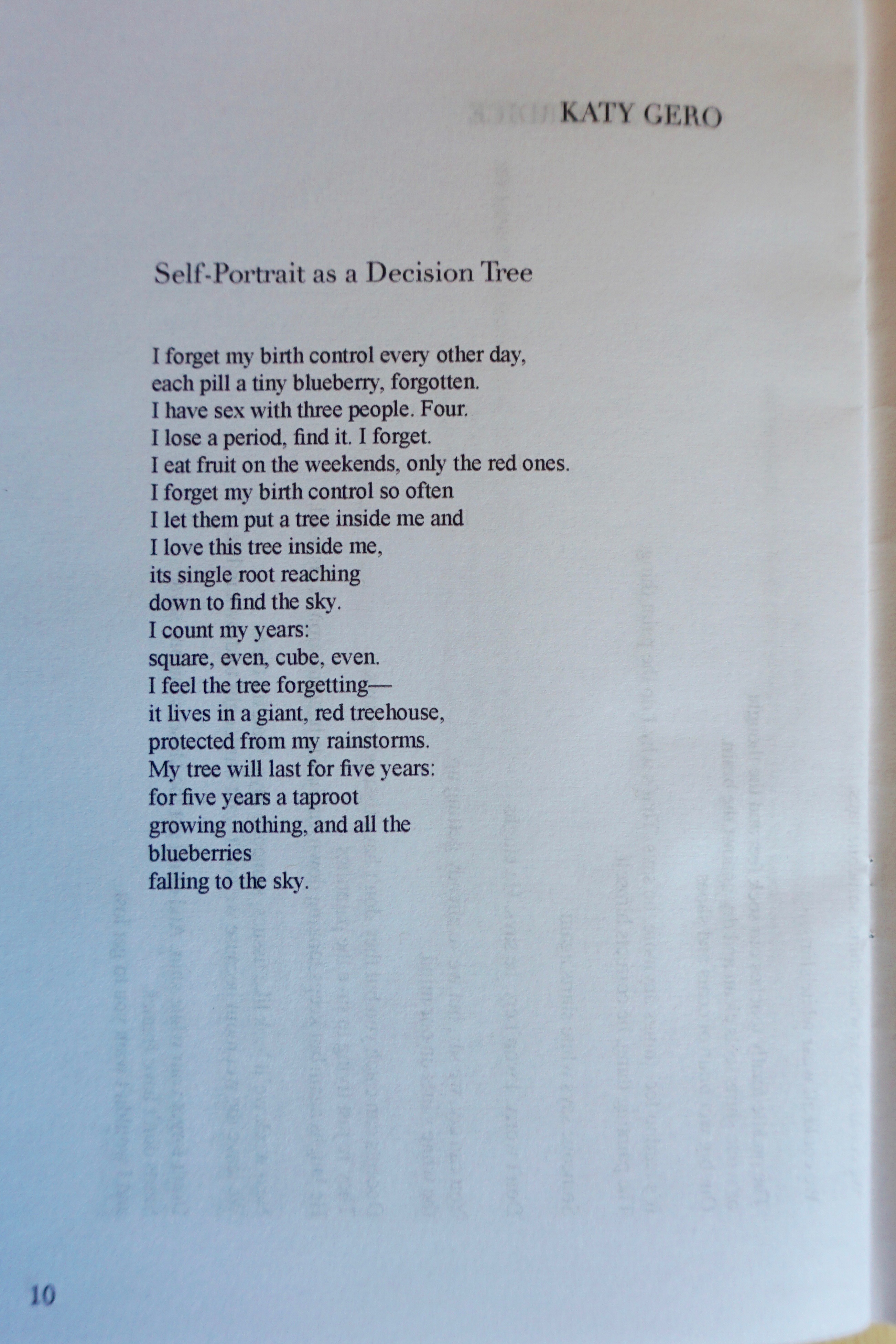
Katy Ilonka Gero is a Lecturer at the School of Computer Science, University of Sydney , with prior postdoctoral roles at Harvard University and the Library Innovation Lab. She holds a PhD in Computer Science from Columbia University (2022) and a BS in Mechanical Engineering from MIT (2017). Education : PhD in Computer Science (Columbia University, 2022); BS in Mechanical Engineering (MIT, 2017) Her research focuses on Human-Computer Interaction in creative domains, particularly how language models impact creative practice, ownership, and learning . She develops community-driven AI models through co-design with creative communities and investigates ethical data governance practices. Recent work includes designing interactive writing tools for metaphor creation and exploring the social dynamics of AI support in writing . The 15 most recent articles reflect trends in AI-augmented creativity (Metaphoria, CHI 2019), AI ethics (Nature Machine Intelligence 2023), and human-AI collaboration (CHI 2020 Best Paper). These works span language model evaluation , creative ownership , and technical innovations in soft robotics (2012) and science communication (2021). Scientific Awards : NSF Graduate Research Fellowship Brown Institute for Media Innovation Grant Amazon Research Award Best Paper - CHI 2025 Honorable Mention - CHI 2024 Best Paper - CHI 2020 As a poet and essayist , she co-edits Ensemble Park , a human-computer co-writing magazine, and authored the dynamic poetry book The Anxiety of Conception (2025). Her grants include support from the National Science Foundation , Brown Institute , and Amazon . For technical details, visit her personal website or GitHub.
Leonora Kaldaras is an Assistant Professor in the Department of Curriculum & Instruction at Texas Tech University College of Education. Her research focuses on equitable personalized learning, AI-driven assessment systems, and cognitive development in STEM education. She holds a dual Ph.D. in Curriculum, Instruction and Teacher Education and Measurement and Quantitative Methods from Michigan State University (2020) and has worked with Nobel laureate Carl Wieman on AI-guided feedback tools. Education: Dual Ph.D. (2020), Michigan State University Science Education Certificate, BGSU B.S. in Chemistry (2009), BGSU Research Interests: Personalizing learning through technology, equity in blended/personalized learning, and fostering knowledge transfer via self-guided strategies. She specializes in NGSS-aligned assessments and AI-enhanced feedback systems for STEM education. Article Trends: Her recent work (2023-2025) emphasizes AI-driven assessment design, NGSS-aligned learning progressions, and cognitive frameworks for math-science integration. Earlier publications (2012-2016) focus on biophysics but transitioned to education post-2020. Scientific Awards: New and Noteworthy Invited Symposium by American Chemical Society Top Downloaded Article (JRST, 2019) Top Cited Article (JRST, 2021-2022) Grants: NSF DrK-12 Co-PI (2022-2026) for AI feedback systems in NGSS classrooms. Labs & Collaborations: Formerly at Stanford University Graduate School of Education and University of Colorado Boulder PhET Interactive Simulations Project, working closely with Nobel laureate Dr. Carl Wieman.
Prof. Dr. Milad Mirbabaie is a University Professor and Chair of Business Informatics (AI Engineering in Companies) at Otto-Friedrich University of Bamberg since December 2023. His academic journey includes roles at the University of Münster (PhD, summa cum laude 2018), University of Duisburg-Essen (postdoc), University of Bremen (visiting professor), and Paderborn University (junior professor). He focuses on AI systems in organizations, human-AI collaboration ethics, future of work dynamics, and digital nomadism. His research integrates insights from business informatics, psychology, and sociology. Education: Bachelor's/Master's: University of Hamburg PhD: University of Münster (2018) Research Highlights: Explores AI ethics, digital workplace transformation, crisis management via social media, and hybrid intelligence applications. Current projects include PREVENT, CYLENCE, and INNO4S initiatives. Collaborates closely with industry and NGOs to bridge academic-practice gaps. Teaching: Offers courses like AI Engineering in Business, Digital Transformation, and Hybrid Intelligence. Emphasizes application-oriented learning through practical projects and seminars. Key Themes in Publications: 2020s work focuses on digital detox frameworks, metaverse workplace dynamics, and identity challenges in AI adoption. Recent 2025 papers address corporate nomadism and distraction management in virtual environments. Affiliations: Active in leading conferences (ICIS/ECIS) and journals (JMIS/JAIS). ResearchGate/ORCID profiles highlight over 100 publications. Engages with industry through collaborative projects and advisory roles.
Yalong Yang is an Assistant Professor at the School of Interactive Computing at Georgia Institute of Technology. His research focuses on immersive analytics, virtual reality (VR), and augmented reality (AR) interfaces, with a particular emphasis on spatial interaction, hybrid user interfaces, and data visualization techniques. He explores how embodied interactions and immersive environments enhance understanding in domains like education, sports analytics, and collaborative decision-making. Key research themes include hybrid immersive systems (combining VR/AR with physical devices), asymmetric collaboration in mixed environments, and AI-driven tools for programming education. His work spans both theoretical frameworks and applied systems, such as SPHERE for scalable personalized feedback in coding classrooms and VizGroup for collaborative learning analytics. Yang’s recent publications highlight trends in spatial hybrid interfaces, navigation in immersive environments, and the integration of generative AI in educational technologies. His projects often involve evaluating interaction techniques (e.g., label placement in AR) and comparing performance across desktop and VR platforms. Notable contributions include the SportsXR initiative for immersive analytics in sports, and systems like CompositingVis for creating complex visualizations in 3D spaces. His work addresses challenges in situated analytics, wearable technologies for outdoor activities, and audience analysis in VR exhibitions.
Elizabeth A. Williams is a Professor of Organizational and Health Communication and Chair of the Department of Communication Studies at Colorado State University, with affiliate faculty status at the Colorado School of Public Health. Her research examines high reliability organizations (e.g., fire departments) and their health/safety practices, including accident response, organizational learning, and wearable technology applications. Education: Ph.D. in Communication from Purdue University Affiliations: Department of Communication Studies, Colorado School of Public Health Recent work includes: Nonprofit resilience during crises (2024) Emotional sustainability in human services (2022) Wearable tech integration in firefighting (2018) Virtual team communication dynamics (2011) She co-edited the award-winning Organizations, Communication, and Health (2017 NCA award) and serves on ResponderStrong's advisory board. Recognized for Excellence in Teaching and Outstanding Service by the College of Liberal Arts, her research bridges organizational theory with public health through communication strategies.
Anu Kajamaa, PhD, is an Adjunct Professor and Principal Investigator in the Faculty of Educational Sciences at the University of Helsinki, Finland. She also holds positions as an Honorary Professor at the University of Exeter's College of Social Sciences and International Studies (UK) and as a Visiting Associate Professor at Aalto University in both the School of Business (Department of Management Studies) and the School of Arts, Design and Architecture (Department of Media). She serves as Co-Leader of the Learning, Culture and Interventions (LECI) expert group and Vice Director of the Doctoral Program of School, Education, Society and Culture (SEDUCE). Dr. Kajamaa's research focuses on collective learning, creativity, organization and management, continuous learning, and change through interprofessional working and formative interventions. She is an expert in sociocultural- and practice-based theories, qualitative research methods, and participatory intervention techniques, particularly cultural historical activity theory and the Change Laboratory method. Her work spans multiple contexts including primary schools, teacher education, prisons, health and social care, and entrepreneurship hubs. Her recent publications demonstrate a strong trend toward educational innovation through makerspaces and the integration of technology in learning environments. The research shows increasing focus on AI-mediated learning processes, relational expertise development, and collaborative innovation practices across educational settings. Her work consistently applies sociocultural theoretical frameworks to examine how learning occurs in complex, real-world contexts. 2023: The Royal Society of Medicine and Center for the Advancement of Interprofessional Education Practitioners Award, UK 2022: Early Career Award, American Educational Research Association (AERA) 2021: The Clinical Teacher Journal Impact Award 2020: Editor's Choice Award (BERA and BJET) 2015: The Adult Educator of the Year, University of Helsinki Dr. Kajamaa has secured significant research funding including an EU HORIZON 2020-MSCA-RISE project on collaborative working between correctional and mental health services, an Erasmus+ KA205 Strategic Partnerships project on media literacy, and an Academy of Finland-funded project on makerspaces. She coordinates the Nordic Research Network on Digitalising Childhoods and is a member of the Playful Learning Center ecosystem. As one of the founders of the European Centre of Excellence in Qualitative Study and Inquiry in Training and Education, she has established herself as a leader in qualitative educational research methodology. Her international research collaborations span institutions including University College London, McGill University, Columbia University, and the University of Oulu. She has been a visiting researcher at numerous institutions worldwide including UC Berkeley, ESSEC Business School, and the University of Exeter. Her work with the Playful Learning Center and the Nordic-Baltic ISCAR network demonstrates her commitment to advancing educational research through international collaboration.
Dr David Johnson is an Associate Professor of Entrepreneurship at Durham University Business School, where he serves as Associate Chair for the £9 million Smart & Scale initiative supporting SME innovation in North-East England. He is also a Fellow of the Wolfson Research Institute for Health and Wellbeing and maintains active Visiting Fellow positions at international institutions. Johnson's educational background includes: PhD in Management (Entrepreneurship), University of Edinburgh Business School MSc by Research (Entrepreneurship), University of Edinburgh Business School MBA, Adam Smith Business School, University of Glasgow Master's degree in Science, University of Edinburgh Bachelor's degree in Science, University of Leeds PG Cert in Learning, Teaching, and Assessment Practice His research centers on academic entrepreneurship , life science commercialisation , and university-industry engagement , with particular focus on linguistic approaches and machine learning applications. Johnson examines how institutional practices shape entrepreneurial activities across contexts ranging from regenerative medicine to Freemasonry, emphasizing the built environment's role in ecosystem development. Johnson's publication trajectory reveals evolving methodological sophistication, shifting from early studies on regenerative medicine venturing (2014-2017) toward computational linguistics and machine learning applications (2024-2025). His work consistently bridges theoretical frameworks with practical innovation challenges, spanning entrepreneurial ecosystems, technology transfer, and narrative analysis in resource mobilization. His scientific recognition includes: NASA Innovation and Technology Transfer: Space2Pitch Final Visiting Research Fellow at Interface, Edinburgh Fellow of Wolfson Research Institute for Health and Wellbeing Visiting Research Fellow at Skolkovo Institute Visiting Research Scholar at Wisconsin School of Business Fellow of Higher Education Academy Johnson supervises postgraduate students including Clare Talbot-Jones and Olivia King, supported by over £500,000 in research funding: Science commercialisation activities at university-industry boundary (£390,824) Cardiology-focused point-of-care device development (£38,934) Primary Research Support Fund for Zambian field research (2025) Global Engagement Grant for Dartmouth College knowledge exchange (2024) He actively leads research infrastructure as Co-Director of Durham Enterprise Centre and through his Smart & Scale initiative role, while contributing to interdisciplinary health research via the Wolfson Institute fellowship.
Alf Steinar Sætre is a Professor of Innovation and Strategy at the Department of Industrial Economics and Technology Management at NTNU. He leads the Norwegian Research School in Innovation (NORSI-PIMS), collaborating with top institutions like Harvard Business School, INSEAD, and Stanford University. His research focuses on innovation processes, organizational learning, and strategic management. Education: MSc in Economics from Norwegian School of Economics (Bergen), PhD from University of Texas at Austin (Fulbright Scholar). Research Interests: Ambiguity management, innovation termination, organizational knowledge absorption, and sustainable business models. His teaching includes courses on Innovation Management, Strategy, and Engaged Scholarship. He co-authored books like Communication in Organizations and contributes to journals such as Academy of Management Review and Journal of Product Innovation Management . Sætre’s work emphasizes practical applications of innovation theory through international collaborations and executive education programs.
Dr. Sandris Zeivots is a Senior Lecturer at the University of Sydney Business School and Interim Academic Director of Business Co-Design. His research focuses on creating transformative educational experiences through co-design methodologies, learning spaces, and emotional dimensions of learning. Zeivots explores student engagement optimization through collaborative educational design and investigates hybrid teaching models. His publications demonstrate consistent focus on innovative pedagogies, with recent work examining generative AI's impact on assessments, connected learning spaces in business education, and cross-disciplinary professional development. Research trends show progression from experiential learning foundations to technologically-enhanced educational frameworks. Zeivots leads the Disruptive Innovations in Business Education Research Group and has secured multiple grants including an Australian Business Deans Council commission. As academic director, he oversees curriculum development initiatives and facilitates faculty development programs through Sydney Facilitators Network and HERDSA networks. His pedagogical approach emphasizes authentic industry engagement and meaningful learning experiences in postgraduate business education.