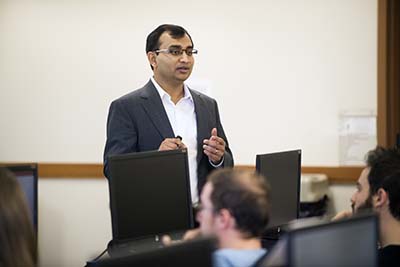
Ronald C. Lasky is a Professor of Engineering at Dartmouth College's Thayer School of Engineering and a Senior Technologist at the Indium Corporation. His academic roles include teaching courses such as ENGM 187: Technology Innovation and Entrepreneurship and ENGS 155: Intermediate Thermodynamics . Dr. Lasky holds a BS in Engineering Physics from Cornell University (1970), an MS in Applied Mathematics from Binghamton University (1974), and a PhD in Materials Science from Cornell University (1986). His research focuses on process optimization, electronic assembly, materials science, and environmental compliance. Notable contributions include work on lead-free solder assembly and Lean Six Sigma methodologies. He received the Member of Technical Distinction Award from the SMTA in 2021. Dr. Lasky actively engages with industry, exemplified by his collaboration with Galanz in China, exploring modern manufacturing practices and infrastructure. His insights on global supply chains and technological advancements highlight his dual academic and professional expertise.
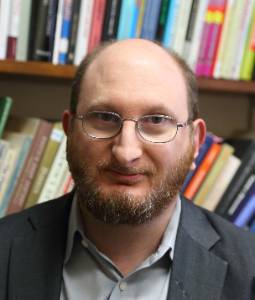
Joseph A. November is an Associate Professor in the Department of History at the University of South Carolina, affiliated with the McCausland College of Arts and Sciences. His research focuses on the history of biomedical computing, distributed computing, and the intersection of technology and medicine. He holds a Ph.D. from Princeton University (2006), an M.A. from the University of Chicago (2002), and a B.A. from Hamilton College (1997). His work includes the award-winning book Biomedical Computing: Digitizing Life in the United States (2012), which explores the co-development of biomedicine and computing technologies. Current projects include Revolutions@home , examining distributed computing in protein folding research, and a biography of computing pioneer Robert S. Ledley. He has received grants from the NSF, NIH, and the Charles Babbage Institute. Teaching interests span the history of science and technology, including courses on the history of medicine, digital humanities, and the role of games in historical education. He actively contributes to professional organizations like SHOT and the History of Science Society. Awards include the Computer History Museum Prize (2013) and the National Institutes of Health DeWitt Stetten Fellowship (2007-2008). His research bridges historical analysis with contemporary issues in technology and biomedical ethics.
Professor Hutan Ashrafian is a clinician-scientist and surgeon at the University of Leeds Business School, holding dual roles as Professor of Research Impact and Senior Research Fellow at Imperial College London. His expertise spans AI in healthcare, metabolic surgery, and ancient history. He pioneered STARD-AI and QUADAS-AI guidelines for AI diagnostics, collaborated on AI-driven breast cancer screening with Google and NHS, and led global health policy initiatives. Ashrafian’s work bridges medicine, history, and philosophy, including his contributions to understanding historical figures’ medical conditions, such as King Tutankhamun’s epilepsy. He has authored over 550 publications, 12 books, and holds a PhD in computational physiology and an MBA with distinction. Awards include the Hunterian Prize and Wellcome Trust Fellowship. His research also explores AI ethics, quantum physics paradoxes, and art-based medical diagnostics. Education: PhD in Computational Physiology (Imperial College London) MBA (Warwick Business School) MD (University College London) Bachelor of Science in Immunology (University College London) Research Interests: Ashrafian’s work spans: AI in Medicine: Diagnostic algorithms, guideline development (STARD-AI/QUADAS-AI), and ethical frameworks. Metabolic Surgery: Bariatric interventions, gut microbiome, and obesity treatments. Ancient History: Medical analyses of historical figures (e.g., Tutankhamun, Julius Caesar) and art-based pathology identification. Philosophy: AI rights (AIONAI law), temporal paradoxes, and the Simulation Argument. Awards: Royal College of Surgeons Arris and Gale Lectureship Hunterian Prize Wellcome Trust Research Fellowship Advising & Innovation: Supervised >50 PhD students, co-founded Oxford Medical Products (weight loss tech), and serves as CSO at Flagship Pioneering’s Preemptive Health division. He advises on NHS digital transformation and global health policy. Labs/Teams: Leads AI initiatives at Imperial’s Institute of Global Health Innovation and collaborates with Google, NICE, and international institutions on health tech solutions.
Tien Tsin Wong is a Professor in the Department of Data Science & AI at Monash University, Australia. Previously, he served as a Professor at the Chinese University of Hong Kong (1999–2024) and held a Visiting Assistant Professor position at the Hong Kong University of Science and Technology (1998–1999). His research focuses on Generative AI, Computer Graphics, Computer Vision, and Computational Manga, with significant contributions to GPU techniques, image-based rendering, and multimedia compression. Education: He earned a B.Sc. (1992), MPhil (1994), and PhD (1998) in Computer Science from the Chinese University of Hong Kong. Research Interests: His work bridges computational techniques with artistic applications, particularly in manga and animation. Notable areas include generative models, diffusion-based video synthesis, and physically plausible scene generation. His research aligns with UN Sustainable Development Goals through innovations in education and digital accessibility. Awards : He has received the 2004 Young Researcher Award, 2005 IEEE Transactions on Multimedia Prize Paper Award, and two international invention medals (Geneva 2018, Asia Hong Kong 2019). Editorial Roles : He serves as an Associate Editor for Computer Graphics Forum , IEEE Transactions on Visualization and Computer Graphics , and Computational Visual Media . His editorial work underscores his influence in advancing visualization and graphics research. Labs/Teams : While not explicitly named, his collaborations span global institutions, focusing on computational manga, generative AI, and GPU-optimized techniques. His work often involves interdisciplinary teams addressing challenges in digital media and AI.
Silvia Lindtner is an Associate Professor at the University of Michigan's School of Information and Director of the Center for Ethics, Society, and Computing (ESC). She holds courtesy appointments in the Penny W. Stamps School of Art and Design and the Digital Studies Institute. Her work focuses on the social and cultural study of technology in China and globally, with a focus on data-driven governance, AI ethics, and the intersection of technology and labor. Lindtner has conducted nearly two decades of fieldwork in China, examining innovation ecosystems, digital economies, and the affective dimensions of state control. She is the author of the award-winning *Prototype Nation: China and the Contested Promise of Innovation* (2020) and co-author of *Technoprecarious* (2020). Education: PhD in Information and Computer Sciences from University of California, Irvine; BS/MS in Media Technology and Design from University of Hagenberg, Austria. Research Interests: Science and Technology Studies (STS), China Studies, HCI, Critical Computing, AI Ethics, Data Governance, Labor Studies, and Transnational Digital Economies. She explores how technological systems shape governance, labor practices, and everyday life, particularly in contexts of global inequality and state surveillance. Awards: Joseph Levenson Prize (2021), Francis L.K. Hsu Book Prize (2021), ACM Distinguished Member (2022), and fellowships from the National Committee on US-China Relations (2021-2023) and China-US Scholars Program (2021-2022). Grants: Supported by NSF, IMLS, Intel Labs, Google Anita Borg, and Chinese National Natural Science Foundation. Leads interdisciplinary initiatives including Tech.Culture.Matters research group and Michigan Interactive and Social Computing (MISC) research group. Labs/Teams: Directs the Center for Ethics, Society, and Computing (ESC) and collaborates with the Lieberthal-Rogel Center for Chinese Studies. Current projects include studies on affective control in AI governance and transnational data practices in healthcare and labor.
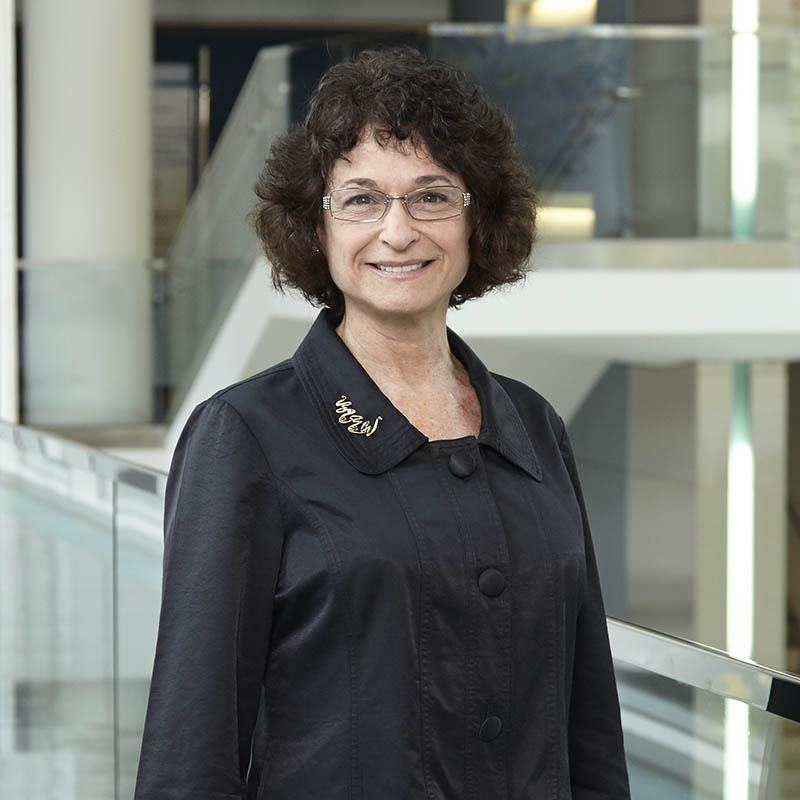
Cheryl Gaimon holds the Esther and Edward J. Brown Chair and serves as a Regents' Professor at the Scheller College of Business, Georgia Institute of Technology. She is Faculty Director of the Management of Technology (MoT) Certificate Program, which she helped establish, and teaches across all academic levels including executive education. Professor Gaimon initiated the Operations Management Program and served as its first Area Coordinator for seven years. Her academic credentials include: Ph.D. in Operations Research from Carnegie Mellon University M.S. in Industrial Administration (Operations Management) from Carnegie Mellon University B.S. in Mathematics and Economics (Magna Cum Laude) from Brooklyn College, City University of New York Professor Gaimon's research centers on managing knowledge-based resources in technology-driven environments. Her work spans Innovation and Management of Technology , Knowledge Management and Outsourcing , New Product/Process Development , Alliances for Innovation , and Sustainability Research . She examines how firms navigate technological change through strategic resource allocation, knowledge transfer, and sustainable operations, with increasing emphasis on environmental strategies in recent years. Her publication trajectory reveals consistent focus on operations management within technological evolution—from foundational work on technology acquisition and capacity planning to contemporary studies on environmental strategies and multidisciplinary technology management. Key journals featuring her research include Management Science , Operations Research , and Production and Operations Management . Major recognitions include: Regents' Professor designation (2005) by the Georgia Board of Regents The 1999 Georgia Tech Research Award for doctoral student development Brady Family Award for Faculty Research Excellence (2014) Best Department Editor Award for POM (2024) POMS Fellow status and Distinguished Service Award (2009/2014) As an educator, she has mentored doctoral students and shaped curriculum through the MoT program. Her professional leadership includes serving as POMS President (2008-2009), founding co-President of the POMS College on Product Innovation and Technology Management, and editorial roles at top journals including Management Science and Production and Operations Management . Professor Gaimon directs the interdisciplinary Management of Technology Certificate Program, fostering cross-departmental collaboration for technology management research and education while advancing sustainability integration in operations.
Sean Cao serves as Associate Professor (with tenure) at the Robert H. Smith School of Business, University of Maryland, where he is Director and Co-founder of the AI Initiative for Capital Market Research. He also holds an affiliation as professor at Harvard Business School's D 3 Institute. His academic journey began with a Ph.D. from the University of Illinois at Urbana-Champaign. Dr. Cao's research focuses on the intersection of artificial intelligence and capital markets, with particular expertise in how machine learning transforms financial analysis, corporate disclosure practices, and investment decision-making. His work examines the evolving relationship between human analysts and AI systems, blockchain applications in financial reporting, and the strategic adaptation of corporate communications for machine readership. He has pioneered research on the "AI divide" among investor groups and developed frameworks for human-AI collaborative stock analysis. His publication portfolio spans top journals including Journal of Financial Economics, Review of Financial Studies, Journal of Accounting Research, and Management Science. The research demonstrates consistent thematic progression toward increasingly sophisticated AI applications in finance, with recent work exploring distributed ledger technologies for auditing, machine learning for extracting private information from disclosures, and the economics of greenwashing in ESG funds. His studies frequently combine textual analysis with traditional financial metrics to uncover novel market insights. Fama-DFA Prize from Journal of Financial Economics for best paper in capital markets and asset pricing Michael J. Brennan Award from Review of Financial Studies Deloitte Initiative for AI and Learning award for developing trustworthy AI for social equity PanAgora Asset Management's Dr. Richard A. Crowell Memorial Prize Multiple best paper awards from Midwest Finance Association, Global AI Finance Conference, and Asian Finance Association Dr. Cao has delivered over 200 invited research talks at major institutions including the Central Bank of Japan, Central Bank of Thailand, and U.S. Securities and Exchange Commission. He serves as Guest Associate Editor for Management Science and has co-chaired Review of Financial Studies conferences on FinTech and Machine Learning. His educational initiatives include a widely adopted free AI textbook for finance and accounting that has been implemented at universities worldwide including Indiana University, UT Dallas, and University of Minnesota. As Director of the AI Initiative for Capital Market Research, Dr. Cao leads a multidisciplinary team exploring practical AI applications in finance. The initiative has secured significant funding including a $150,000 grant from GRF CPAs & Advisors. His research group maintains strong industry connections through partnerships with regulatory bodies, financial institutions, and technology companies, facilitating the translation of academic research into practical financial applications.
Aniket (Niki) Kittur is a Professor in the Human-Computer Interaction Institute (HCII) at Carnegie Mellon University's School of Computer Science. His research focuses on AI-augmented cognition, exploring how humans and computational systems can partner to accelerate knowledge acquisition and innovation. With over 100 peer-reviewed publications and 17 best paper awards or honorable mentions, Dr. Kittur has established himself as a leader in human-computer interaction and social computing. Dr. Kittur's research spans multiple interconnected areas focused on enhancing human cognition through technology. His work on crowd-augmented cognition examines how crowds and computation can collectively enhance human intellect. In social computing, he investigates how sociotechnical architectures can motivate and coordinate large groups for complex tasks. His research in data visualization and sensemaking explores how people collect, organize, and make decisions with online information. Most recently, his work has shifted toward LLM-augmented cognition, investigating how humans and large language models can work together in partnership to achieve better decisions and greater creativity than either could alone. Dr. Kittur's publications reveal a consistent trajectory toward increasingly sophisticated human-AI collaboration systems. Early work focused on crowdsourcing complex tasks (CrowdForge, CrowdSynthesis), then evolved to knowledge acceleration systems (Knowledge Accelerator, Fuse), and has recently centered on LLM-integrated cognition (Selenite, InkSpire, BioSpark). His research consistently demonstrates practical impact, with systems influencing products used by millions and receiving coverage in major media outlets including Nature News, The Economist, and The Wall Street Journal. Kavli fellow NSF CAREER award recipient Allen Newell Award for Research Excellence Inductee into the CHI Academy 17 best paper awards or honorable mentions across his publications Dr. Kittur has advised numerous students, including Andrew Kuznetsov, and has secured major research funding from NSF, NIH, Google, Microsoft, Bosch, Toyota, and other organizations. His Skeema browser extension project, which addresses tab overload through innovative project-based organization, has shown remarkable user retention and represents a practical application of his research on knowledge acceleration. His work with industry partners has influenced products used by millions, including Semantic Reader, Google Shopping, and Wikipedia features.
Hauke Smidt is a Personal Professor at Wageningen University & Research, affiliated with the Molecular Ecology group within the Faculty of Veterinary Medicine and Animal Sciences. His research focuses on microbial ecology, particularly gut microbiota dynamics, antibiotic resistance, environmental microbiology, and the One Health framework. Smidt has supervised over 50 PhD students and contributed to 519 publications, including studies on microbiome resilience, fermented food impacts, and bioremediation strategies. Education and affiliations include leadership roles in projects addressing antimicrobial resistance, pig health, and drinking water microbiology. His work spans collaborations across Europe and Asia, with notable contributions to understanding microbial community responses to environmental stressors and dietary interventions. Smidt is actively involved in public outreach, as seen in media contributions discussing microbiome research and health benefits. Key projects include aquifer treatment for drinking water, microbiome simulation models, and combating plant pathogens. His awards and recognition are not explicitly listed, but his extensive publication record and project leadership highlight significant academic impact.
Syed Hani Hassan Abidi is an Associate Professor at the Department of Biomedical Sciences , School of Medicine , Nazarbayev University , Kazakhstan. His research integrates virology , immunology , viral oncology , and bioinformatics , with a focus on HIV molecular epidemiology , viral evolution , and drug resistance . He has led international projects across Pakistan, Kenya, Afghanistan, and Kazakhstan, and is recognized for innovative teaching and MOOC development. Education: PhD in Virology and Immunology Research Interests: His laboratory employs bioinformatics (machine learning, AI), genomics , and proteomics to study HIV phylodynamics , viral co-infections , and oncogenic viruses like EBV in prostate cancer. He also explores microbiome-immunity interactions and designs antiviral drugs/vaccines . Recent Research Trends: His 2025 publications emphasize COVID-19 immunopathology , HIV/syphilis epidemiology in Pakistan , and particle physics contributions via ATLAS , showcasing interdisciplinary impact. Awards & Recognition: Outstanding Teachers Award (2019, Aga Khan University) Fellowship of Higher Education (UK, 2022) Teaching & Grants: He pioneered Pakistan’s first MOOC on Computer-Based Drug Discovery (2014) and received a 2022 SoTL grant for MOOC-based molecular biology education. His teaching integrates animations , films , and flipped classrooms . Collaborations & Labs: Leads projects on HIV drug resistance , HCV genomics in Kazakhstan , and AI-driven dementia diagnostics (Kazakh Brain Atlas). His lab collaborates with global institutions to advance viral disease surveillance and therapeutic innovation .
Sarah Billington is the UPS Foundation Professor of Civil and Environmental Engineering at Stanford University and a Senior Fellow at the Woods Institute for the Environment. Her research program focuses on sustainable building design, human wellbeing, and ethical supply chain practices. Education: PhD, University of Texas at Austin, Structural Engineering (1997) MSE, University of Texas at Austin, Structural Engineering (1994) BSE, Princeton University, Civil Engineering & Operations Research (1990) Her lab employs interdisciplinary methods to study how built environments impact human physical, psychological, and social wellbeing. Current projects include developing tools to quantify nature exposure in buildings, exploring affordable housing's role in wellbeing, and using AI to assess forced labor risks in material supply chains. While no longer active in this area, her group previously pioneered research on sustainable construction materials like bio-based composites and ductile cement-based composites. Her recent publications address topics such as nature integration in architecture, workplace design optimization, and health impacts of building materials. The Billington Lab at Stanford fosters collaborative team science, welcoming partnerships to advance occupant-centric engineering solutions.
Snježana Babić serves as Associate Professor and Head of the Graduate Study Program Informatics - Teaching Major at the Faculty of Informatics in Pula , University of Pula. With a PhD obtained in 2016 and university affiliation since 2017, she teaches across undergraduate and graduate programs focusing on ICT fundamentals, web design, digital competencies, and informatics education methodology. Her educational background includes graduation in 1993 followed by doctoral studies culminating in 2016. Though specific institutions aren't detailed in the text, her career trajectory shows progression from foundational ICT teaching to specialized informatics education leadership. Babić's research centers on educational technology adoption with particular emphasis on programming pedagogy for young learners through the MEMA method. Her work investigates digital competencies across multiple educational contexts, from primary schools to higher education. Recent publications demonstrate rapid adaptation to emerging technologies, with 2025 studies examining ChatGPT integration in Croatian educational settings and cross-cultural applications of programming methods. Analysis of her 15 most recent publications reveals consistent focus on technology acceptance models applied to Croatian educators and students. The research trajectory shows evolution from foundational e-learning systems (2016-2020) to cutting-edge AI and robotics applications (2022-2025), maintaining strong methodological focus on teacher motivation , implementation barriers , and culturally-specific adoption factors . Her teaching portfolio demonstrates deep integration with research interests: Undergraduate: ICT Fundamentals, Web Design and Application Graduate: Digital Competencies in Education, Informatics Education Methodology, Practicum for IT Educators Cross-disciplinary: ICT in Nursing, Healthcare Informatics Babić actively contributes to institutional leadership as program head while maintaining robust research productivity. Her work bridges theoretical technology adoption frameworks with practical implementation challenges in Croatian educational contexts, particularly examining how emerging technologies like humanoid robots and AI assistants can be effectively integrated into teaching practices.
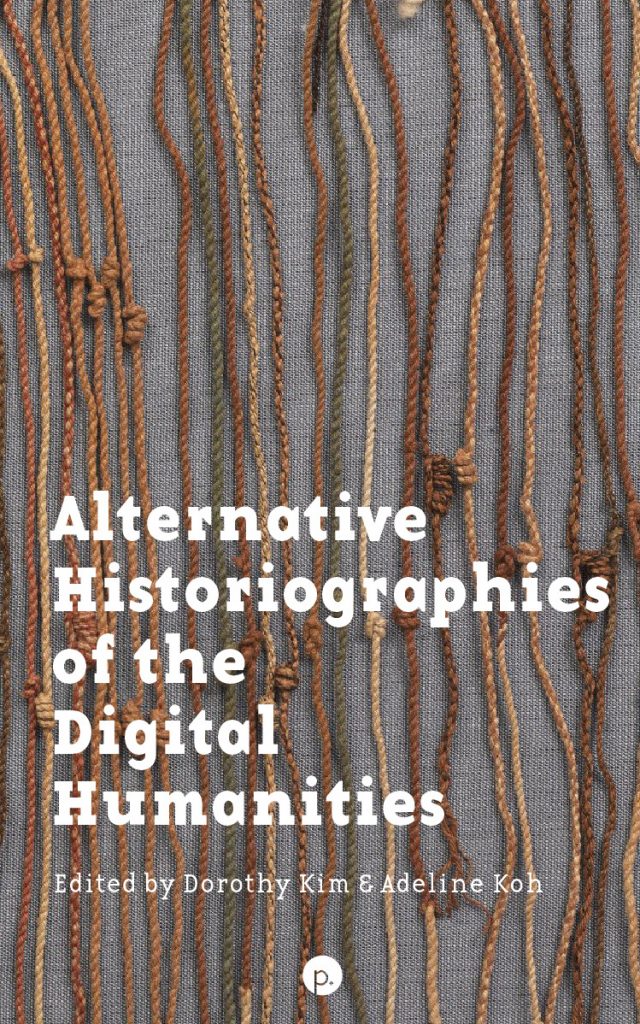
Dorothy Kim serves as Assistant Professor of English at Brandeis University with cross-appointments in the Department of Women's, Gender and Sexuality Studies and the Women's Studies Research Center. Her innovative scholarship bridges medieval literary studies, digital humanities, and critical race theory, examining how medieval history is weaponized by contemporary white supremacist movements and advocating for antiracist frameworks in academia. She earned her Ph.D. and M.A. from the University of California, Los Angeles and her B.A. from the University of California, Berkeley. Her educational trajectory reflects deep engagement with interdisciplinary approaches to literature and cultural studies. Kim's research centers on exposing the racialized foundations of medieval studies, particularly through projects analyzing digital white supremacy and medievalism's role in alt-right ideology. She pioneers methodologies connecting medieval women's literary cultures with contemporary trans feminism while interrogating Jewish/Christian difference in manuscript studies. Her work consistently challenges the field's historical whiteness and develops decolonial digital humanities practices. Her publication trends reveal a decisive shift toward critical race interventions in premodern studies, with increasing focus on database methodologies, sonic histories, and the material politics of medieval manuscript transmission. Recent works demonstrate how digital tools can either reinforce or dismantle racial hierarchies in academic knowledge production. Her distinguished honors include: 2023 Medieval Academy of America Article Prize in Critical Race Studies American Studies Association Digital Humanities Book Prize (2021) Society for Medieval Feminist Scholarship's Best Feminist Article Award (2021) AAUW Postdoctoral Fellowship (2018-2019) Folger Shakespeare Library Long-Term Fellowship (2025-2026) SSHRC, Ford Foundation, Fulbright, and Mellon fellowships Kim directs major collaborative projects including the NEH-funded An Archive of Early Middle English (161-manuscript database) and co-leads the Global Middle Ages Project. As co-director of RaceB4Race and the Reckonings Institute, she creates platforms for community archiving and social justice praxis. Her mentorship focuses on training students in critical digital methodologies through Brandeis' DH Lab while developing antifascist frameworks for humanities education. She currently leads the Brandeis University DH Lab housing her NEH project, co-edits Literature Compass's pre-1800 section, and develops two major book projects: Race, the Crusades, and the Katherine Group (based on her AAUW fellowship) and Music, Multimodal Manuscripts, and Remediating the Medieval Lyric for ArcPress.
Prof. Magnus Fröhling is a Full Professor of Circular Economy and Sustainability Assessment at the Technical University of Munich (TUM), leading the Chair of Circular Economy and Sustainability Assessment at TUM Campus Straubing. He holds a doctorate and habilitation from the Karlsruhe Institute of Technology (KIT), specializing in material flow analysis and resource efficiency. His career includes roles as a professor at TU Bergakademie Freiberg before joining TUM in 2018. Fröhling’s research focuses on quantitative approaches for circular economy systems, including industrial value chains, built environments, and bioeconomy. He co-leads the TUM Mission Network Circular Economy, an interdisciplinary platform for research and innovation. **Education:** Bachelor/Master in Industrial Engineering, Karlsruhe University (TH) PhD in Industrial Engineering (2005), Karlsruhe University Habilitation in Business Administration (2011), KIT **Research Interests:** Circular economy concepts for automotive industry, buildings, and energy systems; sustainability assessment in bioeconomy; policy instruments for resource efficiency. His work emphasizes lifecycle analysis and closed-loop systems. **Awards:** TUM Sustainability Award (2021) and recognition for groundbreaking research on sustainability in industrial biotechnology (2020). **Advising & Grants:** Leads research initiatives like CirculaTUM, focusing on interdisciplinary collaboration. His work integrates policy analysis, technological innovation, and industrial ecology to advance sustainability goals. **Labs/Teams:** Active in TUM’s Green Fuel Center and SynBioFoundry@TUM, promoting sustainable energy and biotechnology solutions.
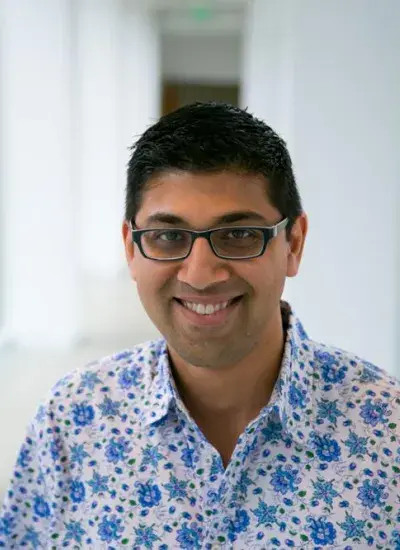
Mohammad Saifur Rahman is the Daniels School Chair in Management and a Professor of Management Information Systems at the Mitch Daniels School of Business, Purdue University. Previously, he was an Associate Professor at the Haskayne School of Business, University of Calgary. His academic journey includes significant leadership roles such as co-chairing the Conference on Information Systems and Technology (CIST) in 2013 and serving as president of the INFORMS eBusiness Society in 2014. Currently, he serves as an associate editor for both Management Science and Information Systems Research (ISR). Ph.D. in Management Information Systems, Krannert School of Management, Purdue University (2008) MBA in Management Information Systems, Southern Illinois University (2004) BS in Computer Science, Southern Illinois University (2002) Rahman's research primarily focuses on the economic implications of digital transformations. His work examines how digitization affects consumer behavior, market structures, and business strategies across various industries. He investigates the value of digital traces in driving consumer behavior and improving decision-making, particularly in omnichannel retail environments. His research on the sharing economy has revealed important insights about economic disparities, showing how platforms like Airbnb provide economic benefits to predominantly white neighborhoods while failing to generate similar spillover effects in predominantly Black or Hispanic neighborhoods. His recent publications reveal a consistent focus on the intersection of technology, economics, and social impact. Rahman's work frequently examines how local market structures interact with digital platforms to create or exacerbate economic inequalities. His research spans multiple disciplines including information systems, economics, marketing, and operations management, with a particular emphasis on empirical studies using real-world data from major companies like Walmart and Cisco. CICP Faculty Commercialization Award (2020) INFORMS Sandy Slaughter Early Career Award (2018) World's Top 40 Business School Professors Under 40 by Poets and Quants (2017) Jay N. Ross Young Faculty Scholar Award (2015) Dean's Award for Outstanding Research Achievement (University of Calgary, 2014) Rahman has secured substantial research funding from organizations including Social Sciences and Humanities Research Council (SSHRC), Adobe Systems ($50,000 grants in 2017 and 2020), Trask Innovation Fund ($21,218), and NSF I-Corps ($50,000). He has advised numerous PhD students and collaborated with industry partners to translate research into practical applications. Rahman co-founded RightFit Analytics, a precision health analytics solution that utilizes AI to learn success patterns in healthcare. He has organized significant academic events including the Krannert-Walmart Data Dive (believed to be the first data dive on a college campus) and the Dawn or Doom Data Dive in cooperation with Cisco. Rahman actively engages with industry through consulting and collaborative research projects. His work with Walmart, Cisco, and other major corporations demonstrates his ability to bridge academic research with practical business applications. He has been particularly active in studying how AI and big data analytics can be leveraged to improve business decision-making while addressing potential negative consequences like algorithmic bias and economic inequality.