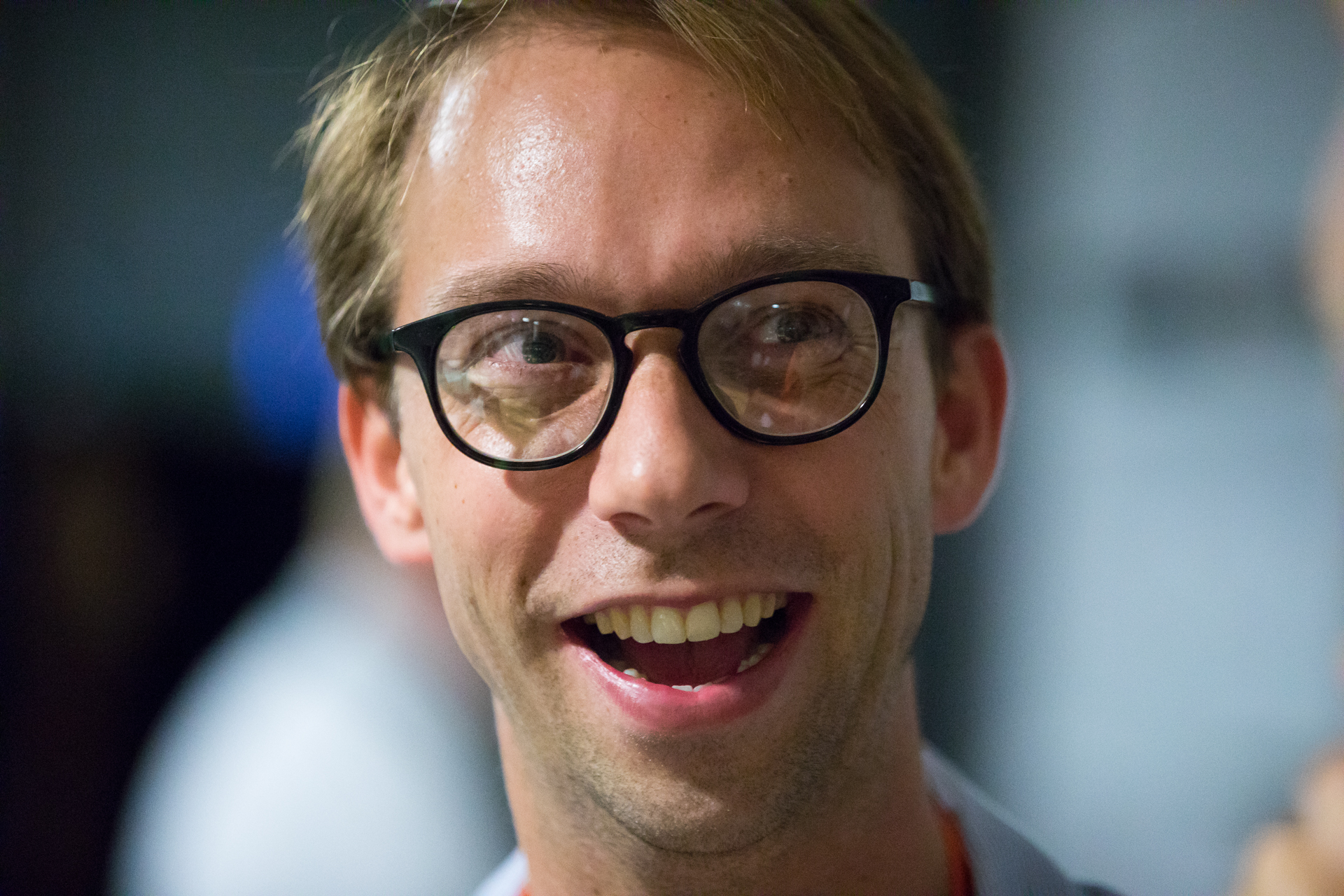
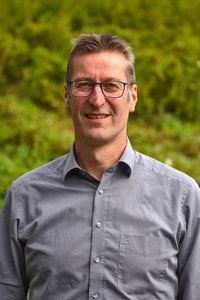
Dong Hyun Kim is a Professor in the Department of Architecture at Sejong University , where he has been since 2006. His academic journey includes a M.Arch from Yale University (2002), an M.S. (1995), and a B.S. (1993) in Architecture from Seoul National University. Education: M.Arch, Yale University (2002) M.S., Seoul National University (1995) B.S., Seoul National University (1993) KIM's research focuses on Design Methodology , Digital Drawing Representation using VR/AR , and Building 3D Printing . His work explores the intersection of Parametric Architecture and Technology for Living , emphasizing innovative fabrication techniques and digital tools in architectural design. Recent publications highlight his expertise in Daylighting Performance Assessment (2024) and Deep Neural Network-Based Parameterization Frameworks (2023). His 2018 study on 3D printing technologies and 2009 work on digital design methodologies underscore his long-term commitment to advancing architectural fabrication. KIM's professional experience includes roles at major firms like Daewoo Corp/Construction (1995-1999) and Pei, Cobb, Freed and Partners (2003-2005), prior to his academic career.
Giuseppe Iannaccone is a full Professor at the University of Pisa , Department of Information Engineering. His research focuses on quantum electronics , neuromorphic computing , and 2D materials for advanced applications in analog circuits and high-temperature electronics. Lead researcher in QUEPE Quantum Engineering and QUEFORMAL projects Pioneer in neuromorphic chip design using silicon and 2D materials Active in developing high-temperature integrated circuits for industrial applications His recent work explores twisted transition metal dichalcogenides for spintronics, inkjet-printed 2D electronics on paper substrates, and wireless power transfer systems for medical devices. The Google Scholar articles show consistent contributions to analog neuromorphic engines , quantum transport modeling , and steep-slope transistor architectures . Collaborations include Gianluca Fiori and Benjamin Zambrano in neuromorphic hardware development. He actively promotes student well-being through institutional initiatives like the Ufficio Benessere at University of Pisa and has taught RFID and IoT courses for PhD students. Current research integrates MoS2/graphene heterostructures and van der Waals junctions for next-generation electronics.
Dr. Lucy Bryant is a Senior Lecturer in Speech Pathology at the University of Technology Sydney (UTS), Faculty of Health, with over a decade of clinical experience working with children and adults across community, private practice, and university clinics. She is a certified practising speech pathologist whose work centers on ensuring access to communication as a fundamental human right, with a strong emphasis on technology applications in speech pathology practice. PhD in Speech Pathology, University of Newcastle Australia (2014-2018) Bachelor of Speech Pathology (First Class Honours, University Medal), University of Newcastle Australia (2009-2012) Graduate Certificate in Higher Education Teaching and Learning, University of Technology Sydney Dr. Bryant's research focuses on language development and rehabilitation across the lifespan, with particular emphasis on how people process, understand, and express meaning. She has significant expertise in discourse analysis for clinical practice, especially for people with aphasia following stroke. Her innovative work explores the integration of Virtual Reality and Augmented Reality technologies in speech pathology, examining how these tools can enhance communication access and inclusion for individuals with communication disabilities. She also investigates neurodevelopmental communication disorders and the application of technology in improving language learning and rehabilitation outcomes across the lifespan. Dr. Bryant's publication record demonstrates a strong trajectory toward immersive technologies in speech pathology practice, with recent work heavily focused on Virtual Reality and Augmented Reality applications. Her research spans both adult and pediatric populations, addressing communication disorders across the lifespan, with a consistent emphasis on translating research findings into practical clinical applications. Her collaborative approach is evident in numerous interdisciplinary projects and international partnerships, particularly the FOQUS Aphasia initiative she helped launch. Dr. Bryant actively supervises Masters and PhD students and has secured competitive research funding through projects like 'Augmented Reality to Support Social Language Skill Development' (EPIC MEGAGRANTS) and 'Co-designing an Augmented Reality Application for Children with Communication Disability' (UTS ECR Research Capabilities Development Initiative). As Theme Lead for Professional Practice and Education in the UTS INSIGHT Digital Health Collaborative, Dr. Bryant works at the intersection of technology and clinical practice. She co-founded the international collaboration FOQUS Aphasia and is actively involved in the UTS speech pathology clinic that provides free public treatment while offering students clinical experience. Her work with the Digital, Virtual and AI in Health Collaborative (DVAIHC) positions her at the forefront of technology integration in speech pathology education and practice.
Professor Susanne Rau serves as Professor for the History and Cultures of Spaces in Modern Times within the Department of History at the University of Erfurt's Faculty of Arts and Humanities. She holds multiple significant academic roles including Fellow and Spokesperson of the Kolleg Research Group at the Max Weber Center for Advanced Cultural and Social Studies, Program Supervisor for the Master's program in Collection-Related History of Knowledge and Culture, and Member of the Doctoral Committee of the Faculty of Philosophy since 2009. Her institutional leadership extends to coordinating Erasmus partnerships with universities across France, Spain, and Italy, and serving as contact person for university cooperation with Jamia Millia Islamia and Kannur University in India. Professor Rau's research establishes her as a pioneer in spatial history , with groundbreaking work on the intersections between urban development and religious practices . Her scholarship reveals sophisticated analysis of how spaces are constructed, perceived, and utilized across historical contexts, particularly examining European and South Asian urban centers. She has developed innovative frameworks for understanding urbanity as a historical concept , exploring how different cultures have conceptualized urban spaces through time. Her research on early modern European cities, especially Lyon and Hamburg, demonstrates exceptional attention to public spaces, tavern cultures, and spatial configurations that shaped social interactions. Her extensive publication record shows consistent methodological innovation, particularly in the spatial turn in historical scholarship . Recent work demonstrates increasing emphasis on comparative urban studies between European and South Asian contexts, with significant focus on Calicut (Kozhikode). Professor Rau has pioneered digital approaches to historical research through projects like the GlobMapLab , which uses computational tools to analyze historical cartographic collections, particularly the renowned Perthes collection in Gotha. Her collaborative work with the "Religion & Urbanity" research group represents a major contribution to understanding how religious practices both shape and are shaped by urban environments. 2023 Thuringian Research Prize (Basic Research) 2023 Palmes Académiques ("chevalier") 2021 Award for internationalization of the University of Erfurt 2018-2021 Distinguished Visiting Professorship at the École Normale supérieure de Lyon 2017 Gay-Lussac Humboldt Prize of the French Academy of Sciences 2017 "Geisteswissenschaften International" Prize for promoting humanities translation 2015 Vienna Prize for urban history research 2009 Heisenberg Professorship of the German Research Foundation 2008 Young Talent Award from the Alfried Krupp von Bohlen und Halbach Foundation As an academic leader, Professor Rau has directed substantial research initiatives including the "Religion & Urbanity" collaborative research group funded by the German Research Foundation, and previously served as Vice President for Research and Young Talent Development at the University of Erfurt (2014-2017). She has secured funding from prestigious organizations including the Alexander von Humboldt Foundation, German Research Foundation, and various European funding bodies. Her editorial leadership extends to co-editing the SpatioTemporality series with De Gruyter and serving on multiple journal editorial boards, significantly shaping scholarly discourse in urban and spatial history. Professor Rau leads the Erfurt SpaceTime Research group, which develops innovative methodological approaches to spatial and temporal analysis in humanities research. Her GlobMapLab initiative represents a cutting-edge integration of digital humanities with traditional historical methods, enabling new forms of analysis of historical cartographic materials. Through her extensive international collaborations spanning France, India, and Italy, she has established herself as a key figure in global scholarly networks focused on urban history, spatial analysis, and cross-cultural historical studies.
Albert To is a Professor at the Swanson School of Engineering, University of Pittsburgh, where he holds the William Kepler Whiteford Professorship. He serves as Director of both the MOST-AM Consortium and the ANSYS Additive Manufacturing Research Laboratory. Since joining Pitt in 2008, he has advanced from assistant to associate (2014) and full professor (2019). Education: BS, MS, and PhD from UC Berkeley; MS from MIT Postdoctoral Research: Northwestern University with Wing Kam Liu Dr. To's primary research interests center around design optimization for additive manufacturing, multiscale methods, and computational mechanics. His work focuses on fast process modeling and topology optimization for metal additive manufacturing. He directs the ANSYS Additive Manufacturing Research Laboratory, which houses advanced metal 3D printers including EOS DMLS, Optomec LENS, and ExOne binder jetting systems. In 2016, he founded the MOST-AM Consortium, which now includes over 30 member companies and research labs collaborating on additive manufacturing research. His research has been consistently supported by major funding agencies including NASA, DOD, DOE, NSF, America Makes, and industry partners like ANSYS. The recent publications demonstrate a strong focus on addressing key challenges in metal additive manufacturing processes, particularly laser powder bed fusion and wire-arc directed energy deposition technologies. His work spans from fundamental process modeling to practical applications in materials science and mechanical engineering. NSF BRIGE Award (2009) Air Force Summer Faculty Fellowship (2009) Board of Visitors Faculty Award (2016) Carnegie Science Award (2018) Best Student Paper Award, 46th Acoustic Emission Working Group Meeting (2003) Dr. To has secured substantial research funding from government agencies and industry partners to advance additive manufacturing technologies. His MOST-AM Consortium facilitates collaboration between academia and industry, accelerating the translation of research findings into practical applications. He has advised numerous graduate students who have contributed to his extensive publication record in top journals. His laboratory at the University of Pittsburgh is equipped with state-of-the-art metal 3D printing systems, enabling both fundamental research and applied development in additive manufacturing. The MOST-AM Consortium provides a framework for industry collaboration, ensuring research addresses real-world challenges in the field.
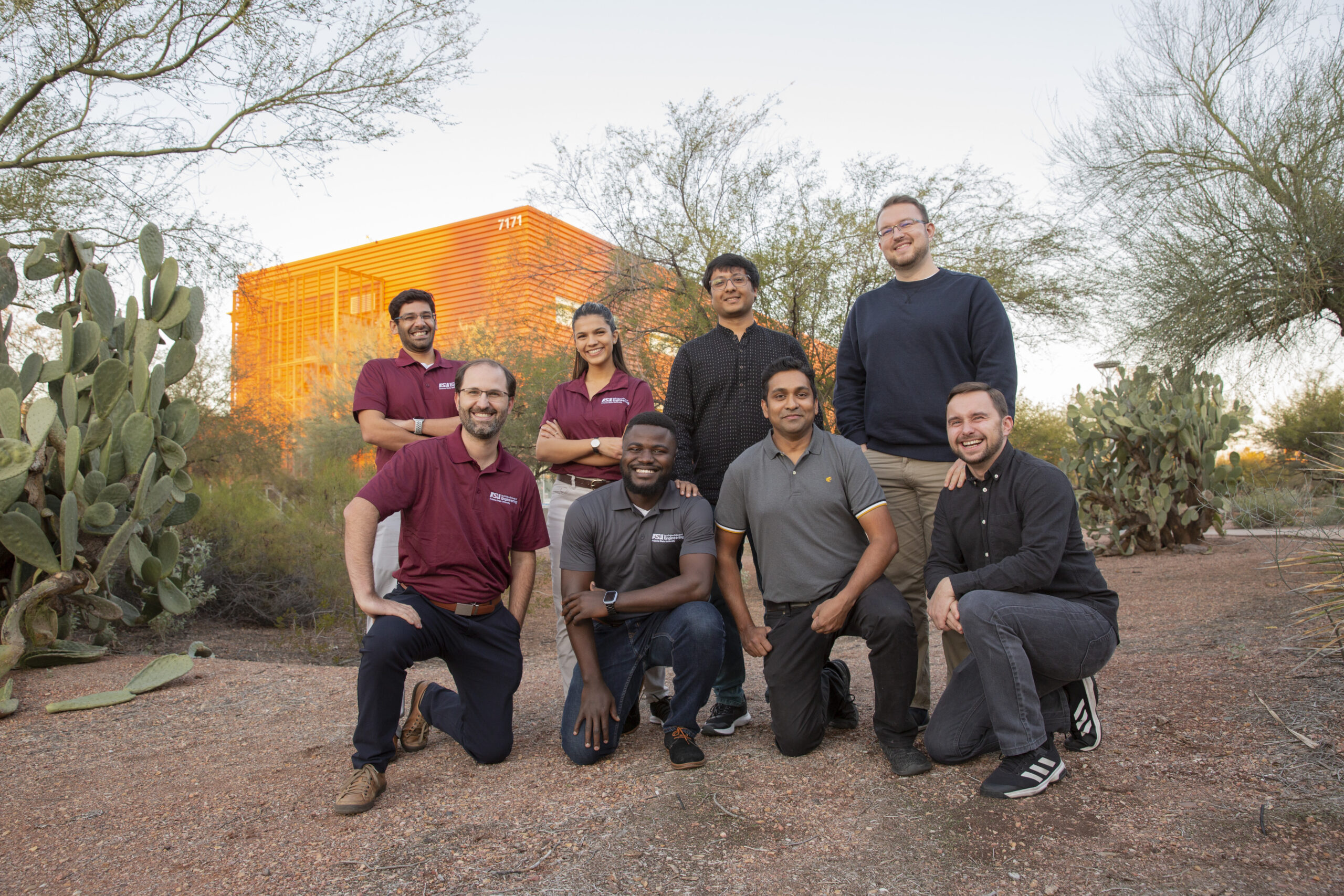
Bruno Azeredo is an Associate Professor at the School of Manufacturing Systems and Networks , Arizona State University (ASU). His research bridges mechanical engineering, material science, and chemistry to advance manufacturing systems for 3D nanomaterials in optics, silicon photonics, and energy harvesting. He also leads STEAM-related educational initiatives. Education Ph.D. Mechanical Engineering, University of Illinois at Urbana-Champaign M.S. Theoretical and Applied Mechanics, University of Illinois at Urbana-Champaign B.S. Engineering Mechanics, University of Illinois at Urbana-Champaign Research Interests include semiconductor manufacturing, electrochemical nanoimprinting, additive manufacturing, and nanomaterials development. His work focuses on scaling 3D nanomaterials for industrial applications while integrating artistic principles into engineering education. Scientific Awards include the prestigious NSF CAREER Award and the Bisgrove Award from Arizona Science Foundation, recognizing his contributions to manufacturing innovation. Students in his research group have successfully defended PhDs, including Aliaksandr Sharstniou and Stanislau Niauzorau, both pursuing careers at Intel. He also mentors students in electrochemical nanoimprinting and nanomaterials for 3D printing.
Dr. Andy Nichols serves as Senior Lecturer in Water Engineering and Director of the General Engineering interdisciplinary degree programme at the University of Sheffield's School of Mechanical, Aerospace and Civil Engineering. Since joining the department in 2015, he has established expertise in water infrastructure management, sensor development, and railway drainage systems through industry collaborations and EPSRC-funded research. His research integrates novel sensing technologies with AI-driven asset management to improve water infrastructure efficiency and safety. Key interests include optical/acoustic sensor development for water industry applications, hydraulic process modeling, asset degradation prediction, and machine learning-based railway drainage management. His work bridges laboratory experimentation with field deployments through partnerships with Network Rail, local authorities, and the Sensors for Water Interest Group (SWIG), which he chairs as founder. Recent publications reveal strong emphasis on computational fluid dynamics, sensor innovation, and data-driven approaches for urban drainage and railway infrastructure. His work connects environmental fluid mechanics with practical engineering solutions for flood risk management, water quality monitoring, and sustainable drainage systems development. Scientific recognition includes: 21st Harold Jan Schoemaker Award for best paper in Journal of Hydraulic Research Royal Academy of Engineering Industrial Fellowship in Railway Drainage Infrastructure Management Outstanding Teaching Award (Sheffield Students' Union, 2018) Multiple early-career awards (CIWEM, IAHR, SWIG, 2012) Fellow of the Higher Education Academy Dr. Nichols secures significant research funding including Horizon 2020's Co-UD Labs project for collaborative urban drainage research and a KTP with Hydro International for sediment monitoring in stormwater systems. He actively supervises PhD students while developing interdisciplinary teaching methods for fluid mechanics and engineering design. He contributes to multiple research groups: Water - Environmental Fluid Mechanics, SuDS and Urban Drainage, Water - Catchments & River Engineering, and Resources, Infrastructure Systems & Built Environment, maintaining strong connections with Pennine Water Group and Sheffield Water Centre.
Dr. Cindy Kohtala is a Professor in Design for Sustainability at the Umeå Institute of Design (UID) , where she serves as Programme Director for the MFA Interaction Design programme. She leads the Design Special Interest Group (SIG) within the Arctic Sustainable Art and Design (ASAD) thematic network under UArctic, focusing on grassroots participatory processes that localize design and sustainability initiatives. Research Focus: Her work bridges Design Research and Science & Technology Studies (STS) , examining material sustainability practices in maker spaces, fab labs, and citizen science projects. She explores infrastructures for alternative production and consumption models, emphasizing peer-to-peer participation and urban maker culture. Teaching & Collaboration: Dr. Kohtala has taught at Bachelor's, Master's, and PhD levels globally, contributing to design education through projects like the LeNS network and EMUDE . She lectures internationally on topics including open design, co-design, and distributed economies, and has been a guest teacher in Mexico, China, and India. Article Trends: Recent publications focus on 2025: Equity in digital fabrication (Fab25), collective healing through sustainable textile-making 2024: Renewable energy co-design, material engagement in sustainability, solarpunk futures, peer production models 2023: Critical analysis of design commons, product longevity strategies, ecosystem thinking in sustainability Network Involvement: Active member of LeNS (Learning Network for Sustainability) o2 Global (design-for-sustainability network) UmArts research environment Aalto University's Creative Sustainability programme
Thijs Roumen is an Assistant Professor at Cornell Tech within the Department of Information Science . He leads the Matter of Tech Lab , focusing on Digital Fabrication and Human-Computer Interaction (HCI) . His work aims to democratize fabrication technology for non-industrial users. PhD from Hasso Plattner Institute MSc in IT Product Design from University of Southern Denmark BSc in Industrial Design from Eindhoven University Research interests include: Laser cutting portability 3D modeling tools Fabrication error prevention Accessible haptic interfaces Recent publications address asynchronous hardware troubleshooting (SplatOverflow, CHI'25), medical robotics (HRI'25), and fabrication artifact data storage (StructCode, SCF'23). His work has received multiple Best Paper Honorable Mentions at CHI and UIST conferences. Scientific contributions include: Key role in CHI meta (2018-present) Chair of German Networking Events at CHI Subcommittee leadership in DIS, CHI, and UIST Active in lab collaborations and invited talks at institutions like Stanford, MIT, and University of Tokyo. Also a World Major Marathon Finisher (Chicago 2023, Berlin 2019).
Dr. Nevena Vukić serves as a Professor at the Department of Physics and Materials within the Faculty of Technical Sciences, University of Kragujevac. Her academic career spans institutions including the Faculty of Technology in Novi Sad (2012-2020) and her current position at the Čačak campus since 2020. She holds a PhD in Materials Engineering from the University of Novi Sad with a perfect 10.00 average grade. Her research focuses on sustainable materials science, particularly biodegradable packaging, polymer nanocomposites, and green chemistry applications. Analysis of her 15 most recent publications reveals consistent emphasis on cellulose-based films, polylactide modifications, and nanotechnology-enhanced materials. Key trends include valorization of waste streams (PET glycolysis), edible packaging development, and educational applications of materials science. Scientific recognition includes: Best female scientist award at University of Kragujevac (2023) Author/co-author of 150+ conference papers and journal articles Textbook author and book chapter contributor Technical solution patent holder She mentors diploma and master's theses at vocational studies programs while serving on doctoral dissertation committees. Her international collaborations include research stays at Demokritos National Research Center (Athens) and Institute of Materials Research (Košice), along with participation in COST and FP7 projects.
Prof. Dr.-Ing. Volker K. S. Feige is a Professor at the Faculty of Electrical Engineering & Information Technology at Düsseldorf University of Applied Sciences (Hochschule Düsseldorf), where he has been teaching since March 2012. He teaches Electronic Components, Circuit Design, Sensor Systems & Signal Processing, and Manufacturing Measurement and Testing Technology. His research focuses on non-destructive testing methods using electromagnetic Terahertz waves, enabling more resource-efficient and sustainable manufacturing processes. Since August 28, 2023, Prof. Feige has also served as a member of the University Council of Düsseldorf University of Applied Sciences. Education: Vocational training as Energieelektroniker - Betriebstechnik (1988-1992) College entrance qualifications and bridge courses (1992-1993) Diploma in Electrical Engineering, Bergische Universität Wuppertal (1993-1998) Doctorate at Bergische Universität Wuppertal (2003) Prof. Feige's research centers on Terahertz technology applications for non-destructive testing and quality control. His work spans electronic components, circuit design, sensor systems, and signal processing with practical applications in corrosion protection of steel bridges and quality control of industrial coatings. He has developed innovative approaches for multilayer thickness measurements using reflection-mode Terahertz time-domain spectroscopy, particularly for challenging industrial environments. His research addresses real-world manufacturing challenges through precise, non-contact measurement techniques that improve sustainability and resource efficiency. Analysis of Prof. Feige's publication history reveals a clear research evolution from fundamental Terahertz measurement techniques toward integrated industrial solutions. His recent work increasingly incorporates robotics and machine learning for automated quality inspection systems, with growing applications in additive manufacturing and 3D printing. The consistent theme across his publications is the development of practical non-destructive testing methods that solve specific industrial challenges, particularly in coating thickness measurement across various substrates and multi-layer systems. Research Leadership: Principal investigator for multiple Terahertz technology research projects Contributor to VDI/VDE guidelines on Terahertz systems standardization Collaborator with industry partners on practical measurement solutions Lead on patents for 3D interferometric position measurement systems Prof. Feige directs research in the Electronics Laboratory at Düsseldorf University of Applied Sciences, where his team develops semi-mobile robotized Terahertz systems for automated quality inspection. His research group maintains strong industry connections, translating fundamental measurement technology into practical industrial applications for non-destructive quality control in manufacturing processes.
Prof. Dr. Michael Layh is a Professor in the Faculty of Mechanical Engineering at Kempten University of Applied Sciences . He serves as the Institute Director for the Institute for Computer Vision and heads the Optical 3D Metrology and Computer Vision Laboratory (3Dvisionlab) . His expertise lies in Machine Vision, Optical Design , and Simulation and Modeling . Teaching Areas: Physics, Engineering Mathematics, Optical Measurement Technology, Technical Optics Research Focus: Development of advanced optical measurement systems, including spectrometer-free chromatic confocal metrology and synthetic image-based neural networks for industrial applications Current Projects: ReGAIN (2023-2024) and opTWINspect (2024-2026) with funding from the German Federal Ministry for Economic Affairs and Climate Action and Bavarian Research Foundation His recent work includes innovations in 3D imaging and high-speed optical scanners , with patents covering EUV projection lithography and micro mirror arrays. Collaborations span Carl Zeiss SMT GmbH and iron foundry industries .
Lars Duggen is a researcher and Head of Unit at SDU Mechatronics Center, University of Southern Denmark, specializing in advanced manufacturing, sensor systems, and mechanical design. His work bridges 3D printing, piezoelectricity, and industrial mechatronics. Institute of Mechanical and Electrical Engineering, University of Southern Denmark Head of Unit, SDU Mechatronics Research Focus: 3D printing of multi-material systems, piezoelectric gas sensors, microcantilever dynamics, and hybrid flexible electronics. Recent projects explore nonlinear sensor behavior, fault diagnosis algorithms, and biomedical applications like non-invasive glucose monitoring. Scientific Contributions: Key articles address machining forces in multi-material printing, functionalization layer modeling, and transfer learning for machinery diagnostics. His work has been cited in fields spanning mechanical engineering, materials science, and sensor technology. Honored with BHJ-priser (2022) Recognized in Sønderjylland research excellence (2022) Teaching & Supervision: Supervises mechatronics projects including fluid behavior modeling and mechanical component design. Collaborates on EU-funded initiatives like EUROFusion BB RH facility and Medical Microtechnology.
Prof. Dr. Martin Stutzmann is the Head of Group at the Walter Schottky Institute at the Technical University of Munich . His research focuses on advanced semiconductor technologies, particularly in Photonics & Optoelectronics , Quantum Technologies , and Energy Materials . His group specializes in the design and characterization of functional semiconductors for renewable energy applications, with a strong emphasis on mid-infrared (mid-IR) and terahertz (THz) photonics . They employ techniques like atomic layer deposition , molecular beam epitaxy , and physical vapor deposition to engineer materials with precise electronic and optical properties. Their recent publications highlight work on GaN nanowires , amorphous nitride semiconductors , and surface-sensitive electrochemical platforms , with applications in photocatalysis , optoelectronic interfaces , and thermal energy conversion . They maintain collaborations with other institutions and laboratories, focusing on interdisciplinary research that bridges materials science , quantum optics , and renewable energy technologies .
Professor Nicole Grobert is a leading academic in nanomaterials research at the University of Oxford and holds a visiting professorship at the BioNano Electronics Research Centre, Toyo University . She currently supervises 16 DPhil and 3 Part II students, with research focus on carbon nanotubes, boron nitride nanomaterials, and hierarchical structures for healthcare and energy applications. Ordinary Fellow, Materials at Corpus Christi College, Oxford Chief Scientific Advisor to the European Commission (2018) Research Interests span Nanomaterials Synthesis , Chemical Vapor Deposition (CVD) , Template Routes , and Wet-Chemical Techniques . Her team emphasizes in situ characterization of growth parameters and structure-property relationships, with key collaborations in healthcare and energy sectors. Recent Publications highlight advancements in 2D materials, electrospun fibers for thermal insulation, photovoltaic nanofibrous layers, and sono-dispersion dynamics. Collaborative work includes ultrasensitive MRI contrast agents and polymer-functionalized nanotubes for electrocatalytic applications. Scientific Awards include the Carbon Pergamon Prize (2001) and multiple Royal Society fellowships (2002, 2006, 2016). She is a Fellow of the Royal Society of Chemistry and the Institute of Materials, Minerals and Mining, and a member of Academia Europaea. Teaching Roles include Introduction to Nanomaterials (first year) and advanced third-year option courses at Oxford. Her Nanomaterials by Design team hosts summer researchers annually.