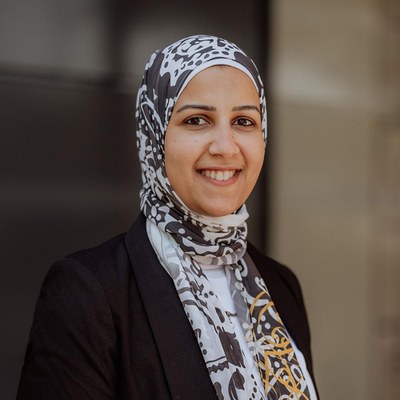
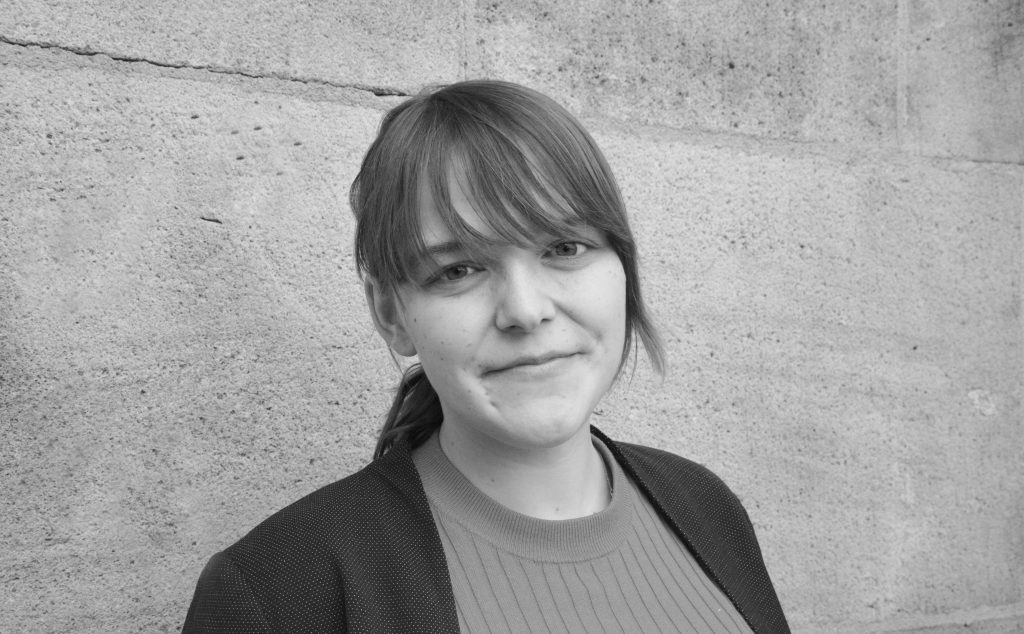
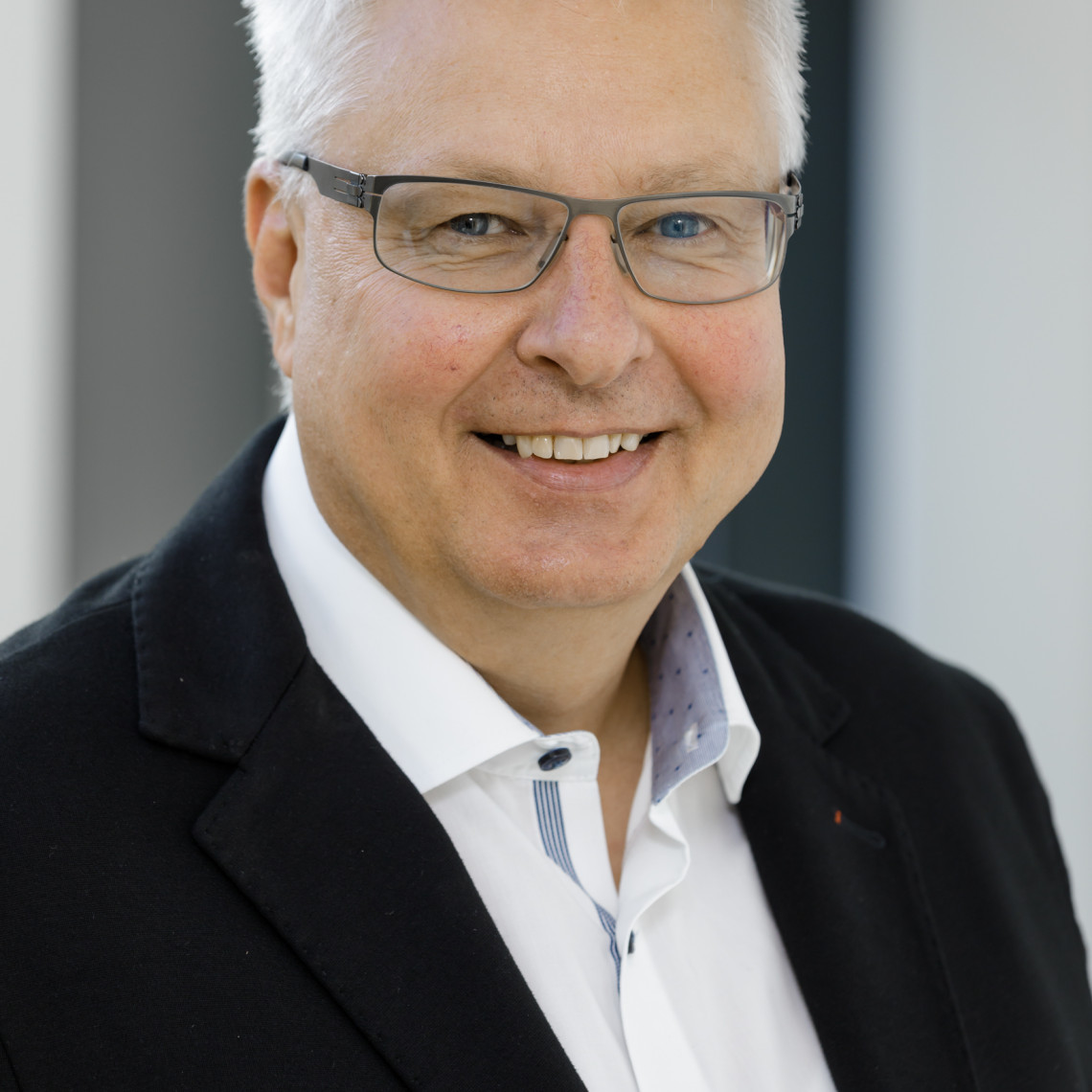
Dr. Yomna Abdelrahman is a Professor of Usable Security and Privacy at the Bundeswehr University Munich . Her research focuses on thermal imaging for security and privacy , virtual reality usability, eye tracking , and biometric authentication . She collaborates with researchers like Florian Alt and Albrecht Schmidt on projects exploring how thermal sensing can enhance user identification and privacy awareness . Key Research Areas : Thermal Imaging, Human-Computer Interaction, Virtual Reality, Password Security, Biometric Authentication, Eye Tracking, Privacy Her recent publications address VR emotion detection , password usability , and privacy implications of thermal imaging . She has contributed to conferences like CHI, MUM, and INTERACT, often examining security-privacy trade-offs and non-invasive biometric systems . Notably, her work on thermal attacks reveals vulnerabilities in mobile authentication through thermal residue. She holds a PhD in Computer Science from the University of Stuttgart (2018), where her thesis, "Thermal Imaging for Amplifying Human Perception," laid the foundation for her later work on thermal-based interaction and cognitive load estimation . Her collaborations span diverse domains, from smart home notifications to industrial worker assistance , reflecting her interdisciplinary approach to usable security and interactive systems .
Dr. Franz Hölker is a Senior Scientist and Research Group Leader at the Leibniz-Institute of Freshwater Ecology and Inland Fisheries (IGB Berlin) and holds the position of Associate Professor (Privatdozent) in Zoology at the Department of Biology, Chemistry and Pharmacy, Freie Universität Berlin. Since 2022, he has served as Programme Area Speaker for 'Aquatic Biodiversity in the Anthropocene' at IGB Berlin, leading research on ecological responses to anthropogenic pressures. Leibniz-Institute of Freshwater Ecology and Inland Fisheries (IGB Berlin): Senior Scientist, Research Group Leader since 2008 Freie Universität Berlin: Associate Professor (Privatdozent) for Zoology since 2009 2012-2017: Deputy Head of Department Ecohydrology, IGB Dr. Hölker earned his Diploma in Biology from the University of Hamburg in 1992, completed his doctorate there in 1999 on fish bioenergetics in eutrophic lakes, and achieved his Habilitation at Humboldt-Universität zu Berlin in 2007 with research bridging ecology, behavior, physiology, and modeling in aquatic food webs. Dr. Hölker's research primarily focuses on freshwater ecology with particular expertise in light pollution, ecophysiology, night ecology, ecological modeling, and citizen science. His work investigates how artificial light at night (ALAN) affects aquatic ecosystems, including impacts on fish physiology, insect behavior, and broader ecological community dynamics. He has pioneered research on the ecological consequences of skyglow and developed methodologies for measuring and assessing ecological light pollution. His research group at IGB Berlin employs a combination of field measurements, laboratory experiments, and modeling approaches to understand how light pollution alters species interactions, community composition, and ecosystem functioning in aquatic environments. His extensive publication record demonstrates a consistent focus on understanding anthropogenic impacts on freshwater systems. Recent work shows increasing emphasis on interdisciplinary approaches, combining ecological field studies with modeling techniques to address complex environmental challenges. His research spans from organism-level physiological responses to ecosystem-level consequences of light pollution, with growing attention to conservation applications and citizen science engagement. The trend in his publications reveals expanding scope from fish ecology to broader ecosystem impacts, with increasing international collaboration and policy relevance. Dr. Hölker has led significant research projects examining the impacts of artificial light at night on freshwater ecosystems, often involving international collaborations across Europe. His work has contributed to policy discussions on sustainable lighting practices through participation in projects like the 'White Paper Citizen Science Strategy 2030 for Germany' and collaborations with lighting professionals to develop ecologically sustainable outdoor lighting guidelines. He leads a research team investigating the ecological impacts of light pollution, with particular focus on how artificial lighting affects nocturnal processes in freshwater ecosystems. His group has developed innovative methodologies for measuring ecological light pollution and has conducted extensive field and laboratory studies to document the impacts of different light spectra and intensities on aquatic organisms. The team's work has significant implications for conservation biology, particularly regarding the protection of nocturnal biodiversity in increasingly illuminated landscapes.
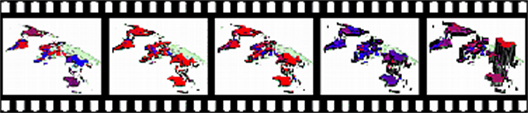
Prof. Dr. Hans-Hubertus Bleuel is a Professor at Hochschule Düsseldorf (University of Applied Sciences Düsseldorf) in the Faculty of Business Studies. He has been a faculty member since 2001, specializing in international management and regional studies. Throughout his career at the institution, he has held various leadership positions including Dean of the Business Department (2010-2014) and currently serves as Chairman of the Faculty Council since 2021. Professor Bleuel's research focuses on the business administration of Multinational Companies, with particular emphasis on international business economics, international risk management, innovation economics, and network economics. His work takes an interdisciplinary approach, combining business administration with economics, sociology, and cultural anthropology to provide comprehensive insights into global business operations. His teaching methodology emphasizes applied learning through case studies and enterprise collaborations to solve real-world management problems. His extensive publication record spanning from 1991 to 2017 demonstrates expertise in foreign exchange risk management (particularly German-Russian contexts), international investment strategies, and post-globalization economic processes. The most recent publications address contemporary issues in international management, currency cooperation, and economic modernization. Professor Bleuel has held significant academic governance roles including member of the faculty council since 2002, financial officer of the faculty (2002-2010), and academic program manager for both International Management Bachelor's (2002-2010) and Master's (2017-2020) programs. He provides valuable resources for students through curated economic information sources and materials on economic growth visualization using Geographic Information Systems.
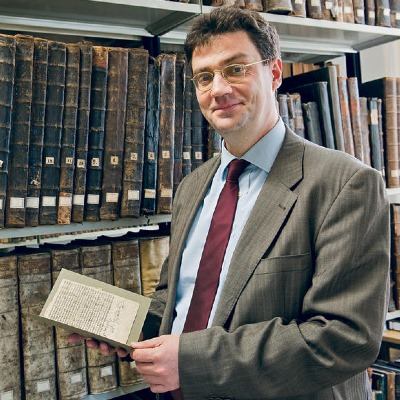
Professor Andreas Lehnardt is a distinguished scholar of Jewish Studies at Johannes Gutenberg University Mainz, where he has been a faculty member since his appointment as university professor in 2004. He serves as Chairman of the Commission for the History of the Jews in Hesse and is a member of the Executive Board of the Gutenberg Research College. His academic leadership extends to the European Association for Jewish Studies and various scholarly organizations focused on Jewish history and religious studies. Born in Duisburg in 1965, Lehnardt pursued extensive studies in Judaic Studies and Theology across multiple prestigious institutions including Münster, Munich, Bonn, Cologne, Jerusalem, Tübingen, and Berlin (1984-1994). His academic journey included research positions at the Institutum Judaicum Delitzschianum (1990-1993) and the Institute for Ancient Judaism and Hellenistic Religious History at the University of Tübingen (1995-1998). He earned his doctorate in Jewish Studies from the Free University of Berlin in 1999 and was appointed university professor at Johannes Gutenberg University Mainz on June 28, 2004. Professor Lehnardt's research spans multiple facets of Jewish studies with particular focus on Rabbinic literature (Talmud and Midrash), Samaritan studies, Hebrew and Aramaic manuscripts, Jewish epigraphy, and Genizah research. His work explores the intersection of textual traditions, material culture, and religious practices in Jewish communities from antiquity through the medieval period. He has made significant contributions to understanding Jewish writings from the Hellenistic-Roman period, Jewish prayers, Minhagim (customs), and the cultural history of Ashkenazi communities, particularly in the German context. Lehnardt's extensive publication record reflects his engagement with diverse research areas, showing a consistent focus on manuscript discoveries, textual analysis, and historical context. His recent work demonstrates increasing attention to material culture studies, particularly through the examination of binding fragments, gravestones, and other physical artifacts that reveal insights into Jewish communal life. He has pioneered research on Hebrew and Aramaic binding fragments in German archives and libraries, creating new avenues for understanding medieval Jewish textual transmission. Professor Lehnardt has secured significant research funding from multiple sources including the German Research Foundation (DFG), the Ministry of Science of Rhineland-Palatinate, the Fritz Thyssen Foundation, and various university research funds. His current major project 'The Old Jewish Library at Johannes Gutenberg University – Cataloguing and Restoration' continues his long-standing commitment to preserving and studying Jewish textual heritage. He has supervised numerous research projects focused on German Jewish history, particularly in the Rhineland region. As an active member of multiple scholarly organizations including the Association for Jewish Studies, the European Association for Jewish Studies, the Hebraistenverband, and the Kommission für die Geschichte der Juden in Hessen, Professor Lehnardt contributes significantly to the institutional framework of Jewish studies internationally. His leadership roles in these organizations demonstrate his commitment to advancing the field through collaborative scholarship and academic service. His work bridges historical research with contemporary cultural preservation efforts, particularly concerning the Jewish heritage in Germany.
Wanda Alberts (born 1975) is Professor of Religious Studies at Leibniz University Hannover, where she has served since August 2013. She currently holds the position of managing director of the Institute for Religious Studies and is actively involved in multiple administrative roles including Chair of the Audit Committee, Examination Board for Religion in the Public Sphere, and representation on the Faculty Council of the Faculty of Philosophy. She also represents professors on the Center for Atlantic and Global Studies and serves on the Selection Committee for the Master's Program in Religion in the Public Sphere. Philipps University Marburg: Doctorate in Religious Studies (2006) University of Marburg: State examination for teaching at grammar schools (2002) University of Marburg: Master of Arts (2001) Universities of Mainz, Swansea (Wales) and Marburg: Religious Studies, English and Protestant Theology Professor Alberts' research focuses on critical approaches to religious studies, particularly examining religion in public spaces and secular educational contexts across international settings. Her work consistently challenges conventional paradigms in religious studies, with special emphasis on critiquing the world religions paradigm and developing innovative approaches to religious studies didactics. She has made significant contributions to understanding how religion functions in diverse educational environments, especially in European contexts where secular approaches to religious education must navigate complex cultural landscapes. Her extensive publication record demonstrates consistent scholarly engagement with the intersection of academic religious studies and practical educational applications. Over the past fifteen years, her work has increasingly focused on the challenges of implementing critical, secular approaches to religious studies within educational systems, particularly examining how different European countries handle religious diversity in public schools. A notable trend in her recent scholarship is the critical examination of how religious education can avoid subtle forms of indoctrination ('small-i indoctrination') while maintaining academic rigor and neutrality. Doctoral Prize of the Philipps University of Marburg (Philosophy and Cultural Studies section, 2007) Doctoral Prize 'Religion and Ethics' from the Interdisciplinary Forum for Religion at the University of Erfurt (2007) Postdoctoral scholarship from the German Academic Exchange Service (DAAD) for research at University of Edinburgh (2007) Doctoral scholarship from the German Academic Scholarship Foundation (2002-2005) with research stays in Oxford and Gothenburg European Union 'Socrates' scholarship for study at University of Wales in Swansea (1997-1998) Professor Alberts has held significant leadership roles in academic organizations, including membership on the executive committee of the European Association for the Study of Religions (EASR) since 2008, where she co-founded and leads the EASR Working Group on Religion in Secular Education. She has served on the Joint Implementation Group of the Council of Europe and the European Wergeland Centre, and was organizer of the XXXIII Annual Conference of the German Association for Religious Studies in 2019. Her administrative responsibilities at Leibniz University Hannover include managing the Institute for Religious Studies and serving on multiple examination boards and committees related to religious studies education. As managing director of the Institute for Religious Studies, Professor Alberts oversees research initiatives including the 'Religious studies from a religious studies perspective' project and the 'Handbook Religious Studies in Germany' (co-edited with Horst Junginger, Katharina Neef and Christina Wöstemeyer). She is also involved with the Center for Atlantic and Global Studies, where she participates in interdisciplinary research examining global religious trends, particularly regarding migration and religious diversity. Her work frequently bridges academic religious studies with practical educational applications through collaborations with European educational institutions and policy organizations.
Uwe Hentschel serves as Associate Professor of Modern German and Comparative Literature at the Faculty of Philosophy, Chemnitz University of Technology. Affiliated with TU Chemnitz since 1993 and holding an associate professorship (apl. Prof.) since 2008, he specializes in 18th and 19th-century German literary history with particular expertise in travel literature, Swiss imagery (Philhelvetism), and regional literary studies. He concurrently holds the position of Deputy Chairman of the Berlin Goethe Society. His academic foundation includes: Born 1960 in Zwickau German Studies and Literary Science studies at Leipzig University PhD (1990) on travel literature at the end of the 18th century Habilitation (1999) on 'Mythos Schweiz. Zum deutschen literarischen Philhelvetismus zwischen 1700 und 1850' Senior Assistant position (2000) Hentschel's research centers on cultural and literary history of the Enlightenment and Romantic eras, examining travel writing's role in shaping regional identities, national consciousness, and cross-cultural perceptions. His work explores intersections between geography, literature, and identity formation, with special attention to erotic literature, epistolary culture, and publishing history. He investigates how travel narratives constructed cultural landscapes of regions like Switzerland, the Ore Mountains, Mecklenburg, and Lausitz, revealing evolving German self-perceptions through encounters with foreign spaces. His extensive publication record demonstrates consistent scholarly engagement with travel literature across two centuries. Recent works focus on regional identity construction through historical travel accounts, examining how 18th and 19th-century writers documented cultural landscapes of Mecklenburg, Pomerania, and Lausitz. This research reveals travel writing's function in documenting cultural transitions, regional particularities, and evolving national consciousness within German-speaking territories. Scientific recognition includes: Long-term editorial collaboration on 'Entstehung von Goethes Werken in Dokumenten' project DFG-funded research on Stefan Heym's 'Ahasver Chronotopos' Organizational leadership for academic conferences including 'memento Stalingrad' Hentschel actively supervises graduate research and contributes to academic governance through the Berlin Goethe Society. His editorial work spans numerous publication series including 'Studien zur Imagologie- und Reiseliteraturforschung' (8 volumes). He maintains significant involvement in research teams focused on Goethe studies and German travel literature historiography. His scholarly activities extend to project leadership in document-based literary research and conference organization, maintaining active participation in national and international academic networks centered on 18th and 19th-century German literature.
Prof. Dr. Claudia Bettina Maier serves as Professor of Nursing Science and Health Services Research at the Faculty of Health Sciences, Bielefeld University since August 2023. She holds dual Senior Fellow positions at the University of Pennsylvania, School of Nursing and the European Observatory on Health Systems and Policies. Her research focuses on future-oriented challenges in nursing and healthcare systems, with particular emphasis on: Academicization and new roles in nursing, including advanced practice nursing Organizational development, work environment, and quality in nursing Skill mix and qualification mix in professional healthcare teams Innovations in nursing practice and delivery models As deputy editor of Human Resources for Health journal, she influences global discourse on healthcare workforce issues. Her expertise is regularly sought by the WHO Regional Office for Europe on nursing policy matters. Her career demonstrates significant international engagement: 2015-2023: Research associate at Technical University of Berlin, including junior research group leadership (2021-2023) 2014-2015: Harkness Fellow at University of Pennsylvania with Prof. Linda H. Aiken 2011-2014: Worked at UNAIDS on health system strengthening and HIV/AIDS program integration 2008-2011: European Observatory on Health Systems and Policies in Brussels 2007-2008: Directorate General Sanco (Santé) in Brussels She actively participates in international advisory roles including the Concerted Action Nursing Expert Group, Robert Bosch Foundation's Restart! project, and Columbia University's Center for Healthcare Delivery Research and Innovation advisory board.
Prof. Wolfgang Rheinheimer is a Professor and Institute Director at the Institute for Ceramic Materials and Technologies , University of Stuttgart, since 2023. Previously, he held academic positions at RWTH Aachen (2022-2023), Forschungszentrum Jülich (Emmy Noether Group Leader, 2020-2022), TU Darmstadt (2020), and Karlsruhe Institute of Technology (2010-2017). Academic Rank: Full Professor Research Focus: Advanced sintering technologies, grain boundary engineering, defect chemistry, conductivity in ceramics, and microstructure evolution His research spans experimental and computational approaches to ceramic materials, with emphasis on field-assisted processing (electric/magnetic), grain boundary properties , and solid-state electrolytes . He has pioneered studies on flash sintering , cold sintering , and blacklight sintering mechanisms. Scientific Awards : Emmy Noether Fellowship (2020-2022) for establishing his independent research group His work integrates phase-field modeling with experimental characterization to optimize ceramic properties for energy applications (solid-state batteries, fuel cells) and structural uses. Collaborations include Robert Bosch GmbH and Purdue University (2018-2019 Visiting Professorship).
Eva van der Zee is a Junior Professor (tenure track) in International Law with a focus on Behavioral Law & Economics at the Institute of Law and Economics, Faculty of Law, University of Hamburg since 2019. She holds a PhD from Wageningen University, with research conducted at the European University Institute and New York University. Her academic journey includes postdoctoral research at Wageningen University and visiting positions at prestigious institutions across Europe and the United States. Her educational background includes: LL.M. International Trade and Investment Law, University of Amsterdam (2011-2012) LL.M. Legal Philosophy (honors program, cum laude), Utrecht University (2010-2011) LL.B. Utrecht Law College (honors program) with minor in Economics, Utrecht University (2005-2009) Eva's research focuses on the intersection of international and EU law with behavioral insights from social sciences, particularly examining how formal and informal regulatory systems interact to promote sustainable development. Her work spans behavioral law and economics, legal theory, sustainable development frameworks, human rights law, consumer protection, competition law, public and private regulation, trade and investment law, and corporate social responsibility. She applies interdisciplinary approaches that combine legal analysis with insights from economics, psychology, and behavioral science to address contemporary regulatory challenges. Her publication record demonstrates a consistent focus on integrating behavioral insights into legal frameworks, particularly examining sustainability standards, environmental assessments, competition law applications to sustainability agreements, and the role of trust in regulatory systems. Her work shows an evolving trajectory from analyzing private sustainability standards to examining how behavioral insights can improve environmental decision-making and regulatory compliance. Her scientific recognition includes: Hamburg Universität Ideeen-und Risikofond (2019, 2021) DFG Funding for International Scientific Events (2020) Wageningen School of Social Sciences junior international research grant (2016) Nomination for Best Master's Thesis Award at Utrecht University (2012) Eva has established herself as a leader in behavioral approaches to international law, organizing the Behavioral Research Approaches in International Law Network (BRAIN) and multiple international conferences. She has advised governmental institutions in the Netherlands on sustainable development policy and maintains active collaborations with researchers across Europe. Her teaching encompasses sustainable development law, behavioral law and economics, and foundational legal education in international contexts. She has established collaborative research groups focusing on behavioral approaches in international law and has developed interdisciplinary connections between legal scholarship and social science methodologies.
Pia Falschebner is a Research Associate at the Center for Conflict Research (ZfK) at Philipps University of Marburg, Germany. She has been working on the DFG-funded project "Reparations Policy of Victims' Organizations in Transitional Justice Processes" since September 2020, collaborating with Prof. Dr. Thorsten Bonacker and Dr. Eva Willems. Her work focuses on victim mobilization, memory politics, and post-colonial justice frameworks. Research Focus: Transitional Justice, Social Movements, Post-colonial Theory, Memory and Identity, Conflict Transformation Geographic Expertise: Morocco, Northern Ireland, Guatemala, Middle East, Latin America Dr. Falschebner has conducted extensive fieldwork in Morocco and Northern Ireland, including guest researcher positions at the Netherlands Institute Morocco (NIMAR) and Queen's University Belfast. She contributes to academic debates through publications in journals like Journal of Human Rights Practice and Global Society , with recurring themes around victim-driven reparations, memory as a tool for justice, and socio-political inequalities in transitional contexts. Her academic contributions include: Keynote presentations at major conferences including ISA Annual Convention and ECPR General Conference Co-organization of workshops on research ethics, particularly in conflict/post-conflict settings Teaching seminars on Research Ethics and Knowledge Production in (Post-)Conflict Settings Notable achievements include receiving the Christiane-Rajewsky-Preis 2020 for her master's thesis on decolonization and colonial memory culture in Germany. She combines methodological innovation with critical analysis in her work across multiple continents.
Christina Busing is a Full Professor for Combinatorial Optimization at RWTH Aachen University, a position she has held since 2021. Previously, from 2016 to 2021, she served as a Junior Professor for Robust Planning in Medical Care at the same institution. She leads the Teaching and Research Group on Combinatorial Optimization, contributing significantly to the academic community through her research and teaching activities. Her educational background includes Mathematics studies at WWU Münster, Universidad Comlutense de Madrid, and the Technical University of Berlin. Her doctoral work was completed under the supervision of Prof. Möhring, focusing on Recoverable Robustness in Combinatorial Optimization. She has also held postdoctoral positions at institutions in Aachen, Lancaster, and Vienna. Professor Busing's research spans multiple areas of optimization theory and application. Her work focuses on optimization under uncertainty, robust optimization, scenario generation, combinatorial optimization, complexity theory, optimality criteria, and both exact and heuristic algorithms. She has made significant contributions to applying these theoretical frameworks to practical problems in healthcare, energy systems, and transportation networks. Her interdisciplinary approach bridges theoretical computer science with real-world operational challenges. Her extensive publication record demonstrates a consistent focus on robust combinatorial optimization, with recent work emphasizing applications in healthcare systems, particularly in patient-to-room assignment, primary care scheduling, and pharmacy services. She has developed novel methodologies for handling uncertainty in optimization problems, including recycling valid inequalities and designing consistent decision frameworks for two-stage optimization problems. RWTH Aachen Brigitte Gilles Award for contributions to the advancement of women in science (2022) RWTH Aachen FAMOS Award for excellent family-friendly leadership (2019) RWTH Aachen university-wide Best Teaching Award (2018) TU Berlin Best Diploma Excellence Award in Mathematics (2008) German National Scholarship (Cusanuswerk) (2003-2007) Professor Busing serves on multiple program committees including EURO (2019), INOC (2018), and ESA (2017). She is also involved with the UnRAVeL Graduate College since 2018. Her teaching portfolio includes courses on Graph and Network Optimization, Mathematical Heuristics for Discrete Optimization Problems, and Combinatorial Optimization. She has developed problem-based learning approaches for heuristic methods in decision problems across mathematics, computer science, and industrial engineering. Her research group actively collaborates on interdisciplinary projects addressing operational issues in healthcare, energy systems, and transportation networks, developing mathematically optimized solutions for complex real-world challenges.
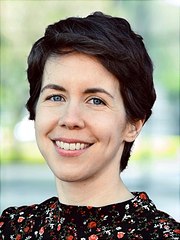
Tamara Schwertel is a researcher at the Chair of Medical Sociology, Institute for Medical Sociology, Health Services Research, and Rehabilitation Science (IMVR) at the University of Cologne . She holds a Digital Visiting Scholar position at the Usher Institute, University of Edinburgh and has taught at universities including Frankfurt, Mainz, Munich, Vienna, and Innsbruck. Her work bridges qualitative methods , medical sociology , and science and technology studies . Education: MA in Sociology (Goethe University Frankfurt), focus on empirical social research. Research: Deep brain stimulation therapy, sociotechnical transformations in healthcare, and situational analysis methodologies. Research Focus : Her publications emphasize qualitative health research , biographical research , and STS , with a critical lens on non-human actors in healthcare. Recent articles explore DBS ethics, collaborative mapping, and feminist methodologies. Teaching : Courses include qualitative methods , medical sociology , and health and reproduction at Cologne, Innsbruck, and Frankfurt. She has led workshops on social media research and methodological foundations .
Dr.-Ing. Frank-Josef Heßeler is a Senior Research Engineer (Geschäftsführender Oberingenieur) and Deputy Institute Director at the Institute of Control Engineering (IRT), RWTH Aachen University . His work focuses on control systems for automotive and urban mobility applications, including model predictive control, vehicle localization, and intelligent infrastructure. He actively contributes to research in autonomous driving, hybrid drivetrains, and thermal systems optimization. Control Engineering Automotive Systems Model Predictive Control Thermal Diagnostics Urban Traffic Simulation His publications highlight advancements in connected vehicle localization, scenario-specific motion modeling, and hybrid drivetrain control. He collaborates extensively with Dirk Abel and other researchers. No scientific awards or student advisement details are explicitly mentioned in the provided texts. He is affiliated with the Institute of Control Engineering, engaging in projects like CERMcity (autonomous urban driving testbed) and Galileo-based navigation systems. His work integrates simulation platforms, Neuro-Fuzzy models, and hardware-in-the-loop testing for automotive control solutions.
Professor Martin Oettel holds a faculty position at the University of Tübingen within the Department of Physics, Faculty of Science, where he leads the Computational Nanoscience research group at the Institute of Applied Physics. His academic address is at Auf der Morgenstelle 10, 72076 Tübingen, Germany. Since 2013, he has co-organized the annual Density Functional Days workshops alongside Joseph Brader (University of Fribourg) and Roland Roth (University of Tübingen), establishing an important forum for researchers in classical density functional theory. Professor Oettel's research focuses on computational soft matter physics , with particular expertise in density functional theory applications to colloidal systems, thin film growth, and phase transitions. His work spans both fundamental theoretical developments and applied materials science problems, especially in organic electronics and nanoscale systems. Key areas include the study of hard sphere systems, monolayers of anisotropic particles on substrates, phase diagrams for complex colloidal mixtures, and the development of dynamic density functional theory approaches. His research often involves sophisticated computational modeling combined with close collaboration with experimental groups, such as Prof. Frank Schreiber's experimental group at Tübingen. His publication record demonstrates consistent contributions to the field since 2006, with recent work (2016-2018) focusing on thin film growth with anisotropic particles, monolayer systems of hard rods, phase transitions in colloidal mixtures, and advanced diffusion phenomena in confined systems. The research shows a clear trajectory from fundamental theoretical developments toward applications in materials science and nanotechnology. Professor Oettel actively supervises doctoral students, as evidenced by the 2023 job posting for a PhD position in modeling thin film growth within a DAAD-CAPES project involving collaboration with Prof. Frank Schreiber (Tübingen) and Prof. Fabio Reis (Federal Fluminense University, Brazil). This position required work on both simulations and dynamic density functional theory, with an extended research stay in Brazil. He maintains the Computational Soft Matter and Nano-Science Chair (Lehrstuhl für Computational Soft Matter and Nano-Science) at the University of Tübingen, where his research group investigates the physics of soft condensed matter systems through computational approaches. The group's work bridges theoretical physics with practical applications in materials science, particularly in organic electronics and nanoscale systems.
Prof. Dr. Christian Linsmeier serves as Director of the Institute for Fusion Energy and Nuclear Waste Management - Plasma Physics at Forschungszentrum Jülich (FZJ) and Professor at the Faculty of Physics and Astronomy, Ruhr University Bochum since 2013. His expertise centers on developing climate-friendly fusion energy through advanced materials research for extreme reactor environments. His primary research interests include Fusion Research , Nuclear Fusion , Plasma-Wall Interaction (PWW) , and Materials Development for Fusion Reactors . He investigates physical and chemical processes at plasma-wall boundaries, critical for sustaining 100-million-degree plasmas in reactors like ITER. His work directly enables viable fusion power by developing materials that withstand extreme thermal and particle loads. Linsmeier holds influential advisory positions including membership in the Bavarian expert commission 'Mission Nuclear Fusion', the Federal Ministry of Research's 'Fusion Research' Advisory Board (BMFTR) since 2024, and chairmanship of Gauss Fusion GmbH's Strategic Advisory Boards. He coordinates Helmholtz Association's 'Plasma-Wand-Wechselwirkung' program and participates in EUROfusion Project Boards for DEMO reactor development. No scientific awards are documented in the provided materials. While specific student supervision details are absent, his leadership in major international collaborations indicates extensive mentorship within fusion research consortia. His team maintains critical partnerships with global facilities including ITER (France), ASDEX Upgrade, and Wendelstein 7-X, driving pre-operational research for commercial fusion energy. Linsmeier's laboratory network focuses on plasma-facing materials characterization, collaborating across Europe's fusion infrastructure. His group develops experimental protocols for DEMO reactor materials validation and contributes to ITER's scientific framework, positioning FZJ as a cornerstone in the transition from experimental fusion to grid-ready power generation.