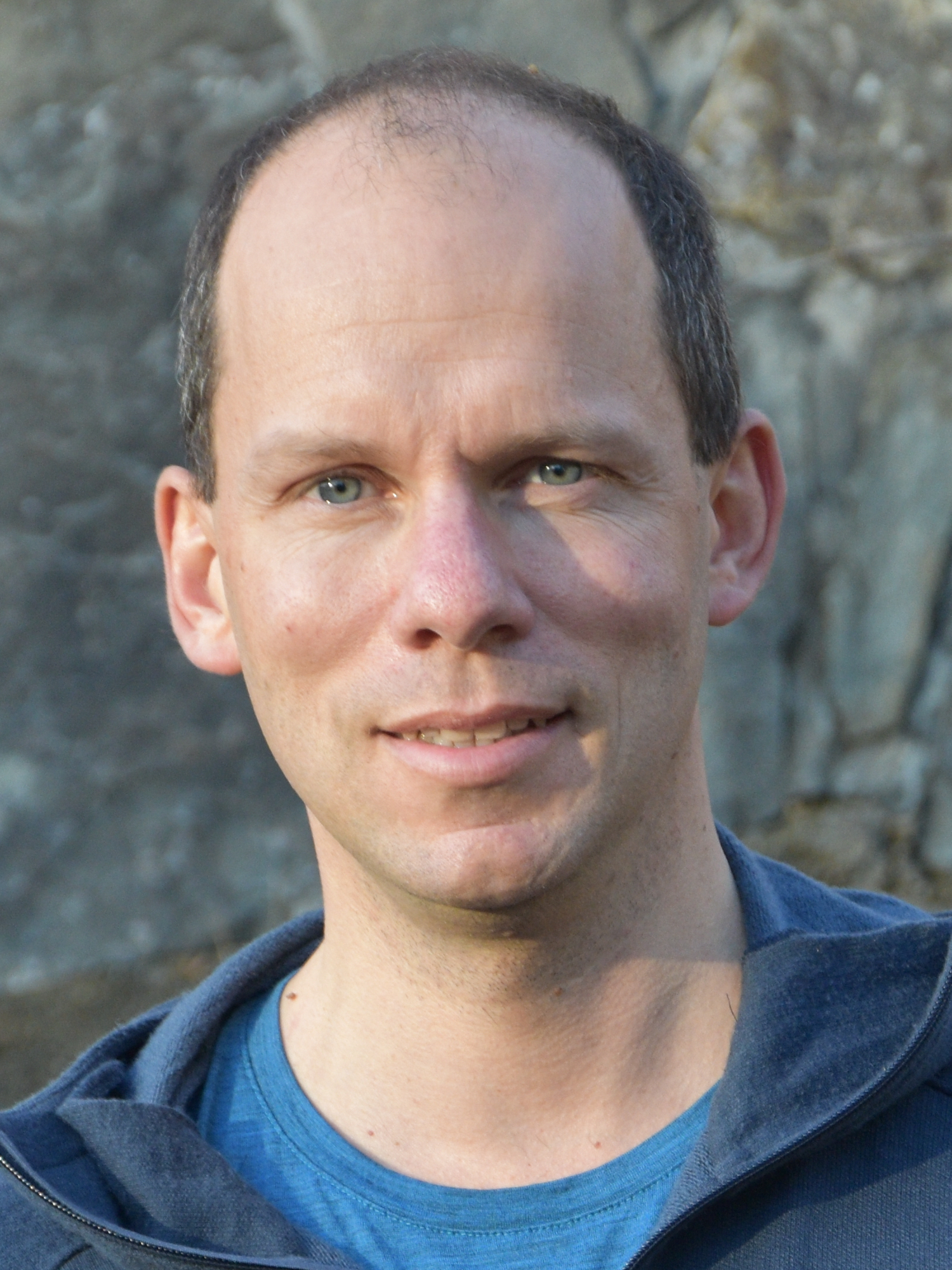
Markus Johnsen Aase serves as a Senior Lecturer in Mathematics and Machine Learning at the School of Business, UiT The Arctic University of Norway, Tromsø. His academic responsibilities span teaching mathematics, statistics, and machine learning courses while conducting interdisciplinary research that bridges theoretical frameworks with real-world applications across diverse domains. His research program centers on practical implementations of mathematical and statistical methodologies, with particular emphasis on: Bayesian statistical modeling for uncertainty quantification Machine learning systems for natural language processing Econometric analysis of economic phenomena Predictive modeling of natural hazards, specifically avalanche dynamics A dedicated educator, Mr. Aase prioritizes creating positive student learning experiences through applied pedagogy. As an active member of the CARE research group, he collaborates on projects connecting computational methods to environmental, linguistic, and economic challenges while maintaining professional engagement through publications in external repositories like NTNU Open.
Mette Talseth Solnørdal is an Associate Professor at the School of Business , UiT The Arctic University of Norway. Her research and teaching focus on Innovation , Sustainable Transition , and Business Development , with particular emphasis on Eco-Innovation , Energy Efficiency Drivers , and Climate Planning in municipal and manufacturing contexts. Position : Head of Department, Associate Professor Email : mette.t.solnordal@uit.no Research Interests : Mette Talseth Solnørdal explores Local Food Systems as climate and environmental transition strategies, analyzing their role in Community Development and Regional Sustainability . Her work also investigates Municipal Climate Budgets as governance tools for Climate Neutrality and their application in Norwegian municipalities. Key themes include Eco-Innovation , Energy Efficiency in manufacturing firms, and Drivers for Corporate Sustainability . Publication Trends : Recent articles (2022–2024) highlight interdisciplinary connections between Food Systems , Climate Policy , and Business Innovation . Earlier works (2017–2021) focus on empirical analyses of Energy Efficiency Drivers and Eco-Process Innovation in Norwegian manufacturing, alongside Climate Budget Frameworks for municipalities. Teaching : She teaches the course BED-2053: Customer-Driven Innovation and is a member of the Learning Academy at the Business Faculty (Handelshøkolen). Her ORCID is 0000-0002-4653-2956 .
Kristen Albert Ellingsen serves as a Lecturer in Marketing and Travel at The School of Business Administration, UiT The Arctic University of Norway, located in Alta. With her office in the SIVA-building (C210), she has been an active academic contributor to the university for many years, focusing on tourism, regional branding, and service management within the unique Arctic context of Northern Norway. Dr. Ellingsen's research primarily centers on tourism marketing, regional branding strategies, and service management within the Arctic context. Her work examines how destinations can effectively market themselves, particularly focusing on the challenges and opportunities of branding in Northern Norway. She investigates the relationship between service quality and profitability, market orientation in tourism businesses, and the development of destination brands that capture the essence of Arctic communities. Her research often addresses practical applications for tourism businesses and regional development initiatives. An analysis of Dr. Ellingsen's publication history reveals a consistent focus on tourism marketing and regional development in Northern Norway. Her work spans academic journals, professional books, and practical industry publications, demonstrating her commitment to bridging theory and practice. The recurring themes in her research include destination branding, service quality in tourism, market orientation for tourism businesses, and the unique challenges of marketing Arctic destinations. Her publications show an evolution from foundational marketing concepts to more specialized applications in tourism and regional development contexts. Dr. Ellingsen has advised numerous students in the field of tourism marketing and business administration, contributing to the development of future professionals in Northern Norway's tourism industry. While specific grant information is not detailed in the available materials, her extensive publication record suggests successful engagement with research funding opportunities focused on Arctic tourism and regional development. Her work demonstrates strong collaboration with industry partners and other academics, particularly Mehmet Mehmetoglu and various co-authors in the tourism field.
Joseph Maloba Makokha is a Research Fellow at the University of Oslo's Institute for Informatics (IFI), housed within the Department of Mathematics and Natural Sciences. His work bridges artificial intelligence (AI), design innovation, and collaborative systems, focusing on how AI systems enhance human creativity, decision-making, and teamwork. He holds a BSc in Electrical Engineering/Computer Science (Nairobi, Kenya), MSc in Education (Holy Names and Stanford Universities, USA), and a PhD in Mechanical Engineering from Stanford University. Research interests include AI's impact on creative processes, team dynamics, and industry applications. He collaborates with enterprises to deploy AI solutions and evaluates their societal implications. Affiliated with UiO Growth House and the International Summer School, he emphasizes interdisciplinary approaches to innovation. Teaching and experimental studies form core activities, with a focus on AI ethics and practical industry integration. His work combines technical AI development with human-centric design principles.
Hannah Mülder is a Doctoral Research Fellow at the Department of Education, University of Oslo. She holds a MSc in Statistics from ETH Zurich and a BSc in Technology and Liberal Arts from University of Twente. Her research focuses on Higher Education Quality , Student Partnership , and Qualitative Research Methods . She employs Social Network Analysis and Agent-based Modelling in her work. Recent publications explore student staff collaboration in quality work (2025) and energy policy simulations using agent-based models (2018). Her work intersects educational innovation, institutional governance, and computational social science. Professional roles include Module Co-Leader in Pedagogical Development Projects and Peer Mentoring Facilitator. She has also completed certifications in University Pedagogy and Theme-Centred Interaction.
Geir Nyborg is a Professor at the Department of Special Needs Education , University of Oslo. His work focuses on psychological and social difficulties in children, particularly shy and introverted students, and strategies for inclusive education. He holds a PhD in Educational Sciences and has extensive experience in special education, including roles as a postdoctoral fellow and advisor at Statped (Norway’s specialist education service). Education: PhD (University of Oslo), Cand. Paed. Spec., Teacher Education Employment History: Professor (2014–present), Associate Professor (prior roles), and former primary school teacher. His research interests emphasize teacher strategies for supporting shy students, psychosocial differentiation in education, and the role of leadership in fostering inclusive environments. Key projects include national studies on teaching practices for shy students and interventions for social anxiety. Publications highlight his contributions to understanding shyness in school settings, with a focus on teacher responses, classroom dynamics, and systemic support structures. Collaborations include international scholars like Robert J. Coplan and Anne Edwards. He is affiliated with research groups such as Behavioral Emotional and Social Difficulties (BESD) and contributes to courses like SPED4300 Specialization in Psychosocial Difficulties .
Malte Müller is an Associate Professor at the Section for Meteorology and Oceanography (MetOs) at the University of Oslo , specializing in Arctic climate dynamics, numerical weather prediction, and ocean-ice-atmosphere interactions. His research spans from high-resolution forecasting systems to climate change impacts on polar regions. Key Projects: Copernicus Arctic Marine Forecasting Center, FOCUS, IcySea, Nansen Legacy, SALIENSEAS, PRISMAS Teaching: GEO4902 – Weather Systems Research Themes include: Sea Ice Modeling: Developing kilometer-scale forecasting systems, analyzing marginal ice zone dynamics, and applying machine learning to sea ice drift predictions. Climate Extremes: Studying circulation pattern changes affecting Norwegian precipitation, atmospheric river-induced floods, and tidal evolution under climate change. Observational Networks: Designing open-source oceanographic instruments like OpenMetBuoy for Arctic wave and drift measurements. Publication Trends reveal focus areas in Arctic Meteorology , Sea Ice Dynamics , Tidal Energy Conversion , and Climate Risk Assessment through collaborations with institutions like NASA, Copernicus, and international universities. Collaborations span institutions including: NASA Goddard Institute for Space Studies Nansen Environmental and Remote Sensing Center Copernicus Marine Service UiO Meteorology and Oceanography Department
Désirée Treichler is a Researcher at the University of Oslo's Section of Physical Geography and Hydrology. Her work focuses on Earth observation, particularly remote sensing of the cryosphere and climate change impacts. She holds a PhD (2017) in Geosciences from the University of Oslo and an MSc (2009) in Geography/Remote Sensing from the University of Zurich. Her research interests include snow depth measurement techniques, glacier dynamics in High Mountain Asia, and data fusion from remote sensing and climate models. She leads the SNOWDEPTH project (NFR Young Talent) and contributes to initiatives like MASSIVE and PATCHES . She is affiliated with the Software Carpentry@UiO as an instructor and participates in gender equality initiatives within the MN faculty and Geoscience Department. Her recent publications address global glacier mass changes, snow data assimilation, and governance for Earth system tipping points. She actively collaborates on projects involving ICESat-2 laser altimetry, radar sensors, and deep learning approaches for cryosphere monitoring. Education: PhD (2017), University of Oslo: Measuring mountain glaciers and snow with a spaceborne laser MSc (2009), University of Zurich: Spectral discrimination of snow and avalanche deposits Projects: SNOWDEPTH: Global snow depth estimation from spaceborne remote sensing MASSIVE: Machine learning and surface mass balance of glaciers PATCHES: Probabilistic analysis of the terrestrial cryosphere Awards: None explicitly mentioned. Her work bridges remote sensing technologies with climate science, emphasizing applications for permafrost studies, high-elevation precipitation, and climate reanalyses. She actively engages in fieldwork in Norway, the Himalayas, and Central Asia.
Camilla Eline Andersen is a Professor at the University of Inland Norway, affiliated with the Faculty of Teacher Education and Pedagogy and the Department of Pedagogy at the Teacher Education Department, based in Hamar. Her research focuses on pedagogy, childhood studies, politics, philosophy, and research methodology. Key projects include teaching about race, sustainability in kindergarten education, Sami culture, and nationalism. She co-edits Reconceptualizing Educational Research Methodologies and is a subject editor for Nordic Kindergarten Research . She holds roles on the NORBARN graduate school board and as convener of the NERA Network 22 (Post-Approaches to Education). Her work emphasizes critical inquiry, posthumanist perspectives, and transformative methodologies in early childhood education. Her recent articles (2025–2022) explore intersections of nature, nationhood, and childhood; autoethnography; and posthumanist approaches to pedagogy. She critiques simplistic diversity frameworks and advocates for inclusive, ethically grounded educational practices. Her publications span 27 works, addressing topics like race in teacher education, sustainability, and qualitative research innovations. She contributes to global debates on childhood studies through interdisciplinary collaborations and methodological experimentation.
Hilde Forfang is an Associate Professor in Pedagogy at the University of Inland Norway, affiliated with the Faculty of Teacher Education and Pedagogy and the Center for Practice-Oriented Educational Research. She has been at SePU (now part of the university) since 2014. Her professional background includes roles as a primary school principal, municipal school advisor, and kindergarten director. Her research focuses on school leadership, organizational learning, and interorganizational dynamics in educational contexts, particularly in rural settings. Forfang holds a master’s degree in special education and a doctorate examining organizational characteristics of rural municipalities with sustained high school performance. She leads the 'Inclusive Learning Environments' project in the Hamar region and supports leadership development in Eidsvoll municipality. She contributes to the Master in Educational Leadership program at Innlandet University College, focusing on modules like 'Management of Development and Change Work' and 'Leadership in Kindergarten and School Environments.' Her research explores themes such as school ownership roles, quality improvement processes, and rural school development. Recent publications emphasize leadership strategies, data-driven decision-making, and collaborative learning systems. She often collaborates with international scholars and has published in journals like Education Sciences and Educational Management Administration & Leadership .
Jon Anders Græsli is an Associate Professor at the University of Inland Norway, affiliated with the Department of Mathematics, Natural Sciences, and Physical Education within the Faculty of Education. His research focuses on spatial cognition and geography education, particularly in children’s wayfinding, map skills, and progressive teaching methodologies. He is part of the Future-Oriented Education in Science and Physical Education (FUNK) research group. Græsli’s work emphasizes educational strategies for developing spatial awareness and cognitive mapping abilities in young learners. His studies explore gender differences in spatial navigation, the effectiveness of hand-drawn maps as learning tools, and the abstraction levels of maps in educational contexts. His research bridges pedagogy, psychology, and geography, aiming to enhance spatial literacy through structured, progressive approaches. Publications highlight his contributions to understanding how children interact with maps and spatial information, with recent work focusing on step-by-step methodologies for map skill acquisition. He holds a position at Campus Hamar, Room 2N1296, and is accessible via email at jon.grasli@inn.no .
Morten Svindland is an Associate Professor at the Faculty of Logistics at Molde University College (HiMolde). His research focuses on logistics, maritime transport systems, environmental sustainability, and supply chain management. He is affiliated with the Supply Chain Management group and the Transport Research Group (TRG). Key research areas include container shipping network dynamics, CO₂ efficiency in short-sea shipping, and port system rationalization. His work bridges transportation economics with environmental policy, analyzing the impact of emission control regulations on maritime logistics. Notable publications include studies on the evolution of global container shipping networks and the environmental implications of port systems. Svindland collaborates on interdisciplinary projects, such as sustainable aquaculture expansion and pedagogical adjustments for remote learning during crises. He holds a Ph.D. in logistics-related fields and contributes to academic discourse through peer-reviewed journals like Maritime Economics & Logistics and Transportation Research Part D . His recent work emphasizes sustainability transitions in transportation systems, with a focus on balancing economic growth and environmental stewardship in maritime logistics. Svindland’s research often employs quantitative analysis to address real-world challenges in port operations and feeder network optimization.
James Charles Wen serves as Professor of Human Computer Interaction at Molde University College's Faculty of Logistics, where he leads the Organic Digital Domain (ODD) Research Group and directs the Future Educational Technologies Project, including the ELF (Enhanced Lecture Flow) initiative for improving teacher-student classroom dynamics. His academic journey spans Cornell University (Physics and Computer Science undergraduate), Brown University (Computer Science graduate studies), and a PhD from the University of Canterbury under AR pioneer Mark Billinghurst. Cornell University: B.S. Physics and Computer Science Brown University: Graduate Studies Computer Science University of Canterbury: PhD Computer Science Wen's research explores the fundamental cognitive and social impacts of emerging technologies at the human-computer intersection. His work establishes quantitative relationships between technology design and human behavior - such as how AR navigation tools affect spatial cognition, how digital interfaces distort social comfort zones, and how humans form attachments to robot teammates. Current projects investigate human-AI collaboration dynamics and educational technology interventions, emphasizing conscientious design that preserves innate human capacities while leveraging technological benefits. Analysis of Wen's publication history reveals consistent focus on cognitive load management in human-technology interaction, evolving from spatial navigation studies (2013-2014) to social robotics (2018) and now educational/AI integration (2022-2025). His work bridges HCI, cognitive psychology, and social computing with strong methodological diversity - employing empirical quantitative studies, gamified simulations (e.g., Unity-based space mining missions), and real-world deployments like cooperative photography apps. No scientific awards are documented in the provided materials. Wen mentors graduate students in XR and IoT domains while leading the ODD Research Group's investigations into technology's cognitive impacts. His service extends to academic leadership as former president of the New York Association of Phi Beta Kappa (managing 3,000+ members and scholarship programs) and conference organization for NordiCHI and CHINZ. Though specific grants aren't detailed, his research appears supported through university affiliations and project-based funding evidenced by sustained publication output. The ODD Research Group and ABC-AI (Applied, Basic, and Conscientious Artificial Intelligence) form Wen's primary research ecosystems, developing tools like ELF for educational enhancement and conducting experiments on human-machine teaming using Unity simulations. These teams maintain active collaboration across HCI, cognitive science, and educational technology domains with practical applications in classroom dynamics, navigation systems, and social robotics.
Janet Mattsson is a Professor in the Department of Nursing and Health Sciences at the University of South-East Norway (USN), affiliated with the Faculty of Health and Social Sciences. Her work focuses on pediatric intensive care (PICU), nursing practices in critical care environments, and patient/family-centered care. She leads research on pain management in non-verbal children, interprofessional learning in healthcare, and the impact of healthcare environments on patient outcomes. Her studies often employ qualitative methods to explore nurse-patient dynamics and parental experiences. Research interests include: 1) Optimizing nursing care in high-tech settings like PICUs; 2) Understanding and addressing pain in critically ill children; 3) Developing strategies for family participation in critical care scenarios. Recent studies examine challenges during pandemics, organ donation processes, and the psychological impact of healthcare environments. Key Research Trends: Her 2025 publications emphasize global maternal health in Tanzania and PICU environmental design. 2024 work explores end-of-life care during the pandemic and donation protocols. Earlier studies (2021-2023) reveal persistent themes in pediatric pain management and family adaptation to chronic conditions like tracheostomy. Technical innovations like real-time bioparticle detection systems reflect her interest in infection control. Notable Projects: 1) Qualitative studies on maternal near-miss experiences in Africa 2) International PICU delirium management surveys 3) Nurse perceptions of pediatric sleep promotion Teaching Contributions: Co-developed interprofessional learning programs with biomedical engineering students to enhance PICU safety Labs/Teams: Collaborates with the Pain Management Nursing Review Panel and participates in technology-focused healthcare innovation initiatives at USN.
Berit Irene Helgheim is an Associate Professor in Logistics at Molde University College's Faculty of Logistics, where she holds multiple director positions including Director of the Master of Science in Logistics, Master of Science in Sustainable Energy Logistics, Experienced-based Master in Logistics, Experienced Master in Health Care Operations Management and Digital Systems, Bachelor in Supply Chain Management and Logistics, and Director of the Center for Health Care Operations Management. Her research focuses on Supply Chain Management and Operations Management in Health Care, with particular expertise in applying logistics principles to healthcare systems. Her work explores the intersection of digital transformation, AI applications, and operational efficiency in healthcare delivery, home care services, and sustainable logistics systems. She has made significant contributions to understanding how technology can improve patient flow, reduce healthcare workloads, and enhance documentation systems in both hospital and home care settings. Analysis of her recent publications reveals a strong trend toward applying advanced analytics and AI to healthcare operations, with increasing focus on sustainability and digital transformation across multiple sectors. Her work spans from theoretical frameworks like principal-agent theory in port digitalization to practical applications in emergency departments and home healthcare. The research demonstrates a consistent pattern of interdisciplinary collaboration, often involving computer science experts for AI implementations and healthcare professionals for domain expertise. Professor Helgheim leads the Center for Healthcare Operations Management research group and contributes to Digitalization for Sustainability and Supply Chain Management research groups at Molde University College. Her work demonstrates strong connections between academic research and practical applications in healthcare systems, with numerous case studies conducted in Norwegian municipalities and healthcare institutions. As director of multiple academic programs, she oversees curriculum development and student supervision across bachelor's, master's, and experienced-based master's programs in logistics and healthcare operations. Her leadership extends to major research projects including e-Hospital4Future, which focuses on digital transformation in healthcare settings.