Stavrakakis Ioannis is a Professor at the Department of Informatics and Telecommunications, School of Science, University of Athens, where he has served since 2002. He previously held academic positions at Northeastern University (1994-1999) and University of Vermont (1988-1994). Ph.D., Electrical Engineering (1988), University of Virginia Diploma, Electrical Engineering (1983), Aristotle University of Thessaloniki His research focuses on network resource allocation algorithms , cooperative content dissemination , mobile ad hoc networks , and privacy-aware protocols . He leads the Advanced Networking Research (ANR) Group. Recent publications highlight trends in AI-driven network optimization , edge computing for VR , drone-assisted sensor networks , and privacy in vehicular systems . Key themes include game theory applications, energy-efficient protocols, and distributed learning frameworks. Contact: ioannis@di.uoa.gr
Dimitris Karlis is a Professor in the Department of Statistics at the Athens University of Economics and Business (AUEB), within the School of Information Sciences and Technology. He has been a key academic figure since earning his BSc and PhD in Statistics from AUEB in 1992 and 1999, respectively, and was promoted to Associate Professor in 2012 before advancing to full Professor. Education: BSc in Statistics, AUEB (1992) PhD in Applied Statistics, AUEB (1999) His research spans computational statistics, mixture models, EM algorithms, copulas, multivariate discrete data, and applications in sports, insurance, and seismicity. He has published extensively in top-tier statistical journals such as the Journal of the Royal Statistical Society and Statistics in Medicine . The 15 most recent publications reveal a strong focus on multivariate count data, integer-valued time series, model-based clustering using copulas, and applications in actuarial science and health. His work frequently involves mixture models, Bayesian inference, and innovative extensions of Poisson-based frameworks. Scientific Service and Recognition: Associate Editor: Metron, Communications in Statistics, IMA Journal of Management Mathematics, Stochastic Environmental Research and Risk Assessment Editor: Biometrics Bulletin of IBS Member: American Statistical Society, International Statistical Institute, International Association of Statistical Computing, Hellenic Statistical Institute Publicity Officer: Eastern Mediterranean Region, International Biometric Society Advising and Grants: He has supervised 4 completed PhDs and 18 Master’s theses, with several more in progress. He has led and participated in research projects funded by the European Union and EUROSTAT, particularly in official statistics. His advising spans methodological and applied topics in statistics. Labs and Teams: While no formal lab is named, he collaborates extensively with researchers in actuarial science, transportation, biostatistics, and environmental risk, often through joint projects and publications.
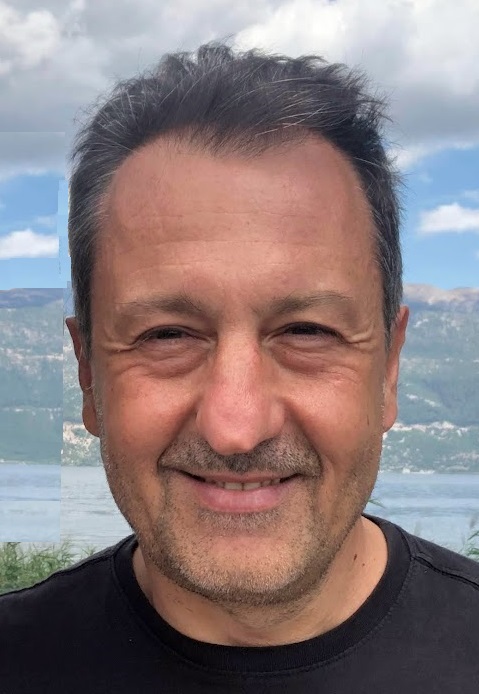
Dr. Anna Saiti is a Professor of Management and Economics of Education at the Department of Early Childhood Care and Education, School of Administrative, Economics & Social Sciences, University of West Attica, Athens, Greece. She has also served as an academic member at Harokopio University's Department of Economics & Sustainable Development (formerly Home Economics & Ecology). Her work bridges educational leadership, health economics, and labor market dynamics. Bachelor's Degree: Organization and Business Administration, University of Piraeus M.A.: Banking and Finance, University of North Wales (Bangor, UK) PhD: Administration and Economics of Education, University of Hull (UK) Her research focuses on strategic/sustainable leadership, health economics, labor market policies, and educational management. She explores themes like AI integration in education, equity in schools, and the impact of minimum wage on employee well-being. Her work spans theoretical frameworks and applied studies in Greece and global contexts. Her recent publications address digital transformation in education, systemic leadership models, and socioeconomic factors in educational systems. These works often intersect with trends in artificial intelligence, policy reform, and workforce management in educational and healthcare sectors. Anna Saiti's academic contributions include supervising five completed PhD theses (2012, 2016, 2018, 2020) and mentoring three ongoing doctoral candidates. She serves as Assistant Editor for the International Journal of Leadership in Education and member of the Editorial Board for Research in Educational Administration and Leadership . She leads projects on labor market dynamics, health economics, and distance learning educator training, the latter co-financed by the Greek State and EU. Her career combines research, editorial work, and international collaboration in educational leadership and economic analysis.
Professor Maria Birbili serves as a Professor in the Department of Pedagogy at the School of Early Childhood Education, part of the Faculty of Education at Aristotle University of Thessaloniki. Her academic specialization lies in Applied Pedagogy within early childhood education, with a focus on curriculum development, teacher education, and child-centered learning practices. She holds a DPhil in Educational Studies (2000) and has contributed significantly to advancing educational methodologies through her research. Her academic career includes teaching courses such as *Assessment in Education*, *Early Childhood Pedagogy and Practice I*, and *Teaching Methodology*. Her research interests emphasize early childhood educational policies, teacher mediation in curriculum design, and the integration of computational thinking in K-12 education. She actively explores themes like parent involvement, professional development for educators, and cross-cultural curriculum comparisons, as seen in her work contrasting Greece and New Zealand’s early childhood policies. Birbili’s publications reflect a commitment to bridging theory and practice, addressing challenges in curriculum implementation, child questioning strategies, and pedagogical documentation. Her work often highlights the need for systemic reforms in Greece’s centralized educational framework to better support teachers and families. She is also engaged in digital initiatives, such as building online teacher communities and leveraging learning analytics for educational insights. Education: DPhil in Educational Studies (2000) Affiliation: School of Early Childhood Education, Aristotle University of Thessaloniki Contact: mmpirmpi@nured.auth.gr | +30 2310991273
Kostas Magoutis is Professor and Chair of the Computer Science Department at the University of Crete and collaborating researcher with FORTH-ICS. His research focuses on distributed systems, scalable data processing, IoT, and cloud computing, with projects including GreenInCities for urban regeneration and STREAMSTORE for stateful stream processing systems. Research interests include: Distributed computer systems architecture Elastic stream processing platforms Quantum-enhanced computing applications Multi-cloud application lifecycle management Recent publications demonstrate strong focus on federated data systems, quantum computing applications, and IoT-enhanced infrastructure, with consistent output in high-impact conferences and journals. Awards and distinctions: Multiple best paper awards from USENIX conferences Grand Challenge Audience Award at DEBS 2022 Marie Curie Fellowship and IBM Research awards Advises over 20 PhD and MSc students in distributed systems research. Leads multiple EU-funded projects and serves on program committees for top conferences including SOSP, EuroSys, and IEEE BigData. Directs research groups in distributed systems and cloud computing at FORTH-ICS.
Manolis Koubarakis is a Professor and Director of Graduate Studies at the Department of Informatics and Telecommunications, National and Kapodistrian University of Athens. He is affiliated with the Archimedes Unit at Athena Research Center and is a member of ELLIS. His research focuses on Artificial Intelligence and Data Science, particularly in Linked Geospatial Data, Earth Observation, and Knowledge Graphs. Education: PhD in Computer Science (National Technical University of Athens), M.Sc. in Computer Science (University of Toronto), and B.Sc. in Mathematics (University of Crete). Research Interests: His work spans AI applications in geospatial data, entity resolution, ontology-based data access (OBDA), and semantic web technologies. He leads projects like ExtremeEarth (AI for Copernicus data) and LEO (linked Earth Observation data). Awards: 2015: Fellow of the European Association of Artificial Intelligence (EurAI) 2022: Best Demo Award at CIKM for Copernicus App Lab Advising & Grants: Supervises students in AI and data science. Collaborates on EU-funded projects like BigDataEurope and participates in initiatives like the Standing Scientific Committee for AI in Greece's justice system. Labs & Teams: Heads the AI Lab (ai.di.uoa.gr) and contributes to the MaDgIK group, focusing on data and knowledge management systems.
Avramidis Elias is a Professor at the University of Thessaly, specializing in Research Methodology and Qualitative Research Methods. His academic focus centers on inclusive education, addressing barriers to its implementation across primary, secondary, and tertiary settings. His research explores effective policies and pedagogies for students with learning difficulties, including emotional and behavioral challenges, and evaluates social impacts of inclusive programs. He also investigates support systems for disabled university students within lifelong learning frameworks and methodological advancements in educational research. His recent work emphasizes collective responsibility in education, teacher attitudes, and cross-national comparisons of inclusive practices. Notable contributions include studies on peer tutoring, teacher resilience during the pandemic, and interventions to enhance student social participation. Despite extensive research output, his profile does not mention formal awards or grants, though his work is widely published in reputable journals. Avramidis collaborates globally, evidenced by co-authored papers with researchers from Canada, Germany, Italy, and Switzerland. He teaches courses such as Statistics and Curriculum Applications in Special Education, reflecting his commitment to both research and pedagogy. His office is located at the Papastratos Complex (Building Rosa Imbrioti, 2nd floor, Room 7), and he holds regular office hours on Wednesdays and Thursdays.
Anastasios Zafeiropoulos serves as Assistant Professor at Harokopio University of Athens, specializing in Spatial Data Management and Analysis within the Postgraduate Studies Program for “Applied Geography and Spatial Management” (Direction C: Geoinformatics). His academic role encompasses teaching “Spatial Databases” and advancing research at the intersection of geospatial technologies and distributed computing systems. His research program focuses on Spatial Databases, Internet of Things (IoT), Cloud/Edge Computing, and 6G Network Orchestration, with significant extensions into Knowledge Graph applications for Sustainable Development Goals (SDGs) and socio-emotional learning in education. Key innovations include the EduCardia methodology for student competency assessment and frameworks for climate vulnerability analysis using knowledge graphs. Analysis of his 2024-2025 publications reveals three dominant thrusts: (1) AI-driven orchestration of 6G services across the computing continuum using reinforcement learning; (2) Knowledge Graph applications for SDG interlinkage analysis and materials science; (3) EU-funded IoT/Edge Computing project ecosystems. His work consistently bridges theoretical networking concepts with practical sustainability and educational applications. Dr. Zafeiropoulos actively contributes to EU-funded initiatives in IoT and Edge Computing standardization, particularly through AIOTI WG Standardisation. His project portfolio includes NEPHELE multi-cloud ecosystem development and O-RAN slice admission control research, demonstrating strong industry-academia collaboration in next-generation networking. He leads the development of innovative tools including Palindrome.js for distributed system visualization and the EmoSocio open-access emotional intelligence model, reflecting his commitment to translating research into practical educational and environmental solutions.
Alvin Cheung is an Associate Professor in the Computer Science Division at UC Berkeley's EECS department. He is affiliated with the Data Systems and Foundations group, Programming Systems group, Sky Lab, and SLICE Lab, and serves as a faculty affiliate at the Berkeley Institute for Data Science. He advises the Data Science Discovery Program and provides technical guidance to industry partners. His research spans data management, programming languages, and scalable software systems, with emphasis on helping users process large datasets efficiently. Key innovations include verified lifting (applying formal methods and ML to infer program properties) and systems for optimizing database-backed applications and geospatial analytics. Recent work explores LLM-driven code optimization and transpilation techniques. His publications (2023-2025) show strong trends in ML-enhanced systems, verified compilation, and data management tools. Articles frequently integrate formal methods, program synthesis, and hardware-aware optimizations across domains like databases, distributed computing, and HCI. Scientific Awards: ACSIC Rock Star Award (2025) Dahl-Nygaard Junior Prize (2024) VLDB Early Career Research Contribution Award (2023) IEEE TCDE Rising Star Award (2020) Sloan Fellowship (2019) NSF CAREER Award (2017) 20+ additional honors Advising & Grants: He mentors PhD/MS students (e.g., Lily Liu at OpenAI, Chenglong Wang at Microsoft Research). Research is funded by: NSF DOE ONR ARO Intel Notable grants include ONR Young Investigator Award and ARO Early Career Program Award. Labs & Teams: Leads projects in Berkeley's Data Systems/Programming Systems groups and collaborates with Sky Lab/SLICE Lab. Manages labs focused on verified compilation (e.g., Tenspiler) and data infrastructure (e.g., Spatialyze).
Thomas Tscheulin is an Assistant Professor in the Department of Geography at the University of the Aegean, focusing on pollinator ecology, biodiversity conservation, and the impacts of environmental disturbances like climate change and habitat degradation. He teaches courses in Ecology, Biogeography, and Environmental Threats. University of Freiburg (Biology, Germany) PhD in Population Ecology, Imperial College London (UK) His research examines how agricultural practices, invasive species, and climate change affect pollinator communities (wild bees, Syrphidae) across local to regional scales. He has contributed to understanding pollination networks, fire ecology, and thermal tolerance in bees. Recent publications analyze olive fly dynamics, thermal stress responses, and habitat management through AI-driven monitoring. Collaborative projects include POL-AEGIS and LIFE 4 POLLINATORS. While no specific awards are documented, his work appears in journals like Science of the Total Environment and Nature Communications . He mentors PhD and MSc students in pollination studies and collaborates across Europe on biodiversity research.
Dimitris Maroulis is a Professor at the Department of Informatics and Telecommunications, University of Athens, leading the Real-Time Systems and Image Analysis Lab (RTS-image). With over 20 years of experience in data acquisition and real-time systems, and 15 years in image/signal analysis, he collaborates extensively with Greek and European hospitals in biomedical informatics. He has led 5 R&D projects and authored 150+ papers with 1400+ citations. University of Athens: Professor (2000–present) Meudon Observatory: Research Fellow (3 years) & Long-term Collaborator (10+ years) Research Interests focus on real-time systems , image/signal processing , and biomedical applications . Key areas include automated segmentation of proteomic images, noise removal methods, and stereo image coding. His 15 most recent publications (2003–2012) span 3D imaging , medical image analysis , and biomedical informatics , with sub-fields like autostereoscopic displays, wavelet-based coding, and computer-aided diagnosis. Awards : Best Paper Award (2012: Integral Image Analysis) Projects include European and national R&D initiatives in image analysis and real-time systems. Labs : RTS-image Lab develops methodologies for biomedical and proteomic applications.
Michalis Mountantonakis is a Postdoctoral Researcher at FORTH and Laboratory Teaching Staff in the Department of Computer Science at the University of Crete, Greece. He holds a PhD (2020), MSc (2016), and BSc (2014) in Computer Science from the University of Crete, all with top grades. His research focuses on Large-Scale Semantic Data Integration, Linked Open Data, and Semantic Web technologies, with over 45 publications in top venues like ACM VLDB, ISWC, and ECML. He has been awarded the prestigious SWSA Distinguished Dissertation Award (2020) and the Maria Michael Manasaki Fellowship (2020). His work includes tools like LODsyndesis and LODChain, addressing challenges in knowledge graph connectivity and validation of AI-generated content. Education: PhD in Computer Science (2016-2020), University of Crete (Excellent GPA 9.74/10) MSc in Computer Science (2014-2016), University of Crete (Excellent GPA 9.87/10) BSc in Computer Science (2010-2014), University of Crete (2nd in class with GPA 8.42/10) Research Interests: His work bridges semantic web technologies with modern AI challenges, emphasizing large-scale data integration, knowledge graph applications, and validation frameworks. He has contributed to cultural heritage informatics, machine learning-augmented semantic systems, and cross-lingual NLP solutions. Recent trends include leveraging LLMs for query generation and semantic enrichment while ensuring factual accuracy through knowledge graph-driven validation. Key Achievements: Developed LODsyndesis, a global-scale semantic integration service Pioneered real-time validation of ChatGPT responses using RDF knowledge graphs Won Best Paper Award (ISWC 2022) for entity enrichment techniques Recipient of Stelios Orphanoudakis Undergraduate Fellowship (2013-2014) Participated in Roche Continents 2019 (top 100 European science students) Grants & Labs: His research has been supported by GSRT/HFRI. He collaborates with FORTH-ICS and leads projects in EU-funded initiatives like iMarine and BlueBridge. Current work focuses on governance models for ontologies, interoperable thesaurus creation (e.g., FoodEx2), and semantic analytics for cultural heritage datasets.
Michail G. Lagoudakis is a Professor at the Department of Electronic and Computer Engineering, Technical University of Crete. His academic journey includes a Ph.D. in Computer Science from Duke University (2003), an M.Sc. from the University of Louisiana, Lafayette (1998), and a B.Sc. from the University of Patras (1995). He has held prestigious positions such as Postdoctoral Fellow at Georgia Institute of Technology's School of Industrial and Systems Engineering. Research Interests : Spanning machine learning (especially reinforcement learning), decision-making under uncertainty, robotics, algorithm selection, computational biology, and human-computer interaction. Publications : Over 15 recent works, including key contributions to robotics (auction-based multi-robot routing), medical diagnosis (urgent endoscopy prediction), and foundational machine learning (Least-Squares Policy Iteration, RCPI algorithm). Scientific Recognition : Recipient of Duke University's Outstanding Dissertation Award (2002-2003) and two Outstanding Teaching Assistant Awards. Professional Affiliations : Member of AAAI, IEEE, and ACM. Collaborations include industrial applications in disassembly planning, dynamic packet routing, and medical imaging. He advocates for computational biology and interdisciplinary research, aiming to integrate tools from mathematics and control theory into machine learning.
Glykeria Fragkiadaki is an Assistant Professor in the Department of Early Childhood Education and Education Sciences at Aristotle University of Thessaloniki. Her academic work focuses on early childhood science education, particularly the integration of science concepts through play-based approaches and Conceptual PlayWorlds. She teaches courses including Early Childhood Pedagogy and Practice, Science and the Child's Social and Cultural Reality, and Science and Everyday Educational Reality in Preschool Settings. Her research interests center on early childhood science education, STEM learning for young children, conceptual development through play, cultural-historical approaches to education, and teacher professional development. She has developed significant expertise in Conceptual PlayWorlds as a framework for science learning in early years. Her work bridges theoretical frameworks with practical classroom applications, emphasizing how children form scientific concepts through imaginative play and social interaction. Dr. Fragkiadaki's recent publications explore science concept formation from infancy through early childhood, the integration of digital tools in Conceptual PlayWorlds, collective imagination in early learning environments, and gender equity in STEM education for young children. Her work demonstrates how theoretical thinking can transform teacher practice and how play creates meaningful conditions for scientific concept development. She has supervised numerous doctoral, postgraduate, and undergraduate theses, both at Aristotle University of Thessaloniki and internationally at Monash University. Her current research includes the project 'Ensuring the playful character of Natural Sciences: strengthening the scientific literacy of young children through play' (2023-2025), where she serves as coordinator, and participation in the research program 'Education Sciences: Research and Practice in changing learning environments' (2022-2027). Her academic journey began with a Diploma in Pedagogy for Kindergarten Teachers from the University of Patras in 2004, followed by a Master's degree in 2013 and a Doctoral degree in 2017, both from TEAPI at the University of Patras. Her scholarly contributions have established her as a significant voice in cultural-historical approaches to early childhood science education.
Professor Pavlis-Korres Maria is affiliated with the Department of Early Childhood Education and Education Sciences at Aristotle University of Thessaloniki's Faculty of Education. She specializes in Lifelong Learning and Non-formal Education, focusing on educational technology, Roma education, and pedagogical practices. Her research emphasizes digital tools in education, online learning during crises, and marginalized groups' educational inclusion. She teaches courses like 'Design of Non-Formal Education Programs' and 'Education and Lifelong Learning.' University: Aristotle University of Thessaloniki School: Faculty of Education Department: Department of Early Childhood Education and Education Sciences Academic Rank: Professor Research interests include integrating technology in education, adult learning, Roma educational challenges, and pandemic-era pedagogical adaptations. She has led projects on environmental awareness programs, digital leadership assessment, and Roma empowerment through non-formal education. Publications span over two decades, addressing topics like virtual reality in military training, synchronous online advising, and gender disparities in education. Her work bridges theory and practice, emphasizing inclusive and adaptive educational strategies.