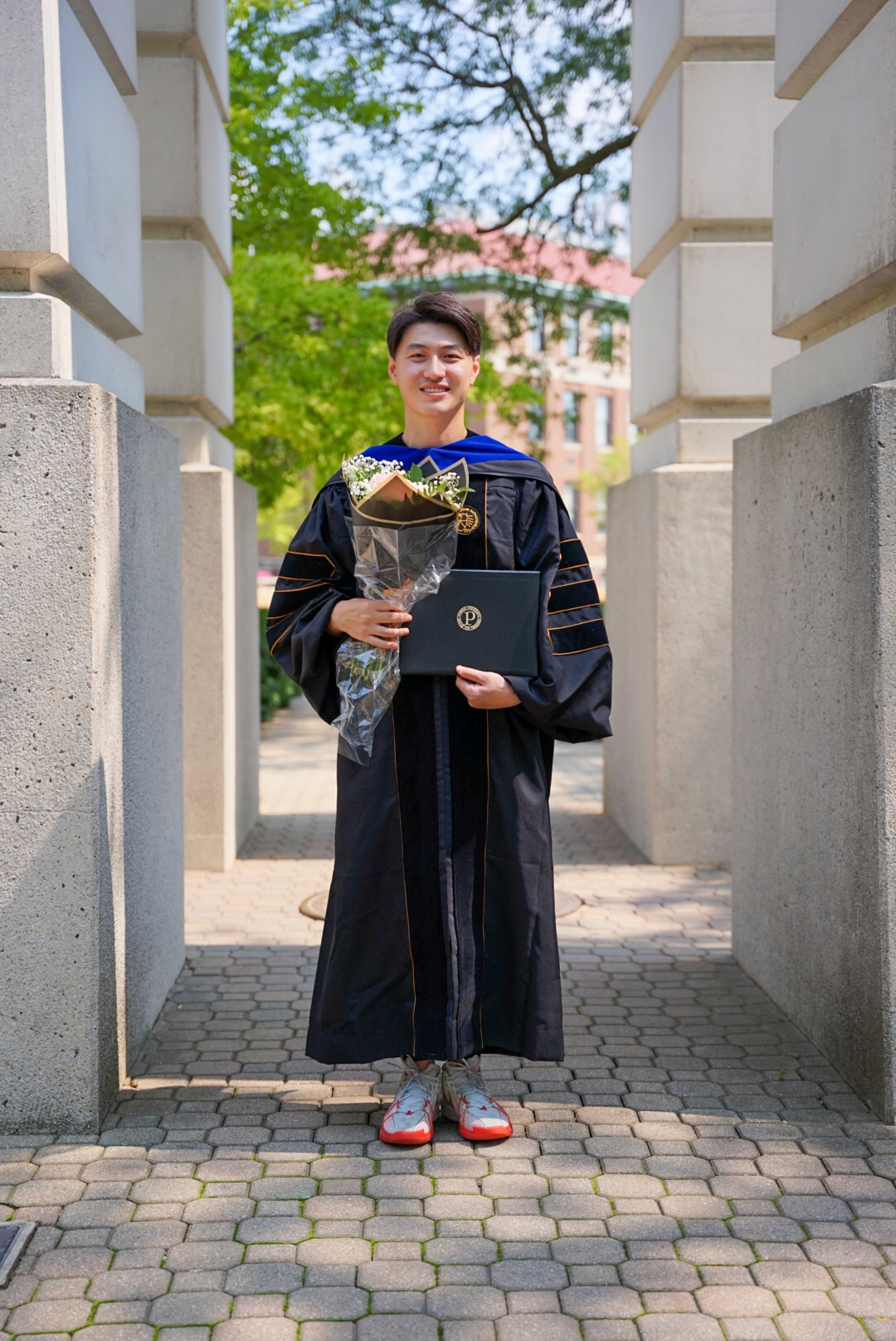
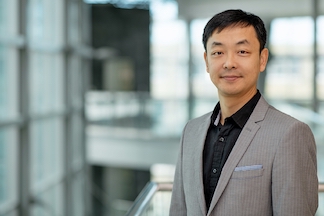
HaoYu Wang is an Assistant Professor of Computer Science at SUNY Albany. His research focuses on parameter-efficient and data-efficient deep learning, particularly in natural language processing and machine learning, aiming to democratize AI access. He holds a Ph.D. from Purdue University's School of Electrical and Computer Engineering, a B.Eng. from the University of Electronic Science and Technology of China, and an MS from SUNY Buffalo. His work includes innovations like RoseLoRA (sparse low-rank adaptation for knowledge editing), LightLT (lightweight quantization for long-tail data), and FedKC (federated knowledge composition for multilingual NLU). He has received awards such as the Future Leaders in Data Science (2024) and Bilsland Dissertation Fellowship. Key research areas include parameter efficiency, cross-lingual NLU, and model fairness. Recent publications span topics like federated learning optimization, robust retrieval-augmented generation, and mitigating token overfitting in LLMs. He advises students on Ph.D. and intern roles, emphasizing CVs and research interests in applications.
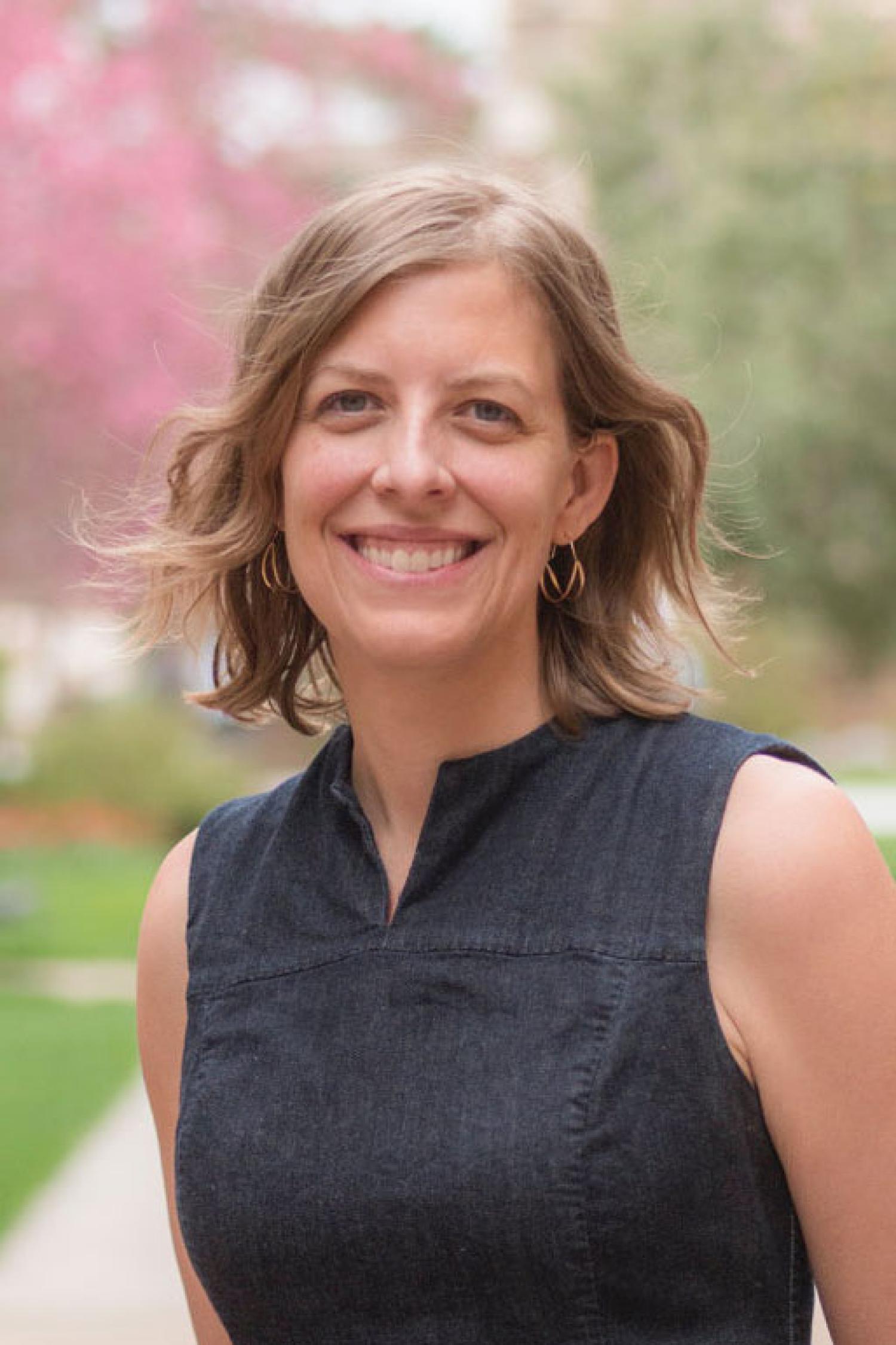
Erin Marie Furtak is a Professor of STEM Education at the University of Colorado Boulder, School of Education. She transitioned from high school teaching to academic research, focusing on formative assessment in science education and equitable classroom practices. Her work emphasizes how teachers design and use assessments to improve student engagement and learning outcomes. Education: PhD in Curriculum and Teacher Education, Stanford University (2006) MA in Education, University of Denver (2001) BA in Environmental, Population, and Organismic Biology, University of Colorado Boulder (1999) Research Interests: Formative assessment design, equity in STEM education, teacher professional development, and learning progressions. She leads the Aspire Partnership (NSF-funded) and Elevate Project , studying teacher-student interactions and equitable assessment practices. Her work bridges educational theory with classroom application, particularly for emergent bilingual learners. Selected Awards: 2011 Presidential Early Career Award for Scientists and Engineers (PECASE) German Chancellor Fellowship (Alexander von Humboldt Foundation, 2006) Teaching & Service: Courses include EDUC 4060/5060: Classroom Interactions and EDUC/MCDB 4811/5811: Teaching & Learning Biology . She serves as Associate Dean of Faculty at the School of Education and advises national initiatives like the Sandra K. Abell Institute and National Academies' Updating America’s Lab Report . Labs/Teams: Aspire Partnership, Elevate Project, and collaborations with school districts nationwide to integrate formative assessment into science curricula.
Chao Ma is a Lecturer at the Research School of Management, Australian National University (ANU). He holds a Doctor of Philosophy, MPhil, Master of Business, and BBA in Human Resource Management from ANU and HKBU. His research focuses on Human Resource Management (e.g., perceived overqualification, career development) and Organisational Behaviour (e.g., leadership, unethical pro-organisational behaviour). He has supervised research students and contributed to over 22 peer-reviewed articles since 2016, exploring topics like AI in HR, knowledge-sharing platforms, and leadership dynamics. His work often examines cross-cultural contexts, particularly in China, addressing themes such as temporary worker integration, follower behaviour under authoritarian leadership, and the dual effects of overqualification on workplace outcomes. Collaborations span international scholars, focusing on topics like employee voice, humility in leadership, and stress management in multi-employment environments. Chao Ma's research bridges theoretical frameworks with practical implications for managing modern organisational challenges, emphasizing ethical leadership, employee well-being, and leveraging technology in HR practices. His recent studies highlight AI's role in improving migrant worker conditions and resolving knowledge-sharing dilemmas in digital platforms.
Prof. Dr. Kai Michael Griese is a full professor of Business Administration with a focus on Marketing at the Faculty of Economics and Social Sciences, Osnabrück University of Applied Sciences since 2009. He holds a Dr. rer. pol. from TU Chemnitz and has extensive industry experience, including roles at Mars Incorporated and Generali Deutschland. His research emphasizes sustainable business models, climate adaptation, and circular economy, with notable contributions to event sustainability and resilience strategies. He leads the Master's program in International Business Management with a focus on sustainable business models. Key roles include Program Director for the Master's focus on Sustainable Business Models and Climate Adaptation. Griese has been affiliated with institutions like the Shanghai University of International Business and Economics (SUIBE) as a guest professor. His work integrates digitalization and sustainability, addressing challenges in logistics, energy cooperatives, and corporate culture. He has secured grants from the German Federal Environment Foundation (DBU), BMBF, and EU-funded projects like Interreg North Sea Region. Research interests span climate resilience in events, sufficiency-driven marketing, and digital entrepreneurship's role in sustainability. His projects include the KlimaEvent initiative in Bad Essen, exploring climate adaptation for municipalities. He emphasizes practical solutions through VR-based simulations and interdisciplinary collaboration.
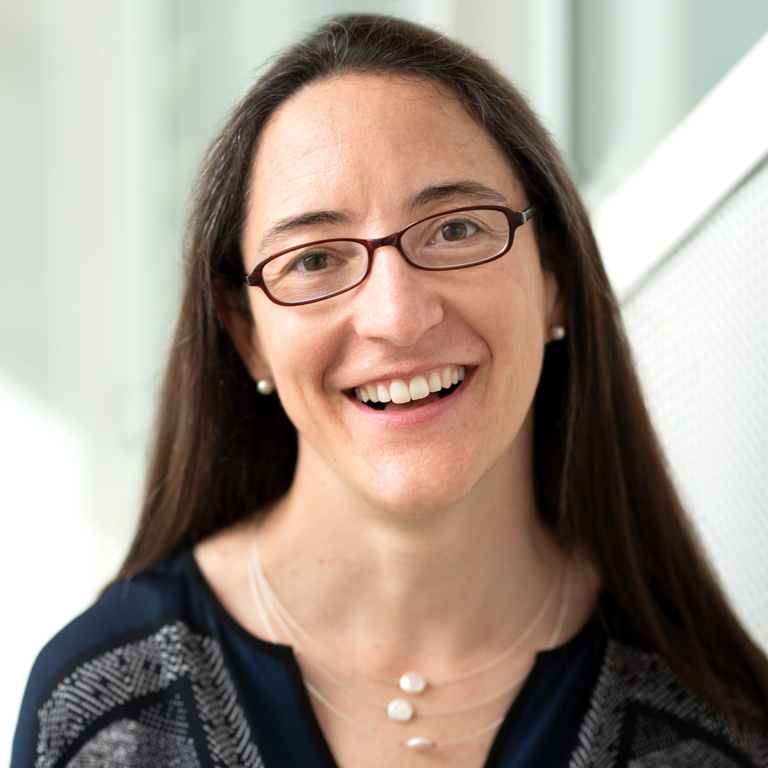
Christina Youngmi Choi is a Professor in the School of Design at the Royal College of Art (RCA), specializing in emerging technologies, healthcare, and inclusive design. She holds a BFA and MA in Industrial Design from South Korea, followed by a MSc and PhD from the Georgia Institute of Technology (Georgia Tech), where she also served as faculty, earning tenure and holding leadership roles such as Associate Chair and Director of the Graduate Program. Her research focuses on leveraging technology for assistive and inclusive design, emphasizing evidence-based and human-centered approaches. Key areas include usability assessment, assistive product design, and healthcare innovation. She has over 60 publications in journals, conferences, and books, with notable works exploring augmented reality in design and accessibility. Dr. Choi has led or contributed to significant grants, including the Rehabilitation Engineering Research Center (RERC) for Wireless Inclusive Technologies (2016–22), and the NSF-funded Feasibility and Usability Assessment of an Intraoral Inconspicuous Control Surface (2013–16). Her work spans collaborations with industry partners like LG Electronics and Jeju Airlines, addressing challenges in healthcare, education, and consumer technology. Awards: Best Paper Award at AHFE 2022 Georgia Tech Teaching Excellence Recognition (multiple years) National Science Foundation Women of Excellence Award (2016) Her advising and grants highlight interdisciplinary projects, such as integrating traditional wood joinery into CNC manufacturing and developing user-friendly medical devices. She is an editorial board member of the Journal of User Experience and peer reviewer for multiple journals and conferences. Her work also addresses privacy in health technologies and medication adherence systems, reflecting a commitment to societal impact through design.
Dr. Joyoung Lee is an Associate Professor in the Department of Civil and Environmental Engineering at New Jersey Institute of Technology (NJIT). He previously served as Laboratory Manager at the Federal Highway Administration's Saxton Transportation Operations Laboratory. His research focuses on Connected Vehicle (CV) systems, including applications in traffic management, signal control optimization, and autonomous vehicle infrastructure integration. Dr. Lee holds a Ph.D. (2010) and M.S. (2007) in Transportation Engineering from the University of Virginia, and a B.S. (2000) in Transportation Engineering from Hanyang University. His work emphasizes CV-based solutions for real-time traffic systems, cooperative vehicle-infrastructure systems (CVIS), and autonomous vehicle integration. Notable achievements include the 2019 IEEE CAVS Best Paper Award and multiple best paper recognitions from PTV User Group Meetings. His research also addresses traffic safety through innovations like the Virtual Guide Dog system for visually impaired pedestrians and advanced traffic monitoring frameworks using LiDAR and computer vision. Education: Ph.D., Transportation Engineering, University of Virginia (2010) M.S., Transportation Engineering, University of Virginia (2007) B.S., Transportation Engineering, Hanyang University (2000) Dr. Lee's research interests span smart city infrastructure, edge computing for traffic systems, and sustainable transportation solutions. He has pioneered algorithms for cooperative intersection management, automated platooning systems, and federated learning-based traffic optimization. His work bridges theoretical models with real-world implementation through partnerships with FHWA and industry stakeholders. Key contributions include development of the Cumulative Travel-Time Responsive (CTR) traffic signal control system, smart arrival notification systems for paratransit services, and advanced microsimulation calibration techniques. His lab focuses on translating CV data into actionable strategies for safer, more efficient transportation networks. Awards: IEEE CAVS Best Paper Award (2019) ASCE Grand Challenge Innovation Contest Honorable Mention (2017) PTV VISSIM Best Paper Awards (2012, 2008) Excellence in Research Award (University of Virginia, 2011) Ongoing projects include semi-decentralized graph neural networks for traffic forecasting and low-cost LiDAR-based traffic monitoring systems. His work addresses critical challenges in autonomous vehicle integration, incident management, and infrastructure resilience through interdisciplinary collaborations.
Carolina Osorio is a Professor at HEC Montréal, holding the Scale AI Research Chair in Artificial Intelligence for Urban Mobility and Logistics. She is affiliated with the Department of Decision Sciences and is a member of the Group for Research in Decision Analysis (GERAD) and the Interuniversity Research Centre on Enterprise Networks, Logistics and Transportation (CIRRELT). Her research focuses on transportation optimization, urban mobility, and data-driven simulation-based methods. She has been recognized among the world’s most influential researchers in 2023 and 2024. Education: Ph.D. in Mathematics, École Polytechnique Fédérale de Lausanne (EPFL) M.Sc. in Statistics, University College London (UCL) Bachelor’s in Engineering, École nationale supérieure d'informatique et de mathématiques appliquées de Grenoble (ENSIMAG) Research Interests: Her work emphasizes scalable transportation modeling, simulation-based optimization, and AI applications for urban logistics. She develops methods for large-scale network analysis, traffic demand estimation, and sustainable urban mobility solutions. Key areas include traffic signal optimization, car-sharing service design, and high-dimensional stochastic systems. Publications: Recent articles highlight advancements in scalable traffic demand estimation, Bayesian optimization for transportation systems, and simulation-based toll optimization. Her work addresses challenges in global highway networks, urban congestion dynamics, and multi-city calibration. Awards: Scale AI Research Chair (Artificial Intelligence for Urban Mobility and Logistics) Recognition as a world-leading researcher in transportation science Advising & Grants: Osorio collaborates on projects funded by Scale AI and leads research initiatives through GERAD and CIRRELT. Her supervision activities include teaching courses such as Decision Analysis and Sample Efficient Optimization at HEC Montréal. Labs & Teams: She contributes to interdisciplinary teams at GERAD and CIRRELT, focusing on integrating advanced analytics into urban transportation systems.
Lauren Horn Griffin is an Assistant Professor of Religious Studies at Louisiana State University (LSU), jointly appointed in the Department of History. Her work bridges religion, technology, media, and nationalism, with a focus on how digital platforms shape contemporary religious identities. She earned a B.A. in English from the University of Oklahoma (2006), an M.T.S. from Vanderbilt Divinity School (2010), and a Ph.D. in Religious Studies from the University of California, Santa Barbara (2016). Griffin’s research examines the intersection of religion and media, particularly in Catholic communities. Her book Fabricating Founders in Early Modern England (2023) explores how confessional debates influenced national identity formation. Current projects investigate post-national religious identities online and the role of medieval imagery in digital spaces. She is also a leader in public humanities, leveraging grants from the Henry Luce Foundation and LSU to advance interdisciplinary work. Her teaching spans digital religion, AI ethics, and U.S. religious history. Courses include Religion and AI and History of Religion in the United States . Griffin actively contributes to initiatives like the LSU Ethics Institute and the AI & Religion Collaborative, emphasizing ethics in emerging technologies. Her awards include the ATLAS Grant (2024-25) and multiple fellowships from the Henry Luce Foundation. Griffin’s publications span peer-reviewed journals, edited volumes, and public-facing platforms like Religion News Service and Religion Dispatches . She frequently addresses topics such as Christian nationalism, traditionalist movements (#RadTrad), and the impact of digital media on religious expression.
Nenad Radakovic is an Associate Professor of STEM Education at Queen's University's Faculty of Education. His research focuses on transdisciplinary approaches in mathematics and STEM education, emphasizing how interdisciplinary integration can enhance learning across PK-12 and post-secondary contexts. He holds a PhD in Curriculum Studies and Teacher Development from the Ontario Institute for Studies in Education (OISE), University of Toronto, and has taught secondary mathematics in Croatia and Canada. Prior roles include Associate Professor at the College of Charleston and Sessional Lecturer at the University of Toronto, where he instructed courses on holistic mathematics pedagogy and curriculum design. Dr. Radakovic’s research interests span transdisciplinary curricula, risk education, mathematics teacher training, and the role of technology in education. He is a STaR Fellow with the Association of Mathematics Teacher Educators and contributes to professional organizations like NCTM and PMENA. His work explores how mathematics education can address societal challenges through critical pedagogy and inclusive practices. Key publications include edited volumes on transdisciplinarity in mathematics education and borders in teacher training. His recent articles address STEM curriculum innovation, inclusive pedagogical frameworks, and the application of feminist theory to educational research. Collaborations include transdisciplinary projects blending arts and mathematics, such as using 3D printing to explore cultural heritage through art.
Yuanzhu Chen is a Professor in the School of Computing at Queen’s University, affiliated with the Faculty of Arts and Science. He previously served as Professor and Department Head at Memorial University of Newfoundland (2005–2021). His research focuses on computer networking, mobile computing, complex networks, and applied machine learning, emphasizing wireless innovation beyond traditional wired systems. He holds a PhD from Simon Fraser University (2004) and a B.Sc. from Peking University (1999). Education: PhD in Computing Science (Simon Fraser University, 2004); B.Sc. in Computer Science (Peking University, 1999). Earlier roles include Post-doctoral Researcher at Simon Fraser University (2004–2005) and leadership positions at Memorial University, including Department Head (2019–2021). Research Interests: Network Coding and Opportunistic Routing Mobile and Wireless Network Protocols Complex Network Analysis Machine Learning Applications Indoor Positioning Systems Social Network Dynamics Selected Awards: Recipient of Queen’s University President's Award for Distinguished Teaching. Lab Affiliation: Director of the Wireless Networking and Mobile Computing Lab (WineMocol). Active in collaborative projects involving smartphone sensors, community-based environmental monitoring, and stock market prediction using web data.
Olli Varis is an Aalto Distinguished Professor at Aalto University's Department of Built Environment, specializing in Water and Environmental Engineering. He holds adjunct professorships at Asian Institute of Technology (Thailand) and has served as Vice Dean for Research & Innovation at Aalto School of Engineering (2013–2018). His expertise spans water resources management in developing economies, climate change impacts, and transboundary water governance. Education: Doctoral degree in Engineering (Helsinki University of Technology, 1991), Licentiate (1988), and dual Master's degrees in Agriculture (University of Helsinki, 1986) and Engineering (Helsinki University of Technology, 1984). Research focuses on sustainable development goals (SDGs), particularly water-energy-food nexus dynamics, urbanization impacts, and global river basin vulnerabilities. Key interests include flood early warning systems, migration-environment linkages, and Asian transboundary water challenges. Notable awards include Aalto Excellence Awards (2018, 2021), Best Research Paper 2023, and Environmental Research Letters' Best Paper 2010. Over 350 publications include works on China's water risks, Nepal's flood resilience, and global migration drivers. Active in UNESCO, WMO, and UNU/WIDER. Recent projects address urbanization's environmental pressures, interdisciplinary education challenges, and东南亚数字经济的崛起与挑战 (Vietnam's digital economy challenges). Leads the Water and Environmental Engineering research group, supervising 12 theses. Involved in public outreach,如芬兰赫尔辛基大学的媒体参与案例.
Ivon Arroyo is a Professor in the Department of Teacher Education & Curriculum Studies (TECS) at the University of Massachusetts Amherst. Her research focuses on integrating novel technologies into math and computational thinking education, emphasizing affective and metacognitive states. She develops intelligent tutoring systems, such as COVES, which personalize learning in real-time and utilize facial expression recognition to enhance engagement. Her work on WearableLearning explores embodied, physically active multiplayer games for K-12 classrooms, leveraging mobile devices and wearable technologies to create immersive learning experiences. Dr. Arroyo holds an Ed.D. (2003) and M.S. (2000) from UMass Amherst and a B.S. from Universidad Blas Pascal in Argentina (1995). She has been recognized with multiple awards, including Best Paper Awards at the 2009 International Conference on Artificial Intelligence in Education and the 2010 Educational Data Mining Conference, a Fulbright Fellowship (1996), and a 1994 undergraduate prize for computer vision research. Her research interests span interdisciplinary areas such as Learning Sciences , Computer Science , Data Science , and Psychology . She prioritizes culturally responsive pedagogical agents and cross-cultural studies in educational technology, particularly in Argentina, India, and the U.S. Her projects often address challenges in developing countries, including localization of tutoring systems to Spanish. Advising and grants are central to her work, with grants like the NSF CAREER Award (2020) supporting embodied math classrooms. She collaborates on teacher dashboard frameworks and explores ethical AI integration in education. Her labs focus on creating tools that merge computational innovation with theoretical learning science principles, emphasizing real-world applications like the WearableLearning Cloud Platform.
Dr. Cai Ladd is a Lecturer in Geography at Swansea University's School of Biosciences, Geography and Physics. His research focuses on coastal wetlands, integrating biogeomorphology, socio-ecological resilience, and ecosystem service sustainability. He leads the 'Coastal Wetlands and Ecosystem Services' theme at the Climate Action Research Institute. Dr. Ladd teaches modules such as Coastal Processes, GIS Applications, and Sustainable Development Goals, emphasizing practical fieldwork and spatial statistics. Current projects include the Community-Led Enhancement and Restoration of Coastal Ecosystems in the Cumbrian Solway Firth (2022–2025), funded at £175,977. He supervises PhD student Rhian Hedd Meara on cross-border coastal conservation. His research employs spatial statistics, hydrological monitoring, and citizen science to develop management tools for coastal conservation. Notable contributions include studies on saltmarsh carbon stocks, mangrove restoration in tropical deltas, and innovative Mini Buoy sensor technology. Dr. Ladd collaborates globally, with publications in Frontiers in Marine Science , Nature Communications , and Environmental Pollution . His work bridges natural and social sciences, addressing climate adaptation and community-led conservation strategies.
Mark Thouin is a Clinical Professor of Information Systems and Associate Dean for Graduate Programs - Academic Operations at The University of Texas at Dallas (UT Dallas), Jindal School of Management. He holds an MBA from George Mason University and a PhD from Texas Tech University. His research focuses on IT business value, experiential learning, and postsecondary leadership, with notable contributions to information systems curriculum development and agile methodologies. He teaches courses like Business Analytics with SAS and Agile Project Management. His awards include the Outstanding Undergraduate Teaching Award from UT Dallas Jindal School of Management and AITP Region 3 Star Performer of the Year. His recent articles emphasize competency models in information systems education, experiential learning simulations for agile methodologies, and curriculum standards through collaborations like ACM/AIS IS2020 initiatives. Education: PhD, Texas Tech University, 2007 MBA, George Mason University, 2004 BS, Virginia Tech, 1992 Professional Organizations: Association for Information Systems (AIS) Society for Information Management Association for Computing Machinery His work bridges academic curriculum design with industry needs, particularly through competency-based frameworks and experiential learning approaches. He has contributed to global standards for information systems graduate programs (MSIS 2016) and undergraduate curriculum guidelines (IS2020).
Dr Marcus Keogh-Brown is an Associate Professor in the Department of Global Health and Development within the Faculty of Public Health and Policy at the London School of Hygiene & Tropical Medicine (LSHTM). His position is split between research focusing on macroeconomic modeling of health and serving as Deputy Programme Director for the school's public health distance learning program. Education: BSc in Mathematics and Statistics, Queen Mary University of London (1995-1998) MSc in Computer Studies, University of Essex (1998-1999) PhD in "A Statistical Model of Internet Traffic," Queen Mary University of London (1999-2004) PGCILT Modules 1 and 2, London School of Hygiene and Tropical Medicine (2008-2012) Dr Keogh-Brown's research focuses on analyzing the macro-economic impact of health disorders and developing macro-economic models in health contexts. His areas of interest include infectious diseases (SARS, influenza, COVID-19, tuberculosis, malaria) and non-communicable diseases (Alzheimer's Disease, Dementia). He specializes in health-related applications of Computable General Equilibrium (CGE) Modeling with GAMS, with current work on health and macroeconomic modeling of COVID-19, tuberculosis, child labor, and health-related food policies. His publication record shows a strong trend toward integrated macroeconomic-epidemiological modeling, particularly for infectious disease outbreaks and public health interventions. Recent work focuses on tuberculosis in India, Covid-19 impacts in Pakistan, and food policy interventions like the UK Soft Drinks Industry Levy. His research consistently applies economic modeling frameworks to evaluate the health and economic impacts of disease and health policies across multiple countries including Ghana, India, Thailand, Myanmar, UK, and China. Grants: Current: "Modelling the health social care and macroeconomic impacts of dementia policies in the UK" (NIHR, 2025-2026) Current: "Co-designing food system fiscal policy for healthy people and planet" (University of Oxford, 2022-2025) Completed: "COVID-19 vaccine scenario analysis for health economic and social impacts" (WHO, 2022) Completed: "Evaluation of the impact of the UK industry levy of sugar-sweetened beverages" (University of Cambridge, 2017-2023) Completed: "Macroeconomic Burden of Alzheimers in China" (Jansen Global Services LLC, 2014-2015) Dr Keogh-Brown is affiliated with several research centers at LSHTM including the Malaria Centre, Global Health Economics Centre, and Centre for Mathematical Modelling of Infectious Diseases. His collaborative work spans multiple countries and addresses critical intersections between health, economics, and policy.