Professor Haijiang Li is a Chair in BIM for Smart Engineering at Cardiff University's School of Engineering. His roles include leading the Computational Mechanics and Engineering AI Research Group, directing the BIM for Smart Engineering Centre, and overseeing the BIM MSc programme. He holds editorial roles for journals like Construction Innovation and Automation in Construction , and chairs the European Group of Intelligent Computing in Engineering (EG-ICE). Research focuses on smart computational engineering platforms integrating BIM, AI, and big data for sustainable infrastructure. Key areas include digital twins, disaster management, and resilient urban systems. He has secured £40M in research funding, including £9M as PI, and led over 70 research staff and students. Prof. Li is a Standards Committee Technical Executive at buildingSMART, driving international BIM standards. His work includes co-authoring a book on BIM standards across China, the US, and the UK. Awards include Fellowships from the British Computer Society (FBCS) and the Higher Education Academy (FHEA). His research outputs span over 250 publications, covering topics like AI-driven bridge maintenance, ontology-based decision-making, and energy-efficient urban systems. Collaborations with industry and global partners emphasize practical applications of BIM and smart technologies.
Zachary Ives is the Adani President's Distinguished Professor and Department Chair of the Computer and Information Science Department at the University of Pennsylvania. He holds affiliations with the ASSET Center for Safe, Explainable and Trustworthy AI, the Warren Center for Network and Data Science, the Center for Neuroengineering and Therapeutics, and serves as a Distinguished Research Fellow at the Annenberg Center for Public Policy. His research focuses on data integration and sharing, data provenance and trustworthiness, and machine learning systems. He develops data science platforms at the intersection of databases, machine learning, and distributed systems, with applications in Web question answering and scientific domains like genetics and neuroscience. His work addresses fundamental challenges in integrating heterogeneous data, ensuring trustworthy results, and facilitating collaborative data science. His recent publications demonstrate a strong focus on data lakes, learned database systems, fine-grained provenance, and question answering systems. These works span top conferences including SIGMOD (where his paper was selected as Best Paper in 2024), VLDB, ACL, and PODS, showing the breadth of his contributions across database systems, natural language processing, and data management. NSF CAREER award recipient Fellow of the ACM Christian R. and Mary F. Lindback Foundation Award for Distinguished Teaching IEEE Technical Committee on Data Engineering Education Award SIGMOD Best Paper Award ICDE 2013 ten-year Most Influential Paper award As Department Chair, Ives has overseen significant departmental growth, hiring 25 new faculty since 2018. He advises numerous PhD students and postdocs, and maintains extensive collaborations across Penn and with external institutions. His research has been funded by NSF, NIH, DARPA, Google, Amazon, and other organizations. He has developed courses including NETS 212 'Scalable and Cloud Computing' and teaches Big Data Analytics. His research group, the Penn Database Group, works on projects including data lake management, data provenance, and collaborative data science platforms. His work with neuroscientists on seizure prediction has received significant attention, including a competition with 504 teams achieving 82% accuracy.
Geng Yuan is an Assistant Professor at the University of Georgia's School of Computing, specializing in AI systems, energy-efficient deep learning, and hardware-software co-design. His work bridges machine learning algorithms with emerging hardware technologies like superconducting circuits and ReRAM. He holds a Ph.D. in Computer Engineering from Northeastern University (2023) and a Master's in Electrical & Computer Engineering from Syracuse University (2016). Doctor of Philosophy (Ph.D.) in Computer Engineering, Northeastern University (2023) Master of Science (M.S.) in Electrical & Computer Engineering, Syracuse University (2016) Bachelor of Science (B.S.) in Electrical Engineering, Beijing University of Technology (2014) His research focuses on optimizing deep learning systems for edge computing and mobile platforms through techniques like model compression, sparse training, and hardware-aware neural architecture search. Recent projects include adapting large language models via hybrid-grained pruning and developing ultra-low-power AQFP circuits for binary networks. Geng Yuan's publications span top venues like NeurIPS, CVPR, ICML, ICLR, ISCA, and DAC, with notable awards including a Best Paper Award at ICLR Workshop 2021, Spotlight Papers at ICLR 2023 and NeurIPS 2021, and a Design Contest 1st Place at ISLPED 2020. Best Paper Award (ICLR Workshop'21) Spotlight Paper Award (ICLR'23, NeurIPS'21) Design Contest 1st Place (ISLPED'20) Best Paper Nomination (DATE'21, ISQED'18) He actively recruits Ph.D., Master's students, and interns to his research group, focusing on advancing AI systems through interdisciplinary approaches combining machine learning, computer architecture, and electronic design automation.
Weiping Tang is a Professor of Pharmaceutical Sciences and Chemistry at the University of Wisconsin-Madison, holding the Janis Apinis Professorship in the School of Pharmacy and the Vilas Distinguished Achievement Professorship. He also serves as Director of the Medicinal Chemistry Center at the School of Pharmacy and maintains a faculty appointment with the Department of Chemistry in the College of Letters and Science. Janis Apinis Professor of Pharmaceutical Sciences Vilas Distinguished Achievement Professor Director of Medicinal Chemistry Center Faculty Appointment with Department of Chemistry Dr. Tang received his B.S. in Chemistry from Peking University in 1997, M.S. in Chemistry from New York University in 1999, Ph.D. in Organic Chemistry from Stanford University in 2005, and completed a postdoctoral fellowship in Medicinal Chemistry, Chemical Biology and Drug Discovery at Harvard University in 2007. Dr. Tang's research program focuses on drug discovery for cancer, infectious diseases, and neurodegenerative disorders through three interconnected areas: Organic Synthesis (advancing glycoscience through novel carbohydrate synthesis technologies), Medicinal Chemistry (developing small molecules that selectively remove disease-associated proteins), and Chemical Biology (dissecting biological pathways using novel small molecule probes). His group operates as an interdisciplinary team where chemists and biologists collaborate closely on drug discovery projects, with particular emphasis on developing novel degraders for disease-causing proteins. Analysis of Dr. Tang's publication record reveals a significant shift toward targeted protein degradation technologies, particularly PROTACs and molecular glues, while maintaining strong foundations in carbohydrate chemistry. His most impactful recent work includes developing degraders for extracellular and membrane proteins (previously considered 'undruggable'), creating rapid synthesis platforms like Rapid-TAC and Rapid-Glue, and advancing understanding of ternary complex formation for novel PROTAC design. His research spans both chemical methodology development and therapeutic applications across multiple disease areas. Vilas Distinguished Achievement Professorship Janis Apinis Professorship Numerous high-impact publications in leading chemistry and pharmacology journals Editor's pick and hot paper designations for significant contributions Dr. Tang mentors a diverse team of graduate students, postdoctoral fellows, and staff scientists with expertise spanning synthetic chemistry, medicinal chemistry, carbohydrate chemistry, computational chemistry, biochemistry, and cell biology. His group has developed innovative platforms for the rapid synthesis of protein degraders and has made significant contributions to understanding the mechanisms of action for these novel therapeutics. Current research includes developing selective degraders for cancer targets like RIPK1, BRD4, and CARM1, as well as advancing delivery systems for clinical translation. The Tang Research Group maintains state-of-the-art facilities within the School of Pharmacy at UW-Madison, equipped for comprehensive chemical synthesis, compound characterization, and biological evaluation. The group actively collaborates with researchers across campus and with industry partners to advance discoveries toward clinical applications, with particular focus on cancer therapeutics and protein degradation technologies.
Jeannette Bohg is an Assistant Professor of Computer Science at Stanford University, directing the Interactive Perception and Robot Learning Lab. Previously, she was a group leader at the Autonomous Motion Department (AMD) of the MPI for Intelligent Systems (2012-2017). She holds a PhD from KTH Royal Institute of Technology (Stockholm) and degrees from Chalmers University and TU Dresden. Her research focuses on perception, learning, and real-time multi-modal methods for autonomous robotic manipulation and grasping, aiming to bridge principles of human sensorimotor coordination with robotic implementation. Education: PhD in Robotics (KTH), MSc in Art & Technology (Chalmers), Diploma in Computer Science (TU Dresden) Research interests include developing goal-directed, real-time robotic systems capable of meaningful feedback for execution and learning. Key areas are dexterous manipulation, imitation learning, and cross-embodiment policy transfer. Notable contributions include the TidyBot platform and work on force-aware surgical robotics. Awards include the 2019 IEEE ICRA Best Paper Award, 2019 IEEE RA Early Career Award, and 2020 RSS Early Career Award. Her lab explores intersections of robotics, ML, and computer vision. Advising: Actively mentoring students/postdocs in manipulation, perception, and learning. Grants and collaborations span NSF, Stanford AI Lab, and industry partnerships. Future work emphasizes robust real-world deployment and human-robot collaboration. Labs/Teams: Leads the Interactive Perception and Robot Learning Lab, contributing to Stanford’s AI ecosystem. Previously managed the MPI AMD group, fostering interdisciplinary research in autonomous systems.
Shiri Azenkot is an Associate Professor at the Jacobs Technion-Cornell Institute at Cornell Tech and Cornell University, affiliated with the Information Science Department and Technion’s Computer Science Department. Her research focuses on accessibility innovations in emerging technologies, particularly addressing needs of people with vision impairments and neurodiverse populations. She holds a PhD from the University of Washington, advised by Richard Ladner and Jacob Wobbrock, and has been recognized with prestigious awards including the NSF Graduate Research Fellowship. Education: PhD in Computer Science & Engineering from University of Washington (advisors: Richard Ladner, Jacob Wobbrock). Research interests include VR/AR accessibility, assistive technology design, inclusive education tools, and ethical AI applications. Current projects explore social VR avatars for invisible disabilities, AR navigation aids, and AI moderation systems against ableist hate speech. Her work is funded by NSF, AOL, Verizon, and Facebook. Recent publications address video accessibility for ADHD users, AI-driven scene descriptions for blind users, and tactile learning materials co-designed with educators. She leads the XR Access initiative promoting inclusive virtual/augmented reality. Awards include the UW Graduate Medal (2020), NSF CRII Award (2017), and AT&T Labs Fellowship (2014). Her research bridges academic innovation with industry impact through collaborations with tech companies and disability advocacy groups.
Kelly D Palmer is an Assistant Professor in the History, Geography and Legal Studies Department at The University of Tampa, within the College of Social Sciences Mathematics and Education. Her academic focus centers on modern European history, with particular expertise in French history, the Holocaust, and World War II humanitarian efforts. Her educational background includes: B.A. from Michigan State University (1991) M.A. from Korbel School of International Studies at the University of Denver (2002) Ph.D. from Michigan State University (2010) Professor Palmer's research delves into the history of modern Europe, with a concentration on France, the Holocaust, and European postwar historical memory. She is currently completing an article on the American Friends Service Committee and Jewish rescue in World War II France, and another on Roswell McClelland's work with the American Friends Service Committee and War Refugee Board. Her upcoming project examines women humanitarian workers in the American Friends Service Committee during WWII. Her teaching covers World History from 1500, the Holocaust, Twentieth-Century Europe, and other European history courses. Her notable scientific awards and grants include: Chosen as a university-wide applicant for the 2023 National Endowment of the Humanities Summer Stipends Program Pollock Research Grant (2021) Grant from the Undergraduate Research and Inquiry Committee for an inquiry-based course (2020) College of Social Sciences Mathematics and Education Award for Outstanding Teacher (2018-2019) UCDALI Professional Development Grant (Spring 2016) CU Online Course Development Grant (Fall 2015) Nominee for College of Arts and Letters at the University of Colorado of Denver, Teaching Excellence Award (2013-2014) Dissertation Completion Fellowship, College of Social Science, Michigan State University (2010) Kussy Scholarship for Study of the Holocaust, James Madison College, Michigan State University (2008) International Studies Program Pre-dissertation Research Fellowship, International Studies Program, Michigan State University (2007) Muelder-Lowe Graduate Award, Department of History, Michigan State University (2007) Summer Research Enhancement Fellowship, Department of History, Michigan State University (2007) Summer Research Fellowship, Department of History, Michigan State University (2006) Summer Research Language Fellowship, Department of History, Michigan State University (2005) Somers Award for Excellence and Creativity in Teaching, Center for Integrative Studies in the Arts and Humanities, Michigan State University (2005) Recruitment Fellowship, Department of History, Michigan State University (2003-2004) Professor Palmer has secured significant grant funding for her research and teaching. Notable grants include: Pollock Research Grant (2021) for her research on WWII humanitarian efforts. Undergraduate Research and Inquiry Committee Grant (2020) for an inquiry-based course. UCDALI Professional Development Grant (2016) CU Online Course Development Grant (2015) She also mentors students through an internship program with the Florida Holocaust Museum, facilitating student placements and collaborative educational events. Professor Palmer collaborates closely with the Florida Holocaust Museum, where she has developed an internship program for students and co-organizes speaker events and educational activities. This partnership serves as a key platform for her students' experiential learning and community engagement.
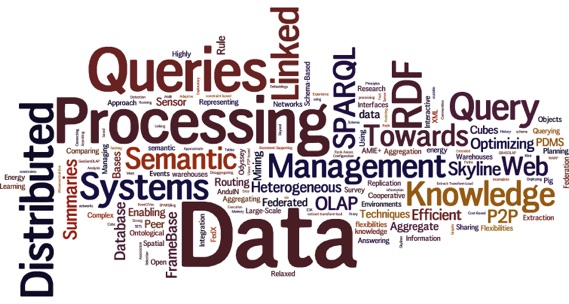
Katja Hose is a Full Professor of Data Management at TU Wien's DBAI research unit, heading the Data Management and Knowledge-Driven AI Lab. She previously held a Poul Due Jensen Foundation Professorship at Aalborg University. Her research focuses on data and knowledge engineering, including graph databases, knowledge graphs, querying, analytics, and machine learning, with interdisciplinary applications in bioscience, healthcare, and environmental assessment. Education: PhD in Computer Science (Ilmenau University of Technology, 2009), Postdoc at Max Planck Institute for Informatics (2009–2012). Academic roles include Program Co-Chair for ISWC 2024 and EDBT 2023, and editorial board membership at VLDBJ and TGDK. She leads projects like TARGET (health virtual twins) and ARMADA (data management). Research Interests: Knowledge Graphs, Semantic Web, Big Data, Machine Learning, Data Integration, and Provenance Systems. Key contributions include SHACL shape extraction, conversational data analytics, and environmental knowledge graphs. Awards include the 2025 Distinguished Meta-Reviewer Award and 2024 Manfred Paul Award. Advising and Grants: Supervised students including E. Pürmayr (Diploma Thesis 2025). Active in EU projects (TARGET, ARMADA) and grant coordination. Labs/Teams: DMKI Lab at TU Wien, collaborating with interdisciplinary teams in healthcare and environmental science.
Taina Bucher is a Professor at the Department of Media and Communication, University of Oslo, specializing in algorithmic studies, digital infrastructure, and human-machine communication. She leads the Screen Cultures research group and serves as Principal Investigator for HumAIn , a five-year humanities hub reimagining AI (2024-2029). Research Focus: Her work examines Algorithmic power and politics Cultural imaginaries of digital technology Temporalities of algorithmic media Feminist epistemologies in digital contexts Monitorial citizenship in platform societies Publications: Bucher has authored two monographs: Facebook (Polity Press, 2021) and IF…THEN: Algorithmic Power and Politics (Oxford University Press, 2018). Her recent articles explore facial recognition systems, algorithmic temporality, and digital divides. Academic Background: PhD in Media Studies (University of Oslo, 2012), MSc in Culture & Society (London School of Economics, 2007), with visiting scholar appointments at The New School, Ryerson University, and New York University. Teaching: She supervises and teaches topics including Digital infrastructure Algorithm studies Screen cultures Media theory Critical data studies Digitalization of public sectors Editorial Roles: Active on editorial boards for Journal of Communication , New Media & Society , and Information, Communication & Society .
Dr. Zhenman Fang is an Associate Professor at the School of Engineering Science , Simon Fraser University (SFU) , where he founded and directs the HiAccel Lab . He also holds an associate membership in the School of Computing Science at SFU. His research focuses on customizable computing with software-defined hardware acceleration , addressing performance, energy-efficiency, and reliability in post-Moore’s law computing across domains like machine learning , big data analytics , quantum chemistry , and precision medicine . Education: Ph.D. in Computer Science from Fudan University (2014), with a visit to University of Minnesota during his studies. Postdoctoral Work: University of California, Los Angeles (UCLA) (2014-2017). Industry Experience: Staff Software Engineer at Xilinx (2017-2019). Dr. Fang’s research spans the entire computing stack , including application characterization , accelerator-rich architecture design , and programming/tool support . He has developed frameworks like HiSpMV , SyncNN , and SQL2FPGA , emphasizing FPGA acceleration for vision transformers , quantum chemistry , and spiking neural networks . His work has been recognized with 3 best paper awards (FPL 2024, TCAD 2019, MEMSYS 2017) and 3 best paper nominees (FCCM 2025, HPCA 2017, ISPASS 2018). Recent publications highlight trends in low-precision machine learning ( ShiftQuant , ESRU ), quantum chemistry acceleration ( SERI ), and vision transformer optimization ( Quasar-ViT ). His HiAccel Lab actively mentors PhD and MASc students , with notable graduates like Alec Lu (PhD 2024, now at Meta) and Philip Stachura (MASc, now with BC Graduate Scholarship). Scientific Awards: Inaugural SFU Research Excellence Award - Horizon Award (2025) FPL 2024 Stamatis Vassiliadis Best Paper NSERC Alliance Award (2020) CFI JELF Award (2019) Xilinx University Program Award (2019) IEEE Senior Member (2023) Grants: NSERC Discovery Grant (2019) CFI JELF Funding (2019) Huawei and Xilinx sponsorships Dr. Fang leads open-source initiatives like SyncNN , PASTA , and SQL2FPGA , and serves as General Chair for ASAP 2025 and Program Co-Chair for RAW 2025 . His lab collaborates globally with institutions such as UCLA , Northeastern University , and Xidian University .
Jakob Schoeffer is a tenure-track Assistant Professor in the Artificial Intelligence department at the Bernoulli Institute for Mathematics, Computer Science and Artificial Intelligence, Faculty of Science and Engineering, University of Groningen (Netherlands). His work focuses on the intersection of human decision-making and artificial intelligence, particularly in high-stakes contexts where fairness, transparency, and appropriate human-AI collaboration are critical. Dr. Schoeffer's research interests center on responsible and explainable AI, with specific focus areas including: Human-AI collaboration dynamics in decision-making processes Fairness perceptions and interventions in AI systems Appropriate reliance on AI recommendations Explainable AI techniques for high-stakes domains Transparency mechanisms that improve human-AI team performance Label indeterminacy issues in medical AI applications His recent publications (2023-2025) reveal a strong trend toward applying AI research in critical domains like healthcare (particularly neurological recovery prediction), while maintaining a rigorous focus on the human aspects of AI deployment. His work spans both theoretical foundations of human-AI interaction and practical implementations, often employing mixed-methods approaches that combine technical AI development with behavioral studies. Dr. Schoeffer actively collaborates with researchers across institutions including the University of Texas at Austin and has made significant contributions to top conferences in AI ethics, fairness, and human-computer interaction. His research has been featured in multiple news outlets and policy discussions, indicating real-world impact of his work on responsible AI development. Prior to his current appointment, Dr. Schoeffer was a Postdoctoral Research Fellow at the University of Texas at Austin. He received his PhD from the Karlsruhe Institute of Technology (KIT) in Germany with a dissertation titled "On the Interplay of Transparency and Fairness in AI-Informed Decision-Making." He also holds a master's degree in Operations Research from Georgia Tech and industry experience as a Senior Data Scientist at IBM.
Ming Yin is an Associate Professor in the Department of Computer Science at Purdue University. Her research bridges human-computer interaction, applied artificial intelligence, computational social science, and behavioral sciences. She focuses on leveraging human behavior data to design intelligent systems that balance machine efficiency with human understanding, trust, and engagement. Education : PhD in Computer Science (Harvard University, 2017), B.E. in Computer Software (Tsinghua University, 2011) Previous Roles : Postdoctoral researcher at Microsoft Research New York City (2017–2018) Teaching : Courses on AI, Human-AI Interaction, Data Mining, and Human-Centered Computing Research Interests center on social computing, crowdsourcing, human-AI interaction, and ethical AI. She employs experimental and computational methods to study how human behavior can improve AI systems' design, fairness, and user trust. Her work has significant implications for gig economy platforms, decision support systems, and algorithmic accountability. Scientific Contributions include over 15 recent articles in top venues like CHI, IJCAI, and ACL. These works explore topics such as LLM-driven trust calibration, adversarial social influence, and ethical AI design. Her research has been recognized with the NSF CAREER Award Siebel Scholar (Class of 2017) Multiple Best Paper and Honorable Mention Awards at CHI, CSCW, and HCOMP Teaching Expertise spans courses like Introduction to Artificial Intelligence (CS 471), Human-AI Interaction (CS 592-HAI), and Data Mining (CS 573). She emphasizes project-based learning and designing systems for real-world problems, such as "learning in a new era" in her 2025 HCI course.
Phuong H. Nguyen is an Associate Professor at the Department of Electrical Engineering at Eindhoven University of Technology (TU/e). He leads the digital Power & Energy Systems (digi-PES) lab, focusing on smart energy systems, distributed control, and IoT integration for future energy grids. His research addresses energy transition challenges, including microgrid optimization, flexibility markets, and data-driven grid management. Nguyen holds a PhD from TU/e (2010) and has held visiting researcher positions at Clemson University. His work contributes to UN SDG goals related to affordable and clean energy. Education: Bachelor's in Electrical Engineering, Hanoi University of Science and Technology (2002) Master's in Electrical Engineering, Asian Institute of Technology (2004) PhD in Electrical Engineering, TU/e (2010) Key Research Areas: Smart Grids and Cyber-Physical Systems Distributed Energy Resource Management Local Energy Markets and Flexibility Provision IoT and Big Data in Energy Systems Awards & Recognition: Best Paper Award SEST 2020 Projects & Grants: REACT-D: Reactive Power Management (Project Manager) Al-driven Applications to Smarten Power System Operation (Project Lead) UNIversity Campus as a Self-Regulated Network (Co-Manager) Labs & Teams: The digi-PES lab develops cyber-physical tools for energy transition, including microgrid simulations, flexibility markets, and grid resilience strategies.
Brendan O'Connor is an Associate Professor in the Manning College of Information and Computer Sciences (CICS) at the University of Massachusetts Amherst. His research focuses on computational social science and natural language processing (NLP), particularly exploring how social factors influence language technologies and using text analysis to understand societal trends. His work includes studies on racial bias in NLP, political event analysis, and social media linguistics. He holds a PhD in Machine Learning from Carnegie Mellon University (2014) and dual MS/BS in Symbolic Systems from Stanford University (2006). Education: PhD in Machine Learning, Carnegie Mellon University (2014) MS in Symbolic Systems, Stanford University (2006) BS in Symbolic Systems, Stanford University (2006) Research interests span AI ethics, social media analysis, and computational methods for studying language and society. Notably, he investigates racial disparities in NLP systems, linguistic variation in African American English, and event detection in news and social media. His work has been recognized with NSF CAREER and Google Faculty awards, and his research has been cited thousands of times. His lab, the Statistical Social Language Analysis Lab, develops tools for analyzing large-scale text data. He is affiliated with the Center for Data Science, Center for Intelligent Information Retrieval, and Computational Social Science Institute. Recent projects include analyzing global news coverage of critical events and developing frameworks for zero-shot argument explication. Awards and Honors: NSF CAREER Award Google Faculty Research Award Best Paper Award Advising and Grants: O'Connor has advised projects on social media polling representativeness and demographic analysis. His grants include collaborative research on sociopolitical event extraction and bias mitigation in AI systems. He has also contributed to platforms like Rookie for news archive exploration and ezCoref for coreference resolution. Labs/Teams: Leads the Statistical Social Language Analysis Lab and collaborates with the UMass NLP Group and Harvard Institute for Quantitative Social Science. His work bridges NLP with social science methodologies, emphasizing transparency in algorithms and causal inference using text data.
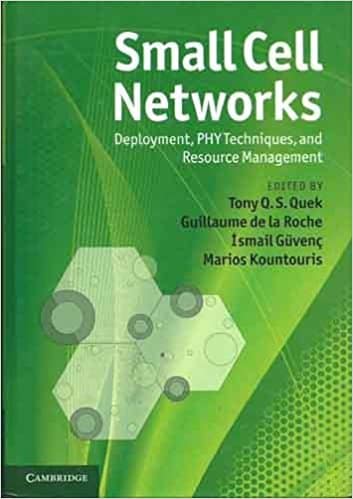
Dr. Ismail Guvenc is a Full Professor in the Department of Electrical and Computer Engineering at North Carolina State University. He holds an IEEE Fellowship and is a Senior Member of the U.S. National Academy of Inventors. His research focuses on 5G/6G wireless systems, UAV communications, heterogeneous networks, and spectrum management. He leads the NSF AERPAW project and serves as the NC State Site Director for the NSF BWAC I/UCRC center. Dr. Guvenc has authored/co-edited four books and holds over 30 U.S. patents. Education: Ph.D. in Electrical Engineering, University of South Florida (2006) Master's in Electrical and Computer Engineering, University of New Mexico (2003) Bachelor's in Electrical Engineering, Bilkent University, Turkey (2001) Research Interests: Dr. Guvenc’s work spans UAV communication systems, 5G/6G networks, spectrum sensing, and machine learning for network optimization. He emphasizes experimental validation through platforms like AERPAW, focusing on drone-based networks, radio dynamic zones, and testbed-driven innovation. His contributions address challenges in UAV localization, interference management, and energy-efficient networks. Grants & Leadership: PI and Director of NSF AERPAW (2019–Present) NC State Site Director for NSF BWAC I/UCRC (2019–Present) Recipient of NSF CAREER Award (2015) and NC State Faculty Scholar Award (2021) Publications & Awards: He has authored over 130 peer-reviewed papers and contributed to standardization efforts. His awards include the R. Ray Bennett Faculty Fellow Award (2019) and the USF Outstanding Dissertation Award (2006). Labs & Teams: Dr. Guvenc directs research in the ECE’s wireless communications group, leveraging AERPAW’s experimental capabilities to advance UAV networks and 6G technologies. His team collaborates with industry and government on spectrum policy and autonomous systems.