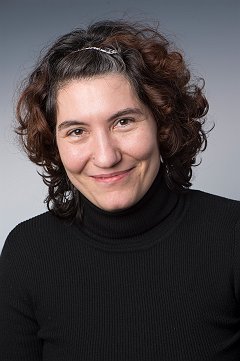
Georgios Polydoros is a Lecturer at the Department of Mathematics, University of Crete. His academic role involves teaching responsibilities, with a focus on mathematics education and technology integration. His office location is D-328, and he can be contacted via email at georgiospolydoros@math.uoc.gr. His research interests center on innovative educational approaches, particularly: Mathematics pedagogy for students with learning disabilities AI-driven interventions to reduce math anxiety Technology-enhanced learning environments Game-based mathematics education Digital transformation in schools His work consistently addresses how technology can bridge educational gaps. Analysis of his recent publications reveals a strong emphasis on technology-mediated solutions for mathematics education. Key themes include AI applications for personalized learning, serious games for skill development, and strategies for supporting students with learning difficulties. His research frequently examines pandemic-era educational challenges, digital tool efficacy, and cognitive aspects of mathematics learning. No scientific awards or honors are mentioned in the available information. There is no available information regarding student advising, research grants, laboratory affiliations, or team collaborations in the provided text.
Angelos G. Kalambounias is a Professor in the Department of Chemistry at the University of Ioannina, Greece, where he has progressed from Assistant Professor (2015-2020) to Associate Professor (2020-2024) and finally to full Professor (November 2024-present). He maintains additional affiliations as a Collaborating faculty member at the Institute of Materials Science and Computation and the Institute of Environment and Sustainable Development, and serves on the Board of Directors of the Scientific and Technological Park of Epirus. His research spans multiple domains of physical chemistry with emphasis on spectroscopic techniques. His primary interests include condensed matter structure and dynamics, development of contactless high-temperature spectroscopic measurement techniques, Raman spectroscopy applications in thermodynamics, inorganic coordination complexes, glass science (particularly tellurite and oxide glasses), nanomaterials, atmospheric pollution analysis, and ultrasonic spectroscopy. His work bridges fundamental physical chemistry with practical applications in materials science and environmental monitoring. His publication record shows consistent output since 1999, with recent work focusing on molecular dynamics, peptide structure, drug delivery systems, microplastic analysis, and advanced spectroscopic techniques. His research group comprises numerous students across physics and chemistry disciplines, reflecting the interdisciplinary nature of his work. Among his professional roles, he serves as a Review Editor on the Editorial Board of 'Battery Systems and Applications' and has acted as a reviewer for over 30 international scientific journals spanning physical chemistry, materials science, and spectroscopy. His teaching portfolio includes undergraduate and graduate courses in physical chemistry, statistical mechanics, quantum chemistry applications, spectroscopic methods, and materials characterization at both the University of Ioannina and previously at the University of Patras.
Arjun Guha is an Associate Professor at Northeastern University's Khoury College of Computer Sciences, where he also serves as the Area Chair for Software. He conducts research in programming languages with a focus on program synthesis for low-resource programming languages and understanding how computer science education is impacted by large language models. His work spans multiple domains including WebAssembly, software-defined networking, and serverless computing. Guha's research interests center around programming language design, implementation, and application. He has made significant contributions to understanding JavaScript through formal semantics (LambdaJS), developing functional reactive programming for web applications (Flapjax), and creating tools for software-defined networks (NetKAT, Frenetic). His recent work focuses on leveraging large language models for code generation in specialized programming languages and understanding their impact on programming education. His publications reveal a strong trend toward applying AI and machine learning techniques to programming language problems, particularly in code generation and understanding. The research spans from foundational programming language theory to practical applications in education and software development tools, with increasing focus on the intersection of programming languages and large language models. Guha has received several prestigious awards including the OOPSLA Most Influential Paper Award in 2019 for his work on Flapjax, an ACM SIGPLAN Research Highlight for his work on NetKAT, and a Best Student Paper Award. His research has been recognized for its foundational contributions to programming language theory and practical impact on software development. OOPSLA Most Influential Paper Award (2019) for Flapjax ACM SIGPLAN Research Highlight for A Fast Compiler for NetKAT Best Student Paper Award for Flapjax paper Guha advises numerous PhD, MS, and undergraduate students, with several alumni now at leading tech companies and academic institutions. His research has been supported by the National Science Foundation, the Department of Energy, the Office of Naval Research, and industry partners including Google, JPMorgan Chase, MathWorks, Meta, Oracle, and Roblox. He leads the Programming Research Laboratory at Northeastern and is actively involved in major research collaborations like the BigCode Project. Guha is a member of the Programming Research Laboratory at Northeastern and leads several major research initiatives including the BigCode Project's evaluation working group. His lab develops practical software systems like MultiPL-E (a polyglot benchmark for Code LLMs) and WasmFX (bringing effect handlers to WebAssembly), with applications in education, software development, and high-performance computing.
Shachar Itzhaky is an Associate Professor in the Department of Computer Science at Technion - Israel Institute of Technology, Haifa. His research spans multiple areas of programming languages, formal methods, and software engineering, with a focus on making program development and verification more accessible and efficient. He has served on program committees for numerous prestigious conferences including PLDI, POPL, SPLASH, and ICFP. Dr. Itzhaky's research interests center around program synthesis, automated reasoning, and formal verification. His work in program synthesis explores techniques for automatically generating programs from high-level specifications, with applications in end-user programming and software development. In automated reasoning, he has made significant contributions to e-graph based reasoning, invariant inference, and property-directed verification. His research in formal methods focuses on practical applications for program verification, particularly for data structures and security properties. An analysis of his recent publications reveals a strong focus on leveraging advanced formal techniques for practical program understanding and generation. His work consistently bridges theoretical foundations with practical applications, particularly in program synthesis, verification, and end-user programming tools. The trend shows increasing integration of machine learning techniques with traditional formal methods, as well as expanding applications to security and privacy domains. ACM SIGPLAN John C. Reynolds Doctoral Dissertation Award Dr. Itzhaky has been actively involved in the programming languages research community, serving on numerous program committees and contributing to the advancement of formal methods and program synthesis. His work has practical implications for software development tools, security analysis, and end-user programming environments. While specific grant information isn't detailed in the provided text, his extensive publication record in top-tier venues suggests successful funding for his research endeavors. His work on projects like Object Spreadsheets and Lifty demonstrates a commitment to creating practical tools that address real-world programming challenges. Dr. Itzhaky's research is conducted within the vibrant programming languages and formal methods group at Technion's Computer Science department. His work intersects with multiple research threads including program synthesis, verification, and security, suggesting collaboration across these areas within the department. His tools like EPR-based Verification, PDR∀, and VeriCon represent significant technical contributions that likely form the basis of ongoing research projects with students and collaborators.
Syed Asad Alam is a Post-Doctoral Research Fellow at the School of Computer Science and Statistics, Trinity College Dublin, The University of Dublin, Ireland, specializing in optimization and efficient implementation of digital systems for signal processing and communication algorithms. Education: Bachelors in Computer and Information Systems Engineering, N.E.D. University of Engineering and Technology, Karachi, Pakistan M.Sc. in Electrical Engineering (System-on-Chip Design), Linköping University, Sweden PhD in Electrical Engineering (Computer Engineering/Electronics Systems), Linköping University, Sweden His research integrates Machine Learning with Embedded Systems through novel approaches to Quantization and Logarithmic Number Systems , targeting efficient Neural Networks implementation on FPGAs and ASICs . This work builds on extensive industry experience with multimedia processors, communication devices, and SOC bus design, including specialized projects on filters, wireless systems, frequency multipliers, and DSP processors. His 2020 LCTES publication on non-base-2 logarithmic systems exemplifies his focus on numerical representation efficiency for resource-constrained embedded applications, reflecting broader trends in hardware-aware machine learning optimization. No scientific awards or grant information was documented in the source material. He has collaborated with multiple industry teams on FPGA-based design and Integrated Circuit Development across startup environments, though specific advising roles or student supervision were not indicated.
Stephen Chong is a Gordon McKay Professor of Computer Science in the Harvard John A. Paulson School of Engineering and Applied Sciences, where he serves as Co-Director of Undergraduate Studies for Computer Science. His academic career spans over a decade of teaching and research at Harvard, where he has made significant contributions to programming languages and information security. Chong received his PhD from Cornell University under the guidance of Andrew Myers, and a bachelor's degree from Victoria University of Wellington, New Zealand. Prior to graduate school, he worked as a consultant and contractor in the software industry, bringing practical experience to his academic research. Professor Chong's research focuses on language-based information security, using programming language techniques to provide information security assurance. His work bridges the gap between theoretical foundations and practical applications, developing tools and frameworks that help programmers write trustworthy programs. His research has evolved to address increasingly complex security challenges in modern computing environments, from web applications to cyber-physical systems. His recent publications reveal a strong trend toward integrating advanced programming language techniques with security analysis, particularly through the use of Datalog, SMT solvers, and program synthesis. His work on Formulog has been particularly influential, extending Datalog with mechanisms to construct and reason about SMT formulas for static analysis. His research has expanded to address security challenges in cyber-physical systems, where sensor attacks pose unique threats to safety-critical infrastructure. Chong has received numerous prestigious awards including an NSF CAREER award, an AFOSR Young Investigator award, and a Sloan Research Fellowship. He has also served in leadership roles for major conferences including CSF 2012-2013, PLMW @ PLDI 2021, and as SIGPLAN-M Chair for 2025-2026. As an educator, Chong has mentored numerous students through Harvard's undergraduate research programs and has served as a thesis advisor. His teaching portfolio includes foundational courses like CS51, systems courses like CS61, and advanced topics in programming languages (CS152) and compilers (CS1530). He has been instrumental in shaping Harvard's computer science curriculum, particularly in security and programming languages. Chong leads a research group focused on language-based security, with projects including Formulog (for SMT-based static analysis), PRINCESS (for autonomous adaptation of software), and work on secure shell scripting (Shill). His group collaborates with researchers across Harvard and other institutions to tackle challenging problems at the intersection of programming languages and security.
Laura Dietz is a tenured Associate Professor in the Department of Computer Science at the University of New Hampshire, where she leads the TREMA lab. Her academic journey began with a PhD from the Max Planck Institute for Informatics in Saarbruecken, Germany (2011), followed by postdoctoral positions at the University of Massachusetts Amherst (2010-2015) and University of Mannheim (2015-2016). Her educational background includes PhD studies at both the Max Planck Institute for Informatics (2007-2011) under Prof. Gerhard Weikum and Prof. Tobias Scheffer, and earlier research at Humboldt University in Berlin. She has built a distinguished career bridging theoretical computer science with practical applications in information retrieval and machine learning. Dietz's research primarily focuses on the intersection of information retrieval, natural language processing, and knowledge graphs, with a parallel research initiative in watershed data science. She is particularly known for her work on entity-aspect linking, complex answer retrieval, and the vision of automatic Wikipedia construction. Her approach integrates fine-grained knowledge annotations with text understanding to create comprehensive information systems that go beyond traditional 10-blue-links search paradigms. In watershed data science, she applies similar machine learning techniques to environmental data streams, focusing on solute transport analysis during storm events. Her recent publications reveal a strong trend toward fine-grained semantic understanding, particularly in entity-oriented search tasks. She has pioneered methods for entity-aspect linking that significantly improve retrieval accuracy by capturing different contexts in which entities appear. Her work increasingly integrates knowledge graphs with neural architectures, showing sophisticated understanding of how to leverage both structured and unstructured information for better search experiences. Best paper award at JCDL 2018 for work on entity-aspect linking NSF CAREER Award (2019-2023) for "Utilizing Fine-grained Knowledge Annotations in Text Understanding and Retrieval" OSSI Award 2013 from UMass ICB3 for open-source hardware/software Dietz actively mentors PhD and Masters students through the TREMA lab, with current research focusing on entity ranking, topic extraction, conversational search, and watershed forecasting. Her grant portfolio includes the NSF CAREER award and funding from the Northeast Big Data Innovation Hub for forecasting salinity in rivers during storm events. She has also coordinated the TREC Complex Answer Retrieval track (2017-2019), creating important benchmarks for the IR community. The TREMA lab (Text Retrieval, Entity Modeling, and Applications) serves as the hub for Dietz's research activities, bringing together students and collaborators to work on cutting-edge problems in information access. The lab's work spans both theoretical contributions to information retrieval and practical applications in domains ranging from environmental science to scientific publication analysis.
Anil Madhavapeddy is the Professor of Planetary Computing at the University of Cambridge Computer Laboratory, where he co-leads the Energy & Environment Group and is a member of the Systems Research Group. He is also a Fellow at Pembroke College where he serves as Director of Studies in Computer Science. Madhavapeddy completed his PhD from the University of Cambridge in 2003 and his BEng in Information Systems Engineering from Imperial College in 1999. He holds a JM Keynes Fellowship since 2022 for his work combining computer science with economics, and serves on the management committee of the Cambridge Conservation Initiative where he co-directs 4C (Cambridge Centre for Carbon Credits) and the Centre for Earth Observation. His research spans computer systems and programming languages with a strong focus on applying these technologies to global conservation, biodiversity, and climate change challenges. He leads the OCaml Labs group and has made significant contributions to open-source projects including OCaml, Docker, Xen, and OpenBSD. His work often bridges computer science with environmental science, developing computational approaches to address planetary-scale challenges. Madhavapeddy's recent publications demonstrate a clear trajectory toward integrating programming language research with environmental monitoring and conservation. His work spans from foundational programming language techniques to applied geospatial computing systems, with increasing emphasis on biodiversity measurement, carbon credit systems, and planetary-scale environmental monitoring. JM Keynes Fellowship (2022-present) As an educator, Madhavapeddy teaches undergraduate courses including Foundations of Computer Science, Software & Security Engineering, and Cloud Computing. He mentors MPhil and PhD students and co-founded the award-winning book 'Real World OCaml' (2nd Edition, 2022). He has co-founded several companies including Unikernel Systems, High Energy Magic, Segfault, and Tarides to translate research into real-world impact. Madhavapeddy leads the OCaml Labs group at Cambridge and works closely with the Energy & Environment Group, collaborating with colleagues from Plant Sciences, Zoology, Economics, and NGOs including UNEP-WCMC and the IUCN. His current efforts are primarily focused on conservation technology through partnerships with organizations like Canopy PACT.
Kunle Olukotun is a Professor of Electrical Engineering and Computer Science at Stanford University's School of Engineering, where he has been faculty since 1991. He directs the Stanford Pervasive Parallelism Lab (PPL) and co-leads the Transactional Coherence and Consistency (TCC) project. His research focuses on computer architecture, parallel programming environments, and scalable parallel systems. Key areas include chip multiprocessors (CMPs), transactional memory systems, domain-specific languages (DSLs) for heterogeneous computing, and hardware-software co-design for machine learning workloads. His work bridges theoretical foundations with practical systems implementation. Notable contributions include the Stanford Hydra research project (one of the first chip multiprocessors with thread-level speculation), founding Afara Websystems (acquired by Sun Microsystems), and developing the Niagara processor architecture. His DSL frameworks like Green-Marl and Spatial enable efficient graph analysis and hardware acceleration. His publications reveal strong trends in parallel systems evolution: from foundational CMP research (2000s) to transactional memory (2004-2010), then DSLs for heterogeneous computing (2010-2015), and currently foundation model systems (2023-2025). Subfield analysis shows consistent focus on hardware-software co-design, sparse computation, and compiler techniques across decades. ACM Fellow (2006) for contributions to multiprocessors on a chip and multi-threaded processor design Best Paper Award at IEEE International Symposium on Workload Characteristics (IISWC '10) for EigenBench Olukotun actively mentors researchers through the Stanford Pervasive Parallelism Lab (PPL), which seeks to proliferate parallelism across application domains. His projects have secured significant industry partnerships, including the acquisition of his startup Afara Websystems by Sun Microsystems. Current research focuses on compiler frameworks for foundation model systems and hardware acceleration for sparse machine learning workloads, supported by collaborations with major tech companies. He leads the Stanford Pervasive Parallelism Lab (PPL), which develops compiler and runtime systems for heterogeneous architectures. The lab's work spans DSLs, hardware acceleration, and parallel programming models, with strong industry ties to companies like NVIDIA and Google. Current initiatives include the Mosaic compiler framework and Stardust architecture for sparse tensor computation.
Baishakhi Ray is an Associate Professor of Computer Science at Columbia University's School of Engineering and Applied Science. Her work focuses on the intersection of AI, Software Engineering, and Security. She received her Ph.D. from the University of Texas, Austin and has established herself as a leading researcher in software engineering with AI applications. Dr. Ray's educational background includes a Ph.D. from the University of Texas, Austin. Her academic journey has led to a prominent position at Columbia University where she continues to advance research in software engineering. Dr. Ray's research spans several critical areas at the intersection of software engineering and artificial intelligence. Her work explores how machine learning techniques can improve software development processes, enhance security practices, and address challenges in program analysis. She has made significant contributions to understanding how large language models can be effectively applied to code generation, vulnerability detection, and software testing. Her research has practical implications for improving software reliability and security in real-world applications, particularly in safety-critical domains like autonomous systems. Analysis of Dr. Ray's recent publications reveals a clear trajectory toward leveraging AI for practical software engineering challenges. Her work has evolved from foundational program analysis techniques to cutting-edge applications of large language models in code understanding and generation. A notable trend is her focus on making AI-assisted software development more reliable, secure, and energy-efficient. Her research increasingly addresses the practical limitations of current AI approaches while developing novel methodologies to overcome them. IEEE TCSE Rising Star Award NSF CAREER Award IBM Faculty Award VMWare Faculty Award ICSME Most Influential Paper Award (2023) FSE'17 Distinguished Paper ASE'22 Distinguished Paper ISSTA'23 Distinguished Paper CACM Research Highlights Dr. Ray actively mentors graduate students and has built a productive research group focused on AI-driven software engineering solutions. Her research has been supported by prestigious grants including the NSF CAREER award. She has successfully guided numerous students through their research projects, with several of her advisees making significant contributions to publications in top-tier conferences. Dr. Ray also serves as an Amazon Visiting Academic, bridging academia and industry to address real-world software engineering challenges. Through her leadership in various research projects and collaborations, Dr. Ray has established a dynamic research environment that combines theoretical rigor with practical applications. Her work often involves interdisciplinary collaboration across computer science subfields, particularly connecting software engineering with security and AI research communities.
Maria Halkidi is an Associate Professor in the Department of Digital Systems at the University of Piraeus, Greece, where she conducts cutting-edge research in data mining and machine learning with over two decades of academic experience. Her educational background includes: Bachelor's degree in Informatics from the University of Piraeus (1997) Master's degree from Athens University of Economics and Business (1999) Ph.D. from Athens University of Economics and Business (2003) Dr. Halkidi's research focuses on fundamental and applied aspects of data mining, particularly recommender systems, graph data mining, cluster validity assessment, and distributed data mining. Her work bridges theoretical frameworks with practical implementations in sensor networks, social media, and real-time analytics, contributing significantly to algorithmic development in these domains. Analysis of her recent publications reveals a strong trajectory toward fairness and diversity optimization in recommender systems, alongside innovative approaches to graph clustering quality assessment and scalable sentiment analysis. Her research consistently addresses real-world challenges in dynamic data environments, with increasing emphasis on multi-stakeholder optimization and privacy-aware recommendation frameworks. Scientific awards: No specific awards or honors were documented in the provided materials. Dr. Halkidi has participated extensively in National and European-funded research projects, including a prestigious Marie-Curie fellowship at the University of California, Riverside. She serves on program committees for major international conferences in data mining and machine learning, demonstrating active community engagement. While specific graduate students aren't listed in the source materials, her professorial role indicates ongoing mentorship of Master's and Ph.D. candidates. She maintains active research affiliations with the Network oriented systems & services lab and the DataStories research group at the University of Piraeus, where she collaborates on interdisciplinary projects involving big data analytics, social network analysis, and distributed systems.
Apostolos Ampatzoglou serves as Associate Professor in the Department of Applied Informatics at the University of Macedonia, where he leads research in software engineering with particular emphasis on technical debt management and software quality. Previously, he held an Assistant Professor position at the University of Groningen (2013-2016) and maintains active collaborations across European research initiatives. His academic credentials include a PhD in Software Engineering from Aristotle University of Thessaloniki (2013), MSc in Computer Systems from the University of Macedonia (2005), and BSc in Informatics from the Technological Education Institute of Thessaloniki (2003). Dr. Ampatzoglou's research program centers on technical debt quantification, reverse engineering, and software maintainability. He pioneered financial models for technical debt management and developed metrics for assessing ripple effects in software systems. His work bridges theoretical foundations with industrial applications through projects like SDK4ED and SmartCLIDE, focusing on energy-efficient development and cloud service engineering. Current investigations explore machine learning applications for vulnerability prediction and technical debt prioritization. His extensive publication record reveals strong trends in applying AI to software quality assurance, with recent work emphasizing transformer models for vulnerability detection and explainable AI for technical debt identification. He actively investigates energy-aware development practices and service-oriented architecture patterns in cloud environments. Notable recognitions include: Top-7 reviewer for Journal of Systems and Software (2022) Best paper awards at IGSCC'21, ICSR'18, and EASE'17 18th most active Consolidated Researcher in Software Engineering (2013-2020) 3rd most active Early Stage Researcher (2010-2017) Multiple personal research grants from National Scholarships Association He has successfully supervised PhD candidates including Dr. Areti Ampatzoglou (Best PhD Thesis Award, University of Groningen) and Dr. Elvira-Maria Arvanitou (VERSEN Institute award). His research is funded through major European projects such as SDK4ED, SmartCLIDE, and SKILLAB, with recent grants exceeding €2M in total funding. Current work focuses on FAIR data implementation and skills gap analysis in European labor markets. As leader of the Software Engineering Lab at the University of Macedonia, he directs a 15+ member team working on technical debt management tools, cloud development environments, and XR applications for warehouse management. The lab maintains strong industry partnerships with technology clusters in Thessaloniki and participates in the Eclipse Foundation ecosystem.