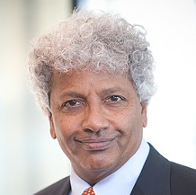
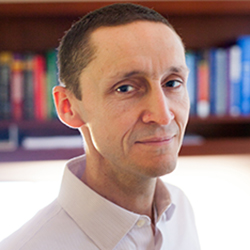
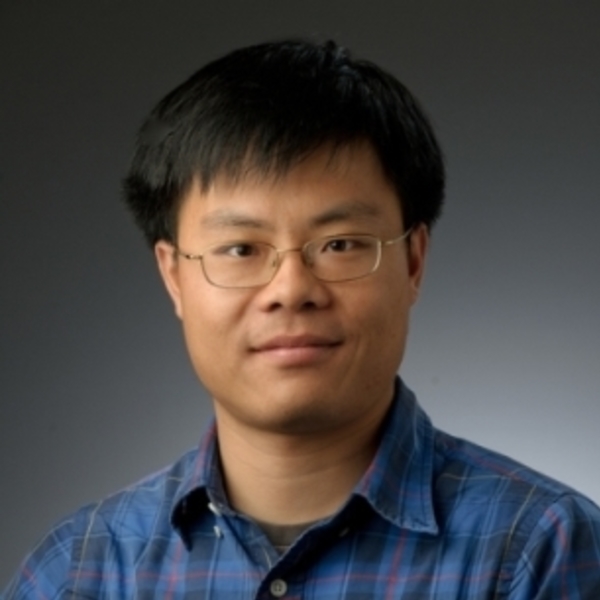
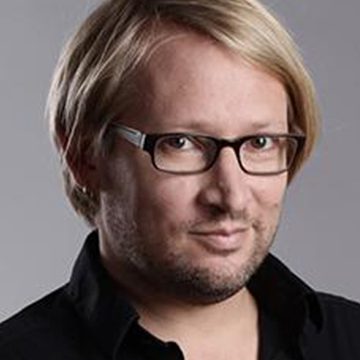
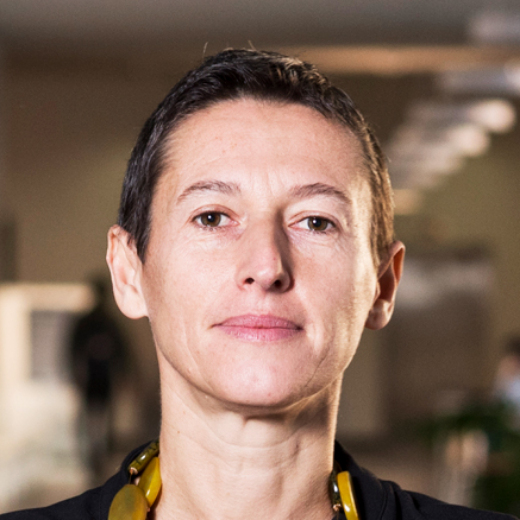
Mahadev Satyanarayanan is the Jaime Carbonell University Professor of Computer Science at Carnegie Mellon University. His multi-decade research focuses on performance, scalability, availability, and trust in distributed systems spanning cloud to mobile edge computing. He pioneered foundational concepts in mobile computing and Edge Computing through his seminal work on VM-based cloudlets. His current research explores cloudlet-based Edge Computing for latency-sensitive applications, wearable cognitive assistance systems integrating augmented reality, and edge-based machine learning frameworks for efficient training data discovery. He collaborates with Dan Siewiorek, Martial Hebert, and Bobby Klatzky on transformative applications. Dr. Satyanarayanan received his PhD from Carnegie Mellon University after completing Bachelor's and Master's degrees at the Indian Institute of Technology, Madras. His honors include ACM and IEEE Fellowships recognizing his contributions to distributed systems and mobile computing. ACM Fellow IEEE Fellow
Aniket 'Niki' Kittur is a Professor in the Human-Computer Interaction Institute at Carnegie Mellon University's School of Computer Science. His research focuses on AI-augmented cognition, exploring how human and machine intelligence can collaborate to enhance creativity, decision-making, and innovation. He leads projects like the Semantic Reader and Skeema browser extension, aiming to reduce cognitive overload through intelligent systems. Education: BA in Psychology & Computer Science from Princeton University; PhD in Cognitive Psychology from UCLA. His work bridges HCI, crowdsourcing, and cognitive science, with 100+ publications and 17 best paper awards. He advises industry partners including Google, Microsoft, and Toyota while maintaining a lab focused on real-world impact. Research interests center on accelerating knowledge acquisition via systems that scaffold sensemaking (e.g., Selenite for web exploration) and fostering analogical innovation through crowdsourced/AI hybrid approaches. Notable contributions include CrowdForge (human-machine workflows) and Kinetica (touch-based data visualization). Awards include NSF CAREER Award, Allen Newell Award, and CHI Academy membership. His lab's Skeema tool has achieved 79% 30-day retention in beta, reflecting impactful user-centered design principles. Current projects emphasize LLM integration for composite cognition, aiming to create systems where 'LLMs + Humans > Either Alone.' Funding来自NSF, NIH, ONR, and industry partners like Bosch and Wikimedia. Teaching includes PhD bootcamps and user-centered research courses. Over 100 students have contributed to his projects, many advancing to tech leadership roles.
Dr. Timothy H. Murphy is a Professor in the Department of Psychiatry at the University of British Columbia's Faculty of Medicine. He is also an Associate Member of the School for Biomedical Engineering and a Member of the Djavad Mowafaghian Centre for Brain Health. Dr. Murphy leads the Dynamic Brain Circuits in Health and Disease initiative and the Division of Neuroscience and Translational Psychiatry at UBC. Dr. Murphy received his Ph.D. from Johns Hopkins University in 1989 and his B.Sc. from Saint Mary's College Maryland in 1984. His research focuses on understanding brain circuit structure-function relationships in relation to stroke recovery, psychiatric disorders, and neurological diseases. He specializes in mesoscale imaging techniques to study cortical activity patterns and develop automated approaches for brain imaging and stimulation. His laboratory develops innovative tools including open-source hardware for automated mouse brain imaging, synthetic data generation for behavioral analysis, and chronic recording systems that enable simultaneous mesoscale cortical imaging with subcortical or peripheral nerve activity monitoring. Research from the Murphy Lab has significantly advanced our understanding of how brain circuits reorganize after stroke and in models of psychiatric disorders. Dr. Murphy's recent publications reveal trends in mesoscale cortical imaging, development of synthetic data for behavioral analysis, and exploration of circuit-level changes in neurological and psychiatric disease models. His work bridges basic neuroscience with potential clinical applications for stroke recovery and mental health treatments. Dr. Murphy has mentored numerous students and postdoctoral fellows who have gone on to successful careers in neuroscience and related fields. His laboratory has received funding to support innovative approaches to understanding brain circuit function and recovery mechanisms. The Murphy Lab maintains strong collaborative ties across UBC and develops open-source tools that are widely adopted by the neuroscience community. Their work on automated home-cage imaging systems, synthetic behavioral data generation, and chronic recording technologies represents significant methodological advances in the field.
Lincoln J. Lauhon is a Professor of Materials Science and Engineering at Northwestern University. His research focuses on nanoscale structure-property relationships in low-dimensional materials, emphasizing synthesis, characterization, and device applications. He leads the Lauhon Research Group, which explores nanowires, 2D semiconductors, and heterostructures for quantum computing, high-power electronics, and energy conversion. Lauhon holds significant recognition including the Camille Dreyfus Teacher-Scholar Award (2008) and National Science Foundation CAREER Award (2005). His work bridges fundamental materials science with practical technologies through advanced microscopy and modeling techniques. Education: Postdoc in Chemistry at Harvard University, Ph.D. in Physics from Cornell University, and B.S. in Physics (Honors) from the University of Michigan. Research interests span nanowire synthesis, 3D nanotomography, scanning probe microscopy, and computational modeling. Current projects include III-As-Sb nanowire networks for quantum computing, GaN diodes for power electronics, and ferroelectric 2D materials. Lauhon's lab emphasizes collaboration across disciplines, with contributions to high-impact journals like Science Advances and Nano Letters . Awards highlight his dual excellence in teaching and research, including the Teacher of the Year award (2006). Professional service includes leadership roles in the Materials Research Society and organizing conferences on electronic materials. His team's innovations include novel nanomaterial synthesis methods and device architectures, with applications in computing, energy, and optoelectronics. The group actively engages in graduate and undergraduate training, fostering future leaders in nanotechnology.
Anya Bernstein is a Professor of Anthropology at Harvard University, affiliated with the Committee on the Study of Religion and the Department of Anthropology. Her research focuses on speculative futures, science/technology interfaces, religion, and death/immortality studies. She holds a BS in Linguistics (Georgetown), MA in Visual Anthropology (University of Manchester), and PhD in Anthropology (NYU). Currently on leave during AY 2025-26, she leads the Human Futures project funded by the Research Council of Norway. Key research themes include transhumanist immortality movements in Russia, Buryat Buddhist revitalization, and Pleistocene Park's ecological engineering. Her books Religious Bodies Politic (2013) and The Future of Immortality (2019) received major academic awards. Notable projects include ethnographic films like In Pursuit of the Siberian Shaman and ongoing work on Arctic ecosystem restoration. Grants include National Science Foundation, Fulbright, and Mellon Fellowships. Her work bridges anthropology of religion, sci-tech studies, and environmental humanities, with 30+ peer-reviewed articles in top journals like American Ethnologist and Cultural Anthropology .
Fred A. Kish is the MC Dean Distinguished Professor and Director of the NC State Nanofabrication Facility at North Carolina State University. He holds a Ph.D. in Electrical Engineering from the University of Illinois at Urbana-Champaign (1992). His research focuses on Photonics, Optoelectronic Devices, and Compound Semiconductor Materials , with emphasis on photonic integrated circuits (PICs), quantum information science, and semiconductor material engineering. He has co-invented foundational technologies for LEDs, VCSELs, and large-scale PICs, contributing over $7B in commercialized products. His leadership includes roles at Hewlett-Packard, Agilent Technologies, and Infinera Corporation, where he pioneered optical communication systems. Dr. Kish is a Fellow of the National Academy of Inventors, Optica, and IEEE, and a member of the National Academy of Engineering. His awards include the IEEE David Sarnoff Award and the John S. Risley Entrepreneur of the Year Award. He has authored 170+ peer-reviewed publications, 135+ patents, and 5 book chapters. His current work drives advancements in wide bandgap semiconductors and photonic integration for next-generation communications and sensors. Labs/Teams: Directs the NC State Nanofabrication Facility, a hub for semiconductor innovation. Collaborates on the CLAWS Hub, a $39.4M CHIPS Act-funded regional semiconductor innovation initiative.
Jun Li is a Full Professor in the Department of Applied and Computational Mathematics and Statistics at the University of Notre Dame's College of Science. He specializes in developing statistical and computational methods for big data, with a focus on interdisciplinary applications in bioinformatics, machine learning, and data mining. His career includes tenure as an Assistant Professor (2012–2017) and promotion to Associate Professor (2017) before becoming Full Professor (2020). Dr. Li holds a Ph.D. in Statistics from Stanford University (2012), supervised by Robert Tibshirani, and earlier degrees from Tsinghua University: a B.E. in Automation (2004) and an M.S. in Pattern Recognition and Intelligent Systems (2007). Research Interests : Dr. Li’s work centers on advancing computational frameworks for handling large-scale datasets, integrating statistical rigor with algorithmic innovation. Recent themes include AI-driven code improvement, ethical LLM applications in HCI, and GUI automation. His methodologies emphasize human-AI collaboration and transparency in algorithmic systems. Publications : His 2025 work explores LLM vulnerabilities in GUI agents, AI-assisted education tools like GLITTER, and ethical challenges in HCI research. Earlier studies (2024–2023) address topics such as natural language database queries, privacy-preserving app promotion analysis, and multimodal task learning. Lab/Teams : Affiliated with Notre Dame’s computational statistics research groups, focusing on interdisciplinary projects bridging statistics, computer science, and applied mathematics. His work often involves collaborations with industry and academic partners to translate theoretical advancements into practical applications.
Guy Hoffman is Associate Professor and Associate Director of Undergraduate Affairs at Cornell University's Sibley School of Mechanical and Aerospace Engineering. He holds faculty appointments in Aerospace Engineering, Computer Science, Information Science, and Mechanical Engineering. Hoffman earned his Ph.D. in Human-Robot Interaction from MIT and M.Sc. in Computer Science from Tel Aviv University. His research explores computational, design, and social aspects of Human-Robot Interaction (HRI), with focus areas including: Embodied cognition for social robots Anticipation and timing in HRI Nonverbal behavior in human-robot collaboration Robotics for performing arts Non-anthropomorphic robot design Publications demonstrate interdisciplinary work spanning social robotics, adaptive interfaces, inclusive design, and AI education. Recent articles explore shadow-based interaction privacy, emotional conveyance through shape-changing interfaces, and cultural aspects of robot morphology. Major recognitions include: Andrew P. Sage Best Transactions Paper Award (IEEE, 2020) Dennis G. Shepherd Teaching Award (Cornell, 2019) Best Paper Award, IEEE/ACM HRI Conference (2015) His research group develops robotic platforms like Blossom and investigates human-robot collaboration in workspaces, inclusive play for children with mixed abilities, and open-source educational tools for AI literacy.
Dr. Calum Gabbutt is a Chapman-Schmidt AI in Science Postdoctoral Research Fellow at Imperial College London's Department of Mathematics (Faculty of Natural Sciences) and a Postdoctoral Training Fellow at the Institute of Cancer Research (ICR), London. He holds a PhD in Mathematical Biology from Queen Mary University of London (2017–2021) and an MPhys from the University of Oxford (2013–2017). His research focuses on mathematical and computational methods to understand clonal dynamics and cancer evolution, particularly leveraging genomic and lineage tracing data. He develops Bayesian inference models to analyze evolutionary processes in cancer, aiming to improve clinical outcomes through precision medicine. Key areas include genetic barcoding, methylation-based molecular clocks, and phylogenetic reconstruction of tumor evolution. Recent work spans large-scale genomic analyses of cancer evolution, computational tools like PISCA-box for somatic chromosomal alterations, and studies on phenotypic plasticity in metastasis and therapy resistance. His research integrates AI-driven approaches to decode cancer heterogeneity and temporal dynamics in human tissues. Collaborations span institutions like the ICR and Queen Mary University of London, emphasizing interdisciplinary methods at the intersection of mathematics, computational biology, and oncology.
Prof. Bernhard U. Seeber is an Extraordinary Professor at the Technical University of Munich (TUM), leading the Chair of Audio Signal Processing within the TUM School of Computation, Information and Technology. His work bridges auditory neuroscience and engineering, focusing on improving hearing aids, cochlear implants, and virtual acoustic systems. He holds affiliations with the Bernstein Center for Computational Neuroscience, Munich Institute of Biomedical Engineering, and others. Education: Studied and earned his PhD (2003) in Electrical Engineering and Information Technology at TUM. Postdoctoral research included time at UC Berkeley and the MRC Institute of Hearing Research (UK), where he pioneered studies on binaural hearing and cochlear implant optimization. Research Interests: Combines experimental and theoretical approaches to explore auditory scene analysis, binaural unmasking, and spatial hearing. Key areas include signal coding for cochlear implants, virtual acoustics, and non-destructive acoustic monitoring. His work emphasizes interdisciplinary collaboration with industry and academia. Awards: Lothar Cremer Award (2010), Emmy Noether Fellowship (2007), and recognition from the German Acoustical Society. Teaching: Offers courses on audio communication, computational neuroscience, and technical acoustics. Projects: Leads initiatives like HAPPAA and Auralization, advancing sound field synthesis and hearing aid algorithms. Current Roles: Head of Chair of Audio Signal Processing, Board Member of DEGA, and spokesperson for the ITG Technical Committee on Hearing Acoustics.
Rosella Gennari is an Associate Professor in Computer Science at the Faculty of Engineering, Free University of Bozen-Bolzano, where she conducts research and teaches in Human-Computer Interaction (HCI). Her work is centered on designing interactive technologies for children, focusing on physical-digital (phygital) artefacts, Technology-Enhanced Learning (TEL), and inclusive design. She leads the Research Unit Human-Centred Intelligent Systems and is actively involved in institutional leadership, including serving on the Third-Mission Board. Ph.D. : Computer Science, Amsterdam University (2002) Postdoctoral Experience : CWI, Amsterdam (ERCIM Alain Bensoussan Fellow); FBK-irst, Trento Leadership : Scientific & Technological Coordinator of the FP7-EU TERENCE project Her research explores how children interact with and design smart technologies, including IoT and AI, through playful and tangible interfaces. She investigates socio-emotional learning, digital well-being, and responsible design, often employing participatory and action research methods. Her work bridges computer science, education, and social impact, aiming to empower young learners as co-creators of technology. The analysis of her recent publications reveals a strong trend in developing and evaluating toolkits and frameworks for children and pre-teens to engage in designing smart things, IoT systems, and sustainable cities. Her work consistently emphasizes inclusivity, reflection, and responsible design, often in collaboration with teachers and learners. The publications span top HCI venues and journals, demonstrating a focus on practical applications in educational settings and the impact of technology on young users. Scientific Awards and Recognition ERCIM Alain Bensoussan Fellowship for talented young researchers Editorial Board Member, Journal of Child Computer Interaction (Elsevier, Q1) Regular reviewer for top HCI conferences and journals Advising and Grants : While specific advisees are not listed, her leadership role in the FP7-EU TERENCE project and numerous other research initiatives indicates extensive experience in securing and managing competitive grants. She mentors students through her research group and teaching, fostering the next generation of HCI researchers. Her collaborative network is extensive, with frequent co-authorship with researchers such as Alessandra Melonio, Maristella Matera, and Mehdi Rizvi. Labs and Teams : She leads the Human-Centred Intelligent Systems research unit, which serves as her primary lab and team. This group focuses on placing humans at the center of computer science and information engineering research. She is also a core member of the organizing committee for the MIS4TEL international conference series, highlighting her role in building and sustaining a global research community in Technology-Enhanced Learning.
Mor Armony is the Vice Dean for Faculty and Research, Harvey Golub Professor of Business Leadership, and Professor of Technology, Operations & Statistics at the Leonard N. Stern School of Business, New York University. She has been a key faculty member since 1999 and is a leading researcher in stochastic modeling and service operations. Ph.D. in Operations Research, Stanford University (1999) M.S. in Operations Research, Stanford University (1997) M.S. in Statistics, Hebrew University of Jerusalem (1996) B.S. in Mathematics and Statistics, Hebrew University of Jerusalem (1993) Her research focuses on large-scale service systems, particularly in healthcare and contact centers. She investigates patient flow in hospitals, optimization of customer experience, and control of stochastic processing systems using advanced queueing models and operations research techniques. Her work bridges theoretical rigor with practical applications in service operations management. The recent articles reflect a strong trend toward integrating behavioral aspects into operations models, such as customer impatience, strategic patient behavior, and the impact of online reviews on physician demand. Her research spans healthcare operations, call center optimization, and dynamic routing in heterogeneous systems, consistently published in top journals like Management Science , Operations Research , and Production and Operations Management . Scientific recognition includes being named the Harvey Golub Professor of Business Leadership, a distinguished title at NYU Stern. Harvey Golub Professor of Business Leadership She actively advises research projects and collaborates with scholars on topics including staffing, routing, and capacity management. Her work has been supported by ongoing academic engagement and publication, with recent projects addressing appointment scheduling with no-shows, strategic capacity withholding, and co-sourcing in call centers. She leads research in data-driven queueing science applied to hospital operations and is involved in empirical studies on digital health platforms. Her research group, the Operations Management Group at Stern, focuses on developing analytical models for complex service systems. She contributes to interdisciplinary efforts in healthcare operations and collaborates with medical researchers on improving critical care delivery and outpatient scheduling.
Alexander Müller-Rakow is a Researcher and PhD Candidate at the Design Research Lab at Berlin University of the Arts. His work explores the interplay between embodied interfaces , digital sovereignty , and social design , focusing on bodily movements as a medium for musical and interactive technologies. Education: Industrial and Interaction Design (University of Applied Science Magdeburg, University of Bergen) Current Roles: Research Scientist (Design Research Lab), Lecturer (Hochschule für Kunste Bremen, others) His research spans haptic technology , textile-integrated sensors , and experimental interfaces , often intersecting with digital justice and material interactions . Early-career publications include collaborations on capacitive sensing and urban design interventions , reflecting his interdisciplinary approach. As part of the Design Research Lab, he contributes to projects addressing inclusive digital futures , smart urban mobility , and collaborative tools , aligning with the lab's mission for ecologically sustainable design .
Björn Ross is a Lecturer in Computational Social Science at the University of Edinburgh's School of Informatics, where he is affiliated with the Institute for Language, Cognition and Computation. He serves as Director of the SMASH research group and is part of the management team for the Centre for Doctoral Training in Natural Language Processing (CDT in NLP). His educational background includes: PhD (2019) from the University of Duisburg-Essen MSc in Computer Science (2016) from the University of Münster Exchange year (2014-2015) at the University of Strasbourg BSc in Information Systems (2013) from the University of Münster Ross's research focuses on computational social science, particularly using natural language processing, social network analysis, and agent-based modeling to study social media phenomena. His work examines misinformation, hate speech, bot activity, and the ethical implications of computational methods. He also investigates how social media can be leveraged for social good, especially in crisis communication contexts. A significant portion of his recent research addresses bias and fairness issues in AI systems, particularly regarding marginalized communities and LGBTQ+ identities. His work spans both technical development of computational methods and critical examination of their societal impacts. Analysis of his recent publications reveals a strong trend toward examining bias in AI systems, particularly regarding marginalized communities. His work spans multiple methodologies including computational analysis of social media data, development of NLP techniques, and critical examination of AI ethics. He frequently collaborates across disciplines, working with researchers in computer science, social sciences, and healthcare domains. His professional recognition includes: Best Paper Award at the Hawaii International Conference on System Sciences (HICSS) in 2018 Associate Editor for Business & Information Systems Engineering Active membership in professional organizations including AIS, ACL, and ACM Ross currently supervises multiple PhD students including Agostina Calabrese, Eddie Ungless, Sandrine Chausson, Wendy Zheng, Seraphina Goldfarb-Tarrant, and Mahmoud Ibrahim. At the University of Edinburgh, he teaches courses such as 'Text Technologies for Data Science' and 'Evidence, Argument and Persuasion in a Digital Age,' reflecting his expertise at the intersection of computational methods and social implications.
Hens Runhaar is Professor of Policy and Governance for Sustainable Food Systems at Utrecht University's Copernicus Institute of Sustainable Development. He holds positions as Chair of the Examination Committee for Sustainable Development and is a member of the Core Team of Future Food Utrecht. Additionally, he serves on the Editorial Board of Earth System Governance Journal and as Associate Editor of Frontiers in Sustainable Food Systems journal. His research focuses on sustainable food systems, policy and governance for biodiversity conservation, and nature-inclusive agriculture. Runhaar's research interests center on understanding the connectivity issues in Western food systems that lead to sustainability challenges including biodiversity loss, climate change, and food-related diseases. He investigates the decoupling of food production from environmental conditions, disconnects between feed production and livestock farming, and the separation between food production and consumption areas. His work emphasizes biodiversity as a key indicator of sustainable food systems, with special interest in scaling up agroecology, regenerative agriculture, and nature-inclusive agriculture. He delivered his inaugural lecture on January 17, 2025, titled 'Governing towards sustainable food systems: new connections for more diversity'. His recent publications demonstrate a strong focus on biodiversity policy integration, nature-based solutions, and transformative food system changes. Runhaar has been instrumental in special issues on biodiversity governance and environmental policy integration. His research projects include COMBINED (2025-2031), REWIRE, DivGrass, and work on the Water Framework Directive after 2027. Editorial Board Member of Earth System Governance Journal Associate editor of Frontiers in Sustainable Food Systems journal Member of the Scientific Advisory Committee of Dutch Bird Protection Association Senior Research Fellow of Earth System Governance research network Fellow of Wageningen School of Social Sciences Runhaar actively supervises numerous PhD students and postdoctoral researchers, with a focus on sustainable food systems, biodiversity conservation, and nature-inclusive agriculture. He has contributed significantly to societal debates through media appearances in NRC, De Volkskrant, and EenVandaag, addressing topics like nitrogen policy, nature restoration, and the role of farmers in sustainability transitions. Beyond academia, he volunteers with the Badger Working Group Utrecht and 't Gooi Foundation, monitoring badgers since 2012 and contributing to nature conservation efforts.