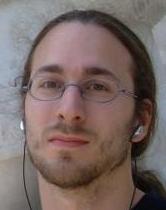
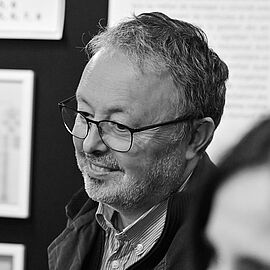
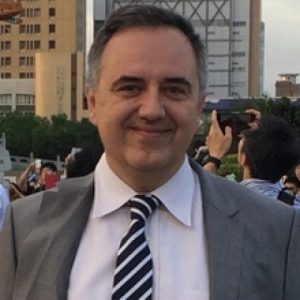
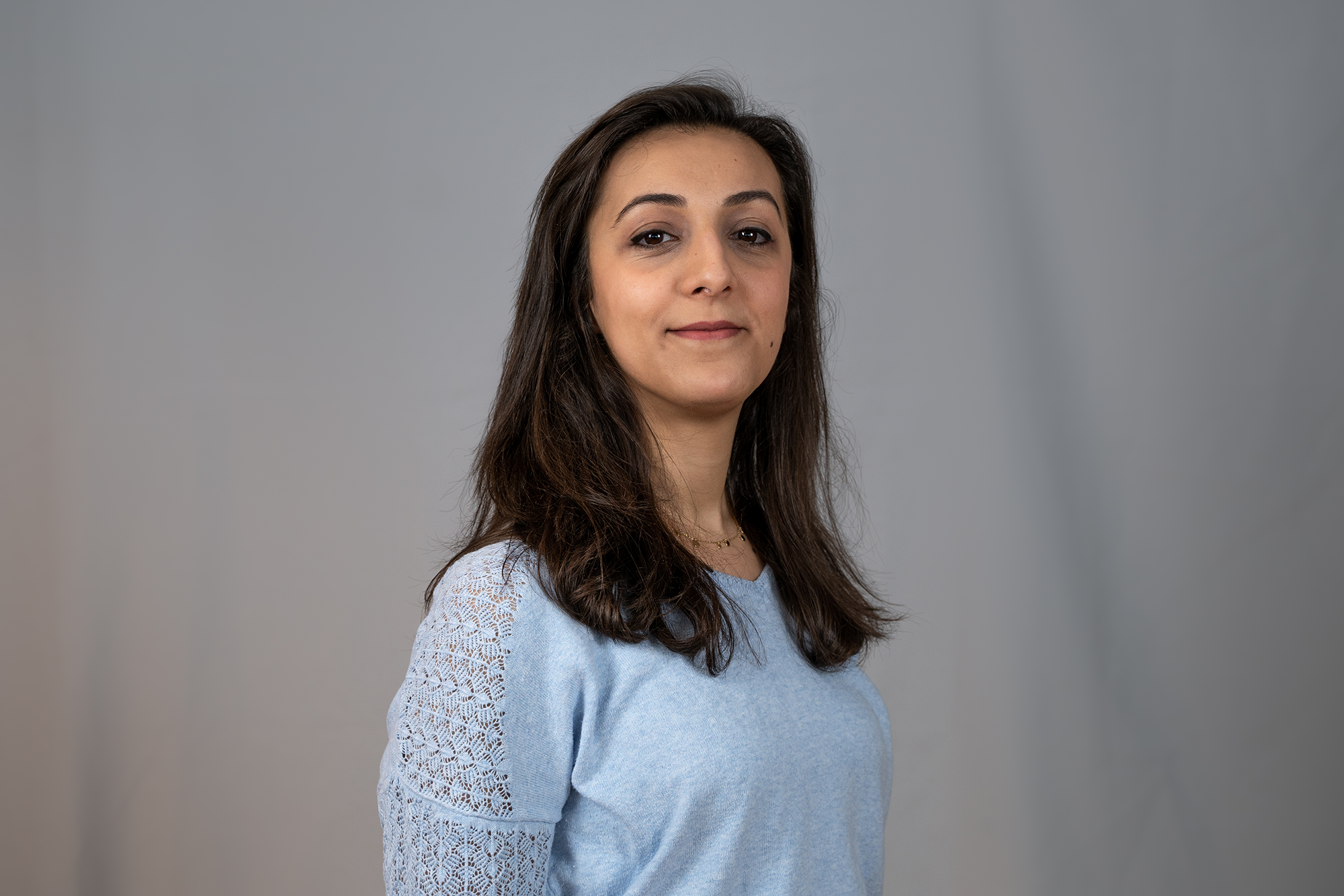
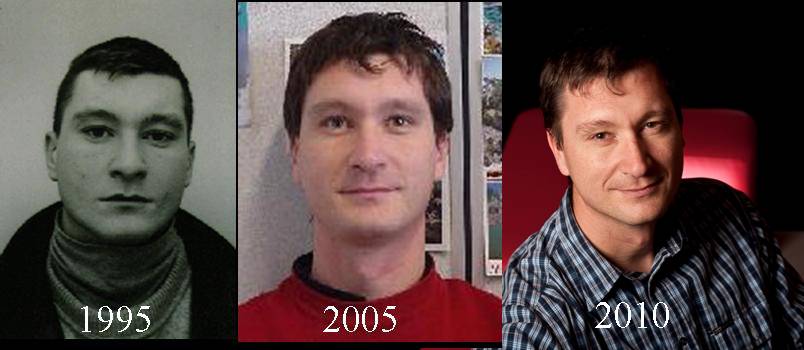
Ales Popovic is a Full Professor of Information Systems at NEOMA Business School, France. He holds a PhD in Management and Information Systems. His research focuses on the value of information systems (IS) in organizations, digitalization, AI, behavioral and organizational issues in IS, and IT in inter-organizational relationships. He has published widely in journals like Journal of the Association for Information Systems and Technological Forecasting and Social Change . Dr. Popovic’s research explores topics such as fake news engagement on social media, blockchain adoption in real estate, and the impact of digital platforms on traditional media. He serves on editorial boards for journals including International Journal of Information Management and Industrial Management & Data Systems . His work bridges theoretical and practical aspects of IS, emphasizing business value creation and ethical considerations in AI. Key contributions include studies on digital transformation, crisis management technologies, and the role of privacy in technology adoption. His research frequently addresses contemporary challenges like misinformation dynamics, gig worker burnout, and healthcare AI applications.
Lucy Glover is a Researcher and Group Leader of the Trypanosome Molecular Biology laboratory at the Department of Parasites and Insect Vectors, Institut Pasteur, Paris, France. She joined the institute in March 2016 as a G5 group leader, focusing on the molecular mechanisms of antigenic variation and DNA repair in Trypanosoma brucei , the causative agent of Human African Trypanosomiasis. Her research integrates molecular, biochemical, and high-throughput approaches to study DNA recombination and immune evasion. Institut Pasteur, Paris (2016–Present) PhD, London School of Hygiene and Tropical Medicine Her research interests center on antigenic variation , DNA repair , and homologous recombination in trypanosomes. She investigates how DNA double-strand breaks influence variant surface glycoprotein (VSG) switching, a critical process for parasite survival in the host. Her lab uses advanced techniques such as RIT-seq, phosphoproteomics, and CRISPR-based tools to dissect these mechanisms at the molecular level. The recent publications of Lucy Glover span molecular parasitology, DNA damage response, and diagnostic development. Key themes include the role of the MRN complex in DNA repair, phosphoproteomic profiling of DNA damage responses, and the design of CRISPR-based diagnostics for HAT. Her work reveals how chromosomal context influences repair pathways and antigenic variation, contributing to a deeper understanding of parasite biology. While no formal scientific awards are listed in the provided text, her contributions are evident through high-impact publications and leadership in collaborative research projects. Lucy Glover advises several PhD and postdoctoral researchers, including Emilia MacLaughlin, Nuria Sima Teruel, and Alix Thivolle. Her lab is supported by institutional initiatives such as LabEx IBEID and transversal drug discovery programs. She collaborates with teams working on host-pathogen interactions, genomics, and infectious disease epidemiology. Her laboratory is part of the Department of Parasites and Insect Vectors and participates in departmental retreats and seminars. The team includes post-docs, research engineers, and administrative staff, reflecting a collaborative and interdisciplinary research environment focused on combating neglected tropical diseases.
Florian Brandner is an Associate Professor at Télécom Paris , Institut Polytechnique de Paris, and a member of the AuTonomous Critical Embedded Systems (ACES) team within the Information Processing and Communication Laboratory (LTCI) . His research focuses on compiler backend optimization for embedded processors , especially VLIW architectures , in the context of real-time systems . He specializes in worst-case execution time (WCET) optimization , code generation techniques, register allocation, and dynamic binary translation. His work addresses challenges in identifying code paths critical for WCET and ensuring predictable behavior in embedded environments. Academic Appointments: Associate Professor (HDR) at Télécom Paris (2025–present); previous roles at COMPSYS team, ENS Lyon; Microsoft Research; Technical University of Denmark. Research Grants: Involved in projects like Designing Formally Verified Predictable Architectures (CEA 2023–2026), Collaborative Action on Timing Interferences (ANR 2022–2026), and Time-Predictable Cache Management (CEA 2016–2019). Scientific Awards: Outstanding Paper at ECRTS'25, Best Paper at RTNS'22, RTNS'20, SoftCOM'17, and RTNS'15. Patents: Co-inventor of Time-Division Multiplexing Methods (US Patent US20210397488A1, French Patent FR3087982B1). Recent Publications highlight advancements in formal verification for memory controllers (Real-Time Systems 2023), causality modeling in timing anomalies (STTT 2022), and context-sensitive cache analysis (Real-Time Systems 2022). His work spans real-time systems theory, practical compiler design, and hardware-software co-verification.
Petr Kuznetsov is a Professor at Telecom Paris (Institut Polytechnique de Paris), affiliated with the Department of Computer Science and Networks (INFRES). He leads the Autonomous Critical Embedded Systems (ACES) research team at the Information Processing and Communication Laboratory (LTCI). His work bridges theoretical foundations and practical applications in distributed systems. Research Focus: Kuznetsov specializes in distributed algorithms, synchronization protocols, failure detection mechanisms, and the application of algebraic topology to distributed computing. His recent work explores Byzantine fault tolerance, blockchain consensus, and concurrency in networking infrastructures. Recent Publication Trends (2015-2025): His articles predominantly focus on scalability and resilience in distributed systems, with emerging themes in blockchain technologies, Byzantine fault tolerance, and concurrency optimization. Theoretical contributions include computability theorems and complexity bounds, while applied work targets payment systems and distributed ledgers. Awards & Honors: Best Paper Award at DISC 2019 for Scalable Byzantine Reliable Broadcast Best Student Paper Award at PODC 2018 for An Asynchronous Computability Theorem for Fair Adversaries Projects & Advising: He directs the TrustShare Innovation Chair (large-scale data synchronization) and DISCMAT (mathematical foundations of distributed computing). Actively seeks PhD candidates for projects on distributed algorithms and concurrency. Laboratory & Teams: Heads the ACES team at LTCI, focusing on critical embedded systems and fault-tolerant distributed architectures. Collaborates internationally through workshops like SPTDC.
Albéric Tellier is a University Professor of Innovation Management at Paris Dauphine University , part of PSL University . A Doctor of Management Sciences, he is affiliated with the M-Lab research team at the DRM (Decision Risk and Information Management) research center (UMR CNRS 7088). Research Focus: Innovation strategies and organizational dynamics, including corporate failure, industry evolution, and social network analysis. Methodology: Historical case studies (pinball, Kodak, music industry) and theoretical frameworks. Publication Trends : Recent articles analyze technological disruption (Kodak), ecosystem alignment , and social network roles in innovation streams . His work spans strategic management, business models, and institutional pressures. Labs/Teams : Active member of the M-Lab team at DRM, focusing on innovation management and organizational theory. His research bridges empirical and theoretical contributions, often in collaboration with scholars like Frédéric Simon and Marc Malherbe.
Lisa Botbol is an economist currently serving as a postdoctoral fellow at the University of New South Wales and an Associate Member of the Toulouse School of Economics. She will join Monash University in October 2025 as a Lecturer (Assistant Professor) in the Department of Economics within the Faculty of Business and Economics. Dr. Botbol received her PhD from the Toulouse School of Economics in July 2024, marking the beginning of her transition to a permanent academic position. Her research focuses on industrial economics with specialized expertise in housing markets and education systems. Dr. Botbol employs empirical industrial-organization methodologies to analyze matching policies in social contexts. Her current research agenda centers on two primary areas: social housing allocation mechanisms in France and school admissions processes in Chile. This work examines how institutional design affects outcomes in critical public service sectors where matching algorithms determine resource allocation. As a rising scholar in applied microeconomics, Dr. Botbol maintains active engagement with the international academic community. She will be traveling to Europe during August-September 2025 for academic collaborations and conferences, welcoming opportunities to discuss research developments during this period. Her email contact (lisa.botbol@monash.edu) serves as the primary channel for professional communication regarding her research and academic activities.
Olivier ALLIX is a Professor at the Laboratoire de Mécanique et Technologie (LMT) at École Normale Supérieure de Cachan (ENS-Cachan). His research focuses on computational mechanics, including multiscale modeling of composite materials, structural failure analysis, and non-intrusive coupling strategies. He has held leadership roles such as Head of LMT-Cachan and Vice-president of the International Association for Computational Mechanics (IACM). Expertise: Computational structural mechanics, material failure, inverse problems, and multiscale approaches. Editorial Roles: Associate editor of multiple journals including Computational Mechanics and Computer Methods in Applied Mechanics and Engineering . Awards: IACM Fellow, Euromech Fellow, and recipient of the Gay-Lussac Humboldt Prize (2019). His work integrates experimental mechanics with computational methods, emphasizing big data applications and model validation. He has organized major conferences like the World Congress on Computational Mechanics and co-led international research initiatives such as the IRTG ‘Virtual Material and Structures’ with Hannover University. Teaching includes advanced courses on structural dynamics, composite materials, and computational mechanics at the Master’s level. His research group collaborates with industries like Safran, IFPEN, and DGA on projects involving fatigue analysis, mooring systems, and composite testing.
Jean-François TAHON is a Researcher at the University of Lille , affiliated with the Materials and Transformations Unit (UMET), CNRS UMR 8207 . His primary affiliation is within the Polymer Systems Engineering department, where he focuses on advanced materials research. His research interests center on thermoelectric and piezoelectric polymers and composites , exploring structure-property relationships through techniques like X-ray diffraction and scattering. He leads instrumental activities including the Thin Film Analyzer , X-ray scattering/diffraction bench , and thermal/ electrical characterization systems. Key contributions include studies on P(VDF-co-TrFE) copolymer crystallography, photochromic supramolecular materials, and polymer-based energy conversion systems. His work emphasizes material characterization, processing-structure-property linkages, and advanced material applications in energy and environmental contexts. TAHON collaborates extensively on interdisciplinary projects, particularly in recycling and functionalization of polymers. He is involved in lab infrastructure management, contributing to experimental platforms for materials analysis.
LIN Yaochen is a Lecturer affiliated with the University of Strasbourg, France. He is a member of the MATISEN Team (Materials for information technology, sensors, and energy conversion) at ICube laboratory, where he contributes to research and teaching in materials science and optoelectronics. Role: Lecturer Research Focus: Photovoltaic materials, liquid crystal devices, nanomaterials for energy conversion Teaching: Involved in multiple Master's programs including Micro/Nano-Electronics, Condensed Matter and Nanophysics, and Materials Science Research Interests LIN's work centers on photovoltaic spatial light modulators , self-powered smart windows , and liquid crystal-nanoparticle composites . His research explores material selection, processing techniques, and device optimization to enhance performance in energy conversion and optical modulation. Key areas include: Material synthesis (e.g., TiO2/MWCNT nanohybrids) Charge transport in liquid crystals Dielectric properties of nanocolloids Smart glass technology Atomic-scale modeling of materials Scientific Awards No specific awards mentioned in available texts. Advising & Collaborations Supervises Master's level internships Active in interdisciplinary projects with physics and engineering departments Focuses on material innovation for optoelectronic devices
Vladan Koncar is a Full Professor and Research Supervisor at École Nationale Supérieure des Arts et Industries Textiles (ENSAIT), where he directs the GEMTEX laboratory and international relations. His research spans smart textiles, e-textiles, wearable sensors, and energy-harvesting systems, with applications in healthcare, military, and environmental monitoring. Research Interests: Koncar's work focuses on three primary themes: (1) Smart textile design for medical/safety applications; (2) Energy harvesting via textile NFC antennas and metamaterials; (3) Standardization of e-textile reliability and testing. His innovations include textile-based ECG monitors, airflow sensors, and photodynamic therapy fabrics. Projects & Grants: He coordinates major EU initiatives (e.g., ETEXWeld, MAPICC 3D) and industrial collaborations with Petit Bateau and @Health. Key projects involve developing instrumented textiles for healthcare, dynamic lighting systems, and filtration monitoring. Honors: Ordre des Palmes Académiques, Chevalier (French Prime Minister Award, 2019) IPC Golden Gnome & Rising Star Awards (2021-2022) Doctor Honoris Causa (Gheorghe Asachi University, 2010) Annual PEDR Award for PhD supervision since 1995 Labs & Teams: Leads the Human Centered Design Group at GEMTEX, specializing in textile-electronics integration. The lab focuses on structural health monitoring, smart composites, and washable e-textile systems.
Dr. Charlotte Halpern is a tenured FNSP researcher at Sciences Po's Centre for European Studies and Comparative Politics (CEE) in Paris. She is Co-director of the Environmental Policies Research Group at LIEPP and Director of the Institute for Environmental Transformations (IPTE). Her research spans public policy, urban sociology, environmental governance, and European Union politics. She teaches public policy analysis and urban governance at Sciences Po and AgroParisTech. Her research interests focus on public action, urban governance, environmental and transport policy, social movements, and participatory democracy. She investigates how policy instruments are selected and combined across different political systems, particularly in France, Germany, the UK, and the EU. Her work emphasizes the role of non-hierarchical governance, state restructuring, and the political regulation of urban utilities. She is particularly known for her studies on the 'Grenelle de l’environnement', metropolitan water governance, and sustainable urban mobility. The analysis of her recent publications reveals a consistent focus on environmental policy innovation, urban sustainability, and comparative governance. Her work bridges political science with urban planning and environmental studies, often employing comparative case studies across Europe, Latin America, and Southeast Asia. Key trends include the evaluation of participatory processes, the governance of decentralized utilities, and the long-term evolution of transport policies in major cities. She has received research funding from prestigious sources including the European Commission (Horizon 2020), the French National Research Agency (ANR), and the French Ministry of the Environment. Her major projects include CREATE (Congestion Reduction in Europe), MEGOWAS (Metropolitan Governance of Water Systems), and SYRACUSE (sustainable urban utilities). CREATE Project (2015–2018): European-funded project on urban congestion and sustainable mobility. MEGOWAS Project (2017–2018): USPC-NUS joint project on water governance in Manila, Jakarta, Lima, and São Paulo. SYRACUSE Project (2012–2016): ANR-funded project on technological and institutional innovations in urban utilities. Grenelle de l’environnement Study (2009–2012): Analysis of France’s national environmental consultation process. Policy Instruments Project (2005–2008): Comparative study of governance modes in EU environmental and urban policy. Dr. Halpern has conducted research stays at Nuffield College (Oxford), the Max-Planck Institute for the Study of Society (Cologne), and Humboldt University (Berlin). She is an associate researcher at the Public Policy Research Group at PUCP, Lima, and contributed to the creation of the Observatorio de políticas públicas para la ciudad. She has also been an invited lecturer at PUCP. Her interdisciplinary collaborations involve engineers, social scientists, and policymakers, particularly through projects integrating social and technical expertise in urban sustainability.
Daniela IUBATTI is an Assistant Professor at SKEMA Business School—Université Côte d’Azur (GREDEG), specializing in Management & Organization. Her research focuses on intra-organizational networks, innovation, digitalization, and gender studies. She holds a PhD in Management from IESE Business School (Spain), and has held roles at the University of Bologna, University of Trento, and University of Chicago. Her work explores how network structures influence innovation and how digitalization impacts organizational practices. Notable contributions include studies on core-periphery networks in R&D productivity and the sociomaterial effects of digital machines in manufacturing. She has published in top journals like Organization Science and Journal of Product Innovation Management . Awards include the 2020 EBS Best Paper Award. She reviews for journals such as Journal of Management and Journal of Business Ethics . Academic activities include SIG committee roles at EURAM and conference presentations at the Academy of Management.
Andrea Simonetto is a Research Professor at the Applied Mathematics Unit (UMA) , ENSTA Paris, Institut Polytechnique de Paris. His work spans optimization, control theory, and learning algorithms for large-scale and streaming data , with applications in smart grids, intelligent transportation, personalized health, and quantum computing. Current research focuses on online algorithms for time-varying optimization , personalized optimization for cyber-physical systems , and variational quantum algorithms . Past contributions include theoretical and algorithmic advances in convex/non-convex optimization, distributed optimization (robotic networks, smart grids), and signal processing for sparse reconstructions and parallel computing in particle filtering. Key application domains include renewable energy integration , quantum state preparation , and human-in-the-loop control systems . His research is published in journals like ACM Transactions on Quantum Computing , IEEE Control Systems Letters , and Automatica .
Fedoua KASMI is a Researcher at the École Nationale Supérieure de Géographie et des Sciences de l'Information (ENSGSI), affiliated with the ERPI laboratory. Her work focuses on circular economy, sustainable territorial development, and innovative ecosystems. She leads strategic courses such as 'Strategic Analysis of Stakeholders' and chairs the 'Territory & Industry Program' at the Research Innovation Network. Dr. KASMI holds a PhD in Economics (2018, Université du Littoral Côte d’Opale) and specialized training in innovation strategies and entrepreneurship. Her research integrates qualitative methodologies to assess project impacts on organizations and territories, with notable contributions to urban factories, eco-responsible innovation spaces, and industrial symbiosis. Key projects include the Horizon Europe LAUDS Factories initiative and the DHDA territorial innovation program. Her work emphasizes multi-stakeholder collaboration, resilience frameworks, and policy instruments for sustainable transitions. She actively designs demonstrators for open manufacturing and circular economy practices, bridging academic research with industrial applications.
François Brémond is a Research Director (DR1) at INRIA Sophia Antipolis, where he leads the STARS research team, which he founded on January 1, 2012. He was previously head of the PULSAR team starting September 2009. He is also a co-founder of the CoBTeK team at Nice University in collaboration with Nice Hospital, focusing on behavioral disorders in elderly patients with dementia. His research is centered on dynamic scene interpretation using video and sensor data, with applications in surveillance, healthcare, transportation, and ambient intelligence. Research Interests: Computer Vision: video processing, object detection and tracking, motion analysis, pattern recognition Cognitive Vision: video understanding, scene understanding, event recognition, behavior analysis, multi-sensor fusion, multimedia interpretation Machine Learning: deep learning architectures, self-attention, knowledge distillation, contrastive learning, self-learning, lifelong learning, knowledge-based systems, spatio-temporal reasoning Autonomous Systems: real-time systems, system evaluation, parameter tuning, system design, 3D visualization His work bridges low-level pixel data with high-level semantic behavior modeling, enabling systems to detect and interpret complex human and vehicle activities in real-world environments. Applications include crowd monitoring, fraud detection, airport operations, homecare for the elderly, and biological monitoring. He has authored or co-authored over 200 scientific papers and has (co-)supervised 18 PhD theses. He has participated in 12 European projects (e.g., FP6, FP7), 12 French national projects (ANR, DGE), and numerous industrial collaborations with companies such as Thales, SNCF, RATP, STMicroelectronics, and Alstom. He also serves as an expert reviewer for ANR and the European Commission. Scientific Leadership and Technology Transfer: Co-founder of Keeneo (acquired by Digital Barriers), Ekinnox, and Neosensys — startups in intelligent video monitoring and business intelligence Reviewer for top-tier journals (PAMI, CVIU, AIJ) and conferences (CVPR, ICCV, AVSS) Contributor to the ARDA workshops on video event ontology He has taught numerical classification at Nice University and video understanding at a Master’s level engineering school. His research program emphasizes generic, scalable systems for behavior modeling and long-term activity mining. Research Projects: Stress ID dataset (ECG and video for stress detection) Toyota Smarthome (Activities of Daily Living) SafEE2 (Homecare for elderly with autonomy loss) Praxis dataset (RGB-D upper-body gestures) GER'HOME, CARETAKER, RATP Project, ETISEO, AVITRACK, CASSIOPEE, ADVISOR, PASSWORDS