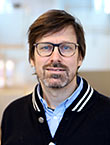
Ståle Holgersen is a part-time lecturer at the School of Humanities, Education and Social Sciences at Örebro University , Sweden. His work focuses on the intersections of capitalism, class struggle, and environmental crises, particularly in urban contexts. Holgersen critiques neoliberal urban planning, housing policies, and climate governance, emphasizing the need for ecosocialist alternatives. Academic Rank: PartTime Lecturer Email: stale.holgersen@oru.se Research Interests include political ecology, far-right environmentalism, urban sustainability critiques, housing justice, and Marxist theory. His recent publications analyze Sweden's climate policy shifts, urban housing crises, and the rise of eco-fascism. The 15 most recent articles (2021–2025) span themes like far-right ecologies , urban capitalism , class-based housing struggles , and ecosocialist strategies . These works often employ dialectical and critical theoretical frameworks.
Michelle Riedlinger is an Associate Professor at Queensland University of Technology's Digital Media Research Centre within the Faculty of Creative Industries, Education & Social Justice. She has served as co-editor of the Journal of Science Communication (JCOM) since 2022 and maintains an active research program focused on science communication, digital media, and public understanding of science. Her work frequently appears in high-impact journals and she regularly contributes to policy submissions through QUT's Digital Media Research Centre. Dr. Riedlinger's research interests center on the intersection of science communication and digital media. She investigates how social media platforms shape the dissemination of scientific information, with particular attention to preprint communication during the COVID-19 pandemic. Her work explores science journalism practices, fact-checking methodologies, and the emerging impact of generative AI on research communication. She has conducted cross-national studies examining science communication practices in Canada, Australia, and other countries, with a focus on understanding how cultural contexts influence science-society relationships. Analysis of her recent publications reveals a clear trajectory toward examining the impact of generative AI on science communication practices. Her 2024-2025 work focuses extensively on how researchers, journalists, and the public are engaging with AI tools for science information seeking and production. She also continues to explore traditional science communication challenges including the politicization of science, science journalism practices, and the role of social media in shaping public understanding of scientific issues. As co-editor of the Journal of Science Communication since 2022, Dr. Riedlinger has played a significant role in shaping scholarly discourse in the field. Her editorial work demonstrates her commitment to advancing the theoretical and practical dimensions of science communication research. She frequently collaborates with an international network of scholars, particularly with Marina Joubert, with whom she co-edits JCOM. Dr. Riedlinger is actively involved with QUT's Digital Media Research Centre, where she contributes to policy submissions addressing critical digital society issues including online safety for young people, social media regulation, and the impact of generative AI on the scholarly economy. Her work bridges academic research and practical policy applications, demonstrating the real-world impact of science communication scholarship.
Jessica Fjeld is a Clinical Lecturer at Harvard Law School and Managing Director of the De|Center, an initiative addressing digital authoritarianism. She is affiliated with the Berkman Klein Center for Internet & Society and previously served as Assistant Director of the Cyberlaw Clinic. Her work focuses on AI governance, digital rights, and the intersection of technology with human rights and creativity. Fjeld holds a JD from Columbia Law School, an MFA in Poetry from UMass, and a BA from Columbia University. Affiliations: Harvard Law School, Berkman Klein Center, Cyberlaw Clinic Roles: Clinical Lecturer, Managing Director (De|Center), Legal Scholar Research Interests: AI ethics and governance frameworks Content moderation challenges for marginalized communities Legal aspects of AI-generated art and intellectual property Corporate accountability in tech sectors Freedom of expression in digital spaces Key Projects: Principled Artificial Intelligence Project (mapping global AI ethics principles) Online Identity Help Center (supporting marginalized users in content moderation disputes) Advocacy against facial recognition misuse in Boston Awards: Hamilton Fellow & James Kent Scholar (Columbia Law School) Poetry Society of America Recognition 92nd Street Y/Boston Review Discovery Prize
Maria Garlock is the Daniel Tsui Professor in Engineering at Princeton University, serving as Co-Director of the Program in Architecture and Engineering and Head of Forbes College. Her roles also include membership in the Executive Committee of the Council on Science and Technology, Associated Faculty in the School of Architecture, and Associated Faculty in the Program in Latin American Studies. Garlock holds a PhD in Structural Engineering (Lehigh University, 2002), an MS in Civil Engineering (Cornell University, 1993), and a BS in Civil and Environmental Engineering (Lehigh University, 1991). Her research focuses on resilient structural design for extreme hazards like fires, earthquakes, and storm surges. She explores both isolated and cascading multi-hazard scenarios while also analyzing historical structural designs (e.g., Félix Candela’s thin-shell concrete umbrellas) and improving STEM education for non-technical majors through innovative teaching methods, including MOOCs and scale model exhibitions. Recent work emphasizes coastal defense systems using hyperbolic-paraboloid forms and steel-concrete girder performance under shear stress. Garlock has received notable honors including the ASCE SEI Fellowship (2016 T.R. Higgins Lectureship), President’s Award for Distinguished Teaching (2012), and the Emerson Electric Co. Faculty Advancement Award (2006). In education and grants, she teaches courses like Structures and the Urban Environment and Advanced Design of Steel/Concrete Structures , and has secured government funding for STEM literacy initiatives. Her research collaborations include the BRITE Pivot project and studies on Cuba’s historic National School of Ballet domes. She also leads efforts in deploying kinetic umbrellas as flood barriers and advancing probabilistic models for fire fragility in multi-hazard contexts. Garlock’s work bridges engineering and art, exemplified by her preservation studies of Candela’s architectural masterpieces and pedagogical innovations that emphasize creativity in structural design.
Katherine Collins is a Research Fellow at the University of Oxford and a member of Wolfson College. She holds affiliations with the Faculty of English and contributes to interdisciplinary research bridging humanities, social sciences, and digital media. Her work emphasizes creative practice as research, critical pedagogies, and the integration of arts/sciences in Antarctic storytelling. Education Katherine earned an MFA in Poetry from the Manchester Writing School. Her academic background combines literary studies with creative writing, demonstrated through her published poetry and collaborative interdisciplinary projects. Research Interests Contemporary life-writing Creative practice as research Critical pedagogies Research cultures 'More-than-human' narratives of Antarctica Interdisciplinary arts/science integration Digital media evolution in storytelling Her publications explore themes like archival gaps in fiction, travel narratives of Frieda Lawrence, and community self-building's sociological impact. Earlier work analyzed Brexit's implications for UK citizens in the EU27 through policy and citizenship frameworks. Recent projects focus on Antarctic storytelling and southern hemisphere textual resonances. Awards Rosamond Prize (2022) for collaboration with composer Christopher Cook Highly Commended in the Plough Prize (2023) for poetry Collaborations & Grants Co-investigator on Wellcome Trust-funded 'Leading in Academic Research Environments' project Collaborator with Joanna Wheeler and Elleke Boehmer on British Academy/Wellcome Trust Antarctic storytelling initiative Former project leader for Ibai (educational inclusion in Nigeria/South Africa/UK) Labs & Teams Affiliated with interdisciplinary teams at the English Faculty and Wolfson College, actively engaging in collaborative research environments and digital humanities projects.
Ros McLellan is an Associate Professor in Teacher Education and Development at the University of Cambridge's Faculty of Education , concurrently serving as Director of Learning & Teaching . She holds a PhD in Science Education (King's College London), MPhil in Psychology of Education (Cambridge), and PGCE in Secondary Mathematics. Her research focuses on student wellbeing, motivation, mathematics anxiety, and teacher learning, with a psychological lens. Research Interests: Student motivation, wellbeing, mathematics anxiety, teacher professional development, gender and achievement disparities, creativity in education. Collaborations: Leads school-university partnerships in Kazakhstan and the UK, including projects on student well-being and education transitions. Professional Roles: British Educational Research Association (BERA) Council member and Chair of its Publications Committee; co-convenes the European Educational Research Association's Health and Wellbeing Education network. Her recent work explores mindfulness-based interventions, bullying victimization across nations, and the impact of SEL programs on adolescent behavior. Over 50 peer-reviewed publications span journals like Frontiers in Education , Child Indicators Research , and Journal of Adolescence . Current projects include analyzing UKSA program impacts and Kazakhstan school well-being initiatives. She advises doctoral students focusing on psychological perspectives of education-related research topics.
Rafie Cecilia is a Lecturer in Museum and Gallery Studies at King’s College London (KCL), affiliated with the Faculty of Arts & Humanities and the King’s Institute for Artificial Intelligence. Her work focuses on disability inclusion in cultural heritage institutions, digital innovation, and inclusive governance. She joined KCL in 2023 after roles at UCL, the Global Disability Innovation Hub, and the Centre for Critical Heritage Studies. Rafie’s research integrates three core areas: 1) museum experiences of disabled visitors, 2) AI and technology for accessibility, and 3) participatory governance models. She advocates for co-creation methodologies and challenges ableist institutional practices. Her teaching emphasizes inclusive pedagogy, particularly through AI literacy initiatives and decolonial approaches. Rafie collaborates with major institutions like the British Museum and Wellcome Collection, focusing on accessibility tools like AltText and inclusive wayfinding systems. Her recent publications address ableism in collections management and pandemic-era museum accessibility. As a disability advocate, Rafie emphasizes sustainable change through policy reform and co-design processes. She does not accept generic PhD applications but encourages disabled applicants to engage deeply with her research.
Professor Lisa Kervin is a leading academic in early childhood education at the University of Wollongong (UOW), serving as Director of Early Start Research and holding a Professorial appointment in the School of Education. Her research focuses on young children’s literate practices, play-based learning, and digital technology integration in education. She leads the ARC Centre of Excellence for the Digital Child and has secured significant funding, including a 2025 ARC Future Fellowship exploring intergenerational play. Kervin was honored as a Member of the Order of Australia (AM) in 2024 for contributions to early childhood digital literacy research. She has supervised over 35 research students, many now in academic and leadership roles, and currently oversees seven doctoral candidates. Her work bridges theory and practice through collaborations with educators and industry partners, emphasizing interdisciplinary approaches to child development and policy influence globally. Education: PhD in Language and Literacy from UOW (2001–2004). Professional roles include Principal Fellow of the Australian Literacy Educators’ Association and Director qualifications from the Australian Institute of Company Directors. Her research spans digital childhood ethics, play pedagogy, and literacy curriculum design, with outputs impacting government policies and international educational frameworks. Ongoing projects include the ‘DigIQ’ program promoting digital literacy and ‘Playgroups for All Ages’ fostering intergenerational engagement. Grants and collaborations involve partnerships across six universities and 33 global organizations. Her teaching innovations include the Early Childhood Elevate Mentoring Program to support educators’ academic progression. Kervin’s work addresses critical issues like screen time impacts, STEAM education, and culturally responsive pedagogies, positioning her as a key voice in 21st-century early childhood education.
Semin Park is an Assistant Professor in the Management and Organization department at the Smeal College of Business, Pennsylvania State University. Her research focuses on relational dynamics within and between teams, employing a social network perspective to analyze longitudinal changes in work collectives across diverse contexts such as emergency response systems and organizational teams. Education: PhD in Management, University of Connecticut (2019) MSc in Management, Seoul National University (2013) BBA in Business Administration, Seoul National University (2011) Research Interests: Dr. Park investigates team dynamics using network analysis to explore conflict resolution, leadership transitions, and collective behavior. She emphasizes structural elements of multi-team systems, emergency response configurations, and the application of big data methods for organizational insights. Her work bridges theoretical frameworks with practical solutions for improving team performance and workplace safety. Publications Trends: Her most recent articles (2020–2024) emphasize network-based approaches to team conflict, leadership transitions in crises, and dynamic constructs in organizational settings. Earlier work (2012–2018) includes foundational studies on team creativity, peer evaluations, and historical evolution of work teams. Affiliations & Resources: She is affiliated with Penn State’s Smeal College and maintains an active Google Scholar profile. No grants or awards are explicitly listed in the provided texts.
Ralph E Rodriguez is a Professor at Brown University , affiliated with both the American Studies and English departments. His work bridges Latinx literature , Chicano studies , and critical race theory , with over two decades of academic contributions. Education : PhD in English (1997) and BA in English (1992) from the University of Texas and Old Dominion University respectively Research focuses on ethnic expectations in literature , transnational identity , and border relations . Current projects analyze multilingual writers and creative non-fiction narratives. Funded by prestigious institutions like the NEH , Woodrow Wilson Foundation , and Cogut Center for the Humanities , he has published extensively on topics including Chicana/o identity , racial surfaces in graphic art , and assimilation critiques . His teaching awards from Brown, Penn State, and University of Texas highlight his commitment to pedagogy that merges radical love with critical analysis . Collaborations with scholars like Valeria Luiselli and affiliations with the American Studies Association and Latinx Studies Association underscore his influence in interdisciplinary fields. Scientific Awards & Fellowships MLA Best Book Prize (2006) Cogut Center Faculty Fellowship (2014) NEH Younger Scholar (1991) Phi Kappa Phi & Sigma Tau Delta honor society memberships Students engage through courses on Latinx cultural theory , creative non-fiction , and contemporary fiction , reflecting his dedication to community-building in academic environments. His radical love pedagogy emphasizes dialogue, positionalities, and equitable knowledge production across identity markers like race, class, and gender.
Dr. Thalia R Goldstein is an Associate Professor in the Department of Applied Developmental Psychology at George Mason University (GMU). She directs the PLAY Lab and co-directs the National Endowment for the Arts Research Lab (MasonARC). Her research focuses on children’s social-emotional development through pretend play, theater, and imaginative activities. Dr. Goldstein holds a Ph.D. in Developmental Psychology from Boston College (2010), with postdoctoral training at Yale University (2010–2012) and a prior faculty role at Pace University (2013–2017). Her education includes a BA from Cornell University (2002), MA (2007), and Ph.D. (2010) from Boston College. Research grants include funding from the National Science Foundation, National Endowment for the Arts, and the John Templeton Foundation. She serves on editorial boards for journals like Psychology of Aesthetics, Creativity, and the Arts and is an APA Division 10 Fellow. Current research explores topics such as the impact of theater education on empathy, longitudinal learning in acting, children’s understanding of fictional characters like Santa Claus, and adult engagement in pretend activities. Her book Why Theatre Education Matters (2024) synthesizes findings on arts’ cognitive and social benefits. Key awards include a 2019 poster award at the Cognitive Science Society conference. Dr. Goldstein advises students on projects involving dance, video games, and moral understanding in pretend play. She teaches courses on developmental psychology, creativity, and social-emotional learning. Her work bridges developmental science and the arts, with media features in The New York Times , NPR, and the National Endowment for the Arts podcast. Labs: PLAY Lab (playlab.gmu.edu), Mason Arts Research Center (MasonARC). Office: David J. King Hall DK3055.
Livia Franchini is a Lecturer in Creative Writing at Goldsmiths, University of London, specializing in feminist literary studies and experimental writing. She holds a PhD in Creative Writing from Goldsmiths (2021), an MA from Royal Holloway (2012), and a BA in Drama & English from Goldsmiths (2010). Her research explores intersections of textual and sexual politics in works by Virginia Woolf, Anna Kavan, and Lydia Davis, emphasizing formal innovation to challenge gender norms. She is a novelist, poet, and translator, with notable works including Shelf Life (2019) and translations of Natalia Ginzburg and James Tiptree Jr. Franchini co-edits Goldsmiths Press’s alumni series and coordinates the Goldsmiths Prize. Awards include the Premio Letterario Pisa 2020 for Gusci . Her teaching spans universities in the UK, Spain, Belgium, and the Netherlands, focusing on creative writing and translation. Professional activities include performing at international festivals, curating literary events, and editorial roles with FILL (Festival of Italian Literature in London) and Goldsmiths Press.
Dr. Kate Sicchio is Associate Professor of Dance and Media Technologies at Virginia Commonwealth University, serving as Graduate Director for Kinetic Imaging. Her interdisciplinary work explores choreography-technology interfaces. Research areas include: Wearable technology for performance Live coding systems for dance Human-robot choreography Real-time video systems Recent publications examine movement notation systems and collaborative live coding platforms, with performances exhibited internationally at venues including London's V&A Museum.
James C. Kaufman is a Professor of Educational Psychology at the University of Connecticut. He holds a Ph.D. in Cognitive Psychology from Yale University (2001). His research focuses on creativity, including assessment, meaning-making, social justice applications, and interdisciplinary domains. Notable contributions include the Four-C Model of Creativity and co-founding journals like Psychology of Aesthetics, Creativity, and the Arts . He has authored over 50 books and 300 papers, including foundational works like Cambridge Handbook of Creativity . Education: Ph.D., Cognitive Psychology, Yale University, 2001. Research Interests: Creativity Assessment, Creativity and Meaning, Creativity & Social Equity, and Cross-Domain Creativity Applications. His work bridges psychological theory with practical educational strategies. Awards: Mensa Research Award, Torrance Award (NAGC), APA Berlyne & Farnsworth Awards, and leadership in APA Division 10. Advising & Collaborations: Advised students like K. Arrington and C. Connery. Active in mentoring through co-authored research. Collaborates globally on creativity measurement tools like the K-DOCS. Labs/Teams: Leads research teams at UConn focusing on creativity’s societal impact, including pandemic-related studies on creativity and well-being during crises.
Andrea Bechert is an Associate Professor & Designer in the Film & Theatre Department at San José State University (SJSU). She holds a prominent role in academic and professional theatre design, with over 400 productions designed nationally and internationally. Her affiliations include SJSU and prior teaching roles at the University of Michigan, University of Chicago, Stanford University, and others. Education History Extensive academic experience across multiple institutions, though specific degree details are not listed. Research & Creative Activity Focuses on theatrical and film design, including scenic, costume, and projection design. Her work has been featured in major exhibitions like the World Design Expo, USITT Design Expo, and the Prague Quadrennial. She emphasizes collaborative design processes and innovative technical approaches in live performance. Awards & Recognition Recipient of the Silicon Valley Laureate Award for design excellence Bay Area Theatre Critics Circle Award for Fun Home (TheatreWorks) RSCA Award from SJSU's College of Humanities & Arts Multiple Authors & Artists Awards from SJSU Advising & Service Actively involved in professional service, serving as Western Region Board Trustee for United Scenic Artists (USA829), National Wellness Committee member, and Chair of the Design Exam Committee. No formal advisees listed in the provided text. Labs & Collaborations Collaborates with major institutions like TheatreWorks (Silicon Valley), SMUIN Ballet, Opera San Jose, and Berkeley Repertory Theatre. Maintains an active design portfolio at ScorpionDesigns.net .