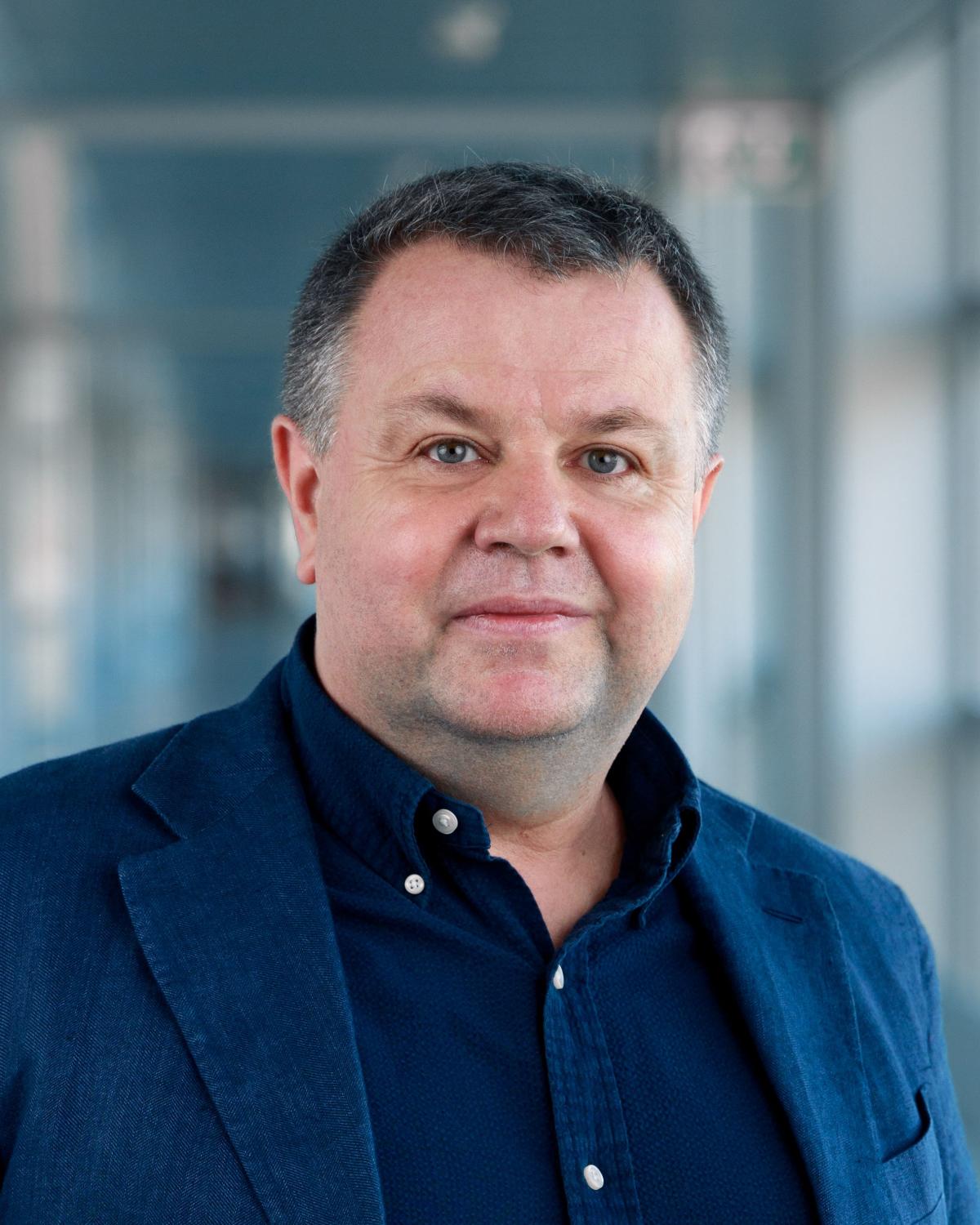
Jörg F. Löffler is a Full Professor of Metal Physics and Technology at the Department of Materials, ETH Zürich , where he has been since 2003. He previously served as Chairman of the Department (2010–2013) and holds Adjunct Professor positions at Tohoku University (Japan) and a Visiting Faculty role at Caltech. His research focuses on bulk metallic glasses , metallic biomaterials , and magnetic materials , combining synthesis, characterization, and applications in biomedical and structural contexts. Educations : Studied Physics and Materials Science at Saarland University (Germany), earned his doctorate at ETH Zurich and Paul Scherrer Institute on magnetism and neutron scattering (1997). Research Trends : Recent work explores additive manufacturing (e.g., laser powder bed fusion), biodegradable magnesium alloys for implants, and magneto-structural coupling in metallic glasses. Collaborative efforts integrate in situ analysis with computational modeling. Scientific Awards : International Magnesium Science and Technology Award (2023) MRS Fellow (2021) DGM 'Breakthrough' Prize (2016) Masing Memorial Prize (2005) ETH Zurich Medal (1998) Alexander von Humboldt Fellowship (1998-2001) Löffler advises the Department of Materials Science and Engineering at UC Davis and serves on editorial boards. His group at ETH Zürich investigates advanced metallic materials using synchrotron radiation and neutron scattering facilities.
Lina Bertling Tjernberg is a Professor at the Department of Electrical Engineering, KTH Royal Institute of Technology, and Deputy Head of the School of Electrical Engineering and Computer Science (EECS) with responsibility for research conditions and impact. She served as Director of KTH's Energy Platform during 2018-2024 and holds memberships in IVA (Swedish Royal Academy of Engineering Sciences) and the IEEE Power & Energy Society. Research Focus: Applying mathematics (statistics, optimization, life cycle assessment) to enhance reliability and predictive maintenance in electric power systems, with emphasis on future electricity grids integrating microgrids, battery storage, HVDC, nuclear/pumped/hydro/wind/solar power, hydrogen, and electrified transport. Collaborations: Engaged with Comillas Pontifical University (Madrid), Addis Ababa University, Norwegian University of Science and Technology (NTNU), and IEA Wind. Key Research Trends: Recent articles highlight advancements in microgrid control (2025), SMR nuclear energy integration (2025), AI-driven asset management (2024), hydrogen sector coupling (2024), and renewable forecasting techniques (2024). Awards: 2021 Power Woman of the Year 2022 Energy Power List (Sweden’s top 20 energy influencers) Leadership Roles: Swedish Electromobility Center (SEC) board Chair of Swedish Electrical Standards (SEK Svensk Elstandard) Member, IEEE PES ISGT Europe steering committee
Professor Haijiang Li is a Chair in BIM for Smart Engineering at Cardiff University's School of Engineering. His roles include leading the Computational Mechanics and Engineering AI Research Group, directing the BIM for Smart Engineering Centre, and overseeing the BIM MSc programme. He holds editorial roles for journals like Construction Innovation and Automation in Construction , and chairs the European Group of Intelligent Computing in Engineering (EG-ICE). Research focuses on smart computational engineering platforms integrating BIM, AI, and big data for sustainable infrastructure. Key areas include digital twins, disaster management, and resilient urban systems. He has secured £40M in research funding, including £9M as PI, and led over 70 research staff and students. Prof. Li is a Standards Committee Technical Executive at buildingSMART, driving international BIM standards. His work includes co-authoring a book on BIM standards across China, the US, and the UK. Awards include Fellowships from the British Computer Society (FBCS) and the Higher Education Academy (FHEA). His research outputs span over 250 publications, covering topics like AI-driven bridge maintenance, ontology-based decision-making, and energy-efficient urban systems. Collaborations with industry and global partners emphasize practical applications of BIM and smart technologies.
Atsuko Tanaka is an Associate Professor in the Department of Economics at the University of Calgary. Her research focuses on labor markets, health economics, and public policy, particularly examining topics such as female labor supply, skill investment, and pension reforms. She holds a Ph.D. in Economics from the University of Wisconsin-Madison (2013), alongside advanced degrees from Cornell University and the University of Tokyo. Education Ph.D. Economics, University of Wisconsin-Madison (2013) M.S. Economics, University of Wisconsin-Madison (2010) M.S. Applied Economics and Management, Cornell University (2007) B.A. Agricultural Economics, University of Tokyo (2004) Research Interests Tanaka’s work explores how health shocks, financial constraints, and policy interventions influence labor market outcomes. She investigates topics such as post-educational skill accumulation via college loans, strategic medical treatment choices under reimbursement reforms, and the macroeconomic effects of pension system transitions. Her research combines rigorous econometric methods with real-world administrative data to inform evidence-based policy. Awards and Grants SSHRC Connection Grant (2022, co-PI: Apostolos Serletis) National Science Foundation Extreme Science Grant (2021) SSHRC Insight Development Grant (2016) Susan Jane Blake Kocin Award, University of Wisconsin-Madison (2011) Grants and Collaboration Her research has been supported by major grants, including SSHRC and NSF funding. She collaborates with scholars on projects like analyzing physician behavior under reimbursement reforms, auditing firm dynamics, and international aid allocation strategies. Her work bridges theoretical models with empirical evidence to address complex socio-economic challenges.
Enamul Hoque Prince is an Associate Professor and Director of the School of Information Technology at York University. He leads the Intelligent Visualization Lab, funded by the Canada Foundation for Innovation (CFI) and Ontario Research Funds (ORF). He holds a PhD in Computer Science from the University of British Columbia and completed postdoctoral work at Stanford University. His research integrates information visualization, human-computer interaction (HCI), and natural language processing (NLP) to address information overload challenges. Dr. Prince's educational background includes a PhD from UBC, an MSc from Memorial University of Newfoundland, and a BSc from Chittagong University of Engineering & Technology. He has conducted research at institutions like Tableau Software and the Qatar Computing Research Institute and serves on committees for top conferences like ACL and IEEE Vis. His work is supported by grants from NSERC, CFI, and others. Research interests focus on NLP-driven visual analytics, user-adaptive visualization, and accessible interfaces. Notable projects include Evizeon (natural language interfaces for visual analytics), ConVisIT (topic modeling for online conversations), and CIDER (concept-based image search). Publications highlight trends in multimodal systems, chart comprehension, and accessibility. Key awards include the NSERC Discovery Grant (2019) and a Best Paper Honorable Mention at DIS 2021. He supervises graduate and undergraduate students in areas like visualization, NLP, and HCI. Labs and collaborations emphasize interdisciplinary approaches, with the Intelligent Visualization Lab advancing tools for data exploration and user-centered design. Teaching includes courses on design principles and information visualization.
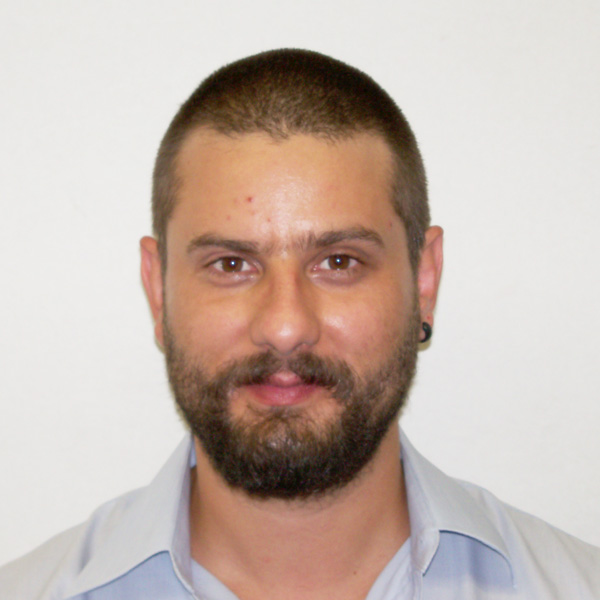
Theo Damoulas is a Professor of Machine Learning at the University of Warwick with a joint appointment in the Department of Computer Science and Statistics. He is a Turing AI Fellow (2021-2026) through UK Research and Innovation, an ELLIS member, and a Visiting Professor at New York University's Center for Urban Science and Progress (CUSP). He founded and leads the Warwick Machine Learning Group and has directed major projects at The Alan Turing Institute including Project Odysseus and the London Air Quality project. Education includes: PhD in Probabilistic Multiple Kernel Learning (University of Glasgow, 2009) MSc in Informatics (Distinction, University of Edinburgh, 2004) MEng in Mechanical Engineering (1st Class, University of Manchester, 2003) His research focuses on probabilistic machine learning and Bayesian statistics, emphasizing the integration of structural priors, spatiotemporal dependencies, physical laws, and causal relationships. Key applications include Digital Twins, urban science, and computational sustainability. His work advances robust and scalable inference methodologies for complex real-world systems. Publications demonstrate strong emphasis on Bayesian methods, spatiotemporal modeling, and uncertainty quantification, with applications spanning battery modeling, urban mobility, federated learning, and causal inference. Recent work shows increased focus on physics-informed models, federated learning frameworks, and causal abstraction techniques. Major scientific awards: Turing AI Acceleration Fellowship (2021-2026) Best Paper Awards (Wilkes 2024, AISTATS 2022, IEEE ICMLA 2010) ACM SIGMOD Most Reproducible Paper (2017) Dissertation Award (Classification Society 2012) Teaching Excellence nominations (Warwick 2015-2017) He actively advises PhD students and secured significant grants including the £multi-million Turing AI Fellowship. Current doctoral researchers investigate federated learning, causal inference, and spatiotemporal modeling. He leads the Warwick Machine Learning Group, a cross-departmental team developing foundational ML methods for scientific and societal challenges.
Christoph Keplinger serves as Managing Director of the Max Planck Institute for Intelligent Systems (MPI-IS) in Stuttgart, Germany, leading the Robotic Materials Department since 2020 and assuming overall institute leadership in 2023. He holds dual academic appointments as Honorary Professor at the University of Stuttgart and Eminent Visiting Professor of Soft Robotics at the University of Colorado Boulder, establishing him as a pivotal figure in bridging fundamental materials science with advanced robotics. His interdisciplinary approach integrates physics, chemistry, and engineering to pioneer breakthroughs in soft robotic systems. Keplinger's academic foundation includes a PhD in Soft Matter Physics from Johannes Kepler University Linz, Austria, followed by postdoctoral research at Harvard University focusing on mechanics and chemistry of soft materials. This unique background enabled his transition into robotics innovation, particularly in electrohydraulic actuation systems. His research program centers on three synergistic pillars: (I) soft robotics development through novel actuator technologies like HASEL artificial muscles; (II) energy capture mechanisms using soft materials; and (III) functional polymers engineered for robotic applications. This work produces transformative hardware that mimics biological functionality, with significant implications for human-robot interaction, medical devices, and sustainable robotics systems. His group employs cutting-edge materials synthesis and characterization techniques to create lifelike robotic components. Analysis of recent publications reveals dominant trends in wearable haptic interfaces, electrohydraulic actuation systems, and tremor-suppression technologies. The research consistently leverages HASEL (Hydraulically Amplified Self-healing Electrostatic) technology to achieve muscle-like performance in soft actuators, with applications spanning from fingertip haptic feedback to underwater manipulation systems. This trajectory demonstrates a clear progression from fundamental material properties toward practical implementations in medical rehabilitation and human augmentation. His exceptional contributions have earned prestigious recognition: 2017 Packard Fellowship for Science and Engineering, awarded for high-impact interdisciplinary research 2021 Alexander von Humboldt Professorship (declined to remain at MPI-IS), Germany's most valuable international research award 2013 EAPromising European Researcher Award from the European Scientific Network for Artificial Muscles As principal investigator, Keplinger leads a dynamic interdisciplinary research group while securing competitive funding for frontier projects. His entrepreneurial vision materialized in 2018 through co-founding Artimus Robotics, where he serves as Chief Science Officer to commercialize HASEL technology. This dual commitment to academic research and industry translation exemplifies his dedication to real-world impact, particularly in creating biodegradable and sustainable soft robotic solutions. The Robotic Materials Department operates state-of-the-art facilities for materials fabrication, robotic integration, and haptic interface development. The team maintains strong collaborations across MPI-IS departments and external institutions including the University of Colorado Boulder, fostering innovation in sustainable robotics through initiatives like biodegradable electrohydraulic actuators. Current projects focus on wearable tremor suppression systems, electrohydraulic locomotion platforms, and energy-autonomous soft robots that address critical challenges in medical rehabilitation and human augmentation.
Pol Antràs serves as the Robert G. Ory Professor of Economics at Harvard University, where he has been a faculty member since 2003. He holds significant research affiliations as a Research Associate at the National Bureau of Economic Research (NBER), where he directed the International Trade and Organization Working Group, and as a Research Affiliate at the Centre for Economic Policy Research (CEPR). He also contributes to the Barcelona School of Economics as a member of its Scientific Council. His academic foundation includes a BA and MSc in Economics from Universitat Pompeu Fabra in Barcelona and a PhD in Economics from MIT (2003). Antràs specializes in international economics and applied theory, with recent research focusing on global value chains, the interplay between globalization and interest rates, market power in global markets, and international relations. His work examines how firms organize cross-border production, the implications for trade policy, and the structural transformations in international trade following events like pandemics. He bridges rigorous theoretical modeling with empirical analysis to address contemporary economic challenges. His publication record reveals a sustained focus on the evolution of global trade architecture, particularly the rise of production networks and their vulnerability to disruptions. Recent work explores unconventional intersections such as monetary policy's impact on trade flows and the political economy of ideology-driven foreign influence. His major scientific distinctions include: Alfred P. Sloan Research Fellowship (2007) Fundación Banco Herrero Prize (2009) Fellow of the Econometric Society (2015) Member of the American Academy of Arts and Sciences (2024) As Editor of the Quarterly Journal of Economics (2015-2020) and contributor to multiple editorial boards, Antràs shapes scholarly discourse in economics. His research is institutionally supported through NBER and CEPR affiliations, though specific grant details aren't publicly itemized. He maintains an active role in mentoring graduate students at Harvard. He drives collaborative research through leadership in the NBER's International Trade and Organization Working Group and CEPR's research networks, fostering international scholarly exchange on trade and globalization.
Andrea Bajcsy serves as an Assistant Professor in the Robotics Institute and School of Computer Science at Carnegie Mellon University, leading the Interactive and Trustworthy Robotics Lab (Intent Lab). Her work focuses on enabling robots to safely interact with open-world environments through novel algorithms in control theory and machine learning. Her educational background includes a Ph.D. in Electrical Engineering & Computer Science from UC Berkeley under Anca Dragan and Claire Tomlin, followed by a postdoctoral position with Jitendra Malik and industry experience at NVIDIA's Autonomous Vehicle Research Group. Research centers on quantifying robot confidence, computing safe interaction policies for nuanced hazards (tearing, spilling, breaking), and aligning AI with human values. Key methodologies integrate optimal control, reinforcement learning, dynamic game theory, and deep learning, applied to robotic arms, quadrotors, quadrupeds, and autonomous vehicles. Core areas include safety for physical human-robot interaction, robot learning for manipulation, and world modeling. Recent publications (2024-2025) reveal a concentrated effort on uncertainty-aware safety mechanisms, out-of-distribution adaptation, and language-based safety specification. Her work increasingly bridges conformal prediction with interactive learning while leveraging vision-language models for real-time policy steering, as evidenced by multiple CoRL, RSS, ICRA, and ICLR acceptances. Scientific Awards: NSF CAREER Award (2025) Advises four active PhD students (Kensuke Nakamura, Ravi Pandya, Junwon Seo, Yilin Wu) and leads research funded by the NSF CAREER grant. Organizes community initiatives including the Northeast Systems and Control Workshop and ICRA workshops on Safely Leveraging VLMs in Robotics and Public Trust in Autonomy. Directs the Intent Robotics Lab, which develops theoretical frameworks and practical implementations for open-world robot safety. The lab maintains strong industry ties through NVIDIA collaborations and emphasizes real-world deployment across multiple robotic platforms.
Professor Winston Hsu is a distinguished faculty member in the Department of Computer Science and Information Engineering at National Taiwan University, where he has served as a full professor since 2015. He is the co-director of the Communications and Multimedia Laboratory (CMLab) and founder of the MiRA (Multimedia indexing, Retrieval, and Analysis) research group. Additionally, he serves as the Founding Director for NVIDIA AI Lab at NTU, the first such lab in Asia. Professor Hsu received his Ph.D. in Electrical Engineering from Columbia University in 2007 under the supervision of Professor Shih-Fu Chang. Prior to his academic career, he was a founding engineer and research manager at CyberLink Corp., now a public image/video software company. National Taiwan University (2007-Present): Professor (2015-Present), Assistant/Associate Professor (2007-2015) MobileDrive (2021-2024): CTO and Vice President (Joint Venture between Foxconn and Stellantis) IBM TJ Watson Research Center (2016-2017): Visiting Scientist Microsoft Research Redmond (2014): Visiting Researcher Columbia University (2007): Ph.D. in Electrical Engineering Professor Hsu's research focuses on machine learning, computer vision, large-scale image and video search and recognition, and embedded AI. His work spans from fundamental research in visual recognition to practical applications in automotive systems, medical imaging, and e-commerce. He has pioneered work in disguised face recognition, low-resolution face hallucination, 3D model search, and virtual try-on systems. His current research emphasizes Embodied AI, integrating perception, action, and learning technologies for applications in automotive and robotics domains. His research group has produced numerous influential publications, particularly in top computer vision and multimedia conferences like CVPR, where they won first place in the Disguised Face Recognition competition in 2018. Their work spans diverse application areas including security, medical diagnostics, automotive systems, and e-commerce solutions, demonstrating strong translation from academic research to real-world impact. IBM Research Pat Goldberg Memorial Best Paper Award (2018) First Place, IARPA Disguised Faces in the Wild Competition (CVPR 2018) Best Brave New Idea Paper Award, ACM Multimedia 2017 NVIDIA AI LAB Award (First in Asia, 2016) First Place, MSR-Bing Image Retrieval Challenge (2013) World's Top 2% Scientists (2023) Professor Hsu actively mentors students and researchers, with his group consistently recruiting PhD students, postdocs, and research assistants. He has successfully bridged academia and industry through multiple collaborations, including his role as CTO at MobileDrive (a joint venture between Foxconn and Stellantis) from 2021-2024. His research has been supported by significant industry partnerships with Microsoft, IBM, and NVIDIA, as well as government grants from Taiwan's Ministry of Science and Technology. His laboratory, the Communications and Multimedia Laboratory (CMLab), maintains strong industry connections and focuses on cutting-edge research in visual AI. The lab has produced numerous award-winning projects and maintains active collaborations with global technology companies, particularly in the automotive and consumer electronics sectors.
Massimo Piccardi is a Professor of Natural Language Processing (NLP), Computer Vision, and Machine Learning at the University of Technology Sydney (UTS) , where he has been since 2002. He currently serves as the Head of the School of Electrical and Data Engineering and leads the Big Data Analytics program at the Global Big Data Technologies Centre. His research focuses on advancing NLP, machine learning applications in healthcare, and cybersecurity in IoT systems. He has authored over 200 journal papers and conference proceedings, secured significant ARC and CRC grants, and holds the IEEE Computer Society Distinguished Contributor Award (2022). Education & Professional Roles: Joined UTS in 2002, progressing from Associate Professor (2002–2007) to Professor (2008–present). Serves as Associate Editor for IEEE Transactions on Big Data and Editor for Artificial Intelligence in Medicine. Active in professional societies including IEEE, ACL, and ALTA (President, 2023–2024). Research Interests: Core areas include NLP (translation, summarization, adversarial attacks), healthcare informatics (clinical NLP, health service analysis), and cybersecurity (IoT security, privacy-preserving systems). Cross-cutting themes include generative models, cross-lingual systems, and ethical AI. Grants & Projects: Principal Investigator on ARC Discovery/Linkage projects and CRC grants. Recent projects include controllable machine translation (Amazon), privacy-preserving digital agriculture, and STEM innovation (ASTRID project with NBN Co). Labs & Collaborations: Leads the UTS Global Big Data Technologies Centre, collaborating on projects like adversarial NLP attacks, medical machine translation, and secure IoT frameworks.
Joanne Lee is a Senior Lecturer in the Department of Italian Studies at the University of Warwick. She holds a PhD from the University of Bristol and has taught at Cardiff University and Bristol University prior to joining Warwick in 2008. Her administrative roles include Head of Italian Studies until September 2024 and Co-head of the School of Modern Languages and Cultures (SMLC) starting January 2025. BA in Italian and Language Studies (Cardiff University, 1999) MA in Literature in European Cultures (Cardiff University, 2003) PhD (University of Bristol, 2008) Her research spans travel writing , Italian emigration/immigration , post-war women writers , and Italy's colonial memory . Recent work examines decolonizing urban spaces through Igiaba Scego's works and sustainable travel in Paolo Rumiz's pedestrian journeys. She explores ethical dimensions of travel writing, including sustainability and cosmopolitan ethics, with a focus on globalization's impact on migration narratives. Selected publications include analyses of Laura Pariani's migration novels, Soviet-Italian Cold War travel discourses, and postcolonial memory in Italian literature. She has collaborated on interdisciplinary projects addressing slow travel , virtual tourism , and post-pandemic tourism patterns. Awards include Senior Fellowship of the Higher Education Academy and Fellowship of the Warwick International Higher Education Academy.
Yaser Sheikh is an Associate Professor at the Robotics Institute of Carnegie Mellon University (on leave) and Director of the Facebook Reality Lab, Pittsburgh . He holds appointments in the Mechanical Engineering Department and focuses on ' metric telepresence ' for AR/VR interactions. His research spans machine perception , computer vision , computer graphics , and machine learning , with applications in social behavior modeling and dynamic 3D reconstruction. University: Carnegie Mellon University Roles: Associate Professor (Robotics Institute), Director (Facebook Reality Lab) Contact: yaser@cs.cmu.edu, yasers@fb.com Research Interests include: Computer Vision: Pose estimation, 3D reconstruction, camera calibration Computer Graphics: Face/Hand animation, photorealistic rendering Machine Learning: Neural rendering, unsupervised learning for landmark detection AR/VR: Telepresence, immersive social interactions Notable Trends in Publications reveal a focus on real-time pose estimation (e.g., OpenPose), dynamic 3D reconstruction , and codec avatars for VR/AR. Recent works emphasize universal priors and neural rendering for photorealistic avatars. Scientific Awards include: Popular Science’s Best of What’s New Award Honda Initiation Award (2010) Best Paper Awards: WACV (2012), SCA (2010), ICCV THEMIS (2009) Hillman Fellowship for Excellence in Computer Science Research (2004) Advising and Grants: He has advised numerous PhD students (e.g., Hanbyul Joo, Tomas Simon) and received funding from the National Science Foundation , DARPA, and industry partners like Intel , Disney , and Honda . Labs & Teams: Leads the Facebook Reality Lab in Pittsburgh, collaborating with institutions like Carnegie Mellon University and Disney Research.
Alexandra Boldyreva is a Professor at the Georgia Institute of Technology, holding joint appointments in the School of Cybersecurity and Privacy and the School of Computer Science. She serves as Associate Chair for Graduate Studies in the School of Cybersecurity and Privacy and coordinates the Information Security Master’s program in the College of Computing. Her affiliations include the Institute for Information Security & Privacy (IISP), the Algorithms, Combinatorics and Optimization (ACO) program, and the Algorithms and Randomness Center (ARC). She earned her Ph.D. in Computer Science from the University of California, San Diego, and holds bachelor’s and master’s degrees in applied mathematics from St. Petersburg State Technical University, Russia. Her research focuses on cryptography and information security, with notable contributions to encryption methods, authentication protocols, and privacy-preserving systems. Boldyreva’s work emphasizes provable security analysis of protocols like FIDO2 and TLS 1.3, as well as searchable encryption and data privacy techniques. Her recent studies include secure communication channel establishment, leakage quantification in encryption systems, and applications of fuzzy search in encrypted databases. She has received Test of Time Awards for foundational contributions to cryptography. Boldyreva leads initiatives in cybersecurity education and has secured grants for research in secure communication protocols and human-computing approaches to key exchange. Her interdisciplinary collaborations span computer science, mathematics, and privacy engineering.
Lara Ferry is the Vice President of Research at Arizona State University (ASU), holding the title of President’s Professor. She is affiliated with the New College of Interdisciplinary Arts and Sciences, specifically the School of Mathematical and Natural Sciences, and serves as graduate faculty in the School of Life Sciences. Her roles include advancing research strategies, fostering interdisciplinary collaborations, and enhancing partnerships with institutions, communities, donors, and industry. Ferry is also a PLuS Alliance Fellow, a Senior Global Futures Scientist at the Global Institute of Sustainability and Innovation, and affiliated with the Biodesign Institute and Global Security Initiative. She holds honors faculty status in ASU’s Barrett Honors College. Her academic background includes a B.S. in Biology from Cal Poly State University, M.S. in Marine Science from San Francisco State University, Ph.D. in Ecology and Evolutionary Biology from UC Irvine, and postdoctoral work at UC Davis. Her research focuses on functional morphology, particularly the evolution of jaws and skeletal materials in aquatic organisms. She has contributed to understanding prey capture mechanisms in fish and the biomechanics of cartilage in elasmobranchs. Ferry’s awards include the 2016 Outstanding Faculty Mentor Award, 2014 Outstanding Research/Creative Activity Award, and the 2018 President’s Professor title. She has led initiatives in equity, diversity, and inclusion (JEDI) and served on boards of professional societies like the American Elasmobranch Society and Society for Integrative and Comparative Biology. Her editorial roles include Senior Executive Editor of Functional Ecology and editorial board memberships in journals like Integrative & Comparative Biology . Her research activity spans functional morphology, biomechanics, and marine physiology, with grants focused on interdisciplinary education and diversity in STEM. Notable projects include studies on cartilage strength in sharks and collaborations on cultural change in professional societies.