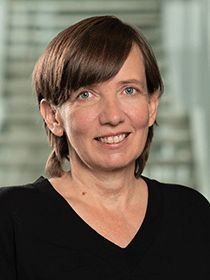
Mats Berdal is a Professor of Security and Development at King's College London's Department of War Studies, with affiliations as a Visiting Professor at The Norwegian Defence Command and Staff College and a Consulting Senior Fellow at the IISS. He serves on multiple editorial boards including International Peacekeeping and International Security . Education: BSc (London) DPhil (Oxford) His research focuses on the intersection of security and development, particularly in post-conflict settings. Key areas include international efforts to consolidate peace after war, UN operations during the Cold War transition, political economy of armed conflicts, evolution of NATO, and post-war violence dynamics. Professional Roles: Member, Academia Europaea Advisory Board, Institute for Post-Conflict and Development Law (Geneva) High-Level Advisory Panel, United Nations Association-UK
Randall Lesaffer is a Professor of Legal History at KU Leuven and a part-time Professor at Tilburg University. He served as Campus Dean of Law and Criminology at KU Leuven (2023-2024) and Chairperson of the Department of Roman Law and Legal History (2018-2023). He is General Editor of The Cambridge History of International Law and Editor-in-Chief of multiple academic series. PhD in Law, KU Leuven (1998) Studied Law and History at Ghent and Leuven Universities Randall Lesaffer's research focuses on the history of international law since 1500, with emphasis on legal history, laws of war, constitutional history, and diplomatic history. His work explores the evolution of international legal doctrines, peace treaties, and the influence of Roman law on modern international law. He has authored a textbook on European legal history and is currently writing a political history of international law during the Cold War's end. His recent publications span the history of international law, analyzing topics such as aggression, reprisals, and peace-making from early modern to 20th-century contexts. These works reflect his interdisciplinary approach to legal history, bridging political, cultural, and doctrinal perspectives. Scientific Awards: Sarton Medal for Intellectual History, Ghent University (2013) Randall Lesaffer has held significant editorial roles, including Editor-in-Chief of the Studies in the History of International Law book series (since 2007) and Editor of the Journal of the History of International Law (since 2015). He has also led institutional initiatives like the Law Schools Global League and the 600th anniversary of KU Leuven's Faculty of Law.
Karin Moser is a historian, researcher, and lecturer specializing in film, broadcasting, and media history at the University of Vienna's Department of Economic and Social History. She holds visiting professorships at the University of Innsbruck and University of Hradec Králové. Her academic career includes a Dr. phil. (2017) and Mag. phil. (2001) from the University of Vienna, alongside professional experience in archives and film institutions. Her research focuses on 20th-century political and media history, public history, and consumer culture. Notable projects include the Comenius Award-winning 'Die Österreich-Box' DVD series and leadership in funded initiatives like 'The Radio Reports of the USIA for Austria' (2019-2022) and 'Film Sources on the History of Austrian Employee Representations' (2021-). Key publications: Analyzes film propaganda, Cold War stereotypes, and Austrian commercial cinema history Documentary work: Co-directed films like 'Die Macht der Bilder' (2014) and 'Rote Katz und bunte Vögel' (2015) Her academic contributions bridge archival research with public engagement, emphasizing visual historiography and media's role in shaping national identity.
Milan Ristović is a Full Professor and Chair of General Contemporary History at the Faculty of Philosophy, University of Belgrade. He holds adjunct roles as Guest Professor of the History of Culture at the Faculty of Architecture in Belgrade (since 2016). His academic career includes roles as Associate Professor (1998–2002), Head of the History Department (2002–2004), and leadership in institutions like the Society for Social History (President since 1998) and editorships of Godišnjak za društvenu istoriju (since 1994). Education: M.A. (Belgrade, Department of Contemporary History), Ph.D. (1991, University of Belgrade) with a dissertation on German 'New Order' plans in Southeastern Europe. His research focuses on 20th-century Southeastern Europe, WWII dynamics, Holocaust studies, Cold War diplomacy, and Balkan historiography. Key publications include monographs on Balkan stereotypes in German media, Yugoslav Jews during the Holocaust, and Yugoslavia's Cold War challenges. His work spans 16 books and ~150 articles in multiple languages. Awards include the Konstantin-Jireček-Medaille (2019) for outstanding contributions to Southeast European studies. Research activities include international projects like 'Yugoslavia and Challenges of the Cold War' (2006–2012) and collaborations with institutions in Germany, Austria, and Greece. He has conducted archival research in London, Berlin, Vienna, and Athens, and lectured globally.
Ass.-Prof. Edith Blaschitz is an Assistant Professor in the Department for Arts and Cultural Studies at the University for Continuing Education Krems, part of the Faculty of Education, Arts and Architecture. Her research focuses on Nazi-era forced labor camps, historical memory, digital cultural heritage, and participatory research methodologies. She leads projects like the 2022-2025 'NS-„Volksgemeinschaft“ und Lager im Zentralraum Niederösterreich' initiative and the 2021-2022 'Making Traces Readable' project, which combine citizen science with digital technologies to document and memorialize sites of Nazi persecution. Education: Not explicitly stated in available texts Affiliations: Director of studies in Cultural Heritage and Digital Humanities Her work bridges historical research with modern digital tools, emphasizing public engagement through augmented reality, co-curation platforms, and geographical mapping. Recent publications include monographs on Nazi labor camps in Lower Austria and interdisciplinary analyses of visual media in reconstructing historical landscapes. Grants include funding from Austrian federal programs and local municipalities for projects like 'Wo sind sie geblieben? Die Frauen von Krems' (2019-2021). She actively participates in international conferences discussing digital preservation of contested spaces and memory politics. Collaborates with institutions such as the Filmarchiv Austria and regional heritage organizations, contributing to exhibitions and public educational initiatives about lesser-known WWII sites.
Vienna University of Economics and BusinessAustria
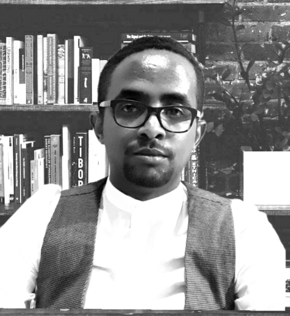
Wogene Berhanu Mena is a teaching and research assistant (prae doc) at the Institute for Gender and Diversity in Organizations at WU Vienna University of Economics and Business. His academic background includes BA/MA degrees in Political Science and International Relations from Addis Ababa University (Ethiopia) and an MA in Intercultural Conflict Management from Alice Salomon University of Applied Sciences Berlin. Current focus on diversity management through ethnic/gender/religious/class intersections Active in refugee integration and conflict management research Recipient of WU SoTL Scholarship and Civil Society Leadership Award His work examines labor control regimes in Ethiopian industrial parks and social class impacts on student interactions , with fieldwork-based publications on Eritrean/Somali refugee communities in Ethiopia. Research trends combine qualitative case studies and theoretical frameworks from organizational sociology, African studies, and migration research. Scientific Awards WU Scholarship for Teaching and Learning (SoTL), 2023 Civil Society Leadership Award, 2019
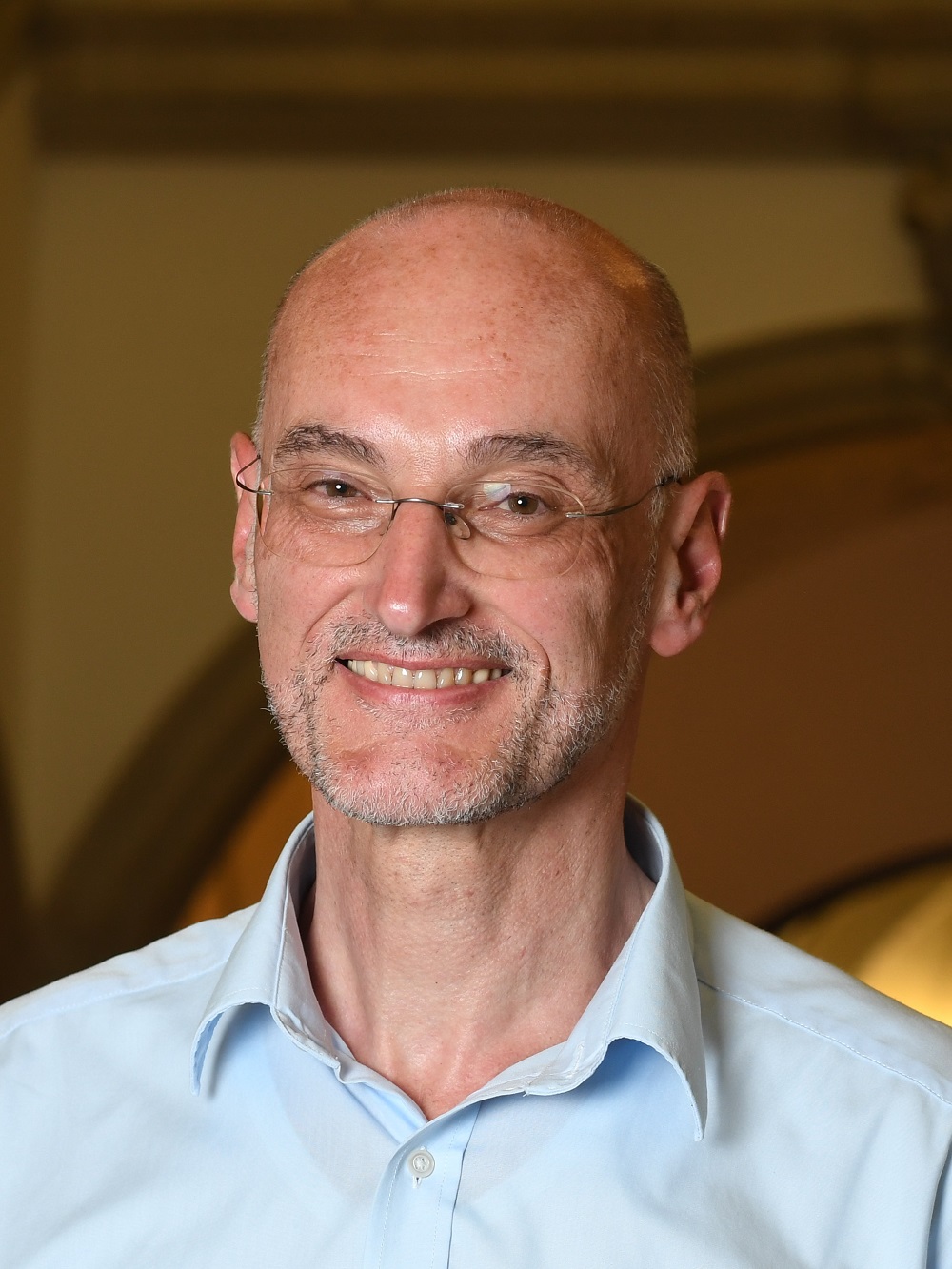
Wolfgang Schmale is a Full Professor of Modern and Contemporary History at the University of Vienna, Austria. He has held academic leadership roles such as Vice-Dean for Education (2012–2016) and Director of Study Programs in History (2010–2012) within the Faculty for Historical and Cultural Studies. His career includes professorships at Ludwig-Maximilians-University Munich, University of Graz, and Technical University Braunschweig. He has been honored with a doctor honoris causa from Sofia University (2021), the Insignia of Honour Blue Ribbon (2018), and membership in the European Academy of Sciences and Arts (2016). Schmale has also served as Secretary-General of the International Society for Eighteenth-Century Studies (ISECS) since 2015. His research focuses on digital humanities, eighteenth-century studies, European integration history, gender history, and human rights. His scholarly contributions include seminal works such as Geschichte Europas (2000), Gender and Eurocentrism (2016), and For a Democratic 'United States of Europe' (2019). These publications analyze transnational networks, historical memory, and the evolution of European identity. Schmale’s work bridges academic rigor with public engagement through travel narratives and digital humanities projects like 'pastperfect.at.' He has held visiting professorships at institutions including the Hebrew University of Jerusalem (2006–2016) and the Université Paris I Panthéon-Sorbonne (2007). His awards reflect both academic excellence and contributions to European scholarly networks. Schmale’s interdisciplinary approach integrates gender studies, cultural history, and digital methodologies to reframe European historical narratives.
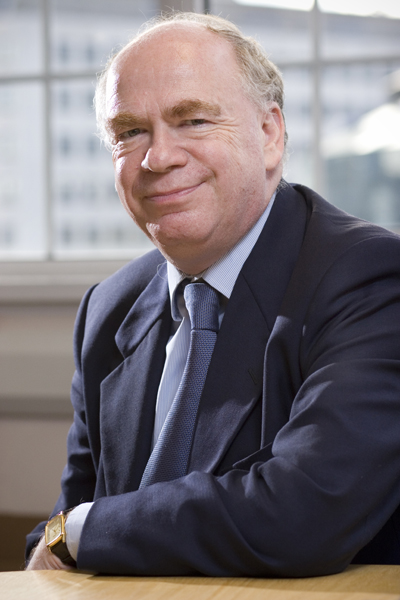
Sir Lawrence Freedman has served as Professor of War Studies at King's College London since 1982 and as Vice-Principal since 2003. His academic career spans over four decades with significant contributions to strategic studies and international security. His educational background includes Whitley Bay Grammar School and the Universities of Manchester, York, and Oxford. Prior to joining King's, he held research positions at Nuffield College Oxford, the International Institute for Strategic Studies (IISS), and the Royal Institute of International Affairs. Freedman's research focuses on nuclear strategy, Cold War history, contemporary defense policy, and international security issues. His work bridges academic theory with practical policy applications, particularly in crisis management and strategic decision-making. He has consistently examined the relationship between military power and political objectives across different historical contexts. His publication record demonstrates a progression from Cold War strategic analysis to contemporary security challenges, with consistent focus on deterrence theory, military intervention, and the political dimensions of warfare. His work on the Falklands Campaign represents significant historical scholarship combined with policy relevance. Academia Europaea Erasmus Medal (1994) Fellow of the British Academy (1995) CBE (Commander of the British Empire) (1996) Official Historian of the Falklands Campaign (1997) KCMG (Knight Commander of St Michael and St George) (2003) Member of the official inquiry into Britain and the 2003 Iraq War (2009) Privy Councillor Freedman has served in numerous advisory capacities including as Official Historian of the Falklands Campaign and as a member of the inquiry into Britain's involvement in the 2003 Iraq War. His work has influenced both academic discourse and government policy on strategic matters. While specific grant information isn't detailed in the source materials, his research appointments and official historical roles suggest substantial research funding and institutional support throughout his career.
Kerstin von Lingen is a Professor at the Department of Contemporary History, University of Vienna, specializing in military history, war crimes trials, and post-war justice. Her research spans WWII, Cold War politics, decolonization, and environmental history intersections. Key research areas: Military justice systems, forced migration, and transcultural legal developments Active teaching roles: Contemporary History lectures and seminars on liberation from Mauthausen, post-war justice, and migration studies Email: kerstin.von.lingen@univie.ac.at Her recent publications focus on: Refugee politics in imperial collapse (2025) Citizenship and property restitution for Holocaust victims (2025) Deserter networks in Nazi Germany (2024) Eastern Front environmental impacts (2024) UN War Crimes Commission's legal legacy (2022)
Univ.-Prof. Dr. Philipp Ther is a Professor of Central European History at the University of Vienna, leading the Research Center for the History of Transformations (RECET) and serving as Deputy Head of the Research Platform for the Study of Transformations and Eastern Europe . He previously held the Chair of Comparative European History at the European University Institute in Florence. His research focuses on post-1989 political and social transformations , East Central European cultural and social history , nationalism , and ethnic cleansing . He has authored award-winning books including Europe since 1989: A History (Princeton UP, 2016), recipient of the Leipzig Book Fair non-fiction prize, and The Outsiders: Refugees in Europe since 1492 (Princeton UP, 2019). He leads major projects like Transformations from Below: Shipyards and Labour Relations in the Uljanik (Croatia) and Gdynia (Poland) Shipyards since the 1980s (2016–2019), funded by German and Austrian research councils. He was awarded the prestigious Wittgenstein Prize (2019), Austria’s highest scientific honor. Teaching : Leads seminars on transformation theories, East European globalization history, and music in the Habsburg Empire. Publications : Over 15 books translated into 15 languages, 12 co-edited volumes, and numerous articles. Affiliations : Department of East European History, University of Vienna; Research Platform for Transformations/Eastern Europe.
Dr. Tatiana Konrad is a researcher at the Department of English and American Studies at the University of Vienna and affiliated with the Environment and Climate Research Hub. Her work spans environmental humanities, cultural studies, and critical analysis of media representations of war, gender, and disability. Principal Investigator for the FWF-funded project "Air and Environmental Health in the (Post-)COVID-19 World" Focus on climate change, war narratives, and identity politics Active in analyzing intersections of culture, environment, and health Her recent publications address plastic pollution, eco-critical frameworks, and sociopolitical dimensions of media artifacts, reflecting her interdisciplinary expertise in cultural and environmental discourse. Tatiana Konrad’s research integrates literary analysis with broader societal concerns, particularly through the lens of postcolonial studies, gender theory, and disability frameworks.
Professor Daniel Siemens is a historian of modern Europe at Newcastle University's School of History, Classics and Archaeology. With a PhD from Humboldt University Berlin (2006) and habilitation from Bielefeld University (2016), he specializes in National Socialism, legal history, and transnational violence studies. His work bridges Germany's 20th-century history, media analysis, and post-WWII restitution efforts. Current Research: 'Advocates of the Victims' (2024-2027) – United Restitution Organisation (URO) history Academic Leadership: Series editor, Modern German History (Bloomsbury); Editor, Central European History (since 2020) His research integrates political violence , media historiography , and legal entanglements . Key themes include: SA dynamics post-1934, Holocaust reparations, and GDR's journalistic culture. Articles span 2013-2025, focusing on Nazi colonialism, legal historiography, and transnational Jewish advocacy. Awarded the 2024 Friedrich Wilhelm Bessel Prize and 2023-2024 IIAS Fellowship, he has held visiting positions at Hebrew University and LMU Munich. Supervising current PhD projects on GDR border guards, Franco regime consent, and UN agency histories, he actively mentors transnational history research. Key Honors 2024 – Academia Europaea fellowship 2023-2024 – Hebrew University research fellowship 2018 – Choice Outstanding Academic Title 2013 – BBC History Book of the Year 2009 – Franz Steiner Prize
Ivan Berend is a distinguished Professor of History at the University of California Los Angeles (UCLA), holding positions since 1990. He previously served as Director of UCLA's Center for European and Eurasian Studies (1993–2005), President of the Hungarian Academy of Sciences (1985–1990), and Rector of the Budapest University of Economics (1973–1979). His academic journey includes roles at Columbia University, Oxford, and other global institutions. Education: Summa cum Laude M.A. (1949–1953), Doctorate in Economics (1957), Ph.D. in History (1958), and Habilitation degree (1962) from Hungarian institutions. His research focuses on Central and Eastern Europe's economic, social, and ideological history, particularly modernization processes and transitions from state socialism to capitalism. Research interests include 19th–20th century European history, European Union dynamics, and peripheral economic development. His work analyzes post-WWII economic challenges and EU integration. He has authored 28 books and over 120 studies, with recent publications addressing contemporary European history and transition economies. Major awards include the Konstantin-Jirasek Gold Medal (2000), Honorary doctorates from Glasgow and other universities, and membership in the British Academy and Academia Europaea. He has held leadership roles in international organizations like the International Committee of Historical Sciences (President, 1995–2000) and advised Hungarian governments on economic reforms (e.g., transition to market economy, privatization). Key contributions include lectures at global forums (World Economic Forum, Davos), keynote addresses at UN meetings, and presiding over academic bodies. His work bridges historical scholarship with contemporary policy analysis, emphasizing Europe's peripheral regions and systemic transitions.
Lars Fredrik Stöcker is an Associate Professor at the University of Vienna's Institute of East European History, affiliated with the Department of European and Comparative Literature and Language Studies. He holds a PhD in History and Civilization from the European University Institute (Florence) and a diploma in Cultural Studies from European University Viadrina (Frankfurt/Oder). His research focuses on Cold War history, post-socialist economies, and transnational expert networks in Eastern Europe and Scandinavia. Education: PhD European University Institute (201?), Diploma European University Viadrina Affiliations: Institute of East European History, RECET (Research Platform for Transformations/Eastern Europe) Current research includes a book project on Estonia's economic reforms during Perestroika and a joint project on 'Polonia Firms' (1976–1994) with the University of Warsaw. His work examines transnational expert cooperation and systemic transformation in late socialism. Teaching includes courses on Baltic Sea Region Studies and transnational consumption histories. He has held fellowships at Tallinn University, Uppsala University, and the Imre Kertész Kolleg (Jena). Grants: Estonian Science Foundation, Swedish Research Council Collaborations: FWF/NCN-funded bilateral project with Prof. Jerzy Kochanowski His publications analyze Soviet Baltic economic policies and Cold War transnational resistance networks. Offices are at Universitätsring 1 (Room O2.147b) and Josef-Holaubek-Platz 2 (Room 2H355).
Christian Werner is a Researcher at the Department of Geoinformatics - Z_GIS, part of the University of Salzburg's Faculty of Digital and Analytical Sciences. His work focuses on geoinformatics applications, spatial analysis, and environmental modeling. Werner’s research portfolio includes studies of historical church governance structures, Cold War religious dynamics, and institutional modernization in Catholic dioceses. Research Interests: His primary areas include geospatial technologies, synodal governance in Catholic contexts, and the interplay between church institutions and political systems. Notable work examines Vatican diplomacy during the Cold War and post-conciliar church reforms in East Germany and Austria. Articles Overview: His recent publications analyze synodal processes in Catholic dioceses, East German church-state relations, and the legacy of Vatican II. Key themes include institutional reform, religious marginalization under authoritarian regimes, and the application of geoinformatics to sociopolitical contexts. Professional Activities: As a member of the Z_GIS team, he contributes to interdisciplinary research initiatives combining geospatial data with historical and theological analysis.