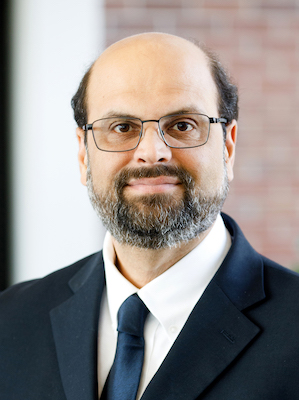
Dr. Wilfredo Moscoso-Kingsley is an Associate Professor in Industrial, Systems, and Manufacturing Engineering at Wichita State University. His research explores machining dynamics, material behavior under extreme conditions (e.g., high strain rates, rapid heating), and precision manufacturing technologies. Publications include studies on tool stress distribution, hybrid cold spray methods, and in-situ quality control.
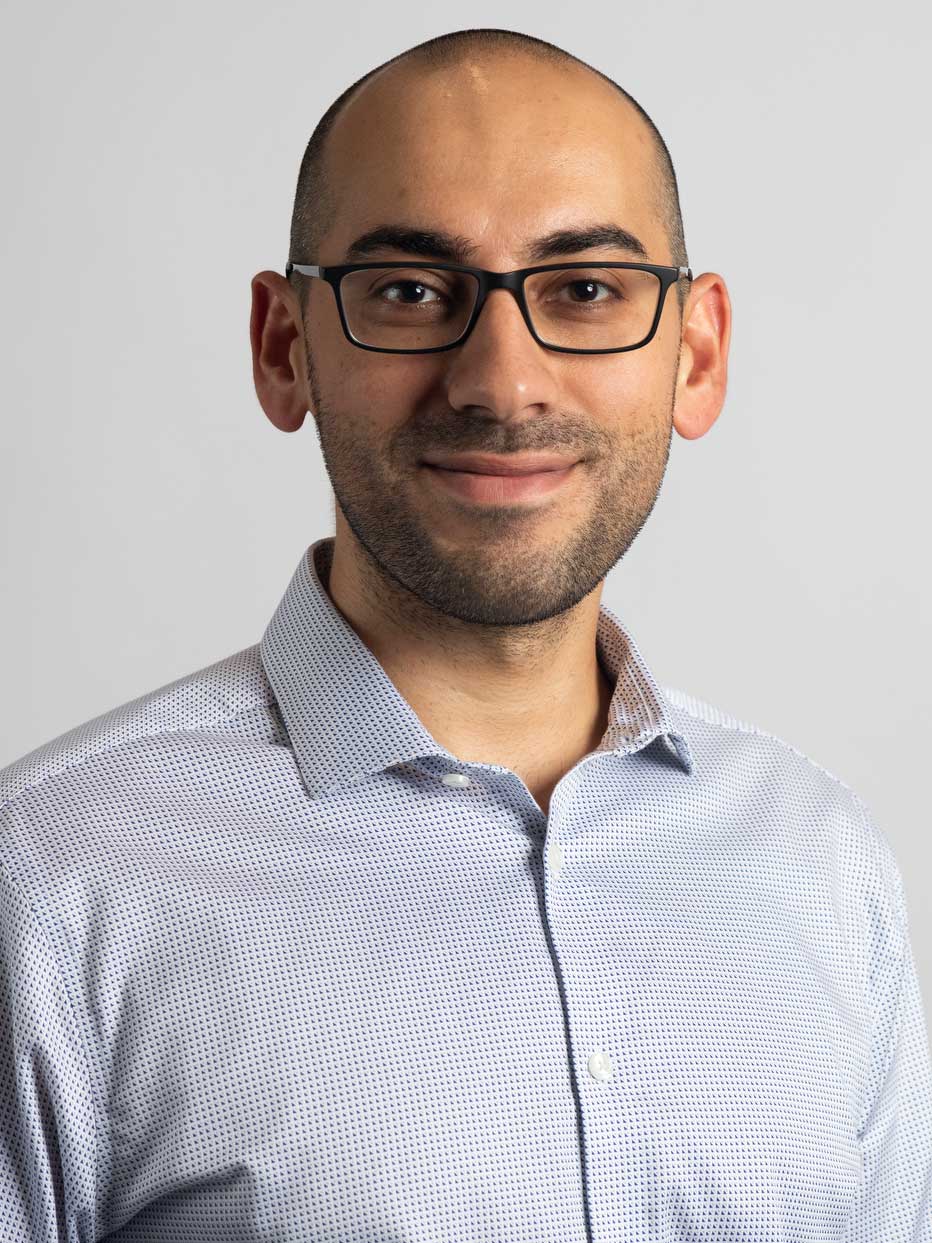
Pranjal Nautiyal is an Assistant Professor in the Department of Mechanical and Aerospace Engineering at Oklahoma State University (OSU). He holds affiliations with the College of Engineering, Architecture and Technology (CEAT). His research focuses on advanced manufacturing, nanostructured materials, tribology, and experimental mechanics. Nautiyal earned a Ph.D. in Materials Science and Engineering from Florida International University (2020), followed by a postdoctoral fellowship at the University of Pennsylvania's Department of Mechanical Engineering and Applied Mechanics (2020-2023). Education: Postdoc, Mechanical Engineering and Applied Mechanics, University of Pennsylvania (2020-2023) Ph.D., Materials Science and Engineering, Florida International University (2015-2020) B.Tech., Mechanical Engineering, Indian Institute of Information Technology, Design & Manufacturing (2011-2015) Research Interests: His work spans nanoscale tribology, additive manufacturing, and biomaterials. Key areas include: Tribofilm formation mechanisms in lubricants BNNT-reinforced composites for structural applications Freeze-cast biomaterials for bone regeneration High-precision microfabrication for organ-on-a-chip systems His lab develops novel materials for energy-efficient tribological systems and biomedical implants. Awards & Recognition: Early Career Award (2023) from STLE Senior Member (2023) of the National Academy of Inventors Nanomaterials and Energy Prize (2020) Trailblazers in Engineering Fellow (2022) Grants & Funding: Recipient of a 2024 NSF grant for studying lubrication mechanisms under electric fields in electrified aircraft systems. His work is supported by industry collaborations and federal funding. Professional Activities: Chair of the Nanotribology Technical Committee (STLE) Member of TMS, STLE, and NAI Organizer of symposiums on advanced real-time imaging (TMS Annual Meeting)
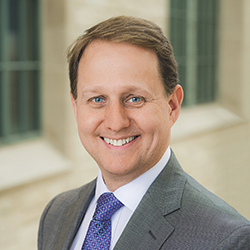
Thomas Keller is a Postdoctoral Research Fellow at The Roux Institute, Northeastern University, working within the Department of Mechanical and Industrial Engineering. His research centers on sustainable materials development and advanced manufacturing techniques, with a focus on creating circular manufacturing solutions in Maine. Education: Tufts University, B.S. Applied Physics (2018) Dartmouth College, PhD Engineering Sciences (2023) Dr. Keller's research spans Materials Science , Computational Modeling , Magnetic Materials , Additive Manufacturing , and Industrial Ecology . He specializes in microstructure-property relationships and holds a patent for rare-earth free permanent magnets. His doctoral work at Dartmouth established foundational knowledge in sustainable magnet materials, driving innovations in eco-friendly manufacturing. Analysis of his 2019-2025 publications reveals dominant research trajectories in manganese-aluminum permanent magnet development (70% of works) and metal additive manufacturing techniques (30%). Key subfields include rare-earth-free magnet optimization, laser powder bed fusion, cold spray applications, and phase transformation control, demonstrating consistent focus on sustainable materials engineering. Scientific Awards: Member of Sigma Pi Sigma National Physics Honor Society (2018) Member of Sigma Xi Scientific Research Honor Society (2024) Dr. Keller currently participates in the Roux Institute's initiative to establish a circular manufacturing hub in Maine. While no formal advisees or grant awards are documented in available sources, his collaborative research with Northeastern's engineering teams advances industrial ecology applications through materials innovation and sustainable processing techniques.
Andrew Neils is a Research Assistant Professor at The Roux Institute, Northeastern University, and a Center Member at the Cross-College Magnetics Center. His work focuses on advanced materials and additive manufacturing technologies, particularly in the development and analysis of materials for high-performance applications. His research interests include additive manufacturing processes, such as laser powder bed and hybrid laser wire techniques, as well as the study of advanced materials like high-entropy alloys and their corrosion resistance. He also investigates the mechanical properties and cross-linking of ultrahigh molecular weight polyethylene (UHMWPE) for biomedical and structural applications. His work combines experimental methods with computational approaches, such as machine learning, to accelerate material discovery and optimization. Andrew has contributed to over two decades of research, with notable contributions in optimizing material properties through irradiation techniques and polymer blending. His studies on lattice structures and electron beam melt manufacturing have advanced applications in aerospace and biomedical engineering. His affiliations include active participation in the Cross-College Magnetics Center, where he collaborates on interdisciplinary projects. No information on advising students or grants is provided. His research emphasizes practical applications, bridging computational models with real-world material testing.
Dr. Ozan Cagatay Ozdemir is an Assistant Professor in the Department of Mechanical and Industrial Engineering at Northeastern University. He specializes in advanced metal additive manufacturing, particularly Cold Spray Additive Manufacturing (CSAM), with expertise in multiphase flows, thermodynamics, and failure analysis. His research is funded by the Department of Defense, Energy, Commerce, and industrial partners, yielding over 700 citations and co-authoring the textbook Practical Cold Spray (2021). Education: PhD in Mechanical Engineering from South Dakota School of Mines and Technology (2017) Research focuses on improving CSAM deposition efficiency, manufacturing rates, and product quality. Key interests include nozzle design, process monitoring, and cybersecurity in additive manufacturing. He holds the 2022 Faculty Research Team Award and leads the Özdemir Research Group at Northeastern’s Innovation Campus in Burlington, MA. Teaching includes Additive Manufacturing, Heat Transfer, and Capstone Design courses. Leadership roles include Chair of ASM International Boston Chapter (2024-2025) and member of the Thermal Spray Society Training Committee. Recent grants include a $4.8M ARL award for wire-arc DED and a $1.5M ARL grant for cybersecurity enhancements in CSAM. Notable innovations include the Internally Cooled Aerodynamically Centralizing Nozzle (ICCN) patent (2024) and contributions to power electronics via copper-AlN coatings. His work bridges fundamental research and industrial applications, emphasizing sustainable manufacturing and high-value asset repair.
Christopher Schuh is the John G. Searle Professor of Materials Science and Engineering at Northwestern University, serving as Dean. His research focuses on structural materials, including metals and ceramics, emphasizing disorder control in microstructures to optimize mechanical properties. He leads the Schuh Group, combining experiments, theory, and simulations to study processing-structure-property relationships. Schuh is a serial entrepreneur, co-founding Xtalic Corporation (nanocrystalline coatings) and Desktop Metal (3D metal printing). His work spans over 250 publications in journals like Science and Acta Materialia . Education: BS in Materials Science and Engineering, University of Illinois at Urbana-Champaign PhD in Materials Science and Engineering, Northwestern University Research Interests: Schuh's group explores nanocrystalline alloys, grain boundary engineering, microparticle impact dynamics, and shape memory ceramics. His innovations include nanocrystalline coatings for electronics and scalable additive manufacturing techniques. Recent projects involve quantifying plasticity in extreme strain rates and developing alloys for rapid sintering. Awards: Fellow of ASM International Fellow of the Minerals, Metals and Materials Society Member of the National Academy of Inventors Member of the National Academy of Engineering Grants & Advising: Schuh oversees a lab with active PhD students (e.g., Tyler Lucas, Daniel Ng) and collaborates on projects like the 'B09-NANO for Industry 3' initiative. His grants fund research into microstructural evolution and cold spray technologies. Labs & Teams: The Schuh Group operates at the intersection of academia and industry, with a focus on translational research. Current projects include shape memory ceramics and high-velocity microparticle impact analysis.
Professor Philippa Reed is a faculty member in the Mechanical Engineering Department at the University of Southampton, specializing in structural materials. She holds a Professorial title and has led significant research collaborations with industry partners like EDF, Rolls Royce, and TWI. Her teaching responsibilities include modules on Mechanical Systems Analysis, Materials and Structures, and Manufacturing. She serves on editorial boards for journals like International Journal of Fatigue and has delivered invited lectures at institutions and conferences. Research Focus: Fatigue processes in additively manufactured alloys, high-temperature oxidation in turbine materials, and numerical modeling of crack behavior. Awards: Elected Fellow of the Institute of Materials, Minerals and Mining (2009); Royal Academy of Engineering Travel Grant (2010). Students: Supervises current PhD researchers in fatigue and materials science, including Christian Cox and Xingjian Zhao. External Roles: Editorial board member (2005–2024), invited speaker at I Mech E and Portsmouth University, technical consultant for E.ON. Her recent publications emphasize additive manufacturing, nickel superalloys, and fatigue mitigation strategies, with a focus on 3D characterization and dwell fatigue analysis. Funding sources include EPSRC, MOD, and industry sponsorships.
Suresh Palanisamy is a Professor of Advanced Manufacturing and Director of the Manufacturing Futures Research Platform at Swinburne University of Technology's School of Engineering. He specializes in metal additive manufacturing, advanced manufacturing technologies, and Industry 4.0, with a focus on cold spray additive manufacturing, laser ultrasonic testing, and sustainable manufacturing. He has secured over $25 million in research funding and led major projects such as the $26 million Air Platforms Program in the Defence Materials Technology Centre. Education: PhD in Die Casting and Ultrasonic Non-Destructive Testing (Ford Motor Company collaboration), Master of Engineering (Computer Integrated Manufacturing), and Graduate Certificate in Higher Education from Swinburne. Research Interests: Metal Additive Manufacturing, Industry 4.0, Machining/Tooling Technologies, and Sustainable Manufacturing. He has collaborated with over 70 industry partners and 20 research institutions globally. Awards: Multiple national/international awards including Vice-Chancellor’s Engaged Team Award, Capability Improvement Awards, and Best Paper/Poster recognitions. His work emphasizes bridging academia and industry, particularly in SMEs. Grants: Over 50 grants including ARC Research Hub for Future Digital Manufacturing, CSIRO collaborations, and Defense Science and Technology Group projects. Active in developing digital twin models for cutting tools and Industry 4.0 solutions. Labs/Teams: Leads the Transport Innovation Centre and collaborates with global institutes like Malaysia Automotive, Robotics & IoT Institute. His research spans additive manufacturing applications in aerospace, biomedical, and energy sectors.
Dr. Thein Kyu is a Distinguished Professor in the Department of Polymer Engineering at the University of Akron. He holds a Ph.D. in Polymer Chemistry from Kyoto University (1980) and has held research positions at McGill University (1980-81) and the University of Massachusetts (1981-83). His research focuses on polymer blends, energy storage materials (e.g., solid-state batteries), flexoelectric polymers, and liquid crystals. He has authored over 230 papers, holds 5 patents, and led grants including NSF-funded projects on solid-state electrolytes and flexible batteries. His team includes Ph.D. and MS students working on advanced materials for energy harvesting and biomedical applications. Key patents include US2018/0337417 (flexoionic membranes) and US9,548,514 (solid polymer electrolytes). Education: B.S. in Textile Engineering (Kyoto Institute of Technology, 1972), M.S. and Ph.D. in Polymer Chemistry (Kyoto University, 1974 and 1980). Research highlights include developing solvent-free solid-state electrolytes and flexoionic materials for wearable energy systems. His current projects address challenges in battery safety, energy conversion, and sustainable manufacturing. Grants include NSF support for multilayered polymer electrolytes (2015-2019) and PFI-TT funding for adaptive battery designs (2022-2025). Collaborators include industry partners like Chemtronergy LLC. His lab focuses on translating polymer chemistry innovations into practical applications for energy storage, wearable devices, and biomedical materials.
Dr. Yan Lin is an Associate Professor in the Department of Geography at Pennsylvania State University, affiliated with the College of Earth and Mineral Sciences and the Social Science Research Institute. Her expertise bridges GIScience, spatial analysis, and health geography, with a focus on environmental health disparities, cancer disparities, and geospatial modeling uncertainties. She holds a Ph.D. from Texas State University and a master’s in GIS from Central South University. Her research integrates geospatial modeling, spatial statistics, and community-based methodologies to explore relationships between human health, social dynamics, and environmental factors. Key areas include: GIScience applications in spatial modeling and uncertainty analysis Environmental health disparities among Native American communities Cancer prevention and control through geographical analysis Dr. Lin’s work has been funded by NIH (NIEHS, NIMHD, NIGMS, NCI), NSF, EPA, and others. She actively collaborates with indigenous communities to ensure research aligns with community needs. Awards include the 2022 Sobel Duncan SHIP Award and Women in STEM Faculty Development Award. Her recent publications span advanced materials science topics such as ceramic composites, high-entropy materials, and aerospace applications, reflecting interdisciplinary collaborations. She mentors students in MS and PhD programs focusing on spatial analysis, health disparities, and environmental health.
Abderrachid Hamrani is an Assistant Professor in the Department of Mechanical and Materials Engineering at Florida International University (FIU). His research focuses on interdisciplinary applications of machine learning, additive manufacturing, and material science. He currently holds an office in the MME department and can be contacted via ahamrani@fiu.edu. Research interests include: Machine learning-driven optimization of manufacturing processes (e.g., cold spray, wire arc additive manufacturing) Biomedical imaging applications (e.g., diabetic foot ulcer segmentation, skin color classification) Renewable energy systems (solar photovoltaics, biohydrogen production) Advanced computational modeling techniques (meshless methods, physics-guided simulations) Recent work emphasizes AI integration across manufacturing, healthcare, and agriculture. Over 30 publications span topics from material deposition optimization to environmental sustainability assessments. No formal awards are listed in available materials. Active in guiding graduate research projects but no specific advisees named. Current research involves collaborations on smart robotics, quadruped locomotion, and energy-water nexus studies in MENA regions.
Benjamin Boesl is a Professor in the Department of Mechanical and Materials Engineering at Florida International University (FIU). His research focuses on advanced materials engineering, including solid mechanics, fracture mechanics, and in situ mechanical testing. He investigates high strain rate material response, processing-structure-property relationships, and dynamic material behavior. His work emphasizes developing novel composites and nanomaterials with enhanced mechanical, thermal, and functional properties. Boesl's research includes the synthesis and characterization of ultra-high-temperature ceramics, carbide foams, and nanocomposites. He employs advanced techniques like in situ mechanical testing, computational modeling, and non-destructive evaluation to study material behavior under extreme conditions. His contributions span fields such as additive manufacturing, plasma spraying, and smart materials, with applications in aerospace, energy, and structural engineering. His recent work explores machine learning for predicting material degradation, bioinspired materials, and graphene-based composites. He has published extensively on topics like boron nitride nanostructures, cold-sprayed coatings, and spark plasma sintering. Boesl collaborates with industry partners through the Center for Excellence in Materials (CELL-MET) and the PATHS-UP Engineering Research Center, advancing translational research in materials science and engineering.
Gang JI is a CNRS Research Officer with HDR at the University of Lille, affiliated with the Materials and Transformations Unit (UMET) and the Physical Metallurgy and Materials Engineering team. He conducts advanced research in metal matrix composites, interface engineering, and microstructural characterization using transmission electron microscopy techniques. His research interests include physical metallurgy, materials engineering, metal matrix (nano)composites, interface characterization, powder metallurgy, additive manufacturing, and advanced electron microscopy. He investigates the relationship between complex microstructures and mechanical properties, with a focus on aluminum and magnesium-based systems. His recent publications reveal a strong trend in enhancing mechanical performance of lightweight alloys, particularly through interface tailoring, precipitation engineering, and advanced processing techniques like cold spraying and additive manufacturing. His work spans from fundamental microstructural analysis to applied materials development for high-performance applications. Co-supervised thesis: Study of aluminum matrix composites reinforced by TiB2 nanoparticles for TEM (Yu MA, 2019) Co-supervision: Preparation, microstructure and properties of advanced multifunctional composites by powder metallurgy (Jingnan MA, 2021) Co-direction: Study of the relationship between complex microstructures and fracture properties of stainless steel (Renata DE OLIVEIRA MELO, 2023) He is actively involved in collaborative research projects and has contributed to significant advancements in materials science, as evidenced by publications in top-tier journals such as Nature Materials , Acta Materialia , and Cell Reports Physical Science .
Lars Nyborg is a Professor of Surface Engineering at Chalmers University of Technology, where he leads the Powder and Surface Engineering research group and serves as the leader of Chalmers' area of strength Production. He is also one of the research leaders of MCR and maintains strong connections with industry through collaborative research projects. Dr. Nyborg was educated in Gothenburg and received his PhD in 1987. His academic journey has been marked by significant contributions to materials science and manufacturing engineering. Nyborg's research focuses on surface engineering, powder metallurgy, and the integration of materials and manufacturing engineering. His work spans cutting processing, high-strength materials, and additive manufacturing technologies. He has been instrumental in developing scientific collaboration with industry, particularly in powder metallurgy applications. His research group investigates novel processing routes for powder-based materials, surface modification techniques, and the relationship between manufacturing processes and material properties. Analysis of Professor Nyborg's recent publications reveals a strong emphasis on additive manufacturing technologies, particularly laser powder bed fusion and directed energy deposition. His work addresses critical challenges in metal AM including surface roughness, defect formation, powder reuse, and the development of novel alloys specifically tailored for additive processes. There is also significant focus on surface engineering solutions like low-temperature carburizing for improved material performance. Professor Nyborg has received numerous scientific awards throughout his career: Fellow of the Royal Swedish Academy of Engineering Sciences SKF/Chalmers Prize for his thesis (1988) First recipient of the Powder Technology Prize (1993) Nyborg actively supervises research projects and students, with a strong emphasis on industry collaboration. His current projects include the PROENVIRO project SuSintPart, the MNT-ERA project TAILORSINT, and international collaborations through the Sino-Swedish Advanced Materials Exchange Center and the STINT Institutional Project with City University Hong Kong. He is deeply involved in European research networks focused on powder metallurgy. Professor Nyborg leads the Powder and Surface Engineering research group at Chalmers, which maintains strong connections with both academic institutions and industrial partners worldwide. The group participates in multiple international collaborations and is at the forefront of research in powder-based manufacturing technologies and surface engineering solutions.
Erdmann Spiecker is a Professor in the Department of Materials Science at Friedrich-Alexander University Erlangen-Nuremberg (FAU). His research focuses on micro- and nanostructure analysis of materials, with expertise in electron microscopy, thin film technology, and catalytic material design. Key Research Areas: Nanotechnology, Photocatalysis, Surface Engineering, and Analytical Electron Microscopy. Notable Techniques: Correlative X-ray and electron tomography, 4D-STEM, Raman spectroscopy. Material Systems: Transition metal dichalcogenides, Ga–Pt liquid metal catalysts, TiO2 nanotubes, superalloys. His recent work explores stability mechanisms in organic photovoltaics, defect analysis in 2D materials, and hierarchical pore networks for catalysis. Articles highlight applications in renewable energy, alloy microstructures, and precision nanofabrication.