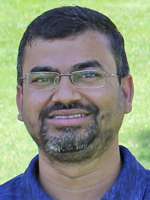
Dr. Becky Adamson is a Researcher in the Department of Fluid Science and Resources at the University of Western Australia. Her work focuses on natural gas research, particularly cryogenic solidification and hydrate formation, with additional expertise in Raman spectroscopy. She has prior experience in cold spray additive manufacturing, addiction research, and composite materials science. Her profile is accessible via UWA Profile and Google Scholar . Research Interests: Cryogenic processes in natural gas systems Hydrate formation mechanisms and applications Raman spectroscopic analysis techniques Advanced manufacturing methodologies Material science innovations No specific awards, grants, or advising activities are explicitly listed in the provided text. Her work contributes to interdisciplinary research at the Fluid Science and Resources group.
Reza Jafari is a Doctoral Researcher at Tampere University's Faculty of Engineering and Natural Sciences, focusing on materials development for demanding environments. His research centers on durable icephobic cold-sprayed coatings, involving microstructural characterization at the Tampere Microscopy Center and Icing Research Center. He holds a Master of Science in High-Temperature Corrosion Behavior of Thermally Sprayed Coatings from Tarbiat Modares University (2017). Research interests include advanced thermal spray technologies, composite materials, and microstructural analysis. His work addresses applications in corrosion protection, additive manufacturing, and environmental engineering, contributing to UN Sustainable Development Goals related to industry and innovation. Recent studies emphasize cold spray deposition, quasicrystal composites, and coating durability under harsh conditions. Key areas: Cold Spray Technology, Quasicrystalline Materials, Microstructure Evolution, Coating Wear Resistance Collaborations: Tampere Microscopy Center, Icing Research Center Publications highlight innovations in flame-sprayed coatings, real-time cold spray monitoring, and mechanical property assessments. His work has been presented at international conferences, including Thermal Spray 2025 and related forums.
Dr. Andrew Ang is an Associate Professor at Swinburne University of Technology's School of Engineering, specializing in thermal spray coatings, additive manufacturing, and materials engineering. He leads the Swinburne’s Space Technology and Industry Institute (STII) and directs the Microscopy & Advanced Analytical Facility (MAAF). His research focuses on material characterization, fatigue analysis, and industry collaborations with companies like Boeing and GE Oil & Gas. Dr. Ang holds a PhD from Swinburne and a Bachelor's from National University of Singapore. He has supervised over 12 PhD/Masters students and secured over $9.5M in ARC grants. Research Interests: Thermal spray technologies (plasma, HVOF, cold spray), high-entropy alloys, corrosion-resistant coatings, additive manufacturing, and aerospace materials. His work bridges academic and industrial applications, addressing challenges in defense, energy, and aerospace sectors. Awards: Includes International Thermal Spray Association Scholarship, Fresh Science Victoria, and DMTC Industry Partnership Award. He edits the Journal of Thermal Spray Technology and chairs committees like ASM-TSS. Grants & Collaborations: Key projects include ARC Training Centres for Surface Engineering and Biofilm Research. Partnerships with 15+ industry leaders focus on material durability, coatings for extreme environments, and additive manufacturing innovations. Labs & Teams: Leads STII and MAAF labs, advancing space technology and materials analysis capabilities. His work supports sustainable manufacturing and clean energy initiatives aligned with UN SDGs for innovation, infrastructure, and climate action.
Akram ALHUSSEIN is an Associate Professor at the University of Technology of Troyes (UTT), where he has been a faculty member since September 2012. He is affiliated with the Laboratory of Mechanical & Material Engineering (LASMIS) research team and is based at the South Champagne UTT Technology Center in Nogent. His work spans mechanical engineering and materials science with a focus on thin film technology, material characterization, and industrial applications. Dr. ALHUSSEIN holds a PhD in Mechanics of materials from the University of Lorraine (2010), a Master M2 in Mechanic, Materials, Structures and Processes from ENIM-ENSAM-University of Lorraine (2006), and a Bachelor (Master) degree in Mechanical Engineering from the University of Aleppo (2003). Prior to his current position, he completed a postdoc at Roberval lab, University of Technology of Compiègne and served as an Assistant Professor at LUSAC lab, Higher School of Engineers of University of Caen. His primary research focuses on developing protective and multifunctional thin films, including hydrogen barrier coatings, elastic behavior of thin films, advanced functional hard coatings, and biomedical applications. His work also encompasses tribocorrosion of additive manufactured parts, hydrogen embrittlement, and duplex treatment of bulk materials. With qualifications in the 28th, 33rd, and 60th CNU sections, his expertise spans multiple disciplinary areas within materials science and engineering. Analysis of Dr. ALHUSSEIN's publication record reveals a strong emphasis on thin film technology, materials characterization, and corrosion resistance. His research bridges fundamental materials science with practical industrial applications, particularly in developing coatings that address challenges in corrosion resistance, wear properties, and functional applications across biomedical and industrial contexts. Recent publications show increasing focus on sustainable materials and advanced characterization techniques. Dr. ALHUSSEIN has supervised eleven PhD students, with five successfully defending between 2018-2023 and six more expected through 2025. He serves as a Member of the LASMIS Research Unit board and the Strategic Information Committee, was International Responsible for the Materials and Mechanical engineering branch (2021-2023), and heads the professional training program 'High Performance Materials and Processes.' Previously, he managed health and safety at the UTT Nogent site (2012-2015). His laboratory work centers on materials characterization, thin film deposition, and mechanical testing, with particular emphasis on coatings addressing corrosion resistance, wear properties, and specialized applications in biomedical and industrial settings. His research program maintains strong industry relevance while advancing fundamental understanding of material behavior at micro and nano scales.
Joseph F. Stanzione, Ph.D., is a Professor and Director of the Advanced Manufacturing and Materials Innovation (AMMI) at Rowan University's Henry M. Rowan College of Engineering. He holds affiliations with the Ph.D. in Materials Science & Engineering and Mechanical Engineering programs. His research focuses on sustainable materials, green chemistry, and additive manufacturing, particularly leveraging lignocellulosics and bio-based polymers for high-performance applications. He has received notable awards, including the U.S. EPA Green Chemistry Challenge Award (2013) and Rowan's Faculty Research Achievement Award (2020). Education: Ph.D., Chemical Engineering, University of Delaware M.S., Chemical Engineering, Drexel University B.S., Chemical Engineering, Drexel University Research Expertise: Dr. Stanzione’s work emphasizes polymer composites, cold spray additive manufacturing, and bio-based materials. His projects include developing lignocellulosic biorefineries and sustainable manufacturing techniques. Recent studies explore CBD-derived thermosets, interpenetrating polymer networks, and mixed-material feedstocks for advanced composites. Grants & Projects: NSF-funded research on bio-based polyesters (2020–2023) U.S. Department of Defense projects on structural materials (2019–2024) Industry partnerships with PPG and Northeastern University Labs & Teams: He leads the AMMI initiative, advancing additive manufacturing and materials innovation. His lab collaborates on projects like cold spray polymer deposition and bio-based resin development.
Dr. Jan Petrik is a full-time faculty member at ETH Zürich, affiliated with the Professorship for Advanced Manufacturing. His research focuses on integrating artificial intelligence with manufacturing processes, particularly in deep learning, reinforcement learning, and computer vision applications for metal forming and additive manufacturing systems. Current position: Professor, Advanced Manufacturing, ETH Zürich Research interests: AI-driven manufacturing optimization, microstructural control, and process modeling Recent work: Development of AI frameworks like DeepForge, RLTube, and CrystalMind for metal forming and additive manufacturing
Dr. Zhilang Zhang is a Professor at ETH Zurich, holding the Professorship for Advanced Manufacturing within the Department of New Manufacturing Technologies. His research focuses on computational mechanics, numerical simulation methods (SPH, FEM), advanced manufacturing processes, and process modeling. He specializes in high-fidelity modeling of complex phenomena such as additive manufacturing, material sintering, and fluid-structure interactions. Key research areas include multiscale modeling, CFD-DEM coupling, and novel numerical methods for extreme mechanics problems. His work integrates advanced computational techniques with experimental validations, addressing challenges in manufacturing, materials science, and fluid dynamics. Recent projects involve operando synchrotron tomography for melt pool analysis and parallelized SPH frameworks for large-scale simulations. Notable contributions include developing the Direct FE2 method for multiscale simulations and improving hydroelastic modeling via meshless methods. He actively explores applications of physics-informed neural networks and surrogate models in engineering optimization. His research group collaborates on cutting-edge projects at the intersection of computational engineering and advanced manufacturing, with a focus on sustainable and high-performance materials processing.
Ehsan Asadi is a Senior Lecturer in the School of Engineering at RMIT University, Melbourne, Australia, specializing in Mechatronics. He joined RMIT University as a Senior Lecturer on February 2, 2020, and is actively involved in research and teaching in the fields of robotics, control engineering, and mechatronics. Dr. Asadi completed his PhD at Politecnico di Milano, Milan, Italy, from January 2010 to October 2013. He then worked as a Post Doctoral Research Fellow at Nanyang Technological University, Singapore, from September 2015 to April 2017. Between May 2017 and February 2020, he was also the Co-Founder and CTO of Transforma Robotics in Singapore. His research interests span control engineering, mechatronics, robotics, field robotics, automotive mechatronics, autonomous systems, and machine learning. Dr. Asadi's work aligns with UN Sustainable Development Goals, particularly Industry, Innovation and Infrastructure; Affordable and Clean Energy; and Sustainable Cities and Communities. His research has applications in various domains including construction waste management, solar photovoltaic inspection, polymer degradation monitoring, and autonomous navigation. Dr. Asadi has published extensively in top robotics and engineering journals with recent publications focusing on robotic hand-eye calibration, aerial imaging for solar panel inspection, hyperspectral characterization of polymer degradation, and intelligent control systems for ballbot robots. His publications demonstrate strong interdisciplinary connections between robotics, computer vision, and practical engineering applications. He is actively involved in academic service, serving on the IoT Alliance Australia Executive committee since October 2024, as an Editorial Board Member for the Journal of Robotics and Mechatronics since March 2024, and as an Associate Editor for IEEE Robotics and Automation Letters since October 2022. He is also a Senior Member of the Institute of Electrical and Electronics Engineers (IEEE). Dr. Asadi is open to supervising Masters Research or PhD students and collaborating on industry projects, advisory committees, and web conferences as a panellist or speaker. His research lab, IA-Cobotics (https://www.ia-cobotics.com/), focuses on intelligent automation and collaborative robotics.
David Bahr serves as Senior Associate Dean of Faculty at Purdue University's School of Materials Engineering in West Lafayette, overseeing academic affairs and participating in key leadership structures including the Engineering Cabinet, Engineering Leadership Team, and multiple faculty committees (Engineering Area Promotions, Named Professorships, Awards, and Affairs Committees). His research centers on materials science and mechanical engineering with emphases on nanomechanical characterization of molecular crystals, additive manufacturing processes, and corrosion protection systems. He investigates hydrogen embrittlement mechanisms in shot-peened metals, nanoindentation behavior of energetic materials, and surface engineering solutions for electronic components, bridging fundamental material properties with industrial applications. Analysis of his 2023-2025 publications reveals three dominant research thrusts: (1) Advanced manufacturing techniques focusing on powder bed additive processes and cold spray metallization, (2) Nanomechanical property characterization using innovative nanoindentation methodologies for molecular crystals and metals, and (3) Corrosion mitigation strategies for electronics through plasma-assisted SiOx coatings and nanoparticle engineering. His work demonstrates consistent interdisciplinary collaboration across materials chemistry, mechanical testing, and electronic packaging domains.
Dr. Jeremy Koh Siang Hui is the Head of Advanced Material Solutions at ST Engineering, overseeing advanced material technologies and strategic development in Protection Materials, Tactical Wearables, and Energy Storage Systems. Concurrently, he serves as an Adjunct Assistant Professor at the National University of Singapore (NUS) College of Design & Engineering and an Adjunct Senior Research Fellow at the Institute of Functional Intelligent Materials. He leads the Advanced Materials & Additive Processing Engineering Centre (AMAPEC), fostering industry-academia collaboration with multi-million-dollar projects. Education: Ph.D. and B.Eng. in Materials Science & Engineering from NUS. Research Interests: Focuses on high-performance ceramics (sesquioxide/carbide), transparent materials, Cold Gas Dynamic Spray (CGDS) for aerospace applications, and thermal/energy management systems. His work bridges academic research with industrial applications, particularly in ballistic protection and additive manufacturing. Professional Roles: Chairperson of NUS Alumni Material Science Society, managing alumni-institution relations. Former Group Head of Intellectual Property at ST Engineering. Labs/Teams: AMAPEC, a collaborative hub for advanced materials R&D with industry partnerships.
Maryam Norouzi is a CONNECT Research Fellow at Trinity College Dublin (TCD), actively involved in the "Digitizing biodiversity" project that focuses on developing integrated sensor platforms. She holds a Ph.D. in Electrical Engineering from the University of Tehran (2021) and has a strong academic background in electrical engineering, including a B.Sc. from K. N. Toosi University of Technology (2011) and an M.Sc. from the University of Tehran (2014). Her work bridges remote sensing, non-contact measurements, passive microwave structures, and additive manufacturing techniques. Education: B.Sc. in Electrical Engineering, K. N. Toosi University of Technology, Tehran, Iran (2011) M.Sc. and Ph.D. in Electrical Engineering, University of Tehran, Iran (2014, 2021) Maryam's research emphasizes the development of zero-power wireless sensors using cold spray technology, particularly during her 2020 sabbatical at the Fatigue and Stress Analysis Lab (FATSLAB) at the University of Waterloo, Canada. She also gained industrial experience at HONGFA (China, 2018) and MAPNA Electric Vehicle Charging Infrastructure (Iran, 2021–2023). Her current focus on digitizing biodiversity aligns with her expertise in sensor design and additive manufacturing. Key Research Areas: Remote Sensing Non-Contact Measurements Passive Microwave Structures Additive Manufacturing Techniques
Kåre Edvardsen is an Associate Professor at the Department of Automation and Process Technology, UiT The Arctic University of Norway. His position involves 50% teaching/administration and 50% research, with leadership as Head of Bachelor in Drone Technology. He is based in Tromsø (Teknologibygget 4.026) and actively participates in the IR, Spectroscopy, and Numerical Modelling Research Group and the SPRICE project (Multidisciplinary approach for spray icing modeling). PhD in vitamin D and breast cancer research Expertise in optical systems: thermography, spectroscopy, LiDAR Teaches courses like Thermography & Spectroscopy (TEK-3602), Applied Remote Sensing (FLY-2604), Technical Thermodynamics (PRO-2604) His research focuses on marine icing, cold regions technology, UV radiation analysis, and multiphysics modeling. Recent articles emphasize capacitive sensors for icing prediction, LiDAR-based spray flux measurement, and CFD simulations. Collaborations span Arctic field expeditions, epidemiological studies, and international environmental monitoring projects.
Dr. Xiaofeng Wu is a Senior Lecturer in Space Engineering at the University of Sydney's School of Aerospace, Mechanical and Mechatronic Engineering. His research focuses on space systems, robotics, and control engineering with applications in satellite technology, additive manufacturing, and autonomous navigation. He holds a BEng from Northwestern Polytechnical University and a PhD from Loughborough University. **Education**: BEng in Space Engineering, School of Astronautics, Northwestern Polytechnical University (China) PhD in VLSI Design for Real-Time Control, Loughborough University (UK) **Research Interests**: Dr. Wu's work spans space engineering innovations such as satellite attitude control systems, on-orbit 3D printing, and robotic manipulators. He integrates neural networks, Kalman filters, and reinforcement learning to address challenges in space robotics and autonomous navigation. Recent projects include lunar navigation systems and fault-tolerant manufacturing solutions for space environments. **Grants & Collaborations**: He leads projects funded by NSW Space Research Network (SRN) and SmartSat CRC, focusing on lunar navigation, on-orbit refueling, and satellite communication networks. Collaborates with Reach Robotics on space robotics solutions. **Teams & Labs**: Member of the Sydney Institute of Agriculture. Involved in the INSPIRE-2 CubeSat project and QB50 initiative. Teaches courses like Spacecraft Design and Instrumentation.
Pankaj Kumar serves as an Assistant Professor in the Department of Mechanical Engineering at the University of New Mexico, Albuquerque, where he joined in August 2020 after completing postdoctoral research at the University of Utah and a research faculty position at the University of Nevada, Reno. His work focuses on advancing materials science through innovative manufacturing techniques for demanding applications. His educational background includes: Ph.D. in Metallurgical Engineering, University of Utah, USA M.S. in Materials Engineering, Indian Institute of Science, Bangalore, IN B.Tech. in Metallurgical and Materials Engineering, Visvesvaraya National Institute of Technology, Nagpur, IN Dr. Kumar's research spans critical areas in materials engineering: Advanced and Additive Manufacturing processes Materials design for Extreme Environments Alloys and Microstructure Design Powder Metallurgy techniques Materials Characterization methodologies Mechanical Behavior analysis (Fatigue, Creep, Fracture) Computational Materials Modeling His publication record (2022-2025) reveals concentrated expertise in metal additive manufacturing, particularly laser-based deposition of titanium and nickel superalloys. Key research thrusts include mechanical property heterogeneity in printed parts, phase evolution in refractory high-entropy alloys, surface modification for improved functionality, and tribological behavior of additively manufactured components. His work consistently bridges experimental characterization with computational modeling to solve real-world engineering challenges. He directs the M³ Lab (Materials, Mechanics, and Manufacturing) at UNM, which pioneers next-generation materials solutions through specialized capabilities in additive manufacturing, alloy design, powder metallurgy, and mechanical behavior testing. The lab's mission targets accelerated development of advanced materials for aerospace, energy, and biomedical applications through integrated experimental and computational approaches.
Kannoorpatti Krishnan is a Research Professor in the Department of Advanced Manufacturing/Engineering at Charles Darwin University's Faculty of Science and Technology. He is affiliated with the Energy and Resources Institute and leads multiple industry-linked research projects. His expertise spans corrosion science, materials engineering, additive manufacturing, and microbial corrosion. He has supervised numerous postgraduate students and contributed to over 50 research outputs since 2011. Key research areas include corrosion behavior of alloys, cold spray manufacturing, and environmental durability of materials. Projects include the ARC Industry Transformation Training Centre for Advanced Manufacturing, studies on zinc-rich coatings' lifespan in corrosive environments, and defect detection in 3D-printed metals using supervised learning. His work aligns with UN Sustainable Development Goals related to industry innovation and climate action. Collaborations span institutions globally, focusing on material science challenges in tropical environments. Notable contributions include thermodynamic analysis of corrosion in chromium carbides, optimization of heat treatments for stainless steel, and antimicrobial properties of copper-nickel alloys. His research bridges theoretical insights with industrial applications, emphasizing sustainability and lifecycle assessment in manufacturing processes.