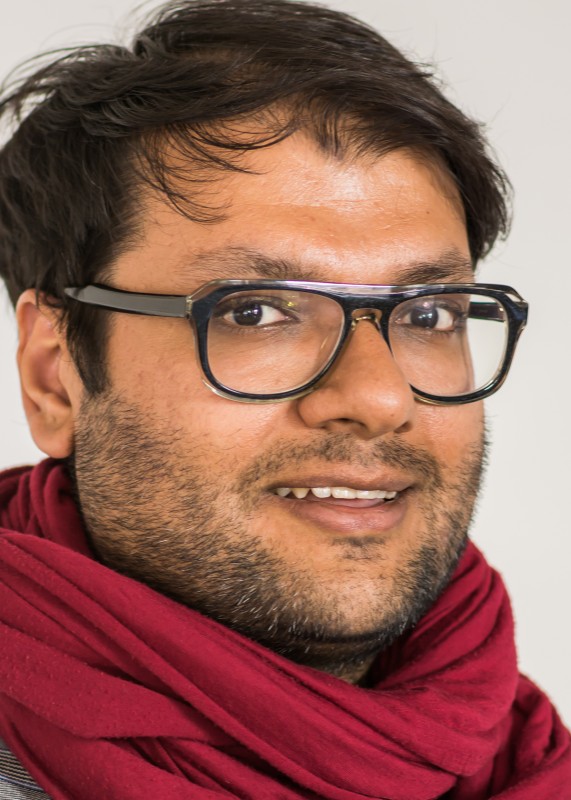
Dr. Zamin A. Kanji is a Lecturer at the Department of Environmental Systems Science, ETH Zurich. His research focuses on aerosol physico-chemical properties and their role in cloud formation, particularly ice nucleation mechanisms. He leads studies on laboratory and field investigations of aerosol behavior in warm and cold clouds. Research Interests: Ice nucleation pathways, aerosol aging effects, spatiotemporal variability of ice-nucleating particles (INPs), and aerosol-cloud interactions. His work employs custom-built cloud chambers and advanced analytical techniques. Membership & Roles: 2024: Member of Aviation non-CO2 expert network (EU) 2023: Elected to Committee on Nucleation and Atmospheric Aerosols (CNAA) 2020: Editorial Board Member (Associate Editor) of Atmospheric Measurement Techniques Labs & Projects: CLOUDLAB project (UAV-based cloud seeding studies), HyICE-2018 campaign (ice-nucleating particles in boreal forests).
Dr. Yu Liya E. is a Researcher at the National University of Singapore (NUS) affiliated with the Yong Loo Lin School of Medicine. Her work bridges atmospheric science and environmental health, focusing on aerosol behavior, air quality, and nanomaterial impacts. Education: Ph.D. in Civil and Environmental Engineering, Stanford University (1997) M.Sc. in Civil and Environmental Engineering, Stanford University (1990) Dr. Yu's research interests include air quality , aerosol science , urban atmospheric processes , and the health effects of engineered nanomaterials . She investigates combustion-derived aerosols, photooxidation of organic compounds, and transboundary biomass-burning smoke dynamics. Recent publications highlight her focus on PM2.5 apportionment, tropical urban pollution, and nanomaterial interactions. Collaborative efforts span environmental engineering, toxicology, and biomedical domains. Scientific Awards: Teaching Commendation Awards, NUS (2000–2007) Dr. Yu actively recruits research fellows and students, emphasizing experimental work in aerosol characterization and modeling. She collaborates with multidisciplinary teams to assess environmental and health impacts of pollutants and nanomaterials. Her research group operates advanced monitoring systems in Singapore, analyzing atmospheric particulates and chemical transformations to inform public health and policy frameworks.
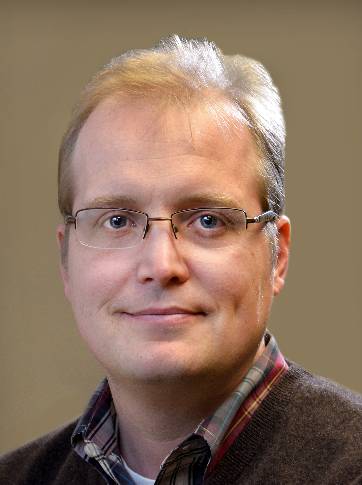
Dr. Rouzbeh Ghabchi serves as Associate Professor in the Department of Civil and Environmental Engineering at South Dakota State University (SDSU), where he has conducted research since joining in 2016 after completing postdoctoral work at the University of Oklahoma. His academic focus centers on sustainable transportation infrastructure materials with emphasis on asphalt pavement engineering. Dr. Ghabchi's educational background includes: B.S. in Civil Engineering from University of Tabriz, Iran M.S. in Civil Engineering from University of Tabriz, Iran Ph.D. in Civil Engineering from University of Oklahoma His research program investigates pavement engineering with specialization in innovative transportation materials and environmentally friendly technologies. Key areas include characterization of asphalt mixes containing recycled content (RAP, RAS, GTR), warm mix asphalt technologies, bio-asphalt development, and fundamental studies of asphalt binder-aggregate bonding mechanisms. Current work emphasizes moisture damage mitigation and performance enhancement through sustainable material solutions. Analysis of Dr. Ghabchi's recent publications (2022-2025) reveals strong thematic continuity in sustainable pavement technologies. His work systematically addresses deicing agent impacts on asphalt performance, advanced characterization of recycled material integration (including plastics and electronic waste), and development of bio-based additives. The research combines multiscale experimental approaches with practical applications for cold-region pavement durability. Dr. Ghabchi has not been documented with scientific awards in the provided materials. As Principal Investigator and Co-PI, Dr. Ghabchi has secured significant external funding for pavement research: Development of Special Provision for Foamed-WMA with RAP (SPTC, 2016-2017, $79,917) SFE Database for Moisture Damage Screening (SPTC, 2016-2017, $194,043) GTR Utilization in Asphalt Pavements (ODEQ, 2015-2016, $18,496) Tack Coat Guidelines Development (ODOT, 2015-2017, $166,319) Dr. Ghabchi actively contributes to transportation research through TRB's Standing Committee on Pavement Preservation (AKT-20) and maintains professional engagement with ASCE, ASTM, and geosynthetics societies.
Helen Anne Curry is a Professor in the School of History and Sociology at Georgia Institute of Technology, holding the Melvin Kranzberg Chair in the History of Technology. She is also an Honorary Senior Research Fellow at the University of Cambridge’s Department of History and Philosophy of Science. Her research focuses on the history of 20th- and 21st-century science and technology, with particular emphasis on food systems, agriculture, and environmental conservation. She has led major projects such as the Wellcome Trust-funded From Collection to Cultivation , which re-examines the historical development of modern crop varieties and conservation practices. Curry’s work bridges historical analysis with contemporary debates about crop biodiversity, industrial agriculture, and global food security. Key research areas include the history of seed banking, the socio-technical dimensions of plant breeding technologies, and the interplay between environmentalism and agricultural science. She has published extensively, including the acclaimed books Endangered Maize: Industrial Agriculture and the Crisis of Extinction (2022) and Evolution Made to Order: Plant Breeding and Technological Innovation in Twentieth-Century America (2016). Grants & Fellowships: Wellcome Trust Investigator Award (2020–present), Pro Futura Scientia Fellowship (2017–2020), Wellcome Seed Award (2016–2017). Projects: Leads the From Collection to Cultivation initiative, collaborates on the Worlds of Natural History edited volume, and contributes to the Seed virtual reality project. Collaborations: Works with institutions like the University of Cambridge, the CGIAR, and international seed conservation networks. Her research highlights the cultural and political dimensions of scientific practices, emphasizing how technological innovations in agriculture shape—and are shaped by—broader societal values. Curry’s work is characterized by interdisciplinary approaches, integrating archival research, fieldwork, and engagement with contemporary scientific communities.
Philip Greening is a Professor at Heriot-Watt University, affiliated with both the School of Social Sciences and Edinburgh Business School. His research focuses on sustainable transport systems, supply chain optimization, and energy transition policies. With over 56 research outputs, he specializes in areas like cold chain logistics, hydrogen infrastructure, and agent-based modeling for perishable goods management. His work aligns with UN Sustainable Development Goals, particularly in addressing climate action and sustainable infrastructure. Recent contributions include studies on digital twins for transport decarbonization and hydrogen supply chain design in the UK. He actively participates in academic conferences, presenting on topics such as road freight electrification and institutional investor behavior in sustainable finance. Collaborations span global projects, including Rwanda’s agri-food cold chain optimization. His interdisciplinary approach bridges engineering, business, and policy to tackle complex logistics and environmental challenges. Notable research highlights include: Agent-based simulation models for optimizing perishable goods distribution Hydrogen refueling network design for long-haul road freight Complexity frameworks for accelerating sustainable finance adoption His work emphasizes practical applications of technology and policy interventions to achieve decarbonization goals in transport and energy sectors.
Brendan Kelly is an Associate Professor of Cotton Fiber Phenomics at Texas Tech University's Department of Plant and Soil Science, with a joint appointment at Texas A&M AgriLife Research. He leads the Cotton Phenomics Laboratory at the Fiber and Biopolymer Research Institute, focusing on improving cotton fiber quality through advanced data analysis and industry collaboration. His work integrates modern instrumentation and multivariate approaches to understand fiber variability and its impact on textile processing. Dr. Kelly holds a Ph.D. and bachelor’s degree in mathematics from Texas Tech University. His teaching includes foundational courses like PSS 100 (Freshman Seminar), PSS 1321 (Agronomic Plant Science), and specialized courses such as PSS 5370 (Cotton Fiber-Textile Industries). His research emphasizes cotton fiber elongation, genetic improvement, and the development of protocols for fiber quality evaluation. Key research areas include cotton fiber morphology, climate impacts on yield, and the application of artificial intelligence in phenotyping. His work bridges agricultural science with textile industry needs, aiming to enhance cotton’s utility as an industrial raw material. Collaborations with industry partners ensure practical applications of his findings. Labs and teams include the Cotton Phenomics Lab and affiliations with Texas Tech’s Fiber and Biopolymer Research Institute. Future work focuses on advancing sustainable cotton production and improving yarn quality through genetic and agronomic strategies.
Prof. Wolfram Spreer is a Professor at HSWT (Hochschule Weiden) in the Department of Agriculture, Food, and Nutrition, part of the Faculty of Agriculture, Food and Nutrition. He specializes in sustainable agricultural practices with a focus on irrigation management, crop physiology, and tropical fruit production systems. His research emphasizes optimizing water use efficiency, developing innovative irrigation systems, and improving postharvest quality through advanced monitoring technologies. Key areas of expertise include mango and longan production optimization in Thailand and Myanmar, biochar applications in soil amendment, and thermal imaging for crop stress assessment. He leads major projects such as the 'Innovative methods in modern greenhouse systems for Tunisian tomato production' and has collaborated on international initiatives like the Thailand-Japan mango export quality studies. His work integrates machine learning (Random Forests, ANN) with agricultural data analysis, advancing precision agriculture through sensor-based monitoring and predictive modeling. Over 30 years of research output (1980s–present) demonstrates consistent contributions to tropical horticulture, water-saving techniques, and postharvest technology for perishable commodities. Current projects involve developing guidelines for industrial waste heat utilization in agriculture and assessing the economic viability of water-saving irrigation methods in upland regions. Collaboration with international teams and industry partners underpins his applied research approach.
Ryan Saylor is an Assistant Professor of Biology at Berry College, specializing in stress physiology and thermal ecology. He holds a B.S. in Marine Biology and B.A. in Chemistry from the University of North Carolina Wilmington (2005), an M.S. in Biology from the University of West Florida (2013), and a Ph.D. in Energy Science & Engineering from the Bredesen Center at the University of Tennessee (2021). His research focuses on fish susceptibility to anthropogenic impacts, particularly hydropower turbine blade strikes and thermal stress. He teaches courses such as Principles of Cell Biology, Zoology, and Comparative Animal Physiology. Dr. Saylor’s research integrates bioengineering, mathematical modeling, and field observations to address global climate change effects on fish populations. He develops biomimetic models to simulate turbine impacts and evaluates thermal tolerances in invasive species like the Asian swamp eel. His work contributes to hydropower infrastructure design and aquatic conservation strategies. Teaching Responsibilities Include: BIO 111: Principles of Cell Biology BIO 202: Principles of Zoology BIO 303: Comparative Animal Physiology BIO 332: Vertebrate Zoology Research Highlights: Development of ballistic gel fish models for turbine impact studies Assessment of fish mortality from simulated hydraulic shear stress Thermal tolerance analyses for invasive species No scientific awards or grants are listed in the provided materials. His work emphasizes interdisciplinary approaches to aquatic ecology and engineering challenges.
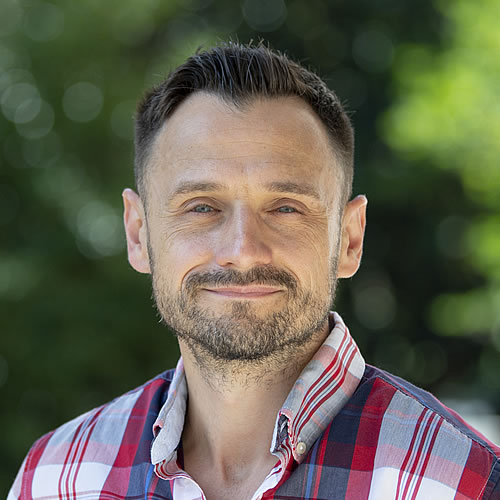
Travis Seaborn is an Assistant Professor at the School of Natural Resource Sciences , North Dakota State University, specializing in Applied Ecology. His research bridges landscape genetics, climate change, and conservation biology to address challenges in aquatic and terrestrial ecosystems. PhD in Biology, Washington State University (2019) MS in Biology, Western Carolina University (2014) BS in Biology with Minor in Philosophy, University of Washington (2010) Seaborn’s work focuses on: Integrating genomics into ecological models to predict species responses to climate change Conservation translocation strategies for endangered populations Assessing adaptive capacity and extinction risk in cold-adapted species Riverscape genetics for dam removal impacts Population connectivity and hybridization dynamics His recent publications emphasize the application of computational frameworks like CDMetaPOP and RAD sequencing to study fish and amphibian populations under environmental stressors, with keywords spanning behavioral plasticity, metapopulation dynamics, and eco-evolutionary responses. Scientific Awards : NDSU EPSCoR Seed Award (2023) for “Comparative bee genomics” Co-PI on $974,122 Forest Service Infrastructure Law grant for invasive species research (2023) Seaborn teaches courses in landscape genetics, ecosystem analysis, and natural resource management. His previous role at the University of Idaho involved NSF EPSCoR-funded postdoctoral research on landscape processes.
Prof. Dr. Philipp Fischer is an Adjunct Professor of Marine Biology at the School of Science, Constructor University Bremen gGmbH. His research focuses on fish behavior, underwater observatories, and the impacts of climate change on marine ecosystems. He leads projects like the Coastal Observing System for Northern and Arctic Seas (COSYNA), integrating technological innovations for environmental monitoring. Key research interests include fish acoustics, benthic-pelagic interactions, and predator-prey dynamics. Over 25 years, he has published extensively on topics ranging from Arctic marine biodiversity to freshwater lake ecosystems. His work emphasizes data interoperability in oceanography and the development of robust underwater observatory systems. Notable contributions include studies on Atlantic cod demographics in Arctic regions, wave effects on predator-prey interactions, and the ecological impacts of water-level fluctuations in lakes. His research bridges observational technology, environmental science, and applied marine conservation.
Beuth University of Applied Sciences BerlinGermany
Prof. Paul Kohlenbach holds the position of Full Professor of Mechanical Engineering/Renewable Energy at BHT Berlin, leading the Mechanical Engineering – Renewable Energies (M.Eng) program. He is affiliated with Faculty VIII, specializing in Mechanical, Process, and Event Technology. His expertise spans refrigeration technologies, solar energy systems, hydrogen technologies, and energy storage. Education: PhD (Dr.-Ing.) from TU Berlin (2003-2006), Dipl.-Ing. in Energy and Process Engineering (TU Berlin, 1996-2000), with international stints at ANU, University of Auckland, and TU Darmstadt. International Roles: Member of the International Institute of Refrigeration (IIR) Management Committee and German delegate to IIR's Executive Committee, as well as Subtask Leader for the IEA SHC Task 65 on Solar Cooling in Sunbelt Regions. Research focuses on solar cooling, renewable energy integration, and sustainable technologies. Key areas include photovoltaic-driven cooling systems, hydrogen energy, and thermal modeling. Awards include the Denis Joseph Award (2009) and WR Ahern Award (2011). Teaching responsibilities include courses on thermodynamics, solar systems, and renewable energy engineering at both bachelor’s and master’s levels. He supervises PhD candidates working on atmospheric water harvesting and waste heat recovery from PEM electrolysis. Grants: Leadership in IEA Task 65 and contributions to EU-funded projects on energy systems and building renovation. Labs/Teams: Active in the KEE Laboratory at BHT Berlin, developing test facilities for direct air capture of CO₂ and atmospheric water harvesting.
Dr. Scott Hamel is a Professor and Chair of the Department of Civil Engineering at the University of Alaska Anchorage (UAA). He holds a Ph.D. in Structural Engineering from the University of Wisconsin-Madison (2011), an M.S. in Civil Engineering from the University of Colorado-Boulder (2005), and a B.S. in Civil Engineering from Worcester Polytechnic Institute (2000). Prior to academia, he worked as a structural engineer and bridge designer in Colorado and Massachusetts. His research focuses on structural plastics, sustainable materials like bio-derived composites and CLT, seismic reliability assessments, and cold region engineering challenges such as accreted ice and infrastructure resilience. He has directed major projects including UAA's Summer Engineering Academies and led the SEAAK Snow Loads Committee, modernizing Alaska's snow load standards. Dr. Hamel has been recognized with the ASCE Faculty Advisor Award (2020) and the Alaska Engineer of the Year (2020). Teaching responsibilities include up to 7 courses annually in structural analysis, steel/concrete design, and finite-element analysis. He advises UAA's ASCE chapter and organizes engineering competitions like the 'bridge breaker' event during E-Week. His service spans roles at ASTM committees, journal reviewing, and leadership in Engineers Without Borders. Key research themes include: 1) Structural Insulated Panels (SIPs) seismic performance, 2) Cold climate material behavior, and 3) Sustainable infrastructure innovation. Over 20 peer-reviewed publications reflect his expertise in composite materials and structural systems analysis.
Michael Cross is an Associate Professor and Chair of the Department of Electrical and Computer Engineering at Norwich University's David Crawford School of Engineering. He teaches courses in first-year engineering, circuits, electronics, and energy systems. His research focuses on battery electric vehicles, grid-connected energy systems, and sustainable energy solutions. Education: B.S. Physics (Rochester Institute of Technology), M.S. and Ph.D. Materials Science (University of Vermont). Research interests include semiconductor thin films, nanomaterials for energy systems, and engineering education innovation. Prior to academia, he worked as a development engineer at IBM Microelectronics, contributing to semiconductor technologies. His recent publications emphasize remote collaboration in engineering design and techno-economic analysis of cold-region microgrids. He actively contributes to advancing sustainable energy infrastructure and pedagogical methods in engineering education.
Alba Pedrouso is a Postdoctoral Xunta de Galicia Fellow at the University of Santiago de Compostela's Department of Chemical Engineering (School of Engineering). She holds a BSc in Chemical Engineering (2013) and MSc in Chemical Engineering and Bioprocesses (2014), both from the same institution. Her PhD thesis (2019) focused on nitritation-anammox processes for mainstream wastewater treatment. She previously worked as a PhD Project Manager at Cetaqua, developing nutrient removal and agrofood waste valorization technologies. Her research focuses on advancing sustainable wastewater treatment through autotrophic nitrogen removal, resource recovery, and bioprocess optimization. Key areas include aerobic granular sludge systems, FNA-based nitritation control, and integration of food waste management with urban water systems. She has supervised three master’s theses on biopolymer production from organic wastes and phosphorus recovery via purple phototrophic bacteria. Recent publications highlight trends in granular sludge stability, food waste-wastewater synergies, and anammox process scalability. Her work emphasizes economically viable, environmentally benign solutions for water infrastructure challenges. Education: BSc Chemical Engineering, University of Santiago de Compostela (2013) MSc Chemical Engineering and Bioprocesses, University of Santiago de Compostela (2014) PhD in Chemical and Environmental Engineering (2019) Advising & Projects: Supervised 3 master’s theses (2023-2024) Contributed to Cetaqua’s agrofood waste valorization projects Labs/Teams: Member of the Biogroup research team at USC Collaborates with Cetaqua and other institutions in wastewater innovation
Nora Casson is an Associate Professor and Canada Research Chair in Environmental Influences on Water Quality at the University of Winnipeg's Richardson College for the Environment. Her research focuses on hydrological controls on nutrient export, landscape effects on stream and lake chemistry, and interactions between hydrological and biogeochemical processes. She teaches courses such as Hydrology (GEOG-3210), Global Biogeochemical Cycles (GEOG-3218), and Interdisciplinary Research Foundations (GESC-7103). Her work emphasizes climate change impacts on water quality, particularly in cold regions. Key research themes include winter weather whiplash events, snowmelt dynamics, and nutrient/phosphorus management in agricultural and boreal forest systems. Recent studies highlight thresholds in winter temperature/precipitation shifts and their ecosystem-wide consequences. Casson’s publications span high-impact journals like Nature and Ecological Monographs , addressing topics from global methane emissions to soil carbon dynamics. She collaborates internationally on databases like GRiMeDB to quantify fluvial methane fluxes. Her interdisciplinary approach bridges environmental science with public health, as seen in her 2023 study on Canadian perceptions of climate change health risks. Her research often involves field simulations of snowmelt flooding and evaluates soil amendments to mitigate nutrient loss. She has contributed to policy-relevant analyses of winter climate trends and their societal/ecological implications in northeastern North America.