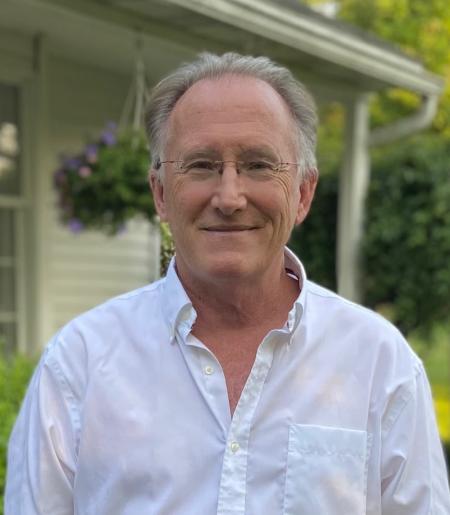
Prof. Joseph Claßen serves as a Professor at Leipzig University, specializing in neural mechanisms of movement, brain adaptation processes, and bodily perception. His work bridges fundamental neuroscience with clinical applications for neurological rehabilitation. Research centers on three interconnected domains: elucidating principles of motor control and learning through neuronal plasticity; developing targeted brain stimulation protocols to alleviate neurological symptoms; and investigating cognitive aspects of bodily representation. These areas drive therapeutic innovation for movement disorders and sensorimotor deficits. PhD projects are actively offered in all three research streams, designed for collaborative execution with other university faculty members to foster interdisciplinary approaches in neuroscience and rehabilitation medicine.
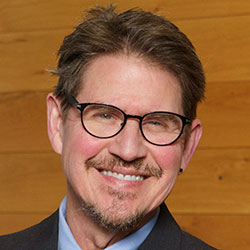
Victor R. Lee serves as an Associate Professor at Stanford University's Graduate School of Education, with his office located at CERAS Building (520 Galvez Mall, Suite 531) in Stanford, California. He is actively affiliated with the Center for Studies in Education and Technology (CSET), where he conducts interdisciplinary research at the intersection of technology and learning. Dr. Lee holds a Ph.D. in Learning Sciences from Northwestern University and earned dual Bachelor's degrees in Cognitive Science and Mathematics from the University of California, San Diego. His academic trajectory bridges technical disciplines with educational research, establishing a foundation for his work in data-intensive learning environments. His research program centers on two interconnected domains: data literacy development in K-12 contexts and STEM education innovation across diverse learning spaces. He investigates how individuals make meaning from data during inquiry-based learning, with particular emphasis on self-collected student data and the epistemological challenges of data sense-making. Concurrently, his STEM education work spans traditional classrooms, makerspaces, computer labs, and school libraries, examining engaged learning practices and conceptual change in mathematics and science. Current projects focus on identifying the specialized knowledge teachers require to effectively scaffold student interactions with complex real-world datasets. Recent publications (2023-2024) reveal a strategic pivot toward artificial intelligence education, examining both teacher preparation and student understanding of AI systems. His work demonstrates consistent methodological rigor through design-based research, classroom implementations, and analysis of student reasoning patterns, particularly regarding how learners conceptualize algorithmic processes in platforms like YouTube. As a core faculty member within CSET, Dr. Lee collaborates with multidisciplinary teams to develop and evaluate educational interventions that bridge theoretical learning sciences with practical classroom applications, with recent emphasis on AI literacy tools and data-enabled pedagogical approaches.
Anna Mayo is the Anna Loomis McCandless Assistant Professor of Organizational Behavior at Carnegie Mellon University’s Heinz College. Her research focuses on dynamic teamwork in modern organizations, particularly in healthcare and cross-sector settings. She investigates how teams adapt to fluid participation, technology integration, and volatile environments to enhance productivity and collaboration. Education: Ph.D. & M.S. in Organizational Behavior & Theory, Carnegie Mellon Tepper School of Business B.A. in Psychology, Denison University Research Interests: Mayo explores team coordination, cognitive versatility, and the impact of organizational structures on teamwork efficacy. She combines lab and field studies (e.g., healthcare, sales teams) to address challenges like rapid team formation/dissolution and distributed member roles. Her work emphasizes agility while mitigating risks to team outcomes. Publications: Her research appears in top journals such as Administrative Science Quarterly, Academy of Management Annals, and BMJ Leader. Recent studies address pandemic teamwork dynamics, nursing-physician collaboration, and the role of coordinated attention in group performance. Prior Experience: Before joining CMU, Mayo held roles at Johns Hopkins Carey Business School and worked in nonprofit human services. She teaches Organizational Design & Implementation (Course 94-700).
Ian Hawkins is an Assistant Professor at the University of Alabama at Birmingham , focusing on Media Psychology , Intergroup Conflict , and Collective Action . He holds a Ph.D. in Communication and Media from the University of Michigan, with prior M.S. and B.S. in Psychology from Central Michigan University. His research employs social scientific methods to analyze how media representations of marginalized groups shape societal attitudes and policy preferences. Current work explores cross-device news consumption dynamics using eye-tracking to assess attention patterns in headline processing. He publishes in New Media and Society , Journal of Communication , and Psychology of Popular Media . Teaching responsibilities include Mass Communication History and Effects and Social Media Use courses. Contact: ihawkins@uab.edu
Yu Meng is an Assistant Professor in the Department of Computer Science at the University of Virginia (UVA), part of the School of Engineering and Applied Science. He joined UVA in 2024 as a tenure-track faculty member. His research focuses on machine learning, natural language processing (NLP), and data mining, with recent emphasis on large language models (LLMs), alignment, reliability, and ethical AI development. Educated at the University of Illinois Urbana-Champaign (UIUC), Meng earned his Ph.D. in 2023 under advisor Jiawei Han. His doctoral thesis, Efficient and Effective Learning of Text Representations , received the ACM SIGKDD 2024 Dissertation Award. He also held a visiting researcher position at Princeton University under Danqi Chen and was a Google PhD Fellow. His work has been recognized with awards including the Superalignment Fast Grant from OpenAI and notable publications at venues like NeurIPS, ICLR, and ACL. Meng’s research explores topics such as preference optimization (SimPO), retrieval-augmented generation (InstructRAG), and zero-shot learning. He actively serves on program committees for top conferences (ICLR, ICML, NeurIPS) and as an action editor for Transactions of Machine Learning Research (TMLR) . He teaches graduate-level courses on NLP, emphasizing cutting-edge LLM topics like architecture design, instruction tuning, and ethical considerations. Key achievements include contributions to LLM alignment via retrieval optimization, efficient pretraining techniques, and foundational work on weakly supervised learning. His research bridges theory and practice, addressing both technical challenges and societal impacts of AI systems.
Dimitris Samaras is a SUNY Empire Innovation Professor in the Department of Computer Science at Stony Brook University, affiliated with the College of Engineering and Applied Sciences. He leads the Computer Vision Lab and holds adjunct roles in Biomedical Informatics and Radiology. His research focuses on computer vision, machine learning, medical imaging, and computational behavioral sciences, with interdisciplinary collaborations in psychology and neuroscience. Education: Ph.D. in Computer Science (University of Pennsylvania, 2001), M.S. in Computer Science (Northeastern University, 1994), Diploma in Computer Engineering (University of Patras, Greece, 1992). Research Interests: Modeling 3D shape and illumination interactions, facial expression analysis, medical image analysis, and applying machine learning to brain imaging. Current funded projects include NIH/NIDA grants, NSF initiatives, and collaborations with institutions like Brookhaven National Lab and Adobe. Publications: Over 150 peer-reviewed papers in top venues like ICCV, CVPR, and MICCAI, with impactful work on shadow removal, face relighting, and digital pathology. Recent trends emphasize medical AI, generative models, and multimodal interactions. Awards: SUNY Chancellor’s Award (2018), Dean’s Millionaire’s Club (2016), and multiple NIH/NSF grants. Recognized for contributions to scholarship and creative activities in academia. Grants & Teams: Leads over $10M in active grants, including projects on AI for penguin population tracking, histopathology image analysis, and robotic assistance. Collaborates with interdisciplinary teams in medicine, engineering, and cognitive science. Labs & Initiatives: Directs the Computer Vision Lab, contributes to the ColdSteel/NSF CVDI-NY SPIR consortium, and co-leads the Sensor and Transportation Security Center with Farmingdale State College.
Jonathan Cannon is an Assistant Professor in the Department of Psychology, Neuroscience & Behaviour at McMaster University's Faculty of Science. His research focuses on timing and rhythm in perception and action, with particular interest in timing-related neural dynamics in the basal ganglia, cerebellum, and supplementary motor area. His work combines mathematical modeling with experimental approaches to understand the neural basis of rhythm perception and production. Dr. Cannon's research interests span timing and rhythm perception , neural dynamics , dynamical systems theory , Bayesian cognition , neural oscillations , and autism research . His approach centers on formulating and simulating neurophysiological and cognitive models, drawing on dynamical systems theory and Bayesian cognitive frameworks. His work incorporates psychophysics, EEG experiments, and collaborations with experimentalists to investigate how the brain processes rhythmic information. Analysis of his recent publications reveals a strong focus on the intersection of rhythm perception, motor control, and autism spectrum disorder. His work demonstrates how beat perception co-opts motor neurophysiology, with particular attention to predictive processes in rhythmic cognition. His research shows reduced precision of motor and perceptual rhythmic timing in autistic adults, while also finding intact sequence learning abilities in certain contexts. Dr. Cannon teaches advanced courses including Machine Learning Methods for Brain Modelling and Neural Data Analysis (PSYCH 734), Computational Models in Neuroscience (NEUROSCI 3MN3), and Neuroscience Seminars. His teaching reflects his interdisciplinary approach that bridges mathematics, neuroscience, and cognitive science. Beyond his academic work, Dr. Cannon is an active musician who performs on violin and guitar, particularly in klezmer and folk music contexts. He has also demonstrated entrepreneurial spirit through founding Flying Leap Games and developing the storytelling game 'Wing It,' which successfully crowdfunded and reached numerous retailers.
Dr. Mohamed Khalifa is a Visiting Fellow at the Centre for Health Informatics, Australian Institute of Health Innovation, Macquarie University, Sydney. He holds a PhD in Health Innovation from Macquarie University (2020) and an MSc in Health Informatics from the University of Edinburgh (2012). His expertise spans health informatics, AI-driven healthcare solutions, and strategic healthcare management. He has led multidisciplinary teams in developing evidence-based frameworks like GRASP for clinical predictive tools. Affiliations: Visiting Fellow, Macquarie University Director of Studies, College of Health Sciences (Education Centre of Australia) Former Digital Health Officer, Australian Digital Health Agency (2020–2021) His research focuses on AI applications in healthcare, clinical decision support systems, and health analytics. Over 20 years, he has published 60+ peer-reviewed papers and holds an innovation patent (2018). He has received awards including the IMIA Best Paper (2020) and ICIMTH Best Paper (2015). Dr. Khalifa’s work emphasizes improving healthcare efficiency through technology, including projects on predictive tools, emergency room performance, and diabetes management. He is a Fellow of the Australasian Institute of Digital Health and certified in healthcare information systems (CPHIMS).
Taskin Padir is a Professor in the Department of Electrical and Computer Engineering at Northeastern University and concurrently serves as an Amazon Scholar. He holds a PhD and MS from Purdue University and a BS from Middle East Technical University. His research focuses on experiential robotics, human-robot teaming, and embodied AI, with leadership roles in the Robotics and Intelligent Vehicles Research Laboratory (RIVeR Lab) and the Institute for Experiential Robotics. Padir has led projects for DARPA, NASA, and industry partners, advancing autonomous systems for extreme environments and human-robot collaboration. Education: PhD, Electrical and Computer Engineering, Purdue University (2004) MS, Electrical and Computer Engineering, Purdue University (1997) BS, Electrical and Electronic Engineering, Middle East Technical University (1993) Research Interests: Shared autonomy and human-in-the-loop robotics Embodied artificial intelligence Human-robot teaming in extreme environments (e.g., space, disaster zones) Collaborative robotics for industrial applications His work bridges robotics, AI, and real-world challenges, with recent projects addressing seafood processing automation, robotic navigation in unstructured terrains, and spectroscopy-based environmental monitoring. Awards: Recipient of the 2024 Faculty Research Team Award, 2023 Impact Award, and 2022 Amazon Scholar distinction. His research has been funded by NSF, DARPA, NASA, and industry collaborators like Amazon Robotics and Intel. Labs: Director of the RIVeR Lab and Institute for Experiential Robotics, fostering interdisciplinary research in autonomous systems and intelligent vehicles. Current projects include CRISP (Co-worker Robots for Seafood Processing) and PROSPECT (robotic spectroscopy tools).
David J. Field is a Professor of Psychology at Cornell University, affiliated with the College of Arts and Sciences. His research focuses on theories of sensory coding, visual processing, and the relationship between natural environmental structure and sensory system representations. He is an active member of the Graduate Field of Psychological Sciences and Human Development. His work spans computational neuroscience and visual perception, with a particular emphasis on efficient coding principles and neural responses to natural scenes. Key research interests include the spatiotemporal dynamics of visual processing, sparse coding models, and the application of advanced imaging techniques like dynamic electrode-to-image (DETI) mapping. His studies often bridge neuroscience with computer science, exploring how neural systems encode visual information efficiently. Recent publications emphasize the role of behavioral goals in shaping neural coding and the statistical properties of natural scenes. Dr. Field teaches courses such as PSYCH 3420 (Human Perception: Application to Computer Graphics, Art, and Visual Display) and contributes to graduate training programs in psychological sciences. His work has been published in top journals, reflecting a strong focus on interdisciplinary approaches to understanding perception and neural representation.
Diana Tamir is a Professor at Princeton University, where she directs the Princeton Social Neuroscience Lab. She earned her Ph.D. from Harvard University and specializes in the intersection of internal mental processes and external social cognition. Her research investigates: How minds predict others' emotions and mental states The cognitive consequences of self-disclosure and social media use Neural mechanisms of social prediction using fMRI and machine learning Effects of fiction reading on theory of mind Dynamics of spontaneous thought and social bonding Her recent publications (2024-2025) demonstrate strong focus on emotion prediction mechanisms, social interaction dynamics, neural signatures of psychological states, and developmental aspects of social cognition. Methodologically, she employs neuroimaging hyperscanning, ecological momentary assessment, and computational modeling across diverse populations. She currently advises graduate students including Faustine Corbani and Yeaju Diana Kim. Her lab focuses on empirical approaches to understanding how individuals navigate between internal experiences and external social environments.
Hassan Foroosh is a Professor in the Department of Electrical Engineering and Computer Science at the University of Central Florida (UCF), directing the Computational Imaging Laboratory (CIL). He holds a Ph.D. in Computer Science from INRIA-UNSA, France (1996). Prior to UCF, he worked as a Senior Research Scientist at UC Berkeley (2000–2002) and an Assistant Research Professor at the University of Maryland, College Park (1997–2000). Research Interests: His work focuses on Computer Vision, Image Processing, Machine Learning, and Signal Processing. Notable contributions include LiDAR-based perception, adversarial attacks on detectors, medical imaging analysis, and dataset design for action recognition. His research is supported by NASA, NSF, ONR, and industry partners. Publications & Impact: Over 130 peer-reviewed papers, including influential work on super-resolution techniques, transformer networks for 3D object detection, and adversarial machine learning. His recent work explores analytical reasoning in LLMs and multimodal fusion in sports analytics. Awards: Pierro Zamperoni Award (2004), Best ICPR Paper (2004), Sun Microsystems Academic Excellence Award (2004). Labs/Teams: Director of the Computational Imaging Lab (CIL), UCF. Grants: Active funding from NASA, NSF, and industry collaborators.
Ruixiang Tang is an Assistant Professor at Rutgers, The State University of New Jersey. His research focuses on artificial intelligence, machine learning, and natural language processing, with an emphasis on multimodal learning, model security, and ethical AI. He explores topics such as adversarial robustness, bias mitigation, and applications in healthcare and robotics. Key research interests include developing robust algorithms for vision-language models, analyzing model vulnerabilities like backdoors and hallucinations, and designing trustworthy AI systems. His work bridges theoretical advancements and practical applications, addressing challenges in healthcare data augmentation, copyright infringement detection, and cognitive reasoning. His recent publications highlight contributions to multimodal in-context learning, counterfactual reasoning benchmarks, and secure model optimization. Tang's research also intersects with fairness in AI, such as mitigating bias in NLP models and ensuring equitable outcomes in medical applications.
Dr. Jing Wang is a Professor in the Department of Bioinformatics at Southern Medical University's School of Medicine, with extensive research at the intersection of artificial intelligence and biomedical applications. Her work demonstrates strong cross-disciplinary collaboration across medical institutions, engineering departments, and computer science research groups. Her primary research interests include Artificial Intelligence in Healthcare , Biomedical Engineering , and Traditional Chinese Medicine Informatics , with recent publications showing particular expertise in medical imaging analysis, diagnostic assistance systems, and clinical decision support. Her work spans both theoretical algorithm development and practical clinical implementations. Analysis of her 15 most recent publications (2025-2026) reveals a strong trend toward clinically applicable AI systems, with approximately 60% of publications focused on medical diagnostics and treatment support systems. The remaining publications demonstrate expertise in industrial applications of computer vision and fundamental AI research. Her work shows consistent collaboration with both domestic Chinese institutions and international research groups. Notable scientific contributions include: Development of 'Tianyi', a traditional Chinese medicine language model for clinical practice Innovations in bionic soft robotics for rehabilitation assistance Novel approaches to medical image analysis for cancer diagnostics Her research program appears well-funded with consistent publication output across high-impact journals in biomedical engineering, AI, and medical informatics. Current work suggests strong emphasis on translating AI research into clinical practice, particularly in diagnostic support systems and rehabilitation technology.
Kristian J. Hammond is the Bill and Cathy Osborn Professor of Computer Science at Northwestern University's McCormick School of Engineering. He directs both the Master of Science in Artificial Intelligence Program and the Center for Advancing Safety of Machine Intelligence (CASMI). His research focuses on artificial intelligence, natural language generation, narrative generation, conversational interfaces, and ethical AI applications across domains like law, education, and journalism. Hammond co-founded Narrative Science, leveraging AI for automated journalism from data. Education: PhD, MS, and BA in Philosophy (all from Yale University). His work spans technical innovation and societal impact, with notable contributions to AI transparency, bias mitigation, and machine learning ethics. Hammond has authored influential articles on AI governance, conversational systems, and the future of work in an automated economy. His leadership roles emphasize interdisciplinary collaboration between computer science, business, and humanities. Research highlights include developing AI systems that enhance human capabilities, exploring ethical frameworks for machine intelligence, and advancing AI safety through initiatives like CASMI. He frequently engages in public discourse via TEDx talks and commentaries on AI's societal implications, emphasizing the need for human-centered technology design.