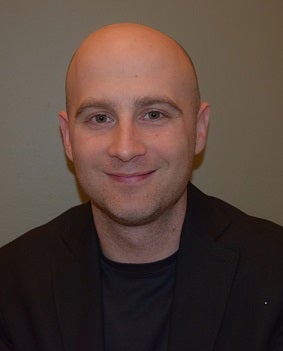
Leonardo Banh is a Researcher at the University of Duisburg-Essen within the Faculty of Computer Science and its Chair of Business Information Systems and Software Engineering . M.Sc. in Business Information Systems (University of Duisburg-Essen, 2022) B.Sc. in Business Information Systems (University of Duisburg-Essen, 2020) Semester abroad at Instituto Superior Técnico, Lisbon (2021) His research focuses on Generative AI and its socio-technical implications, particularly in Machine Learning and Deep Learning applications. He explores intersections with NeuroIS , Smart Tourism , and E-commerce Ecosystems , emphasizing sustainability and digital transformation. Recent publications analyze Generative AI in Software Engineering , AI in Music Sentiment Analysis , and AI-Based Sign Language Translation . His work often involves design science research and grounded theory frameworks. Best Paper in Track Award (ICIS 2024) Nominated for Best Paper Award (ICIS 2024) Outstanding Reviewer (ICIS 2024) As advisor, he supervises theses on topics including AI-Based Mental Health Chatbots , Generative AI in HR , and Smart Tourism Applications . He also contributes to the Institute of Computer Science and Information Systems and serves on appointment/habilitation committees.
Yao Zhu is a Visiting Professor at the Chair of Information Theory and Data Analytics, RWTH Aachen University . His research focuses on advanced wireless communication systems, particularly in Edge Computing , Ultra-Reliable Low-Latency Communication (URLLC) , and Physical Layer Security , leveraging Finite Blocklength Codes for next-generation network optimization. Key research areas include: Optimization of resource allocation and task scheduling in distributed edge learning and fog computing environments Reliability and energy efficiency trade-offs in Industrial IoT and V2X networks Novel applications of NOMA (Non-Orthogonal Multiple Access) and short-packet communication for secure and fresh data transmission Integration of physical layer deception with semantic reliability models His work explores the interplay between telecommunications and computer science principles to address challenges in low-latency, high-reliability networked systems. The Chair of Information Theory and Data Analytics serves as his academic base, focusing on theoretical and practical advancements in data-driven communication frameworks.
Evan F. Risko is a Professor and Associate Chair (Graduate Affairs) at the University of Waterloo. His research focuses on Distributed Cognition, Effort Perception, and applying cognitive psychology principles to improve education and training. He holds the Canada Research Chair in Embodied and Embedded Cognition and has received multiple awards including Early Career Awards from the Psychonomic Society, Canadian Society for Brain, and Outstanding Performance Awards from the Province of Ontario. His work is funded by NSERC, SSHRC, and other major grants. He leads the Cognition and Natural Behaviour Laboratory, exploring how humans integrate body and environment to enhance thinking. Recent studies examine lecture design, cognitive offloading effects, and metacognition in digital contexts. Education: B.A., M.A., Ph.D. from the University of Waterloo in Cognitive Psychology. His research bridges theoretical and applied domains, with a focus on optimizing learning through lecture video design, understanding effort perception, and mitigating cognitive biases. Scientific Awards: Canada Research Chair in Embodied and Embedded Cognition Early Career Award (Psychonomic Society) Early Career Award (Canadian Society for Brain, Behaviour, and Cognitive Science) 2014 & 2018 Outstanding Performance Awards (Province of Ontario) Advising & Grants: Supervises graduate students in cognitive science and education research. Major grants include NSERC Discovery Grants, SSHRC Insight Development Grants, and Canada Foundation for Innovation funds. His work on video lectures and cognitive offloading has implications for educational technology and workplace training. Labs & Teams: Director of the Cognition and Natural Behaviour Lab, collaborating on projects like 'Distributed Metacognition' and 'Effort Perception in Technology Use'. Current initiatives explore how external tools (e.g., smartphones) shape cognitive processes and learning efficacy.
Srdan Medimorec is a Senior Lecturer in Psychology at Teesside University's SSSHL Psychology department, affiliated with the Institute for Collective Place Leadership. His research focuses on memory, language, implicit learning, and cognitive processes such as offloading and metacognition. Education: He holds a Master's degree from Arizona State University and a PhD from the University of Waterloo. Research Interests: His work spans Memory and Language, Language Production/Comprehension, Implicit Learning, Cognitive Offloading, and Metacognition. He explores how these areas intersect with educational practices and behavioral science. Key Projects: He leads projects on metacognition, language and memory, and improving second-language learning. Collaborative work includes studying gambling behavior linked to sports group identification. Publications: His recent work includes studies on children’s cognitive offloading, social identity interventions, and eye movement effects on spatial learning. Datasets include studies on letter fluency and temporal ambiguity resolution. Awards: While no formal awards are listed, his active research portfolio demonstrates significant contributions to cognitive psychology and linguistics. Advising & Grants: He coordinates multiple research projects and has contributed to datasets, reflecting his role in academic leadership and collaborative research.
Richard P. Martin is an Associate Professor and Associate Chair in the Department of Computer Science at Rutgers University's School of Arts and Sciences. His research focuses on wireless networks, sensor systems, and network security applications, with particular emphasis on practical implementations that address real-world challenges in healthcare monitoring, energy efficiency, and network performance. He maintains an active research group working closely with WINLAB (Wireless Information Network Laboratory) and has numerous ongoing collaborations with industry and academic partners. Dr. Martin's research interests span several interconnected domains including wireless communication systems, sensor network design, network security, localization technologies, and energy-efficient computing. His work bridges theoretical computer science with practical engineering applications, often focusing on how wireless technologies can solve problems in healthcare monitoring, particularly medication adherence systems. His research group develops innovative solutions that combine hardware and software approaches to address challenges in wireless sensing, network security, and system optimization. The team's work often involves creating novel protocols and architectures that improve performance while maintaining security and privacy constraints. His recent publication trends show increasing focus on healthcare applications of wireless technology, particularly medication adherence monitoring systems using smart pill bottles and other unobtrusive sensing approaches. He has also maintained a strong research thread in wireless network security, localization systems, and energy-efficient computing. His work often combines machine learning techniques with traditional networking approaches to create more intelligent and adaptive systems. The interdisciplinary nature of his research spans computer science, electrical engineering, and healthcare technology domains. Dr. Martin has advised numerous graduate students who have co-authored publications with him, including Murtadha Aldeer, Mohammadreza Soltaniyeh, and Jorge Ortiz. His research has been supported by various funding sources that enable the development of practical wireless systems and sensor networks. He teaches courses in computer systems and structures, sharing his expertise in networked systems with undergraduate and graduate students. His laboratory work centers around WINLAB, where his team develops and tests wireless and sensor network technologies. The lab focuses on creating practical implementations of theoretical concepts, often building custom hardware and software solutions to address specific challenges in wireless communications and sensing. Current projects emphasize healthcare applications, energy efficiency, and security in wireless systems.
Claude D'Amours is a Professor in the Department of Electrical and Computer Engineering at the University of Ottawa, Faculty of Engineering. With a research career spanning over two decades, his work has significantly contributed to the fields of wireless communications, signal processing, and network security. His current research focuses on cutting-edge technologies including 5G/6G networks, UAV communications, reconfigurable intelligent surfaces, and physical layer security. Dr. D'Amours' research interests center on advanced wireless communication systems, with particular emphasis on MIMO technologies, CDMA systems, spectrum sensing techniques, and channel modeling for emerging applications. His work bridges theoretical foundations with practical implementations, addressing critical challenges in modern wireless networks including interference management, security vulnerabilities, and efficient resource allocation. Recent research has expanded into UAV communications, where he investigates channel characteristics and reliability issues in drone-based networks. Analysis of his recent publications reveals a strong focus on security aspects of wireless communications, particularly physical layer security mechanisms to counter jamming attacks and eavesdropping. His work on RF fingerprinting for device authentication in industrial IoT settings demonstrates practical applications of his theoretical research. The trend in his publications shows increasing attention to 5G/6G technologies, with particular emphasis on millimeter wave communications, hybrid precoding architectures, and novel approaches to spectrum sharing. Multiple publications on UAV-to-ground channel modeling and performance analysis Research on physical layer security mechanisms against jamming attacks Work on hybrid precoding architectures for mmWave MIMO systems Studies on RF fingerprinting for secure industrial IoT applications Investigations into spectrum sensing techniques for cognitive radio Dr. D'Amours maintains active research collaborations with numerous colleagues, particularly Michel Kulhandjian, Hovannes Kulhandjian, and François Chan, resulting in a consistent stream of high-impact publications across top-tier IEEE journals and conferences. His research group appears to focus on both theoretical analysis and practical implementation of advanced wireless communication techniques, with applications spanning from critical mission communications to industrial IoT security.
Affiliations & Roles Michele Albano is an Associate Professor at the Department of Computer Science, Aalborg University, Denmark. He is affiliated with The Technical Faculty of IT and Design, focusing on research in IoT, Cyber-Physical Systems, and Edge Computing. He leads the Productive4.0 project (2017–2020), funded by Horizon Europe, addressing Industry 4.0 challenges in product lifecycle management. His work integrates formal verification tools like Uppaal with real-world applications in robotics, energy systems, and blockchain-based platforms. Research Interests Albano's research spans IoT architecture optimization , energy-efficient systems , and model-driven engineering . He develops tools for autonomous exploration algorithms (MAES), edge-cloud resource orchestration, and fault-tolerant computation offloading. His work bridges theoretical models (e.g., Uppaal SMC) with practical implementations in smart grids and robotic systems. Recent projects include blockchain-based crowdsourcing for machine learning and energy-aware thermal dynamics estimation in buildings. Collaborations & Impact He collaborates with the European Industry 6.0 community, contributing to the Arrowhead Framework for interoperable IoT systems. His research outputs include 112 publications, with 2025 highlights in human-inspired robotics and cognitive cloud frameworks. Media coverage in 2024–2025 highlights his work on green IT and secure API generation. Albano advises students on system modeling (e.g., ACSmt plugin development) and edge computing optimization. Labs & Teams His research group focuses on Cyber-Physical Systems and Smart Grids , with contributions to tools like RoutesMobilityModel and FlexHousing. He actively participates in workshops on New Trends in Software Architecture (SATrends '24) and IEEE conferences on Industrial Informatics.
Dr. Mai Vu is a Professor in the Department of Electrical and Computer Engineering at Tufts University, with a secondary appointment in Computer Science. She leads the Laboratory for Intelligent NetworKed Systems (LiNKS), focusing on machine learning and wireless communication systems, particularly for 5G/6G networks. Her research addresses challenges in beamforming, user association, and network optimization using advanced optimization and reinforcement learning techniques. Education: Ph.D. in Electrical Engineering from Stanford University (2006), MS from Stanford and University of Melbourne, and B.E. from RMIT University. Research Interests: Machine learning applications in wireless networks, optimization algorithms, 5G/6G systems, and reconfigurable intelligent surfaces (RIS). Her group has published extensively on topics like hybrid beamforming, user association in dense networks, and interference mitigation. Awards: Senior Member of IEEE, Editor roles for IEEE Transactions on Wireless Communications (2013-2016) and IEEE Transactions on Communications (since 2022). Active in conference organization, including Technical Program Co-Chair for IEEE Communication Theory Workshop 2023. Grants: Multiple NSF-funded projects on terahertz networks, edge computing, and RIS beamforming. Collaborates on latency-aware VR/AR edge computing and 6G system design. Labs/Teams: LiNKS lab actively involves PhD students and postdocs in projects like GNN-based beamforming and satellite-terrestrial network coexistence.
Bo Sophia Xiao is a Professor of Information Technology Management at the Shidler College of Business, University of Hawaii at Manoa, where she currently serves as Chair of the Department of Information Technology Management. She holds the prestigious title of Shidler College Distinguished Professor and has established herself as a leading scholar in information systems research with publications in top-tier journals including Journal of the Association for Information Systems, Information Systems Research, and Management Information Systems Quarterly. Her academic credentials include a PhD in Management Information System from the University of British Columbia, an MSc in Information Management from Arizona State University, and an M.TESOL from Arizona State University. Professor Xiao's research primarily focuses on responsible information systems, particularly responsible AI design frameworks that address ethical challenges in artificial intelligence. Her work explores human-computer interaction and collaboration, digital platforms, and health information systems, with particular attention to how technology can be designed to maximize benefits while minimizing potential harms. She investigates psychological and social aspects of technology use, including cyberbullying behaviors, crowdsourcing dynamics, and digital health applications. Her research often employs both quantitative and qualitative methods to provide nuanced insights into complex human-technology interactions. Her recent publications (2018-2025) demonstrate a significant shift toward ethical AI research, with multiple 2025 publications specifically addressing responsible AI design frameworks, infrastructure, and implementation. This represents an evolution from her earlier work on product recommendation agents, online trust, and cyberbullying, while maintaining her consistent interest in human-technology interaction. Her research increasingly addresses interdisciplinary concerns at the intersection of technology, ethics, and human behavior. 2023: Shirley M. Lee Research Senior Award, Shidler College of Business 2022-Present: Shidler College Distinguished Professor 2017-2022: Shidler College Distinguished Associate Professor 2018: Highly Commended Paper in Internet Research, Emerald Literati Award 2015: Distinguished Paper Award at International Conference on e-Commerce 2012: Best Paper Award at International Conference on e-Commerce Professor Xiao has actively supervised numerous doctoral students at both Hong Kong Baptist University and the University of Hawaii at Manoa, serving as principal advisor, co-supervisor, and committee member. She has held significant editorial roles including Associate Editor for MIS Quarterly and Internet Research, and has served on multiple editorial boards. Her service to the academic community extends to conference organization, including serving as Conference Program Co-Chair for PACIS 2023 and multiple Track Co-Chair positions at major information systems conferences. While specific lab names aren't mentioned in the available information, Professor Xiao leads a productive research group focused on responsible AI and human-computer interaction, with extensive collaborations particularly with Kaveh Abhari, Andrea Rivera, and Yee Man Wong across multiple publications spanning cyberbullying, crowdsourcing, and responsible AI research.
Dr. Carla Ruis is an Associate Professor in the Faculty of Social and Behavioural Sciences at Utrecht University . She serves as a researcher in Experimental Psychology and works as a Clinical Neuropsychologist in the Department of Neurology and Neurosurgery at University Medical Center Utrecht . Her academic contributions span neuropsychology, cognitive neuroscience, and clinical interventions. University: Utrecht University Faculty: Social and Behavioural Sciences Department: Psychology Academic Rank: Associate Professor Research Interests : Dr. Ruis focuses on cognitive functioning in neurological conditions, including: Neuropsychological assessment during awake brain surgery Relationships between cognition and survival in glioma patients Impact of affective touch on chronic pain Memory and executive function in diabetes and dementia Her recent publications (2024) explore intraoperative cognitive monitoring, left-right orientation in brain tumors, and pain modulation through touch in Parkinson's disease. She has contributed to 56+ peer-reviewed works. Advising and Leadership : Dr. Ruis acts as a PhD examination committee chair and year group trainer for clinical neuropsychology programs. She serves on editorial boards and accreditation committees.
Dr Nathan Bray is a Senior Lecturer in Preventative Health and Lecturer in Healthcare Improvement at Bangor University, affiliated with the School of Health Sciences and the College of Medicine & Health. He leads the Academy for Health Equity, Prevention and Wellbeing (AHEPW) and is actively involved in research, grant leadership, and academic service. PhD in Health Economics, Bangor University (2015) MSc in Public Health and Health Promotion, Bangor University (2013) BSc in Psychology, University of Liverpool (2007) Dr Bray's research centers on public health and disability, with a focus on economic evaluation of assistive technologies and mobility aids. His work aims to improve quality of life measurement for people with mobility impairments, particularly through the development of novel instruments like the MobQoL-7D and WATCh tools. He explores how economic methods can inform equitable healthcare decisions and policy. His recent publications span topics such as cost-effectiveness of early powered mobility for children, patient-centered outcome measures in wheelchair services, and health economics of well-being across the life course. These works reflect a strong trend toward developing and validating tools that capture mobility-specific quality of life and evaluating interventions through economic modeling and systematic reviews. Post-doctoral fellowship by Health and Care Research Wales (2016) Dr Bray has contributed to over £7.5 million in grant capture as lead or co-applicant, with funding from NIHR, Horizon 2020, Health and Care Research Wales, and NHS England. He supervises PhD students and has led major projects like EMPoWER and AdaptQoL. He was Associate Editor for the British Journal of Dermatology (2017–2021) and chaired the International Society of Wheelchair Professionals’ committee (2015–2018). He currently serves on the Health and Care Research Wales Social Care PhD Studentship Committee and is College Lead for Sustainability. He leads the development of key research tools including the MobQoL-7D for measuring mobility-related quality of life and the WATCh/WATCh-Ad instruments for assessing outcomes in pediatric and adult wheelchair users. These tools are used in clinical and research settings to ensure patient-centered care and evaluation.
Professor David Pearson is a cognitive psychologist at Anglia Ruskin University's School of Psychology, Sport and Sensory Science , where he holds a professorship in Cognition and Cognitive Neuroscience. He leads research within the ARU Centre for Mind and Behaviour and maintains visiting researcher positions at Trieste University (Italy) and University of Bergen (Norway). Education: PhD in Psychology, University of Aberdeen (1997) MA (Hons) in Psychology (1st), University of Edinburgh (1992) Research Focus: Pearson's work centers on three interconnected domains: (1) Mental imagery mechanisms in clinical disorders (particularly trauma-related intrusive memories), (2) Cognitive benefits of natural environments through Attention Restoration Theory, and (3) Visuo-spatial working memory processes including oculomotor control. His research bridges experimental psychology with clinical applications, examining how contextual representations modulate trauma intrusions and how natural scenes reduce cognitive load compared to urban environments. Recent work explores visual creativity, sequence-space synaesthesia, and perceptual specificity in long-term imagery. Publication Trends: His 15 most recent articles reveal increasing interdisciplinary integration between cognitive neuroscience and clinical applications. A clear trajectory emerges from basic visuo-spatial working memory mechanisms toward trauma-focused clinical interventions, with growing emphasis on environmental psychology applications. Key methodological threads include eye-tracking paradigms, analogue trauma models, and ecological validity in experimental design. Professional Recognition: Chartered Psychologist Associate Fellow of the British Psychological Society Member of the Experimental Psychology Society Associate Editor for Frontiers in Psychiatry (Mental Imagery in Clinical Disorders) Research Leadership: Pearson actively supervises PhD candidates in mental imagery, environmental psychology, and visuo-spatial cognition. He has secured over £300,000 in research funding from major bodies including ESRC, Wellcome Trust, and Nuffield Foundation. His current projects examine scene saliency in cognitive restoration and contextual modulation of trauma intrusions, while maintaining long-term collaborations with Oxford, Durham, and Scandinavian institutions. He contributes to professional governance through the BPS Research Board and Membership Standards Board.
Kevin P. McIntyre serves as Professor and Chair of the Department of Psychology at Trinity University. He completed his B.S. in Psychology at the University of Illinois at Urbana-Champaign and earned his Ph.D. in Social Psychology with a minor in Research Methods and Statistics from Saint Louis University. McIntyre teaches statistics and research methods, social psychology, and introductory psychology courses. His educational contributions include co-authoring a statistics textbook published by MacMillan Learning in Spring 2024 and creating openstatslab.com, a dedicated resource for statistics education. His research examines how romantic relationships shape self-perception and identity, with publications in the Journal of Social and Personal Relationships, Self and Identity, and Personal Relationships. He co-edited Interpersonal Relationships and the Self-Concept (Springer Press) and has secured research funding from the Association for Psychological Science and Society for Personality and Social Psychology. His scholarly work reveals consistent trends in relationship science, particularly examining self-expansion theory and the two-dimensional model of relational self-change across multiple contexts including romantic partnerships and workplace environments. His research bridges theoretical social psychology with practical applications for understanding relationship dynamics. Grants from the Association for Psychological Science Grants from the Society for Personality and Social Psychology As a statistical consultant, McIntyre has contributed to medical, educational, and psychological research projects, and provided expertise in legal proceedings involving professional sports teams, technology firms, and financial services. His leadership as department chair demonstrates institutional commitment to advancing psychological science education and research.
M. R. Sauter is an Assistant Professor at the University of Maryland College of Information, specializing in the history and philosophy of technology. Their work examines intersections between high technology, finance, and social justice, with a focus on venture capital's role in shaping innovation ecosystems. They are the author of The Coming Swarm: DDoS Actions, Hacktivism, and Civil Disobedience on the Internet and Risk Capital: How High Finance Remade High Technology (under contract with University of Chicago Press). PhD in Communications Studies, McGill University (2020) Masters in Comparative Media Studies, MIT Research Fellowships: Berkman-Klein Center, New America Research Interests : Sauter investigates corporate influences on digital security and rights through projects on: Venture capital history and mythmaking Public-private partnerships in tech Surveillance capitalism Smart cities ethics Information justice frameworks Recent Publications explore venture capital policy evolution, algorithmic governance, and digital protest tactics across journals like The Atlantic , Journal of Communication , and New Media and Society .
Yulia Razmetaeva serves as a Researcher at Uppsala University's Department of Theology within the Centre for Multidisciplinary Research on Religion and Society (CRS), while concurrently holding an Associate Professor position at Yaroslav Mudryi National Law University in Kharkiv. Her dual affiliation bridges Scandinavian and Eastern European academic traditions in law and digital ethics. Her educational background features a 2009 PhD in Law with dissertation on Human Rights as Fundamental Value of Civil Society , followed by promotion to Associate Professor in Theory and Philosophy of Law in 2020. Her research examines the intersection of artificial intelligence, human rights, and legal philosophy through multiple international projects including Wallenberg AI initiatives and an EU Jean Monnet Centre of Excellence. Razmetaeva's scholarly output reveals a systematic investigation of algorithmic justice across legal systems. Her publications consistently address privacy erosion in predictive systems, rule of law challenges in automated decision-making, and the philosophical foundations of digital rights. The research demonstrates strong interdisciplinary orientation connecting legal theory with computer science ethics and political philosophy. Fellow, Information Society Law Center (University of Milan), 2023-2025 Royal Swedish Academy of Sciences (KVA) Scholarship Researcher, 2022 CEU Democracy Institute Fellowship Researcher, Budapest, 2022 Visiting Fellow, Uppsala Forum on Democracy Peace and Justice, 2022 As Project Leader for the European Fundamental Values in Digital Era initiative and participant in Wallenberg AI programs, Razmetaeva directs significant research funding while maintaining active involvement in Ukrainian legal education despite the ongoing conflict. Her work with the Center for Law, Ethics and Digital Technologies in Kharkiv continues through international partnerships. Razmetaeva contributes to several working groups including Artificial Intelligence, Democracy, and Human Dignity at Uppsala, while maintaining leadership roles in Ukrainian digital law initiatives. Her current research focuses on algorithmic addiction frameworks and phenomenological approaches to digital experience within the WASP-HS program.