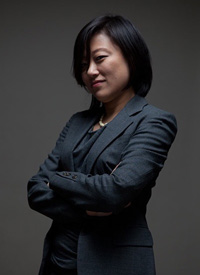
SeungJung Kim is an Associate Professor at the University of Toronto in the Department of Art History, specializing in Greek art and archaeology with cross-cultural focus on Gandharan Buddhist art. Education: PhD in Art History (Columbia University, 2014), PhD in Astrophysical Sciences (Princeton University, 2001) Key Research Areas: Greek art and archaeology Phenomenology of visual perception Time and temporality in Archaic/Classical Greek art Cross-cultural currents in Gandharan art Publications focus on East-West cultural interactions, temporal theory in art, and interdisciplinary approaches blending scientific and art historical methodologies. Awards: Meyerson Award for Excellence in Teaching (Columbia University) Administrative Service: Associate Chair and Director of Graduate Studies at University of Toronto (2021-2024).
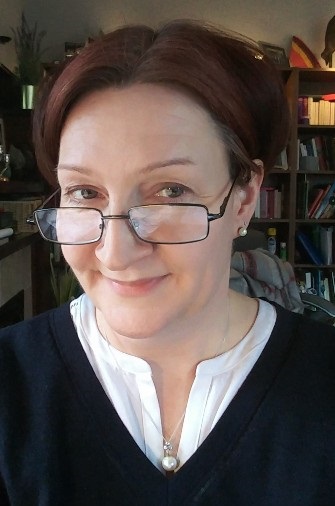
Dr. April Nowell is a Professor of Anthropology in the Department of Anthropology at the University of Victoria's Faculty of Social Sciences, specializing in Paleolithic archaeology, cognitive archaeology, and the archaeology of children. Currently on leave, she leads internationally recognized research projects across Europe, the Levant, Australia, and Africa while actively accepting graduate students. She earned her PhD from the University of Pennsylvania and has developed expertise in Neanderthal lifeways, Paleolithic art, and hominin life histories. Her academic journey reflects deep engagement with both theoretical frameworks and fieldwork across diverse geographical contexts. Nowell's research examines how prehistoric societies structured knowledge transmission, childhood development, and symbolic expression. Her groundbreaking work on finger flutings in Australian caves reveals children's roles in Paleolithic storytelling traditions, while her analysis of Levantine wetland ecosystems demonstrates how Pleistocene humans adapted to environmental shifts. She challenges conventional narratives about Neanderthal cognition and has pioneered methodologies for reconstructing prehistoric childhood experiences through skeletal and material evidence. Her recent publications show consistent innovation in archaeological methodology, particularly in digital documentation of rock art and interdisciplinary approaches to human development. Key trends include integrating bioarchaeological data with cognitive models, examining material culture as evidence of social learning, and analyzing environmental archives to understand human dispersal patterns. Her scientific recognition includes: 2023 EAA Book Prize for Growing Up in the Ice Age: Fossil and Archaeological Evidence of the Lived Lives of Plio-Pleistocene Children Nowell secures major research funding including Social Sciences and Humanities Research Council grants supporting her Azraq Basin project in Jordan and Koonalda Cave research in Australia. She mentors graduate students in Paleolithic theory while collaborating with Indigenous communities and international scholars on field projects spanning five continents. Her work bridges academic research and public engagement through TEDx talks and media appearances examining science communication. She directs field programs at Jordan's Azraq Basin wetlands and Australia's Koonalda Cave, working with multidisciplinary teams including geochronologists, bioarchaeologists, and Traditional Owners to investigate Pleistocene human adaptation and cultural transmission.
Heather M.-L. Miller serves as an Associate Professor in the Department of Anthropology at the University of Toronto Mississauga (UTM), currently on academic leave for the 2025-2026 term. Dr. Miller's educational background includes a PhD from the University of Wisconsin-Madison (1999) alongside MA, MSc, and BA degrees, though specific institutions for the latter are not detailed in the provided materials. PhD, University of Wisconsin-Madison, 1999 MA (institution and year not specified) MSc (institution and year not specified) BA (institution and year not specified) Her research specializes in South Asian archaeology, with emphasis on prehistoric and historic complex societies. Key areas include ancient technology, material culture analysis, social organization, regional interconnections, and agricultural systems. Current projects focus on medieval Islamic trade routes in northwestern Pakistan, particularly through the Caravanserai Networks Project which examines economic and social aspects of historical travel routes. Analysis of Dr. Miller's recent publications reveals a strong focus on the Indus Civilization and South Asian archaeology, with increasing attention to medieval periods. Her work integrates archaeological evidence with historical texts to explore trade networks, technological practices, and socio-economic organization, demonstrating an interdisciplinary approach that bridges anthropology, history, and material science. Scientific Awards: No specific awards or honors are mentioned in the provided information. Dr. Miller mentors graduate students, including Rachele Andrea Bianchi. Her research is supported by competitive grants from the Social Sciences and Humanities Research Council of Canada (SSHRC) and the Connaught Foundation at the University of Toronto, enabling fieldwork in Pakistan and database development for historical trade routes. She is an active member of the Trent University Archaeology Research Centre (TUARC) and the Centre for South Asian Studies at the University of Toronto. Her field research involves collaboration with the Directorate for Archaeology and Museums of the Northwest Frontier Province (NWFP) in Pakistan and international scholars, fostering cross-border academic partnerships.
Katja Goebs is an Associate Professor in the Department of Near and Middle Eastern Civilizations at the University of Toronto, where she specializes in Egyptology, particularly ancient Egyptian religion, mythology, kingship, and iconography. She is based at the St. George campus and is actively engaged in research and academic service. Education: DPhil, University of Oxford MA, Universität Hamburg, Germany Her research centers on the cognitive and symbolic dimensions of Egyptian myth, with a focus on the interplay between text and image, royal ideology, and comparative mythology within the ancient Near Eastern and Mediterranean worlds. She investigates how myth functioned in society, the logic behind mythical thinking, and the religious symbolism embedded in royal regalia and funerary texts. The trends in her publications reveal a sustained engagement with mythological structures, divine kingship, and iconographic symbolism across millennia of Egyptian history. Her work bridges philology, religious studies, cognitive science, and art history, offering interdisciplinary insights into ancient Egyptian thought. Scientific Awards and Honors: Alexander von Humboldt Fellowship, Freie Universität Berlin (2011–2012) Fellow, Institute for Advanced Studies, University of Birmingham (2015) Kommunizierendes Mitglied, German Archaeological Institute, Cairo She serves on the editorial boards of the book series MythoS and the Journal of Egyptian Archaeology , contributing significantly to the global Egyptological community. While no advising or grant information is available, her international academic footprint—including prior positions at Oxford, UCLA, McGill, and Trinity College Dublin—underscores her prominence in the field. Her research has been supported by major fellowships, and she continues to publish foundational work on Egyptian myth and symbolism. She was on research and study leave from January to June 2023, indicating ongoing scholarly activity.
Paul Théberge is a Professor at Carleton University, cross-appointed to the Institute for Comparative Studies in Literature, Art and Culture and the School for Studies in Art and Culture (Music). He teaches graduate courses in Cultural Mediations (technologies of culture), Film Studies (sound in visual media), and Music (sound studies), reflecting his interdisciplinary academic home within Ottawa's major research institution. His research interrogates the material and cultural dimensions of sound technologies, with core expertise in music-technology-culture intersections, internet-mediated musical practices, and sonic applications in film/television. Théberge's scholarship bridges musicology, media studies, and science and technology studies, examining how recording technologies reshape creative practice and auditory experience across historical periods from analog tape to digital streaming platforms. Analysis of his 15 most recent publications reveals persistent engagement with sound's materiality—from multichannel audio histories to the embodied nature of listening—and consistent exploration of technological transitions, particularly the internet's disruption of traditional music production/distribution models. His work demonstrates deep methodological versatility spanning archival research, ethnographic observation, and creative composition. Scientific recognition includes: International Association for the Study of Popular Music (US branch, 1998) Society for Ethnomusicology (2000) While the source text doesn't specify current advising activities, his extensive editorial work (e.g., co-editing Living Stereo ) and composition output suggest significant mentorship through collaborative projects. His research has been supported through Canada Research Chair funding and industry partnerships like Sony Classical International.
Yana Meerzon is a Full Professor in the Department of Theatre at the University of Ottawa, affiliated with the Faculty of Arts. Her academic roles include teaching advanced courses such as Performance and Migration , THE 5130 Dramaturgy , and THE 5934 Theatre at the Crossroads of Narratives . She holds additional adjunct roles at institutions like Carleton University’s Cultural Mediations Program and Dalhousie University’s Department of English. Her research focuses on theoretical approaches to performance and migration, including studies on displacement, multilingualism, and identity politics. She has authored four books and co-edited nine collections, with recent works exploring Russian nationalism and migration narratives. Her current SSHRC-funded project examines the intersection of migration and neo-nationalism in European theatre. Meerzon’s academic leadership includes serving as President of the Canadian Association for Theatre Research (2020–2022) and membership in global organizations like IFTR and EASTAP. Her educational background includes a Ph.D. from the University of Toronto and advanced degrees from the Russian Academy of Theatre Arts (GITIS). Her scholarly contributions span over 86 publications, including analyses of Wajdi Mouawad’s work, Michael Chekhov’s pedagogy, and digital performance in crises. She actively engages in public discourse through interviews and media links, emphasizing the ethical and cultural dimensions of migrant theatre practices in Canada and beyond.
Clayton Ashton is a Lecturer in Chinese Thought at the Department of Asian Studies, University of British Columbia (UBC), located on the traditional territory of the Musqueam people. He specializes in early Chinese ethics, religion, and political thought, particularly focusing on ritual's role in pre-Qin and Early Imperial China. His research explores intersections between ritual theory, virtue ethics, moral psychology, and embodied cognition. Education: M.A. in Asian Studies from UBC, focusing on translation of pre-Qin archaeological texts. Teaching includes courses like History of Early China (ASIA 320), Foundations of Chinese Thought (ASIA 371), and Development of Traditional Chinese Thought (ASIA 372). No scientific awards or grants are explicitly listed in available records.
Michael Chazan is a Professor at the University of Toronto, Department of Anthropology. His research focuses on the Paleolithic periods of Africa, Europe, and the Middle East, with expertise in lithic analysis, paleoarchaeology, and the history of archaeology. PhD, Yale University (1992) His work explores early human technological evolution, including the transition from Lower to Middle Paleolithic, fire use in Wonderwerk Cave, and lithic technology in the Levant and South Africa. Key projects involve the Holon site (Israel) and Kathu Pan 1 (South Africa). Recent publications highlight his contributions to understanding prehistoric subsistence strategies, spatial organization, and dating techniques. Collaborative studies with L.K. Horwitz and others emphasize interdisciplinary approaches. Chazan advises graduate student Sarah Ranlett and postdoctoral supervisee Hilary Duke. His fieldwork teams have conducted significant excavations at Wonderwerk Cave, advancing knowledge of Acheulean cultures.
Daniel Steel is an Associate Professor in the Department of Philosophy at the University of British Columbia, affiliated with the Faculty of Arts. He is also an Associate Member of the W. Maurice Young Centre for Applied Ethics and the School of Population and Public Health at UBC. His research focuses on ethical-epistemic issues in science, particularly in environmental and public health contexts. Steel holds a Ph.D. from the University of Pittsburgh’s Department of History and Philosophy of Science. He has authored influential books including Philosophy and the Precautionary Principle: Science, Evidence, and Environmental Policy (Cambridge 2015) and Across the Boundaries: Extrapolation in Biology and Social Science (Oxford 2008). He co-edited Current Controversies in Values and Science (Routledge 2017). His work explores how ethical considerations intersect with scientific decision-making, emphasizing precautionary approaches to environmental risks. Steel received a SSHRC Insight Grant ($73,500, 2017-2020) for research on diversity concepts and their implications for science. He currently supervises graduate students and recruits a Research Assistant for this project. His recent articles address climate collapse frameworks, societal resilience, and the ethical dimensions of medical evidence in global health contexts. His teaching focuses on philosophy of science and applied ethics. His research bridges philosophy and interdisciplinary science studies, advocating for transparent and value-aware scientific practices.
Daryn Lehoux is a Professor & Head of the Department of Classics & Archaeology at Queen’s University (on sabbatical Jan-June 2025). His research focuses on ancient science, epistemology, Greek/Roman philosophy, and the interplay between science and societal concepts like race/gender. A leading scholar in ancient astronomy, astrology, and medicine, he combines textual analysis with interdisciplinary methods. Education includes advanced training in Classics and Ancient Science, though specific degree details aren't listed here. His work bridges history of science and classical studies, emphasizing how ancient thinkers constructed knowledge systems. Key research areas include: ancient theories of reproduction, Delphic oracle practices, parapegmata (ancient astronomical calendars), and the reception of Lucretius' scientific ideas. His 2012 What Did the Romans Know? redefined understanding of Roman scientific thought, while Creatures Born of Mud and Slime (2017) explores spontaneous generation theories. Publications span monographs, edited volumes, and peer-reviewed articles in ISIS , Journal of Roman Studies , and Zeitschrift für Papyrologie und Epigraphik . Awards include the 2008 History of Science Society Prize for his Observers, Objects, and the Embedded Eye . Lehoux collaborates on digital humanities projects like Reflectance Transformation Imaging of archaeological artifacts. He supervises graduate students in classical studies and ancient science, contributing to Queen's interdisciplinary research environment.
Aara Suksi is an Associate Professor of Classics at Western University's Department of Classical Studies within the Faculty of Arts & Humanities. She holds a BA, MA, and PhD from the University of Toronto and maintains an active research profile focusing on Greek literature and culture, Ancient Greek language, myth, and gender in Ancient Greece. Her research interests include intergenerativity and intertextuality in the ancient Greek literary tradition, gender and textuality, and the reception of Greek texts in Latin literature and contemporary writing. She has supervised multiple graduate students including Alexandra Dawson (PhD candidate on Euripidean supplication scenes), Jonathan Vickers (PhD candidate on dance in Greek culture), Cassie Mackenzie (MA on vision in Greek novels), and co-supervised Lisa Micheelsen from the University of Alberta. Dr. Suksi has presented numerous papers at major conferences including the Classical Association of Canada and Society for Classical Studies, with recent presentations focusing on spatial narratives in Greek tragedy, heroic identity in epic, and gender dynamics in ancient literature. Her scholarly output demonstrates consistent engagement with both traditional philological approaches and contemporary theoretical frameworks. Her publications span journal articles, book chapters, and edited volumes, with several forthcoming works including studies on Horace's Odes, Aeschylean tragedy, and Heliodorus' Aithiopika. Her work shows particular strength in analyzing spatial representations, gender dynamics, and intertextual connections across the Greek literary tradition. Dr. Suksi has served as co-editor for special issues such as 'The Seasons: Greek and Roman Perspectives' in Mouseion, and has contributed book reviews to prestigious journals including University of Toronto Quarterly and Phoenix. Her scholarly activities demonstrate sustained engagement with both the technical aspects of classical philology and broader theoretical questions about ancient literature's continued relevance.
Merlin Donald is Professor Emeritus in Psychology at Queen's University, specializing in cognitive neuroscience and human cognitive evolution. His groundbreaking work includes the books Origins of the Modern Mind and A Mind So Rare , which propose a brain-culture symbiosis theory of human cognition. His research examines how cultural networks shape cognitive development and the evolutionary trajectory of human consciousness. Honored as a Fellow of the Royal Society of Canada, Donald has held positions at Yale, Harvard, and Stanford. His current work investigates cognitive adaptation to technological change and the future of human cognition in digital ecologies.
David Howes is a Professor of Anthropology at Concordia University and an Adjunct Professor in the Faculty of Law at McGill University, Montreal. His work focuses on the cultural life of the senses, sensory design, and the intersection of law and sensory regulation. He leads projects like 'Explorations in Sensory Design' and collaborates with artists to create multisensory artworks. His publications include Ways of Sensing and the forthcoming Sensory Studies Manifesto . He is also the Managing Editor of The Senses and Society journal. His research spans sensory ethnography, material culture, and interdisciplinary sensory studies. Education: Not explicitly stated in the provided text. Affiliations: Concordia University (Anthropology), McGill University (Law), The Senses and Society journal. Research interests include the sensory dimensions of cultural practices, the role of senses in legal frameworks, and the application of sensory design in contemporary art. His work bridges anthropology, sociology, and art to explore how sensory experiences shape human interaction with environments and institutions. Publications reflect a focus on sensory studies across disciplines, including law, art, archaeology, and social theory. Collaborations with new media artists like Christopher Salter highlight his commitment to interdisciplinary innovation. No specific grants or awards are listed, though his editorial role underscores his influence in the field. Labs/Teams: Involved with sensory design projects and artistic collaborations but no specific lab names mentioned.
Christopher Watts is an Associate Professor in the Department of Anthropology at the University of Waterloo. His research integrates archaeological theory, Indigenous collaboration, and material culture analysis to study the Woodland Period (ca. CE 1-1550) cultural traditions of the lower Great Lakes region. His work explores: Relational ontologies in archaeological contexts Materiality and affective engagement with artifacts Woodland Period earthen enclosures in southwestern Ontario Transmedial analysis of geometric designs Agentive qualities of ceramic artifacts Recent publications examine Indigenous iconological sovereignty, Iroquoian effigy pipes, and GIS-based spatial analyses of archaeological sites. Dr. Watts teaches courses including ANTH 201 (Introduction to Archaeology), ANTH 309 (Archaeology of North America), and ANTH 415 (Archaeologies of Landscape). His research methodology emphasizes: Indigenous scholarship integration Contextual artifact analysis Excavation and fieldwork in Essex County Museum collections research Ontological approaches to material culture Dr. Watts welcomes graduate students in Waterloo's MA program in Public Issues Anthropology.
Dr. William James Harvey is an Associate Professor at the Department of Kinesiology & Physical Education in the Faculty of Education at McGill University , where he also serves as Director of the CHAMPS Lab (Choices in Health, Action, Motivation, Pedagogy, and Skills). His work bridges theory and practice in Adapted Physical Activity , focusing on Self-Determination , Self-Regulation , and Mental Health through physical activity and leisure. Academic Background : B.Ed., M.A., and Ph.D. in Adapted Physical Activity from McGill University. Research Themes : His studies explore the intersection of Physical Health Education , Sports Sociology , and Critical Pedagogy , particularly for individuals with disabilities or ADHD. Current Supervision : Accepting Master's and Ph.D. students for the 2024-25 academic year.