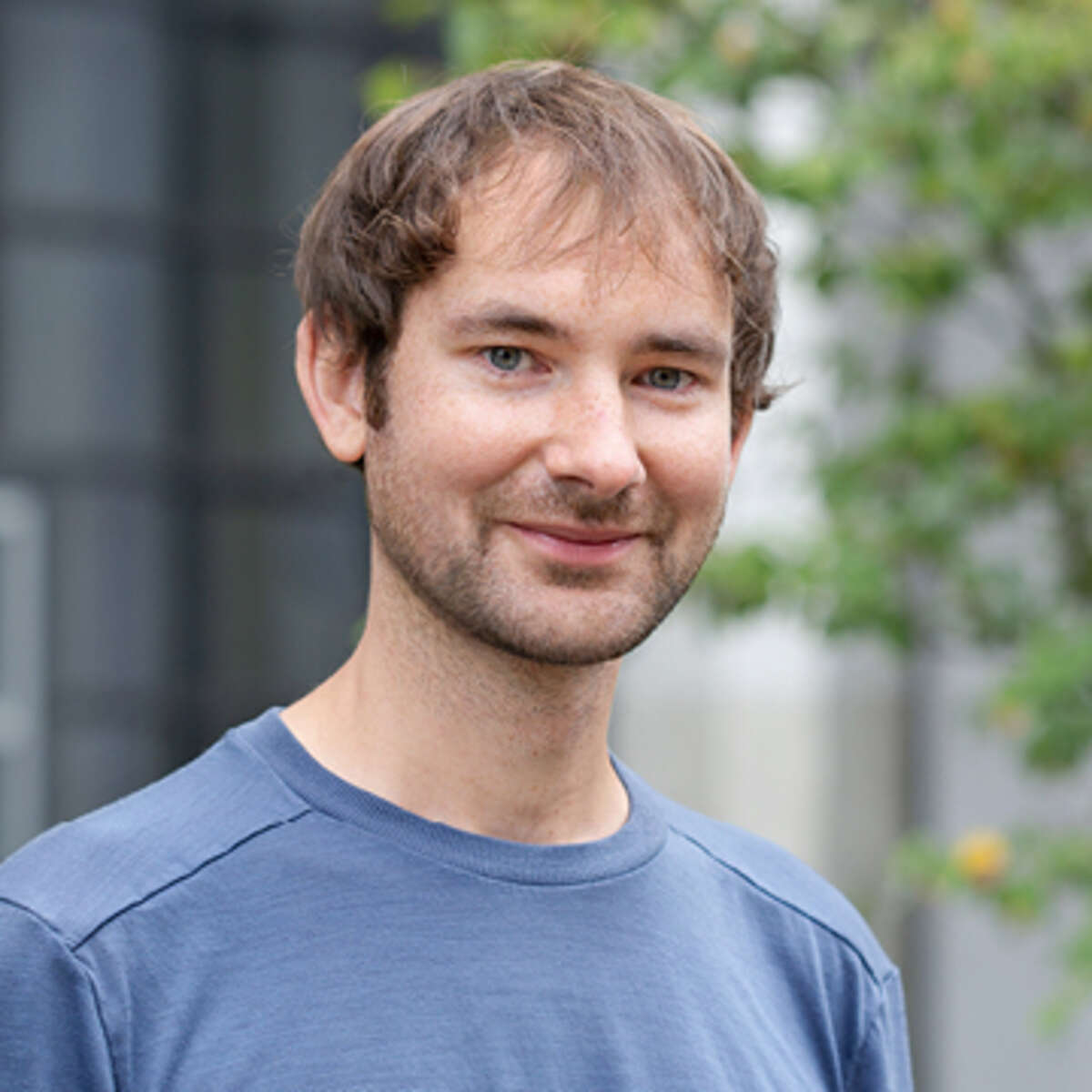
Dr. Jamie McGowan is a Lecturer in Genetics at the School of Biomolecular and Biomedical Science, University College Dublin. With an interdisciplinary background in Biology and Computer Science, their research focuses on bioinformatics, evolutionary genomics, and microbial eukaryotes, particularly protists and fungi. They previously held a postdoctoral position at the Earlham Institute, contributing to the Darwin Tree of Life Project. Education: Double Honours BSc in Biology and Computer Science, Maynooth University PhD in Genomics, Maynooth University Research Interests: Bioinformatics Evolutionary Genomics Microbial Eukaryotes Pathogen Genomics Single-Cell Genomics Genetic Code Variants Publications: 15 most recent articles span genomics of yeast strains for biofuel production, genetic code reassignments in ciliates, fungal pathogen effector analysis, and comparative studies of oomycetes threatening global ecosystems.
Professor Rachel Warnock leads the Systems Paleobiology research group at the GeoZentrum Nordbayern , part of Friedrich-Alexander University Erlangen-Nuremberg (FAU). Her work bridges paleontological and molecular data through advanced phylogenetic methodologies. Develops Bayesian phylodynamic frameworks Specializes in fossil data integration Focus on speciation/extinction processes Recent publications emphasize Bayesian phylogenetic inference , fossilized birth-death modeling , and macroevolutionary analysis across biological and cultural systems. She co-authored the FossilSim and FossilSimShiny packages for fossil occurrence simulation. Her research team includes collaborators from computational biology, paleontology, and evolutionary ecology domains, operating within FAU's Paleontology Department .
Dr. Joana Correia Faria is a Sir Henry Dale Fellow at the Department of Biology, University of York, focusing on monogenic gene expression mechanisms in African trypanosomes. Her work bridges molecular biology, genetics, and parasitology to unravel how pathogens evade immune systems through antigenic variation. PhD in Microbiology (University of Porto / Institut Pasteur Korea, 2016) MSc in Pharmaceutical Sciences (University of Porto, 2011) Her research explores nuclear organization, RNA decay pathways, and liquid-liquid phase separation in gene regulation. She employs advanced techniques like precision gene editing, cryoET imaging, and proteomics, collaborating with York's Physics and Chemistry departments and international institutions. Recent work includes 2025: Discovering histone tail modifications' role in trypanosome gene expression 2023: Identifying inter-chromosomal bridges in monogenic expression 2023: Modeling antigenic variation dynamics Scientific Awards: Wellcome-Beit Prize (£25,000) FCT PhD Fellowship (£71,560) REQUINTE Research Fellowship (£5,391) Currently leading a Wellcome Trust/Royal Society-funded Sir Henry Dale Fellowship (£1.096 million) and contributing to BBSRC-funded cryoET infrastructure projects.
Michelle Cluver is an Associate Professor at the School of Science, Computing and Emerging Technologies at Swinburne University of Technology. As a researcher in the Centre for Astrophysics and Supercomputing , her work focuses on galaxy evolution in group environments, star formation physics, and the interplay between gas, dust, and galactic dynamics. She pioneered the use of mid-infrared WISE data for stellar mass and star formation rate calibration. PhD in Astronomy (University of Cape Town, 2009) ARC Future Fellow (2018–2022) Her research spans galaxy groups, HI gas distribution, and radio continuum studies, with recent work on the 4MOST Hemisphere Survey (co-PI). Key methodologies include MeerKAT, WALLABY, and JWST observations. Awards include the Anne Green Prize (2023) and UCT's Best PhD Thesis (2009). Grants highlight her leadership in projects like 'From Feast to Famine: Tracing Transformation in Galaxy Groups' (ARC, 2018–2022). She supervises PhD students in topics ranging from cosmic web assembly to transient universe studies.
Dr. Stephen Mills is a Senior Lecturer in Archaeology at Cardiff University's School of History, Archaeology and Religion. With a career spanning since 2003, he specializes in the Neolithic of Southeast Europe, GIS applications, and auditory archaeology. His research integrates spatial technologies with sensory scholarship across Romania, Turkey, and the UK. PhD (Cardiff, 2002): The significance of sound in 5th millennium BC southern Romania MA (Cardiff, 1998, distinction) BA (Cardiff, 1997, first class honours) Research Interests focus on: Mesolithic-Neolithic transformation in the Lower Danube Valley Auditory archaeology methodologies Human-river interactions during the Holocene Digital archaeology and 3D imaging applications Key Projects include: Lower Danube Human-River Interactions (2016-present) with University of Lincoln Views of an Antique Land (2014-2017) funded by Heritage Lottery Fund Catacombs of Anubis (2009-2020) in Egypt Lyonesse Project (2009-2016) on Scilly coastal environments Art Landscape Transformations (2008-2011) EU-funded in Romania Scientific Contributions feature: Over 25 peer-reviewed publications Monograph: Auditory Archaeology (2014) Co-editor of international conference proceedings Principal Investigator for EU and HLF grants Teaching & Supervision includes: Undergraduate: GIS, Prehistoric Europe, British Archaeology Postgraduate: Research Methods in Archaeology PhD/MPhil co-supervision across digital archaeology and Neolithic studies Developed sensory scholarship modules Professional Roles since 2003: Web Producer for Archaeology & Conservation Director of Information Resources Committee Programme Lead for Archaeology & Conservation (2021-2025) Grant Reviewer for European Research Council
Martha Leonia Bulyk is a Professor of Medicine at Harvard Medical School and the Brigham & Women's Hospital . She also holds associate memberships at The Broad Institute and Dana-Farber Cancer Institute . Research: Functional genomics, gene regulation, protein-DNA interactions Technologies: Universal protein binding microarrays (PBMs), computational genomics Her work focuses on understanding transcriptional regulatory networks , particularly the role of transcription factors in DNA binding specificity and the evolution of regulatory elements. She has developed high-throughput methods like PBMs to characterize TF-DNA interactions and predict tissue-specific enhancers. Her lab combines experimental and computational approaches to study gene regulation in Drosophila and humans , including the impact of genetic variation on TF function. Key publication trends include studies on transcription factor isoforms , enhancer landscapes , silencer mechanisms , and the evolution of regulatory codes . Her recent work (2025) explores molecular interactions among TF isoforms, while 2023 publications address pioneer factors in chromatin regulation and open questions in transcriptional control. Dr. Bulyk is affiliated with multiple Harvard graduate programs including Biological & Biomedical Sciences and Biophysics , and her lab is located at the New Research Building in Boston.
Dr. Jay Quade is a Professor at the University of Arizona in the Department of Geosciences. His research focuses on low-temperature geochemistry, radiometric dating, and paleoenvironmental reconstruction, primarily within the Cenozoic Era. He has conducted fieldwork globally, including in the western USA, central Asia, Ethiopia, southern South America, and Turkey, and frequently collaborates with archaeologists and anthropologists. His analytical work is carried out in the Environmental Isotope Laboratory (led by Dave Dettman) and the Accelerator Mass Spectrometry facility (led by Greg Hodgins) for 14C dating. Key courses taught include Geochemistry, Quaternary Geochronology, Isotopic Methods in Paleoenvironmental Reconstruction, Geologic Field Camp, and interdisciplinary studies on the coevolution of Earth and the biosphere. Contact details: Office in Gould-Simpson Bldg. 376; phone 520-626-1847; email quadej@email.arizona.edu .
Wenqin LU is a Research Assistant Professor at Southern University of Science and Technology (SUSTech), working in the Department of Biology within the School of Life Sciences. She joined SUSTech in 2021 as a postdoctoral researcher in Professor Jixian Zhai's research group and was promoted to Research Assistant Professor in 2023, where she continues her research on advanced molecular biology techniques and plant genomics. Educational Background: PhD in Plant Pathology, College of Plant Protection, Northwest Agriculture and Forestry University (2015-2020) BS in Biotechnology, Innovation Experimental College, Northwest Agriculture and Forestry University (2011-2015) Dr. LU's research focuses on cutting-edge molecular biology techniques to investigate fundamental plant processes. Her primary research interests include the study of mRNA poly(A) tail length regulation using long-read sequencing technology and the development of high-throughput single-cell multi-omics techniques. Her work bridges plant molecular biology with advanced genomic technologies, aiming to uncover regulatory mechanisms that govern plant development and immunity. She has developed expertise in advanced sequencing methodologies that allow for more comprehensive analysis of RNA modifications and their functional consequences in plants. Analysis of Dr. LU's recent publications reveals a strong progression from plant-pathogen interactions to specialized RNA regulation mechanisms. Her earlier work focused on plant immune responses against Phytophthora pathogens, while her more recent research has centered on poly(A) tail dynamics using advanced sequencing approaches. This represents a strategic shift toward understanding fundamental RNA regulatory processes that may underpin plant immune responses. Her work on creating an atlas of plant poly(A) tail length demonstrates technical innovation in applying long-read sequencing to RNA biology questions. Professional Experience: 2023-Present: Research Assistant Professor, Department of Biology, School of Life Sciences, Southern University of Science and Technology 2021-2023: Postdoctoral Fellow, Department of Biology, School of Life Sciences, Southern University of Science and Technology
Clare Rittschof is an Associate Professor at the Martin-Gatton College of Agriculture, Food and Environment, University of Kentucky. Her research integrates behavioral ecology, neuroscience, and genomics to investigate how social experiences and environmental factors shape behavioral expression in insects, particularly honey bees. Location: 405 Plant Sciences Building, Lexington, KY Email: clare.rittschof@uky.edu Phone: (859) 218-3343 Research focuses on: Social cue integration and behavioral plasticity Impact of early-life experiences on adult phenotypes Neurogenomic mechanisms of aggression and disease resistance Environmental stressors in agroecosystems Epigenetic regulation of social behavior Systems approaches to plant-pollinator interactions Recent publications highlight trends in honey bee aggression regulation, social context effects on behavior, transcriptomic responses to stress, and environmental impacts on colony dynamics. Her work bridges ecological and molecular perspectives through studies on brain mitochondrial bioenergetics, kleptobiotic events, and grooming behaviors. Scientific award: National Science Foundation CAREER Award for 'Signal to Noise' research on social information processing Mentoring initiatives emphasize undergraduate research opportunities, with lab social media platforms showcasing their NSF-funded work and bee behavior studies.
Mauro Zamboni is a Professor at the Department of Law, Faculty of Law, Stockholm University, where he focuses on the relationship between law and politics. His current research examines the emergence of transnational legal order for corporate governance from a legal theory perspective through his major project "The Idea of Corporation in Transnational Law: Setting the Legal Foundations". Zamboni's research interests span legal theory, transnational law, corporate governance, rule of law, Scandinavian legal realism, legal method, and evolutionary legal theory. His work explores how political considerations interact with legal frameworks, particularly in transnational contexts where traditional state-based legal systems encounter new governance challenges. He has developed theoretical frameworks for understanding how law evolves in response to political pressures and how legal systems adapt to globalized contexts. His scholarly contributions have been recognized with prestigious awards including the European Award For Legal Theory in 2005 and the Swedish University Association's prize for outstanding scientific achievement in 2007. Zamboni has held significant research positions including at the Royal Swedish Academy of Sciences (2007-2012), and has served as a visiting professor at the Center of Law and Governance in Groningen, Netherlands (2010-2014). Zamboni's international academic engagement is extensive, with visiting researcher positions at Stanford University (2003-2004), Harvard University (2008-2009), and the University of Bremen (2009-2011). His publications demonstrate a consistent focus on theoretical approaches to understanding how legal systems function in increasingly complex global contexts, with particular attention to legislative processes, democratic legitimacy, and the evolution of legal thought.
Herbert Michlmayr is a researcher at the Institute of Plant Breeding within the Department für Agrarwissenschaften at the University of Natural Resources and Life Sciences Vienna . His work focuses on plant-microbe interactions and mycotoxin detoxification mechanisms. Specializes in Trichothecene toxin metabolism Develops analytical methods for mycotoxin detection Investigates UDP-glucosyltransferase activity in plant defense Collaborates across disciplines in food safety and agricultural biotechnology Michlmayr's research addresses fungal contamination in cereals through biochemical approaches, including deoxynivalenol (DON) modification and masked mycotoxin analysis . His publications demonstrate expertise in enzymatic synthesis and toxin structural characterization . He has supervised Master's theses on heterologous enzyme systems and serves as peer reviewer for journals like Food Chemistry and Applied Microbiology and Biotechnology . His work informs EU-funded research on food safety and FWF projects on plant-pathogen interactions.
Vladimír Bahna, PhD, is a researcher at the Institute of Ethnology and Social Anthropology of the Slovak Academy of Sciences (ÚESA SAS), where he has been working since 2007. His academic background includes an Mgr. in Religious Studies from Comenius University's Faculty of Arts (2006) and a PhD (2012). He maintains active international collaborations, having worked at Masaryk University in Brno and Oxford University's Centre for Anthropology and Mind. His research primarily focuses on cognitive and evolutionary anthropology, with special emphasis on religion, narrative folklore, and supernatural experiences. Bahna has made significant contributions to understanding memory transmission, conspiracy theories, and the cognitive aspects of religious beliefs. His work often bridges anthropology with psychology and cognitive science, employing both theoretical and experimental approaches to study cultural phenomena. Bahna's scholarly output shows a consistent trajectory toward understanding how supernatural experiences are transmitted socially and how cognitive mechanisms shape religious beliefs and practices. His research spans from theoretical explorations of cultural evolution to empirical studies of contemporary religious practices and online discourse about conspiracy theories. Literary Fund Award for Scientific and Professional Literature 2020 for the book Supernatural Experiences and the Narrative Mind Award for the best dissertation project in social sciences for 2009 within the "We support individuality" program of the Intenda Foundation Bahna actively contributes to academic training, supervising doctoral students and teaching courses on cultural evolution and religion at multiple institutions including Comenius University and Masaryk University. He has participated in numerous research projects funded by VEGA grants, focusing on collective rituals, ethnology, and social anthropology in Slovakia. His international collaborations include work with the LEVYNA Laboratory for experimental research on religion at Masaryk University.
Simon van Vliet is a Junior Group Leader at the Biozentrum, University of Basel, and the Department of Molecular and Functional Biology at the University of Lausanne (DMF-UNIL). Originally trained as a physicist, he transitioned to biology to study the ecology and evolution of complex microbial systems. His research focuses on understanding how interactions between bacterial cells affect the dynamics of multispecies biofilms, which are critical to human health, planetary biogeochemical cycles, and industrial applications. His research spans several interconnected areas: Systems ecology of bacterial biofilms and emergent community properties Spatial organization and patterning in microbial communities Metabolic interactions and dependencies in multispecies communities Evolution of cooperation and cross-feeding in spatially structured environments Application of interdisciplinary approaches combining experimental and computational techniques Dr. van Vliet's recent publications reveal an integrated research program that bridges physics, ecology, and microbiology. His work demonstrates how cell-cell interactions through molecular exchange significantly alter biofilm properties, with particular focus on how spatial structure influences evolutionary processes and community dynamics. His lab combines single-cell microscopy, transcriptomics, and mathematical modeling to quantify and predict biofilm behavior, with important implications for understanding and addressing chronic infections caused by multispecies biofilms. He is actively engaged in the scientific community through initiatives like the Alma Dal Co School on Collective Behaviour and the SAME18 conference on Aquatic Microbiomes. His laboratory (vanvlietlab.ch) currently includes PhD student Giulia Bottacin, demonstrating his commitment to training the next generation of interdisciplinary scientists.
Douglas R. Taylor is the Commonwealth Professor of Biology in the Department of Biology at the University of Virginia, where he leads research on population genetics, molecular evolution, and genomics with a focus on spatially structured populations. His work integrates molecular methods, field studies, and theoretical modeling to explore evolutionary dynamics in metapopulations. His research program centers on: Evolution of population structure and genetic diversity maintenance Genetics of biological invasions and range expansions Genetic conflict across biological levels (e.g., nuclear-mitochondrial interactions) Mitochondrial genome evolution in plants, particularly in the genus Silene Mating system evolution and sex ratio dynamics Analysis of his 2014-2025 publications reveals consistent emphasis on plant model systems (especially Silene species), with recurring themes in organelle genome evolution, cyto-nuclear coadaptation, and the ecological genetics of invasive species. His work frequently combines long-term field data with genomic approaches to address fundamental questions in evolutionary biology. Professor Taylor has secured significant research funding including an NSF LTREB grant for metapopulation studies in the Silene-Microbotryum host-pathogen system and an NSF CAREER award for sex ratio evolution research. He actively recruits graduate students and postdoctoral fellows to his lab, emphasizing collaborative opportunities through his 30+ year longitudinal study of natural metapopulations. The Taylor Lab, based in Gilmer Hall, maintains extensive genomic resources from long-term ecological studies and serves as a hub for collaborative research on evolutionary processes in structured populations, with particular applications to invasion biology and host-pathogen coevolution.
Robert Cowie is a Research Professor at the Pacific Biosciences Research Center (PBRC) of the University of Hawaii at Manoa, serving as Graduate Faculty in both the Zoology Program and Ecology, Evolution and Conservation Biology (EECB) Program within the School of Life Sciences. His office is located at 3050 Maile Way, Gilmore 408, Honolulu. His academic credentials include: BA Natural Sciences (Zoology), University of Cambridge (1975) MA Natural Sciences (Zoology), University of Cambridge (1979) PhD Zoology, University of Liverpool (1982) Dr. Cowie's research integrates systematics, ecology, and conservation to address Pacific Island biodiversity crises. His primary foci encompass the Sixth Mass Extinction (particularly invertebrate extinction), rat lungworm disease ecology (where snails serve as vectors), and invasion biology of alien species. He conducts field and laboratory studies on Hawaiian land snails, apple snails, and metastrongyloid nematodes, combining phylogenetics, biogeography, and climate change modeling to inform conservation strategies. His work has significant implications for public health and invasive species management in vulnerable island ecosystems. Analysis of his 2019-2025 publications reveals dominant themes: the accelerating Sixth Mass Extinction (with emphatic warnings against denialism), rat lungworm transmission dynamics through snail behavior and environmental stressors, and conservation assessments of non-marine molluscs globally. His interdisciplinary approach bridges parasitology, conservation biology, and invasion science, frequently published in high-impact journals like Trends in Ecology & Evolution (IF 17.3) and Biological Reviews (IF 14.4). As Graduate Faculty, Dr. Cowie mentors students in Zoology and EECB programs. His laboratory investigates snail-nematode interactions, extinction patterns, and invasive species impacts, supported by extensive fieldwork across the Pacific. He actively engages in public outreach through documentaries like Accidental Host – The Story of Rat Lungworm Disease (PBS Hawaii) and media appearances discussing mass extinction risks.