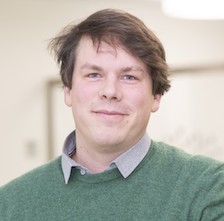
Maude Baldwin is the Director of the Evolution of Sensory and Physiological Systems department at the Max Planck Institute for Biological Intelligence. Her research focuses on the molecular and physiological mechanisms underlying sensory receptor evolution in vertebrates, particularly in birds. Education : Ph.D. from Harvard University (Department of Organismic and Evolutionary Biology, 2007-2014); B.A. from New York University (Gallatin School of Individualized Study, 2005). Research Interests include: Evolution of taste receptors, such as the repurposing of savory receptors for sweet detection in hummingbirds. Convergent evolution in sensory systems across vertebrates. Integrative approaches combining molecular methods, cell culture, and behavioral studies. Impact of dietary shifts on ecological and physiological adaptations. Publication Trends reveal a focus on comparative genomics , protein evolution , and sensory system adaptation , with specific attention to bird taste receptors , gene loss , and echolocation genetics . Labs & Teams : Baldwin leads a multidisciplinary team at the Max Planck Institute, recruiting researchers in comparative genomics , organoid technology , and vertebrate natural history . The group investigates sensory-diet coevolution and physiological trade-offs.
Prof. Ralph Hückelhoven is a Professor of Phytopathology at the Technical University of Munich (TUM), affiliated with the TUM School of Life Sciences. His research focuses on the molecular and biological mechanisms underlying plant diseases, particularly plant immunity, pathogen exploitation of signal transduction, and host-pathogen interactions. He leads the Chair of Phytopathology at TUM since 2006, following academic roles at universities of Kiel and Hohenheim. Education: PhD (1999) and habilitation in molecular phytopathology (2005) from Justus Liebig University Giessen, after a biology degree at RWTH Aachen University. Awards: Julius Kühn Prize (2004) and leadership of a DFG Junior Research Group (2002-2006). His research spans plant immunity at cellular and molecular levels, including studies on receptor kinases (e.g., MIK2, LORE), RAC GTPases (e.g., RACB), and metabolomics-driven insights into pathogen resistance. He has published over 100 peer-reviewed articles, examining topics like fungal toxins, volatile signaling, and crop disease management. Key publications include work on Arabidopsis immune receptors, barley powdery mildew susceptibility factors, and Fusarium head blight resistance. Research integrates genetics, proteomics, and metabolomics to advance disease-resistant crop development. His lab investigates host-pathogen interactions across scales—from molecular signaling to field epidemiology—contributing to sustainable agricultural strategies against plant pathogens.
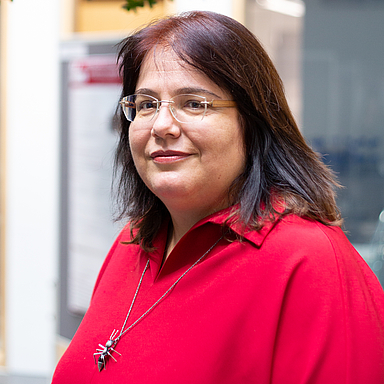
Prof. Dr. Susanne Foitzik is a Professor of Evolutionary Biology at Johannes Gutenberg University Mainz since 2010, where she leads the Evolution & Behavioral Ecology of Ants research group at the Institute of Organismic and Molecular Evolution (IOME). Previously, she was Professor in Behavioral Ecology at LMU Munich (2004-2010) and Assistant Professor in Zoology at the University of Regensburg (2000-2004). She earned her PhD in Biology from Julius Maximilian University, Würzburg in 1998. Her research integrates approaches from behavioral ecology through genomics to epigenetics, focusing on ants as model organisms to study complex social behaviors. Host-parasite coevolution and social parasitism in ants Molecular mechanisms underlying division of labor Reversal of the fecundity-longevity trade-off in social insects Gene regulation in phenotypic plasticity Evolution of chemical communication systems Analysis of her recent publications (2022-2025) reveals a strong focus on molecular mechanisms of social behavior, with particular emphasis on host-parasite interactions, epigenetic regulation of behavior, and genomic adaptations in social insects. Her work increasingly combines transcriptomic, proteomic, and functional genomic approaches to understand the molecular basis of social evolution. Among her notable scientific achievements: Speaker of Research Training Group 2626 GenEvo: Gene Regulation in Evolution (2019-present) Speaker of EES Master Program funded by VW foundation (2007-2010) DAAD Fellow at State University of New York (1992-93) Prof. Foitzik has supervised numerous PhD students and postdocs, including Maide Macit, Tom Sistermans, and Marcel Caminer. Her research is supported by multiple DFG-funded projects investigating host-parasite coevolution, the role of gene regulation in division of labor, and parasite interference in host gene expression. She serves as Handling Editor for Biology Letters and previously served on the editorial board of Insectes Sociaux. Her research group operates within the Institute of Organismic and Molecular Evolution (IOME) at Mainz, with laboratory facilities at the Biozentrum I. The group collaborates extensively with researchers across Germany and internationally, including partnerships with institutions in Frankfurt, Freiburg, Bristol, and Tel Aviv.
Martin Kaltenpoth serves as Director at the Max Planck Institute for Chemical Ecology in Jena since 2020 and Professor for Evolutionary Ecology at Johannes Gutenberg University of Mainz since 2015. Previously, he led the Research Group Insect Symbiosis at the MPI for Chemical Ecology from 2009 to 2015. Education: PhD in Biology (summa cum laude), University of Würzburg, 2006 Diploma in Biology (with honors), University of Würzburg, 2003 His research centers on insect-bacterial symbioses , investigating evolutionary, ecological, and chemical dimensions of host-microbe interactions. Key foci include nutritional and defensive symbiosis in beetles, genomic adaptations of symbiotic bacteria, and chemical mediation of symbiotic relationships. His work bridges entomology, microbiology, and chemical ecology to unravel coevolutionary mechanisms. Analysis of recent publications reveals dominant trends in beetle-microbe systems, emphasizing symbiont roles in cuticle synthesis, antifungal defense, and host-plant adaptation. His studies frequently employ genomic, biochemical, and experimental approaches across diverse insect lineages. No scientific awards were documented in the source material. While specific advisees and grants remain unlisted, his leadership of research groups and dual academic appointments indicate active supervision of graduate researchers and externally funded projects in symbiosis evolution. Currently directing research at the Max Planck Institute, Kaltenpoth advances understanding of symbiotic systems with implications for evolutionary theory and sustainable pest management strategies.
Veronika Settele is a historian specializing in 19th-20th century societal transformations, currently serving as a Visiting Professor and junior research group leader at the University of Bremen since 2023. Her work bridges History of Sexuality , Food History , and Animal Studies , examining intersections between economic systems, technological shifts, and cultural norms. Education : PhD in History (2015-2020), Freie Universität Berlin MSc in European Politics and Society (2011-2014), University of Innsbruck Magister in History (2007-2012), University of Innsbruck Research Focus : Her scholarship interrogates how sexuality , animal husbandry , and food systems reflect and shape societal structures. Current projects like "Hinter der Norm" analyze sexuality's secularization through religious practice lenses, while her publications explore industrial agriculture's moral and economic dimensions. Article Trends : Spanning 2012-2024, her work traces industrial agriculture (1945-1990), animal labor dynamics , and sexuality as cultural practice , with keywords spanning Capitalism , Technological History , and Environmental Ethics . Scientific Recognition : Opus Primum Preis der Volkswagen Stiftung Deutscher Studienpreis Friedrich-Meinecke-Preis Fonds Deutscher Studienpreis der Körber-Stiftung Gerald D. Feldman-Reisebeihilfen Academic Leadership : She co-organized conferences like "Beyond Norms and Categories" , serves on the editorial board of Zeithistorische Forschungen , and has taught seminars on transnational reform movements, Holocaust studies, and capitalism history at the University of Bremen and Sorbonne Université.
Barbara Drossel is a Full Professor at the Institute of Solid State Physics within the Faculty of Physics at the Technical University of Darmstadt, where she has been conducting research since February 2002. Her work bridges theoretical physics, complex systems theory, and theoretical ecology, focusing on interdisciplinary approaches to understanding emergent phenomena in natural systems. She leads the AG Drossel research group that investigates the theoretical foundations of complex networks, ecological communities, and quantum systems. Professor Drossel's research spans multiple domains with emphasis on complex systems theory, where she has made significant contributions to understanding random Boolean networks, food web modeling, and the physics of ecological communities. Her work demonstrates how simple rules can lead to complex emergent behavior across different scales, from quantum systems to ecological networks. She investigates how top-down causation operates in complex systems and explores the relationship between microscopic dynamics and macroscopic patterns in diverse contexts. Analysis of her recent publications reveals a consistent focus on theoretical frameworks that connect physics with ecology. Her work shows increasing integration of quantum mechanics with ecological modeling, particularly in understanding emergence and time evolution in complex systems. She frequently employs network theory to analyze ecological communities and has developed innovative approaches to studying species interactions, mutualistic networks, and spatial dynamics in meta-communities. Minerva Fellowship Heisenberg Fellowship DFG Fellowship for research at MIT Professor Drossel has supervised numerous doctoral students whose work spans theoretical ecology, complex systems, and statistical physics. Her research group has secured funding for projects examining the stability of ecological networks, quantum decoherence, and the mathematical foundations of complex systems. She maintains active collaborations with researchers across Europe and has contributed to major theoretical advances in understanding how complexity emerges from simple interactions in diverse systems. The AG Drossel research group operates at the intersection of physics and theoretical biology, maintaining strong connections with both the physics and biology departments at TU Darmstadt. The group combines mathematical rigor with biological relevance, developing models that capture essential features of complex natural systems while remaining analytically tractable. Their work has influenced both theoretical physics and ecological theory, demonstrating the power of interdisciplinary approaches to complex systems.
Univ.-Prof. Dr. med. Martin A. Kriegel serves as full Professor and Department Head of the Department of Translational Rheumatology and Immunology at the Institute of Musculoskeletal Medicine, University of Münster, while maintaining an active laboratory at Yale School of Medicine. He leads the Section for Rheumatology and Clinical Immunology (SRKI) at Medical Clinic D, where his team integrates clinical care with cutting-edge microbiome research. His department operates from Röntgenstraße 21 and Von-Esmarch-Str. 54 in Münster, Germany, with extensive collaborations including the "Cells in Motion" research initiative and the CiM-IMPRS graduate program. Dr. Kriegel's research program focuses on the critical interface between host immunity and microbiota, particularly investigating how gut commensals translocate to host tissues and trigger autoimmune responses. His laboratory pioneered the discovery that specific pathobionts like Enterococcus gallinarum and certain Lactobacillus strains can translocate from the gut to mesenteric lymph nodes, liver, and other sites, driving autoimmune responses through molecular mimicry of human autoantigens. His work has established fundamental mechanisms by which microbiota influence rheumatic diseases, cutaneous autoimmunity, and cancer immunology, with particular emphasis on Ro60 autoantigen mimicry, TLR7-dependent pathways, and diet-microbiome interactions. The laboratory employs advanced techniques including gnotobiotic mouse models, humanized systems, and detailed molecular characterization of host-pathobiont interactions. Analysis of Dr. Kriegel's publication record reveals a consistent trajectory of high-impact research connecting microbiome dynamics to autoimmune pathogenesis. His most recent work (2023-2025) demonstrates increasingly sophisticated understanding of how specific bacterial strains influence disease phenotypes across multiple autoimmune conditions, with notable advances in identifying shared microbiome signatures across lupus and inflammatory bowel disease. The publications show progressive refinement from initial observations of microbial translocation to detailed mechanistic insights into tryptophan catabolism pathways, structural basis of molecular mimicry, and diet-sensitive microbial triggers. Dr. Kriegel's scientific recognition includes US Patent No. 11,058,756 B2 for compositions treating autoimmune diseases by reducing enterococcus, reflecting the translational potential of his research. His laboratory receives substantial funding, most notably a $3 million award from the Lupus Research Alliance for the TransLuMi project investigating gut pathobiont translocation in systemic lupus erythematosus. As an educator and mentor, Dr. Kriegel directs a substantial research team including multiple postdocs (Drs. Marcia Pereira, Nathalie Becker), PhD candidates (Anna Brinkhege, Carina Brune, Helen Fuhrmann), and laboratory specialists. He participates in the CiM-IMPRS graduate program and supervises medical students through the MedK program. His laboratory currently manages multiple significant research projects including: (A) intestinal wall permeability and pathobiont translocation in autoimmunity; (B) diet-environment-microbiome interactions; (C) microbiota disruption of immunological tolerance; and (D) microbiome roles in lymphoma development. The Kriegel laboratory maintains state-of-the-art facilities at both Münster and Yale, with specialized capabilities in gnotobiotic research, microbiome analysis, and immune profiling. His team collaborates with international partners including Dr. Eran Elinav at Weizmann Institute, Dr. Nissan Yissachar at Bar-Ilan University, Prof. George Tsokos at Harvard, and Prof. Ilana Brito at Cornell University. The laboratory's website (https://www.medizin.uni-muenster.de/mikrobiom/startseite/) details ongoing projects and research opportunities.
Jochen Wolf is Chair of the Evolutionary Biology Division at Ludwig-Maximilians-Universität München (LMU) and a Max Planck Fellow of the Max Planck Institute for Biological Intelligence since 2022. His research integrates evolutionary biology, genomics, and ecology to address fundamental questions about speciation, adaptation, and biodiversity across multiple biological systems. Dr. Wolf's research program applies an integrative approach to understand microevolutionary processes and genetic mechanisms underlying species divergence. His work combines large-scale genomic analyses with laboratory and field experiments to characterize genomic divergence across populations and species. Key empirical systems include natural populations of birds (particularly corvids, swallows, and cuckoos), marine mammals (pinnipeds and killer whales), plant communities, and experimental evolution in fission yeast. His research spans multiple scales from immediate microevolutionary processes to broader evolutionary patterns across time. His recent publications reveal a sophisticated integration of genomic, epigenetic, and ecological perspectives. A notable trend shows increasing focus on structural genomic variation, chromosomal rearrangements, and epigenetic mechanisms as drivers of evolutionary processes. His work demonstrates how these molecular mechanisms interact with ecological factors to shape patterns of biodiversity and adaptation. Dr. Wolf's research has gained significant recognition through publications in top-tier journals including Nature, Science, and Nature Ecology & Evolution. His groundbreaking studies on crow hybrid zones, killer whale ecotypes, and experimental evolution of speciation have been featured in prominent media outlets such as The New Yorker, The Guardian, Scientific American, and Der Spiegel, demonstrating the broad impact of his work. As Principal Investigator, Dr. Wolf actively mentors doctoral students and postdoctoral researchers, fostering the next generation of evolutionary biologists. His lab maintains strong international collaborations, particularly through affiliations with SciLifeLab in Uppsala. Research in his group is supported by multiple funding sources including German Research Foundation grants and European Union programs, enabling both fundamental research and applications to conservation biology. The Wolf lab operates within LMU's Division of Evolutionary Biology, which provides access to state-of-the-art facilities including the Leibniz Supercomputing Centre. The lab maintains strong connections with the Max Planck Institute for Biological Intelligence and SciLifeLab in Uppsala, creating a rich collaborative environment for interdisciplinary research in evolutionary genomics. This network enables comprehensive studies spanning from molecular mechanisms to ecological and evolutionary consequences across diverse biological systems.
Prof. Dr. Arne Traulsen is a Scientific Member and Director of the Department of Theoretical Biology at the Max Planck Institute for Evolutionary Biology in Plön, Germany. He leads interdisciplinary research integrating biology, physics, mathematics, and computer science to study evolutionary dynamics, particularly in cancer evolution, metaorganisms, and population structure. His work often involves collaborations with clinicians, experimentalists, and bioinformaticians. Education: Diploma in Theoretical Physics (2002) Doctorate from Kiel University (summa cum laude, 2005) Research Interests: Arne’s research focuses on evolutionary game theory, finite populations, group selection, mathematical models for cancer , and population structure . His team explores how mutations accumulate, how cooperation evolves, and how eco-evolutionary dynamics shape biological systems. Recent work connects chaotic turnover in ecosystems and evolutionary responses to treatment with broader biological questions. Scientific Awards: Postgraduate Grant of Studienstiftung des Deutschen Volkes Postdoc Grant of Deutsche Akademie der Naturforscher Leopoldina Emmy-Noether Grant of Deutsche Forschungsgemeinschaft Young-Scientist Award for Socio- and Econophysics (2012) Advising and Collaborations: While specific student names are not listed, Arne has hosted numerous research groups and mentored interdisciplinary teams. His work spans collaborations with institutions like Kiel University , the CRC 1182 Metaorganisms , and global researchers in evolutionary biology and computational modeling .
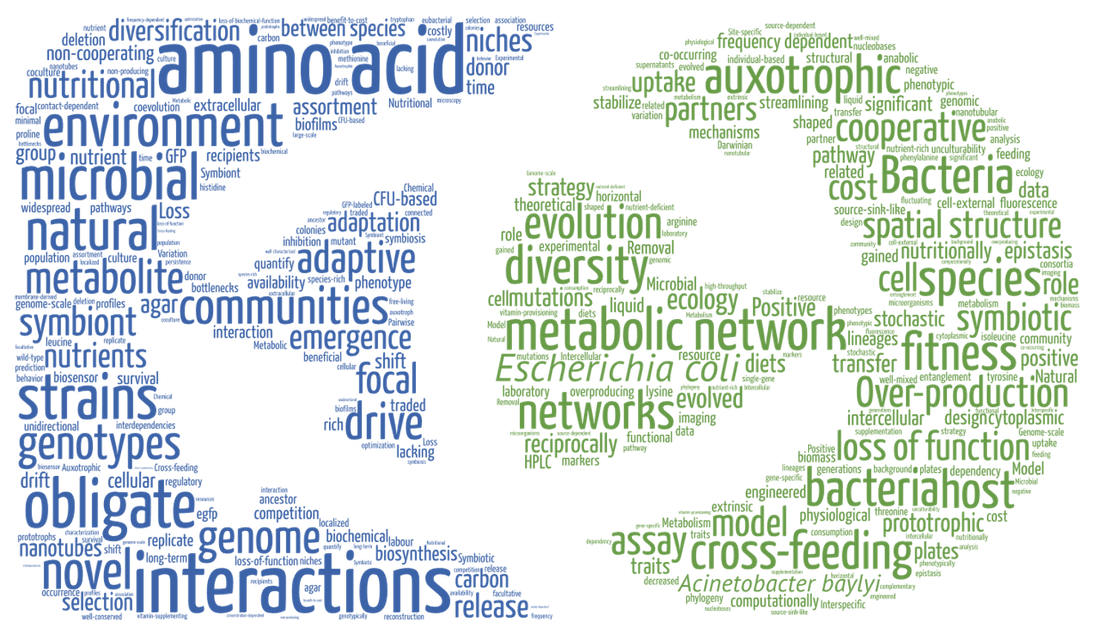
Prof. Dr. Christian Kost is a Professor in the Department of Ecology at the University of Osnabrück. His research focuses on the molecular and ecological mechanisms underlying cooperative interactions between organisms, particularly metabolic cross-feeding in bacteria. He leads the Experimental Ecology and Evolution group, investigating how cooperation evolves and its physiological consequences. Key research topics include the evolution of cooperation, synergistic coevolution, microbial community dynamics, bacterial multicellularity, and phenotypic heterogeneity. Methodologies employed include experimental evolution, synthetic ecology, genomics, microscopy/microfluidics, and theoretical modeling. Recent work highlights obligate cross-feeding’s role in expanding bacterial metabolic niches and the prevalence of reciprocity in mutualistic interactions. Kost’s lab has published influential studies on microbial symbiosis, including landmark papers in Nature Ecology & Evolution and Current Biology . Current projects explore ecological interaction networks, predator-prey dynamics (e.g., ciliate-bacteria), and synthetic microbial communities. The lab actively collaborates with international researchers and employs cutting-edge techniques like omics profiling and individual-based modeling (e.g., McComedy tool development). Recent lab additions include bachelor students Karmen Lohstroh, Pía-Kathleen Habekost, and Finn Dinnus. Kost’s work bridges theoretical and experimental approaches, aiming to define principles governing microbial cooperation and its ecological significance.
Dr. Thomas Spallek is a Junior Group Leader leading the Plant Biotic Interactions Group at Georg-August University Göttingen, Germany. His research focuses on functional genetics of parasitic plants, interspecific signaling, and haustoria formation mechanisms. Previously, he held roles as Project Leader (2019–2022) and Postdoc (2018–2019) at the University of Hohenheim, with postdoctoral experience at RIKEN (Japan) and The Sainsbury Laboratory (UK). Education: PhD in Plant Biology (Max Planck Institute, Cologne, 2011), Diploma in Biology (University of Konstanz, 2008). Research Interests: Parasitic plant genetics and host interactions Cytokinin signaling in plant-pathogen relationships Cellular and molecular mechanisms of haustorium development Publications span plant-parasite signaling, hormonal regulation, and genomic studies of parasitic weeds. Notable collaborations include work on Striga asiatica genome analysis and cytokinin-driven virulence factors. He is affiliated with the International Research Training Group 2172 - PRoTECT and coordinates the Plant Biotic Interactions research group. His work integrates molecular genetics, bioimaging, and computational tools to dissect plant defense and parasitic strategies.
Prof. Dr. Tim Rollenske is a faculty member and principal investigator at the University of Bonn , affiliated with the Faculty of Medicine and the Institute of Immunology . He leads the Tim Rollenske Laboratory , focusing on mucosal immunology and B cell responses to the microbiota. His research is supported by prestigious grants such as the Emmy Noether DFG Grant and the ImmunoSensation 2 Seed Funding. His research interests include: Mucosal Immunology and IgA function B cell biology and antibody repertoire Host-microbe interactions and microbiota modulation Monoclonal antibody discovery and therapeutic potential Analysis of his recent publications (2018–2025) reveals a strong focus on the role of secretory IgA in shaping microbial communities, B cell development in early life, and cross-reactive antibody responses in infection and immunity. His work integrates human samples, gnotobiotic mouse models, and single-cell BCR analysis. Scientific awards include: Fritz and Ursula Melchers Prize (2022) ImmunoSensation 2 Seed Funding Prize (2023) Travel grant and poster prize at IMMEI Retreat (2024) He mentors several PhD students, including Jonathan Schreiber, Sophie Burkhalter, Antonia Geisse Anguita, and Chris Johann Göschel. His lab is part of a collaborative network within the University of Bonn’s immunology research ecosystem, including the Christian Kurts, Natalio Garbi, and Veronika Lukacs-Kornek laboratories. He has received funding from DFG, Excellence Cluster ImmunoSensation 2, and SFB 1454 Metaflammation. His laboratory investigates the molecular mechanisms by which B cells and antibodies maintain mutualistic host-microbe relationships at mucosal surfaces, with long-term goals of improving mucosal vaccination and developing monoclonal antibody therapies.
Dr. Renas I. Koshnaw is a postdoctoral researcher at the Department of Structural Geology and Geothermics, Georg-August University Göttingen, and holds a research associate position at MIT. His research focuses on tectonic processes, particularly the coevolution of fold-thrust belts and sedimentary basins, integrating field-based geology, geochemistry, and thermochronology. He received his BSc from Salahaddin University-Erbil (2006), MSc from the University of Texas at Austin (2011), and PhD (2016). He has held fellowships including the Humboldt Postdoctoral Fellowship (Göttingen) and Swiss Government Excellence Scholarship (Bern). Research interests include structural geology, tectonics, sedimentary basin evolution, and geodynamic processes. His work emphasizes the Zagros orogen and Neotethys slab dynamics, with applications to continental collision processes. He has published extensively on topics like foreland basin subsidence, detrital zircon provenance, and magmatic activity in ophiolite complexes. Awards: Humboldt Postdoctoral Fellowship (2019–present), Swiss Government Excellence Scholarship (2018), American Fellowship (MSc/PhD funding). Grants: Not explicitly listed, but fellowships imply significant funding support. Labs/Teams: Collaborates with institutions like MIT (EAPS), University of Bern (Geology), and Göttingen’s Geowissenschaftliches Zentrum.
Paul Schulze-Lefert is Director of the Department of Plant Microbe Interactions at the Max Planck Institute for Plant Breeding Research (MPIPZ) in Cologne, Germany, and Honorary Professor at the University of Cologne. His research bridges genetics, molecular biology, and biochemistry to study plant-microbe interactions, with focus areas including: Structure/function of Arabidopsis root microbiota (ERC Advanced Grant ROOTMICROBIOTA) Intracellular immune sensors and non-self perception mechanisms Evolutionary conservation of NLR-triggered immunity His work explores how plants distinguish beneficial microbes from pathogens, and how root microbiota influence nutrient uptake and disease resistance. Research utilizes Arabidopsis, barley, and Lotus japonicus models to decode immune receptor functions and microbial community assembly. Major scientific honors include election to the National Academy of Sciences (USA), German National Academy of Sciences (Leopoldina), and American Academy of Microbiology. He co-founded AgBiome to translate microbiome research into crop protection solutions. Dr. Schulze-Lefert leads an active research group with 6+ PhD students/postdocs investigating: Bacterial root endophytes NLR receptor biochemistry Microbiota-mediated nutrient cycling Cross-kingdom immune mechanisms Current projects include ERC-funded work on root microbiota evolutionary trajectories and structural studies of immune receptors.
Dr. Joanna Malukiewicz is a Postdoctoral Researcher at the University of Hamburg, affiliated with the Faculty of Mathematics, Informatics and Natural Sciences and the Department of Biology. She works within the Institute of Animal Cell and Systems Biology, focusing on Evolutionary Immunogenomics. Her research emphasizes genomic studies of primates, particularly marmosets (Callithrix species), hybridization dynamics, microbiome analysis, and conservation genomics. Dr. Malukiewicz's work spans evolutionary biology, genomics, and biodiversity conservation. She investigates topics such as morphological variation in marmosets, genomic mechanisms driving dwarfism, and the impact of captivity on animal health. Her studies often combine genomic data with ecological observations to understand species adaptation and survival. Her recent publications highlight advancements in sequencing technologies, applications of genomics to conservation, and insights into zoonotic diseases in urban primate populations. She collaborates internationally, addressing challenges in endangered species management and sustainable biodiversity strategies. Dr. Malukiewicz holds no listed scientific awards but contributes actively to peer-reviewed literature and conservation initiatives. She is based at the Institute of Animal Cell and Systems Biology, Room 459, in Hamburg.