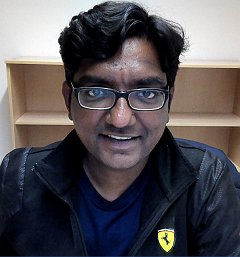
Sivajeet Chand is a Researcher at the Technical University of Munich , affiliated with the Chair of Software & Systems Engineering . He began his PhD in July 2024 under the supervision of Prof. Dr. Alexander Pretschner . His research focuses on Generative AI and Large Language Models (LLMs) for code migration and modernization. He holds a master's degree in Software Engineering and Technology from Chalmers University of Technology, Sweden , and has prior industry experience as a Data Engineer at Volvo Group and as a student engineer at Aptiv and Good Solutions. His research interests span Generative AI , LLMs , Software Engineering , and Code Migration . Recent publications highlight his work on design pattern recognition using LLMs (2023), automating requirements review in the automotive sector (2024), and empirical evaluations of LLMs in code migration (2025). His projects often intersect with automotive industry applications , code refactoring , and AI-assisted software development .
Michel T. Ivrlac is a Senior Researcher at the Chair of Signal Processing Methods within the School of Computation, Information and Technology at the Technical University of Munich (TUM). His research focuses on: Physically consistent modeling of communication systems Compact MIMO systems Electromagnetic principles of information technology Space/time coding with coarse quantization of the received signal Interference in cellular mobile communications Dr. Ivrlac teaches several key courses at TUM including: Adaptive and Array Signal Processing (winter semester) Circuit Theory and Communications (winter semester) Electrical Engineering I and II for Teacher Training Physical Principles of Electromagnetic Fields and Antenna Systems Systems and Circuit Technology Practical Course His research connects theoretical signal processing with practical applications in communications technology, particularly focusing on physical layer aspects of wireless communications. His work spans from fundamental electromagnetic principles to advanced signal processing techniques for next-generation communication systems, aligning with TUM's research in Machine Learning for Physical Layer Wireless Communications and Intelligent Reflecting Surface Systems. Dr. Ivrlac maintains regular office hours by appointment and is based in Room N1115 at Theresienstrasse 90, Building N1, 1st Floor at the Technical University of Munich.
Benedikt Feldotto is a Researcher at the Technical University of Munich, affiliated with the Department of Computer Science, Chair of Robotics, Artificial Intelligence and Real-Time Systems led by Prof. Knoll. He works on the Neurorobotics Platform as part of the European Human Brain Project and serves as lead developer of the NRP Robot Designer since 2017. His educational background includes a Bachelor of Engineering in Mechatronics from Baden-Wuerttemberg Cooperative State University (DHBW) with industry experience in automation pre-development, including a development stay in the USA. He further specialized with a Master of Science in "Robotics, Cognition, Intelligence" at Technical University of Munich. Feldotto's research focuses on biomimetic learning in neurorobotic systems, with particular emphasis on spiking neural networks for embodied cognition. His work bridges cognitive neuroscience and robotics, exploring how robots can interact naturally with humans and environments through biologically-inspired learning mechanisms. Key areas include musculoskeletal modeling, human-robot interaction, and the ethical implications of learning robots in society. He actively develops simulation tools to enable large-scale neurorobotic experiments and has contributed significantly to the Human Brain Project's Neurorobotics Platform infrastructure. His publication record shows a clear progression from foundational platform development toward increasingly sophisticated embodied simulations using high-performance computing. Recent work emphasizes scaling spiking neural networks for robotic control, analyzing neural network architectures for specific motor tasks, and validating biomechanical models against human movement data. The research consistently connects theoretical neuroscience with practical robotics applications. His scientific recognition includes: Best Poster Award from the Graduate School of Bioengineering (2018) As an educator, Feldotto has taught Cognitive Systems course exercises from Spring Semester 2018 through Spring Semester 2022. He regularly offers thesis and project opportunities in biomimetic robotics and neural network learning, though no current openings are listed. His teaching and research are supported through the European Human Brain Project funding framework. Feldotto leads development of the NRP Robot Designer, a critical tool within the Neurorobotics Platform ecosystem. He has presented this work internationally through workshops at major conferences including the European Robotics Forum and Japanese Neural Network Society meetings. His outreach extends to public exhibitions at the Deutsches Museum and participation in ethics discussions on robot stereotypes, demonstrating commitment to both technical advancement and societal implications of neurorobotics research.
Prof. Dr. Benedikt Grothe serves as Professor of Neurobiology at the Faculty of Biology, Ludwig Maximilians University Munich, and is also affiliated with the Max Planck Institute for Biological Intelligence where he leads the Circuits of Spatial Hearing research group. He holds multiple leadership roles including MCN & GSN Speaker, Head of the GSN Examination Board, and Chair of the Division of Neurobiology. His research spans cellular and systems neuroscience with a particular focus on auditory processing mechanisms. Prof. Grothe's research interests center on the structure, physiology, and function of neuronal circuits processing spatio-temporal information, with research topics spanning from ion-channels and biophysics to circuit structure and function, in vivo single cell responses, population coding, and psychoacoustics. His laboratory employs a wide range of techniques including electrophysiology (in vitro and in vivo), pharmacology, laser-uncaging, optogenetics, comparative anatomy, immunohistochemistry, calcium imaging, and animal and human psychophysics. He takes a comparative approach, studying animals with different 'auditory worlds' including bats, short-tailed opossums, gerbils, mice, and rats. Analysis of Prof. Grothe's recent publications reveals a strong focus on auditory neuroscience, particularly examining the role of myelination, neural circuitry, and inhibitory mechanisms in sound processing and localization. His work demonstrates how neural adaptations occur in response to environmental stimuli and how these adaptations affect auditory perception. The research spans multiple levels from molecular and cellular mechanisms to systems-level processing and behavioral outcomes, with an increasing emphasis on computational approaches to understanding neural coding. Prof. Grothe has mentored numerous students throughout his career, including both current and graduated GSN students. His laboratory serves as an important training ground for neuroscientists, with students working on diverse projects related to auditory processing, neural development, and sensory systems. While specific grant information isn't detailed in the provided text, his extensive publication record suggests sustained research funding supporting his laboratory's work. Prof. Grothe leads the Circuits of Spatial Hearing research group at the Max Planck Institute for Biological Intelligence, which works closely with research teams led by Tobias Bonhoeffer and Alexander Borst. His laboratory employs a multidisciplinary approach, combining optical, electrophysiological, and behavioral methods to investigate the fundamental circuit mechanisms underlying auditory spatial representation in the brain.
Mark Hübener is a Professor and Group Leader at the Max Planck Institute for Biological Intelligence, with significant affiliations to Ludwig Maximilian University of Munich (LMU) as a board member of the Munich Center for Neurosciences (MCN) and the Graduate School of Systemic Neurosciences (GSN). His research centers on the mammalian visual system, investigating neural plasticity, development, and functional organization using advanced mouse models. Research Focus: The Hübener Lab employs dual approaches of functional/structural imaging and behavioral analysis to dissect how visual input manipulations reshape cortical circuits. Key investigations include binocular disparity mapping, monocular deprivation effects, sensorimotor integration during natural behaviors (e.g., prey capture), and experience-dependent structural changes in neuronal connectivity. The lab specializes in linking cellular-level alterations to system-wide functional outcomes in visually guided behavior. Publication Trends: Recent work (2009-2019) demonstrates consistent focus on cortical plasticity mechanisms, evolving from structural circuit analysis (2009) to complex behavioral paradigms (2012, 2016) and high-resolution mapping of visual processing (2019). Publications span top-tier journals including Nature , Science , and Neuron , emphasizing translational relevance in neural repair and sensory processing disorders. Advising: Through the GSN, Hübener has mentored multiple graduate students including Sandra Reinert, Danielle Paynter, Matthew McCann, and Sabine Liebscher, focusing on interdisciplinary neuroscience training at the intersection of imaging, behavior, and circuit analysis. Laboratory: The Synapses – Circuits – Plasticity/Visual System Plasticity department at the MPI provides state-of-the-art infrastructure for in vivo two-photon imaging, behavioral tracking, and circuit manipulation techniques, enabling comprehensive investigation of visual system organization across multiple spatial and temporal scales.
Marten Borchers is a Researcher at the Department of Computer Science, Faculty of Mathematics, Computer Science and Natural Sciences, University of Hamburg. His work focuses on Business Information Systems and Socio-Technical Systems Design (WISTS) . Education : Dual Master's Degree from University of Bremen (AI, ML, NLP, IT Management), semester at University of Tartu Professional Experience : 4+ years in IT Consulting (Public Service Consultant) Research Interests include: Smart City and Climate Change Mitigation AI/ML Applications in Urban Mobility Collaboration Engineering for Citizen Participation E-Government and Digital Transformation His publications since 2023 focus on: ML-Based Energy Prediction for Electric Buses Bloom's Taxonomy in LLM-Assisted Learning Mobile Apps for Storm Flood Emergency Management AI Support for Urban Participation Platforms Scientific Awards : 2025 Hamburg Teaching Award (team award) for cross-border teaching innovations Advising & Grants : Co-author with Eva Bittner on 6 publications Collaboration with Springer, ACM, and IEEE journals Labs & Teams : Active member of WISTS (Socio-Technical Systems Design) research group Participant in D²S²C Hamburg and DDLitLab projects Collaboration with Hochbahn AG and STEAM ecosystem analysis
Prof. Dr. Barbara E. Weißenberger serves as Professor of Business Administration, especially Controlling and Accounting at the Heinrich Heine University Düsseldorf (HHU) Faculty of Business and Economics. As chairholder of the Controlling and Accounting team, she leads research on the integration of finance functions with corporate competitiveness and sustainability. Her work spans both theoretical and practical domains, with regular contributions to the Frankfurter Allgemeine Zeitung's "Der Betriebswirt" column and authorship of the non-fiction book "Erfolgsfaktor BWL" (Success Factor Business Administration). Prof. Weißenberger's research interests focus on the evolving role of management control systems in modern business environments. She investigates how digital technologies like predictive analytics and artificial intelligence transform corporate finance functions, examining their impact on work organization and role understanding within finance departments. Her work on behavioral accounting explores decision-making and control errors through behavior-oriented design of controlling instruments. She also examines the integration of ecological, social, and digital sustainability requirements into planning, reporting, and control processes, with particular attention to compliance frameworks. Analysis of her recent publications reveals a clear trajectory toward digital transformation in accounting and control systems. Her work increasingly addresses the intersection of artificial intelligence, behavioral economics, and traditional accounting practices. The research demonstrates growing emphasis on sustainability integration, with CSR-related management control systems becoming a prominent theme. Her methodology spans experimental approaches, systematic literature reviews, and case studies across various industries, particularly insurance and finance sectors. Prof. Weißenberger maintains active engagement with professional practice through her column in Frankfurter Allgemeine Zeitung and frequent contributions to industry publications. Her work bridges academic research with practical business applications, particularly in the areas of digital reporting, controller transformation, and sustainable business practices. She has led several collaborative projects examining the future of controller work in digital environments and the integration of sustainability considerations into management control systems.
Agostino Cortesi is a Full Professor of Computer Science at Ca' Foscari University of Venice, where he has served since 2002. He holds significant administrative roles including Rector's Delegate for Research Quality Evaluation and Deputy Coordinator of the Scientific Committee of the Temporary Innovation Ecosystem Project Center. His academic home is the Department of Environmental Sciences, Computer Science and Statistics. Dr. Cortesi received his PhD in Applied Mathematics and Informatics from the University of Padova in 1992, followed by a post-doctoral position at Brown University. His academic career has included leadership positions as Dean of the Computer Science programme, Department Chair, and Vice-Rector of Ca' Foscari University for quality assessment and institutional affairs. His research focuses on programming languages theory, software engineering, and static analysis techniques with particular emphasis on security applications. His work spans abstract interpretation, information flow analysis, string analysis for program verification, and security applications in blockchain and IoT systems. He has published extensively with over 150 papers in high-level international journals and conference proceedings, with an h-index of 22 according to Scopus and 31 according to Google Scholar. His recent publications show a consistent focus on abstract interpretation techniques applied to string analysis, security verification for blockchain and IoT systems, and tools for static analysis. His work bridges theoretical foundations with practical applications, particularly in security-critical domains. Dr. Cortesi serves on the editorial boards of Computer Languages, Systems and Structures and Journal of Universal Computer Science, and has participated in numerous program committees for international conferences including SAS, VMCAI, CSF, CISIM, and ACM SAC. He teaches several advanced courses including Software Correctness, Security, and Reliability; Data Programming; Information Networks and Systems; and Software Engineering across both Computer Science and Business Administration programs. His research is supported by multiple funded projects from the European Union, Italian Ministry of Education, Veneto Region, and industry partners.
Clark Barrett is a Professor in the Department of Computer Science at Stanford University, where he conducts research in formal methods, automated reasoning, and verification. He is affiliated with several research centers including the Stanford Center for Automated Reasoning, Stanford Center for AI Safety, Stanford Agile Hardware Project, and Stanford Center for Blockchain Research. His research focuses on developing formal methods and tools for verifying complex systems, with particular emphasis on satisfiability modulo theories (SMT), verification of neural networks, hardware design verification, and security. His work bridges theoretical foundations with practical applications across multiple domains. Over the past decade, Barrett's research has evolved from foundational work in SMT solving to increasingly diverse applications including neural network verification, hardware verification, and AI safety. His recent publications demonstrate a strong focus on practical verification techniques for real-world systems, particularly in the areas of hardware design, neural networks, and programming languages. The trend shows an expansion from core verification techniques to broader applications in AI safety and secure systems design. 2021 CAV (Computer Aided Verification) Award Barrett leads several major research initiatives and collaborates extensively with industry partners. His work on the Marabou neural network verification framework, SMT-LIB standard, and Symbolic QED verification methodology have had significant impact in both academic and industrial settings. He has supervised numerous PhD students and postdoctoral researchers who have gone on to successful careers in academia and industry. He is a key member of the Stanford Center for Automated Reasoning, which develops foundational technologies for automated reasoning, and the Stanford Center for AI Safety, where he focuses on formal methods for ensuring the safety and reliability of AI systems. His work on the Stanford Agile Hardware Project aims to revolutionize hardware design through formal methods and verification techniques.
Dr. Mahsa Varshosaz is an Associate Professor in the Software Quality Research group at the IT University of Copenhagen , Denmark. Her work bridges theoretical and practical aspects of software quality assurance, with a focus on model-based testing , formal verification , and automatic program repair for complex systems. Her research spans software product lines , autonomous systems , and cyber-physical systems , including projects like REMARO (testing of underwater robotic systems) and Linux kernel program repair. She employs formal methods to address challenges in system safety, reliability, and variability. Selected publications reveal a trajectory in hybrid testing techniques combining symbolic execution and reinforcement learning, safety analysis of autonomous underwater vehicles, and formal verification of probabilistic systems. Her work intersects software testing formal methods AI-based verification robotics safety product line engineering concurrent system analysis . She actively contributes to academia as Co-Chair of Doctoral Symposium in SPLC conferences Editorial Board member of Science of Computer Programming Program Committee member across testing/verification workshops like A-MOST, ITEQS, and ECOOP . Her 2023 invited talk series at Trustworthy Autonomous Systems Verifiability Node and participation in Dagstuhl/Shonan seminars highlight her influence in unifying formal methods with AI-based autonomous systems . Projects include REMARO (co-coordinator) and INSIGHT.
Martin Kruliš serves as an Associate Professor in the Department of Distributed and Dependable Systems (D3S) at Charles University's Faculty of Mathematics and Physics in Prague, Czech Republic. His academic work focuses on the intersection of parallel computing, GPU programming, and self-adaptive systems, with significant contributions to both theoretical frameworks and practical implementations in high-performance computing environments. Dr. Kruliš's research interests center on optimizing computational systems through innovative approaches to parallelism and adaptability. His work demonstrates particular expertise in GPU-accelerated algorithms, self-optimizing architectures, and the integration of machine learning techniques into system design. He has developed substantial expertise in creating abstractions that simplify complex parallel programming tasks while maintaining high performance. His publication record reveals a clear trajectory from foundational work in parallel algorithms and GPU programming toward increasingly sophisticated integration of machine learning with self-adaptive systems. Recent work shows a strong emphasis on applying machine learning to optimize parallel computing environments, particularly through novel abstractions that make these techniques accessible to developers. As an educator, Dr. Kruliš teaches Programming in Parallel Environment (NPRG042) and Advanced Programming in Parallel Environment (NPRG058), demonstrating his commitment to training the next generation of parallel computing specialists. He has also contributed to the ReCodEx project, an automated system for evaluating coding assignments that has been used for over five years at his institution. Dr. Kruliš actively participates in the academic community through conference service, having served on committees for ECOOP 2022 and other major computer science conferences. His work with the D3S research group reflects a collaborative approach to tackling complex problems in distributed and dependable systems.
Krishna Narasimhan is a Researcher at the Software Technology Group within Technical University of Darmstadt, Germany, focusing on developer struggles with cryptographic APIs and secure programming practices. He plays a key role in the CogniCrypt framework development, an Eclipse Foundation project designed to help developers use crypto APIs securely. His research spans secure programming, programming languages, static analysis, source code transformation, and domain-specific languages. His work demonstrates a clear progression from foundational research in program transformation during his PhD to practical applications in API security and developer tooling. Recent work shows growing interest in AI-assisted development and machine learning bug detection. His publication record reveals consistent contributions to major software engineering venues (ECOOP, SPLASH, ICSE), with recent papers examining trustworthy AI software development, misuse-resilient APIs, and code generation from test specifications. The research shows strong emphasis on practical tools that address real-world developer challenges rather than purely theoretical contributions. Narasimhan maintains active service in the research community as a committee member for artifact evaluation at numerous conferences including ECOOP, PLDI, ISSTA, and SPLASH, demonstrating recognition of his expertise in experimental methodology and reproducibility. His career path includes industry experience as a Language Engineer at Itemis developing Mbeddr (an embedded DSL platform), followed by return to academia where he now bridges practical tool development with academic research. His PhD work focused on semi-automatic tools for source code evolution tasks like copy-paste abstraction and data representation migration.
Michèle Finck is Professor of Law and Artificial Intelligence at the University of Tübingen, Germany, and co-director of the CSZ Institute for Artificial Intelligence and Law. She is a member of the Cluster of Excellence “Machine Learning: New Perspectives for Science” and represents Tübingen at the CIVIS Hub “Digital and Technological Transformation”. Research Focus: Regulation of artificial intelligence EU data law and GDPR Data intermediaries and the Data Governance Act Explainability of AI systems Access to data for environmental purposes Automation of public administration Her recent publications (2021-2024) chart a trajectory from foundational questions of data protection and AI governance to concrete regulatory challenges posed by the EU AI Act and the Data Governance Act, reflecting a commitment to interdisciplinary and policy-oriented legal scholarship. Service & Expert Advice: Member, Council of Europe ad hoc Committee on Artificial Intelligence Advisor to the European Commission and European Parliament on digitalisation issues Professor Finck has previously held posts at the University of Oxford, the London School of Economics, the Max Planck Institute for Innovation and Competition, and has been a Visiting Professor at LUISS University and a Visiting Fellow at University College London.
Antonio Orvieto is a Professor and Principal Researcher at the Max Planck Institute for Intelligent Systems and ELLIS Institute Tübingen, where he leads the Deep Models and Optimization research group. He is also a lecturer at the University of Tübingen and faculty for the CLS, ELLIS, and IMPRS-IS PhD Programs. His research focuses on improving the efficiency of deep learning technologies through theoretical understanding of optimization dynamics and innovative neural network architectures. Dr. Orvieto earned his PhD from ETH Zürich under the supervision of Prof. Dr. Thomas Hofmann and Dr. Aurelien Lucchi. Prior to his PhD, he obtained his master's degree in Robotics, Systems, and Control from ETH. His educational background also includes undergraduate studies at Universita' degli studi di Padova in Italy. During his academic journey, he gained research experience at DeepMind (UK), Meta (US), MILA (CA), INRIA (FR), and HILTI (LI). Dr. Orvieto's research spans two main areas: understanding the intricacies of large-scale optimization dynamics and designing innovative architectures and powerful optimizers capable of handling complex data. His work particularly focuses on decoding patterns in sequential data, with applications in biology, neuroscience, natural language processing, and music generation. His theoretical approach to deep learning has led to significant contributions in understanding recurrent neural networks, transformers, and optimization methods. His recent publications reveal a strong focus on sequence modeling, optimization theory, and the theoretical foundations of deep learning, with particular emphasis on improving training efficiency and model performance. Schmidt Sciences AI2050 Early Career Fellow Dr. Orvieto actively mentors PhD students and leads a vibrant research group at the Max Planck Institute for Intelligent Systems. His Deep Models and Optimization group includes PhD students Destiny Okpekpe, Felix Sarnthein, Diganta Misra, Sajad Movahedi, and Wenjie Fan, among others. He is deeply involved in doctoral education as faculty for multiple PhD programs including CLS, ELLIS, and IMPRS-IS. His teaching includes the course "Nonconvex Optimization for Deep Learning" at the University of Tübingen. The Deep Models and Optimization research group investigates the interplay between optimizers and architectures in deep learning, with a focus on developing new networks for long-range reasoning. The group's mission is to design new optimizers and neural networks to accelerate technology and scientific discovery, with a strong theoretical foundation in optimization theory. They strongly believe that deep learning will revolutionize science and technology, and they aim to make powerful deep learning solutions accessible to scientists and engineers regardless of resource limitations.
Dr. Romy Lorenz is a Max Planck Research Group Leader at the Max Planck Institute for Biological Cybernetics in Tübingen, Germany, where she leads the Cognitive Neuroscience & Neurotechnology research group. She previously held postdoctoral positions at the University of Cambridge, Stanford University, and the Max Planck Institute for Human Cognitive & Brain Sciences from 2018 to 2023 as a Sir Henry Wellcome Postdoctoral Fellow. Dr. Lorenz's educational background includes: BSc in Psychology from Leuphana University (2009) MSc in Human-Machine Interaction from TU Berlin (2012) PhD in Neurotechnology from Imperial College London (2017) Her research focuses on understanding the frontoparietal brain network mechanisms that underpin high-level cognition and adaptive behavior. She employs an interdisciplinary approach combining subject-specific brain-computer interface technology, fMRI at standard and ultrahigh magnetic field strengths (3T, 7T, and 9.4T), EEG, non-invasive brain stimulation, computational modeling, and machine learning techniques. A key innovation in her work is the development of neuroadaptive Bayesian optimization methods that allow for real-time, closed-loop experimental design in cognitive neuroscience. Dr. Lorenz's recent publications demonstrate a clear trend toward investigating brain function at increasingly fine-grained spatial scales, particularly exploring layer-specific processing in the prefrontal cortex using ultrahigh-field fMRI. Her work bridges computational neuroscience, cognitive psychology, and neurotechnology, with applications ranging from basic cognitive science to clinical rehabilitation. A significant portion of her research focuses on closed-loop systems that integrate real-time brain imaging with adaptive experimental design and stimulation protocols. Her notable scientific achievements include: Outstanding Contributions in AI Innovation Award Sir Henry Wellcome Postdoctoral Fellowship Funding from the German Scholar Organisation Fellowships from the Wellcome Trust and Engineering and Physical Sciences Research Council Dr. Lorenz has secured significant research funding for her work, including support from the Wellcome Trust and German funding agencies. She has mentored several students, including Master's students like Pedro who has presented their collaborative work at conferences. Her research group actively recruits postdoctoral researchers and students interested in cognitive neuroscience and neurotechnology. Dr. Lorenz leads the Cognitive Neuroscience & Neurotechnology research group at the Max Planck Institute for Biological Cybernetics, which focuses on developing and applying advanced neuroimaging and computational methods to understand high-level cognitive functions. She has also co-initiated interest groups such as CoCoNUT (Computational Cognitive Neuroscience at the Max Planck Institute) to foster interdisciplinary collaboration. Her lab utilizes cutting-edge technologies including real-time fMRI at ultrahigh field strengths, EEG, and non-invasive brain stimulation to investigate frontoparietal network function.