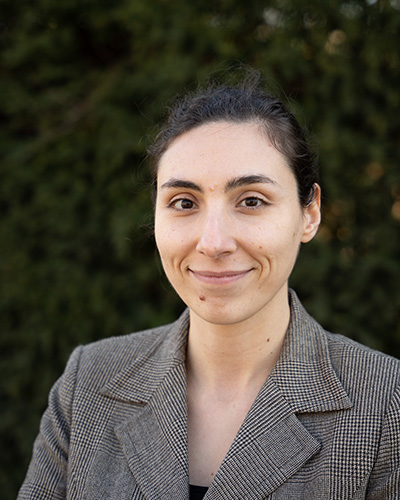
Mariya Toneva is a tenure-track faculty member at the Max Planck Institute for Software Systems , conducting groundbreaking research at the intersection of Machine Learning , Natural Language Processing , and Neuroscience . She leads the Bridging AI and Neuroscience (BrAIN) group , focusing on computational models that align AI systems with human brain processes. Her work aims to enhance both AI capabilities and neuroscience understanding through this cross-disciplinary approach. Actively recruiting postdocs, PhDs, and research interns in areas like code/text representation, brain-AI alignment, and neuroimaging data analysis Collaborator on NIH-funded projects using fMRI and neuropixel data Research Themes : Her group explores neural mechanisms of language processing, event segmentation in narratives, memory reactivation via music, and effective human-AI collaboration frameworks. Key methods include LLM analysis, cross-modal similarity metrics, and naturalistic task-based fMRI studies. Key Publications (2024-2025): Brain-tuned speech models (INTERSPEECH 2025) Cognitive event boundaries in LLMs (Behavioral Research Methods 2025) Music-induced memory reactivation (biorxiv 2024) LLM-brain alignment reasons (EMNLP 2024) Advising : Mentors PhD candidates Omer Moussa (speech processing), Camila Kolling (representational similarity), and Gabriele Merlin (LLM alignment). Collaborates with institutions like MIT, NYU, and ETH Zurich.
Prof. Dr. Christian Rossow is a faculty member at CISPA – Helmholtz Center for Information Security in Dortmund, Germany. He also serves as a professor at Saarland University and an honorary professor at TU Dortmund. His research focuses on network security , system/software security , and cyber attacks and countermeasures . His recent publications include work on CSS exploitation for browser fingerprinting, Spectre mitigations on ARM, DDoS attack analysis, and hardware-assisted security extensions. Christian Rossow regularly serves as a PC member and track chair for top cybersecurity conferences like ACM CCS and USENIX Security . He advises multiple PhD students and leads a research group exploring foundational and practical security solutions.
Andrew Pavlo is a Professor in the Computer Science Department at Carnegie Mellon University's School of Computer Science. His research focuses on database management systems, particularly in the areas of transaction processing, in-memory databases, and self-driving database systems. He leads a productive research group that has published extensively in top database venues including VLDB, SIGMOD, and CIDR. Pavlo's research interests span database management systems, transaction processing, in-memory databases, non-volatile memory databases, and self-driving database systems. His work often bridges theoretical database concepts with practical system implementation, focusing on performance optimization, query processing, and system architecture. Recent work has explored machine learning applications for database tuning, novel storage techniques, and innovative approaches to transaction processing. An analysis of his recent publications reveals a strong focus on self-driving database systems, with significant work on the Database Gym framework for training machine learning models to optimize database performance. His research also examines columnar storage formats, transaction scheduling, and novel approaches to user-defined function optimization. The work demonstrates a consistent trajectory toward making database systems more autonomous and efficient through a combination of systems techniques and machine learning. Pavlo has been instrumental in mentoring numerous PhD students who have become active contributors to the database research community. His research has been supported by significant grants that have enabled the development of innovative database technologies and frameworks. His research group operates within CMU's vibrant database ecosystem, collaborating with other researchers on projects related to database systems, storage engines, and query processing frameworks. The group maintains close connections with industry partners to ensure practical relevance of their research contributions.
Michael Pradel is a full professor at the University of Stuttgart, specializing in software engineering, programming languages, and machine learning. He will join CISPA as a faculty member from September 2025 while retaining his Stuttgart position. His research focuses on: Neuro-symbolic software analysis Web application analysis Dynamic analysis and test generation Quantum software testing Machine learning for code Recent publications address: LLM-based program repair (RepairAgent, Treefix) WebAssembly analysis (Wasm-R3, LintQ) Python security and analysis (DyLin, DyPyBench) Quantum program analysis (LintQ) Scientific awards: Ernst-Denert Software Engineering Award Emmy Noether grant (1.3M Euro) ERC Starting Grant (1.5M Euro) 3x ACM SIGSOFT Distinguished Paper Award at FSE ACM Distinguished Member Best Paper/Distinguished Paper Awards at ISSTA, ASE, ASPLOS, MSR Key contributions include: DeepBugs for name-based bug detection Getafix for automated bug fixing LintQ for quantum program analysis DyLin for Python dynamic analysis Neuro-symbolic developer tools
Prof. Dr. Gaia Tavosanis is a faculty member at RWTH Aachen University , affiliated with the Department of Developmental Biology . Her research focuses on the cellular and molecular mechanisms underlying neuronal resilience and dynamics in Drosophila , particularly during development and adult life. Research Interests Her work investigates dendritic structural remodeling, lipid metabolism in neuronal health, and the role of the Drosophila mushroom body in sensory processing and memory formation. These studies integrate genetic models, advanced imaging techniques, and functional analyses to uncover conserved biological principles. Publications Trends Recent publications highlight her expertise in neurodevelopmental mechanisms, lipid metabolism in neurons, and computational ethology using Drosophila . Key themes include dendritic plasticity, disease modeling, and neural circuitry optimization. Contact Email: gaia@devbiol.rwth-aachen.de Phone: +49 241 80 20870 Address: Worringerweg 3, 52074 Aachen, Germany
Yannic Noller is a Professor at the Faculty of Computer Science at Ruhr University Bochum (RUB), leading the Software Quality group. Previously, he held positions as Assistant Professor at Singapore University of Technology and Design (SUTD) and Research Assistant Professor at National University of Singapore (NUS). His research focuses on automated software engineering, including program repair, machine learning analysis, and software testing. He earned his Ph.D. from Humboldt-Universität zu Berlin under Prof. Lars Grunske, with a thesis on hybrid differential software testing. Education: Ph.D. in Computer Science (2016-2020, Humboldt-Universität), M.Sc. (2013-2016, University of Stuttgart), B.Sc. (2010-2013, University of Stuttgart). Research interests include automated program repair techniques, machine learning model analysis, and intelligent tutoring systems for programming education. Notable contributions include HyDiff (hybrid differential analysis tool) and CPR (concolic program repair). Awards include the Distinguished Artifact Reviewer at ISSTA'2021 and multiple scholarships for academic excellence. Teaching includes courses on software engineering, requirements engineering, and automated software engineering.
Prof. Daniel Große serves as Professor at the Institute for Complex Systems (ICS) within Johannes Kepler University Linz, Austria, while maintaining a dual affiliation with the German Research Center for Artificial Intelligence (DFKI) in Bremen. His research centers on Electronic Design Automation (EDA), specializing in verification, debugging, and synthesis of complex hardware/software systems through advanced virtual prototyping techniques. His primary research domains include Formal Verification , Hardware Verification , and Virtual Prototyping , with significant contributions to RISC-V architecture development and embedded systems validation. Current projects like PaSVer (automotive electronics), AUTOASSERT (analog-digital verification), and VerSys (RISC-V software platforms) demonstrate his focus on bridging simulation and formal methods for safety-critical applications. Recent publications reveal accelerating trends in metamorphic testing for embedded graphics libraries and RISC-V vector extensions, alongside innovations in waveform analysis tools like Surfer. His work increasingly integrates AI-assisted verification while maintaining rigorous formal methods foundations. Prof. Große actively supervises student research, having guided Lucas Klemmer's PhD thesis and nine Bachelor theses on topics ranging from RISC-V processor design to transaction visualization. His projects including SATiSFy (autonomous vehicle security) and CONVERS (complex system design automation) secure substantial research funding from academic and industry partners. He leads the Institute for Complex Systems' development of open-source tools such as RISC-V VP++ and contributes to international standards through program committee roles at DATE, ICCAD, and RISC-V Summit Europe.
Dr. Yu Huang is an Assistant Professor in the Department of Computer Science at Vanderbilt University's School of Engineering, with a secondary appointment in the Department of Teaching and Learning at the Peabody School of Education. She is affiliated with the Institute for Software Integrated Systems, the Frist Center for Autism and Innovation, the Vanderbilt Lab for Immersive AI Translation (VALIANT), and the Vanderbilt LIVE Learning Innovation Incubator. Her academic journey began with a BS in Aerospace Engineering from Harbin Institute of Technology in China (2011), followed by an MS in Computer Engineering from the University of Virginia (2015), and culminated with a PhD in Computer Science and Engineering from the University of Michigan in 2021 under Professor Westley Weimer. Dr. Huang's research bridges human cognition and machine intelligence to enhance software development. Her work spans software, hardware, AI, medical imaging (fMRI/fNIRS), eye tracking, and mobile sensing through collaborations with Security, Education, Psychology, and Neuroscience researchers. She leads the MIND Lab (Mixed INtelligence Development for programming lab), investigating programming expertise formation, code comprehension processes, cognitive error patterns, and diversity in programming communities. Her innovative approach combines empirical human studies with AI model development to create more effective programming tools. Her recent publications reveal a growing emphasis on leveraging human attention data to improve code language models, analyzing cognitive biases in security contexts, and examining social factors in technical communication. The research shows strong interdisciplinary connections between neuroscience, psychology, and software engineering, with increasing applications of LLMs in developer tooling. Dr. Huang's work consistently demonstrates how understanding human cognition can inform better AI systems for programming tasks. Dr. Huang has received numerous prestigious recognitions including the 2025 ICPC Vaclav Rajlich Early Career Achievement Award and three ACM SIGSOFT Distinguished Paper Awards (ICSE 2019, FSE 2023, ICSE 2024). Her lab has earned the Best Presentation Award at GI2024, while her students have received the Richard Bennett/Dorothy Danforth Compton Prize scholarship and the C. F. Chen Best Paper award. She actively mentors a diverse team of graduate students (Yifan Zhang, Zach Karas, Zihan Fang, Yueke Zhang, Jiahao Zhang) and undergraduate researchers, with many former students advancing to top institutions (Stanford, Harvard, Duke, UC Berkeley) and organizations (NASA JPL). Her research is supported by a 4-year NSF grant, GitHub Tech for Social Good funding, and the Provost's Faculty Immersion Vanderbilt Grant, enabling comprehensive studies of human-AI collaboration in software engineering. The MIND Lab maintains a strong collaborative culture, frequently working with Professor Kevin Leach's research group and organizing retreats to locations like Radnor State Park and the Great Smoky Mountains. This environment fosters innovation at the intersection of human cognition and software engineering while supporting the professional development of emerging researchers in the field.
Cuiyun Gao is a Full Professor and PhD Supervisor at the School of Computer Science and Technology, Harbin Institute of Technology, Shenzhen. She has established herself as a prominent researcher in the intersection of artificial intelligence and software engineering. Her educational background includes a PhD from the Chinese University of Hong Kong (completed in 2018), followed by postdoctoral work at CUHK and a Research Fellowship at Nanyang Technological University. She also had a visiting period at University College London supervised by Prof. Mark Harman and Prof. Federica Sarro. Dr. Gao's research primarily focuses on Software Repository Mining, Natural Language Processing, Code Analysis, Large Language Models, Source Code Understanding, User Review Analysis, Vulnerability Detection, and Mobile Advertising Analysis . Her work bridges the gap between traditional software engineering practices and modern AI techniques, particularly in the context of code intelligence and software maintenance. Her recent publications (2024-2025) demonstrate a strong emphasis on Large Language Models for code-related tasks, including code generation, optimization, vulnerability detection, and software engineering applications. Her research shows a clear trend toward addressing practical challenges in integrating LLMs into the software development lifecycle while maintaining code quality and security. Scientific Awards: Distinguished Paper Award at ASE 2023 Best Paper Award of the Track at ICSE 2024 Distinguished Paper Award at ICSE 2024 Dr. Gao actively supervises multiple PhD and Master's students, contributing to the next generation of software engineering researchers. She has served on numerous conference committees including FSE, ISSTA, ICSE, ASE, and SANER. Her research has received significant attention in the software engineering community, with multiple papers published in top-tier venues like FSE, ICSE, ASE, and TSE. Her lab appears to be actively engaged in both theoretical research and practical applications, particularly in the context of WeChat and other industry collaborations, demonstrating strong industry-academia connections.
Chang Xu is a Professor and Ph.D. supervisor at Nanjing University, affiliated with the State Key Laboratory for Novel Software Technology, School of Computer Science, and Institute of Computer Software (ICS). He has been a full-time faculty member since 2010, when he joined as an associate professor and was later promoted to full professor in 2015. Education: Ph.D. from The Hong Kong University of Science and Technology (HKUST) in 2008 (advisor: Prof. S.C. Cheung) M.Eng. from Institute of Software, Chinese Academy of Sciences (ISCAS) in 2003 B.Eng. from University of Science and Technology of China (USTC) in 2000 Research Interests: Professor Xu's research focuses on big data software engineering, intelligent software testing and analysis, and adaptive and autonomous software systems. His recent work centers on constructing and providing runtime support for intelligent software in open environments, with emphasis on inconsistency detection and resolution for environments, and quality assurance for adaptive, concurrent, learning-based, smartphone-based, and spreadsheet-based applications. His work bridges theoretical foundations with practical applications in software engineering, particularly in program analysis, software testing, and self-adaptive systems. Scientific Awards: ACM SIGSOFT Distinguished Paper Award from ICSE 2025 Best Student Paper Award from EUROSYS 2025 ACM Distinguished Member in 2024 Best Paper Award from SOSP 2023 Best Paper Candidate from ISSRE 2022 Yangtze River Scholar by the Ministry of Education in 2021 Multiple ACM SIGSOFT Distinguished Paper Awards from conferences including ASE, ICSE National Science and Technology Progress Award (Second Class) in 2011 Academic Service and Advising: Professor Xu has served on numerous program committees for top software engineering conferences including ICSE, ASE, ESEC/FSE, and ISSTA. He is an editorial board member for several journals including Journal of Computer Science and Technology and Frontiers of Computer Science. He has supervised numerous Ph.D. and MSc students, with research topics spanning program analysis, software testing, self-adaptive systems, and more. His students have gone on to successful careers in both academia and industry. Research Groups: Professor Xu is associated with the SPAR research group at Nanjing University and the CASTLE research group at HKUST, focusing on software analysis, reliability, and testing.
Nikolaus Rajewsky is a leading Professor at the Max Delbrück Center for Molecular Medicine (MDC) and Charité – Universitätsmedizin Berlin , where he founded and directs the Berlin Institute for Medical Systems Biology (BIMSB) . His lab integrates experimental (biochemistry, molecular biology) and computational (bioinformatics, physics) approaches to study RNA regulation in gene expression , with applications to developmental biology, regeneration, neurodegenerative diseases, and cancer . Using model systems like C. elegans , planaria, and human brain organoids, his team pioneers cutting-edge methods such as MirDeep , DistMap , and FLAM-seq for RNA analysis. His research focuses on single-cell transcriptomics , spatial RNA sequencing , and circular RNA (circRNA) regulation , revealing novel roles for circRNAs like CDR1as in neuropsychiatric disorders. Recent work includes 3D tumor microenvironment mapping and computational modeling of RNA metabolism in diseases. Scientific Awards : Gottfried Wilhelm Leibniz Prize (2012) EMBO Membership (2010) Honorary PhD, Sapienza University of Rome (2014) Berlin Science Award (2009) His team's recent articles highlight breakthroughs in 3D spatial transcriptomics , circRNA degradation mechanisms , and mitochondrial disease modeling using human brain organoids. The lab actively collaborates with clinical partners across Charité and European institutions, driving the LifeTime initiative for cell-based interceptive medicine.
Prof. Stefan Wrobel is a Professor of Computer Science at the University of Bonn and Director of the Fraunhofer Institute for Intelligent Analysis and Information Systems (IAIS). He holds leadership roles, including Co-Director of the Lamarr Institute for Machine Learning and Artificial Intelligence and Managing Director of the Bonn-Aachen International Center for Information Technology (b-it). His research focuses on AI, machine learning, and big data applications in industry and society. He earned his PhD from the University of Dortmund and has held academic positions at Magdeburg University and Berlin Technical University. Active in national/international AI initiatives, he chairs the Fraunhofer Strategic Research Field on Artificial Intelligence and co-leads the Machine Learning Rhine-Ruhr (ML2R) Competence Center. Education: Master's (Georgia Tech), PhD (University of Dortmund). Research emphasizes intelligent algorithms, data analysis, and AI ethics. Awarded GI-Fellow (2022) and honored by the German Computer Science Society for contributions to AI history. Key roles include Editorial Board member of Machine Learning journals and advisory roles in AI ethics and certification. Scientific contributions span over 100 publications in machine learning, data mining, and visual analytics. Advised numerous PhD students on topics like graph mining and trustworthy AI. Leadership in institutions like Fraunhofer Technology Hub for Machine Learning and the German Computer Science Society's Special Interest Group on Knowledge Discovery.
Markus König is a Professor of Informatics in Civil Engineering at Ruhr University Bochum, where he has been researching and teaching since October 2009. His work focuses on Building Information Modeling (BIM), digital construction technologies, and civil engineering informatics, with significant contributions to the development and implementation of digital methods in German construction industry. Dr. König earned his degree in civil engineering with a focus on applied computer science at Leibniz University Hannover, where he also completed his doctorate on cooperative building planning at the Institute for Building Informatics. He subsequently held a junior professorship for Theoretical Methods of Project Management at Bauhaus University Weimar before joining Ruhr University Bochum. His research spans multiple cutting-edge areas including Building Information Modeling (BIM), construction process simulation, tunneling informatics, infrastructure asset management, and the application of artificial intelligence and computer vision in civil engineering. As chair of the Building Informatics Working Group from 2012-2016, he played a key role in developing the first national BIM curriculum for German universities and serves as editor of the book 'Building Information Modeling: Technological Foundations and Industrial Practice.' Analysis of his recent publications reveals a strong trend toward semantic technologies, digital twins, automated compliance checking, and the integration of AI in construction processes. His work increasingly focuses on information containers, ontology development, and the application of large language models to infrastructure data, reflecting the evolving landscape of digital construction. Dr. König's significant contributions to digital construction have been recognized with prestigious awards: Lower Saxony-Bremen Construction Industry Award (2017) for 'services in the development and introduction of digital construction in Germany' Konrad Zuse Medal (2020) While specific details about his advising and grant activities aren't explicitly mentioned in the provided text, his extensive publication record with numerous co-authors suggests active supervision of doctoral students and research staff. His involvement in multiple collaborative research projects is evident from his publication history. At Ruhr University Bochum, Professor König leads a research group focused on civil engineering informatics, with particular emphasis on BIM, digital construction technologies, and their application across the building lifecycle. His team appears to work at the intersection of computer science and civil engineering, developing innovative solutions for construction process optimization, infrastructure management, and digital transformation of the AEC industry.
Irena Koprinska is a prominent researcher at the University of Sydney with over 150 publications from 1996 to 2025. Her work spans multiple interdisciplinary domains with significant contributions to machine learning applications in educational technology, time series forecasting, and health informatics. She maintains strong research collaborations, particularly with Kalina Yacef (38 joint publications), Mashud Rana (26 papers), and Bryn Jeffries (22 papers), indicating leadership in her research group. Her research interests focus on practical applications of machine learning across diverse domains. In educational data mining, she has pioneered methods for predicting student performance in programming courses, analyzing syntax errors, and developing automated hint generation systems. Her work in time series forecasting has made significant contributions to solar power prediction using advanced neural network architectures. Additionally, she has applied machine learning techniques to medical domains, particularly in sleep disorder detection and analysis. The analysis of her 15 most recent publications (2022-2025) reveals a continued focus on educational technology and time series analysis, with increasing attention to interpretable methods and health applications. Her work demonstrates a consistent trajectory of applying sophisticated machine learning techniques to solve real-world problems across multiple domains, with particular emphasis on creating practical tools for education and renewable energy management. Notable Research Contributions: Development of the HINTS framework for automated programming hint generation Innovative approaches to multistep-ahead time series forecasting Applications of deep learning to sleep disorder detection Methods for predicting student performance in programming education Her publication record in top venues including Machine Learning journal, AIED, EDM, and IJCNN demonstrates significant impact in both machine learning and educational technology communities. The consistent output of high-quality research over nearly three decades indicates sustained scholarly productivity and leadership in her fields of expertise.
Xin Peng is a Professor and Deputy Dean at the School of Computer Science, Fudan University, China. He leads the CodeWisdom research team focusing on intelligent software engineering techniques for development, maintenance, and operation of software systems. His educational background includes a PhD in Computer Science (2001-2006) and Bachelor's degree in Computer Science (1997-2001), both from Fudan University. He progressed through the academic ranks from Assistant Professor (2006-2010) to Associate Professor (2010-2015) and finally to Professor (2015-present). Professor Peng's research interests span Software Analytics, Intelligent Software Development, Microservice systems, and AIOps. His work leverages AI technologies including deep learning and knowledge graphs to develop intelligent software engineering techniques. A significant portion of his recent work focuses on applying Large Language Models to various software engineering tasks, including vulnerability detection, API usage analysis, and test automation. His publication record shows a clear trend toward increasingly sophisticated applications of AI in software engineering, with recent work heavily featuring LLMs for tasks ranging from vulnerability patch porting to resource leak detection. The research spans multiple domains including microservice systems, automotive software, and Web of Things security. Best Paper Award of ICSM 2011 ACM SIGSOFT Distinguished Paper Award of ASE 2018 and 2021 IEEE TCSE Distinguished Paper Award of ICSME 2018, 2019, and 2020 IEEE Transactions on Software Engineering Best Paper award for 2018 Professor Peng serves in numerous leadership roles including Deputy Director of CCF Technical Committee on Software Engineering, Co-Editor-in-Chief of Journal of Software: Evolution and Process, and Associate Editor for ACM Transactions on Software Engineering and Methodology. He has been actively involved in program committees for major software engineering conferences including ICSE, ASE, ESEC/FSE, and ICSME. He leads the CodeWisdom research team at Fudan University, which has developed several benchmark systems including TrainTicket for microservice research. The team's work bridges academic research with industrial applications, particularly in microservice systems analysis and intelligent software development tools.