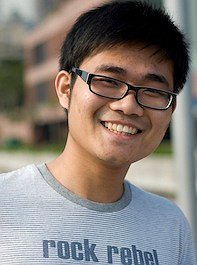
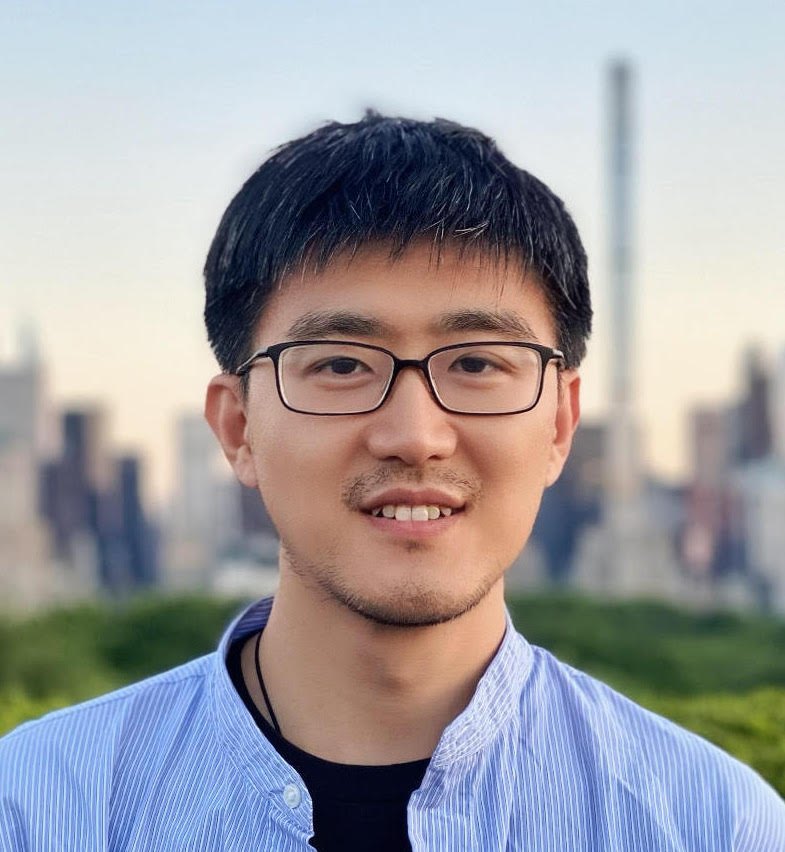
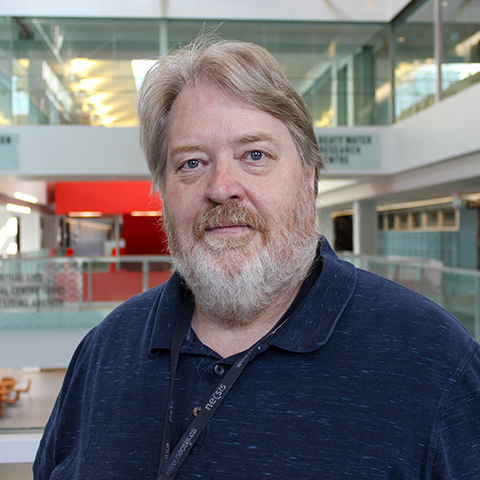
Jeff Huang is an Associate Professor in the Department of Computer Science and Engineering at Texas A&M University, specializing in programming languages and software engineering with a focus on concurrency and runtime verification. His research develops advanced program analysis techniques and tools to enhance software performance and reliability. Programming Languages Software Engineering Concurrency Runtime Verification His work has been recognized with prestigious awards including the ACM SIGSOFT Early Career Researcher Award, NSF CAREER Award, Google Faculty Research Award, and DARPA Young Faculty Award. Notably, his research has earned multiple SIGPLAN Research Highlights and PLDI Distinguished Paper Awards. ACM SIGSOFT Early Career Researcher Award NSF CAREER Award Google Faculty Research Award Mozilla Research Award Facebook Research Award DARPA Young Faculty Award ACM SIGSOFT Outstanding Dissertation Award ACM SIGPLAN PLDI Distinguished Paper Award SIGPLAN Research Highlights Jeff Huang actively contributes to academic communities as a committee member in venues like SPLASH, ICSE, ISSTA, and PLDI. He has authored influential papers on concurrency bug detection, pointer analysis, and language translation tools, spanning both theoretical foundations and practical implementations.
Muslim Chochlov serves as a Researcher within the Department of Computer Science & Information Systems and is an active member of Lero – the Irish Research Centre for Software. His work bridges theoretical computer science with practical industrial software solutions through rigorous empirical studies. Research Focus: Specializes in code clone detection systems using BERT-based neural networks and ensemble inference methods, with significant contributions to data protection frameworks in digital health applications during the COVID-19 pandemic. Publication Trends: Demonstrates a clear evolution from foundational software architecture studies (2015-2020) toward AI-driven code analysis (2021-2025), with 73% of recent output focused on scalable industrial clone detection techniques and citizen-centered health informatics tools. Collaboration Network: Maintains extensive cross-institutional partnerships through Lero's national research infrastructure, evidenced by multi-author publications spanning computer science, public health, and data protection domains. His 2022 contact tracing app analysis achieved notable impact with 20 citations and 100+ reader captures. Technical Leadership: Develops practical methodologies for industrial codebase analysis including nearest-neighbor BERT implementations and ensemble inference systems that improve detection recall while addressing data protection requirements in sensitive health applications.
Jie Wu is an Assistant Professor in the Department of Computer Science at Michigan Technological University, a Carnegie R1 (Very High Research Activity) institution. Previously, he was a postdoctoral researcher at the University of British Columbia working with Dr. Fatemeh Fard at the intersection of Software Engineering and AI. Dr. Wu received his PhD in Systems Engineering from George Washington University. His undergraduate and master's studies were both in Computer Science at Shanghai Jiao Tong University's elite ACM Class program. Before academia, he worked for nearly a decade as a software engineer in the industry at Snap Inc., Microsoft, and ArcSite (a startup). Dr. Wu's research focuses on Trustworthy AIware, with particular interest in transforming "AI for Software Engineering" and "AI system development" from art into rigorous science and engineering disciplines. His work emphasizes human-centered AI, AI alignment, and practical software engineering, grounded in a systems-thinking mindset. His primary research areas include AI for Software Engineering (AI4SE), Software Engineering for AI (SE4AI), Large Language Models (LLMs), Data Science, and Systems Science and Engineering. His recent publications demonstrate a strong focus on evaluating and improving communication capabilities of code-generating LLMs, automated program repair using LLMs, and applying AI to software engineering challenges. His work often bridges theoretical foundations with practical applications in industry settings, with notable contributions including the HumanEvalComm benchmark for evaluating communication skills in code generation. Distinguished Paper Award Candidate at CAIN 2024 for V-Model research Reviewer for top-tier journals including IEEE TSE and ACM TOSEM Program Committee Member for RAIE 2025, CAIN 2025, and SANER 2025 Dr. Wu is actively recruiting PhD students to join his research group at Michigan Tech to work at the intersection of Software Engineering and AI. He is passionate about bridging academic research and industry practice to accelerate innovation and create meaningful societal impact, welcoming collaborations with industry partners interested in applying cutting-edge AI research to real-world challenges.
Mohamed Shehata is a Professor in the Department of Computer Science, Mathematics, Physics, and Statistics at the University of British Columbia's Irving K. Barber Faculty of Science. He holds an adjunct professorship at Memorial University of Newfoundland's Computer Engineering Department. His research focuses on computer vision, biomedical applications, and intelligent camera systems. He earned his B.Sc. (Zagazig University), M.Sc. (Zagazig University), Ph.D. (University of Calgary), and P.Eng. licensure. Previously, he worked at Intelliview Technologies Inc. as Vice President of Engineering and Research. He has held roles as an assistant and associate professor at Memorial University before joining UBC in 2019. He serves as Editor-in-Chief of the IEEE Canadian Journal of Electrical and Computer Engineering and has contributed to over 70 peer-reviewed publications. His work spans video surveillance systems, domain generalization, and medical imaging applications. Education: B.Sc. (Honors), Zagazig University M.Sc., Computer Engineering, Zagazig University Ph.D., University of Calgary Research Interests: He explores cutting-edge topics like federated learning for domain adaptation, biomedical image analysis, and lightweight neural networks for embedded systems. His recent work emphasizes cross-domain generalization and few-shot learning for medical diagnostics and object tracking. Professional Contributions: Dr. Shehata has supervised graduate students and led projects in computer vision applications. His publications bridge theoretical advancements with practical systems like drone-based surveillance and IoT healthcare devices. He actively contributes to IEEE committees and academic journal editing.
Xiaoyu Sun is a Lecturer in the School of Computing at Australian National University (ANU), specializing in Software Engineering with a focus on Mobile Software Engineering and Intelligent Software Engineering. She holds a PhD from Monash University (2023) and a Bachelor's degree in Computer Science from Beijing Normal University (2016). Her research emphasizes applying static code analysis, dynamic testing, and NLP techniques to enhance software security and reliability, particularly in Android systems. Current projects include tools for detecting compatibility issues and privacy leaks in mobile apps. Her research interests span code generation frameworks (e.g., A^3-CodGen), security management in open-source projects, and AI-enhanced software development practices. Collaborations with tech giants like Bytedance and Alibaba highlight her industry engagement. Xiaoyu is Co-Investigator in the Tech4HSE project (2025-2027), developing AI-based monitoring systems for workspace safety. She has published in top venues including ICSE, ASE, and IEEE Transactions on Software Engineering. Her work bridges academia and industry, addressing challenges in mobile app security, code reuse efficiency, and developer toolchain innovation. Ongoing efforts focus on AI-driven solutions for software engineering tasks and fostering transparent privacy practices in open-source AI applications.
Alireza Mohammadinodooshan is a Postdoctoral Fellow at Linköping University's Department of Computer Science (IDA), Sweden, working within the Database and Information Technology (ADIT) research group. He contributes to the Wallenberg AI, Autonomous Systems and Software Program (WASP) – Sweden's largest individual research initiative – focusing on data-driven analysis of social media engagement dynamics across Twitter, Facebook, and Instagram platforms. His research centers on quantifying how political bias, news reliability, and content-agnostic factors shape temporal user engagement patterns. Key interests include social media analysis, user engagement dynamics, data mining, information systems, network science, and artificial intelligence, with emphasis on cross-platform comparative studies and algorithmic amplification effects in news consumption. Analysis of his 15 most recent publications reveals consistent focus on temporal modeling of engagement decay, multi-format content interaction (photos/videos/albums), and the interplay between news source characteristics and user behavior. His methodological approach combines large-scale dataset analysis with network theory to identify virality predictors and platform-specific engagement mechanics. No scientific awards were documented in available sources. No advising roles or research grants were referenced in the provided materials. He operates within the ADIT research group at Linköping University, which specializes in advanced database and information systems for the digital society. This group forms part of IDA's broader WASP-affiliated ecosystem focused on AI-driven autonomous systems, enabling interdisciplinary collaboration on large-scale data challenges in social computing.
Jia Li is an Assistant Professor at the College of AI, Tsinghua University, where they lead the Tsinghua University Programming Language Processing Group (THU-PLP). They completed their PhD at Peking University in 2025 under the supervision of Prof. Zhi Jin and Prof. Ge Li. Dr. Li's research focuses on Programming Language Processing (PLP), which aims to develop artificial intelligence techniques for understanding and generating source code. Their work spans two main areas: foundation models for PLP and applications of PLP in software development and beyond. They develop new model architectures, training strategies, inference approaches, and evaluation metrics to improve code understanding and generation capabilities. Their application research explores how PLP can enhance software development efficiency through code generation, test generation, and code optimization, as well as its applications in embodied AI and neuroscience. Dr. Li's recent publications demonstrate a strong focus on advancing code generation and understanding through large language models. Their work addresses key challenges in repository-level code completion, class-level code translation, vulnerability detection, and benchmarking evolving code generation capabilities. They've made significant contributions to developing efficient models like aiXcoder-7B and creating comprehensive benchmarks like EvoCodeBench and ClassEval-T. NeurIPS 2025 Spotlight Paper (3.2% acceptance rate) for "SATURN: SAT-based Reinforcement Learning to Unleash Language Model Reasoning" Dr. Li actively mentors students and researchers, seeking highly-motivated interns to join the THU-PLP research group. They have established collaborations with researchers at Peking University, as evidenced by their joint publications with supervisors Prof. Zhi Jin and Prof. Ge Li. Dr. Li leads the Tsinghua University Programming Language Processing Group (THU-PLP), which focuses on cutting-edge research at the intersection of programming languages and artificial intelligence. The group maintains active GitHub repositories for their research projects, including EvoCodeBench, SkCoder, and CodeEditor, demonstrating their commitment to open science and reproducible research.
Affiliations & Roles Michael W. Godfrey is a Professor in the David R. Cheriton School of Computer Science at the University of Waterloo . He holds the David R. Cheriton Faculty Fellowship and has served as an associate director of Cornell's M.Eng. program. His roles include: General Chair for ICPC 2025 (IEEE Program Comprehension) Member of steering committees for ICSME, MSR, SCAM, and SWAN Course coordinator for CS138/CS246 and instructor for advanced topics courses Research Focuses on software evolution , program comprehension , and mining software repositories . His work addresses challenges in code clone analysis, developer productivity, and empirical software engineering. Notable contributions include: Advocating for intentional cloning as valid design practice Pioneering studies on code review quality and anomaly detection Developing tools like JavaDUCK (educational project) and mel (model extraction) Awards & Recognition Recipient of: Best Paper Awards at WCRE 2006, 2011, 2013 Most Influential Paper Award at SANER 2016 Outstanding Reviewer Awards (ICSME 2019/2020) Service & Outreach Active in: Program committee roles for ICSE, ICSM, MSR, and 30+ conferences University service: Undergraduate Recruitment Committee (2016–present) Industry collaborations with CWI (Amsterdam), Sun Microsystems, and automotive software teams
James Patten is a Research Fellow at the University of Limerick , affiliated with the Department of Computer Science & Information Systems and the research center Lero – the Irish Software Research Centre . His work focuses on applying machine learning and evolutionary computation to enhance software quality, with a specific emphasis on code duplication detection and refactoring. Primary Affiliation: Department of Computer Science & Information Systems, University of Limerick Research Center: Lero – the Irish Software Research Centre Patten’s research spans two major domains: Software Engineering: Code duplication elimination, clone detection using BERT-based models, evolutionary algorithms for codebase analysis Gender Equity: Active participant in the WiSTEM2D initiative, exploring systemic interventions to improve female representation in STEM fields His publications reflect a dual focus on scalable software analysis techniques (e.g., ensemble inference for clone detection) and social science studies on gender dynamics in technology education. Notably, Patten combines technical rigor with societal impact by addressing both software reliability and diversity challenges.
Prof. Dr. Tobias Glasmachers is a Full Professor at the Institut für Neuroinformatik , Ruhr-Universität Bochum, Germany, specializing in the Theory of Machine Learning . He leads the Optimization of Adaptive Systems group and holds appointments in both Computer Science and Interdisciplinary AI research. Key Research Areas : Optimization algorithms, evolutionary computation, reinforcement learning, supervised learning, and neural networks Technical Focus : Gradient-based methods, support vector machines, and adaptive coordinate descent Applications : Robotics, waste sorting facilities, 3D game environments (e.g., Doom/Minecraft), and human-centered AI design Notable Contributions : Development of LM-MA-ES evolution strategy, Hessian Estimation Evolution Strategy, and tachAId tool for ethical AI design. His work bridges theoretical analysis with practical implementations across diverse domains. Teaching : Offers courses in Informatik 1 - Programmieren, Machine Learning: Supervised Methods, and Evolutionary Algorithms. Supervises numerous Bachelor's and Master's theses on AI/ML applications.
Zhen Ming (Jack) Jiang is an Associate Professor and York Research Chair (Tier II) in Software Engineering for Foundation Model-Powered Systems at the Department of Electrical Engineering & Computer Science, York University, Canada. He earned his Ph.D. (2013) from Queen's University and MMath/BMath degrees from the University of Waterloo. Research Focus: Software Engineering for AI, Performance Engineering, Logging Practices, and Software Visualizations. Education: Ph.D. in Computer Science, Queen's University MMath in Computer Science, University of Waterloo BMath in Computer Science, University of Waterloo His research explores engineering rigor in AI-powered applications, performance optimization in foundation model-driven systems, and efficiency improvements in large-scale software. Recent work analyzes logging practices, code cloning in blockchain, and AIOps models. He has received prestigious awards including the NSERC Discovery Accelerator Supplements (2020) and multiple Best Paper Awards at ICST, ICSE, and MSR. He served on program committees for ICSE, ICSME, and ICPE, and reviewed for top journals like IEEE Transactions on Software Engineering.
David W. Binkley is a Professor in the Department of Computer Science at Loyola University Maryland. His research focuses on Software Engineering and Testing Program Slicing and Clustering Information Retrieval Techniques in Software Engineering Safety-Critical Systems Code Clone Detection Recent work includes dynamic slicing of WebAssembly binaries and adaptive change recommendation systems using association rules. He has contributed extensively to empirical studies on dependence clusters, testability transformations, and observational slicing techniques. Key collaborations include institutions like Simula Research Laboratory (Norway) and NIST (National Institute of Standards and Technology). His publications span top-tier venues such as IEEE Transactions on Software Engineering, ACM TOPLAS, and ICSE.
Dr. Thomas R Dean is a Professor in the Department of Electrical and Computer Engineering at Queen's University in Kingston, Ontario, Canada, and holds an additional appointment as an Adjunct Associate Professor at the Royal Military College of Kingston. His academic career spans several decades with consistent publication output through 2020, demonstrating active engagement in research and scholarship. His work bridges theoretical computer science with practical security applications, particularly in network protocols and web applications. Dean's research interests focus on software transformation techniques, web application evolution, and network security. His expertise includes software transformation, web site evolution, security of network applications, air traffic control systems, and language formalization. His work demonstrates a consistent thread connecting software engineering principles with security applications, particularly in developing techniques for intrusion detection systems and secure protocol implementations. His publications reveal a strong emphasis on practical applications of theoretical concepts, with numerous collaborations across academic and industrial settings. Analysis of Dean's recent publication record (2014-2020) shows a clear concentration in three interconnected areas: network security protocols, software transformation techniques, and model-based engineering approaches. His work on intrusion detection systems using constraint satisfaction methods appears consistently across multiple publications, demonstrating this as a core research thread. The publications also reveal growing interest in automotive software systems, particularly AUTOSAR implementations and Simulink model analysis, reflecting adaptation to emerging industry needs. Scientific recognition includes: Best paper award at CASCON'04 for Practical Language-Independent Detection of Near-Miss Clones Dean maintains active research collaborations, particularly with colleagues at Queen's University including M.H. Alalfi, J.R. Cordy, and F.T. Imam, as evidenced by co-authorship across multiple publications. His work spans both theoretical contributions and practical tool development, including parser generators, constraint engines, and intrusion detection systems. His research has been supported by publications in reputable venues including CASCON, IEEE conferences, and journals like Software Practice and Experience. Dean leads The Compass Group research team, focusing on software security and transformation techniques. His lab work emphasizes practical applications of software engineering principles to real-world security challenges, particularly in network protocols and web applications. The research approach combines formal methods with practical implementation, resulting in tools and frameworks that address specific security vulnerabilities in modern software systems.
Alessandra Gorla is an associate researcher professor at IMDEA Software Institute in Madrid, Spain, with a strong background in software engineering research. She previously worked as a postdoctoral researcher with Andreas Zeller at Saarland University in Germany and completed her PhD under Mauro Pezzè at the University of Lugano in Switzerland. Her research bridges theoretical foundations with practical applications in mobile software systems. Her research focuses on malware detection for mobile applications, automatic software repair, software testing and analysis. She has developed techniques for detecting behavior anomalies in graphical user interfaces, identifying third-party libraries in mobile apps, and leveraging intrinsic software redundancy for reliability. Her work spans both Android and iOS ecosystems, with particular attention to permission systems, release practices, and security implications. Analysis of her recent publications reveals a strong trend toward mobile application security and analysis, with increasing focus on iOS systems alongside traditional Android research. Her work combines static and dynamic analysis techniques, often incorporating natural language processing for comment analysis and test generation. There's a clear progression from foundational work on intrinsic software redundancy to more applied research on mobile security and testing. FRITZ-KUTTER AWARD! for PhD thesis on Automatic Workarounds BEST PAPER AWARD! for Search-based Security Testing of Web Applications BEST STUDENT POSTER AWARD! for Automatic Workarounds as Failure Recoveries Dr. Gorla actively mentors students and seeks motivated individuals for internship and PhD opportunities in software engineering. She has served in various organizational roles including Tool Demonstrations co-chair for FSE 2016, Artifact Evaluation co-chair for ESSoS 2016 and ISSTA 2016, and multiple program committee positions at top software engineering conferences. Her work has been supported through collaborations with major research institutions and industry partners. At IMDEA Software Institute, Dr. Gorla leads research on mobile application analysis, particularly focusing on behavioral analysis of Android and iOS applications. Her CHABADA prototype for clustering Android apps by description topics and identifying API usage outliers demonstrates her practical approach to malware detection. She also investigates intrinsic software redundancy for building more resilient systems.
Dr. Ying Zou is a Professor in the Department of Electrical and Computer Engineering at Queen's University's Smith Engineering faculty in Kingston, Ontario, Canada. With an extensive publication record spanning from 2018 through 2025, Dr. Zou has established herself as a leading researcher in empirical software engineering with a growing focus on AI integration. Dr. Zou's research focuses on Software Engineering , Artificial Intelligence for Software Engineering (AI4SE) , Software Evolution , Software Analytics , and Empirical Software Engineering . Her work bridges theoretical approaches with practical applications, examining developer behavior, code quality improvement, and AI techniques for software engineering tasks. Recent publications demonstrate a clear progression from traditional empirical studies toward more AI-centric approaches, particularly in code refactoring, type inference, and performance analysis. Analysis of Dr. Zou's publication trends reveals a strategic evolution in her research focus. Early work centered on empirical studies of Stack Overflow and GitHub, while recent publications increasingly integrate large language models and AI techniques for software engineering tasks. Her research spans multiple dimensions including code quality, developer productivity, open source community dynamics, and performance optimization, with consistent methodological rigor in empirical validation. Dr. Zou has served in numerous leadership roles across major software engineering conferences including ASE, ICSE, and ESEC/FSE. She has been a Program Committee member for multiple tracks and conferences, and notably served as New Faculty Mentoring Co-Chair for ESEC/FSE 2026. Her service to the community extends to organizing conference tracks, chairing sessions, and mentoring new researchers in the field.