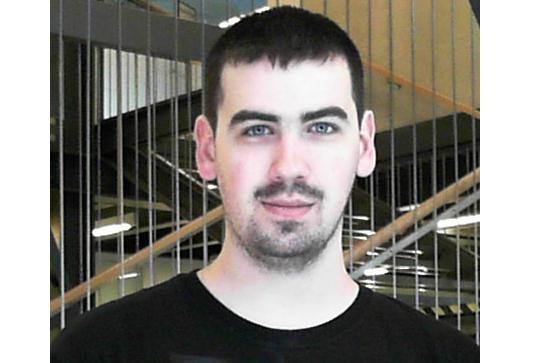
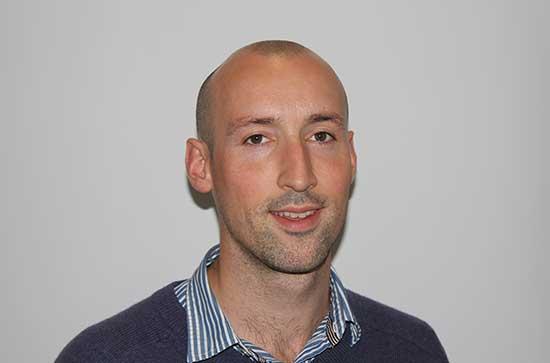
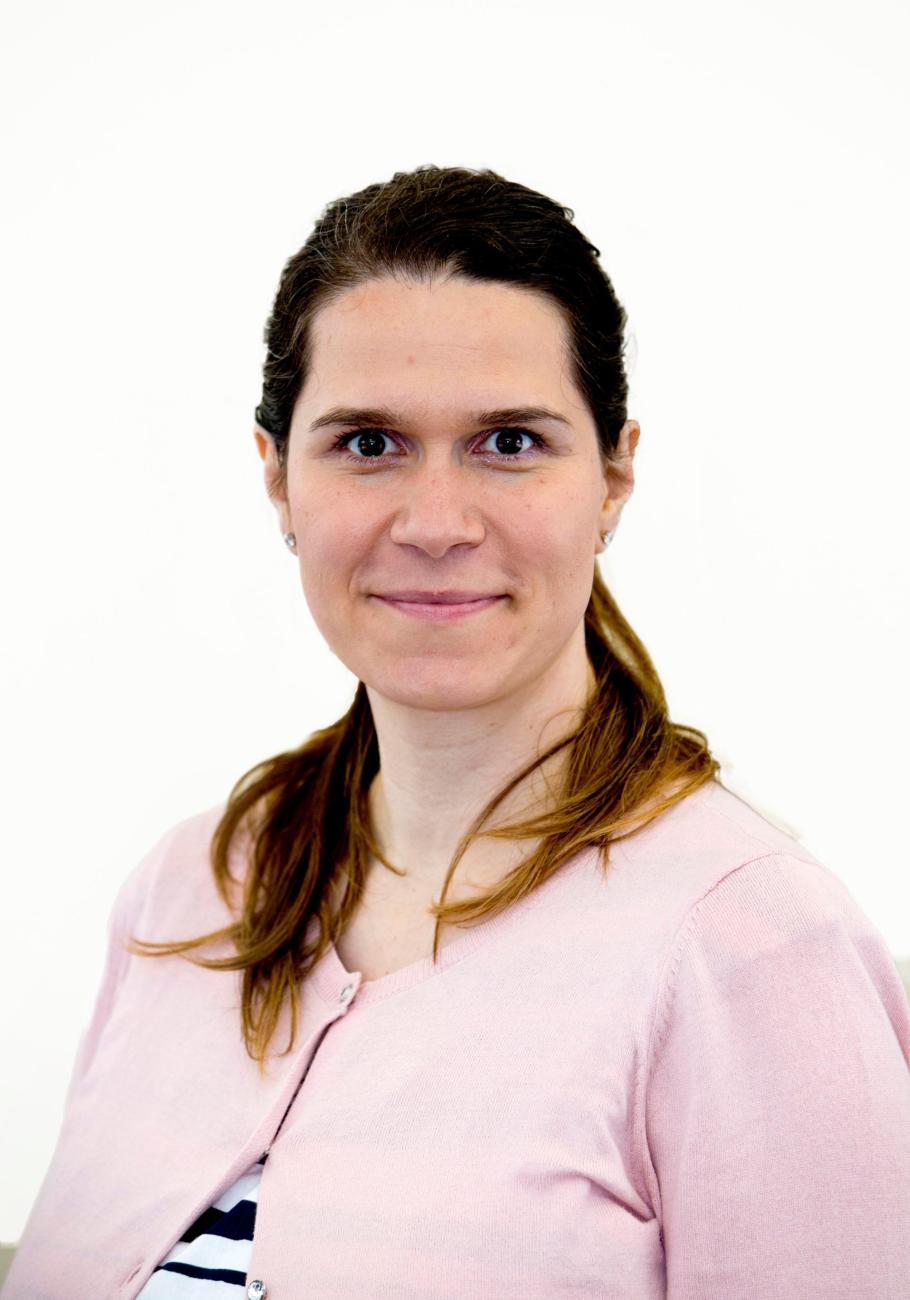
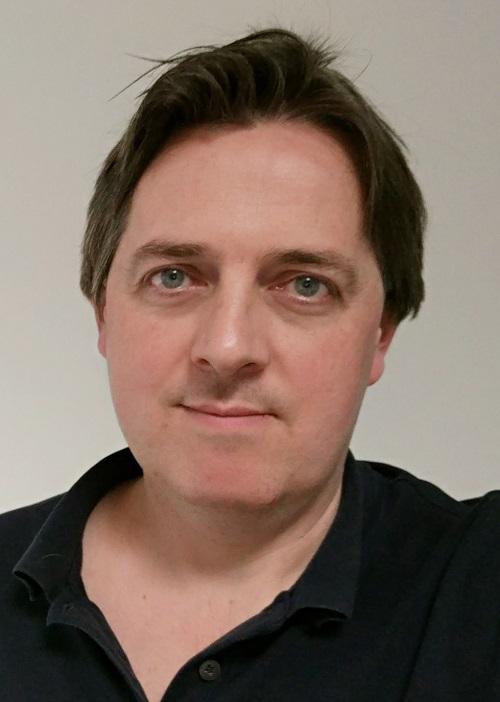
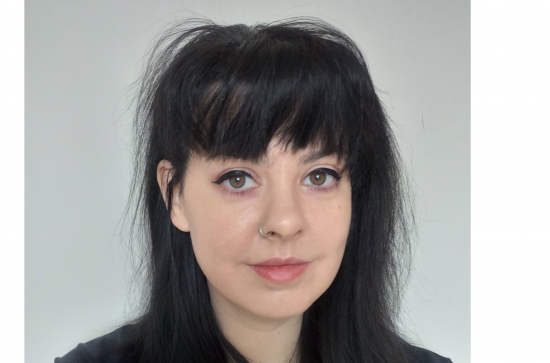
Conor Keighrey is a Lecturer in the Department of Computer and Software Engineering within the Faculty of Engineering and Informatics. His research focuses on immersive technologies, including Virtual Reality quality of experience, human-computer interaction, and assistive applications. Key interests involve optimizing collaborative VR systems and developing accessible XR solutions. Recent publications emphasize VR applications in industrial design, accessibility tools for visually impaired users, and physiological metrics in collaborative environments, demonstrating a consistent focus on user-centered extended reality systems.
Dr. Edgar Galván is an Associate Professor in the Department of Computer Science at Maynooth University, Faculty of Science & Engineering. He holds a PhD in Computer Science from the University of Essex and has held senior research roles at institutions like University College Dublin and Trinity College Dublin. His research focuses on Evolutionary Algorithms, Genetic Programming, and their applications in optimization, games, and circular economy challenges. Education : PhD in Computer Science, University of Essex MSc (Hons) in Artificial Intelligence (Research), University of Veracruz BSc (Hons) in Computer Science, University of Veracruz Research Interests : Dr. Galván pioneers work in semantic-based Genetic Programming, neutrality and locality in evolutionary algorithms, and applications in combinatorial optimization and energy systems. He also explores AI-driven solutions for the circular economy, including material reuse and policy design. Grants & Projects : REBUILD (€449,879): Reimagining buildings as material banks for the circular economy (2024–2027) VISION (€149,874): Circular business models to reduce virgin material use in construction (2023–2026) Stochastic Bio-inspired Evolutionary Algorithms (€267,000): Dynamic optimization problems (2014–2017) Awards : Top 1% of researchers in Genetic Programming (UCL, 2020) Elected member of Mexico’s National Research System (2015) Marie Curie Fellowship (Irish Research Council, 2014) Professional Activities : Chair of ACM Genetic and Evolutionary Computation Conference committees, Programme Committee member for IEEE Congress on Evolutionary Computation, and Scientific Adviser for research councils in Ireland, France, and Mexico.
Mark Noone is a University Tutor in the Department of Computer Science at Maynooth University since July 2019. He specializes in managing large-scale outreach initiatives such as annual Summer Camps, CoderDojo programs, and first-year teaching modules. His research focuses on hybrid programming languages (e.g., Hybrid Java) and improving CS1 education through visual/textual integration. He holds a Master of Computer Science in 'VisTex: An Investigation on the Role of Visual and Textual Languages when Learning to Program' and a B.Sc. in Computer Science & Software Engineering from Maynooth University. Key research interests include computer science education methodologies, gamification (BreakoutEDU), curriculum development, and student support structures. He is affiliated with the PACT team and Computer Science Education Research Group. Notable awards include the 2019 Best Student Paper (Computer Science Education: Innovation and Technology) and the 2016 John and Pat Hume Scholarship. Recent work emphasizes automated grading systems, support center redesigns, and hybrid programming environments. His publications span peer-reviewed journals (e.g., Journal of Computers in Education) and conferences like SIGCSE and ITiCSE. He also serves as a reviewer for the Annual SIGCSE Conference proceedings.
Jason Chan is a Professor in the Department of Applied Psychology at University College Cork (UCC), Ireland, where he leads research at the intersection of brain and behavior. His work utilizes advanced neuroimaging techniques including magnetoencephalography (MEG), functional magnetic resonance imaging (fMRI), and electroencephalography (EEG) to investigate multisensory integration and its applications in understanding neurological conditions. Dr. Chan earned his BA from California State University, Los Angeles, followed by a D.Phil in Experimental Psychology from the University of Oxford. Prior to joining UCC, he conducted post-doctoral research at Trinity College Dublin and Goethe University, gaining expertise in diverse research methodologies across international institutions. His primary research focus centers on multisensory integration (MSI), examining how perceptual training affects cortical connectivity and how these processes serve as biomarkers for neurological conditions including autism spectrum disorder and mild cognitive impairment in aging populations. Through seemingly simple behavioral tasks coupled with sophisticated neuroimaging, Chan's work provides critical insights into human perception and disorders. Analysis of his recent publications reveals a consistent trajectory in multisensory research, with increasing focus on aging populations, autism spectrum disorders, and the application of predictive coding frameworks to understand perceptual processing differences. His work spans both theoretical neuroscience and practical applications for cognitive rehabilitation. Dr. Chan has secured multiple research grants, including funding from Enterprise Ireland, HEA COVID Support, and the Health Research Board for projects examining fear of falling detection systems, community walking programs for older women, and the impact of chaotic home environments on emotional perception in autism. He actively contributes to the academic community through committee service on the Applied Psychology Ethics, Research, and Teaching Committees at UCC. His professional affiliations include the Federation of European Neuroscience Societies, American Association for the Advancement of Science, Society for Neuroscience, Neuroscience Ireland, and the Association for Psychological Science. Dr. Chan directs the Acme Lab (www.acmelab.science), which serves as the hub for his research team's investigations into brain-behavior relationships, providing a collaborative environment for advanced neuroimaging studies and perceptual research.
Dr. Mary Farrelly is an Assistant Professor in Spanish Studies at the School of Languages, Cultures and Linguistics, University College Dublin, within the College of Arts & Humanities. She joined UCD in 2017 as a Teaching Fellow and was promoted to Assistant Professor in 2018. Previously, she taught at the University of Chester and the University of Manchester, where she completed her PhD on convent and prison spaces in Spanish film and television. BA (Mod) – Trinity College Dublin MA – University College London PhD – University of Manchester Professional Diploma in University Teaching and Learning – University College Dublin Her research focuses on gender, mysticism, and spirituality in contemporary Spanish cultural production, especially in film and theatre. She explores historical memory related to the Spanish Civil War, Francoist dictatorship, and democratic transition, with particular attention to religious women, hagiography, and the cinematic representation of martyrdom. Her work bridges cultural studies, feminist theory, and religious studies. Her recent publications analyze mystical visions in Spanish cinema, the portrayal of nuns as maternal figures, and the interplay between traditional Catholic imagery and modern human rights discourse. She has contributed to discussions on inclusive higher education, emphasizing the importance of democratizing equity work and preventing it from becoming a 'minority tax.' Mothers Superior: Nuns as Maternal Figures in Spanish Popular Culture (1923–1936) – Royal Irish Academy Charlemont Grant Living Multilingually: Online Tools for Empowering Language Learners in Transition – National Forum Learning Enhancement Project From Convent to Cabaret: The Spectacle of Feminine Spirituality on the Spanish Stage and Screen – AHGBI/WiSPS Dorothy Sherman Severin Early Career Fellowship She has received the College Teaching & Learning Award at UCD and is actively involved in outreach, widening participation, and equality initiatives. She chairs the SLCL Outreach Committee and serves on the College of Arts and Humanities EDI Committee and UCD Widening Participation Committee. She also contributes to peer review for journals such as Bulletin of Hispanic Studies and Bulletin of Spanish Studies .
Bryan Hennelly is an Associate Professor in the Department of Electronic and Electrical Engineering at Maynooth University's Faculty of Science & Engineering . His research bridges biomedical engineering and biophotonics , focusing on optoelectronic microscopy systems for clinical pathology applications. PhD in Optical Engineering (University College Dublin, 2005) Established biophotonics laboratory (2012) Science Foundation Ireland Starter Researcher Grant recipient His work integrates holographic microscopy and Raman micro-spectroscopy for automated diagnostics, particularly in early-stage bladder cancer detection from urine samples. Collaborations span industry , academia , and HSE institutions . Key research themes include: 3D imaging systems using digital holography Optical encryption techniques Signal processing algorithms for biomedical applications Background subtraction and noise reduction in spectroscopy Publications (over 100) demonstrate expertise in Raman spectroscopy , digital holography , and optical signal processing . Current projects involve developing advanced diagnostic platforms combining imaging and spectroscopy with machine learning.
Dr. Anca Delia Jurcut is an Assistant Professor in the School of Computer Science at University College Dublin (UCD), leading the DNS Research Lab. She holds a PhD in Security Engineering from the University of Limerick and a BSc in Computer Science and Mathematics from West University of Timisoara. With over 16 years of academic and industry experience, her research focuses on cybersecurity, including formal verification of security protocols, IoT security, and machine learning applications for threat detection. She has secured €1.5M+ in EU and national grants and authored over 120 peer-reviewed publications. Notable awards include the 2023 Best Paper Award from JNCA and inclusion in the World’s Top 2% Scientists (2024). Education: PhD (University of Limerick), BSc (West University of Timisoara) Research Interests: Cybersecurity, Attack Detection, Formal Verification, Blockchain, Quantum-Resistant Protocols Awards: World’s Top 2% Scientist, IEEE Senior Member, UCD Women in Science Award Research Highlights : Pioneered SDN attack datasets (InSDN), developed formal verification tools (CDVT/AD), and advanced ransomware classification frameworks. Current projects address quantum-resistant protocols, MEC security, and resilient IoT systems. Grants & Funding : Lead researcher on EU H2020 projects (e.g., AIDA), SFI grants (Machine Learning Labs), and NATO-funded studies on insider threats. Collaborates internationally on cybersecurity frameworks and edge computing security. Labs & Teams : DNS Research Lab (UCD), co-founder of the InSDN Dataset initiative, and contributor to the CDVT/AD formal verification tool.
Dr. Marija Bezbradica serves as Associate Professor and COMBUS Programme Board Chair at Dublin City University's School of Computing. Her research bridges computational finance, educational analytics, and complex systems modeling. Key research areas include financial risk modeling using Bayesian methods, educational data mining for programming courses, and healthcare analytics for infection control. She holds affiliations with ADAPT (FinTech research), ARC-SYM (complex systems modeling), and Lero (software engineering). Recent publications demonstrate cross-disciplinary applications, spanning cryptocurrency market analysis, hospital readmission prediction, and synthetic data generation for medical conditions. Work frequently employs machine learning, graph-based methods, and advanced statistical modeling. No information is available regarding awards, supervised students, or specific laboratory facilities.
Dr. Mark Humphrys is an Assistant Professor at Dublin City University's School of Computing within the Faculty of Engineering and Computing. He holds a BSc in Mathematics and Computer Science from University College Dublin, a PhD in Computer Science from the University of Cambridge, and completed postdoctoral work at the University of Edinburgh. His research spans Artificial Intelligence, Reinforcement Learning, JavaScript-based educational platforms, and multi-agent systems. His research focuses on: Action selection methods in autonomous agents Reinforcement learning architectures JavaScript-based AI education platforms (Ancient Brain) Multi-author hybrid AI systems Turing Test implementations Urban mobility and transportation modeling Analysis of his recent publications reveals strong emphasis on: Educational technology innovations using JavaScript frameworks Financial market impacts on labor economics Distributed AI system architectures Urban transportation solutions and predictive modeling Human-computer interaction paradigms He has supervised 4 PhD students to completion and maintains the Ancient Brain coding platform hosting over 11,000 user projects. His work has received 686 citations with an h-index of 11. Dr. Humphrys leads several projects including Ancient Brain (JavaScript coding education), World-Wide-Mind (distributed AI research), and maintains research groups exploring multi-agent systems and transportation analytics.
Professor Tiziana Margaria is a faculty member at the Department of Computer Science & Information Systems at the University of Limerick. She is affiliated with multiple research centers, including Lero – the Irish Software Research Centre, the Centre for Research Training in Foundations of Data Science, and the Limerick Digital Cancer Research Centre. Academic focus on Model-Driven Development, Artificial Intelligence in Healthcare, and Formal Verification 2023 recipient of the University of Limerick Team Teaching Award Active in interdisciplinary collaborations bridging Computer Science with Digital Humanities and Healthcare Develops low-code/no-code platforms for medical data analysis and smart manufacturing Her research spans AI governance , blockchain-based privacy systems , digital twins for cyber-physical systems , and education-focused software tools . Recent projects include interoperability frameworks for healthcare data and extreme model-driven approaches for historical data transcription. Notable scientific contributions include: 2025: Review on AI-driven healthcare system design 2024: Formal methods in AI validation 2022: Edge analytics in smart manufacturing 2020: Blockchain for medical privacy Her work emphasizes practical implementation of theoretical concepts through tools like Cinco de Bio and MazeGen. She actively promotes collaboration between technical and domain-specific teams in Industry 4.0 contexts.
Natalie Culligan is an Assistant Professor/Lecturer at Maynooth International Engineering College, affiliated with the Faculty of Science & Engineering at Maynooth University. She holds a PhD in Computer Science and has cross-disciplinary teaching roles across Computer Science, Engineering, Media, and Philosophy departments. Her research focuses on pedagogical coding environments, data analysis in education, and digital media technologies. Education: PhD in Computer Science, Maynooth University (funded by John and Pat Hume and Irish Research Council Scholarships) Sound Engineering, Ballyfermot College of Further Education Research: Her PhD work, “Two Roads Diverge: Mapping the Path of Learning for Novice Programmers…” , utilized large-scale data and neural networks to study student learning in coding environments like MULE (Maynooth University Learning Environment). Current interests include Virtual Reality, Digital Visual Technology, and Media Convergences. Awards: John and Pat Hume Postgraduate Award Irish Research Council Postgraduate Scholarship Teaching & Grants: Taught modules in Introduction to Programming, Photoshop, Philosophies of the Digital Age, and VR technologies. Holds a Professional Certificate in Teaching and Learning from Maynooth University. Research funded through postgraduate scholarships. Labs/Teams: Developed the MULE coding environment as part of her PhD research, integrating pedagogy and data science.
Jürgen Simpson is an Associate Professor in the Department of Computer Science & Information Systems and a core member of the Digital Media and Arts Research Centre at the University of Limerick. His work bridges electronic music composition, live performance, and interdisciplinary art, with a focus on minimalism, live electronics, and cultural memory. He actively engages in collaborative projects such as air india [redacted] , an opera addressing the 1985 Air India Flight 182 bombing, and reinterpretations of landmark works like Simeon Ten Holt’s Canto Ostinato . Research Interests: Live electronic performance, minimalist composition, screendance, and cultural heritage through digital mediums Key Projects: air india [redacted] , Canto Ostinato live electronics adaptation, and Spiral festival series His academic contributions include over 70 research outputs across performances, compositions, and exhibitions, with notable recognition including the 2002 Oberhausen International Short Film Festival Prize. Simpson frequently presents at conferences and serves on arts committees, including leadership roles at Limerick City Gallery of Art.
Nuala Brady is an Associate Professor in the School of Psychology at University College Dublin. She holds a B.A. (Hons) in Psychology from Trinity College, Dublin, and a Ph.D. in Experimental Psychology from Cornell University. Her research focuses on visual and social cognition, including face perception, biological motion, and perception-action integration. She has held academic roles at UCD since 2000, including Vice Principal for Graduate Studies (2018-2021). Her teaching spans undergraduate and postgraduate courses like 'Visual and Social Cognition' and directs the MSc in Behavioural Neuroscience. Awards include the Aurora Leadership Programme for Women (2019) and the President's Research Fellowship (2007). She leads grants on topics such as motor imagery in Parkinson’s disease and embodied social processing. Brady's work bridges experimental psychology with clinical applications, particularly in autism, dyslexia, and neurorehabilitation. She is involved in Widening Participation initiatives to promote educational equality. Education: B.A. (Hons) Psychology, Trinity College Dublin Ph.D. in Experimental Psychology, Cornell University Research Interests: Visual perception, social cognition, face recognition, biological motion, dyslexia, autism spectrum disorders, motor imagery, and Parkinson’s disease. Active in translational research addressing psychological outcomes post-acquired brain injury. Awards: Aurora Leadership Programme for Women (2019) President's Research Fellowship (2007) Foundation Scholarship in Psychology (1985) Grants: Includes projects on digital training for Parkinson’s motor-cognitive strategies, embodied social processing, and access to education equity. Over 13 grants spanning cognitive neuroscience and applied psychology.
Gerald Kennedy is a Lecturer in Computing and Digital Media at Atlantic Technological University (ATU), Galway City Campus, affiliated with the Department of Computer Science & Applied Physics within the College of Engineering and Built Environment. He also serves as an External Examiner at the University of Hull from 2025 to 2028. His research and teaching focus on the intersection of design, technology, and education. Key areas include Digital Media Design, UI/UX, Interactive Design, Creative Coding, and the application of emerging technologies such as Augmented Reality (AR), Virtual Reality (VR), and Artificial Intelligence (AI) in creative practices. He promotes interdisciplinary, hands-on learning that fosters innovation and critical thinking. The most recent publication analyzes the impact of synchronous versus asynchronous learning models on graphic design students in Botswana and the UK, highlighting cross-cultural educational dynamics and digital engagement in developing and developed contexts. Fellow of the Higher Education Academy (FHEA) Gerald Kennedy integrates professional creative practice with academic teaching, mentoring students through practical, project-based learning. His work bridges academic research and real-world design applications, with a focus on immersive experiences and visual storytelling. While no formal grants are listed, his international presentations and publications reflect active scholarly engagement. He is involved in academic quality assurance through his external examiner role and contributes to curriculum development and peer review in design and computing education.
Sean Quinlan is a Lecturer in Neuroscience at the School of Biomolecular and Biomedical Science, University College Dublin. His research focuses on the pathophysiology of early-life seizures and their role in epilepsy etiology, particularly examining calcium-activated potassium channels, intracellular calcium receptors, and hippocampal cellular dynamics. His work emphasizes neurotoxicity profiles of anti-seizure medications, transcriptomic alterations in the hippocampus, and the intersection of neuroinflammation with seizure pathology. Recent studies explore purinergic signaling, microRNA detection methods, and neurodevelopmental outcomes of drug interventions. Quinlan's publications span seizure suppression mechanisms (Padsevonil), comparative neurotoxicity analysis (phenobarbital vs. levetiracetam), and advanced diagnostic approaches for neonatal encephalopathy using purine nucleosides. His research integrates molecular neuroscience, pharmacology, and clinical translational models. Scientific awards include the Conway Fellow (University College Dublin, 2024) MSCA Research Fellow (2022-2024) Quinlan teaches Membrane Biology (Neur30080, 2024) and holds certifications in Bioinformatics and Data Analytics from University College Dublin.