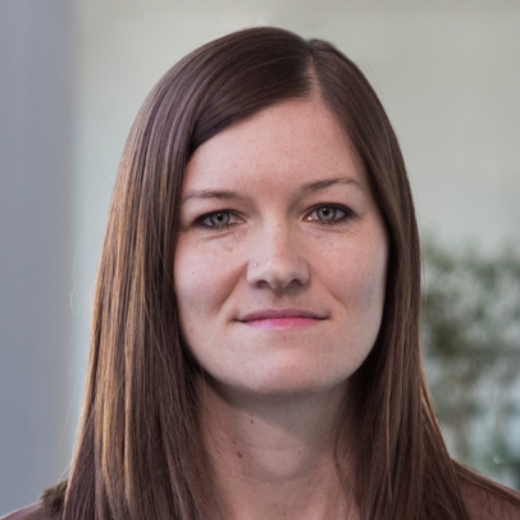
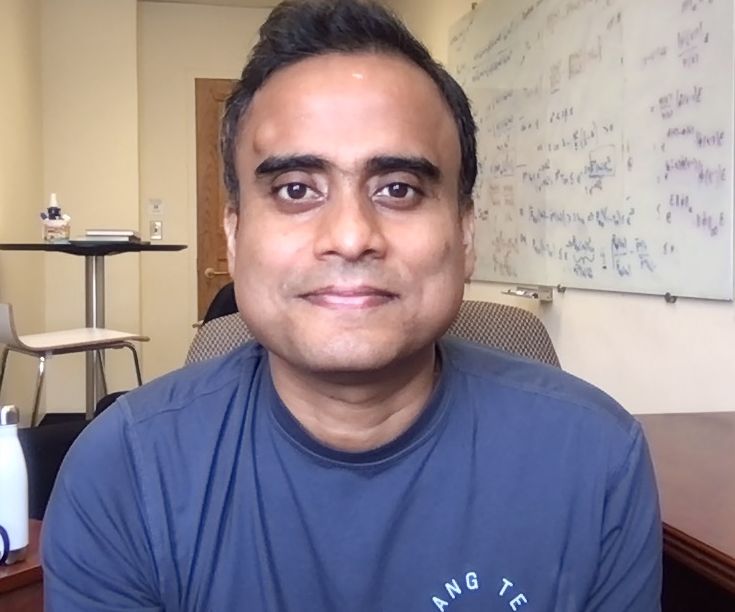
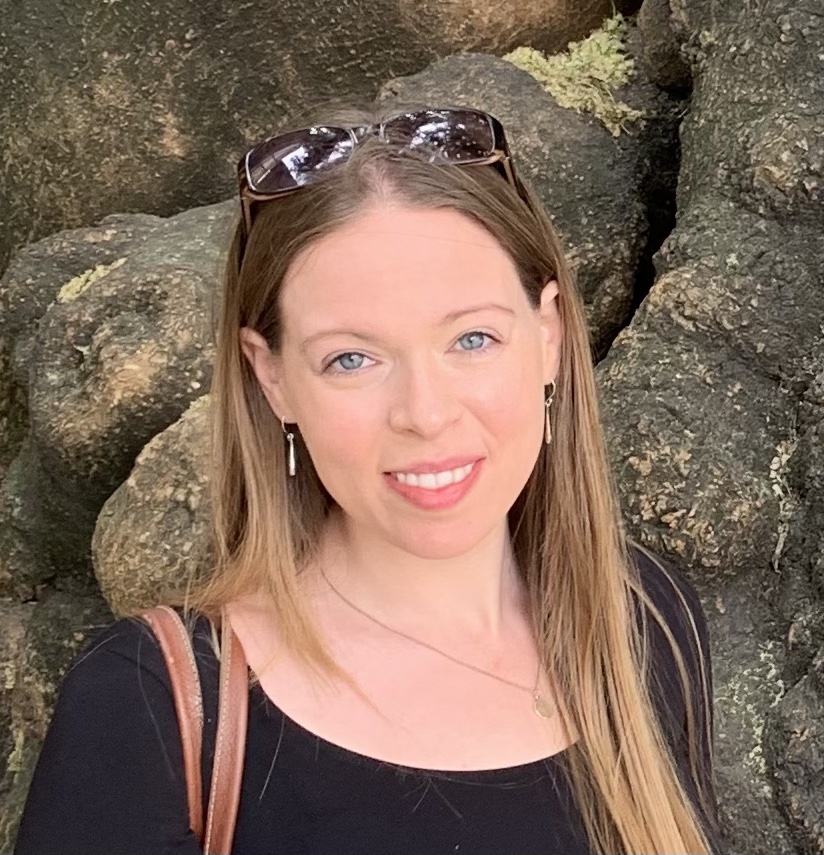
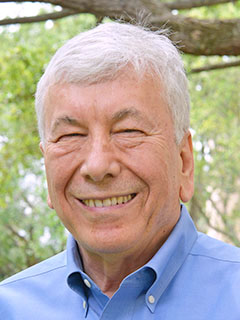
Olivier Festor is a Researcher at INRIA (French National Institute for Research in Digital Science and Technology), specializing in network security, cloud computing, and IoT. His work focuses on developing scalable solutions for modern network challenges, including in-network computation, cloud service security, and anomaly detection. Research Interests: Dr. Festor investigates vulnerabilities in distributed systems, designs protocols for efficient data processing (e.g., stateful in-network computation), and pioneers frameworks for IoT threat emulation. His recent work emphasizes cloud gaming optimization, automated security for service migrations, and darknet-based threat intelligence. Publication Trends: Over 200 publications (1993–2024) reflect a shift toward cloud/IoT security and programmable networks. Recent articles prioritize machine learning for traffic classification, TOSCA-based cloud orchestration, and P4-enabled data planes, highlighting applied research with industry relevance.
Ruth Videsott is a linguist at the Free University of Bozen/Bolzano (UniBZ), affiliated with the Faculty of Educational Sciences. She specializes in sociolinguistics, multilingualism, and Ladin language studies, with a particular focus on the linguistic situation in South Tyrol's Ladin valleys. Her research and teaching activities center on language acquisition, didactics of L1, and the documentation and preservation of minority languages in Alpine regions. Dr. Videsott's research interests encompass sociolinguistics of plurilingualism with particular reference to the Ladin area, language acquisition and didactics of L1, and the study of dialects and minority languages. Her work examines how multilingualism functions in educational settings, particularly in the context of Ladin language and culture in the Alpine region. She investigates language ideologies in society and education, exploring how linguistic diversity is managed in classrooms and communities where German, Italian, and Ladin coexist. Her research provides valuable insights into language contact phenomena and the challenges of maintaining minority languages in multilingual environments. Analysis of her recent publications reveals a strong emphasis on corpus linguistics (particularly the AlpiLinK Corpus), language contact phenomena, and the documentation of the Ladin language. Her work spans multiple dimensions of linguistic study, from child language acquisition in multilingual settings to the impact of social media on minority languages. Videsott's research consistently addresses practical applications for language education and preservation in the Ladin valleys of South Tyrol, with a notable increase in scholarly output since 2022. Dr. Videsott teaches courses including Sociolinguistics of Plurilingualism with particular reference to the Ladin area (85263 · L-FIL-LET/09) for the Specialization course in Ladin language and culture and Alpine anthropology, and Language acquisition and didactics of L1 (13405D · L-FIL-LET/09 and 13405E · L-FIL-LET/09) for the One-tier Master's degree in Educational Sciences for Primary Education - Ladin Language Section. She also participates in doctoral studies in Linguistics, contributing to advanced linguistic research training. Her academic engagement extends to practical educational initiatives, as evidenced by her involvement in events where students discover Tyrolean dialects and Ladin language varieties. She has contributed to important discussions about language ideologies in society and education, including debates about dedicated school classes for children with no German skills, demonstrating the real-world impact of her research on educational policy and practice in multilingual South Tyrol.
Francisco J. Andújar Muñoz is an Associate Professor at the University of Valladolid in the Department of Computer Science since January 2024. His career spans multiple institutions including Universidad de Castilla-La Mancha (2008-2015) and Universitat Politècnica de València (2017-2018), with academic roles ranging from Research Assistant to Juan de la Cierva Formación Researcher. PhD in Advanced Computer Science Technologies (2011-2015) MsC in Advanced Computer Science Technologies (2010-2011) Computer Science Engineering (2008-2010) Computer Science Technical Engineering (2004-2008) His research focuses on high-performance interconnection networks , with significant contributions to quality-of-service mechanisms, energy-efficient network topologies, and heterogeneous programming optimization. He maintains the open-source VEF Traces framework for network workload modeling. Recent publications (2023-2025) demonstrate expertise in FPGA high-level synthesis portability, SYCL-based GPU optimization, and machine learning applications for Twitch streaming analysis. His work combines theoretical network design with practical implementations in the Journal of Supercomputing and IEEE Transactions on Computers .
Hilja Lisa Huru is a Professor of Mathematics in the Department of Mathematics and Statistics at UiT The Arctic University of Norway. Her research focuses on culturally responsive mathematics education, particularly examining how Kven language and culture can be integrated into mathematics teaching and learning. She actively contributes to the academic community through numerous publications and participation in research collaborations addressing diversity in mathematics education. Professor of Mathematics, Department of Mathematics and Statistics, UiT The Arctic University of Norway Member of Cultural Diversity in Mathematics Education (CuDiME) research group Member of the research network for Kven topics (Faglig nettverk for forskning og kunnskapsutvikling om kvenske tema) Member of Geometry and Mathematical Physics research group Huru's research primarily centers on culturally responsive mathematics education, with special attention to Kven language and culture integration in mathematics classrooms. Her work explores mathematical abstraction in relation to cultural identity and place-based learning, examining how traditional knowledge systems can inform mathematics pedagogy. She investigates multilingual mathematics classrooms and develops frameworks for culturally based mathematics tasks that draw from Kven traditional artifacts and knowledge. Her research examines narrative storylines in media about mathematics education and minoritized students, highlighting how these narratives shape educational practices and policies. Analysis of Huru's recent publications reveals a consistent focus on the intersection of mathematics education and cultural diversity, particularly regarding minoritized students from Kven backgrounds. Her work demonstrates how mathematical concepts can be connected to students' cultural contexts through land-based pedagogies and traditional knowledge systems. She develops strength-based assessment approaches that recognize students' cultural assets rather than focusing on deficits. Her research shows how mathematical abstraction can create detachment from cultural and environmental contexts, and how reconnecting mathematics to place and culture can enhance learning for minoritized students. Huru collaborates extensively with researchers across Norway, Canada, and the United States through the MIM (Mathematics education responsive to diversity) research collaboration. Her classroom-based research in northern Norway, particularly in Lakselv, demonstrates practical applications of her theoretical work, showing how Kven immersion in mathematics education can support both language revitalization and mathematical learning. She has developed specific teaching resources and frameworks that connect traditional Kven knowledge with mathematical concepts, creating innovative pathways for culturally responsive mathematics instruction.
Marianne Gullberg is a Professor of Psycholinguistics at Lund University , where she serves as Director of the Lund University Humanities Lab and Huminfra , Sweden's national infrastructure for digital and experimental humanities research. Her work integrates second language acquisition , bilingualism , and gesture studies , focusing on semantic and discourse processing in multilingual contexts. Research Leadership: She leads the TEAM program on transdisciplinary approaches to multilingualism and co-founded the LAMiNATE network for language acquisition and teaching. Scientific Contributions: Known for pioneering research on speech-gesture integration in bilinguals, she co-established the Nijmegen Gesture Centre and directed the Max Planck Institute's Dynamics of Multilingual Processing group (2003-2009). Honors: Recipient of the 2019 European Second Language Association Distinguished Scholar Award , 2019 Swenson Prize , and 2014 Rausing Prize . Leadership Roles: President of the International Society for Gesture Studies , Vice-President of EuroSLA (2003-2007), and Non-resident Fellow at the Swedish Collegium for Advanced Studies . Academic Service: Former Associate Editor for Language Learning (2009-2014), Frontiers in Psychology , and Gesture (2000-2017). Key Research Themes include embodied cognition in language learning, multimodal communication, and cognitive-linguistic interactions in multilingual speakers. Her recent publications emphasize methodological innovations (e.g., smartphone-based tracking via the LANG-TRACK-APP ) and comparative studies of language exposure in migration vs. study abroad contexts. Scientific Awards: European Second Language Association Distinguished Scholar Award (2019) Swenson Prize in Humanities and Social Sciences (2019) Rausing Prize in Humanities (2014) Eva and Lars Gårding's Prize in Linguistics (2010) Infrastructure Development: As Director of Huminfra, she coordinates national digital humanities resources. Her editorial work spans top journals like Language Learning and Frontiers in Psychology .
Aria Adli is a Professor of Linguistics at the Department of Romance Studies , University of Cologne, where he has been tenured since April 2014. He serves as Head of the Sociolinguistic Lab and is a principal investigator in the CRC 1412 (Register: Language-Users’ Knowledge of Situational-Functional Variation). Research focus: Grammatical variation, syntax in speech contexts, information structure, social stratification (Bourdieu), and register analysis Education: Habilitation from University of Freiburg (2011); PhD in Romance Linguistics (Tübingen 2004); Double MA in Linguistics/Psychology His work combines cross-cultural analysis (French, Spanish, Catalan, Persian) with empirical methods including fieldwork, corpus analysis, acceptability judgments, statistics, and computer simulations . He leads the Sociolinguistic Lab Cologne and has organized international workshops like the Flexible and Multiple Plural Marking in Language Contact (2022) and Sounds and Structure in Language and Music (2016). Scientific grants include CRC 1412 (2020-2027), DAAD EduVenTure (2020-2021), CRC 1252 (2017-2020), and DFG grants for projects like The Relation between Grammar and Usage (2013-2017). He has supervised 15+ students including PhDs by Amalia Canes Nápoles and Eric Engel.
Richard Daniel Mooney is the George Barth Geller Distinguished Professor for Research in Neurobiology at Duke University School of Medicine, where he also serves as Professor of Cell Biology and Director of the T32 Neurobiology Training Program. He is a Faculty Network Member of the Duke Institute for Brain Sciences. Dr. Mooney received his B.S. from Yale University in 1981 and his Ph.D. from California Institute of Technology in 1991. Dr. Mooney's research focuses on the neural mechanisms by which experience guides learning, behavior, and perception. His laboratory explores the structure and function of sensorimotor circuits important to learned vocal communication in songbirds and auditory-motor integration in mice. His group has developed extensive technical expertise including in vivo multiphoton neuronal imaging, chronic recording of neural activity in freely behaving animals, intracellular recordings, and manipulation of neuronal activity using electrical, chemical and optogenetic methods. His recent publications reveal a strong focus on vocal learning circuits, auditory-motor integration, and neuromodulatory control of vocal behavior. His work spans from cellular and synaptic mechanisms to systems-level neural dynamics, with particular emphasis on how neural circuits encode, produce, and refine vocal communication. His research bridges basic neuroscience with potential applications for understanding human speech disorders. Major Awards: National Academy of Sciences Member (2024) American Academy of Arts & Sciences Member (2020) Sloan Research Fellowship in Neuroscience (1997) Advanced Mini-Microscope Award (2014) Dr. Mooney has mentored numerous students and postdoctoral fellows who have gone on to successful careers in neuroscience. His laboratory receives substantial funding from multiple NIH grants, including the Neurobiology Training Program which he directs. His team works at the cutting edge of neural circuit analysis, developing innovative approaches to understand how complex behaviors like vocal learning are encoded in brain circuits.
Surya Tapas Tokdar is a Professor of Statistical Science at Duke University and a Faculty Network Member of the Duke Institute for Brain Sciences. His research bridges Bayesian statistics, machine learning, and neuroscience. Ph.D. from Purdue University (2006) Research Interests include neural signal processing, Bayesian density regression, Gaussian process modeling, and quantile regression. He focuses on understanding how statistical methods can decode brain activity patterns and address high-dimensional data challenges. Recent Publications highlight his work on neural multiplexing, Bayesian topic models, and spatial data analysis. His studies often explore how neurons encode information and how statistical tools enhance interpretability. Awards include the Leonard J. Savage Dissertation Award and participation in prestigious Bayesian inference seminars. Grants span projects on neural information preservation, dependent extremes analysis, and gene-environment interactions.
Professor Tamir Tuller is a Full Professor in the Department of Biomedical Engineering at Tel Aviv University's Faculty of Engineering, where he leads the Laboratory of Computational Systems and Synthetic Biology. He also maintains affiliations with the Edmond J. Safra Center for Bioinformatics. His research spans computational biology, bioinformatics, and systems biology with a focus on developing mathematical models of gene expression and biological systems. Prof. Tuller's research interests include computational modeling of gene expression, engineering of gene expression systems, deciphering the gene expression code, evolutionary systems biology, computational study of molecular evolution, and gene expression in diseases. His work particularly focuses on developing computational predictive models to mathematically analyze and simulate gene translation processes, devising approaches for engineering gene expression for biotechnological objectives, and analyzing large-scale genomic data to understand how gene expression is encoded in transcripts. Analysis of his 15 most recent publications reveals a strong trend toward computational approaches for understanding and engineering biological systems. His work integrates mathematical modeling, machine learning, and large-scale genomic analysis to address challenges in virology, cancer research, synthetic biology, and genome editing. Key themes include the relationship between RNA structure and viral pathogenesis, computational prediction of CRISPR efficiency, AI-driven analysis of evolutionary patterns in codon usage, and the development of novel tools for gene expression modeling. Prof. Tuller leads an active research laboratory focused on computational systems and synthetic biology. His team develops comprehensive computational models to study intracellular processes, particularly mRNA translation dynamics, and applies these models to problems in biotechnology, medicine, and agriculture. The lab's work bridges theoretical computational approaches with experimental validation, as evidenced by numerous publications demonstrating practical applications of their computational models. His research has significant implications for vaccine development (particularly for viruses like Zika and Hepatitis C), cancer diagnostics and treatment, synthetic biology applications, and improving genome editing technologies. The lab's EXPosition tool for CRISPR-Cas9 sgRNA evaluation represents a practical application of their computational models that has potential to enhance genome editing projects across multiple fields.
Eleanor Chodroff is an SNF Assistant Professor in the Department of Computational Linguistics at the University of Zürich . She leads the Phonetics and Cognitive Science Lab (PaCSci Lab) within the broader Phonetics & Speech Sciences Group . Her research spans the phonetics–phonology interface , cross-talker and cross-linguistic phonetic variation , speech prosody , and morphophonology . A central theme involves leveraging large spoken corpora to advance linguistic theory, with applications in speech recognition and phonetic analysis . Former roles include Lecturer in Phonetics and Phonology at the University of York and postdoctoral researcher in the Prosody & Speech Dynamics Lab at Northwestern University . She holds a PhD in Cognitive Science from Johns Hopkins University and a BA in German and Linguistics from New York University . Recent collaborative projects include the CorpusPhon workshop (co-organized with Morgan Sonderegger), computational studies on temporal anticipation in speech , and methodological investigations of speaker heterogeneity in datasets like Common Voice. Her work intersects acoustic phonetics with machine learning frameworks, particularly in low-resource language contexts.
Xiaojun Tian is an Associate Professor at Arizona State University's School of Biological and Health Systems Engineering. He leads the Tian Laboratory, which focuses on quantitative approaches to understanding biological systems through the integration of mathematical modeling and experimental techniques. His work bridges systems biology, synthetic biology, and biomedical engineering. Education: Ph.D. in Systems Biology from Nanjing University (2012) Postdoctoral Fellow at Virginia Tech (2012-2014) Postdoctoral Fellow at University of Pittsburgh (2014-2017) Research Interests: Dr. Tian's research spans multiple interdisciplinary areas at the intersection of biology, engineering, and mathematics. His laboratory employs quantitative experiments and mathematical modeling to investigate fundamental problems in systems and synthetic biology, with particular focus on gene circuits, nonlinear dynamics, and cellular decision-making processes. His work on epithelial-mesenchymal transition (EMT) has provided important insights into cancer metastasis and tissue development. The lab's approach combines theoretical frameworks with experimental validation to develop predictive models of biological behavior. Research Trends: Analysis of Dr. Tian's recent publications reveals a strong focus on resource competition in synthetic gene circuits, growth feedback mechanisms, and the development of robust control strategies for biological systems. His work increasingly integrates concepts from nonlinear dynamics, control theory, and systems biology to address challenges in synthetic biology engineering. Recent publications demonstrate a shift toward more complex multi-module circuit designs and the development of strategies to mitigate context-dependent circuit failures. Scientific Awards: NIH Maximizing Investigators' Research Award (MIRA) NSF Career Award Advising and Grants: Dr. Tian has successfully mentored graduate students including Diego Barra Avila (who successfully defended his Master's Thesis) and Hanah (who passed her comprehensive exam). His research is supported by multiple significant grants including an NIH grant titled "Multi-Scale Engineering of Heterogeneity in the Host-Aware Synthetic Gene Circuits" (2021-2026), an NSF grant on "Epigenetics Control by Noncoding RNA" (2019-2022), and an NSF CAREER award "Molecular and Cellular Mechanisms Underlying Circuit-Host Interactions" (2022-2027). Laboratory: The Tian Laboratory at ASU focuses on developing quantitative approaches to understand and engineer biological systems. The lab actively recruits talented and motivated graduate students interested in interdisciplinary research at the interface of biology, engineering, and mathematics. Current research directions include investigating circuit-host interactions, developing strategies to address resource competition in synthetic gene circuits, and understanding the dynamical mechanisms underlying cellular decision-making processes.
Ozcan Ozdamar is a Research Professor in the Department of Biomedical Engineering at the College of Engineering, University of Miami, with additional affiliations in Otolaryngology and Neuroscience departments, reflecting his interdisciplinary research approach. Dr. Ozdamar's research spans several key areas in neural signal processing: Visual Evoked Potentials (VEPs) and Pattern Electroretinography (PERG) Brain-Computer Interface (BCI) development Auditory processing and binaural hearing Signal processing techniques for neural response extraction Neurophysiological assessment methods His methodological innovations focus on improving signal-to-noise ratios and developing more efficient data acquisition protocols. Recent work demonstrates continued productivity with publications in high-impact journals such as Journal of Vision, Journal of the Acoustical Society of America, and Translational Vision Science & Technology. His research shows consistent methodological innovation across visual and auditory neuroscience domains. Dr. Ozdamar has developed novel approaches including: Deconvolution methods for simultaneous extraction of neural responses Quasi-steady-state stimulation paradigms Advanced techniques for measuring full-range auditory event-related potentials Next-generation PERG methods with expanded dynamic range His work bridges fundamental neuroscience with practical clinical applications, particularly for diagnosing conditions affecting visual and auditory pathways, and developing assistive technologies for individuals with disabilities.
Molly Megraw is an Associate Professor at Oregon State University's College of Agricultural Sciences , affiliated with the Department of Botany and Plant Pathology , Molecular and Cellular Biology Program , and Center for Genome Research and Biocomputing . She also collaborates with the Department of Electrical Engineering and Computer Science. Education : Ph.D. in Bioinformatics (2007) from the University of Pennsylvania Her research integrates computational biology , machine learning , and plant genomics to study: Transcriptional regulation of Pol-II genes and miRNAs in plants Network motif analysis in TF-miRNA circuits Chromatin accessibility and promoter identification via nanoCAGE Synthetic biology applications in plant systems Recent publications focus on: Salinity stress responses in rice miRNA editing in human cancer Network motif discovery algorithms PlantSimLab modeling platform Scientific accomplishments include: NSF CAREER Award (2018) for machine learning models of gene regulation MiRGen database development for miRNA genomic organization She supervises graduate students in Biological and Physical Sciences (BPP) and teaches computational courses like BDS 470/570 Introduction to Computing in the Life Sciences . Her lab maintains active collaborations across plant biology and computational disciplines.
Zuzana Nevěřílová serves as an Assistant Professor at Masaryk University's Department of Czech Language within the Faculty of Arts. She also maintains external cooperation with the Department of Machine Learning and Data Processing at the Faculty of Informatics, demonstrating interdisciplinary engagement between linguistic theory and computational approaches. Her research interests span computational linguistics with particular emphasis on Czech language processing, natural language processing methodologies, and development of language resources. Her work bridges theoretical linguistics with practical computational applications, focusing on areas such as named entity recognition, text analysis, word embeddings, and language resource development. Dr. Nevěřílová's recent publication trends (2021-2025) reveal strong focus on Czech language technologies, including named entity processing in parallel corpora, efficient language models, and educational applications of NLP. Her work demonstrates consistent contributions to Slavonic language processing communities through workshops like RASLAN and conferences like TSD. Her scientific contributions include extensive publications in proceedings of international conferences and workshops, software development for language resources, and educational materials for digital humanities. She has supervised various projects related to language technology and has contributed to significant resources like the New Encyclopedic Dictionary of Czech and VerbaLex lexical database. Her research has practical applications in language services, educational technology, and digital humanities. Dr. Nevěřílová works within the Institute of the Czech Language at Masaryk University, contributing to research teams focused on Czech language processing, corpus development, and computational lexicography.
Pia Quist serves as Professor and Center Director of the Center of Excellence Changing Urban and Rural Lives (TRANSITION) at the Department of Nordic Studies and Linguistics, Faculty of Humanities, University of Copenhagen. Funded by Danmarks Grundforskningsfond, her leadership focuses on interdisciplinary investigations of language dynamics in evolving Danish communities. Her research centers on sociolinguistic intersections of multilingualism, dialects, gender, youth language, urban environments, and social mobility. Employing ethnographic approaches and community-of-practice frameworks, she examines how linguistic practices reflect identity formation, spatial belonging, and societal change—particularly in Copenhagen’s diverse neighborhoods and rural peripheries. Key methodologies integrate historical analysis with contemporary fieldwork to trace language evolution. Recent publications reveal a pronounced emphasis on urban soundscapes, multiethnolects, and historical sociolinguistics, with Copenhagen as a primary case study. Her work bridges linguistic anthropology, human geography, and migration studies, highlighting how non-standard speech triggers social reactions while documenting dialect persistence amid globalization. Scientific recognition includes: Semper Ardens Fellowship from the Carlsberg Foundation Election to the Royal Danish Academy of Sciences and Letters Membership in the Norwegian Academy of Science and Letters She has secured major funding including Speaking Up. Language and Social Mobility (Danish Council for Independent Research, 2021–2024), The Sound of Copenhagen (VELUX Foundation, 2019–2023), and Language, Body and Place (Carlsberg Semper Ardens, 2018–2019). Current service roles encompass the Danish Language Council’s research committee and the Foundation for Danish-Norwegian Cooperation board. As TRANSITION Center director, Quist coordinates a cross-disciplinary network analyzing linguistic adaptation to demographic shifts. The initiative combines archival research, urban ethnography, and digital tools to map how language mediates social mobility across Denmark’s changing urban-rural landscape.