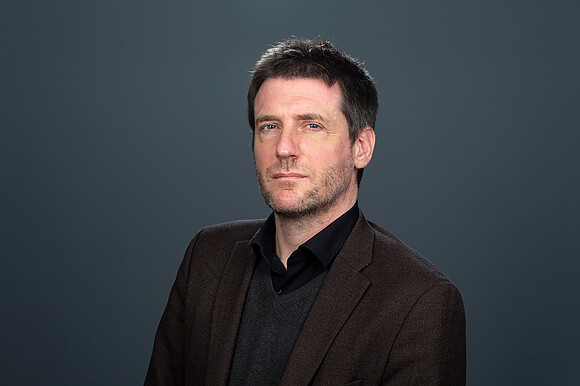
Vinod Nigade is a Visiting Professor in the Department of Computer Science at Vrije Universiteit Amsterdam (VU). His research focuses on edge computing, deep learning systems, and network security. He holds a PhD in Computer Science from VU, defended in 2023 with his thesis Latency-Critical Inference Serving for Deep Learning . Key research areas include: Dynamic edge networks and latency-optimized inference systems IoT communication protocols and battery-free device synchronization Neural intrusion detection in programmable networks Distributed deep learning architectures Collaborations span academia-industry projects involving real-time systems, network programmability, and cybersecurity. His work addresses challenges in timely video analytics, service-level objectives in edge computing, and scalable exploit detection in distributed environments. Publications emphasize practical solutions for latency-critical applications, with contributions to ACM, IEEE, and other top venues. Current research trends include accelerating IoT discovery protocols and enhancing network security through AI-driven systems.
Gerald Stell is an Associate Professor in the Section of Language and Information Sciences at the University of Lausanne, appointed since August 2023. Previously, he held roles as Assistant and Associate Professor at Hong Kong Polytechnic University. He earned his PhD in Linguistics from the Université Libre de Bruxelles (VUB). His research focuses on multilingualism and linguistic variation, particularly in postcolonial contexts. Key areas include phonetic/grammatical variation, code-switching, and identity strategies in language use, with a specific emphasis on Namibian English and Afrikaans. He is currently finalizing a monograph on Namibian English, proposing an eclectic variationist methodology combining subjective and objective data analysis. His recent work explores sociolinguistic dynamics in postcolonial settings, including studies on language contact, ethnic identity negotiation, and the interaction between sociopolitical factors and linguistic structures. His research bridges theoretical linguistics with applied sociolinguistics, aiming to contextualize language variation within broader social and historical frameworks.
Allison Louise Wetterlin is a Professor at the Department of Foreign Languages and Translation, University of Agder. She co-leads the Experimental Linguistics research group and serves as Study Program Director for the Master's program in English. Her teaching includes phonology, phonetics, language history, and experimental linguistics at both undergraduate and postgraduate levels. Research Interests: Wetterlin investigates how language is represented in the brain, focusing on psycholinguistic and neurolinguistic mechanisms, bilingualism, aging effects on language processing, and diachronic language change. Her work explores multilingual cognition and its implications for cognitive aging. 2016–Present: Professor, University of Agder 2015–2016: Associate Professor, University of Agder 2015–2021: Associated Researcher, Faculty of Linguistics, University of Oxford Recent Collaborative Articles: Wetterlin has published extensively on bilingual cognition, aging effects on language comprehension, and phonological processing in Bengali and English. Key themes include neurocognitive aspects of multilingualism and experimental interventions.
Marie-Agnès Dillies is a Researcher at Institut Pasteur's Department of Computational Biology, where she currently serves as interim manager of the Bioinformatics and Biostatistics Hub (since July 2020) and co-manages the StatOmique consortium of French statisticians. Previously, she was co-head of the Hub (2015-2020) and a statistician at the Transcriptome and Epigenome Platform (2002-2017). Her education includes a PhD in Control of Complex Systems (UTC, 1993), Master's in Functional Genomics (Paris Diderot, 2002), and an Engineering degree in Biomedical Engineering (UTC, 1989). Dr. Dillies specializes in biostatistical methods for high-throughput biological data, with research interests spanning: Transcriptomics and RNA-seq analysis Experimental design optimization Single-cell data interpretation Statistical inference frameworks Bioinformatics tool development Her recent publications demonstrate strong focus on pathogen genomics (Entamoeba, Lassa virus), host-pathogen interactions , and development of computational tools for mass spectrometry data. Research consistently integrates statistical approaches with molecular biology techniques. She leads significant training initiatives including PhD courses in bioinformatics and coordinates the Institut Pasteur's bioinformatics program. Current projects include biostatistical support for transcriptomics studies and technological developments in data analysis pipelines.
Nada Poropat Jeletić is an Associate Professor at the Faculty of Humanities and Social Sciences of the Juraj Dobrila University of Pula, specializing in Romance Philology and sociolinguistics. She holds a PhD (summa cum laude, 2014) and has held leadership roles including Head of Postgraduate Study in Translation and Erasmus Coordinator. Her academic journey includes international collaborations with institutions like Harvard, Oxford, and Sorbonne. Education: PhD in Humanities with focus on Romance Studies (University of Zadar, 2014) Professional Roles: Head of Postgraduate Translation Program Erasmus Coordinator for European mobility Member of PLIDA Certification Board (since 2019) Principal Investigator in multiple EU-funded projects Research Interests: Bilingualism, multilingualism, sociolinguistics, corpus linguistics, and language policy in Adriatic regions Her research focuses on Istrian language dynamics, producing corpora like BilingBank C-ORAL-IC and CABank Istriot. Key contributions include sociolinguistic analyses of code-switching and bilingual self-assessment. She has published 30+ peer-reviewed articles in journals like Frontiers in Communication and Journal of Mediterranean Studies , with a focus on heritage languages and language contact phenomena. Awards: Doctoral Scholarship (Italian Union, 2011-2014) PhD honoris causa (summa cum laude) Professional Memberships: 8 international associations including Network of Excellence of Institutional Italian and Mediterranean Studies Association Teaching spans undergraduate to postgraduate levels, covering glottodidactics, legal multilingualism, and computational linguistics. Current projects include the Linguistic Memory Archive of Istria and multilevel discourse analysis frameworks.
Łukasz Trzeciak is an Assistant Professor at the Department of Polish Philology, Institute of Philology, Pomeranian University in Słupsk. He holds a PhD in Humanities from Adam Mickiewicz University in Poznań and is a member of the Slavic Onomastics Laboratory at Wrocław University. His research focuses on onomastics, glottodidactics, and Armenian linguistic studies, with particular attention to historical language contacts in Polish and Slavic contexts. Education: PhD in Humanities (Linguistics), Adam Mickiewicz University, Poznań Research and teaching internship at Veliko Tarnovo University Research Interests: Anthroponymy of Polish Armenians and Slavic linguistic diaspora Language contact phenomena in South-Eastern Poland Patronymic surname evolution and Slavicization processes Historical phonetics and teaching methods for Armenian language learners Grants & Projects: National Science Centre MINIATURA 8: Anthroponymy of Latvian Poles (Project Manager) International Visegrad Fund: Czech-Polish Hodonymy Study Professional Roles: Head of Department of Polish Philology Editorial board member of Lehahayer and Acta Baltico-Slavica Court linguistics expert in Polish language cases Key Contributions: His work bridges historical linguistics with cultural studies, analyzing Armenian linguistic heritage in Polish territories. Recent articles examine surname evolution, Ukrainian influences in Lviv Armenian anthroponymy, and pedagogical approaches to Armenian phonetics for Polish speakers.
Dr. Janina Iwaniec is a Senior Lecturer in the Department of Education at the University of Bath, specializing in language learning motivation and its contextual determinants. With a PhD from Lancaster University (2015) and prior teaching experience at Lancaster, she focuses on bilingual education, intercultural competence, and gender dynamics in language acquisition. Key Research Areas: Language learning motivation, CLIL methodologies, EMI programs, and intercultural competence frameworks. Projects: Principal Investigator for "The effect of bilingual schooling in Madrid on SES" (2019-2021); Co-Investigator in multiple British Council-funded initiatives. Collaborations: Active in UK and international research networks with 100% focus on bilingual education and intercultural competence. Her methodological expertise includes latent variable modeling and mixed-methods approaches, with recent work examining CLIL's equitable outcomes and EMI enrollment motivations in China. Research output: 40+ publications including studies on Polish learners, Uzbek language programs, and transcultural competence development in higher education.
Dr. Awel Vaughan-Evans is a Reader in Psychology at Bangor University's School of Psychology and Sports Science, affiliated with the College of Medicine and Health. She serves as Assistant Pro Vice-Chancellor and holds Principal Fellow status at the Higher Education Academy (2023). Her educational background includes a BSc, MSc, PhD, and Senior Fellow recognition from the Higher Education Academy. Her research focuses on bilingual cognition, neuroaesthetics, and language-brain interactions. Primary interests include: How languages co-activate in the brain during processing Neuroscientific investigation of bilingualism using ERPs and eye-tracking Perception of poetry and music through neurocognitive frameworks Art-based therapeutic interventions Her publications demonstrate consistent focus on bilingual cognition, language processing mechanisms, and neuroaesthetics. Recent work examines how external cues influence language selection, while earlier research explores syntactic transfer between languages and neural responses to poetry. Methodologically, her work employs electrophysiological measures, eye-tracking, and behavioral experiments across multilingual contexts. Awards and fellowships: Principal Fellow of the Higher Education Academy (2023) Senior Fellow of the Higher Education Academy She supervises undergraduate and postgraduate research in bilingualism and language acquisition, with current PhD students including Gwennant Evans-Jones. She leads dissertation modules and organizes courses in research methods and neuroaesthetics, all offered bilingually in Welsh and English.
Christopher L. Buckley is Professor of Neural Computation (Informatics) at the School of Engineering and Informatics, University of Sussex, where he has been a faculty member since 2014. He was promoted from Lecturer to Senior Lecturer in 2018 and to Professor in 2022. His research bridges theoretical neuroscience and artificial intelligence, with a focus on active inference, predictive coding, and embodied cognition. Master of Physics (First Class), University of Edinburgh, 2000 MSc in Evolutionary and Adaptive Systems, University of Sussex, 2001 PhD in Cognitive Robotics, University of Southampton, 2008 His research interests center on understanding how neural systems give rise to robust behavior and how such principles can inform AI. He investigates machine learning models grounded in neuroscience, particularly through the lens of the free energy principle and active inference. His work spans artificial intelligence, machine learning, theoretical neuroscience, cognitive robotics, and artificial life , with applications in planning, perception, and adaptive systems. His recent publications reveal a strong trend in scaling predictive coding, hybrid active inference models, and rate-distortion theory for action representation. He frequently collaborates with leading researchers like Karl Friston and explores topics such as tool use, synthetic awareness, and ecosystem-level intelligence. His work appears in high-impact journals and preprint servers including Neural Computation , Frontiers in Network Physiology , and arXiv. He has received multiple research grants from prestigious funders including Innovate UK, the John Templeton Foundation, BBSRC, and the European Union, supporting projects on synthetic awareness, neural abstraction, and brain-wide dynamics in vertebrates. A metapredictive model of synthetic awareness for enabling tool invention (Innovate UK) Modelling Abstractions in Deep Reinforcement Learning and Rate-Distortion Theory (VERSES INC) The Scaling-up of Purpose in Evolution (John Templeton Foundation) DIMENSIVE: Data-driven Inference of Models from Embodied Neural Systems (EU) Distributed neural processing of self-generated visual input (BBSRC) Christopher Buckley leads an active research group at Sussex, contributing to the development of next-generation AI systems grounded in biological principles. He has no listed students in the provided data, but his collaborative network is extensive. He is not part-time, not retired, and not a former staff member, indicating ongoing active engagement in research and teaching.
Daniel J. Graham is a Professor of Psychological Science at Hobart & William Smith Colleges (HWS), where he has been a faculty member since 2012. He is affiliated with the Department of Psychological Science within the School of Humanities and Sciences, contributing to interdisciplinary research and teaching in vision science, brain networks, and neuroaesthetics. Graham holds a Ph.D. in Psychology and an M.S. in Physics from Cornell University, and a B.A. in Physics from Middlebury College, reflecting his strong foundation in both the natural and cognitive sciences. Ph.D. in Psychology, Cornell University M.S. in Physics, Cornell University B.A. in Physics, Middlebury College His research integrates computational, behavioral, and theoretical approaches to understand how the brain processes visual information, particularly in natural scenes, art, and faces. He is a leading proponent of the 'internet metaphor' for brain function, proposing that neural communication operates similarly to packet-switched networks. His work emphasizes efficiency, statistical regularities, and network dynamics in cortical and whole-brain systems. Key research themes include efficient coding, neuroaesthetics, and models of neural communication. The most recent publications reveal a strong trend toward interdisciplinary synthesis, combining neuroscience, computer science, and psychology. His work increasingly explores machine learning models to predict human affective responses to visual stimuli, critiques of dominant theoretical frameworks like the free energy principle, and educational innovation in perception teaching. The research spans from foundational vision science to philosophical reflections on brain function. Scientific Awards and Recognition: Winner, Outstanding Student Presentation Award at MAA MathFest (2021) Invited speaker at numerous national and international conferences, including the Redwood Neuroscience Institute and the Bernstein Conference Media coverage of PNAS work in Nature , NPR , BBC , and IEEE Spectrum Teaching and Advising: Graham mentors numerous undergraduate students, many of whom co-author his publications. He has developed innovative lab courses involving electrophysiology, perceptual experiments, and creative demonstrations. He teaches core courses such as Introduction to Psychology, Sensation and Perception, and advanced seminars on art and neuroscience. His teaching philosophy emphasizes critical thinking, interdisciplinary reasoning, and active student participation. Research Labs and Collaborations: Graham collaborates closely with Prof. Yan Hao (HWS Mathematics) on modeling neural communication. His research group involves students in computational modeling, data analysis, and experimental design. He is involved in conferences and workshops focused on the mathematics of neuroscience and AI, reflecting his commitment to cross-disciplinary science.
Howard Manns is a Senior Lecturer in the Department of Linguistics within the Faculty of Arts at Monash University, Australia. His research lies at the intersection of sociolinguistics, linguistic anthropology, and conversation analysis, with a strong focus on language, identity, and meaning-making in multilingual and multicultural interactions. His academic expertise spans several linguistic contexts, including Persian, Indonesian, sign languages, and Australian/World Englishes. He employs qualitative methodologies such as Conversation Analysis, ethnography, and interviews to explore how language shapes and reflects social identities. Interactional Sociolinguistics Conversation Analysis Linguistic Anthropology Multilingualism Intercultural Communication Language and Identity His recent publications and research projects reveal a consistent trend in understanding communication among Deafblind individuals, tactile signing, Australian vernacular expressions, and the sociocultural dimensions of slang and metaphor. These works highlight his commitment to inclusive, socially impactful linguistics that contributes to the UN Sustainable Development Goals, particularly in reducing inequalities and promoting quality education. His scientific engagement includes significant contributions to public discourse, with over 250 media appearances, especially with the ABC, where he discusses topics such as slang, mnemonics, and chiasmus. Metaphors and identities in the Australian vernacular (ARC-funded, 2021–2025) Deafblind communication: Building professional competencies (2021–2024) Talking through touch: adapting sign languages for Deafblind use (ARC, 2016–2020) Monash Intercultural Lab Summer School (2021–2023) He is an active member of the Monash Intercultural Lab and collaborates with institutions such as the National Institute of Informatics (Japan) and Victoria University of Wellington (New Zealand), reflecting his international research network and interdisciplinary approach.
Mic'hela Bertozzi is a Research Fellow at the Department of Interpretation and Translation of the University of Bologna, with academic ties to the Forlì campus. She holds the National Scientific Qualification as an associate professor in the Spanish Language, Translation, and Linguistics sector. Her roles include teaching interpreting, tutoring, and research. Education: PhD in Translation, Interpreting, and Intercultural Studies (2018) Master's in Conference Interpreting (Forlì, 2011) Bachelor's in Applied Interlinguistic Communication (Forlì) Research focuses on Anglicisms in interpreting/translation , remote interpreting technologies , pedagogy for interpreters , and corpus-based analysis . She co-leads the Shift in Orality project and contributes to the Interdisciplinary Research Group on Interpreting (GRIINT) . Teaching spans conference interpreting , dialogical interpreting , and intercultural communication across undergraduate and graduate programs. She also serves as an educational tutor for linguistics mediation students. Professional experience includes 14+ years as a freelance conference interpreter and translator, specializing in technical and publishing sectors. She is a member of AISPI, Tradinfo, and other professional associations.
Adriana Soto Corominas is a Researcher at the International University of Catalonia (UIC), holding a position in the Department of English Philology and German Studies. She earned her PhD in Hispanic Linguistics from the University of Western Ontario (UWO) in 2018. Her postdoctoral research included roles at the University of Alberta (2018–2021) and UIC (2021–2023). Her research focuses on bilingualism, heritage language development, and morphosyntax in Catalan-Spanish and Arabic-English contexts. She leads projects like LexiCat (vocabulary tests for Catalan) and studies input quality in bilingual children's language acquisition. Her work contributes to SDGs related to education and sustainable development. Key research interests include: Catalan-Spanish bilingualism, heritage language maintenance, cognitive factors in language acquisition, and CLIL methodologies. She has published widely on topics such as third language performance in bilingual children, age effects in Syrian Arabic heritage speakers, and cross-linguistic influence in syntax. Recent projects (2024–2025) investigate vocabulary skills in Catalan and phonetic/morphosyntactic acquisition in bilingual children. She collaborates internationally and has supervised doctoral students. Her studies often use experimental designs and longitudinal data to explore language development in multilingual contexts.
Glenn Van Wallendael is an Associate Professor at Ghent University's Faculty of Engineering and Architecture , affiliated with the Department of Electronics and Information Systems . He leads research in video coding, digital watermarking, and immersive media technologies. Academic Focus: Video compression standards (HEVC, H.266), AI for multimedia, virtual reality Key Collaborations: iMinds, imec, European research consortia Research Interests include: Video compression algorithms (HEVC, SVC, MV-HEVC) Digital watermarking for copyright protection Machine learning applications in image/video analysis Quality of Experience (QoE) in immersive environments Recent Publications (2024-2025) show expertise in: Deepfake detection using vision transformers Medical image landmarking tools Lightweight geometric approximation methods AI-driven video quality assessment Doctoral Mentorship includes supervising: 2021: Hannes Mareen (video forensics) 2020: Vasileios Avramelos (light field coding) 2017: Johan De Praeter (adaptive video encoding)
Liss C. Werner is a computational design researcher at Dessau International Graduate School of Architecture , focusing on the intersection of cybernetics, architecture, and digital systems. Her work explores bio-computational reactors, digital twins for buildings, and slime mold-based architectural models. She contributes to urban planning through GIS-based tools and investigates historical cybernetic principles in design. Key Research Areas: Cybernetics, computational architecture, bio-digital integration, digital twins, and urban systems. Collaborations: Projects with scholars in Germany, Austria, and Sweden, including studies on microbial fuel cells and particle physics applications. Theoretical Contributions: Extended Gordon Pask's Conversation Theory into architectural design, proposed 'sixth ecology' frameworks, and critiqued bio-digital fantasies in design. Tools & Methods: Uses Python OpenCV, Grasshopper/Rhinoceros, Arduino-Uno, and parametric CAD environments for bio-reactor monitoring and urban optimization. Publications: 15 recent works cover topics from digital infrastructure in the Anthropocene to cybernetic feedback mechanisms in architecture, with a focus on adaptive geometries and human-machine co-evolution.