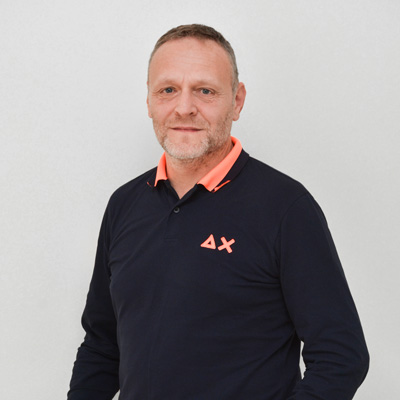
Fabio Palomba is an Associate Professor at the Department of Computer Science , University of Salerno, Italy. He earned a European PhD in Management & Information Technology (2017), funded by University of Salerno and University of Molise, under advisor Prof. Andrea De Lucia. His research spans software maintenance and evolution , empirical software engineering , and ML systems quality . Recipient of IEEE Computer Society Best PhD Thesis Award (2017) Multiple Distinguished Paper Awards from ACM/SIGSOFT and IEEE/TCSE Recipient of prestigious SNSF Ambizione grant (2019) and IEEE Rising Star Award (2023) His work investigates fairness-aware practices in ML , technical debt in AI systems , and LLM applications in software engineering . Recent studies focus on automated requirements generation via RECOVER, quantum software engineering , and socio-technical community smells in ML-enabled systems, with empirical analyses across large datasets. Key editorial roles include Elsevier's Information and Software Technology Journal (2022-), Springer's Empirical Software Engineering Journal (2021-), and IEEE Transactions on Software Engineering (2020-). He has served as program co-chair for SANER 2024 , ICPC 2021 , and multiple conference tracks. 16 Distinguished Reviewer Awards for his refereeing work Co-authored 80+ journal papers , 100+ conference papers , and advised 300+ theses
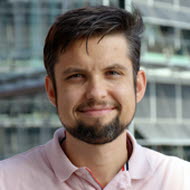
Mohammad Masudur Rahman is an Associate Professor in the Faculty of Computer Science at Dalhousie University. His research focuses on intelligent automation of software maintenance and evolution , combining Artificial Intelligence (AI) and Software Engineering (SE) to address challenges in bug detection, diagnosis, and reproducibility. He leads the RAISE Lab , which aligns with Dalhousie’s strategic goals in Advanced AI & Digital Innovation , particularly Sustainable Software Innovation and Sustainable AI . Dr. Rahman earned his PhD in Computer Science/Software Engineering from the University of Saskatchewan (2019), advised by Prof. Dr. Chanchal Roy, and completed a postdoc at Polytechnique Montreal under Prof. Dr. Foutse Khomh. He has published 50+ papers in top venues like ICSE , ESEC/FSE , ASE , and TOSEM , with research funded by NSERC Discovery Grant, Mitacs Accelerate International, and Dalhousie Startup Fund. His work investigates the challenges of software bugs, crashes, vulnerabilities, and technical debt , particularly in AI-driven systems like Large Language Models and Deep Learning frameworks. He develops tools to automate bug diagnosis, leveraging code structures and neural machine translation. Recent articles analyze deep learning bug reproducibility , fault diagnosis in attention models , and code smell impacts . Scientific Awards : Governor General's Gold Medal, U of S Doctoral Thesis Award, Dalhousie Belong Research Fellowship, President Gold Medal (Bangladesh). Grants : $475K+ (PI) and $4.3M+ (Co-PI) from NSERC, Mitacs, Climate Action Fund, and Dalhousie.
Petar Jovanovic is a researcher at the Department of Service and Information Systems Engineering within the Barcelona School of Computer Science at Polytechnic University of Catalonia (UPC). His work focuses on Big Data management , data governance , and user-centered data integration platforms . PhD (2016) from UPC and Université Libre de Bruxelles Software Engineering degree from University of Belgrade Jovanovic created the Quarry platform, enabling non-technical users to perform data analysis for global health initiatives like WHO disease eradication programs. His 2017 SCIE/BBVA award recognized innovations in applying Big Data to combat diseases such as Chagas in underprivileged countries. Recent research emphasizes: Knowledge graph-based data governance frameworks (2024) Web API evolution prediction models (2024) Automated FAIR data lifecycle systems (2023-2024) He has co-authored 15+ high-impact publications and holds one patent as primary innovator. His work spans European Union research programs and WHO collaborations.
Amleto Di Salle is an Assistant Professor at the Gran Sasso Science Institute in Italy, specializing in Software Engineering , with a focus on Software Architecture , Model-Based Engineering , and Technical Debt . He previously served as a Research Fellow at the European University of Rome and earned a Ph.D. in Computer Science from the University of L’Aquila in 2015. Research Interests : Software Architecture Model-Driven Software Engineering Distributed Systems Composition Technical Debt and Code Smells Self-Adaptive Systems Digital Twins Recent Publications show a trend toward Deep Learning for Code Analysis , Model-Driven Architecture , and Distributed System Compliance . He has collaborated extensively on projects like CHOReVOLUTION and MATISSE . Teaching spans courses on Software Engineering , Model-Driven Development , and Java/J2EE Programming at institutions including the University of L’Aquila and European University of Rome.
Felix Dobslaw is a Senior Lecturer and Associate Professor at Mid Sweden University , affiliated with the Department of Communication, Quality Technology and Information Systems (KKI). He leads the cross-disciplinary Software Engineering and Education (SEE) research group, focusing on the intersection of technology and human use in software development, with a particular emphasis on Generative AI applications.
Hasan Sözer is a Professor at the Department of Computer Science , Ozyegin University , where he has worked since 2011. His research focuses on software engineering , particularly in software architecture recovery , fault tolerance , and distributed systems . Education: B.Sc. in Computer Engineering , Bilkent University (2002) M.Sc. in Computer Engineering , Bilkent University (2004) Ph.D. in Computer Science , University of Twente (2009) Research Interests include software architecture design , test automation , and self-adaptive systems . His work often combines genetic algorithms and heuristics for architecture recovery, with applications in blockchain security and embedded systems . Scientific Projects funded by the Scientific and Technological Research Council of Turkey include topics like automated web application testing , blockchain-based security solutions , and serverless function deployment . He collaborates with industry partners such as Turkcell Technology , Vestel , and Fibabanka . Students under his supervision include Hüseyin Yapıcı , who defended a thesis on evolutionary coupling metrics . He leads the Ozyegin University Software Research Lab (SRL) , which focuses on modular architecture recovery and test model refinement .
Daniel Varro is a Professor and Head of Unit at the Department of Computer Science (IDA) of Linköping University, Sweden. He leads the Software and Systems (SAS) department, focusing on AI, software engineering, and cyber-physical systems. His research is supported by major grants like the Vinnova 5.6 million SEK project for AI-generated software quality assurance. Affiliation: Department of Computer Science (IDA), Linköping University Department: Software and Systems (SAS) Research Focus: Model-based systems, large language models for code analysis, reinforcement learning, and cyber-physical safety verification. His recent work includes empirical studies on machine learning notebooks, infrastructure code smells, and data leakage in large language models. He collaborates extensively within the Wallenberg Autonomous Systems Program (WASP) and trains doctoral students in software engineering.
Giacomo Garaccione is a Ph.D. candidate in Computer and Systems Engineering at the Polytechnic University of Turin , affiliated with the Department of Control and Computer Engineering (DAUIN) and the SOFTENG - Software Engineering Group . He holds an MSc in Computer Engineering (Software) from the same institution. Current Role : Ph.D. candidate (38th cycle, 2022-2025) Teaching : External lecturer and teaching assistant for Information Systems and Software Engineering courses in Engineering and Management and Computer Engineering programs (2022-2025). His research focuses on applying gamification to software engineering education , with emphasis on conceptual modeling and GUI testing . He develops gamified tools like UMLegend and GERRY , integrating artificial intelligence and natural language processing for automated model validation and feedback. Publications analyze gamification’s impact on student productivity and perception in UML/BPMN education. Scientific recognition : Nominated for merit awards (2025). Collaborator on multiple studies involving large language models and gamified IDE plugins , with ongoing work to create a comprehensive gamified environment for software modeling and requirements training.
Ivan Polášek is a part-time Associate Professor at the Department of Applied Informatics within the Faculty of Mathematics, Physics and Informatics at Comenius University in Bratislava. His institutional affiliations include membership in the Division of Theory and System Design. His research explores: Software modeling and visualization techniques Virtual/augmented reality applications in software engineering AI-driven optimization of software design and refactoring Collaborative development methodologies Design pattern analysis and anti-pattern detection Recent publications (2017-2024) demonstrate strong focus on VR-supported collaborative design, executable software models, and communication methodologies in team-based development environments. He teaches undergraduate courses in agile development and software architectures, while leading research seminars. No awards or supervised students are documented in available sources. Polášek contributes to the INNOVAITE research project and maintains collaborations with European institutions including researchers from the Netherlands, France, and Sweden.
Dr. Ying Wang is an Associate Professor and Assistant Dean at the Software College of Northeastern University in China, where she also serves as a doctoral supervisor. She received her PhD in Software Engineering from Northeastern University in January 2019 and joined the faculty in February 2019. Her academic career includes a postdoctoral fellowship at the Hong Kong University of Science and Technology (2022-2023) and a visiting scholar position at Microsoft Research Asia (2021) through the StarTrack Program. Her research focuses on dependency management, software ecosystem governance, software refactoring, and software supply chain security. She has made significant contributions to understanding cross-language dependencies, vulnerability propagation across ecosystems, and developing tools for dependency conflict detection and resolution. Her work spans multiple programming language ecosystems including Java, C#, Python, Go, JavaScript, Android, and Rust. Dr. Wang's publication record shows a consistent trajectory of high-impact research in top software engineering conferences (CCF-A level) including ASE, ICSE, ESEC/FSE, and ISSTA. Her recent work increasingly integrates large language models with traditional software engineering techniques, particularly in dependency analysis and software refactoring. The publications demonstrate a strong emphasis on practical tool development with industry applications. Microsoft Research Asia Star Program Scholar (2020) CCF Outstanding Doctoral Dissertation Award nomination (2020) Liaoning Province Outstanding Doctoral Dissertation Award (2021) ACM SIGSOFT Distinguished Paper Award (ICSE 2021 and ESEC/FSE 2023) Multiple CCF ChinaSOFT Software Prototype Competition awards (2020, 2023) OpenHarmony Community Security Governance Contributions (2024, 2025) Dr. Wang actively mentors a large group of graduate students working on various aspects of software engineering, with many graduates securing positions at major technology companies including Huawei, Microsoft, Alibaba, and Tencent. She serves on the editorial board of IEEE Transactions on Software Engineering and has held numerous program committee positions at top software engineering conferences. Her research has strong industry connections, with several tools developed by her team being integrated into commercial platforms at Huawei and Microsoft.
Justus Verhagen is an Associate Research Scientist at Yale School of Medicine's Department of Radiology & Biomedical Imaging, with a secondary appointment at The John B. Pierce Laboratory. His work integrates behavioral and neural methods, utilizing optogenetic imaging and stimulation in awake rodents to study food perception and olfactory processing. Education: PhD in Neuroscience, University of Delaware (2001) MSc in Cognitive Neuroscience, University of Amsterdam (1996) Dr. Verhagen's research focuses on olfactory system dynamics , particularly retronasal smell encoding, temporal coding of odor signals, and input-output relationships in olfactory bulb glomeruli. Collaborative projects include multi-modal imaging (fMRI/calcium imaging) with Fahmeed Hyder and exploration of odor navigation through the NSF-funded BRAIN Initiative. His recent publications analyze odor plume intermittency, neurovascular coupling, and advanced neural coding frameworks in olfactory systems. Key trends in his 15 most recent publications reveal expertise in olfactory bulb dynamics , optogenetic imaging , and multi-sensory integration across Neuroscience , Biomedical Imaging , and Behavioral Neuroethology disciplines.
Muhammad Ali Babar is a Professor in the School of Computer Science at the University of Adelaide. He leads a theme on architecture and platform for security as service in the CyberSecurity Cooperative Research Centre (CSCRC), which has an estimated budget of A$140 Millions over 7 years with A$50 Millions provided by the Australian government. Prof Babar has established CREST (Centre for Research on Engineering Software Technologies), directing the research, education, and engineering activities of more than 25 researchers and engineers. He has attracted more than $12 Millions in funding from industry and government since 2017. Prof Babar's research focuses on Secure Software Systems and Services for emerging technologies including Cloud Computing, Edge Computing, Internet of Things (IoT), and Big Data. His work sits at the intersection of Software Engineering, Artificial Intelligence (ML/NLP), and Cyber Security, employing empirical research methods both qualitative and quantitative. His recent publications demonstrate a strong emphasis on vulnerability prediction, secure microservices management, and applying large language models to security challenges. With over 320 peer-reviewed scientific papers and 17,763 citations (h-index 66 as of January 2025), Prof Babar ranks among the leading Software Engineering researchers in Australia and New Zealand. His research has been recognized with the most influential paper award for the Australasian Software Engineering Conference in 2014 and multiple best paper awards at international conferences. Most influential paper for Australasian Software Engineering Conference (2014) Multiple best paper awards at international conferences Prof Babar obtained his Ph.D. in Computer Science and Engineering from the University of New South Wales, Australia. His research is conducted in collaboration with industry and government partners including DST, ActewAGL, TSS, ATO, Jemena, Cisco, DST Group, Health SA, and Defence SA, as well as key players in the Australian Cyber Security ecosystem such as AustCyber, Data61, DST Group, Oceania Cyber Security Centre, and Australian Cyber Collaboration Centre (AC3). Prof Babar is eligible to supervise Masters and PhD students and has led high-performing R&D teams that have successfully carried out high-quality research in close collaboration with industry. His leadership in the Cyber Security Cooperative Research Centre represents a significant contribution to Australia's cyber security research capabilities and industry engagement.
Coen De Roover is a Professor at the Vrije Universiteit Brussel (VUB) since October 2015, affiliated with the Software Languages Lab (SOFT) where he leads the Code Analysis and ManiPulation (CAMP) subgroup. He serves as programme director for the bachelor's program in Computer Science since the 2019-2020 academic year. His research focuses on the design of program analyses and their application to software quality problems , with particular expertise in static and dynamic analysis techniques. Key research areas include: Soft verification of contracts and incremental abstract interpretation Fine-grained change analysis of individual commits Mining for change patterns across multiple commits Vulnerability detection in infrastructure code (particularly Ansible) Concolic testing and resilience analysis Recent publication trends show increasing focus on infrastructure as code security, WebAssembly analysis, and modular abstract interpretation frameworks. His work bridges theoretical program analysis with practical software engineering applications, often validated through empirical studies on open-source projects. As an active contributor to the software engineering community, he has served on program committees for major conferences including ASE, ECOOP, ICSE, and SPLASH. His leadership roles include steering committee positions for GPCE and SANER, and program co-chair roles for International Conference on Program Comprehension. De Roover directs the CAMP research subgroup which has published over 120 peer-reviewed articles. The group develops practical analysis tools while advancing theoretical foundations of program analysis, with recent work focusing on infrastructure code security and WebAssembly analysis.
Mohammad Hamdaqa is an Associate Professor at the Department of Computer Engineering and Software Engineering at Polytechnique Montréal (Canada), where he leads the Software and Emerging Technologies Lab. He received his PhD in Software Engineering from the University of Waterloo in Canada in 2016 and holds multiple advanced degrees including a Master of Applied Science in Software Engineering and an MBA with a minor in Management Information Systems. His educational background includes: Ph.D. in Electrical and Computer Engineering, University of Waterloo, Canada Master in Electrical and Computer Engineering, Concordia University, Canada Master in Business Administration, New York Institute of Technology, USA Bachelor in Computer Engineering, Jordan University of Science and Technology, Jordan Dr. Hamdaqa's research focuses on the intersection of software engineering and emerging technologies. His work explores how software engineering approaches can be tailored to address the complexities of architecting, building, and deploying applications for new platforms like Cloud Computing and Blockchain. He is particularly interested in how emerging technologies can advance software creation, evolution, and management practices. His research spans model-driven software engineering, cloud computing, blockchain, and the application of AI in software development processes. His recent publications demonstrate a strong focus on smart contract security, infrastructure as code, model-driven engineering, and the application of large language models in software engineering tasks. His work bridges theoretical software engineering concepts with practical applications in cutting-edge technology domains, with particular emphasis on addressing security, sustainability, and maintainability challenges in next-generation software systems. Dr. Hamdaqa has received recognition through service on program committees for major software engineering conferences including ASE, ICSE, MODELS, and SANER. He serves on the editorial board of Service Transactions on Internet of Things and is a Member of the IEEE Computer Society and the Association for Computing Machinery. He has supervised multiple Master's students to completion, with recent theses focusing on OCL generation, smart contract auditing, epidemiological modeling, and infrastructure as code security. His current research group continues to explore innovative approaches at the intersection of software engineering and emerging technologies. Dr. Hamdaqa leads the Software and Emerging Technologies Lab at Polytechnique Montréal, which brings together researchers and students to investigate cutting-edge challenges in software engineering for new technology platforms. The lab focuses on practical solutions that balance theoretical rigor with real-world applicability.
Apostolos Ampatzoglou serves as Associate Professor in the Department of Applied Informatics at the University of Macedonia, where he leads research in software engineering with particular emphasis on technical debt management and software quality. Previously, he held an Assistant Professor position at the University of Groningen (2013-2016) and maintains active collaborations across European research initiatives. His academic credentials include a PhD in Software Engineering from Aristotle University of Thessaloniki (2013), MSc in Computer Systems from the University of Macedonia (2005), and BSc in Informatics from the Technological Education Institute of Thessaloniki (2003). Dr. Ampatzoglou's research program centers on technical debt quantification, reverse engineering, and software maintainability. He pioneered financial models for technical debt management and developed metrics for assessing ripple effects in software systems. His work bridges theoretical foundations with industrial applications through projects like SDK4ED and SmartCLIDE, focusing on energy-efficient development and cloud service engineering. Current investigations explore machine learning applications for vulnerability prediction and technical debt prioritization. His extensive publication record reveals strong trends in applying AI to software quality assurance, with recent work emphasizing transformer models for vulnerability detection and explainable AI for technical debt identification. He actively investigates energy-aware development practices and service-oriented architecture patterns in cloud environments. Notable recognitions include: Top-7 reviewer for Journal of Systems and Software (2022) Best paper awards at IGSCC'21, ICSR'18, and EASE'17 18th most active Consolidated Researcher in Software Engineering (2013-2020) 3rd most active Early Stage Researcher (2010-2017) Multiple personal research grants from National Scholarships Association He has successfully supervised PhD candidates including Dr. Areti Ampatzoglou (Best PhD Thesis Award, University of Groningen) and Dr. Elvira-Maria Arvanitou (VERSEN Institute award). His research is funded through major European projects such as SDK4ED, SmartCLIDE, and SKILLAB, with recent grants exceeding €2M in total funding. Current work focuses on FAIR data implementation and skills gap analysis in European labor markets. As leader of the Software Engineering Lab at the University of Macedonia, he directs a 15+ member team working on technical debt management tools, cloud development environments, and XR applications for warehouse management. The lab maintains strong industry partnerships with technology clusters in Thessaloniki and participates in the Eclipse Foundation ecosystem.