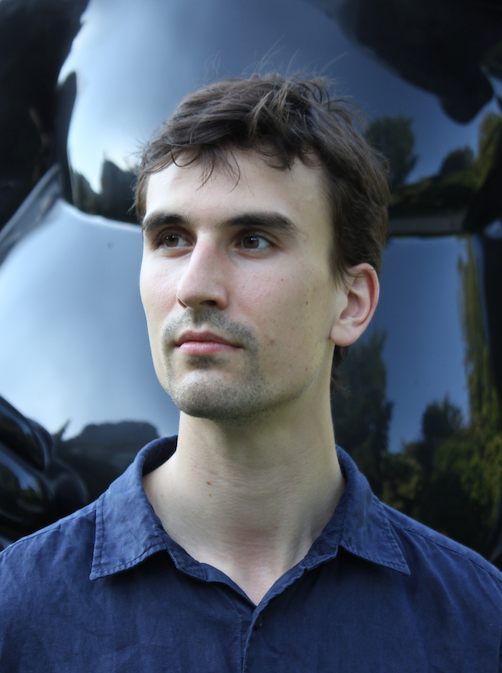
Anoosheh Heidarzadeh is an Assistant Professor in the Department of Electrical and Computer Engineering at Santa Clara University's School of Engineering. He holds a Ph.D. in Electrical and Computer Engineering from Carleton University (2012) and previously served as a Visiting Assistant Professor at Texas A&M University (2018-2022) and Associate Research Scientist at the same institution (2015-2017). His postdoctoral research was conducted at the California Institute of Technology (2013-2014). His research focuses on: Information and coding theory : Fundamental limits of data transmission and storage systems Private and secure computing : Protocols for confidential data processing in networked environments Fault-tolerant distributed systems : Resilient computation frameworks for large-scale applications Distributed machine learning : Scalable algorithms for collaborative learning architectures Recent publications (2021-2022) demonstrate strong emphasis on privacy-preserving computation (covering 73% of articles) and distributed coding techniques (67% of articles), with innovations in private information retrieval, matrix operations, and group testing methodologies. Theoretical contributions dominate (87%), while 13% address applied challenges like COVID-19 screening.
Gail E. Kaiser is a Professor of Computer Science and the Director of the Programming Systems Laboratory (PSL) in the Computer Science Department at Columbia University. She has been with Columbia University since 1985, becoming a full Professor in 1998. Prof. Kaiser's research spans software engineering, program analysis, software testing, and software security, with recent focus on addressing challenges in AI/ML systems testing and security. Prof. Kaiser received her PhD in Computer Science from Carnegie Mellon University in 1985 and her ScB in Computer Science and Engineering from MIT in 1979. Her dissertation at CMU was titled "Semantics for Structure Editing Environments" under advisor Nico Habermann, and at MIT she completed "Automatic Extension of an Augmented Transition Network Grammar for Morse Code Conversations" under advisor Al Vezza. Prof. Kaiser's research interests primarily focus on software engineering following a systems building approach, with recent emphasis on static and dynamic program analysis techniques to improve software reliability and security. Since 2005, she has investigated testing "non-testable" programs, particularly in machine learning, data mining, and scientific computing applications where traditional testing oracles are insufficient. She has developed novel techniques and tools for detecting bugs and verifying repairs in complex systems. Concurrently, she has worked on collaboration environments for computational scientists, creating knowledge sharing and domain-aware environments to support scientific workflows. Prof. Kaiser's recent publications demonstrate a strong focus on the intersection of software engineering and artificial intelligence. Her work addresses critical challenges in testing AI systems, code understanding through deep learning, vulnerability detection, and educational tools for computational thinking. There's a clear evolution from traditional software engineering topics toward AI/ML applications, with particular emphasis on metamorphic testing for non-testable systems, code similarity analysis, and educational applications. Prof. Kaiser has received numerous prestigious awards throughout her career: Distinguished Journal Award (10 Years) from 18th IEEE International Conference on Software Testing, Verification and Validation (ICST), April 2025 Best Research Paper Award at 24th IEEE International Conference on Source Code Analysis & Manipulation (SCAM), October 2024 Distinguished Reviewer Awards for ASE 2024 and FSE 2024 ACM SIGSOFT Distinguished Paper Award for "CONCORD: Clone-aware Contrastive Learning for Source Code", July 2023 Best Student Paper Award at ICCE 2021 Multiple ACM SIGSOFT Distinguished Paper Awards dating back to 2014 Presidential Young Investigator in Software Engineering and Software Systems from NSF (1988-1993) Prof. Kaiser has chaired Columbia's doctoral program since 1997 and served on editorial boards including IEEE Internet Computing and as a founding associate editor of ACM Transactions on Software Engineering and Methodology. Her lab has been continuously funded by major agencies including NSF, NIH, DARPA, ONR, NASA, and numerous companies. Current grants include significant NSF funding for secure containers architecture, learning semantics of code for software assurance, and finding semantic security bugs. As Director of the Programming Systems Laboratory (PSL), Prof. Kaiser leads research in software systems, program analysis, and software testing. The lab has developed numerous tools and techniques for software reliability and security, with recent focus on challenges in AI/ML systems. Her work bridges theoretical foundations with practical applications, often resulting in deployable tools that address real-world software engineering challenges.
Andrew Head is an Assistant Professor at the University of Pennsylvania in the Computer and Information Science department. His research focuses on human-computer interaction, programming, and reading, particularly in developing technology for interactive reading and reasoning. He advises PhD students Alyssa Hwang, Hita Kambhamettu, Litao Yan, Jeffrey Tao, and Jessica Shi, and co-leads the Penn Human-Computer Interaction (Penn HCI) group with Danaé Metaxa. His work is published in top venues like ACM CHI, UIST, and ICSE. Research Interests: Andrew's work bridges interactive systems with programming environments, aiming to enhance how scientists and programmers interact with their tools. Key areas include AI-assisted code understanding, math notation accessibility, and medical note interpretation through interactivity. He employs user studies to identify needs and builds interactive systems to address them. Recent Article Trends: His publications emphasize systems-centric HCI approaches, integrating AI into code and document interfaces. Topics span code explanation (e.g., Ivie), property-based testing (e.g., Tyche), math notation augmentation (e.g., FreeForm), and medical informatics (e.g., Explainable Notes). Recent work also explores notebook environments (e.g., Bolt-on, Tyche) and literate programming (e.g., Colaroid). Scientific Awards: Distinguished Paper Award, ICSE 2024 Best Paper Awards at CHI (2024, 2023, 2022, 2019), UIST (2023, 2018), and others. Nominated for Best Paper at CHI 2023 and VL/HCC 2015. Advising & Grants: Andrew advises multiple PhD students and has secured significant grants, including a $1M NSF award for 'Property-based Testing for the People' (2024). His group collaborates with Penn’s MindCORE center and teams like PLClub and PennNLP. Labs & Teams: He co-leads the Penn HCI group, which works closely with other Penn research teams and labs. The group focuses on creating interactive tools that enhance scientific and programming workflows, supported by grants and cross-institutional partnerships.
Andrew Childs is a Professor at the University of Maryland, affiliated with the Department of Computer Science and the Institute for Advanced Computer Studies (UMIACS). He serves as Director of the NSF Quantum Leap Challenge Institute for Robust Quantum Simulation (RQS) and is a Fellow at the Joint Center for Quantum Information and Computer Science (QuICS). His research focuses on quantum algorithms for simulating physical systems, algebraic problems, and quantum walk protocols, with applications in quantum computing and computational complexity. University of Maryland Institute for Advanced Computer Studies (UMIACS) Joint Center for Quantum Information and Computer Science (QuICS) NSF Quantum Leap Challenge Institute for Robust Quantum Simulation Childs' research spans quantum simulation, quantum Fourier transform, phase estimation, and Hamiltonian dynamics. He has developed techniques to reduce quantum computational resources for simulating quantum systems and explored limitations of quantum computers through hidden subgroup problems and non-unitary dynamics. His publications cover diverse areas including quantum walk optimization, Hamiltonian simulation methods, and applications to cryptography and condensed matter physics. Recent works address spatial search algorithms, product formulas for commutators, and quantum routing protocols. As an educator, Childs has taught courses on quantum algorithms and information processing at both the University of Maryland and University of Waterloo, with lecture notes and materials spanning multiple years. Contact: amchilds@umd.edu | Office: ATL 3359 | Affiliated with University of Maryland's quantum research institutes.
Aditya Parameswaran is an Associate Professor in the Electrical Engineering and Computer Sciences (EECS) department at the University of California, Berkeley. He co-directs the EPIC Data Lab and the Police Records Access project, focusing on simplifying data science at scale through human-in-the-loop systems, LLM-powered tools, and scalable data systems. His research spans database systems, human-computer interaction, and machine learning, with notable contributions in tools like Lux, Modin, and DataSpread. Education : PhD in Computer Science from Stanford University (2013) BTech in Computer Science and Engineering from IIT Bombay (2007) Research Interests : Parameswaran's work centers on empowering end-users with intuitive data tools. Recent projects include LLM-powered systems for document processing (DocETL, TWIX), proactive data systems, and benchmarking frameworks. He emphasizes democratizing data science through low/no-code solutions and improving production ML workflows. Articles Trends : His recent work (2023–2025) prioritizes LLM integration into data systems, focusing on robust pipelines, assertion generation (SPADE), and debugging tools (RAGGY). Earlier contributions include visualization recommendation (Lux), scalable dataframes (Modin), and spreadsheet optimization (DataSpread). Awards : Recipient of the VLDB Early Career Award (2019), Sloan Research Fellowship (2020), NSF CAREER Award (2017), and multiple best paper/demonstration awards at top venues like SIGMOD and VLDB. Advising & Grants : Guides over 20 PhD/postdoc alumni, many now in academia (e.g., Madelon Hulsebos at CWI) and industry leadership roles. Active in securing grants (e.g., NSF, Army Research Office) and industry partnerships (e.g., Snowflake, LangChain). Labs/Teams : Leads the EPIC Data Lab, focusing on agentic data systems, and co-founded Ponder (acquired by Snowflake). Collaborates on the Police Records Access initiative, building transparency tools for public records.
Ming-Syan Chen is a distinguished academic holding dual roles as a Distinguished Research Fellow and Director of the Research Center for Information Technology Innovation (CITI) at Academia Sinica, Taiwan, and a Distinguished Professor jointly appointed across multiple departments at National Taiwan University (NTU), including Electrical Engineering (EE), Computer Science and Information Engineering (CSIE), and the Graduate Institute of Communication Engineering (GICE). His career spans academia and industry, with prior roles as a research staff member at IBM Watson Research Center and leadership positions in Taiwan's technology sector. Education: He earned a B.S. in Electrical Engineering from National Taiwan University, followed by M.S. and Ph.D. degrees in Computer, Information, and Control Engineering from the University of Michigan, Ann Arbor. Research Interests: Chen's work focuses on databases, data mining, machine learning, multimedia networking, and cloud computing. He has authored over 350 papers and holds numerous patents, contributing to foundational advancements in query processing, data management, and networked systems. Award Highlights: Recipient of ACM and IEEE Fellowships, National Chair Professorship (lifetime honor), Teco Award, Pan Wen Yuan Distinguished Research Award, and IBM's Outstanding Innovation Award. His contributions span research, teaching, and technology commercialization. Leadership & Service: Former Dean of NTU's College of Electrical Engineering and Computer Science, CEO of Taiwan's Networked Communication Program, and Editor-in-Chief of the International Journal of Electrical Engineering. He has chaired international conferences and served on editorial boards of journals like IEEE TKDE and VLDB. Labs & Teams: Leads the Network Database Laboratory and collaborates on national initiatives in information and communication technologies. His research groups focus on data science, distributed systems, and social network analysis.
Professor Ernest Foo is a distinguished academic at Griffith University's School of Information and Communication Technology, specializing in cybersecurity with a focus on industrial control systems and cryptographic protocols. With over 15 years of experience in computer networking, he has established himself as a leading expert in SCADA security and smart grid cybersecurity. His research has significant practical applications in critical infrastructure protection, and he has developed hands-on security training programs that have trained professionals from major Australian utilities and government agencies. Professor Foo's educational background includes: Bachelor of Engineering with Honours in Electronic and Computer Engineering from University of Queensland Doctor of Philosophy from Queensland University of Technology Professor Foo's research interests center around secure cryptographic protocols with specific applications in industrial control system security and cyber physical systems. His work spans SCADA security, smart grid protection, wireless sensor network security, and post-quantum cryptography. He has made significant contributions to understanding vulnerabilities in industrial protocols like Modbus and DNP3, and has pioneered the application of process mining and data mining techniques for attack detection in critical infrastructure systems. His research bridges theoretical security concepts with practical implementations in real-world industrial environments. Professor Foo's recent publications demonstrate a clear trajectory toward increasingly sophisticated security frameworks for critical infrastructure. His work shows a progression from foundational SCADA security research to advanced applications of artificial intelligence, machine learning, and formal methods in cybersecurity. A notable trend is the integration of zero trust principles with industrial control systems, alongside growing emphasis on post-quantum cryptographic solutions. His publications span high-impact journals and conferences in cybersecurity, with increasing focus on anomaly detection in cyber-physical systems and the application of graph-based machine learning techniques to network security challenges. Professor Foo's notable scientific achievements include: Best paper award at the 2nd International Cyber Resilience Conference for "Gap analysis of Intrusion Detection in Smart Grids" Professor Foo has secured significant research funding including an ARC Linkage grant with Powerlink Queensland focused on cyber security for electricity sub-stations. He currently leads multiple research projects including Westpac Micro-Credentials in Financial Crime Investigation, Digital Banking Micro-credentials with ANZ, and research on quantum-safe cryptography. As a dedicated educator, he serves as Program Director for multiple cybersecurity programs including the Master of Cyber Security, and has supervised numerous doctoral and masters students. His Cyber Security: Industrial Control System course, conducted annually from 2013-2018, featured innovative hands-on training with real-world participants from major Australian utilities. Professor Foo has been instrumental in establishing the SCADA security research laboratory with multiple vendor system miniatures running industrial PLCs. His work bridges theoretical security concepts with practical implementations, making significant contributions to the security of industrial control systems and critical infrastructure worldwide.
Rashmi Vinayak is an Associate Professor in the Computer Science Department at Carnegie Mellon University, with a courtesy appointment in the Electrical and Computer Engineering Department. She is a member of both the Systems group and Theory group at CMU and leads TheSys research group. She is also affiliated with the Parallel Data Lab (PDL). Her educational background includes a Ph.D. from UC Berkeley in 2016, followed by postdoctoral studies at the same institution. Rashmi's research spans the intersection of computer/networked systems and information/coding theory. Her current focus is on robustness and resource efficiency in data systems across storage, communication, and computation. Key thrusts include storage systems, caching systems, and systems for machine learning. Her work on SIEVE, a cache eviction algorithm, has been widely adopted by industry including VMware, Google, Redpanda, and numerous open source libraries. Her recent publications demonstrate a strong trend toward practical systems research with theoretical foundations, particularly in caching algorithms, storage systems, and machine learning infrastructure. Many of her papers have received best paper awards and industry adoption. Notable awards include: Sloan Research Fellowship (2023) IEEE Information Theory Society Goldsmith Lecturer (2023) NSF CAREER Award (2020) Multiple USENIX NSDI Community (Best Paper) Awards VMware Systems Research Award (2021) Facebook and Google Research Awards Rashmi has supervised numerous PhD, Master's, and undergraduate students, many of whom have gone on to prestigious positions at Harvard, Google, Meta, and other leading institutions. Her research has been generously funded by NSF, Sloan Foundation, Open Compute Project, Google, Facebook/Meta, VMware, and Amazon Web Services. She actively collaborates with industry partners including Google, Microsoft, NetApp, Facebook, Cisco, Intel and Cloudera. She leads TheSys research group which focuses on designing next-generation data systems that are robust, efficient, and performant. The group takes a multi-disciplinary approach spanning computer systems, information theory, and machine learning.
Julian McAuley is a Professor in the Department of Computer Science and Engineering at the University of California, San Diego's Jacobs School of Engineering. His research spans recommender systems, machine learning, natural language processing, music information retrieval, and multimodal learning. He maintains an active research group with numerous PhD students and postdocs working on cutting-edge AI problems. His research interests focus on developing advanced algorithms for personalized recommendation systems, with particular emphasis on sequential recommendation, multimodal learning, and integrating large language models with traditional recommendation approaches. His work bridges the gap between theoretical machine learning and practical applications across multiple domains including e-commerce, music, and healthcare. McAuley has published extensively in top-tier conferences including NeurIPS, ICML, KDD, SIGIR, and ACL, with his most recent work exploring the intersection of large language models and recommendation systems. His publications reveal a strong trend toward multimodal approaches that combine text, vision, and audio for more comprehensive understanding and recommendation. He has received significant research funding from major technology companies including Google, Amazon, Facebook, Adobe, and Samsung, as well as government agencies like the National Science Foundation and Department of Defense. His work has practical applications across multiple industries, with a focus on improving user experience through better personalization. McAuley advises numerous PhD students who have gone on to successful careers at leading technology companies and academic institutions. His former students include Wang-Cheng Kang and Jianmo Ni at Google DeepMind, Chris Donahue and Zachary Lipton as assistant professors at CMU, and Ruining He at Google Deepmind.
Ben Fisch is an Assistant Professor of Computer Science at Yale University's School of Engineering & Applied Science. He is also the co-founder of Espresso Systems, a company focused on blockchain infrastructure. His research focuses on privacy and verifiability in decentralized systems like Bitcoin and Ethereum, with applications in digital finance and healthcare. Dr. Fisch received his B.A. from the University of Pennsylvania and completed his Ph.D. at Stanford University, where he worked with Dan Boneh in the applied cryptography research group. His educational background provided the foundation for his work at the intersection of cryptography, distributed systems, and economics. His research centers on leveraging cryptographic tools such as succinct non-interactive zero-knowledge proofs (zk-SNARKs), private information retrieval, and homomorphic encryption to address challenges in verifiable computation, verifiable storage, and verifiable fairness. He has made significant contributions to verifiable delay functions (VDFs) and proofs of replication, which have been adopted by major blockchain projects including Ethereum 2.0, Chia, and Filecoin. His work on Filecoin's Proofs of Replication has helped the network reach over 1.5 exabytes of storage capacity. His publication record shows a clear trend toward increasingly sophisticated cryptographic protocols for blockchain applications, with recent work focusing on data availability for Bitcoin rollups, efficient folding schemes for pairing-based arguments, and privacy pools with proof-carrying disclosures. His research bridges theoretical cryptography with practical implementations that have real-world impact in decentralized systems. His notable recognition includes: Best Paper Finalist at ACM CCS 2017 for 'Iron: Functional Encryption using Intel SGX' Dr. Fisch's research has led to significant technology transfer, most notably with his work on Verifiable Delay Functions (VDFs) sparking a multimillion dollar industry initiative through the VDF Alliance. His research on Proofs of Replication forms the basis of Filecoin's incentive layer and consensus protocol. His newer SNARK system Basefold is being used by several commercial products. He maintains active collaborations across academia and industry, with publications spanning top conferences in cryptography and security. As co-founder of Espresso Systems, Dr. Fisch leads a team developing next-generation blockchain infrastructure, particularly focusing on sequencing layers for rollups. His work bridges academic research with practical implementation, ensuring that theoretical advances in cryptography find real-world applications in decentralized systems.
Arman Cohan is an Assistant Professor of Computer Science at Yale University, affiliated with the School of Engineering & Applied Science. His research focuses on the intersection of Machine Learning and Natural Language Processing (NLP), particularly in language modeling, representation learning, retrieval systems, and applications in specialized domains such as scientific text processing. He earned his Ph.D. in Computer Science from Georgetown University and has received notable awards, including the Dr. Harold N. Glassman Distinguished Doctoral Dissertation Award (2019) and the EMNLP 2017 Best Long Paper Award. His work emphasizes ethical AI, robustness of LLMs, and interdisciplinary applications in healthcare, science, and education. Cohan's research group, the Yale NLP Lab, develops advanced techniques for multi-document summarization, adversarial fact-checking, and LLM-driven tools for scientific discovery. Recent projects include frameworks like SciBERT, Longformer, and ChemAgent, which enhance domain-specific reasoning and safety in AI systems. His publications address challenges in table reasoning, uncertainty expression, and multimodal reasoning, with applications in medical decision-making and educational problem-solving. He collaborates on initiatives like the Roberts Innovation Fund to advance AI in healthcare and environmental technology.
Wenhu Chen is an Assistant Professor at the University of Waterloo's Computer Science Department and a CIFAR AI Chair at the Vector Institute. He also holds a part-time role as a Senior Research Scientist at Google DeepMind (20% allocation). His research focuses on natural language processing, deep learning, and multimodal reasoning, with contributions to models like MAmmoTH, OpenCoderInterpreter, and VISTA. He received awards including the Canada CIFAR AI Chair (2022) and the UCSB CS Outstanding Dissertation Award (2021). Education: PhD in Computer Science from the University of California, Santa Barbara (under William Wang and Xifeng Yan). Research interests include complex reasoning, controllable GenAI, and multimodal benchmarks like MEGABench and MMMU. Grants include CIFAR AI Chair Funding (2022-2027), NSERC Discovery Fund (2023-2028), and multiple NRC Canada grants. He directs the TIGER Lab, advancing generative models in text, images, videos, and music. Recent talks include presentations on multimodal reasoning at Apple and NeurIPS workshops.
Aidan J Horner is a Professor in the Department of Psychology at the University of York. He holds a BSc in Psychology (2005) and MSc in Cognitive Neuroscience (2006) from the University of York, followed by a PhD in Cognitive Neuroscience from the University of Cambridge (2010). His career includes postdoctoral research at Otto-von-Guericke University (2010–2011) and University College London (2011–2016), and a visiting scholar position at Stanford University (2008). He returned to York as a Lecturer in 2016, advancing to Senior Lecturer and his current Professorship. Research Focus: Horner’s work examines how the brain encodes and retrieves long-term memories, particularly spatial and event-based information. He employs experimental psychology, virtual reality, neuroimaging (e.g., fMRI, MEG), and computational modeling to study hippocampal and cortical mechanisms underlying memory formation, consolidation, and forgetting. His recent studies explore the role of theta oscillations in memory binding, the impact of emotion on memory coherence, and forgetting dynamics. Publications & Awards: Over 50 peer-reviewed articles, including high-impact work in Current Biology , Nature Communications , and Cognition . Recognized with the Annual Cognitive Paper Prize Award (2022) for groundbreaking contributions to memory research. Grants & Projects: Lead investigator on ESRC-funded projects (e.g., "Promoting rapid and sustained learning of novel information" , 2018–2022). Collaborates with institutions like the York Neuroimaging Centre (YNiC) to advance neuroimaging techniques in cognitive studies. Labs & Teams: Affiliated with the York Neuroimaging Centre (YNiC), integrating neuroimaging with behavioral and computational approaches to memory systems. Active in interdisciplinary teams studying memory plasticity and cognitive neuroscience.
Hadi Esmaeilzadeh is an Associate Professor at the University of California, San Diego in the Department of Computer Science and Engineering . He previously served as an Assistant Professor at Georgia Tech (2013-2017) and holds the Halicioğlu Chair in Computer Architecture . As founder/director of the Alternative Computing Technologies (ACT) Laboratory and associate director of UCSD's Center for Machine Integrated Computing and Security (MICS) , his research drives cross-stack solutions for next-generation computer systems. Early tenure recipient at UCSD Coined the term "dark silicon" in computer architecture Developed Tabla/DnnWeaver open-source frameworks Research Interests span: Approximate Computing Neural Acceleration FPGA/ASIC Hardware Design Machine Learning Systems Dark Silicon Challenges Security/Privacy in Accelerated Systems Scientific Recognition : 4 CACM Research Highlights 4 IEEE Micro Top Picks Distinguished Paper Award (HPCA 2016) Inducted to ISCA Hall of Fame (2018) Teaching : Developed courses on accelerator design (CSE 240D) and alternative computing (CS 8803 ACT) Advocates for hands-on FPGA-based learning in Processor Design with FPGAs courses
Nils Holzenberger is an Assistant Professor at Télécom Paris, France, since February 2023, affiliated with the Data Intelligence Graphs (DIG) research team within the Information Processing and Communication Laboratory (LTcI). His work bridges artificial intelligence, natural language processing, and legal domains through neuro-symbolic approaches to statutory reasoning, particularly in tax law. Education: PhD in Computer Science, Johns Hopkins University (2017-2022) Master's in Engineering, Mines ParisTech (2013-2017) Preparatory Classes, Lycée Louis-le-Grand (2011-2013) Holzenberger's research centers on legal artificial intelligence with emphasis on statutory reasoning limitations in large language models. He pioneered the SARA dataset for tax law reasoning and LegalBench benchmark, developing hybrid symbolic-neural frameworks that expose LLMs' shortcomings in precise legal interpretation. His work integrates Prolog solvers with NLP techniques to create executable tax code mappings and contract analysis tools, establishing foundational methods for verifiable legal AI systems. Analysis of his 15 most recent publications (2019-2024) reveals three dominant research thrusts: (1) Tax law reasoning benchmarks exposing LLM hallucinations, (2) Neuro-symbolic integration for statutory interpretation, and (3) Low-resource template extraction for legal documents. His work consistently demonstrates that pure neural approaches fail at precise legal reasoning, necessitating symbolic grounding for reliable legal AI applications. The DIG research team at Télécom Paris, where Holzenberger leads legal AI initiatives, is actively hiring faculty for neuro-symbolic projects. While specific grant details aren't public, his collaborations with HEC Paris, Copilex startup, and featured podcast appearances indicate substantial industry-academia engagement in legal tech development. Holzenberger directs the legal AI vertical within LTcI's DIG team, focusing on data intelligence for statutory reasoning. His group develops tools for tax minimization strategy discovery, contract analysis, and legal information extraction, maintaining close ties with legal practitioners through projects like the Prolog-based tax code interpreter. The team's infrastructure supports both academic research and startup partnerships in computational law.







.jpg)