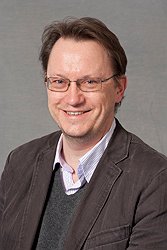
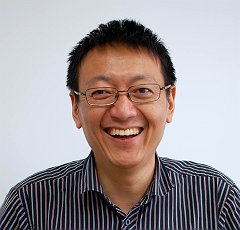
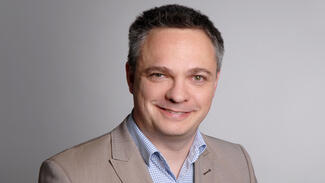
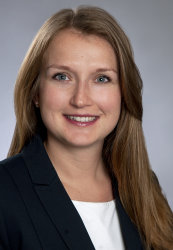
Jeff Huang is an Associate Professor in the Department of Computer Science and Engineering at Texas A&M University, specializing in programming languages and software engineering with a focus on concurrency and runtime verification. His research develops advanced program analysis techniques and tools to enhance software performance and reliability. Programming Languages Software Engineering Concurrency Runtime Verification His work has been recognized with prestigious awards including the ACM SIGSOFT Early Career Researcher Award, NSF CAREER Award, Google Faculty Research Award, and DARPA Young Faculty Award. Notably, his research has earned multiple SIGPLAN Research Highlights and PLDI Distinguished Paper Awards. ACM SIGSOFT Early Career Researcher Award NSF CAREER Award Google Faculty Research Award Mozilla Research Award Facebook Research Award DARPA Young Faculty Award ACM SIGSOFT Outstanding Dissertation Award ACM SIGPLAN PLDI Distinguished Paper Award SIGPLAN Research Highlights Jeff Huang actively contributes to academic communities as a committee member in venues like SPLASH, ICSE, ISSTA, and PLDI. He has authored influential papers on concurrency bug detection, pointer analysis, and language translation tools, spanning both theoretical foundations and practical implementations.
Prof. Dominik Müller holds the Chair of Cultural and Social Anthropology at the Institute of Sociology at Friedrich-Alexander-University Erlangen-Nürnberg (FAU). He is the SDAC (Southeast Asia Studies Center) Speaker, leading research initiatives on Southeast Asian societies, Islamic legal systems, and state-religion dynamics. His work focuses on pluralism, Sharia governance in Brunei and Malaysia, and the bureaucratization of religious authority. Research Interests: Islamic authority and state interactions Sharia law and socio-legal change Religious pluralism and normative conflicts State formation in Southeast Asian sultanates Cultural anthropology of bureaucracy Transnational Islamic networks Recent Publications Highlight: Prof. Müller’s work analyzes Brunei’s Sharia Penal Code, Islamic authority negotiation in Swiss mosques, and the transformation of Islamic judiciaries in Malaysia. His interdisciplinary approach bridges anthropology, sociology, and legal studies, emphasizing fieldwork in Southeast Asia and Europe. Grants & Projects: Leads the Emmy Noether Research Group 'The Bureaucratization of Islam' and collaborates with the Max Planck Fellow Group on Environmental Rights. Active in organizing SDAC academic events including guest lectures, film screenings, and transnational student exchanges. Labs/Teams: Core member of the Southeast Asia Studies Center (SDAC) coordinating academic programs and research networks. Directs the 'Bureaucratization of Islam' research cluster producing comparative analyses across Brunei, Singapore, and Switzerland.
Dr. Emiel van der Vorst is a cardiovascular researcher focusing on atherosclerosis, immunometabolism, and translational medicine . His work spans molecular mechanisms, therapeutic targeting, and omics-based approaches. Affiliation: Institute for Molecular Cardiovascular Research (IMCAR) Research Focus: Chemokine signaling, microRNA therapeutics, immune-metabolic interactions Research Trends: Recent publications highlight his exploration of microRNA-26b in metabolic liver disease GPR55 receptor in cardiomyocyte adaptation calcium-sensing receptor in sex-specific atherosclerosis aryl hydrocarbon receptor in gut-liver-cardiovascular axis His work integrates nanomedicine, genetic models, and clinical biomarker development .
Georgios Coussios is a Researcher at the University of Duisburg-Essen, Faculty of Educational Sciences, Institute for Social Work and Social Policy, specializing in applied conversation research, interactional linguistics, and medical communication. His work focuses on knowledge transfer in oncology, patient-doctor interaction, and social categorization in discourse. Education: MA in Language, Culture, Translation (Mainz), MA in Applied Linguistics (Münster), BA in English Studies and Romance Studies (Bonn). His research explores how linguistic structures and pragmatic strategies shape expert-lay communication, particularly in medical contexts. Recent projects include secondary analyses of social differences in qualitative interviews and optimizing patient understanding in oncology. His publications span monographs on cancer patient communication, contributions to linguistic handbooks, and analyses of ethnic categorization in migrant humor. He has taught seminars on institutional communication and syntax of spoken language at Hamburg and Duisburg-Essen, and participated in international conferences. Coussios co-edits the online magazine fokus:interaktion , contributing to academic discourse on interactional studies.
Ruma Chopra serves as Professor of History at San Jose State University, specializing in migration-driven diversification processes across the British Atlantic during the eighteenth and nineteenth centuries. Her academic career centers on analyzing how shifting loyalties and cultural adaptations occur when populations relocate under non-voluntary circumstances. Her research spans Atlantic History, Migration Studies, Caribbean History, Diaspora Studies, Post-slavery Societies, and Indentured Labor, with particular emphasis on socio-cultural encounters between indigenous groups, newcomers, and displaced communities. Current work investigates complex interethnic dynamics among East Indians, Chinese, African Creoles, and Europeans in post-slavery Jamaica, Trinidad, and Guyana, focusing on indentured labor systems that replaced African slavery through regulated five-year contracts and penal codes. Chopra's publication record includes the 2018 Yale University Press monograph Almost Home , examining deported Jamaican ex-slaves' experiences in Nova Scotia and Sierra Leone during British abolitionist campaigns. Her scholarly output consistently engages History, Migration Studies, Atlantic World frameworks, and African Diaspora studies, with subfield specializations in Loyalist migrations, colonial Caribbean societies, and transitional labor systems between slavery and freedom. No scientific awards were documented in the source material. Advising activities and research grants remain unspecified in available records, with no mention of laboratory facilities, research teams, or collaborative institutional frameworks beyond her independent scholarly projects.
Dr. Nour Ali serves as a Professor and Vice-Dean of Education in the College of Engineering, Design and Physical Sciences at Brunel University London, where she co-heads the Brunel Software Engineering Lab. With a PhD in Software Engineering from Universidad Politecnica de Valencia and a Computer Science degree from Bir-Zeit University, she brings extensive international experience from previous positions at University of Brighton, Lero (Irish Software Engineering Research Centre), and Politecnico di Milano. PhD in Software Engineering, Universidad Politecnica de Valencia, Spain Major in Computer Science, Bir-Zeit University, Palestine PG Certificate in Teaching and Learning in Higher Education, University of Brighton Fellow of the Higher Education Academy (HEA) Her research focuses on developing software architecture techniques for distributed, mobile, and adaptive systems, with particular expertise in microservice architecture recovery and visualization. With over 70 publications spanning two decades, her work bridges theoretical architecture principles with practical implementation challenges. Recent research demonstrates a strong focus on microservice architecture recovery tools like MiSAR and analysis of service granularity adaptation. Dr. Ali has made significant contributions to the software engineering community through editorial roles including Deputy Editor in Chief of IET Software, committee memberships for major conferences like ICSE and ASE, and reviewer positions for EPSRC and other funding bodies. Her publications reveal consistent contributions across architecture consistency, microservice systems, and adaptive requirements engineering, with recent work increasingly focusing on practical tool development for architecture recovery. External Examiner, York St John University (2021-2025) Deputy Editor in Chief, IET Software Committee member for ICSE, ASE, EASE, ICSA, MOBILESoft conferences EPSRC Full College Member (2018-present) Reviewer for Dutch Research Council (NWO), UK UNESCO Newton Prize As an educator, Dr. Ali leads CS3100 Software Project Management and contributes to multiple undergraduate and postgraduate courses. Her teaching philosophy integrates research insights with practical software engineering skills, supported by her PG Certificate in Teaching and Learning and HEA Fellowship. She actively supervises PhD students and contributes to curriculum development as Vice-Dean of Education for her college.
Reinier Boon serves as DZHK Professor for RNA Therapeutics at Goethe University Frankfurt, holding dual affiliations at the Institute for Cardiovascular Regeneration (Frankfurt, Germany) and the Department of Physiology at VU University Medical Center (Amsterdam, Netherlands). His research program, funded by the German Center for Cardiovascular Research (DZHK) and an ERC Starting Grant, focuses on molecular mechanisms of cardiovascular aging. Prof. Boon's laboratory investigates how non-coding RNAs regulate age-related deterioration in endothelial cells and cardiomyocytes, with particular emphasis on long non-coding RNAs (H19, Meg3, MALAT1) and microRNAs (miR-34a, miR-29). His work has identified critical roles for these molecules in cellular senescence, metabolic regulation, and vascular dysfunction, revealing novel pathways involving Stat3 signaling, KLF2 transcription factors, and extracellular matrix remodeling. This research bridges fundamental molecular biology with therapeutic development for age-related cardiovascular diseases. Analysis of his key publications (2011-2019) reveals a consistent trajectory from mechanistic discoveries in RNA biology to translational applications, with increasing focus on therapeutic targeting of non-coding RNAs in vascular aging and regenerative processes. The work spans endothelial metabolism, cardiac aging, neovascularization, and aortic pathology, demonstrating strong interdisciplinary integration of molecular cardiology, regenerative medicine, and RNA therapeutics. Major recognitions include: European Society of Cardiology Outstanding Achievement Award (2019) ERC Starting Grant (2015) Franz-Maximilian Groedel Research Prize (2014) Dutch-German Young Investigator Award (2013) American Heart Association Melvin L. Marcus Award (2010) Prof. Boon leads an internationally collaborative research group supported by DZHK infrastructure and competitive grants. His laboratory directs multiple projects on RNA-based interventions for cardiovascular aging, with strong emphasis on translational validation. The group maintains active collaborations across European cardiovascular research networks and participates in DZHK's therapeutic development initiatives. The Boon Group operates across two specialized sites: the Institute for Cardiovascular Regeneration at Frankfurt's Center for Molecular Medicine and Amsterdam's VU University Medical Center physiology department. As part of the DZHK's RNA Therapeutics program, the team combines advanced molecular techniques with disease models to develop novel strategies against age-related cardiovascular decline.
Mark Harman is a part-time Professor of Software Engineering at University College London's Department of Computer Science within the Faculty of Engineering Sciences, while working full-time as a Research Scientist at Meta Platforms in the Instagram Product Performance team. He previously served as head of Software Engineering at UCL and director of its CREST centre from 2006 to 2017 before joining Meta when his startup Majicke was acquired in 2017. Harman's research spans multiple domains of software engineering, with particular emphasis on Search Based Software Engineering (SBSE), which he co-founded in 2001. His work has evolved to include LLM-based software engineering, software testing, program analysis, and bias mitigation in machine learning systems. He has made significant contributions to automated testing through systems like Sapienz and WW that have been deployed at scale at Meta. His publication record shows a clear evolution from traditional software testing and analysis toward increasingly sophisticated integration of machine learning techniques. Recent work demonstrates strong focus on addressing fairness challenges in ML systems, improving test reliability in continuous integration environments, and exploring the applications of large language models in software engineering tasks. This reflects both his ability to identify emerging challenges and his commitment to practical, industry-relevant research. IEEE Harlan Mills Award (2019) ACM Outstanding Research Award (2019) Fellowship of the Royal Academy of Engineering (2020) Harman maintains a unique bridge between academia and industry, having co-founded the Simulation-Based Testing team at Meta and previously directing UCL's CREST research centre. His work on Sapienz grew from his startup Majicke and has had significant industrial impact while maintaining strong academic foundations. He frequently participates in academic conferences as both contributor and committee member, demonstrating ongoing commitment to the research community despite his industry position. At Meta, Harman works within the Instagram Product Performance team, building on his earlier work with the Simulation-Based Testing team where he co-developed platforms for client- and server-side testing. His research on cyber-cyber digital twins represents an innovative application of simulation techniques to virtual software systems rather than physical ones.
Dr. Tim Gerrits is a researcher at the Institute for Visualization (VIS) at RWTH Aachen University, where he leads the Visualization Team. His work bridges scientific visualization, high-performance computing, and immersive technologies, with a strong focus on in-situ and in-transit analysis for large-scale simulations. University: RWTH Aachen University Institute: Institute for Visualization (VIS) Role: Lead of the Visualization Team Tim Gerrits' research centers on developing tools and frameworks for efficient and interactive visualization of complex scientific data. His interests include ensemble data analysis, uncertainty visualization, virtual reality interaction techniques, and leveraging game engines like Unreal Engine for scientific applications. He is particularly active in the domain of neuronal network simulations and oceanographic modeling. His recent publications highlight a strong trend toward accessible, real-time, and hybrid visualization workflows. He has contributed to the development of DaVE, a curated database of visualization examples to support HPC users, and Insite, a lightweight pipeline for in-transit processing in neuroscience simulations. His work emphasizes usability, performance, and integration with existing scientific workflows. Scientific Awards: Best Paper Award at IEEE Uncertainty Visualization Workshop, 2024 Honorable Mention Award at Eurographics Workshop on Visual Computing for Biology and Medicine (VCBM), 2022 Dr. Gerrits actively mentors and collaborates on interdisciplinary projects involving computational neuroscience and climate modeling. He has led the curation of datasets for the IEEE SciVis Contest and promotes open science through Zenodo-hosted resources. His lab focuses on building scalable, user-centered visualization systems that empower domain scientists to gain early insights from massive simulations.
Prof. Dr. Jürgen Pfeffer is Full Professor of Computational Social Science at the School of Social Sciences and Technology, Technical University of Munich . Previously, he served as Assistant Research Professor of Societal Computing at Carnegie Mellon University (2012–2016). He studied computer science at Vienne University of Technology and received his Ph.D. in Business Informatics from a non-university institution in 2010. His research focuses on analyzing large-scale social, political, and economic systems through computational methods, bridging social and computer sciences. Key themes include social media network dynamics, algorithmic challenges in social data analysis, and ethical implications of digital platforms. Recent work examines Twitter API reliability , hate speech in TikTok , and LLM applications in education . He also investigates trauma modeling in genocide tribunals, decentralized platform dynamics (Mastodon), and political communication structures across countries. Current projects include tools for social network analysis, educational simulations, and ethical frameworks for AI in digital ecosystems. His methodology combines network science, machine learning, and mixed-method approaches to complex social systems.
Prof. Dr. Gabriel M. Ahlfeldt serves as Chair of Econometrics at Humboldt University's Faculty of Economics, leading the Institute for Statistics & Econometrics since March 2024. Previously, he was Professor of Urban Economics and Land Development at the London School of Economics. Currently on sabbatical at the University of Barcelona for the winter term 2024/25, Ahlfeldt maintains active research and teaching commitments at Humboldt University. His leadership extends to editing Regional Science and Urban Economics , positioning him at the forefront of spatial economic research. Professor Ahlfeldt's research centers on Quantitative Spatial Economics (QSE) , which integrates theoretical, empirical, and computational methods to model economies as interconnected locations. His work examines how commuting, migration, and trade link spatial economies in general equilibrium, accounting for interdependencies across land, labor, and goods markets. This approach has become essential for simulating policies affecting productivity, amenities, transport accessibility, trade integration, environmental quality, and labor market efficiency. His research regularly influences policy debates and receives coverage in national and international media. His publication portfolio demonstrates consistent focus on spatial economic modeling, with recent work including toolkits for quantitative spatial models, analyses of skyscraper economics, and micro-geographic property price indices. Ahlfeldt's research bridges academic rigor with practical policy applications, particularly in urban and regional contexts. His articles collectively emphasize computational methods for spatial analysis, causal identification in urban settings, and the economic implications of density and transportation infrastructure. As an educator, Ahlfeldt offers courses in Econometric Methods, Applied Econometrics, Time Series Analysis, and Quantitative Spatial Economics at both Master's and PhD levels. He co-organizes the Berlin School of Economics Quantitative Spatial Economics Research Seminar, fostering a vibrant research community in the Berlin metropolitan area. His teaching philosophy emphasizes enabling students to answer real-world questions using appropriate data and methods, with particular attention to coding and practical implementation skills. Professor Ahlfeldt actively engages with external partners including government agencies, non-profit organizations, and private sector entities, applying quantitative models to inform policy decisions. His expertise in causal inference allows for rigorous ex-post assessment of program effectiveness, while his spatial economic models provide valuable ex-ante policy simulation capabilities. The Chair of Econometrics under his leadership maintains strong connections with the broader academic community through initiatives like the Berlin Quantitative Spatial Economics Research Group.
Xiaoxing Ma is a Professor at the State Key Laboratory for Novel Software Technology , Nanjing University , focusing on Software Engineering , Self-adaptive Software Systems , and Software Engineering for Machine Learning . His recent work bridges neuro-symbolic reasoning and formal verification. Key research areas: Software Engineering, Self-adaptive Systems, Neuro-symbolic AI Awards: China National Awards (2006, 2011), MOE Award (2010), CVIC SE Award (2009) His 2023-2024 publications emphasize: Formal semantics for hardware description languages (Verilog) Neuro-symbolic frameworks for mathematical reasoning Dynamic update verification and CRDT model checking LLM-driven API migration and traceability recovery He serves as Program Co-Chair for SEAMS 2024 and contributes to major software engineering conferences (ICSE, ASE, FSE, PLDI).
Dr. rer. nat. Stefan Lankes is an academic researcher at the Chair of Automation of Complex Power Systems, RWTH Aachen University's Faculty of Electrical Engineering and Information Technology. His work focuses on operating systems, high-performance computing (HPC), cloud computing, and lightweight virtualization techniques for embedded and real-time systems. Stefan holds a PhD in Electrical Engineering (2003) for his dissertation on real-time distributed platforms. His career spans roles from Scientific Assistant (1998-2004) to Academic Director (since 2019), with key contributions to HPC infrastructure and simulation environments. Research highlights include Rust-based OS development ( HermitCore unikernel ), GPU virtualization in distributed systems, and energy-efficient embedded computing paradigms. He pioneered the FlippedOS digital teaching platform using virtual workstations for operating systems education. Scientific awards include the 2016 Digital Teaching Fellowship and the 2021 RWTH Lecturer distinction. His publications cover topics from NUMA memory management to real-time CORBA protocols, with recent works addressing unikernel security and CUDA virtualization. Stefan leads simulation infrastructure and HPC virtualization projects, with affiliations to the E.ON Energy Research Center and involvement in European workshops like Euro-Par. His work bridges system software innovation with practical applications in energy systems and supercomputing.
Jan Vitek is a Professor of Computer Science at Northeastern University's Khoury College of Computer Sciences. He also holds an appointment at Charles University in Prague supported by an ERC.CZ grant. With a background rooted in Czechoslovakia (birth) and Switzerland (education), Prof. Vitek has established himself as a leading researcher in programming languages and systems. Prof. Vitek's research spans programming language design, implementation, and application across multiple domains. His work has significantly impacted real-time embedded systems, concurrent and distributed systems, and more recently, scalable data analytics. He has published extensively in top venues including Programming Languages, Virtual Machines, Compilers, Software Engineering, Real-time Computing, and Bioinformatics. His publication record shows a clear evolution from foundational work on programming language theory to practical implementations and modern data science applications. Early work focused on ownership types and real-time Java systems, while recent publications center on dynamic languages (particularly R and Julia), compiler optimizations, and large-scale code analysis. His research demonstrates consistent innovation in bridging theoretical foundations with practical implementations. Selected Awards: Dahl-Nygaard Senior Prize (2020) ACM SIGPLAN Distinguished Service Award (2019) ECOOP Test of Time Award (2018) ISSTA Distinguished Artifact Award (2018) OOPSLA Distinguished Artifact Award (2017) As an advisor, Prof. Vitek has mentored numerous PhD students through successful thesis defenses on topics ranging from type stability in Julia to analyzing large code repositories. He has also been deeply involved in the research community through conference organization, having chaired major events including SPLASH, PLDI, ECOOP, ISMM and LCTES. Currently serving as Editor in Chief of TOPLAS, he continues to shape the field while actively conducting research with his team at the PRL lab. His research group, the PRL (Programming Research Laboratory) and PRL-PRG, focuses on creating beautiful code that solves real-world problems, with particular emphasis on making software development more efficient, reliable, and accessible.
Lena Sowada , a researcher at the Department of Romance Studies of the University of Heidelberg , focuses on historical sociolinguistics, language contact, and writing practices in multilingual contexts. Since 2022, she has been a member of the Junge Akademie of the Heidelberger Akademie der Wissenschaften. PhD (2019) in cotutelle between Heidelberg University and Université Paul-Valéry Montpellier 3 BA in Spanish and French Linguistics Her research explores French language history (19th-20th centuries) Writing practices of less-experienced scribes Language contact in bilingual spaces (e.g., Alsace-Lorraine, Balearic Islands) Recent projects examine multilingualism and WWII correspondence. Her publications analyze Ego-documents from WWI Discursive traditions in private texts Orthographic challenges in historical writing She coordinates Erasmus programs for Spain and serves on the university's research commission.