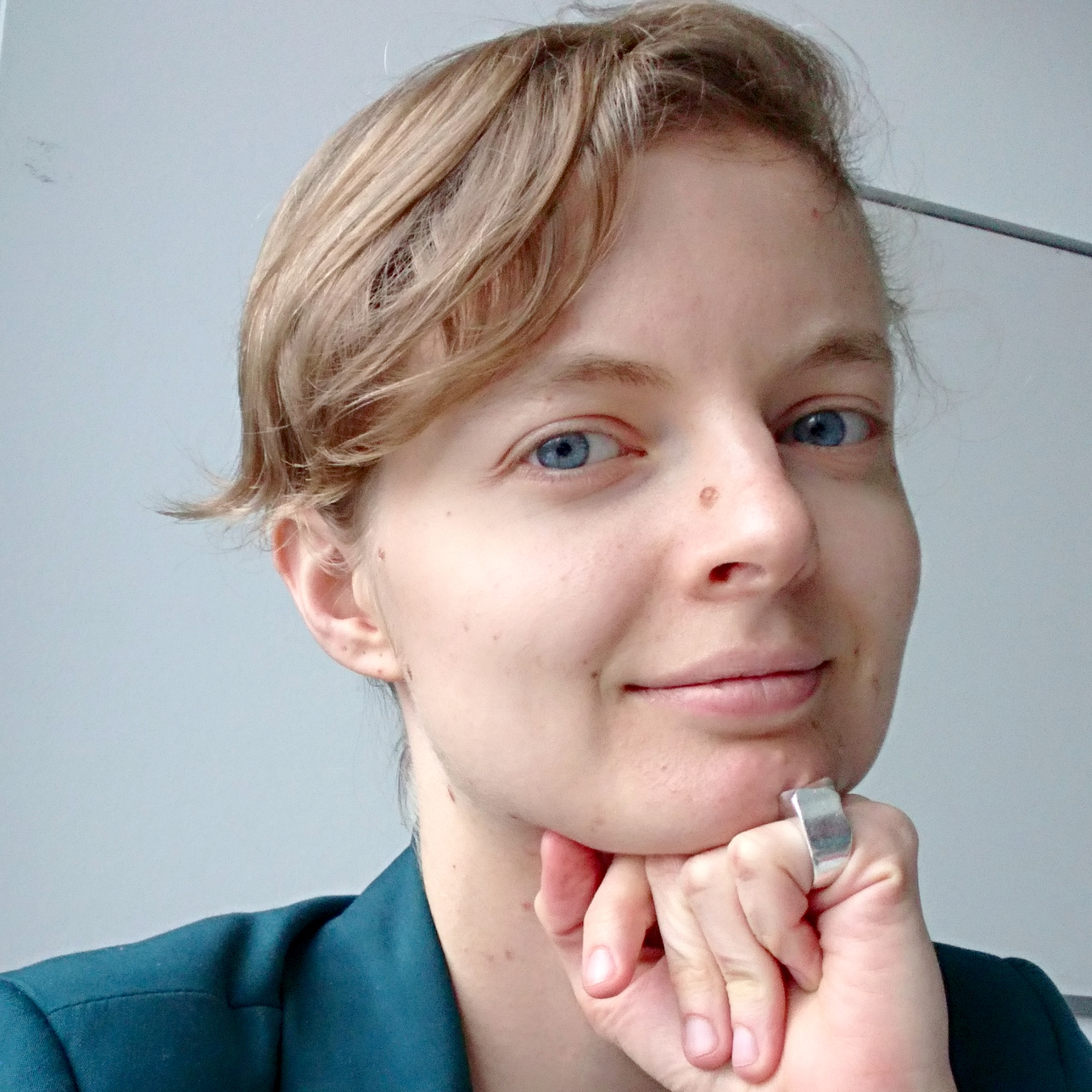
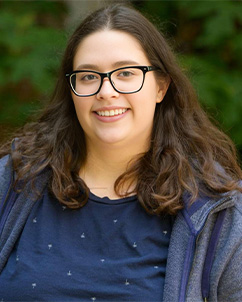
Prof. Rocco Pietrini is a Researcher at the Department of Information Engineering, Università Politecnica delle Marche. His work focuses on AI-driven systems for retail, fashion, agriculture, and digital humanities. He specializes in computer vision, machine learning, and ethical AI applications. Pietrini leads projects like OutfitAI (fashion recommendation systems), Shelf Management (retail automation), and Social4Fashion (social media trend forecasting). His research bridges technical innovation with societal impact, including ethical AI frameworks and legacy code modernization. Roles: Researcher in Information Engineering Affiliations: Dipartimento di Ingegneria dell'Informazione, UNIVPM Key research interests include AI ethics, precision agriculture, and multimodal data integration. His recent studies span smart retail systems, environmental monitoring via YOLO-based buoy detection, and Fortran-to-Python code conversion using LLMs. Pietrini collaborates on EU-funded projects like GREEN PATH (space planning) and Edge-AI for aquaculture. Publications emphasize practical AI applications, from consumer behavior analysis to sustainable water management systems. He maintains an active presence in academic communities through the IRIS repository and teaching at the School of Engineering.
Dr. Shengchao Qin is a Professor of Computer Science at Teesside University's School of Computing & Digital Technologies, specializing in formal methods and software verification. He holds a BSc and PhD from Peking University, with postdoctoral experience at the Singapore-MIT Alliance. As Associate Dean for Research & Innovation (2016-2019), he led strategic research initiatives. His research focuses on automated verification of software safety/security, program analysis, and cyber-physical systems. Major funded projects include EPSRC grants for resource analysis of embedded software (£403k) and inference mechanisms for separation logic domains (£213k). He actively contributes to academic service as Program Committee Chair for ICFEM/TASE conferences, steering committee member for formal methods symposiums, and editorial roles for IEEE Access and Science of Computer Programming. Collaborations span top institutions including National University of Singapore and Peking University. Research Supervision: Current PhD advisees: Chris Curry, Yang Liu, Colin Joy, Ndidi Ogbo Former supervisees: Zhang Zhang (PhD '20), Florin Craciun (Postdoc), Ryuta Arisaka (PhD '13)
Paolo Modesti is a Senior Lecturer in Cybersecurity at Teesside University's School of Computing, Engineering and Digital Technologies. He holds a PhD in Computer Science from Ca' Foscari University Venice, Italy, and an MSc from the University of Udine. His research focuses on security protocols, formal methods, and tool development for secure systems. He is a Fellow of the Higher Education Academy and a licensed professional engineer. Dr. Modesti's work includes designing formal verification frameworks (e.g., AnBx compiler/IDE) and analyzing protocols like Open Banking APIs and Bitcoin's Payment Protocol. He actively contributes to academic conferences (e.g., IEEE, ACM) and serves on program committees for security-related events. His teaching roles include leading the BSc Cyber Security program and modules on Ethical Hacking and Security Analysis. Research interests span security protocol modeling, automatic code generation, intrusion detection systems, and blockchain security. He advocates bridging the gap between academic tools and industry practices through frameworks like PTES and MITRE ATT&CK. His tools, such as the AnBx ecosystem, aim to simplify formal methods adoption for practitioners.
Fiammetta Caccavale is a Researcher at the Department of Chemical and Biochemical Engineering at Technical University of Denmark (DTU), affiliated with the PROSYS - Process and Systems Engineering Centre. Her work focuses on integrating artificial intelligence and digital technologies into chemical engineering education, with contributions to sustainable development goals related to quality education and industry innovation. Education: She completed her PhD in Chemical Engineering at DTU (2021-2025), supervised by Prof. Ulrich Krühne and Dr. Carlos Gargalo. Her doctoral research centered on digitalization strategies in chemical engineering education, including AI chatbots and Python programming integration. Research Interests: Her work spans AI-driven educational tools (e.g., chatbots, virtual tutors), machine learning applications in bioprocess monitoring, and curriculum modernization. She emphasizes ethical considerations in AI implementation and Industry 4.0 readiness. Publications: Her recent work explores AI chatbots for automating educational tasks (ChatGMP), machine learning for cell cycle analysis, and Python course frameworks for engineers. These contributions highlight her dual focus on pedagogical innovation and technological application in engineering. Lab/Team: As part of PROSYS, she collaborates on process systems engineering projects, contributing to educational technology development and bioprocess modeling initiatives.
Dong Deng is an Associate Professor in the Department of Computer Science at Rutgers University, School of Arts and Sciences. He joined Rutgers University in 2019 as an Assistant Professor and has since been promoted to Associate Professor. His research is conducted through the Data Curation Lab within the Database Group. Dong Deng received his PhD from Tsinghua University and completed postdoctoral training at MIT CSAIL. His academic journey has positioned him as a leading researcher in database systems and data management. Dong Deng's research focuses on data management, data science, and database systems, with an emphasis on developing novel algorithms and building practical systems to address data problems. His primary research areas include scalable data curation (covering textual, structured, and feature data curation), data manipulation and wrangling at scale, data integration, data cleaning, data discovery, and scientific dataset management. His work bridges theoretical foundations with practical implementations, particularly in the areas of similarity search, approximate nearest neighbor algorithms, and data integration techniques. His research has significant applications in big data processing, entity resolution, and data lake management. Dong Deng has published extensively in top venues including SIGMOD, PVLDB, and ICDE. His recent publications demonstrate a strong focus on near-duplicate detection, efficient algorithms for similarity search, and data curation techniques. His work shows a consistent trajectory toward more complex and scalable solutions for data management challenges, with increasing emphasis on high-dimensional data and large language model applications. NSF III: Small: Large-Scale High Dimensional Dense Vector Management (2022) NSF CDSE: Computation-Informed Learning of Melt Pool Dynamics for Real-Time Prognosis (2022) SIGMOD Student Programming Contest 2022 Second Place Dong Deng has secured significant research funding and actively mentors students. He has served in various leadership roles within the academic community including Digital Platform Chair for VLDB 2023 and Student Mentorship co-Chair for SIGMOD 2022 and 2021. He teaches advanced courses in database systems and data management at Rutgers University. Dong Deng leads the Data Curation Lab, which focuses on developing innovative solutions for data management challenges. The lab has produced influential research with practical applications across multiple domains requiring sophisticated data processing capabilities.
Constantinos Patsakis is an Associate Professor at the Department of Informatics, University of Piraeus, and an adjunct researcher at the Institute for the Management of Information Systems (IMIS) of Athena Research and Innovation Centre. He holds a Mathematics degree from the University of Athens, an M.Sc. in Information Security from Royal Holloway, University of London, and a PhD in Security from the University of Piraeus. Previously, he worked as a Researcher at the UNESCO Chair in Data Privacy at Rovira i Virgili University, a Research Fellow at Trinity College Dublin, and a Senior Researcher at the Luxembourg Institute of Science and Technology. His primary research areas include cryptography, security, privacy, data anonymization, malware analysis, and blockchain technology. With over 190 publications to his name, his work spans from theoretical security frameworks to practical applications in digital forensics and malware detection. He has contributed significantly to the development of datasets for security research, including the Malicious MS Office documents dataset, Social Live Streaming Service Grooming dataset, and the HYDRA dataset for Domain Generation Algorithm research. His recent publications (2024-2025) reveal a strong focus on emerging security challenges, with particular emphasis on LLM applications in security analysis, novel malware detection techniques, privacy-preserving protocols, and blockchain security. His work bridges academic research with practical security solutions, addressing both technical and human aspects of cybersecurity. As an editor for journals including Computers and Security, International Journal of Information Security, Scientific Reports, and Blockchain: Research and Applications, he plays a significant role in shaping the discourse in his field. He currently teaches undergraduate courses in Information & Code theory, Security Governance, Introduction to Computer Science, and Cryptography, as well as graduate courses in Digital Forensics & Malware Analysis, Cryptographic protocols, and Blockchain development. Principal Investigator for ALUNA (ISFP-2021-AG-CYBER) Coordinator for LAZARUS (HORIZON-CL3-2021-CS-01) Principal Investigator for Cut the Cord (ISFP-2020-AG-CYBER) Principal Investigator for HEROES (H2020-FCT-01-2020) His research group actively contributes to multiple EU-funded projects addressing critical cybersecurity challenges, with a particular focus on digital forensics, blockchain security, and privacy-preserving technologies. The team maintains strong collaborations with international institutions and industry partners, ensuring their research has real-world impact.
Hongyang Gao is an Assistant Professor at Iowa State University, focusing on AI, Machine Learning, and Data Science. His work bridges theoretical foundations and practical applications in neural networks, graph representation learning, and cybersecurity. Education: PhD in Computer Science, Texas A&M University MS in Computer Science, Tsinghua University B.S. in Biomedical English, Peking University Research Interests: Explores neural ODEs, graph neural networks (GNNs), and their applications in molecular modeling, vulnerability detection, and trustworthy AI systems. His recent work emphasizes model interpretability (e.g., MotifExplainer), optimization theory for implicit networks, and graph-based explainability techniques. Publications Trends: Recent papers (2022-2025) highlight advancements in graph learning frameworks, such as G2T-LLM for molecule generation and MAGE for GNN explainability. His work on Neural ODEs explores activation function impacts on convergence, while cybersecurity papers apply dataflow analysis for vulnerability detection. Advising: Collaborates with students on projects involving motif-based methods (e.g., Motifpiece), meta-learning (Meta-AdaM), and trustworthy AI (data preconditions research). No grants explicitly listed in provided texts.
Benoit Baudry is a Full Professor of Computer Science at the University of Montreal's Faculty of Arts and Sciences, Department of Computer Science and Operations Research. He leads the GEODES research group (Groupe de recherche sur les systèmes ouverts et distribués et l’expérimentation dans les logiciels), focusing on software engineering challenges. His teaching responsibilities include courses like Software Quality Metrics (IFT-3913), Software Project Management (IFT-3150), and Advanced Topics in Software Engineering (IFT-6251). He is actively involved in strategic initiatives like IVADO and MITACS-funded projects. Research interests span software supply chain security, dependency management, automated software engineering, and AI-driven development tools. He leads projects such as 'Safe and Transparent Software Reuse' (2025–2031) funded by NSERC and 'CLIMB: LLM-driven MLOps Interface' (2025) supported by MITACS. His work addresses critical issues like detecting bloated dependencies, ensuring reproducible builds, and mitigating supply chain vulnerabilities. Recent funding includes NSERC Discovery Grants and Apogée Canada operational funds. He has pioneered techniques for generating mocks from production data, automating test generation via runtime analysis, and applying large language models to software repair. His interdisciplinary projects bridge software engineering with digital art, such as algorithmic art generation systems. He advises multiple graduate programs including Computer Science Bachelors, Masters, and PhD tracks. Key collaborations include KTH Royal Institute of Technology and industry partnerships like Co-operators. His research emphasizes practical solutions for real-world software systems' reliability and security.
Nata Stulova is a Researcher currently working as a staff research scientist at MacPaw's Technological R&D Center, focusing on software engineering research involving formal and informal program specifications. Formerly, she held academic roles including senior postdoctoral researcher at the University of Bern (SCG), researcher at EPFL's LARA Lab, and PhD work at the Technical University of Madrid (UPM). Her research spans software documentation consistency, NLP applications, runtime verification, and low-code tools. She has led multiple projects addressing code comment quality, empirical studies on documentation practices, and tool development for requirements engineering. Despite transitioning to industry in 2022, she maintains active collaboration with academia, publishing in top conferences like ICSE and IEEE Transactions. She holds a PhD in Computer Science from UPM and has authored numerous peer-reviewed articles and conference papers. Her work emphasizes bridging academic research with industry applications, particularly in software analysis and developer productivity. Education: PhD in Computer Science, Technical University of Madrid (2018) MSc in Artificial Intelligence, Technical University of Madrid (2013) BSc in Applied System Analysis, NTUU "KPI" (2012) Research Interests: Her work focuses on improving software quality through automated documentation tools, runtime verification techniques, and low-code solutions for requirements engineering. She explores NLP methods for detecting inconsistent or outdated comments and optimizing static analysis efficiency. Recent projects include SwiftEval (LLM-generated code evaluation) and RepliComment (cloned comment detection). She also emphasizes practical applications of formal methods in dynamic languages like Prolog and Python. Grants & Funding: ASA: Agile Software Assistance TRACES: Resource-Aware Software Tools N-GREENS: Energy-Efficient Software Labs/Teams: Core member of the Ciao system development team at IMDEA Software Institute, contributor to the Software Composition Group (SCG) at UniBe, and collaborator with MacPaw's TR&D team on industry-focused R&D.
Giles Reger is a Lecturer in the Formal Methods Group within the School of Computer Science at the University of Manchester. His primary roles include research and teaching in theorem proving, runtime verification, and formal methods. He has been actively involved in projects such as the Centre for Digital Trust and Society and the SCorCH project focusing on secure code verification. Educational background: Giles holds a BA in Computer Science from the University of Cambridge (2009), an MSc in Advanced Computer Science from the University of Manchester (2010) with the Highest Achiever of the Year Award, and a PhD from the University of Manchester (2014) titled Automata based monitoring and mining of execution traces . Research interests focus on two core areas: theorem proving (quantifier reasoning, first-order theories, collaborative proof search, and integration of SAT/SMT solvers) and runtime verification (temporal specifications, monitoring algorithms, violation explanation, and benchmarking). His work emphasizes practical applications in tool development and real-software analysis. Notable awards include the ACM SIGSOFT Distinguished Paper Award (2024) for his paper on LLM-generated invariants. His research contributions span over 50 publications, with active involvement in funded projects like SCorCH (Secure Code for Capability Hardware) and the Centre for Digital Trust and Society. Advising and grants: Reger welcomes PhD/MSc students in theorem proving, program verification, and related fields. He has supervised multiple research students and leads collaborative projects involving international researchers. His lab, the Formal Methods Group, develops tools like the Vampire theorem prover and contributes to runtime verification frameworks.
Sebastian Schuster is a Lecturer in Computational Linguistics at University College London (UCL), effective January 2024. He will transition to the University of Vienna in mid-2025 to lead a WWTF-funded research group. Previously, he held postdoctoral positions at Saarland University and NYU (via the 2020 Computing Innovation Fellowship), and completed his PhD in Linguistics at Stanford University, affiliated with the ALPS Lab and Stanford NLP Group. His research focuses on evaluating large language models (LLMs), computational semantics, and pragmatics. Key themes include improving NLU systems through entity tracking analysis, understanding scope ambiguities, and modeling pragmatic inferences. Recent work explores how pretraining affects LLM capabilities and how context influences scalar implicature processing. Notable contributions include datasets like SIGA for scalar implicatures and SpreadNaLa for code generation evaluation. He has presented at ETH Zurich, Oxford, and served as Area Chair for *SEM2023's psycholinguistics track. His fellowship and invited talks reflect recognition of his interdisciplinary work bridging computational and experimental linguistics. Professional activities include contributions to Universal Dependencies projects, software tools like Open Linguistics, and collaborations on child language development. His work integrates methodologies from NLP, experimental psychology, and cognitive science to advance both theoretical and applied linguistic research.
Niklas Elmqvist is a Professor in the Department of Computer Science at Aarhus University. His research focuses on immersive analytics, data visualization, and human-computer interaction, emphasizing user-centered design and interdisciplinary approaches. He leads projects on interactive visualization systems, collaborative platforms, and accessibility in data analysis. Key research areas include agentic visualization systems, attention-aware interfaces, and ubiquitous analytics environments. He explores novel interaction techniques, such as bimanual gestures and multimodal feedback, to enhance data exploration experiences. His work bridges computer science with domains like epidemiology, cybersecurity, and creative writing. Elmqvist has contributed to influential platforms like DashSpace (collaborative immersive analytics) and Datamancer (gesture-driven analytics). He investigates challenges in accessible visualization for visually impaired users and the use of large language models for automated design feedback. His recent work addresses human-centered AI integration in visualization tools and the ethics of automated decision-making systems. He collaborates internationally on projects such as Riverside (cybersecurity visualization) and Lodestar (data science workflow recommendations). His research has been published in top journals like IEEE Transactions on Visualization and Computer Graphics, emphasizing both theoretical advancements and practical system implementations.
Shwai He is a PhD student and Affiliate Assistant Professor at the University of Maryland, advised by Ang Li. Their research focuses on advancing AI systems through innovative approaches in large language models (LLMs), fairness in machine learning, and efficient neural network architectures. Key areas include multi-agent systems, causal modeling for bias mitigation, and optimization techniques for mixture-of-experts models. Research interests span artificial intelligence, machine learning, and natural language processing with emphasis on practical applications like healthcare diagnostics and social pairing systems. Notable work includes developing GNWT-based multi-agent digital twins for social platforms and improving LLM transparency through token analysis. Publications highlight contributions to counterfactual fairness, dynamic-depth transformers, and parameter-efficient methods. Current efforts explore computational efficiency in vision-language models and bio-inspired antibody prediction systems. No scientific awards have been mentioned. Advising and grants: Currently a PhD student under Ang Li's supervision. Research involves collaborations across computer science and bioinformatics domains.
Christine Herlihy holds the academic rank of Adjunct Associate Professor in the Department of Computer Science at the University of Maryland. She is also a PhD Candidate advised by John Dickerson, located in IRB 2108. Her research focuses on algorithmic fairness, health informatics, and natural language processing with applications in socially consequential domains like public health and agriculture. She explores optimization techniques such as restless bandits and develops tools for scientific model augmentation, including a Julia package named SemanticModels.jl. Education: Christine is pursuing her PhD in Computer Science at the University of Maryland under the guidance of John Dickerson. Earlier academic qualifications are not detailed in the provided information. Research Interests: Christine’s work bridges computer science and societal impact. She investigates how AI systems can improve health literacy through personalized smartphone applications and ensure fairness in algorithmic decision-making. Her studies also address challenges in clinical NLP, resource allocation for small farmers, and longitudinal analysis of LLM data contamination. She advocates for transparent and equitable algorithmic frameworks in domains ranging from healthcare to policy evaluation. Advising & Grants: Christine is advised by John Dickerson in her doctoral studies. No grants or independently advised students are explicitly listed in the provided materials.
Julia Mendelsohn is an incoming Assistant Professor at the University of Maryland's College of Information and Department of Government and Politics, starting August 2025. She is currently a postdoctoral scholar at the University of Chicago Data Science Institute. Her research focuses on the intersection of language, politics, and computation, with expertise in computational linguistics, political communication, and sociolinguistics. Education: PhD in Information (University of Michigan), BA in Linguistics and MS in Computer Science (Stanford University) Her research explores computational models of political rhetoric, dehumanization in discourse, and the societal impacts of language technologies. Notable projects include analyzing framing in immigration debates, Russian wartime media, and developing tools to combat antisemitism. Recent work includes studies on metaphor usage in immigration discourse (2025), AI agent truthfulness trade-offs (2024), and the role of multilingual users in social media (2023). She has been recognized with awards such as the Google PhD Fellowship and the 2023 Outstanding Methodology Award. Awards: Google PhD Fellowship, NSF Honorable Mention, ICWSM Outstanding Methodology Award (2023) Julia is actively recruiting PhD students for Fall 2025, emphasizing interdisciplinary approaches in NLP, computational social science, and political communication. She collaborates with research centers like the Computational Linguistics and Information Processing (CLIP) Lab and the Global Elections and Information Security (GEIS) group.